
Press Release
NEXTYPE, the new form of next generation blockchain game

In Game industry,it is always a question that how to make games more interesting. For this point, combining games with new technologies should be considered a good way. A famous example is the extensive use of VR/ AR in the games. So far, on the well-known game platform STEAM, there are more than 4000 games with the “virtual reality (VR)” tag, accounting for 5.3% of the total number of games on the platform.
In fact, from the CryptoKitties to all kinds of blockchain games nowadays, the combination of game and blockchain technology has never stopped. With the continuous updating and iteration of blockchain technology, the modes of DeFi and NFT make the game rules decentralized formulation and virtual assets decentralized storage feasible technically. The convenience of the virtual assets on chain also brings more possibilities for the blockchain to land in the game.
Under this background, NEXTYPE is established for defining the new form of the next generation blockchain game. NEXTYPE hopes to offer a blockchain game platform which is high in proficiency and low in cost. To build a cross-chain integrated application ecosystem for the blockchain games.
Analysis of NEXTYPE
NEXTYPE is defined as the application ecology, which means that NEXTYPE not only needs to complete the underlying technical support and the self-research for blockchain games, but also provides an ecological platform for partners to participate in co-construction, co-governance and co-sharing. What efforts has NEXTYPE made to achieve these?
1.Games Matrix
As the first game of NEXTYPE, Mining Tycoon aims at developing a product with the properties of gaming and blockchain at the beginning. The game is based on the development path of traditional games. For example, Ming Tycoon uses the LAYA engine to develop the client and builds a complete system of player growth while added the method of DeFi in the economy system. Finally, NEXTYPE developed a next generation blockchain game that is totally different from what we have seen in the past.
Business games are undoubtedly the mainstream of the current leisure game market. Mining Tycoon uses the core game method of virtual mining to allow players to participate in the game process of upgrading the mining machine at a low threshold, let players experience the fun of the game and gain profit through the stakes with DeFi. In addition to NT reward, mining will also produce other buff props that are conducive to the growth in the game. At the same time, it can also produce props that represent the identity of high-level players: mining license, which is an essential prop to participate in the high-level BTC mining pool. Players can collect and stake the mining license to mine BTC every day.
To provide more ecological partners with the channel for issuing the token, Mining Tycoon sets up the cooperative mining pool, that is, through the cooperation with NEXTYPE, high-quality projects can have their own token mining pool. And through the multi-dimensional data accumulation and analysis of players’ mining machines, mining grade and mining outputs, the partners can obtain the most accurate user portrait in the whole network and customize the mining mechanism for the target users. For partners with IDO needs, Mining Tycoon can also provide corresponding support for ecological resources.
Mining Tycoon also carries the mission of launching the second game of NEXTYPE, NFT Master. The NFT of artists will be broken into 1000 pieces, each piece corresponds to an NFT, which is randomly distributed in each mining pool. Players collect NFT through stake mining. When the collection of 1000 pieces is completed, the whole NFT painting will be completely lit, And NFT Master will also officially launch. NFT Master is a game specialized in creating and trading NFT. By cooperating with famous IPs, players can create their own NFT works and complete the transaction.
NEXTYPE will also launch 8-10 self-developed games in this year and cooperate with at least 10 games to create NEXTYPE games matrix.
2. Protocol support
The construction and prosperity of the ecology need stable and convenient infrastructure. In terms of stability, the rapid rise of public chains such as HECO and BSC, as well as the gradual maturity of ETH layer 2 and ETH 2.0, have brought revolutionary changes to the improvement of blockchain games and the game experience of players.
In terms of convenience, NEXTYPE has developed NVEP (NFT Value Exchange Protocol) and NCCP (NFT Cross-Chain Protocol) to solve the difficult situation of NFT transaction. And it also realizes the multi form swap between NFT and NFT, NFT and FT, and storage、exchange and circulation of NFT among different chains.
Moreover, the smart contracts has been audited by CERTIK, which means the security of players’ property is guaranteed.
3.Resource Integration
NEXTYPE has reached strategic cooperation with SeeSea Japan, a well-known Japanese company, and Quaras, a subsidiary of Fuji Media. This is an important milestone for NEXTYPE to enter the Japanese IP market. Including some well-known anime IPs, NEXTYPE has signed up with more than 1000 IP units covering the mainstream IP from China, the US, Japan, and other countries.
Besides, NEXTYPE has been formally invited to join the BGA (Blockchain Game Alliance), So far, BGA has attracted more than 100 well-known institutions such as Ubisoft, AMD, and Aave, Opensea, Metamask, Matic. NEXTYPE will work with BGA and its members to promote the application and development of blockchain in the field of games.
And the CMO of NEXTYPE, Uncle David, who has over 20 million fans on the global video sharing Apps said he will promote the global pre-launch campaign, which means there will be millions of potential users for MiningTycoon!
Summary
According to the official news, time-limited whitelist reservation of MiningTycoon will be available next week, players with qualification will get rewarded.
As far as we are concerned, with high-quality games and better player’s experience, NEXTYPE will define the new form of next-generation blockchain games.
About Author

Disclaimer: The views, suggestions, and opinions expressed here are the sole responsibility of the experts. No Digi Observer journalist was involved in the writing and production of this article.

The Dallas-based finance and technology entrepreneur discusses how experience in investment banking, community banking, software, acquisitions, and asset management has shaped the questions he asks when evaluating new opportunities.
DALLAS, Texas, 26th September 2026, ZEX PR WIRE— A promising business opportunity can look very different depending on which side of the table someone is sitting on.
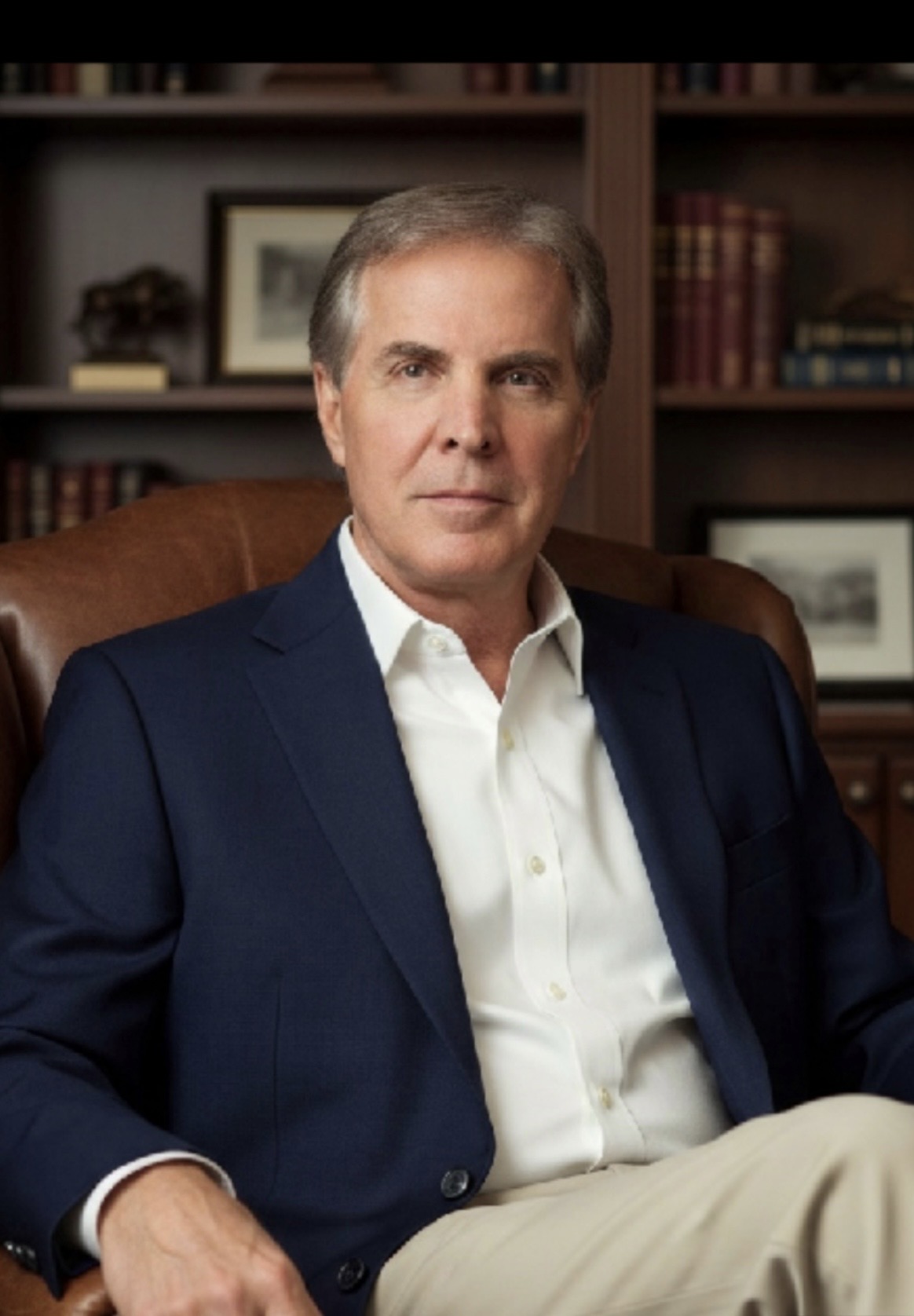
After more than four decades working across finance and technology, Gary Bassett has occupied several of those seats. He has analyzed companies as an investment banker, worked inside community banking, built and operated an enterprise software company, experienced an acquisition as a founder, and later returned to institutional finance.
Each experience, Bassett says, added another question to the way he evaluates an opportunity.
“Early in my career, I learned to ask whether the numbers supported the story,” Bassett said. “Later, after running a company myself, I learned to ask another question: What actually has to happen every day for those numbers to become real?”
Looking Beyond the Initial Opportunity
Bassett began his career in investment banking at J.P. Morgan in New York in 1979. His work included financial modeling, valuation, due diligence, and corporate debt transactions.
The experience taught him to examine the assumptions underneath a proposal rather than focusing only on its potential.
“An idea can sound very compelling until you start changing the assumptions behind it,” Bassett said. “What happens if growth is slower? What happens if the cost is higher? What has to go right for the plan to work? Those were useful questions to learn early.”
His subsequent experience in Texas banking brought those questions closer to individual businesses and communities.
Bassett became a founding shareholder of Lamar National Bank and served as president of the Lamar Bank Center. The work exposed him to commercial banking, lending, real estate, and the practical consequences of financial decisions.
That perspective became particularly important when Bassett moved from analyzing businesses to building one.
Building Microbank Changed the View From the Other Side
In 1985, Bassett founded Microbank Software Inc., an enterprise software company serving organizations in banking and construction.
Running the company introduced a different set of considerations. A business could not succeed on strategy alone. Products had to work. Customers had to see value in them. Employees had to execute. Problems that appeared small on paper could become much larger when they affected day-to-day operations.
“Building Microbank changed the way I looked at companies,” Bassett said. “When you have been responsible for the product, the customers, and the decisions that have to be made on Monday morning, you start asking different questions when you look at a business.”
Microbank eventually developed an international client base and was acquired by Citicorp. Bassett also participated in the integration that followed the acquisition.
That process added another layer to his experience. Evaluating whether two businesses make sense together is one challenge. Integrating people, systems, customers, and operating processes after a transaction is another.
“A transaction has a closing date, but the work of combining organizations does not end on that date,” Bassett said. “That experience made me pay much more attention to what has to happen after an agreement is signed.”
Returning to Investment Banking With an Operator’s Perspective
Bassett later spent nearly a decade as a managing director at Bank of America, working in investment banking, mergers and acquisitions, capital markets, and strategic advisory assignments.
He returned to institutional finance with experience he did not have earlier in his career: he had founded and operated a company himself.
Bassett says that experience made him more interested in what sits behind financial statements and projections.
“Numbers are important, but every number came from something that happened inside the business,” he said. “There are customers, employees, operating decisions, competitors, and unexpected problems behind those results. I became much more interested in understanding that part of the story.”
Experience Can Change the Questions
Today, Bassett is the founder, chairman, and managing partner of Dallas-based HP Capital Partners, which he established in 2012.
His career has crossed industries and roles, but Bassett does not view those experiences as separate chapters with no connection to one another.
Instead, each has influenced how he approaches the next opportunity.
For business leaders, he believes evaluating an opportunity requires more than asking how attractive the potential outcome appears. It also means examining assumptions, understanding how an organization actually operates, considering what could disrupt the plan, and determining whether the people and systems involved can execute it.
“Experience does not mean you automatically know the answer,” Bassett said. “If anything, it gives you more questions to ask. I think that is useful. The goal is not to make every opportunity look good or bad. It is to understand what would actually have to happen for it to work.”
About Gary Bassett
Gary Bassett is a Dallas, Texas-based finance and technology entrepreneur whose career has included investment banking, community banking, enterprise software, acquisitions, asset management, and philanthropy. He began his investment banking career at J.P. Morgan and later became a founding shareholder of Lamar National Bank. In 1985, he founded Microbank Software Inc., an enterprise software company Citicorp later acquired. Bassett subsequently served as a managing director at Bank of America. In 2012, he founded HP Capital Partners, where he serves as founder, chairman, and managing partner. Bassett holds a BBA in Finance and an MBA from Southern Methodist University.
About Author

Disclaimer: The views, suggestions, and opinions expressed here are the sole responsibility of the experts. No Digi Observer journalist was involved in the writing and production of this article.
Press Release
Nivia Fontanez Highlights the Often-Overlooked Role of Radiology Technologists in Patient Care

Bronx-based radiology technologist Nivia Fontanez discusses the communication, preparation, positioning, safety, and attention to detail behind medical imaging.
BRONX, N.Y, 26th September 2026, ZEX PR WIRE, When patients arrive for an X-ray or CT scan, much of their attention naturally goes to the imaging equipment. Behind the technology, however, is a radiology technologist who guides the patient through the process and performs the study according to established procedures.
Bronx-based radiology technologist Nivia Fontanez believes patients may not always see the human side of the profession.
Fontanez works with X-rays, CT scans, and bone density studies. She holds a New York State radiologic technologist license and is qualified to administer contrast for CT studies. Her experience has shown her that medical imaging requires technical knowledge, but operating equipment is only one part of the technologist’s responsibilities.
“Patients see the machine because that is the most obvious part of the room, but there is a lot happening around it,” Fontanez said. “We are thinking about positioning, instructions, safety, and whether the patient understands what we need them to do.”
Positioning Requires Working With the Individual Patient
Positioning is one example of a responsibility that can appear simple from the patient’s perspective. A technologist may ask someone to stand in a certain place, turn their body, move an arm, or remain still while an image is captured.
In practice, patients have different physical abilities and limitations. Some may be experiencing pain or have difficulty moving into a standard position. Technologists must follow appropriate procedures while recognizing what an individual patient can reasonably do.
“You can know the position you need, but you’re still working with a real person,” Fontanez said. “Someone may be uncomfortable or unable to move exactly the way you initially ask. You have to pay attention and communicate.”
That interaction is one reason Fontanez views adaptability as an important part of working in medical imaging. Technical requirements remain important, but patients cannot be approached as though everyone will respond to an instruction in exactly the same way.
Clear Communication Helps Patients Understand What Is Expected
Communication is another significant part of the technologist’s role. Instructions that sound simple to someone working in radiology every day may be unfamiliar to a patient.
Fontanez believes healthcare professionals must be aware of that difference.
“Something can be routine for me and completely new for the patient,” Fontanez said. “I try not to assume that someone understands an instruction just because I’ve given that same instruction many times before.”
That may mean explaining a position differently, letting someone know what will happen next, or checking that an instruction was understood before continuing.
Fontanez also notes that different patients want different amounts of information. Some have questions about each step, while others prefer to receive the necessary instructions and complete the study. Recognizing those differences is part of working directly with people.
“The goal isn’t to overwhelm someone with technical information,” Fontanez said. “It’s to communicate clearly enough that they understand what is expected of them during the study.”
Safety and Attention to Detail Remain Central to Medical Imaging
Many checks in medical imaging are not particularly visible to patients. Technologists follow established procedures for patient identification, the requested study, positioning, imaging practices, and applicable safety requirements.
Certain studies may involve additional considerations. Fontanez’s work with CT imaging, for example, includes her qualification to administer contrast for CT studies.
Fontanez believes one challenge of professional experience is making sure familiarity doesn’t become complacency.
“When you do something regularly, you naturally become more comfortable with it, and experience is important,” she said. “At the same time, you don’t want something being familiar to make you less attentive to the details.”
Efficiency matters in a busy healthcare environment, but Fontanez says there are also situations when taking additional time to verify information or explain an instruction is necessary.
Technology Does Not Replace the Human Side of Radiology
Medical imaging relies heavily on sophisticated equipment, but Fontanez sees the technologist as the connection between that technology and the patient.
Equipment cannot recognize that a patient is struggling to understand an instruction. It cannot independently account for the way an individual is experiencing an appointment or provide the human communication that may be needed during the process.
That responsibility remains with the professionals working directly with patients.
“Technical knowledge matters, but you’re never just working with equipment,” Fontanez said. “There is always a person on the other side of what you’re doing.”
For Fontanez, that is one of the defining aspects of being a radiology technologist. The final medical image may be what remains after the appointment, but producing it involves preparation, communication, positioning, safety procedures, and attention to the individual patient.
Those responsibilities may happen quietly in the background, but they are part of the work every day.
About Nivia Fontanez
Nivia Fontanez is a radiology technologist based in the Bronx, New York. She works in medical imaging with experience in X-ray, CT imaging, and bone density studies. Fontanez holds a New York State radiologic technologist license and is qualified to administer contrast for CT studies.
Fontanez earned an associate degree in computer science from SUNY Cobleskill before transitioning into healthcare. She later earned a bachelor’s degree in radiology from Concordia College in 2020 and has also been certified as a nursing assistant. In 2025, she received a Best Technologist Award for her work. Her professional interests include medical imaging, patient communication, continued learning, and the role radiology technologists play in patient care.
About Author
Disclaimer: The views, suggestions, and opinions expressed here are the sole responsibility of the experts. No Digi Observer journalist was involved in the writing and production of this article.
Press Release
Piya Saliba Releases Free Community Connection Checklist to Help People Build Stronger Relationships
California, USA, 26th September 2026, ZEX PR WIRE, Piya Saliba, CEO of Fountain Capital and an active supporter of the Nalin and Naseeb Foundation and the Cedars-Sinai NICU Family Council, has announced the release of a free Community Connection Checklist, a practical self-guided resource designed to help people become more intentional about supporting others in their everyday lives.
.jpg)
The checklist encourages users to evaluate how they spend their time, identify simple ways to contribute to their communities, and build consistent habits around volunteering, communication, and relationship-building.
Saliba created the resource after years of balancing business leadership with nonprofit involvement and community service.
“I’ve learned that leadership begins with paying attention to people,” Saliba said. “You don’t have to make a huge gesture to create positive change. Small actions repeated consistently often have the greatest impact.”
The resource reflects Saliba’s belief that meaningful relationships are built through preparation, consistency, and follow-through rather than one-time efforts.
“I don’t think relationships should become transactional,” she said. “Trust grows over time when people know you’ll continue showing up even after the immediate need has passed.”
The need for stronger community engagement continues to grow. Recent research highlights the personal and social cost of weak social connections:
-
The U.S. Surgeon General reported that social isolation increases the risk of premature death by amounts comparable to smoking up to 15 cigarettes per day.
-
Gallup has found that people with strong social connections report significantly higher levels of overall well-being than those who feel disconnected.
-
According to the U.S. Bureau of Labor Statistics, only about one in five Americans formally volunteers each year, leaving many nonprofit organizations struggling to meet growing community needs.
-
The American Psychological Association continues to report that stress remains one of the leading challenges affecting adults, with strong social support consistently identified as one of the most effective protective factors.
Saliba believes many people want to contribute but simply do not know where to begin.
“People often think they need more time, more money, or more experience before they can help,” she said. “Most communities simply need reliable people who are willing to listen, volunteer, and stay involved.”
The Community Connection Checklist includes:
-
A five-minute personal relationship self-audit
-
A weekly community involvement planner
-
A conversation starter guide for reconnecting with friends, neighbors, or colleagues
-
A volunteer opportunity planning worksheet
-
A monthly reflection page to track progress and consistency
Use This in 15 Minutes
The resource is designed to be completed quickly without any special training.
Minutes 1-3: Identify three people or groups you have not connected with recently.
Minutes 4-7: Complete the relationship self-audit and identify one area where you can be more consistent.
Minutes 8-11: Choose one practical community action, such as volunteering, checking in on a neighbor, supporting a local nonprofit, or mentoring someone.
Minutes 12-15: Schedule your first action on your calendar and identify one accountability partner who can encourage you to follow through.
“Leadership isn’t about reacting to everything,” Saliba said. “It’s about making thoughtful decisions and consistently acting on what matters most.”
Common Mistakes People Make
According to Saliba, many people unintentionally make community involvement more complicated than it needs to be. She recommends avoiding these common mistakes:
-
Waiting until life feels less busy before helping others
-
Assuming only large donations or major commitments make a difference
-
Treating volunteer work as a one-time event instead of an ongoing habit
-
Trying to solve every problem instead of helping where you can make a realistic contribution
-
Forgetting to build genuine relationships while focusing only on completing tasks
She believes consistency will always outperform occasional bursts of effort.
“I’ve learned that trust compounds over time,” Saliba said. “People remember how dependable you are long after they forget individual conversations.”
Call to Action
Download or recreate the Community Connection Checklist today. Set aside 15 uninterrupted minutes, complete the self-audit, choose one meaningful action you can take this week, and schedule it before the day ends. Then repeat the process once each month to build stronger relationships, support your community, and create a lasting habit of service.
To read more, visit the website here.
About the Community Connection Checklist
The Community Connection Checklist is a free practical resource inspired by Piya Saliba’s approach to leadership, philanthropy, and community engagement. Designed for everyday individuals, it helps people strengthen relationships, identify opportunities to support families and local organizations, and build sustainable habits of compassion through simple, actionable steps.
About Author
Disclaimer: The views, suggestions, and opinions expressed here are the sole responsibility of the experts. No Digi Observer journalist was involved in the writing and production of this article.
Gary Bassett Shares Lessons From 45 Years Across Finance and Technology
Nivia Fontanez Highlights the Often-Overlooked Role of Radiology Technologists in Patient Care
Piya Saliba Releases Free Community Connection Checklist to Help People Build Stronger Relationships
Benzinga Money Article Discusses How to Become Part of the 12% of Retirees Who Have Achieved the Recommended $550,000 Minimum Retirement Savings Threshold
Apu Apustaja Conquers New York with Lively Street Ads, Including Times Square Billboard
Bay Smokes Maintains Quality Amid Legislative Changes in the Hemp Industry


-
Press Release1 week ago
AJ Auto Expands Specialist Jaguar Land Rover Key Replacement Services for Drivers Facing Lost, Damaged and Replacement Key Problems
-
Press Release3 days ago
Thomas Berkley of Nexus Acquisition AI Introduces Smarter Client Acquisition Strategies for Service Businesses
-
Press Release5 days ago
Quoin Pharmaceuticals Announces FDA Fast Track Designation for QRX003 for the Treatment of Peeling Skin Syndrome
-
Press Release1 week ago
Car Plates Pro Expands Range of UK Number Plates With Custom, 3D, 4D and Road-Legal Options
-
Press Release2 days ago
Whimsical Halloween Wardrobe Ready: Arshiner Kids’ Outfits Light Up the Trick-or-Treat Adventure
-
Press Release1 day ago
Painted Brick Digital Named Among Expertise.com’s Top 8 Legal Marketing Companies in Scottsdale
-
Press Release1 day ago
DTC Group Joins AI Expo Thailand 2026 as Partner, Speaker
-
Press Release23 hours ago
Steve Glaros Named 2026 Honorary Mayor of East Hillsborough