
Press Release
At Forex Expo Dubai, Tommaso Caratelli Urges Traders to Choose Sustainability Over Easy Promises

Speaking at Forex Expo Dubai 2026, the world’s most-attended forex event, Italian entrepreneur and investor Tommaso Caratelli called on the trading industry to choose sustainability over easy promises. In a market trading $9.6 trillion a day, he argued, traders do not lack opportunity. They lack discipline, risk management and transparent automation. He presented Ascendra AI, a risk-first automated trading system that excludes martingale and grid strategies and publishes its live results on Myfxbook.
Italy, 12th Nov 2026 – Tommaso Caratelli, Italian founder, investor and speaker, took the stage at Forex Expo Dubai 2026 with a message aimed at both traders and the wider industry: online trading can only regain credibility if automation is built around risk management rather than around the appearance of profit.

Held on 22–23 September at the Dubai World Trade Centre, the ninth edition of Forex Expo Dubai broke its own Guinness World Records title for the largest attendance at a forex event, with 23,816 attendees, 270 exhibitors and 150 speakers across five stages. It was Caratelli’s second appearance at the event, following his talk earlier this year at Money Expo Colombia in Bogota.
A booming market, uneven outcomes
Caratelli opened by setting out the scale of the industry. According to the Bank for International Settlements’ 2025 Triennial Survey, global foreign exchange turnover averaged $9.6 trillion per day in April 2025, up 28% from 2022. Leading retail brokers also reported record figures for 2025: Plus500 posted $6.5 billion in total customer deposits, XTB surpassed 1.19 million active clients, and Interactive Brokers reached nearly $780 billion in client equity.
“Looking at all these ambitious people, I asked myself a simple question: if the opportunities are so massive, why isn’t everyone a millionaire?” said Caratelli. “Because the market alone doesn’t determine success. The person behind the decisions does: their skills, their beliefs, their clarity of purpose, and their ability to adapt when things get difficult. Most people don’t fail because they lack opportunities. They fail because they keep being the same person while expecting different results.”
“I left one boss and found a far more demanding one”
Caratelli drew on his own experience. Years ago he left a managerial role at a multinational company to pursue the freedom that trading is often said to offer.
“I had left one boss only to find a much more demanding one: the market,” he said. “Hours in front of charts, checking positions during dinner, waking up at night to see what gold was doing, holidays that weren’t holidays. I wasn’t free. I was on call 24 hours a day.”
The problem is not automation, but hidden risk
According to Caratelli, many traders who fail to find that freedom turn to Expert Advisors (automated trading programs), often with disappointing results. Many systems available online only work on the historical data they were optimised for, rely on high-risk techniques such as martingale or unprotected grid strategies, or display smooth equity curves for months while concealing risk that surfaces all at once.
“These systems are built to look infallible, not to be infallible,” he said. “The loss doesn’t disappear; it is simply postponed until the market presents the bill. The problem isn’t automation. It’s automating risk to sell a feeling of profit. If a system forces you to check it every hour because it might blow up, it hasn’t freed you. It has only changed the kind of anxiety you have.”
Ascendra AI: a risk-first approach
As an example of an alternative approach, Caratelli presented Ascendra AI, an automated trading system developed over several years with a team of developers. It is designed to operate over the medium to long term with controlled risk rather than to maximise short-term returns:
- each trade is a single position with predefined stop loss and take profit, targeting a 1:4 risk-to-reward ratio;
- risk per trade is set in advance, and position sizing adjusts dynamically to account equity;
- trailing stop and break-even mechanisms are built in to protect accrued gains;
- martingale and grid strategies are excluded by design.
The system identifies key price levels and places pending orders; if market conditions are not met, the order is cancelled and the analysis restarts. Live-account results are published on the independent tracking platform Myfxbook.
A call to the industry
“Trading can only become credible again if the industry chooses sustainability over easy promises,” Caratelli said. “Automation built with rigour, transparency and serious risk management is one of the most concrete ways to get there. For traders, it means discipline and the chance to take back their time. For the industry, it means rebuilding the trust of everyone who has been let down so far.”
He closed his talk with the idea that ran through it: “Real freedom isn’t having no boss. It’s having a system that doesn’t ask you to sacrifice your life in order to work. No matter how big the market becomes, your next level requires a new version of you.”
About Tommaso Caratelli
Tommaso Caratelli is an Italian entrepreneur, investor and international speaker. After a managerial career at a multinational company, he moved into the financial markets, where he focuses on algorithmic trading, risk management and financial innovation. In 2026 he spoke at Forex Expo Dubai, Money Expo Colombia and FX.world in Rome, advocating for sustainable, transparent automation in retail trading.
Media Contact
Organization: Tommaso Caratelli
Contact Person: Tommaso Caratelli
Website: https://www.youtube.com/@TommasoCaratelli-official
Email: Send Email
Country: Italy
Release id: 50658
View source version on King Newswire:
At Forex Expo Dubai, Tommaso Caratelli Urges Traders to Choose Sustainability Over Easy Promises
About Author

Disclaimer: The views, suggestions, and opinions expressed here are the sole responsibility of the experts. No Digi Observer journalist was involved in the writing and production of this article.

Carmel, IN 46032, United States, 12th Nov 2026 – XTJ CNC, a long-standing CNC machining manufacturer, has announced that it is directing its precision machining services to semiconductor equipment manufacturers. The service covers components for chip fabrication equipment and tooling, from prototypes to production volumes. Parts can be delivered in three to five days, the company said.

XTJ CNC also provides CNC machined parts (link pending) for other industries, and the semiconductor service draws on the same machine shop. The company said the work is carried out on CNC machines fitted with air-bearing spindles and diamond-tipped cutting tools. These are used where flatness and surface quality matter more than they do in general machining.
What Is New for Chip Equipment Makers
Semiconductor fabs make microchips on wafers, and the equipment that handles those wafers needs close control of dimensions and cleanliness. XTJ CNC has organised its offer around three groups of parts. Wafer processing components include wafer chucks and carriers, with flat surfaces and precisely drilled holes for holding wafers during processing.
The second group covers test sockets and heat sinks, which serve testing and heat management. The third is carriers and molds for lithography and polishing equipment.

“Semiconductor equipment makers send drawings where flatness, cleanliness and material handling all matter at once,” said Hafiz Pan, Director of Operations at XTJ CNC. “Directing the service to this sector means those buyers can bring all three requirements to one machine shop, from a first prototype through to production volumes.”
What It Means for Buyers
The service is built around the materials the sector works with. XTJ CNC machines silicon, silicon carbide and gallium arsenide, and each places different demands on the machine shop. Silicon is the most common base material for semiconductor devices. Gallium arsenide is used in high-frequency applications and is brittle, so it needs careful handling. Silicon carbide is used in high-power applications and demands advanced machining techniques.
Cleanliness is part of the offer alongside the cutting itself. XTJ CNC states that semiconductor parts are produced in ISO-classified cleanrooms to limit contamination, and that HEPA filtration is used during machining. Brittle crystalline materials can chip under cutting force, and fine particles can settle on a finished surface. Handling and cleaning steps therefore form part of the process, alongside the machining.

For a buyer, this means one supplier covers the cutting, the handling and the cleanliness controls for parts that go into fab equipment. The air-bearing spindles and diamond-tipped tools support the flatness and surface quality that the work calls for, while the cleanroom and filtration steps address contamination.
How the Service Works in Practice
The delivery window covers prototype work and production runs alike. A buyer developing new fab equipment and a buyer ordering production quantities of tooling components can therefore use the same service. According to the company, its quality control includes inspections at every stage of the work. Buyers that need measurement data would confirm those details when they request a quote.
Quote requests are answered within 24 hours, according to XTJ CNC. Semiconductor customers often specify material, flatness and finish on the drawing, and these are the points an engineering review would normally confirm first. For a project of this kind, agreeing those points early gives both sides a clear basis before production is scheduled.
Looking Ahead
XTJ CNC expects requests from the semiconductor sector to differ by material, part type and quantity. It plans to review each drawing on its own terms before production is scheduled, so that a small prototype order and a larger production order receive the same attention.
“Requests from this sector will vary a great deal, so each drawing will be reviewed before any material is cut,” said Pan. “The aim is to keep the inspection and cleanliness steps the same whatever the order size.”
About XTJ CNC
XTJ CNC, founded in 2005 and now employs more than 300 engineers, technicians and quality inspectors. The company provides precision CNC machining and sheet metal fabrication for customers in a range of industries.
For additional information about semiconductor CNC precision machining and related industry developments, contact XTJ CNC by email at hafiz@cncpartsxtj.com. The company is located at 506 S Rangeline Rd, Carmel, IN 46032, USA.
Media Contact
Organization: XTJ CNC
Contact Person: Hafiz Pan
Website: http://xtjcnc.com/
Email: Send Email
Contact Number: +12185277419
Address: 506 S Rangeline Rd
City: Carmel
State: IN 46032
Country: United States
Release id: 50681
View source version on King Newswire:
XTJ CNC Targets Semiconductor Manufacturers With Precision CNC Machining
About Author
Disclaimer: The views, suggestions, and opinions expressed here are the sole responsibility of the experts. No Digi Observer journalist was involved in the writing and production of this article.
Medley, FL 33178, United States, 12th Nov 2026 – Cloom Tech, a leading manufacturer of custom cable assemblies and wire harnesses, has announced that it is advancing its JST cable assembly manufacturing for OEM buyers. According to the company, customers can choose to have these assemblies produced at its factory in Hebei, China, or at its factory in Cavite, the Philippines. Orders start from a drawing or specification sheet submitted with a quote request.
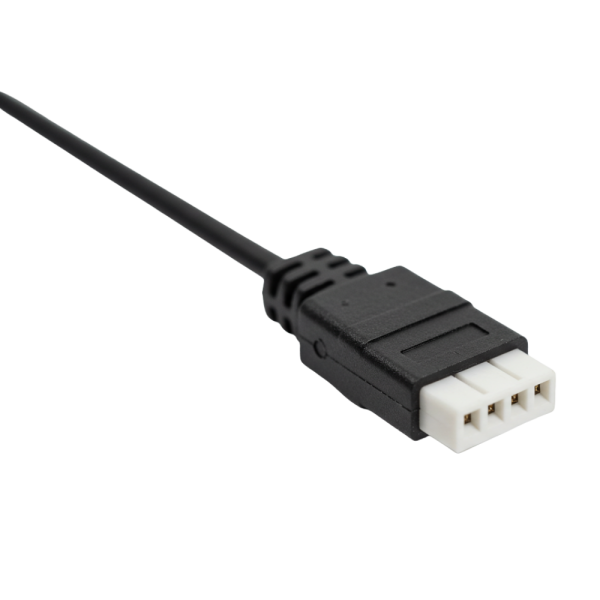
The assemblies are built around JST connector series, and the work covers wire preparation, terminal crimping, connector assembly and the integration of finished assemblies into cable or wire harness builds. The company said it works with electrical, electronic and automotive wire specifications.
What Is New for OEM Buyers
JST connectors are small board and wire connectors that appear in many compact electronic products. Each assembly is usually specified by series, pin count and wire type, and Cloom Tech builds them into a broad range of cable types, from coaxial and flat cable to waterproof and extension cable.
The company states that samples can be confirmed with the customer before full production begins. Flexible minimum order quantities apply depending on complexity, and prototype quantities can start from as few as 50 pieces, according to the company.
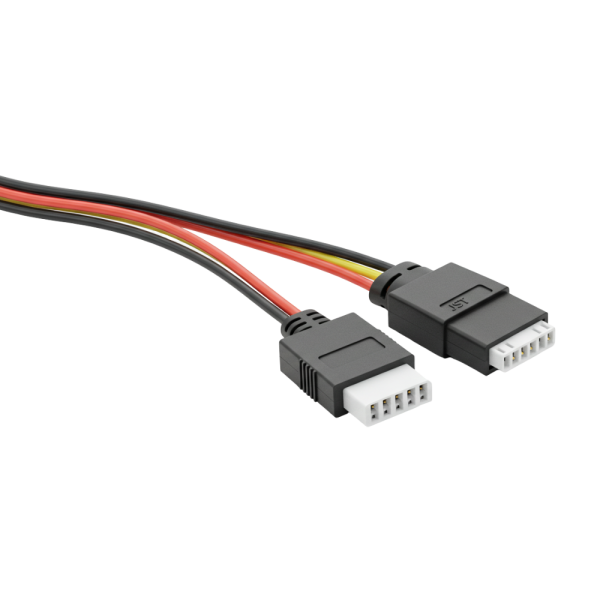
“JST assemblies are small, but the series, the pin count and the wire all have to match the drawing exactly,” said Ivy Zhao, spokesperson for Cloom Tech. “A sample confirmation before production gives the customer a chance to check that match. For an OEM buyer, that means an assembly can be approved on a real sample before the full order is built, and that is why we are putting this process forward.”
How Assemblies Are Made and Tested
Wire is prepared on automated stripping and cutting machines, the company said. Preparation services include insulation removal to specified lengths, end twisting and tinning. Terminals are then crimped on automatic double end crimping machines, with semi-automatic equipment used alongside them.
Testing is carried out against a documented routine. Cloom Tech lists labeling verification, broken wire detection, insulation resistance, connector insertion and extraction force and verification of full electrical function among its checks. Environmental testing, covering temperature cycling, humidity exposure and vibration, is available on request. The company states that test data is documented and provided with delivery.
Inspection is carried out by engineers from departments separate from harness production, the company says. The people who build an assembly are therefore not the people who sign it off, which gives buyers an independent check on each order.
Ordering and Applications
Cloom Tech states that it returns quotes within 12 hours of receiving a drawing or specification. Customer support includes progress reporting and coordination of packaging and delivery, with contact available by phone and email. For a buyer comparing suppliers, the quoting window and the progress reporting set out what to expect between sending a drawing and receiving finished assemblies.
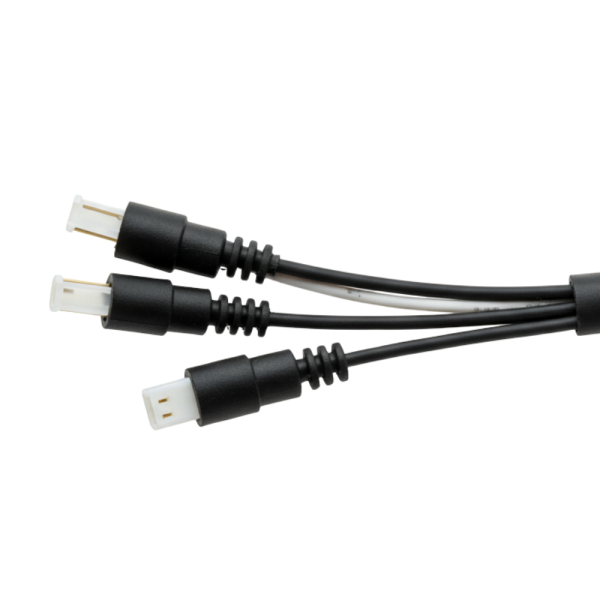
The company identifies several fields in which JST assemblies are used. In industrial automation they connect sensor networks and control systems, and in consumer electronics they carry internal power and display connections. Robotics applications include sensor feedback and motor control, while power and energy uses include battery management and electrical distribution.
Looking Ahead
Cloom Tech said it expects JST assemblies to remain part of its OEM work. It plans to keep the same sample confirmation and test documentation steps on each order, whatever the size of the batch.
“Buyers send drawings with different pin counts and different wire sizes, so the steps stay the same for each one,” said Ivy Zhao, spokesperson for Cloom Tech. “That means the same checks and the same test records whatever the quantity, and it is how we expect to keep OEM buyers confident as their projects change.”
About Cloom Tech
Cloom Tech makes custom wire harnesses and cable assemblies for industries that include automotive, electronics, medical devices and agricultural equipment. The company covers prototyping, production, assembly, testing and delivery.
For additional information about JST cable assembly manufacturer and related industry developments, contact Cloom Tech at 9251 NW 112th Ave, Medley, FL 33178, USA. Inquiries regarding the company’s products, services and drawing review can be directed to +1 863 434 8447 or by email at sales@cloomtech.com.
Media Contact
Organization: Cloom Tech
Contact Person: Ivy Zhao
Website: https://cloomtech.com/
Email: Send Email
Contact Number: +18634348447
Address: 9251 NW 112th Ave
City: Medley
State: FL 33178
Country: United States
Release id: 50680
View source version on King Newswire:
Cloom Tech Advances JST Cable Assembly Manufacturing for OEM Buyers
About Author
Disclaimer: The views, suggestions, and opinions expressed here are the sole responsibility of the experts. No Digi Observer journalist was involved in the writing and production of this article.
A closer look at the opening price, early sale estimates and what determines the outcome at expiry.
Canada, 11th Nov 2026, Grand Newswire –
The most useful part of HiBT’s Event Contracts appears after the order is placed. On eligible positions, the app lets the holder see an estimate for selling before expiry. That can be useful when a Bitcoin move starts to reverse with time still left on the contract. The limitation is easy to miss: the estimate tells the holder what an early exit might return at that moment, and it may be less than the amount they put in.
The easiest way to misread the position screen is to treat its two USDT amounts as interchangeable. The potential payout describes what the contract may pay if the selected outcome is correct at expiry. The early sale estimate describes what closing the position could return before expiry. A trader can be right about the direction so far and still face a choice between accepting the amount currently available and waiting for a settlement that has yet to be determined.
The order screen is easy to read
A HiBT Event Contract takes a view on whether a selected price index will finish above or below its opening level at a specified expiry. The contract guide describes the two directions as Call and Put. A Call expresses a view that the index will finish higher; a Put expresses a view that it will finish lower. The order screen shows the duration, the amount committed and the potential payout.
The opening level is the number against which the expiry price is judged. It matters more to the result than the day’s opening price or any other price a trader happens to be following. Someone can correctly say that Bitcoin is up on the day and still have a losing Call if the index finishes below the opening level of that particular contract.
The opening price takes a closer look
HiBT’s execution notice says the exchange introduced a one-second delay between submission and execution on April 13, 2026. Under the published rule, the index at execution determines the opening price. The price visible when the user taps to submit is a reference figure and can differ from the price ultimately recorded on the order.
During a fast price move, even that short interval can change the reference level the contract must finish above or below. The recorded opening price is the figure that matters at settlement.
Early selling is the useful difference
The exchange’s more recent trading guide describes early selling as an available exit route. In the app, the option is labeled Sell Event Position. When it is available on an open contract, the confirmation screen shows estimated proceeds. That amount can change as the underlying price moves and the time left on the contract decreases.
A trader might look at the estimate after the market has moved in the expected direction. There is still a reason to look again if the market turns: the original view may no longer hold, and the amount available for an early sale may have changed as well. A changing estimate is useful precisely because it can be checked against the original amount. It also means a figure seen earlier should not be treated as the proceeds of a sale that has yet to happen.
The order amount is a useful comparison. If the sale proceeds exceed what the trader put in, a completed sale can realize a gain. If the proceeds are smaller, it can realize a loss. The price direction alone does not tell the trader which of those cases applies. What matters for that calculation is the amount actually received on the sale.
What the settlement record shows
For a contract held to expiry, the closing index is compared with the recorded opening level under the applicable rules. The market may have crossed that level several times during the contract. Those crossings explain why someone might have reconsidered the position, but they are not the settlement result. The opening price, expiry time and closing price are the figures that let the trader reconstruct the outcome afterward.
For a contract sold early, the relevant record is the completed sale. A subsequent move that would have favored the trader does not add to the proceeds. Nor does a later reversal reopen the position. Keeping those two records separate makes it possible to understand an outcome even when the closing price on a chart looks at odds with the amount received.
Recognition at the Global Onchain Awards
In October 2026, HiBT was named Best Global Event Contracts Exchange at the Global Onchain Awards, held during the Global Onchain Summit in Singapore. The organizer’s winners announcement reported more than 100 nominations across over 20 categories for the awards program as a whole. Those totals describe the program, rather than nominations or votes received by HiBT.

HiBT’s Global Onchain Awards 2026 winner graphic. Source: CoinGape.
The published judging criteria covered market coverage, contract variety and the reliability of market resolution. The award was for the Event Contracts offering as a whole.
HiBT also offers an Event Contracts API for approved external platforms. The API serves a separate purpose from early selling: it lets approved partners connect their own systems to the product. For individual traders, the more immediate change is on the position screen, where an eligible contract can be closed before settlement.
The trade off on short contracts
The clearest part of the design is the choice at entry. A direction, a duration and a conditional payout give the order a defined shape. The early sale estimate adds a decision that makes sense for a short contract: if the trader has changed their mind, they can see what leaving would mean in USDT. That is more useful than seeing a countdown alone.
The harder part is keeping track of which number belongs to which moment. The index when the order executes can differ from the one visible at submission. The early sale estimate can change while the contract is open. The potential payout stays conditional until the outcome is known. A glance at the underlying chart cannot substitute for the order record, and a favorable move cannot tell someone how much an exit would return.
Early selling gives the holder a way to act on a change of view. How useful it is depends on whether the option is available on the position and what the sale would return. For a contract with little time left, those details matter more than the direction of the last price move.
On mobile, that decision happens on the open position screen. The iPhone app for the HiBT platform is listed as Global HibtHub on the Apple App Store. HiBT’s Android app is available on Google Play.


Global HibtHub store previews. Source: Apple App Store.
Media Contact
Organization: HiBT
Contact
Person: HiBT
Website:
https://www.hibt.com/
Email:
support@hibt.com
Country:Canada
The post How HiBT Event Contracts Work From Entry to Settlement
appeared first on Grand Newswire.
It is provided by a third-party content provider. Grand Newswire makes no
warranties or representations in connection with it.
About Author
Disclaimer: The views, suggestions, and opinions expressed here are the sole responsibility of the experts. No Digi Observer journalist was involved in the writing and production of this article.
XTJ CNC Targets Semiconductor Manufacturers With Precision CNC Machining
Cloom Tech Advances JST Cable Assembly Manufacturing for OEM Buyers
At Forex Expo Dubai, Tommaso Caratelli Urges Traders to Choose Sustainability Over Easy Promises
Benzinga Money Article Discusses How to Become Part of the 12% of Retirees Who Have Achieved the Recommended $550,000 Minimum Retirement Savings Threshold
Apu Apustaja Conquers New York with Lively Street Ads, Including Times Square Billboard
Bay Smokes Maintains Quality Amid Legislative Changes in the Hemp Industry


-
Press Release5 days ago
ElectionBuddy Announces New Voting Features and Platform Enhancements
-
Press Release5 days ago
Create a Lasting Legacy Ferdinand J. Ruano Arroyo’s Newly Released Book Helps Everyday Investors Build Long-Term Wealth
-
Press Release6 days ago
Born in the Exam Room, a Korean Skincare Brand Meets the World in Hong Kong
-
Press Release6 days ago
ALLCOM Smart Tumbler to Launch on Kickstarter, Bringing Temperature Control to Everyday Drinks
-
Press Release6 days ago
Puttist to Launch Putt-Pool on Kickstarter, Bringing the Fun of Pool to Golf Putting
-
Press Release5 days ago
Chinese and foreign cultural & media figures visited China Auto Valley
-
Press Release5 days ago
Holiday Party Hair: Bon Bon Hair Salon & Spa of Scottsdale Gets Guests Event-Ready
-
Press Release5 days ago
Soult Introduces the World’s First Secure Digital Life Vault in the UAE