
Press Release
Zild Protocol To Be Launched On World’s Fifth-Largest Exchange Bittrex Before Going Live

Moscow, Russia–ZILD Lending Protocol, which is a suite of decentralized protocols that support all sorts of ERC20 tokens lending, borrowing, and debt settlement capabilities, is about to launch on Bittrex. At present, there are more than 20,000 users on chain addresses who own the token. The lending protocol, which a prominent player in Decentralized Financial sector (DeFi), is slated to be launched on Bittrex, the world’s fifth-largest exchange, on May 13.
Zild Lending Protocol, which is due to go live on May 19, has been double-checked by the US audit firm Certik and the Chinese audit firm SlowMist. Zild, which has a strong community consensus, is expected to have more than 100,000 participants in its Zild Lending business after its launch. Zild has the basic features of the current mainstream DeFi money markets protocol. At the same time, Zild has introduced a new model in terms of the scope of asset support and risk prevention, which makes it more widely applicable and safe.
“At present, the existing money market protocols all adopt the Compound Single Pool model. Assets in the same pool can be each other’s collateral assets and borrowing assets. In this model, fluctuations in the value of any one asset spread to other assets in the pool. For example, a user deposits $10 million worth of asset A as collateral, and borrows $6 million worth of asset B. When the market price of A falls sharply to $4 million, the borrower who borrowed Asset B will choose not to repay the debt and simply give up the collateral asset. In this case, all users who deposit in Asset B will suffer a loss of $2 million”, said a core team member of Zild.
Unlike the Compound single pool model, Zild uses multiple pools. In multiple pools, the assets of different pools are insulated from each other. After depositing assets in Pool A, the user can only borrow out the assets supported by those from Pool A. For those assets with large market flow and relatively stable value, a pool of basic assets with large scale can be formed. For those assets whose volatility is huge or have not experienced sufficient value verification, a pool with small initial asset size can also be established by flexibly setting indicators such as collateral rate and liquidation penalty rate. The Zild protocol provides the possibility for long tail assets to enter the DeFi money markets field.
With the Zild protocol, each pool in each direction will optimize the interest rate with self-definition by the pool creator. The parameters for increasing interest rates will be configurable for each pool. This will allow for the creation of thousands of lending pools for any ERC20 token, creating the ability to go margin short on a large variety of tokens.
Over the past year or so, with the explosive growth of the Defi industry, more and more crypto assets have started to enter the DeFi space. Lending, swapping, and stablecoin are considered the three fundamental applications supporting the DeFi industry. Compared to the constant iteration of stablecoin on the algorithmic stablecoin model and the continuous innovation of AMM methodology on the DEXs, there were few significant innovations in the money markets in the past period of time. The launch of Zild may change that.
“Users can get liquidity without selling their cryoto. They won’t be forced to sell out their cryptocurrency and they can get enough liquidity for their business overheads and other expenses. Besides that, they can also yield on their crypto to get more liquidity. Using the Zild protocol is quite easy and simple. Users can simply earn interest on their crypto in a completely automated and non-custodial way”, said one of the development team members.
“They can also use their reputation to reduce collateral and avail of the best terms. In other words, they can simply act at their discretion in the decentralized financial market, just as they do in the traditional financial world, getting access to personal loans and overdrafts. As the protocol follows the zero-knowledge proof model, users won’t have to worry about disclosure of their identity to third parties. Not only that, they can also build their decentralized applications and other decentralized software products and earn money from their innovations. Users can easily scale their wallets and liquidity proofs and other kinds of decentralized exchanges on Zild. Zild was designed for rapid, effective and secure development of decentralized finance applications”, he added.
At present, the company offers six apps and solutions. ZILD.api is the interface for off-chain applications, designed for blockchain interactions. ZILD.wallet is the digital assets storage designed for the web and mobile. There’s also ZILD.rewards, which helps users to implement tokenized points and reward systems for loyalty programs. ZILD.influencers is another solution that helps users to rope in social media influencers to promote their dApps. ZILD.dex is the app token exchange developed by the team. The last one, ZILD-P2P, helps users to exchange government currencies for tokens or cryptocurrencies.
The concept of the protocol was first set afloat in early 2020. In 2021 first quarter, ZILD Beta was already launched on Ethereum main-net and the security audit was also done during this period. Zild developers are all set to release Version 2.0 of the protocol during 2021 second quarter, besides having plans to launch reputation-based lending via Xild. The company also has plans to start a referral program and launch Zild governance mechanism. The ultimate goal is to expand Zild protocol beyond the Ethereum network.
About the Company
The mission of Zild is to enable the sustainable creation of individual and collective non-custodial wealth through the decentralized financial technologies.
To know more, visit https://zild.finance/#/
Contact:
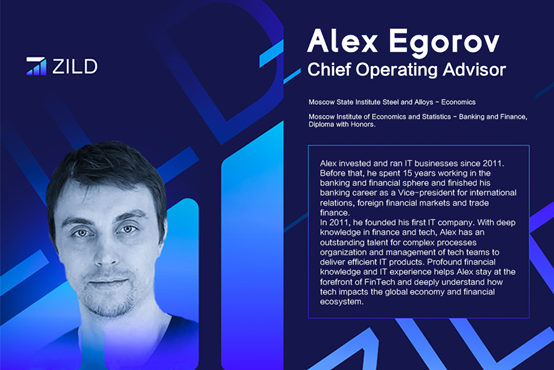
Alex Egorov
hello@zild.finance
Website: https://zild.finance/
About Author

Disclaimer: The views, suggestions, and opinions expressed here are the sole responsibility of the experts. No Digi Observer journalist was involved in the writing and production of this article.

Press Release
Ronel Lamour Junior Explains What the Shift Toward Smart HVAC Equipment Means for South Florida Homeowners

Miami, FL, November 2nd, 2026, ZEX PR WIRE,
Fort Lauderdale HVAC technician Ronel Lamour Junior says new equipment is changing what a service call looks like, and he tells homeowners what that means before they buy.
A Shift Technicians Are Seeing in the Field
Ronel Lamour Junior has spent about 16 years working on air conditioning and heating systems across South Florida. Over that time, he has watched the equipment itself change as much as the weather it has to survive.
Variable-speed compressors, smart thermostats, and connected heat pumps show up in more homes every cooling season. Lamour, a Senior HVAC Service Technician, says the shift is real, but it does not change the basics of how a system should be diagnosed.
“The equipment is smarter,” he says. “The troubleshooting still has to start with the same questions: what is the system actually doing, and why.”
What Variable-Speed Systems Change
Older single-speed units run at one output level. Variable-speed systems adjust their output based on demand, which can mean better humidity control and steadier temperatures in a Florida home.
Lamour tells clients that variable-speed equipment can be a genuine improvement, especially in houses that struggle with humidity between full cooling cycles. But he is careful not to oversell it.
“It’s a different tool for a different job,” he says. “It solves certain problems well. It doesn’t solve a duct leak or a sizing mistake, because those are separate issues.”
Smart Thermostats: A Tool, Not a Fix
Smart thermostats are one of the most visible parts of the shift. Lamour uses manufacturer apps and thermostat platforms regularly in his own work, and he thinks they’re useful when paired with a system that is actually working correctly.
His caution is about what a thermostat can’t do. A smart thermostat can show a homeowner that a system is running longer than usual. It cannot tell them why.
“People sometimes think the thermostat is diagnosing the problem,” Lamour says. “It’s reporting information. Somebody still has to interpret it.”
Heat Pumps Gaining Ground
Heat pumps have become more common in homes that want one system for both heating and cooling, even in a climate where heating demand is light. Lamour has worked on a growing number of them in recent years.
He says heat pumps bring their own troubleshooting logic, separate from a standard air conditioner, particularly around defrost cycles and reversing valves. Technicians who are used to cooling-only systems sometimes miss things because they’re applying the wrong mental checklist.
“A heat pump isn’t just an AC that also heats,” he says. “It has its own failure points. You have to know what you’re looking at.”
What He Tells Clients to Ask
When a homeowner is deciding whether to upgrade to newer equipment, Lamour says the conversation should start with the house, not the brochure.
He tells clients to ask what problem they are actually trying to solve. A noisy system, high humidity, uneven temperatures between rooms, and high utility bills are different problems with different answers, and not all of them require new equipment.
He also tells people to ask whether their ductwork and insulation can support the upgrade they’re considering. New equipment installed into an old duct system, he says, often underperforms no matter how advanced it is.
“The equipment gets smarter every year,” Lamour says. “The house it’s going into usually hasn’t changed. That’s where I spend most of my time looking.”
About Ronel Lamour Junior
Ronel Lamour Junior is a Senior HVAC Service Technician based in Fort Lauderdale, Florida, with approximately 16 years of experience in residential and light-commercial heating, ventilation, air conditioning, and refrigeration work. He holds an EPA Section 608 Universal Certification and has spent his career focused on accurate diagnosis, honest recommendations, and mentoring newer technicians. He is working toward opening his own HVAC business in South Florida.
About Author

Disclaimer: The views, suggestions, and opinions expressed here are the sole responsibility of the experts. No Digi Observer journalist was involved in the writing and production of this article.
Mount Holly, NJ, November 2nd, 2026, ZEX PR WIRE,
Habib Lawal says his work as a real estate agent centers on helping buyers understand their options before a financial setback becomes a foreclosure.
A Service Built From Experience
Habib Lawal works as a real estate agent in addition to his work developing property. The agent side of his business came out of something personal: his family lost their home to foreclosure in 2008, before they immigrated to the United States in 2009. Several tenants had stopped paying rent, and his parents did not have a clear picture of what options existed to deal with it. They started over with three children and little else.
That history shapes how Lawal approaches clients today. He treats the agent relationship as a chance to walk people through decisions his own parents did not have the information to make.
What the Work Actually Looks Like
For Lawal, being a real estate agent is not only about matching buyers to listings. It means spending time on the parts of a transaction that often get rushed: what a mortgage costs over time, what happens if a tenant stops paying, and what a seller’s real options are before a lender gets involved.
“A lot of people make real estate decisions the same way my parents did, without knowing what else is out there,” Lawal says. “I’d rather spend an extra hour explaining the numbers than watch someone end up where my family did.”
He works with buyers at different stages, from first-time purchasers to people looking at investment property. The questions he raises tend to be practical: What is the actual monthly obligation once taxes and insurance are included? What is the plan if a renter misses payments for two or three months in a row? What happens to equity if the property has to be sold quickly?
Where Real Estate and Development Meet
Lawal’s agent work sits alongside his development projects, which he has built in Mount Holly, New Jersey, and other communities. The two sides inform each other. As a developer, he sees how neighborhoods change property by property. As an agent, he sees how individual families make the decisions that either build equity or put them at risk.
That dual view is part of why financial literacy comes up so often in how he talks about his agent work. He is not selling a product so much as trying to help others avoid the gap his own family fell into. For buyers weighing a first purchase, or owners of rental property trying to plan ahead, Lawal treats the conversation as the actual service, not a formality before closing.
Why He Keeps the Two Roles Separate but Connected
Lawal entered the real estate industry in 2019 while continuing to work in corporate technology, gaining experience with a leading financial services firm before moving into a product management role at a global consulting and technology company. Initially pursuing real estate as a personal investment strategy, he gradually expanded his involvement into property development and real estate sales.
That background gives him a particular way of looking at a deal. Years spent solving problems in technology and business taught him to ask what a client needs before proposing a solution, rather than starting with the listing or the property. He brings the same habit to a first conversation with a buyer: understand the full financial picture first, then talk about the property.
He is clear that this is not a formal program or a published checklist. It is simply the way he works a transaction, shaped by what his family went through and by nearly a decade of experience in both corporate technology and real estate.
About Habib Lawal
Habib O. Lawal is a real estate agent, developer, and product manager, based in Mount Holly, New Jersey. He holds a bachelor of science in electrical engineering and a master’s degree in cybersecurity from the University of Rhode Island. He began investing in real estate in 2019. He also works to grow a professional networking business built around connecting people across industries.
About Author
Disclaimer: The views, suggestions, and opinions expressed here are the sole responsibility of the experts. No Digi Observer journalist was involved in the writing and production of this article.
Hong Kong S.A.R., 2nd Nov 2026 – Hong Kong audiences scroll fast and judge faster. On the MTR, between meetings in Central, before a website ever loads — your brand has only a few seconds to earn attention. That is why companies from Cathay Pacific and Uniqlo to local NGOs keep investing in video. But after years of producing campaigns across this city, we can tell you the difference between video that converts and video that gets skipped is rarely the camera. It is the thinking before it.
As a video production Hong Kong team working with global brands, government departments, and non-profits alike, here is what we see separating the two.
The Hong Kong difference
This market is genuinely bilingual and visually sophisticated. A campaign often has to land in Cantonese, English, and Mandarin as one flexible concept — not three afterthoughts. Script, casting, on-screen text, and pacing must be designed for that from day one. The scroll speed is brutal too: the first frame matters more than the last thirty, so a pretty montage will always lose to one arresting image and a bold claim. And because Hong Kong viewers grew up on world-class advertising, work that would pass elsewhere reads as cheap here — a standard that applies equally to a TV commercial and a 15-second Reel.
Strategy before cameras
The most expensive mistake happens pre-shoot: deciding you ‘need a video’ before deciding what it is for. One audience, one message, one job per video — everything else is craft in service of that decision. A working process looks like this: a discovery call to pin down the objective; concept development with storyboards or a prototype video, the cheapest insurance in the whole process; a tightly planned shoot; professional editing, colour grading, and sound design; then deployment — vertical cut-downs, 15-second pre-rolls, subtitles for silent autoplay. Skip a stage and it shows.
And not every message needs a film crew. For explainers and multilingual campaigns, animation and motion graphics are often the smarter spend — easier to localise, cheaper to update, longer-lived.
Choosing the right partner
Look past the showreel. Does the portfolio span television commercials, online brand films, and NGO work? Do recognisable brands come back? Can the team handle strategy and post-production in-house, not just filming? Our Mastercard x OpenRice television commercial, for example, ran the full journey — creative development, directing, colour grading, sound design — the same end-to-end process we bring to every client, whatever the budget.
The bottom line: in a city that scrolls this fast, video is not optional — but an unfocused video is an expensive way to be ignored. Get the strategy right first, and ninety seconds can do what a year of static posts cannot.
About Good Good Creative
Good Good Creative is a Hong Kong video production house serving clients from Cathay Pacific and Uniqlo to NGOs and government departments. The team covers every stage — pre-production, production, post-production, and animation — bringing a storyteller’s eye and a marketer’s discipline to every project.
Media Contact
Organization: trustbanana
Contact Person: Sher
Website: https://trustbanana.com
Email: Send Email
Country: Hong Kong S.A.R.
Release id: 50409
View source version on King Newswire:
Video Production Hong Kong: Why Strategy Beats Budget Every Time
About Author
Disclaimer: The views, suggestions, and opinions expressed here are the sole responsibility of the experts. No Digi Observer journalist was involved in the writing and production of this article.
Habib Lawal Spotlights Real Estate Agent Work Rooted in Financial Education
Ronel Lamour Junior Explains What the Shift Toward Smart HVAC Equipment Means for South Florida Homeowners
Video Production Hong Kong: Why Strategy Beats Budget Every Time
Benzinga Money Article Discusses How to Become Part of the 12% of Retirees Who Have Achieved the Recommended $550,000 Minimum Retirement Savings Threshold
Apu Apustaja Conquers New York with Lively Street Ads, Including Times Square Billboard
Bay Smokes Maintains Quality Amid Legislative Changes in the Hemp Industry


-
Press Release2 days ago
A Better Life Through Ai Wheel Mobility Scooter 20 inch Boarding Luggage: Airwheel Smart Carry on hand Luxury Cabin Suitcase Shine at the 140th Canton Fair
-
Press Release3 days ago
AIXONA Announces AI-Powered Transaction Optimization and Expansion into European and Canadian Markets
-
Press Release2 days ago
Soika Labs Launches Mockingjay Network, an Agentic AI Operating System That Lets Businesses Command Their Own AI Workforce
-
Press Release7 days ago
KodyGas Boiler Repair Adds F-Gas Certified Air Conditioning Installation and Servicing Across South Yorkshire
-
Press Release4 days ago
Alex Cecola Highlights Why Investment Process Matters More Than Market Prediction for Long- Term Investors
-
Press Release5 days ago
FinSight Ventures Launches $100 Million Physical AI Index Fund
-
Press Release2 days ago
Remittances to Uzbekistan Reach $18.9bn as OSON X Opens a UAE Money App for Central Asians
-
Press Release2 days ago
Aussie Vape Trend Scales Wholesale Supply Network Across Australia