
Press Release
Why Rotary Tools Ruin Fine Details And What to Use Instead for Precision Sanding

How a design-driven reciprocating sander is replacing rotary tools for makers who refuse to compromise on finish quality.
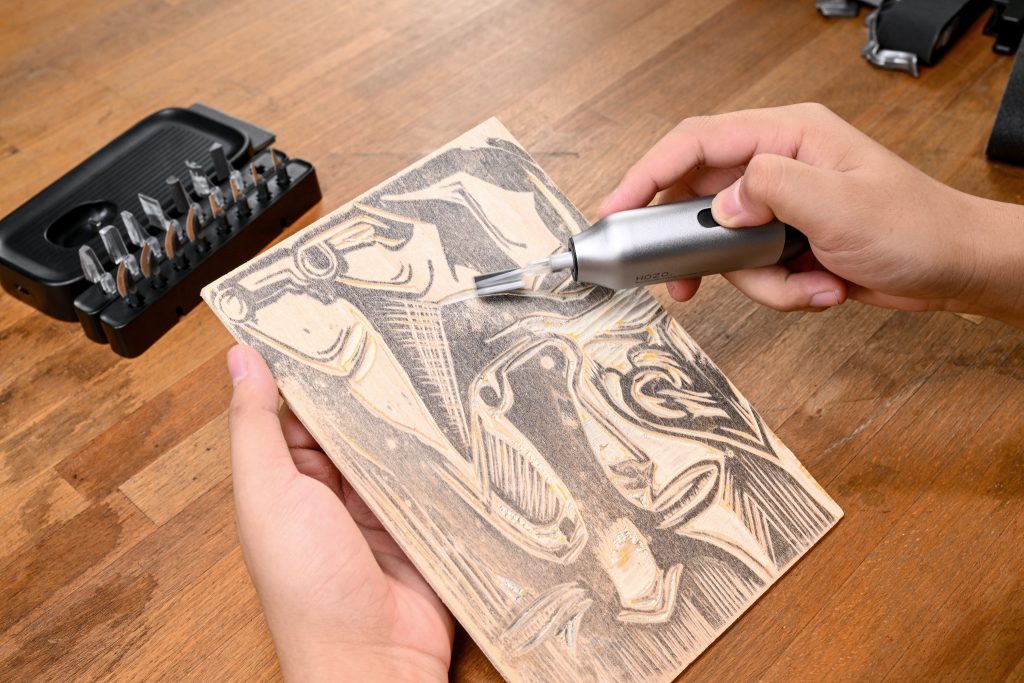
Hong Kong, China- Makers working on scale models, 3D prints, and fine woodworking can encounter challenges during the finishing stage. A rotary tool used for cleanup can quickly affect surface quality, resulting in melted resin edges, gouged panel lines, or uneven wood grain.
Within these communities, such issues are often attributed to the mechanics of the tools themselves rather than user technique. Rotary woodworking tools and other rotary-based precision tools rely on high-speed spinning abrasives that can generate heat and reduce control on small, delicate surfaces. Even with careful handling, this can make precision work more difficult.
Reciprocating sanding systems are increasingly being explored as an alternative approach, offering a different method of material removal that may reduce heat buildup and improve control in fine-detail applications. The HOZO NeoSander is one such tool designed around this principle.
Why Rotary Tools Damage Fine Details
Rotary tools spin an abrasive disc at 5,000 to 35,000 RPM. That constant friction against plastic, resin, or PLA converts to heat almost instantly. At high RPM, a rotary sanding device can soften and melt the surface in under two seconds. The abrasive never lifts off. Heat accumulates faster than the material dissipates it. The result can be smeared edges, deformed corners, and glossy patches where a matte finish is expected.
A spinning disc also leaves circular scratch patterns. For a model sander application on a 1/144 scale Gundam piece or a carved figurine, those arcs are nearly impossible to hide without extensive hand follow-up. Every pass creates more circular marks that require three or four additional passes to blend out.
Within maker communities, however, opinions on rotary tools are not entirely one-sided. Many experienced users still rely on rotary tools for bulk material removal, especially in early-stage cleanup, where speed matters more than surface finish.
Manual sanding also remains widely used for final finishing. While it is slower, it offers maximum control and completely eliminates the risk of heat buildup. For some makers, especially those working on high-end display models or delicate resin kits, hand sanding is still considered the safest approach despite the time investment.
In practice, each method comes with trade-offs. Rotary tools offer speed but can introduce heat and control issues, while manual sanding provides precision but requires significant time and effort. As a result, many makers adopt a hybrid workflow, switching between tools depending on the stage of the project.
Then there is torque. Apply too much side pressure and a rotary power sander grabs the surface and digs in. On soft materials like balsa, styrene, or cured resin, one slip means the part is scrap. Even on harder plastics, torque-induced catches leave visible dents and uneven surfaces that no amount of follow-up sanding can fully correct. This is why experienced modelers who rely on woodworking tools keep rotary options away from final finishing work.
How Reciprocating Motion Helps Reduce the Problem
A reciprocating sander moves its head back and forth in a straight line instead of spinning. This significantly changes how the abrasive interacts with the surface.
Each stroke of a reciprocating sanding machine contacts the surface for a fraction of a second, then pulls away. This interrupted contact prevents heat buildup. Plastic stays cool. Resin stays firm. Wood keeps its grain structure intact.
That makes reciprocating motion a more suitable approach for wood sanding and plastic finishing at high speed. Users get the benefit of powered sanding, thousands of strokes per minute, without the thermal penalty that comes with a spinning disc that never breaks contact with the workpiece.
The scratch pattern is linear, not circular. Linear scratches from a small sander disappear with a single fine-grit pass. Circular scratches from a rotary tool need three or four passes and often remain faintly visible under certain lighting angles. And because reciprocating motion produces no rotational torque, the tool never grabs or jerks the workpiece out of position. When the work requires a mini sander that removes material predictably without surprises, reciprocating action is the safer, more controlled choice.
Because of these differences, reciprocating sanding systems have started gaining attention in niche maker communities, particularly among scale modelers, 3D printing enthusiasts, and small-scale woodworkers who require greater control during finishing.
That said, not all reciprocating sanders perform the same. Differences in motor design, vibration control, stroke precision, and head geometry can significantly affect the overall experience. As a result, users often evaluate these tools not just on motion type, but on how well the implementation matches their specific workflow.
What Makes the HOZO NeoSander Different
HOZO Design built the NeoSander from the ground up as a cordless sander for detail finishing. It is not a repurposed rotary tool. It is a purpose-designed reciprocating sander with a direct-drive linear motor; no gears, no eccentric cams, no conversion losses. Most competing sanders use a rotary motor with an eccentric mechanism to fake reciprocating motion. That approach introduces vibration and the same stalling issues as any gear-driven sanding device.
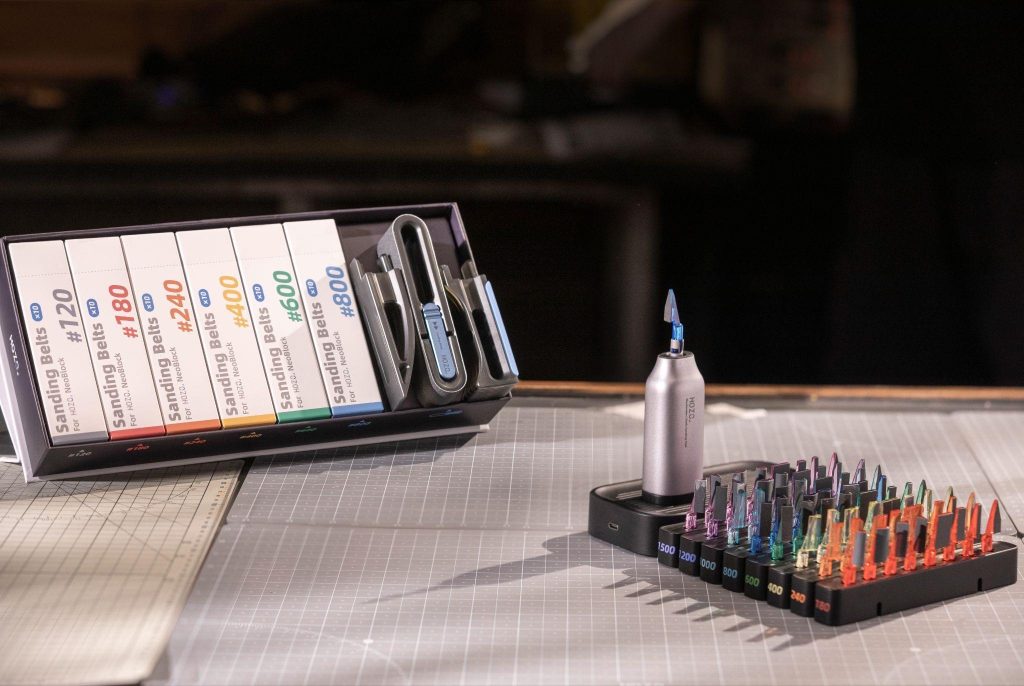
NeoSander’s motor delivers up to 13,000 strokes per minute with high positional accuracy, allowing users to maintain control even at higher speeds. Adjustable power (0.8–5W) and stroke length (0.6–1.8mm) let users dial in exactly the right aggressiveness, from aggressive nub removal to mirror polishing. That range of adjustability is rare in a compact sander this size.
The tool supports multiple interchangeable head shapes, allowing it to handle different surface types such as flat areas, curves, and tight corners. This makes it more adaptable across a range of small-scale finishing tasks.
This head system makes the NeoSander a true multi-geometry model sander instead of a one-shape tool that forces improvisation. Most competing products ship with a single head profile and expect the user to make it work everywhere. The NeoSander takes the opposite approach: match the tool to the surface, not the other way around.
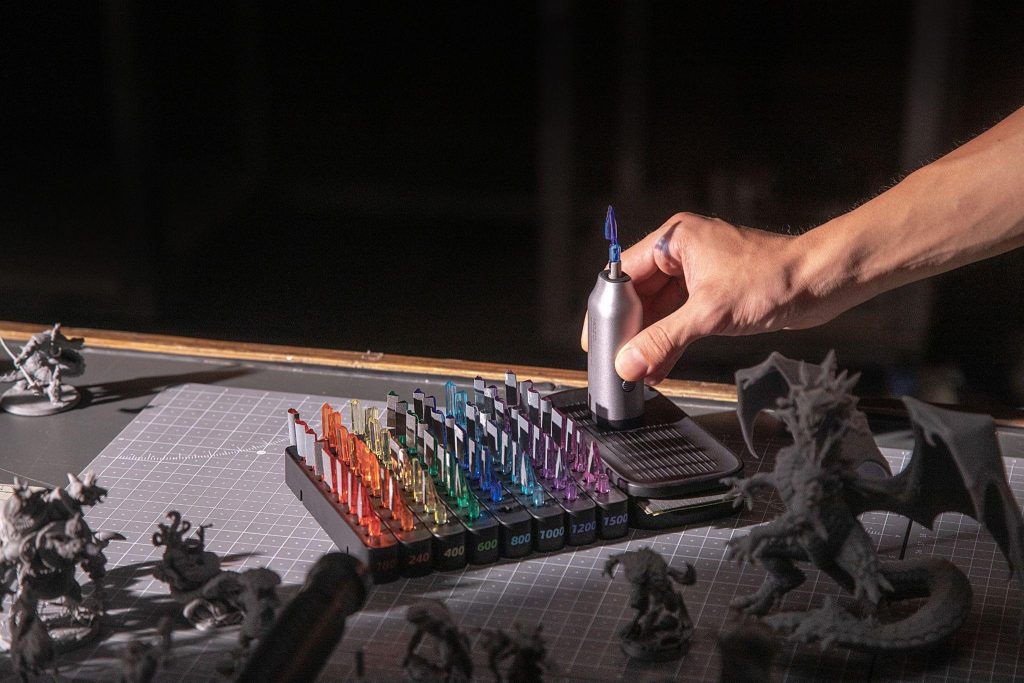
The Premium Combo ships 64 heads across all 8 shapes, color-coded by grit (180 through 1500). A head is selected, snapped on magnetically, and used for sanding. The color is swapped when the grit changes. No peeling, no cutting, no wasted sheets. For users working through multiple parts in one session, this system helps keep the sanding process more consistent and organized.
Designed Like a Writing Instrument, Not a Power Tool
The NeoSander is designed as a compact, pen-like tool for fine-detail work. Its lightweight body and balanced form factor make it easier to control during extended use, particularly on small parts and intricate surfaces. The 8-color grit coding is a UX decision borrowed from information design. Color replaces reading. One glance tells the user what grit is loaded and what comes next; the same logic behind color-coded resistor bands in electronics and transit line maps. It reduces cognitive load during repetitive wood sanding sessions where switching grits happens dozens of times per hour.
At 104 x 33 x 28mm, the rectangular profile sits flat on a desk without rolling and allows overhand, underhand, or pencil grips depending on the angle of approach. The charging dock doubles as sandpaper storage with organized compartments that keep sheets flat and protected. Type-C fast charging brings the battery from 10% to 90% in just 30 minutes, so the tool spends more time working than waiting.
For design-conscious makers, the NeoSander setup looks as intentional on a studio desk as a set of Copic markers. Every piece: the tool, the head organizer racks, the dock, was designed as part of a single visual system.
A Sander That Doubles as a Saw
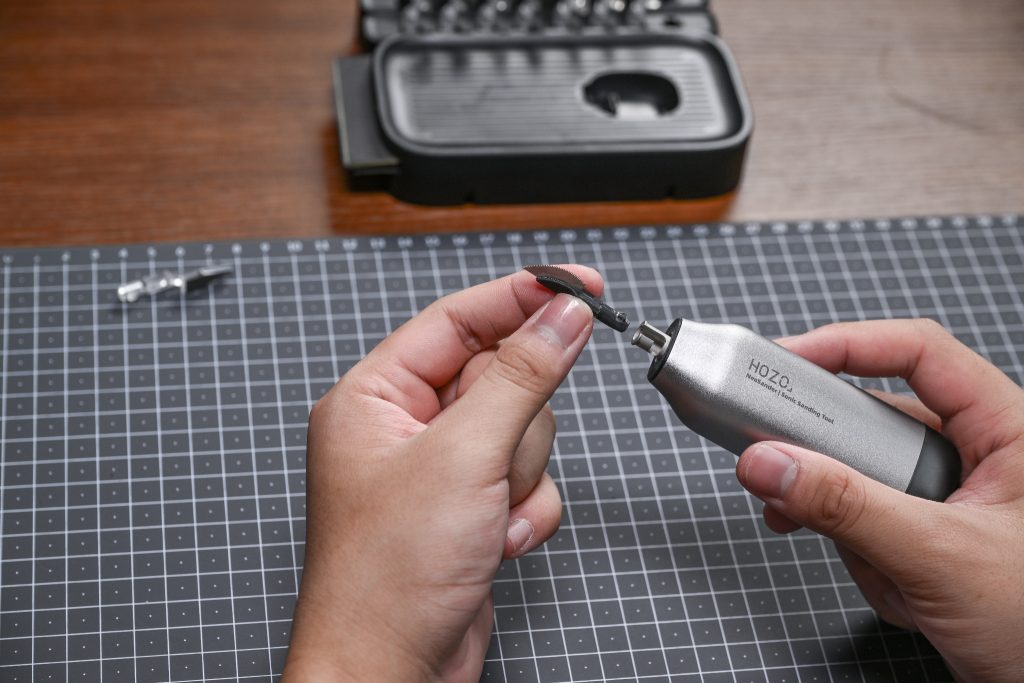
This mini saw capability means cutting and sanding can be done from the same device, with the same hand, in the same workflow. An optional accessory allows the tool to perform light cutting tasks, adding flexibility for makers who prefer a more compact setup. That dual functionality is rare among model tools. Most sanders only sand. Most saws only cut. The NeoSander doubles as both a precision sanding platform and a mini saw from a single motor system, simplifying any maker’s toolkit and reducing desk clutter.
Who This Tool Is For
Gunpla builders who hold their gundam tools for hours need a tool that prevents fatigue and melting. The NeoSander’s 85% vibration reduction and featherweight build keep hands steady through long nub removal and seam line cleanup sessions. The 3.7V, 1100mAh battery delivers up to 240 minutes of typical use, and use-while-charging means the cordless sander never forces a full stop mid-project. For Gunpla builders working through an entire Master Grade kit in one sitting, that uninterrupted workflow makes a real difference.
3D print finishers need a reciprocating sander that handles PLA, ABS, PETG, and resin without thermal damage. Layer lines, support scars, and print artifacts all require targeted sanding at progressively finer grits. The 64-head color-coded system moves from 180-grit cleanup to 1500-grit polishing with zero downtime between grit changes, turning multi-hour finishing sessions into predictable, repeatable processes.
Woodworkers need a tool that respects grain direction during wood sanding. The NeoSander’s linear motion follows the grain naturally. Half-cylinder and arc heads conform to concave surfaces that flat-pad sanders miss entirely, making it a reliable model sander for miniature carving and fine furniture work. Jewelry box makers, luthiers shaping guitar necks, and woodturners finishing spindle details all benefit from a sander that works with the material instead of against it.
Automotive detailers need a compact sander with wet-sanding capability and fine grit support. IP54 splash resistance on the front section handles waterproof paper for paint blending, clear coat correction, and spot repair in tight areas where a full-size orbital sander cannot reach.
Cosplay and prop makers need a sanding device with low thermal output for EVA foam, Worbla, and cast resin. These materials deform or melt under rotary friction. The NeoSander’s reciprocating action and multi-grit head system handles all of them without the heat damage that sends cosplayers back to the craft store for replacement materials.
And for gundam tools enthusiasts who sand dozens of parts per session, the color-coded workflow eliminates grit confusion entirely. The correct color is selected, sanding is performed, and then swapped. Done.
Stop Fighting The Tools
Different tools are designed for different stages of the making process. Rotary tools remain effective for cutting and aggressive material removal, while manual sanding continues to offer unmatched control for delicate finishing.
For makers working on fine details, the challenge is often not about choosing a single “best” tool, but about finding the right balance between speed, control, and surface quality. This is where alternative approaches, such as reciprocating sanding, begin to play a more clearly defined role.
For builders who depend on gundam tools daily, the difference is clear. The NeoSander is the fast sander that finally respects the work put into assembly, cleaning nub marks in seconds without melting edges.
The HOZO NeoSander is a ground-up reciprocating sander that puts physics, precision, and considered industrial design into a single tool weighing less than a deck of cards. It is proof that a detail sander can be as thoughtfully designed as the objects it helps create. For makers who have settled for rotary compromises long enough, the NeoSander is the tool that was missing from the bench.
The NeoSander Premium Combo is available for pre-order at hozodesign.com.
Media Contact
Company Name: Hozo Design Co., Limited
Contact Person: Edith Pan
Website: hozodesign.com
About Author

Disclaimer: The views, suggestions, and opinions expressed here are the sole responsibility of the experts. No Digi Observer journalist was involved in the writing and production of this article.

Press Release
Carziqo Brings A-DS Autonomous Delivery to San Francisco During Future Mobility Festival
- The company reports rising delivery demand as it positions autonomous logistics as a response to growing operating costs and the need for more efficient urban services.
SAN FRANCISCO, CA, Oct 03, 2026, ZEX PR WIRE — Carziqo says its A-DS autonomous delivery vehicles have begun operating in San Francisco, extending the company’s delivery business during the Carziqo Future Mobility Festival. The development comes as the company reports continued growth in delivery orders across its supported operations and sees increasing opportunities for autonomous technology in the movement of goods.

The San Francisco operation brings a practical focus to the October celebration: how intelligent mobility can support the everyday needs of businesses and consumers. For Carziqo, autonomous delivery represents an opportunity to connect its vehicle technology with a service whose value depends on consistency, convenience and careful management of operating costs.
The company’s recent announcements have emphasized rising A-DS order volumes and the importance of matching delivery demand with available fleet capacity. Carziqo says its priority is to translate that growth into better vehicle utilization and a more dependable service as the business develops.
The economic backdrop gives that objective particular relevance. According to the U.S. Bureau of Labor Statistics, compensation costs for private industry workers rose 3.3 percent in the year ending June 2026, including a 3.1 percent increase in wages and salaries. Although these figures cover private industry broadly, they provide context for the cost pressures businesses face when planning labor-intensive services.
For delivery operators, handling additional orders involves more than adding vehicles. It requires coordinating routes, staffing, vehicle availability and the time needed to complete each task. Higher demand creates a commercial opportunity, but the ability to serve that demand efficiently determines how much value the additional activity can generate.
Carziqo’s approach centers on reducing the manual driving requirements of supported delivery journeys while maintaining human involvement in fleet supervision, maintenance, customer support and situations requiring direct intervention. The company describes this division of responsibilities as a way to organize delivery work more efficiently as volumes increase.
That distinction is central to the business case for autonomous delivery. Automation can change how resources are allocated, but its usefulness depends on the performance of the wider service. A vehicle must be available when needed, assigned a suitable route and supported throughout its operating cycle.
Carziqo describes the A-DS platform as combining automated driving with route planning, connected vehicle monitoring and centralized operational support. Its fleet systems are designed to bring together information about vehicle condition, delivery progress, charging requirements and maintenance needs, helping teams coordinate the vehicles as a network.
For San Francisco, the significance of the deployment lies in applying that approach to local delivery needs. The commercial opportunity will depend on how effectively available capacity meets demand and how consistently the service performs within its operating scope. Those practical considerations give the expansion a business focus beyond the introduction of another autonomous vehicle model.
Carziqo has previously described a phased approach to A-DS deployment, with attention to route suitability, operational stability and service consistency. Experience gathered from its delivery operations is intended to inform improvements in dispatching, maintenance planning and future deployment decisions.
The Carziqo Future Mobility Festival places these developments within the company’s broader ambition to make intelligent transportation relevant to daily life. Held throughout October, the festival centers on greener mobility, connected services and the practical use of technology to improve how people and goods move through cities.
Autonomous delivery gives that theme an everyday point of connection. Behind each delivery is a person waiting for an item or a business fulfilling a customer’s request. The value of the technology ultimately rests on whether it can help complete those tasks reliably and make the service easier to manage.
The festival also provides an occasion to recognize the community supporting Carziqo’s development. In a separate A-DS announcement, the company introduced an additional Wednesday Performance Reward for eligible A-DS rental users, with amounts, claiming arrangements and eligibility governed by the terms published on its platform.
As the company develops its delivery business, its stated priorities include closer coordination between demand and vehicle deployment, management of operating costs and continued improvement of the service experience.
The San Francisco operation adds a new chapter to that effort during the Future Mobility Festival. With A-DS, Carziqo is positioning autonomous delivery as a practical part of its longer-term mobility ambitions—one whose progress will be measured through the everyday work of moving goods and serving customers.
For company information and official updates, visit www.carziqo.com.
About Author
Disclaimer: The views, suggestions, and opinions expressed here are the sole responsibility of the experts. No Digi Observer journalist was involved in the writing and production of this article.
Press Release
Brian Baldari on the Difference Between a Mentor and a Sponsor, and Why It Decides Promotions
-
ResilExec® Coaching founder Brian Baldari, Pharm.D., MBA, on why senior leaders who have plenty of advice and no advocacy stall at the same level for years.
BRICK, N.J., Oct 03, 2026, ZEX PR WIRE — Most senior professionals have someone they go to for advice. Far fewer have someone who argues for them in a room they are not in. According to Brian Baldari, Pharm.D., MBA, founder of ResilExec® Coaching, that distinction accounts for a large share of stalled advancement among otherwise strong performers.
Baldari spent 24 years inside pharmaceutical, healthcare, and enterprise leadership organizations. He held five successive Director-level roles, moved from Director to Vice President and Senior General Manager in 18 months, and led the commercial launch of 14 brands. He now works with Associate Directors, Directors, Senior Directors, Executive Directors, and Vice Presidents inside pharmaceutical, healthcare, and enterprise IT organizations.
“A mentor talks to you. A sponsor talks about you,” Baldari says. “One of those changes your calendar. The other changes your title.”
Advice Is Not Advocacy
Mentorship is widely available and widely encouraged. Many organizations run formal programs for it. A mentor offers perspective, context, and guidance, and that guidance has real value early in a career when the primary gap is knowledge.
Sponsorship operates differently. A sponsor spends their own credibility on someone else. They put a name forward on a succession slate, defend a candidate during calibration, and accept the consequences if the bet does not pay off. That is a materially different act, and it is not something an organization can mandate.
“Leaders collect mentors because mentors are easy to ask for,” Baldari says. “Nobody feels awkward requesting advice. Asking someone to spend their reputation on you is a different conversation, and most people never have it.”
Where the Gap Shows Up
The gap becomes visible at the point where advancement decisions are made collectively. Calibration sessions and succession discussions involve people across multiple functions, many of whom have no direct experience of a given candidate’s work. In those rooms, a candidate is represented by whoever chooses to speak.
“If nobody in that room can describe what you do at enterprise scale, you are not in the conversation, regardless of your review,” Baldari says. “The decision is not made on the strength of your record. It is made on the strength of the description someone else gives of it.”
Baldari notes that this is where strong performers are most often surprised. Their performance ratings are high, their manager is supportive, and the outcome still does not change, because the people who influenced the decision were never engaged.
Sponsorship as a Variable
Sponsorship is one of five variables in Baldari’s Promotion Math framework, alongside Performance, Visibility, Narrative, and Timing. In his assessment, strong performers optimize the first variable and leave the remaining four unattended, then attribute the result to politics.
“Performance gets you noticed. Positioning gets you promoted,” Baldari says. “Sponsorship is the variable people find hardest to work on, because it requires asking for something rather than producing something.”
What Changes the Outcome
Baldari advises leaders to identify the specific individuals who will participate in the decisions that affect them, then assess honestly whether those individuals could describe their contribution without prompting. In most cases the answer is no, and that is the actionable finding.
From there the work is practical rather than social. It involves delivering value to those individuals rather than checking in with them, framing results at enterprise level rather than functional level, and showing up in forums where that work is visible to people beyond a direct reporting line.
“You do not recruit a sponsor by asking them to be one,” Baldari says. “You give them something worth putting their name next to, and you make sure they understand what it was.”
About Brian Baldari
Brian Baldari, Pharm.D., MBA, based in Brick, New Jersey, is the founder of ResilExec® Coaching and Resilient Performance Group LLC. He spent 24 years inside pharmaceutical, healthcare, and enterprise leadership organizations, held five successive Director-level roles, and advanced from Director to Vice President and Senior General Manager in 18 months. He led the commercial launch of 14 brands across rare and chronic disease categories, led an organization of more than 250 people, and has mentored more than 50 leaders across three continents. Through ResilExec Coaching, he helps Associate Directors, Directors, Senior Directors, Executive Directors, and Vice Presidents accelerate career growth through personalized executive coaching, leadership development, and strategic career positioning.
Media Contact
Resilient Performance Group LLC
About Author
Disclaimer: The views, suggestions, and opinions expressed here are the sole responsibility of the experts. No Digi Observer journalist was involved in the writing and production of this article.
Press Release
Timothy Caraboolad Publishes a Buyer’s Checklist for New-Build Condos in South Florida
-
Real estate developer Timothy Caraboolad is releasing a set of questions first-time buyers should ask before putting money down on a new-build apartment in South Florida.
A market full of new buildings, and a lot of first-time buyers
Florida, USA, Oct 03, 2026, ZEX PR WIRE — South Florida has no shortage of new construction. Buildings go up fast, sales offices open before the concrete cures, and renderings promise more than any buyer can verify in a single walkthrough.
Timothy Caraboolad, a real estate developer and designer based in Palm Beach, Florida, has spent years on the other side of that process, building high-end custom homes through his firm Lad Design. He says the buyers who end up happiest are the ones who ask harder questions earlier, not the ones who fall for the best rendering.
“A sales gallery is designed to sell you a feeling,” he says. “Your job as a buyer is to slow that down and ask what you’re actually getting for the price.”
What to check before signing anything
Caraboolad points first-time buyers toward a few areas that matter more than finishes.
Construction quality behind the walls. Countertops and cabinetry are easy to judge. What is inside the walls is not. Caraboolad suggests asking who the general contractor is, how long they have built in the area, and whether the building uses concrete or wood-frame construction, since that affects sound, insurance, and long-term durability in a hurricane-prone region.
HOA fees and what they actually cover. New buildings often advertise low fees at launch that rise once amenities open and reserves get funded. “Ask for the projected budget once the building is fully occupied, not just the introductory number,” Caraboolad says. He recommends buyers ask specifically what percentage of the fee goes into reserves, since that determines whether the building can pay for a roof or a seawall repair without a special assessment.
Storm readiness. In South Florida, this is not optional. Buyers should ask about impact windows, generator backup for elevators and common areas, and flood elevation. Caraboolad says a building’s flood zone designation should be requested in writing, not estimated by a sales agent.
Parking and storage, spelled out. Some buildings sell parking as a deeded asset. Others assign it and can reassign it later. Caraboolad says this distinction matters more than most buyers realize until after closing.
Developer track record. A new building has no resale history to check. Caraboolad suggests buyers look at other projects the same developer has completed, not just renderings of the one being sold, and ask how those buildings have held up.
Timing the purchase
For pre-construction units, Caraboolad says the biggest risk is not price, it is timeline. Delays are common, and buyers should understand what happens to their deposit if the closing date slips.
“Get the outside date for completion in writing,” he says. “And ask what your options are if that date passes.”
He also encourages buyers to walk a finished unit in the same building, or a comparable one from the same developer, before relying on a model unit that may use upgraded finishes not included in the base price.
Why this matters for first-time buyers specifically
Caraboolad says first-time buyers face a particular disadvantage: they often do not know which questions are normal to ask, so they accept vague answers.
“An experienced buyer will push back on a soft answer about HOA reserves or insurance history,” he says. “A first-time buyer might just assume that’s how it works. It isn’t. You’re allowed to ask for documentation before you commit.”
His broader point is that a new building can be a strong investment in South Florida, but only when the buyer treats the sales process the same way a developer would: checking budgets, checking materials, and checking the people building it, before checking the view.
About Timothy Caraboolad
Timothy Caraboolad is an entrepreneur, real estate developer, and designer based in Palm Beach, Florida. He is the founder of Lad Design, a South Florida firm building high-end custom homes, and previously founded Arc Design, a luxury residential development and design firm in the Boston area. He holds a Bachelor’s Degree in International Business from Rollins College.
About Author
Disclaimer: The views, suggestions, and opinions expressed here are the sole responsibility of the experts. No Digi Observer journalist was involved in the writing and production of this article.
Carziqo Brings A-DS Autonomous Delivery to San Francisco During Future Mobility Festival
Timothy Caraboolad Publishes a Buyer’s Checklist for New-Build Condos in South Florida
Brian Baldari on the Difference Between a Mentor and a Sponsor, and Why It Decides Promotions
Benzinga Money Article Discusses How to Become Part of the 12% of Retirees Who Have Achieved the Recommended $550,000 Minimum Retirement Savings Threshold
Apu Apustaja Conquers New York with Lively Street Ads, Including Times Square Billboard
Bay Smokes Maintains Quality Amid Legislative Changes in the Hemp Industry


-
Press Release1 week ago
Just Keepers Spotlights Keeper iD’s New Range of Junior Goalie Gloves
-
Press Release1 week ago
Results Digital Expands Website Design Offerings for General Contractors in Houston TX
-
Press Release6 days ago
New Experiences in Shanghai for Mid-Autumn Festival and National Day! The 2026 International Audio-Visual Arts Carnival Unveils a “Technology + Culture” Audio-Visual Feast
-
Press Release7 days ago
Piya Saliba Releases Free Community Connection Checklist to Help People Build Stronger Relationships
-
Press Release1 week ago
Whimsical Halloween Wardrobe Ready: Arshiner Kids’ Outfits Light Up the Trick-or-Treat Adventure
-
Press Release1 week ago
Painted Brick Digital Named Among Expertise.com’s Top 8 Legal Marketing Companies in Scottsdale
-
Press Release7 days ago
Gary Bassett Shares Lessons From 45 Years Across Finance and Technology
-
Press Release7 days ago
Nivia Fontanez Highlights the Often-Overlooked Role of Radiology Technologists in Patient Care