
Press Release
Valle Capital Token Launches RWA and Agribusiness Ecosystem

Tortola, British Virgin Islands, July 1st, 2026, Chainwire
VCT combines blockchain transparency, agribusiness intelligence, export-finance infrastructure and real-world asset tokenization on BNB Smart Chain.
Valle Capital Token (“VCT”) today announced the development and expansion of its blockchain-powered ecosystem designed to connect global digital capital with Brazilian agribusiness operations and international commodity exports.
Built on BNB Smart Chain, Valle Capital Token combines utility-token functionality with a real-world asset-focused model intended to support greater transparency, operational visibility and digital infrastructure across agricultural production, commodity financing, logistics and export activity.
The project is structured around a British Virgin Islands tokenization entity and aims to create a bridge between traditional agribusiness, international trade and the global Web3 economy. Through EVM smart contracts, digital dashboards, monitoring tools and on-chain records, Valle Capital intends to support a more transparent and connected ecosystem for producers, commercial partners, exporters, international buyers and eligible global participants.
Connecting Global Capital to the Real Economy
Brazilian agribusiness and commodity exports represent one of the country’s most important economic engines. The sector depends on continuous access to capital, operational intelligence, logistics coordination, documentation control and reliable reporting across every phase of the production and export chain.
From advance commodity purchases and crop financing to storage, shipment preparation and international settlement, agricultural and export operations often involve multiple parties, including producers, buyers, warehouses, logistics providers, exporters, financial partners, insurers and international counterparties.
Valle Capital Token is designed to help address this operational complexity by creating a technological layer that organizes information, improves visibility and supports digital integration across the agro-export chain.
The project’s market opportunity is driven by the increasing demand for:
- More transparent agribusiness and export operations
- Better access to structured working capital
- Reliable contract and document monitoring
- Digital traceability from field to shipment
- Operational intelligence through data and artificial intelligence
- Blockchain-based auditability for selected commercial milestones
- New technology infrastructure connecting real assets and global digital capital
VCT is positioned at the intersection of agribusiness, commodity trading, export finance and real-world asset tokenization.
A Technology Layer for the Entire Agribusiness Chain
Valle Capital Token is not designed solely as a digital asset. It is being developed as a broader ecosystem of digital tools and operational infrastructure for the agribusiness and export sector.
The platform is expected to include:
- Satellite Monitoring and Field Intelligenc: The ecosystem plans to use imagery and field data to monitor agricultural areas and track the evolution of production cycles. These tools are intended to support improved operational visibility across the agricultural chain.
- Climate Mapping: Territorial and climate indicators are planned to support decision-making throughout crop cycles, helping participants monitor environmental and operational conditions relevant to agricultural activity.
- Logistics Tracking: Valle Capital Token plans to provide visibility into commodity movement, storage, commercial preparation and shipment-related milestones, helping reduce fragmented information among partners in the supply chain.
- Irrigation and Field Mapping: The platform is expected to include tools for mapping and visualizing irrigated areas, soil information and field infrastructure, supporting operational analysis and agricultural planning.
- Operational Artificial Intelligence: VCT plans to integrate AI-based tools for operational analysis, sector intelligence and data interpretation, strengthening the ability of participants to understand trends, monitor activity and make more informed decisions.
- Digital Traceability: Digital traceability tools are intended to support the monitoring of production-chain information, operational milestones and product-origin data. This can create a clearer historical record for selected activities within the agro-export ecosystem.
- Information Panels and Operational Alerts: The project plans to provide dashboards for users and partners, combining field data, operational progress, real-time alerts and relevant ecosystem information in a single digital environment.
- Smart Contracts and On-Chain Transparency: A central component of Valle Capital Token is its use of EVM-compatible smart contracts to support auditable records of selected capital flows, commercial structures and operational milestones.
The project intends to register hashes and references associated with real-world operations, which may include:
- Agricultural agreements
- Commodity purchase contracts
- Export and international trade agreements
- Invoices
- Packing lists
- Bills of Lading
- Certificates
- Logistics milestones
- Delivery confirmations
- Settlement status
This structure is designed to improve auditability and transparency without replacing the legal, financial, and commercial processes required for real-world operations.
According to the project’s model, financing flows are expected to be formalized through legal structures and recorded on-chain to create a more transparent operational record.
Agribusiness and Export Finance Strategy
Valle Capital Token’s ecosystem is designed around two primary operational areas.
Valle Capital: Agribusiness Operations
 The project plans to support infrastructure connected to:
- Agricultural financing for producers
- Advance commodity purchases
- Working-capital support
- Crop financing
- Future-contract structuring
- Agricultural supply-chain operations
Grupo CGM: Export Operations
 The export-finance structure may support:
- Pre-shipment financing
- Logistics and shipping costs
- Operational cost coverage
- Commodity-export preparation
- International trade activities
- Export-volume expansion
The project states that international capital may be transferred to Brazilian operating entities through formalized legal mechanisms, including capital contributions and structured private-loan agreements, subject to applicable law, regulatory requirements and project compliance procedures.
VCT Token and Ecosystem Utility
VCT is positioned as an RWA-focused utility token intended to connect eligible global participants to a growing ecosystem of digital tools, services, programs, benefits and future platform modules.
The current website identifies a total supply of 650,000,000 VCT on BNB Smart Chain. The token allocation is structured across presale, operations and treasury, liquidity and listings, marketing and ecosystem development, team and advisors, and strategic reserve and legal allocation.
Current token allocation includes:
- 35% — Presale: 227.5 million VCT
- 25% — Operations and Treasury: 162.5 million VCT
- 15% — Liquidity and Listings: 97.5 million VCT
- 10% — Marketing and Ecosystem: 65 million VCT
- 10% — Team and Advisors: 65 million VCT
- 5% — Strategic Reserve and Legal: 32.5 million VCT
The presale is structured across 15 rounds of 10 days each. The website states that presale allocations include 10% at token-generation event, with the remaining 90% released over 12 months.
Roadmap Toward Global RWA Expansion
Valle Capital Token has outlined a phased roadmap focused on moving from token infrastructure and presale activity to real operational deployment and broader ecosystem expansion.
Phase 1 — Foundation and Presale includes the BVI tokenization entity, smart-contract development, audit preparation, BNB Smart Chain deployment and the 15-round presale structure.
Phase 2 — Capital Deployment focuses on agribusiness financing through Valle Capital, export-finance activity through Grupo CGM, formalized capital flows and investor dashboards.
Phase 3 — Smart Operations includes satellite and climate monitoring, logistics-tracking modules, AI operational analysis, digital traceability and staking-related ecosystem tools.
Phase 4 — RWA Scale targets on-chain commodity tokenization, card-gateway and fiat on-ramp integration, international partnerships, exchange-listing preparation and the development of a global RWA marketplace.
Why Valle Capital Token Stands Out
Valle Capital Token is designed around a differentiated proposition: combining blockchain technology with real agribusiness and commodity-export operations rather than focusing exclusively on speculative digital-asset use cases.
The project’s main advantages include:
- Focus on Brazilian agribusiness and global commodity exports
- BVI tokenization structure and BNB Smart Chain deployment
- Utility token with an RWA-focused ecosystem model
- Smart contract-based transparency and auditability
- Satellite, climate and logistics intelligence tools
- Digital traceability for the agro-export chain
- AI-driven operational analysis
- Investor and partner dashboards
- Structured capital deployment for agro and export operations
- Long-term roadmap toward global RWA marketplace infrastructure
“Valle Capital Token is being developed to connect technology, capital and real operational activity. Our goal is to create a more transparent digital ecosystem where agribusiness, exports, blockchain infrastructure and global participants can operate together,” said Luan Coimbra Correia Responsible Representative, Valle Token.
Important Notice
VCT is a utility token and does not represent equity, ownership participation, a security, guaranteed returns, guaranteed yield or guaranteed token appreciation. Participation in digital assets involves risks, including market volatility, liquidity risk, technology risk, operational risk, regulatory changes and potential loss of capital.
The project states that participation is subject to applicable laws, jurisdictional restrictions, KYC/AML verification and legal review. The VCT presale is not marketed to persons located in, or citizens or residents of, the United States, Brazil or OFAC-sanctioned jurisdictions.
About Valle Capital Token
Valle Capital Token is a blockchain-powered agribusiness, export-finance and real-world asset ecosystem. The project aims to connect global digital capital with Brazilian agricultural operations and international commodity exports through EVM smart contracts, blockchain transparency, digital traceability, operational intelligence and scalable Web3 infrastructure.
Official Links
Website: https://valletoken.com
Whitepaper: https://whitepaper.valletoken.com
Telegram: https://t.me/vallecapitaltoken
X / Twitter: https://x.com/valletoken_
Instagram: https://www.instagram.com/vallecapitaltoken
Contact
CFO
Luan Coimbra Correia
VALLE CAPITAL TOKEN
support@valletoken.com
About Author

Disclaimer: The views, suggestions, and opinions expressed here are the sole responsibility of the experts. No Digi Observer journalist was involved in the writing and production of this article.

Community leaders, humanitarian advocates and peacebuilders gathered at the Church of Scientology London to mark the UN International Day of Peace and examine how human rights, education and local action contribute to peaceful communities.
Brussels, Brussels, Belgium, 1st Oct 2026 — Community leaders, humanitarian advocates and peacebuilders from across London gathered at the Church of Scientology London for a round-table discussion marking the United Nations International Day of Peace, with participants focusing on the practical contribution individuals and civil society can make to building more peaceful communities.
The gathering reflected the 2026 United Nations theme, “Invest in Peace – For Everyone, Everywhere, Every Day,” which places particular emphasis on people working at community level to bridge divisions, strengthen dialogue and create the conditions for lasting peace. The International Day of Peace is observed annually on 21 September and was established by the UN General Assembly in 1981.
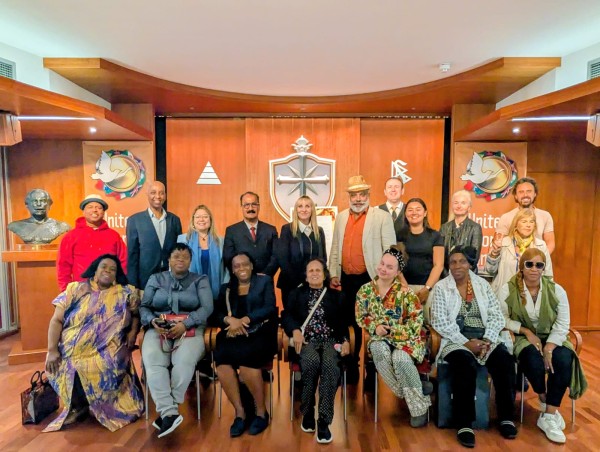
Rather than approaching peace solely as a question for governments and international institutions, speakers at the London meeting explored its connection with everyday choices, human rights education, humanitarian work and community responsibility.
Lorna Marah, a Peace Ambassador, United Nations Women Advocate and member of the UK Civil Service Women Alliance, described peace as something requiring deliberate effort rather than something that emerges by itself.
“Peace is not accidental. It is intentional. It is crafted through our choices, our leadership, our compassion, and our willingness to challenge the norms that divide us,” Marah said. “Peace is a design project and every one of us is a designer.”
Her remarks echoed an important element of this year’s UN observance: recognition of the role played by people whose work in neighbourhoods, schools and communities helps create stability, dialogue and cooperation from the ground up.
The discussion also brought a humanitarian perspective through Eleanor Daibowon Moore, the London-based founder of Eleanor’s Children Foundation, which works in Liberia with young orphans and widows, including through projects intended to support sustainable livelihoods and greater independence.
“Peace is a ship — a responsibility, which needs our care and help,” Moore told participants.
Her contribution placed economic independence, care for vulnerable people and community support within the wider discussion about the conditions in which peaceful societies can develop.
Suraiya Kassamally of Rotary Club London presented another approach to peacebuilding, briefing participants on the work of the Rotary Peace Centers and their international fellowship programme.
Since the programme began in 2002, more than 1,900 fellows have received training through Rotary’s peace fellowship programme, with alumni working internationally in government, civil society, education, peacebuilding and related fields.
“We all need peace now — more than ever before,” Kassamally said.
Human rights education as part of peacebuilding
A central theme of the London discussion was the relationship between peace and knowledge of fundamental human rights.
Tracey Coleman, Community Affairs Director of the Church of Scientology London, highlighted human rights education as one means of addressing intolerance, bullying and discrimination before they become entrenched within communities.
“Peace has everything to do with human rights,” Coleman said. “Where we see lack of harmony, where we see bullying, we see violations of human rights.”
“We must join hands, work together in positive action and make sure our youth know their 30 human rights. We must not only ‘know’ these rights but apply them in our lives to bring about a world with respect and tolerance.”
The Church supports the educational work of Youth for Human Rights International, a nonprofit initiative that presents the 30 articles of the Universal Declaration of Human Rights in formats designed for young people and educators. Its resources include booklets, audiovisual materials and educator materials intended to make the principles of the Declaration understandable and applicable in daily life.
The support forms part of the wider humanitarian and social initiatives associated with the Church of Scientology and inspired by its founder, L. Ron Hubbard, including programmes concerned with human rights education, drug prevention, literacy and community service.
The London round table placed that work alongside the experience of other organisations and advocates, illustrating how people from different professional, humanitarian and civic backgrounds can find common ground around dignity, responsibility and peaceful coexistence.
Ivan Arjona, representative of the Church of Scientology to the European Union, OSCE, Council of Europe and United Nations, proposed the following reflection on the gathering:
“Europe’s experience has repeatedly shown that peace cannot be separated from human dignity and fundamental rights. Those principles acquire their full meaning when they become part of everyday life — in our schools, neighbourhoods, institutions and relationships with people whose beliefs or backgrounds may differ from our own. Meetings such as this bring together people with very different experiences around a shared responsibility: turning respect, dialogue and human rights into daily practice.”
The emphasis on human dignity is consistent with the UN’s approach to peace as more than the absence of conflict, connecting it with safety, dignity, opportunity, cooperation and respect for fundamental rights.
The International Day of Peace was created by the United Nations General Assembly in 1981. In 2001, the General Assembly strengthened the observance by designating 21 September as a day of non-violence and ceasefire. The annual observance has since developed into an international occasion for governments, organisations and communities to examine how dialogue, education, human rights and cooperation can contribute to more peaceful societies.
The London gathering reflected that community-level interpretation of peace: not as a single annual event, but as a continuing process involving education, cooperation and respect across differences.
About the Church of Scientology in Europe
The Church of Scientology, founded on the religious and philosophical works of L. Ron Hubbard, maintains churches, missions, groups and members throughout the European continent. Scientologists support a range of educational and community initiatives addressing human rights awareness, drug prevention, moral education and volunteer service. The Church and its affiliated religious communities have obtained various forms of religious and charitable recognition in European jurisdictions as their presence and engagement with civil society have developed across the continent. Its humanitarian programmes continue to place emphasis on education, prevention and practical community betterment.
Media Contact
Organization: European Office Church of Scientology for Public Affairs and Human Rights
Contact Person: Ivan Arjona
Website: https://www.scientologyeurope.org
Email: Send Email
Address: Boulevard de Waterloo 103
City: Brussels
State: Brussels
Country: Belgium
Release id: 49602
The post London Peace Day Round Table Links Human Rights Education with Everyday Peacebuilding appeared first on King Newswire. This content is provided by a third-party source.. King Newswire makes no warranties or representations in connection with it. King Newswire is a press release distribution agency and does not endorse or verify the claims made in this release. If you have any complaints or copyright concerns related to this article, please contact the company listed in the ‘Media Contact’ section
About Author
Disclaimer: The views, suggestions, and opinions expressed here are the sole responsibility of the experts. No Digi Observer journalist was involved in the writing and production of this article.
About 1.5 hours from Tokyo, awaits an extraordinary journey through mountains and rural landscapes
Japan, 1st Oct 2026 – The Hitachi-no-kuni Long Trail, connecting six cities and towns in northern Ibaraki Prefecture, has now fully opened as an approximately 350-kilometer route, Ibaraki Prefectural Government Northern Region Development Bureau announces.

With its full opening, the Hitachi-no-kuni Long Trail is now the longest long trail in Japan designed as a loop route.
Stretching approximately 350 kilometers, the trail connects a diverse range of local attractions, including lush forests and satoyama landscapes, valleys, coastlines, and historic cultural heritage sites. What awaits here is more than simply hiking toward a destination.
Walk through the region’s natural landscapes, encounter its history, meet the people who call the area home, and experience the local food and culture unique to each place. On the Hitachi-no-kuni Long Trail, a new way to travel in Ibaraki begins—one that allows visitors to experience the region’s appeal in a way that can only be discovered on foot.
And through this trail, Ibaraki offers opportunities to discover the many different sides of Japan.
A New Way to Travel in Japan: “Travel by Foot”

Hitachinokuni Trail
Unlike mountain climbing, where reaching a summit is the primary objective, a long trail is a route designed for journeys where walking itself is part of the experience, connecting hiking and mountain trails with paths through satoyama landscapes, agricultural areas, and local communities.

Hitachinokuni Trail
Along the way, travelers can encounter not only spectacular natural scenery but also the history, culture, everyday life, food, and other landscapes unique to each region.
From forests and valleys to the Japan countryside and coast, every section offers a different perspective on the places and communities along the route.
Japan has a long tradition of traveling on foot, from the Kumano Kodo pilgrimage routes to the Shikoku pilgrimage.
In recent years, as interest in health and well-being and in spending time in nature has grown, long trails have attracted increasing attention as a new style of travel.
Hitachi-no-kuni Long Trail
A 350-Kilometer Journey Connecting Satoyama and Communities

Hitachinokuni Trail
The Hitachi-no-kuni Long Trail is a long-distance trail that connects the diverse natural landscapes, food, historical and cultural heritage, and other regional attractions scattered throughout northern Ibaraki Prefecture via hiking trails and other paths. Its concept is “an extraordinary journey of repeatedly walking through mountains and rural landscapes while experiencing both everyday life and the extraordinary.”
One of its greatest features is the opportunity to walk through rich natural surroundings while experiencing Japan’s satoyama landscapes, local culture, and the lives of the people who live there. The trail passes not only through deep forests and valleys, but also through communities, fields, and historic sites, and areas along the coast, where visitors can experience the distinctive scenery of a coastal trail alongside landscapes shaped by generations of human life.
Its convenient accessibility from the Tokyo metropolitan area is another major attraction. There is no need to walk the entire trail in a single trip. Depending on their fitness level, interests, and itinerary, visitors can enjoy individual travel as section hikes or day hikes.
Whether embarking on a long journey or a short one, travelers can enjoy the trail at their own pace. That is the appeal of the Hitachi-no-kuni Long Trail.
Discovering a New Kind of Slow Travel in Ibaraki
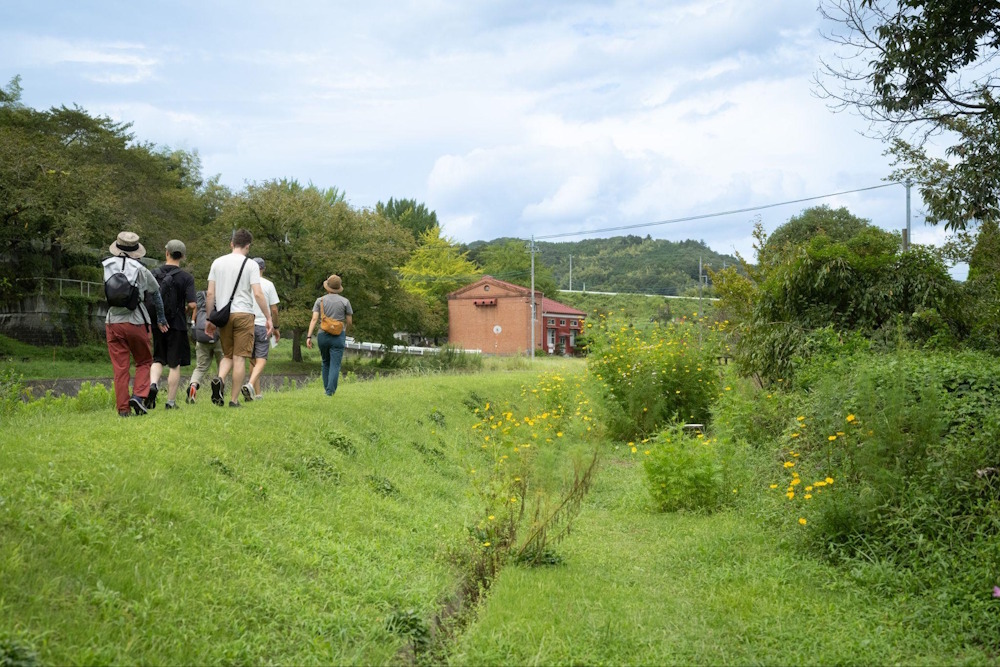
Hitachinokuni Trail
The appeal of Ibaraki is not limited to visiting a large number of tourist attractions in a short amount of time. Walk. Talk with local people. Make something. Taste the region’s cuisine. Spend time in nature.
Through each of these experiences, travelers can slowly come to understand the culture and everyday life of a place.
The full opening of the Hitachi-no-kuni Long Trail represents the potential for this new kind of slow travel in Ibaraki—one centered on taking the time to experience a destination.
Just one to two hours from Tokyo, Ibaraki’s proximity and diversity are among its greatest attractions.
Here, travelers can encounter an incredibly diverse Japan, from the forefront of space exploration to mythology and prayer, traditional crafts, fermentation culture, and satoyama landscapes where local communities continue to live in harmony with nature.
Beyond traveling along the long trail itself, visitors can discover different sides of Japan according to their own individual curiosity.
With the full opening of the Hitachi-no-kuni Long Trail as a starting point, Ibaraki is opening up its diverse attractions as a new destination capable of responding to the curiosity of every traveler.
Discover more: https://kenpokult.com/en/
—
Company: Ibaraki Prefectural Government Northern Region Development Bureau
Name: PR
Email: kenpokusinkou2@pref.ibaraki.lg.jp
HP URL: https://visit.ibarakiguide.jp/en/
Media Contact
Organization: Ibaraki Prefectural Government Northern Region Development Bureau
Contact Person: P.R.
Website: https://visit.ibarakiguide.jp/en/
Email: Send Email
Country: Japan
Release id: 49603
The post Japan’s Longest Loop long trail, the Hitachi-no-kuni Long Trail, Fully Opens appeared first on King Newswire. This content is provided by a third-party source.. King Newswire makes no warranties or representations in connection with it. King Newswire is a press release distribution agency and does not endorse or verify the claims made in this release. If you have any complaints or copyright concerns related to this article, please contact the company listed in the ‘Media Contact’ section
About Author
Disclaimer: The views, suggestions, and opinions expressed here are the sole responsibility of the experts. No Digi Observer journalist was involved in the writing and production of this article.
Press Release
76% of Treasury Teams Hit by Fraud as Deepfake Attacks Rise, Treasury Dragons & nsKnox 2026 Index Finds
New York, New York, October 1st, 2026, FinanceWire
2026 Treasury Dragons Payment Fraud Index, produced with nsKnox, shows verification remains the weak link: only 18% of organizations continuously revalidate supplier bank details, and 41% still receive sensitive payment data by email
nsKnox, a leader in B2B payment security, today released the findings of the 2026 Treasury Dragons Payment Fraud Index, “Why Verification Remains the Weak Link,” produced in partnership with Treasury Dragons, the global network for buyers, specifiers and users of corporate treasury technology. The findings were unveiled this morning in a live Treasury Dragons Masterclass webinar.
Now in its fourth year, the survey of 104 corporate treasury professionals found that 76% of organizations experienced at least one payment fraud incident in the past 12 months, up from 73% last year, and 44% were hit more than once. Two-thirds (67%) expect the risk to rise further over the next year.
Artificial intelligence is making familiar attacks faster, cheaper and far more convincing. More than half of respondents (53%) have faced a confirmed or suspected deepfake-related fraud attempt, most often in multi-channel attacks that pair a legitimate-looking email thread with a voice call, messaging exchange or video interaction. Yet only 44% have formal policies covering AI-related fraud.
Other key findings include:
- Confidence is outpacing controls. 79% rate their confidence in supplier banking information as high or very high, yet only 18% continuously revalidate supplier bank details.
- Email is still a front door for fraud. 41% receive sensitive supplier or payment data by email, and only 39% always use secure or encrypted channels.
- Awareness is high, but ownership is not. 75% rate their fraud awareness as high or very high, but only 39% say ownership of payment fraud is clearly defined.
- Technology is the biggest gap. 48% do not use a dedicated payment fraud prevention system, and 71% are prioritizing investment in payment validation.
“This year’s Index confirms what we hear from finance leaders every day: the problem is no longer awareness – it’s verification,” said Nithai Barzam, CEO of nsKnox. “When AI lets a fraudster impersonate a supplier convincingly across email, phone and video, any control that relies on these channels becomes part of the attack. Organizations need to validate bank accounts independently, continuously and globally, using authoritative data from the banking system, before a payment is ever released.”
“In four years of running this survey, we have watched awareness climb steadily, but the controls underneath it haven’t kept pace,” said Mike Hewitt, CEO of Adaugeo Media and Founder of Treasury Dragons. “The message for treasurers is clear: confidence should be the outcome of continuous verification, not a substitute for it.”
The full 2026 Treasury Dragons Payment Fraud Index report is available for download here. A recording of the masterclass, “How Treasury Can Stop Corporate Payment Fraud,” is available on demand at this link.
About Treasury Dragons
Treasury Dragons is the global network for buyers, specifiers and users of corporate treasury technology. Treasury Dragons is published by Adaugeo Media Ltd, London.
About nsKnox
nsKnox is the global standard for securing payments against B2B fraud. Unlike solutions limited to a single database or validation network, nsKnox provides total global coverage to truly validate any bank account, anywhere, delivering the fastest and most accurate results possible. When other methods fall short, nsKnox uses authoritative data directly from the banking system to validate even out-of-network accounts. All nsKnox solutions are built on the patented Cooperative Cyber Security (CCS) technology, which protects payment information by distributing it across a decentralized network – making it cloud-proof and quantum-safe.
Contact
VP Marketing
Assaf Dargan
nsKnox
assaf.dargan@nsknox.net
3135097748
About Author
Disclaimer: The views, suggestions, and opinions expressed here are the sole responsibility of the experts. No Digi Observer journalist was involved in the writing and production of this article.
Japan’s Longest Loop long trail, the Hitachi-no-kuni Long Trail, Fully Opens
London Peace Day Round Table Links Human Rights Education with Everyday Peacebuilding
76% of Treasury Teams Hit by Fraud as Deepfake Attacks Rise, Treasury Dragons & nsKnox 2026 Index Finds
Benzinga Money Article Discusses How to Become Part of the 12% of Retirees Who Have Achieved the Recommended $550,000 Minimum Retirement Savings Threshold
Apu Apustaja Conquers New York with Lively Street Ads, Including Times Square Billboard
Bay Smokes Maintains Quality Amid Legislative Changes in the Hemp Industry


-
Press Release1 week ago
Thomas Berkley of Nexus Acquisition AI Introduces Smarter Client Acquisition Strategies for Service Businesses
-
Press Release5 days ago
Piya Saliba Releases Free Community Connection Checklist to Help People Build Stronger Relationships
-
Press Release5 days ago
Results Digital Expands Website Design Offerings for General Contractors in Houston TX
-
Press Release6 days ago
Whimsical Halloween Wardrobe Ready: Arshiner Kids’ Outfits Light Up the Trick-or-Treat Adventure
-
Press Release5 days ago
Just Keepers Spotlights Keeper iD’s New Range of Junior Goalie Gloves
-
Press Release5 days ago
Gary Bassett Shares Lessons From 45 Years Across Finance and Technology
-
Press Release5 days ago
Painted Brick Digital Named Among Expertise.com’s Top 8 Legal Marketing Companies in Scottsdale
-
Press Release5 days ago
Nivia Fontanez Highlights the Often-Overlooked Role of Radiology Technologists in Patient Care