
Press Release
The mobile terminal of digital currency wallet is the necessary development trend of the future blockchain market – Santi Principal SUEx came into being


With the continuous development of blockchain technology, the number of users using digital currency continues to increase, and various blockchain application scenarios are gradually implemented. The demand for more and more users to transfer money is becoming more and more obvious, and it is the most convenient to use wallet to transfer money. The quick way.
In this era of mobile Internet, people are slowly changing from a traditional lifestyle to a digital and intelligent lifestyle. In this stage of social development and transformation, the traditional tools we have used before are often replaced by technology or the Internet. From food, clothing, housing and transportation, we are now inseparable from mobile phones all the time, so the mobile terminal is the inevitable trend of the future digital currency industry.
Mobile payment has become a way of life for high-frequency payment in today’s society. Digital currency is the development direction of digital finance for emerging technologies. Now many traditional companies are slowly starting to deploy the digital currency market. In order to further stabilize and expand the market, the current leading digital currency wallet project parties are more actively deploying the life scene application of the wallet ecological industry chain, aiming to create a full scene digital life ecology!
However, digital encrypted assets are easy to lose, making it difficult for the past network storage tools to ensure the security of digital assets. How to store digital currencies safely, efficiently, and centrally is a major problem that needs to be solved urgently. The birth of SUEx Wallet Digital Asset Smart Wallet will lead the entire development of blockchain digital economy technology. SUEx Wallet is the world’s first digital asset wallet security steward, Chinese name: Sanjin Ontology, English name: SUEx, SUEx develops a NO-LOCALCOIN exchange network based on the Ethereum platform, and connects transactions through smart contracts and cross-chain gateways and cross-smart contract technologies All APIs realize simple, convenient and safe digital currency exchange services. Its core functions mainly include a variety of digital currency asset storage management, currency trading, dual warehouse mining, currency generation, smart brick arbitrage, financial services and payment functions, creating a professional platform for token asset managers , Aiming to solve the pain points of digital currency safe deposit and transaction. SUEx Wallet has multiple smart contract technology, and combines its own high-performance nodes to provide a smart blockchain application that provides strong support for digital assets. It controls private keys, decentralized services, and built-in high-performance on-chain transaction engines.
SUEx Wallet is the Alipay of the future. The main service carrier is composed of Kana Token, wallet APP, and digital currency bank card. Through the products and services of the SUEx wallet platform, companies are provided with services for the rapid deployment of efficient blockchain solutions, while achieving one-stop management and simple management of bitcoin, ether, various tokens and the company’s own digital tokens Conveniently complete the transaction and exchange of digital currency, and can bind digital assets to bank cards to achieve a seamless connection between digital currency and the physical world, allowing your digital currency to be used in various transaction consumption scenarios, and truly activate your Digital assets. Based on a global basis, SUEx Wallet, on the premise of complying with the current laws and policies of various countries, connects with payment institutions and card issuers to provide users with compliant and safe products and services.
At present, the wallet project has gradually become an industry that can continue to generate cash flow with the built-in various ecological functions. The wallet’s income model ensures that it can also obtain benefits in a bear market. The next ten years are the ten years of the digital age. In the future, personal wealth will exist in the form of digital assets. The leading trend of Sanjin Ontology SUEx will surely detonate the market and bring the best experience to all users!
Sanjin Ontology SUEx Wallet’s innovative dual-storage currency holding model detonates the market

The general trend of the future-the development trend of digital currency wallets. Why is the digital currency wallet the future of the general trend? It can guarantee the security of digital currency, and there is a bigger reason for market demand. Nowadays, a large number of investors are flooding into the digital currency market, which makes the value of digital currency increase, so ensuring the security of digital currency becomes the first One demand. Although exchanges can store digital currencies, exchanges that are frequently attacked by hackers have made many people in the currency circle no longer rest assured to put their digital assets on exchanges. Then looking for a new place to settle is a digital currency wallet. The digital currency wallet with blockchain technology makes investors who hold digital currency feel at ease. After everyone protects their keys, they seem to be able to reap the benefits. Digital currency wallets are more than just wallets. So everyone looked at the big platform of digital currency-the exchange. They think that by integrating the functions of the exchange into the wallet, the wallet can override the exchange, because the exchange will no longer be the only ecological platform for the blockchain.
After independence, digital currency wallets need to think about more things, such as how can they be distinctive? Is it really enough to have a public chain? These are all questions to think about, but the direction of thinking will vary from person to person. With different focuses, the development and demand it brings are also different.
Missing application scenarios: For digital currency to have a longer-term development, it must be supported by a wider range of application scenarios. At present, with the deepening of research in the field of blockchain, especially the exploration of the direction of smart contracts, there are gradually some product solutions that are combined with real economic life to seek win-win cooperation on the enterprise side. However, it is still very scarce to actually land and use on a large scale, and there are only a handful of services for the user side. Whether it is Bitcoin, Ether, or various newly issued tokens based on smart contract platforms, only with more interaction with the physical world can the value of the digital currency itself be increased, thereby promoting the prosperity of the digital currency market and the physical world Efficiency improvement. These problems are solved by SUEx Wallet through blockchain technology. SUEx Wallet is the world’s first digital asset wallet security steward. Its core functions mainly include a variety of digital currency asset storage management, currency transactions, currency holdings, smart brick arbitrage, financial services and payment functions, which are token asset management The author builds a professional platform that aims to solve the pain points of safe depository and transaction of digital currency. SUEx Wallet has multiple smart contract technology, and combines its own high-performance nodes to provide a smart blockchain application that provides strong support for digital assets. It controls private keys, decentralized services, and built-in high-performance on-chain transaction engines. SUEx Wallet is used by the world’s top financial team to collect digital asset transaction big data through smart contracts, cross-chain gateways, using artificial intelligence, Turing algorithm, and machine learning factors to achieve simple, convenient and efficient digital currency exchange and financial services, so that we can store Of digital assets, obtain long-term stable value-added space under low risk,
ETAG Technology was established in 2017 and is headquartered in Singapore. It was jointly initiated and established by Singapore Temasek and ARM. It is managed by ETAG Investment Management Co., Ltd. The fund will integrate ARM’s global industrial ecosystem and focus on investing in blockchain and mobile internet. , Internet of Things, artificial intelligence and other key technology companies with potential.
ETAG Technology is committed to the development and construction of SUEx and governance transparency, actively advocates and promotes work, and promotes the safe, high-strength and orderly development of the platform. The foundation will help manage the general affairs and privileges of the credit investigation platform by formulating a good governance structure.
SUEx Wallet has a variety of smart contract technologies. SUEx Wallet is the leader of the future. Through the products and services of SUEx Wallet Platform, it is simple and convenient to complete the transaction and exchange of digital currency, and realize the seamless connection between digital currency and the physical world. SUEx Wallet Based on the global, under the premise of complying with the current laws and policies of various countries, it will dock with payment institutions and card issuers to provide users with compliant and safe products and services. More and more digital asset currencies are being discovered and recognized by people one after another. At the same time, in order to facilitate everyone’s management, digital asset wallets have also become an essential tool for everyone. In the next ten years, the market size of currency investment management will reach tens of trillions of dollars, and everyone will become the holder and investment of tokens. By. Hand in hand with the three-body principal, you are the big winner!
About Author

Disclaimer: The views, suggestions, and opinions expressed here are the sole responsibility of the experts. No Digi Observer journalist was involved in the writing and production of this article.

Press Release
TwinMeta Combines CPTI Creative Assessment and GFT Digital Ownership to Launch Genesis Twinker Initiative

Following its SSRN-published research on creative tendencies, TwinMeta introduces Goods Fused Tokens (GFT) connecting NFC-enabled physical merchandise with digital proof of ownership for creators and fans in the AI era.
Lewes, Delaware (DE), United States, 26th Oct 2026 – TwinMeta, a Delaware-based creative technology platform, today announced a comprehensive expansion of its creator support ecosystem. The initiative integrates the platform’s Creative Power Type Indicator (CPTI) framework—recently documented in research published on the academic platform SSRN—with Goods Fused Token (GFT) technology to establish sustainable creator-fan engagement models in the age of artificial intelligence.

As generative AI tools accelerate content production, human creators face growing challenges in establishing unique artistic value, proving authenticity, and building long-term relationships with audiences. TwinMeta addresses this shift through a two-pronged approach: diagnosing individual creative working styles through CPTI, and translating those artistic identities into verifiable physical and digital collectibles via GFT technology.
CPTI examines human creativity across four dimensions: ideation, expression, creative goals, and work process. Available at genesistwinker.xyz, the assessment helps creators understand their preferred methods rather than assigning a numerical score. The theoretical foundation, backed by a review of 39 academic sources, outlines a model for understanding creative diversity beyond mere speed and output.
To put this framework into practice, TwinMeta is launching its inaugural Genesis Twinker program, selecting an initial cohort of 12 creators to pioneer the GFT ecosystem. Participating creators receive lifetime-exclusive profile badges and $1,000 in dedicated promotional launch support per project.
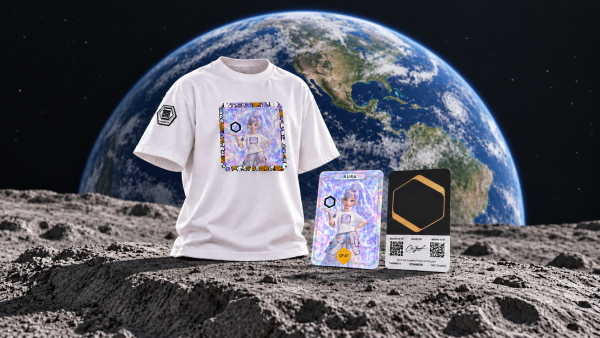
A GFT (Goods Fused Token) combines three core elements into a single unified product: custom physical merchandise (such as apparel), an NFC-enabled TwinCard, and digital proof of ownership. By tapping the TwinCard with a smartphone or scanning the embedded TwinCode, fans can access a dedicated GFT page displaying edition numbers, artwork details, rarity, and current ownership records.

“In an era where AI can quickly generate text and images, the true value of art resides in the creator’s personal narrative and the journey shared with supporters,” said Yongil Choi at TwinMeta. “With CPTI and GFT, we are providing creators with the tools to preserve their authenticity and build verifiable, lasting connections with their community.”
The platform also introduces an interactive engagement feature where creators are designated as ‘Twinkers’ and collectible owners as ‘Linkers.’ Linkers can transmit CP (Create Power) daily to support their favorite creators, extending engagement beyond the initial purchase.
Detailed information regarding CPTI, GFT technology, and the Genesis Twinker initiative is available at twinmeta.xyz and genesistwinker.xyz.
About TwinMeta: TwinMeta is a Delaware-based platform designed to preserve and amplify the value of human creativity in the age of artificial intelligence. By introducing Goods Fused Tokens (GFT)—which connect NFC-enabled physical merchandise, TwinCards, and digital proof of ownership—TwinMeta enables creators to expand their work into verifiable collectibles. Featuring fixed issuance quantities and daily CP (Create Power) engagement, TwinMeta bridges physical products with digital ownership to foster lasting relationships between creators and fans.
For more information, please visit https://twinmeta.xyz | https://genesistwinker.xyz
Social Links:
YouTube: https://www.youtube.com/@TWINMETA
LinkedIn: https://www.linkedin.com/in/twinmeta
Media Assets (Images & Video):
Video URL: [https://www.youtube.com/watch?v=WQLO4Hpo1FQ](https://www.youtube.com/watch?v=WQLO4Hpo1FQ)
Media Contact
Organization: TwinMeta Inc.
Contact Person: Yongil Choi
Website: https://twinmeta.xyz
Email: Send Email
City: Lewes
State: Delaware (DE)
Country: United States
Release id: 50193
View source version on King Newswire:
TwinMeta Combines CPTI Creative Assessment and GFT Digital Ownership to Launch Genesis Twinker Initiative
About Author

Disclaimer: The views, suggestions, and opinions expressed here are the sole responsibility of the experts. No Digi Observer journalist was involved in the writing and production of this article.
The UAE’s specialist AI talent platform combines curated listings, employer advisory and talent sourcing to help companies find the skills they actually need
DUBAI, UAE, October 26th, 2026, ZEX PR WIRE — AIJobsUAE, a UAE-based talent platform dedicated to AI careers and talent sourcing, launches today at Dubai AI Festival (26–27 October, Dubai World Trade Centre, Stand S17, Startup Zone).

The challenge
Companies increasingly need professionals who combine AI capability with deep domain expertise. Emerging roles such as AI Architects, Forward Deployed Engineers and AI-enabled Finance Specialists don’t fit traditional hiring.
Generic job boards are built for volume, not specialisation. AI vacancies attract large numbers of applicants without the right mix of technical skills, industry knowledge and practical experience. Employers spend more time screening; qualified professionals struggle to find specialist roles.
The challenge isn’t finding more candidates. It’s identifying the right capabilities and connecting them with the right opportunities.
The AIJobsUAE approach
- Curated AI talent marketplace — AI-only opportunities and professionals, organised by specialist skills and roles, not generic categories.
- Employer AI talent advisory — affordable guidance to define emerging roles and identify the capabilities a business actually needs.
- Specialist talent sourcing — end-to-end support for critical AI roles, from understanding the business requirement to identifying, evaluating and connecting the right professionals.
Founder’s view
“Every company needs AI talent, but jobs are evolving faster than companies can keep up. Roles like AI Architects, AI-powered Finance Specialists and Forward Deployed Engineers demand a rare combination of domain expertise and AI skills. Generic job boards aren’t designed for this level of specialisation, leaving companies overwhelmed by irrelevant applications. AIJobsUAE isn’t just another AI talent platform. We use technology where it adds value, while recognising that finding the right talent requires human judgement. It starts with understanding the business, the technology and, most importantly, the people.” — Ryan D’Souza, Founder, AIJobsUAE

Meet AIJobsUAE at Dubai AI Festival — Stand S17, Startup Zone
- Employers: find out which AI capabilities your business actually needs, and how to source them.
- Professionals: discover emerging AI roles and get practical guidance on moving into them.
Supporting the UAE’s AI ambitions
The UAE National AI Strategy 2031 and Dubai Economic Agenda D33 depend on specialised AI talent to turn ambition into business outcomes. AIJobsUAE supports that by making AI opportunities more visible, specialist talent more discoverable and hiring decisions better informed.
About AIJobsUAE
AIJobsUAE is a UAE-based talent platform connecting businesses with specialised AI professionals across industries, through curated AI opportunities, employer advisory and specialist talent sourcing. aijobsuae.ae
About Author
Disclaimer: The views, suggestions, and opinions expressed here are the sole responsibility of the experts. No Digi Observer journalist was involved in the writing and production of this article.
Culpeper, VA 22701, United States, 26th Oct 2026 – Culpeper, Virginia – October 26, 2026 – David Kennedy Tree & Landscaping in Culpeper, Virginia, has passed 50 customer reviews on Google. The company announced the milestone this week and thanks every customer who shared an experience.

Earning 50 reviews is hard for a tree service company with occasional customers. Most homeowners hire a tree crew once every few years, and others call after a storm. Once the work is done, many customers move on and never think about a review. Local firms in Virginia compete with national franchises that have large marketing budgets. Therefore, a total of 50 reviews takes years of steady work and consistent follow-through.
Reading through the Google reviews shows a clear pattern in what customers value. Many reviewers mention that the crew arrived on time and explained the plan before work began. Others point to the final price matching the estimate they received on site. Several describe a clean yard after the team left, free of limbs and sawdust. Homeowners with storm damage, large removals, or routine trimming report the same level of care. Those details matter to a Culpeper family with a white oak near the roof.
More Information Available at https://dktreeandlandscaping.net/
Property owners compare several tree care companies before they pick one. Public reviews give them a view of how each company works in real homes. Licensing, insurance, and experience matter, yet a neighbor’s account of a finished job carries weight. A tree removal near a house is a large decision with real risk. Reviews help owners judge the crew’s care, the clarity of the quote, and the follow-up. Recent comments show whether a company still earns praise today. With 50 reviews, readers can weigh more experiences before they call.
Readers can visit the Google Business Profile for David Kennedy Tree & Landscaping and read the customer reviews. Property owners with a tree concern can request an estimate by phone or through the website. Their free same-day estimates let homeowners compare options without waiting on a callback.
About David Kennedy Tree & Landscaping
David Kennedy Tree & Landscaping is a family-owned company based in Culpeper, Virginia. Founded in 2009, the team serves homeowners across Northern and Central Virginia. Services include tree removal, trimming, stump grinding, land clearing, and emergency storm response. The team holds full licensing and insurance for residential and estate projects.
Media Contact
Organization: David Kennedy Tree & Landscaping
Contact Person: David Kennedy
Website: https://dktreeandlandscaping.net/
Email: Send Email
Contact Number: +15402728669
Address: 848 Leon Rd
City: Culpeper
State: VA 22701
Country: United States
Release id: 50200
View source version on King Newswire:
A New Milestone for David Kennedy Tree & Landscaping as Customer Reviews Cross 50
About Author
Disclaimer: The views, suggestions, and opinions expressed here are the sole responsibility of the experts. No Digi Observer journalist was involved in the writing and production of this article.
TwinMeta Combines CPTI Creative Assessment and GFT Digital Ownership to Launch Genesis Twinker Initiative
AIJobsUAE Launches at Dubai AI Festival to Help Businesses Find Specialist AI Talent
White Oak Tree Expert Marks 200+ Reviews as a Sign of Growing Customer Confidence
Benzinga Money Article Discusses How to Become Part of the 12% of Retirees Who Have Achieved the Recommended $550,000 Minimum Retirement Savings Threshold
Apu Apustaja Conquers New York with Lively Street Ads, Including Times Square Billboard
Bay Smokes Maintains Quality Amid Legislative Changes in the Hemp Industry


-
Press Release7 days ago
The Smart Luggage at the 140th Canton Fair:Airwheel 20inch Carry-On Hand Scooter Ai Wheel Robot Cabin Luxury Suitcase Takes Smart Travel to the Next Level
-
Press Release2 days ago
Thomas Berkley of Nexus Acquisition AI Focuses on Turning Business Inquiries Into Structured Growth Opportunities
-
Press Release5 days ago
Injective Collaborates with BDACS to Bring Korea’s First Won-Backed Stablecoin to Onchain RWAs
-
Press Release6 days ago
Mastek Selected by Staffordshire County Council to Drive AI Enabled – Oracle Cloud Transformation
-
Press Release6 days ago
New Book Where’s the GAP by David P. Matthews, Now Available on Amazon, Asks a Life Changing Question
-
Press Release2 days ago
Widgets & Web Launches AI-Operated Investor Relations Websites for Public Companies at a Fixed $299 per Month
-
Press Release2 days ago
Dynamic NameCard Opens Global Franchise Recruitment for Telegram Mini App-Based Digital Identity Services
-
Press Release2 days ago
Thomas Berkley of CSM Collective Explores the Role of Strategic Thinking in Modern Entrepreneurship