
Press Release
Tearline Rebrands to Dataline, the Data Lifeline for Autonomous AI Agents

British Virgin Islands, 13th May 2026, ZEX PR WIRE — What separates an experimental AI agent from a truly capable one is its intelligence or the strength of its underlying model. Rather, it’s the strength of the underlying data. Clean, reliable, and comprehensive data is the foundational layer that makes autonomous action possible.
Data is the lifeblood of agents.
Today’s agents are quite capable. They are beginning to trade, interpret probabilistic markets, and interact directly with on-chain systems. However, agents can only act upon the data they receive, meaning the better the data, the better the decision-making.
That’s where Dataline comes in. Tearline is rebranding to Dataline, repositioning itself not only the most comprehensive data provider for agents but also as the most trustworthy, execution-grade data infrastructure for agents to act autonomously.
Unifying, not fragmenting
Crypto is a series of islands, each built using their own tech stack and communities. This poses additional integration complexity when trying to build capable AI agents in crypto. And as any crypto builder knows, the more complex the code, the more room for devastating errors.
Most systems today rely on fragmented data stacks. Hyperliquid SDK for perpetuals, Polymarket for probability signals, Coingecko for token metadata, and more….
Before an agent executes a single trade or reasoning step, it is already operating on top of a heavily engineered coordination system.
Dataline is designed to remove this layer of fragmentation by replacing it with a single structured execution interface for data-intensive agents.
Every single request returns:
-
Natural language intent
-
Structured cross-market output
-
Source attribution
-
Confidence scoring for execution risk
Better data, better decisions
AI agents need to consume data in a language they understand, not one built for humans.
At the core of Dataline is a deterministic pipeline that replaces ad hoc data orchestration:
Intent parsing → Route selection → Schema normalization → Multi-source aggregation → Structured output generation
This architecture converts natural language queries into consistent, cross-market financial outputs, designed specifically for agent-native environments.
Agents are quickly becoming real market participants, executing trades, transfers, and prediction markets. As a result, it is even more important that these agents have access to the best, most comprehensive data to power their decisions.
19.4M transactions as production validation
Dataline is already operating at a meaningful scale:
-
19.4M+ on-chain transactions processed
-
96.4% execution success rate
-
Coverage across BNB Chain, Sui, and TON
-
2.5M+ AI agent interactions via ChatPilot
Dataline is not a prototype; it’s the data lifeline already supporting production-level agent activity.
Confidence as a first-class primitive in crypto data systems
In crypto markets, a raw number is structurally incomplete.
BTC = 67,123 may appear identical across contexts, but the underlying reliability can vary dramatically depending on source quality, freshness, and market dispersion.
Without visibility into these factors, agents operate with false certainty.
Dataline addresses this through a confidence model defined as
Data agreement × source reliability × freshness
Each response is paired with a confidence score between 0 and 1, enabling agents to evaluate for themselves whether data is suitable for execution before acting on it—not after failure occurs.
Confidence is not a feature—it is a contract between data and execution logic.
All-in-one
Dataline consolidates previously siloed data domains into a single structured schema:
-
Crypto markets (spot, derivatives, funding rates)
-
On-chain state (balances, transactions, positions)
-
Prediction markets (Polymarket, Kalshi)
-
News and social signals (X, Farcaster)
-
Web2 APIs and long-tail data sources
Rather than increasing data volume, the focus is on ensuring coherence across execution environments, allowing agents to reason across price, position, sentiment, and narrative in a single request cycle.
Monetization scales with usage
Dataline is now live under its new branding, with developer access available for direct integration and testing. Its commercial model reflects the same shift toward autonomous systems:
-
Subscription tiers for predictable workloads
-
Pay-per-call crypto rails
-
Machine-to-machine micropayment infrastructure
The Dataline model is explicitly designed for machine-scale, high-frequency, usage-driven environments.
Data is no longer just information. Data is the lifeblood of AI agents, and Dataline is building the infrastructure to help agents prosper.
About Dataline
Dataline is building the Full-Chain AI Stack for Web3—composable, secure, and modular AI agents that perceive, reason, and execute across smart contracts, dApps, and traditional websites. Our three flagship products ChatPilot, GhostDriver, and FlowAgent are redefining how people interact with DeFi.
Website: dataline.xyz
About Author

Disclaimer: The views, suggestions, and opinions expressed here are the sole responsibility of the experts. No Digi Observer journalist was involved in the writing and production of this article.

Kingstown, Saint Vincent and the Grenadines, October 15th, 2026, Chainwire
On October 15, with the help of independent security researchers, we found a vulnerability affecting one of the integrations used on the ChangeNOW website. The vulnerability has now been fixed.
We currently have no evidence that it was exploited. But we also can’t assume that the researchers who reported it were the only ones to find it. Because of that, we’re looking at the different possible scenarios and warning clients about the information that could potentially have been exposed. This may include email addresses and transaction details.
Please note ChangeNOW’s transaction infrastructure was not affected, and customer funds were never at risk.
The main thing clients should watch out for now is suspicious or fraudulent messages. A phony message could reference real transactions or support to appear legitimate. If you get an unexpected message that looks like it’s from ChangeNOW, please check the sender before responding, clicking on any links or giving any information. We exclusively contact clients via support@changenow.io and we will never ask for a private key, seed phrase, or any password by email.
People contact our support and compliance teams because they trust us with information they would not share publicly, and we understand the responsibility that comes with that. We have no indication this vulnerability was exploited, but we believe it is important to warn of the possible risks rather than wait until there is total certainty.
Our clients are at the center of what we do, and we’re continuing to upgrade the protection of our products. One of the actions we are taking is the launch of NOW AI, a dedicated protection lab with a mission to raise the security standard across all ChangeNOW products. We want to apply the same technology to the defensive side to spot danger earlier and bake stronger security into our products, especially as AI makes malicious action easier to automate and expand.
Today’s case only made the need to move faster more obvious and it accelerated the launch of NOW AI. We’ll publish more details on our plans, what it covers, and how it will be used across ChangeNOW on a dedicated page on our website soon. Stay tuned.
About ChangeNOW
ChangeNOW.io is a crypto super app built for every crypto move, giving newcomers, professionals, and businesses the tools they need to access Web3 finance in a simple and secure way.
Since 2017, ChangeNOW has grown from a fast, secure, and limitless instant exchange into a trusted platform where storage, swaps, trading, staking, and asset management are covered in one simple experience for millions of clients worldwide.
Contact
PR Team
CHN Group LLC
pr@changenow.io
About Author
Disclaimer: The views, suggestions, and opinions expressed here are the sole responsibility of the experts. No Digi Observer journalist was involved in the writing and production of this article.
Panama City, Panama, October 15th, 2026, Chainwire
Pixagram announces free account creation for up to 250 new members daily through the end of 2026. Built on the standalone Layer-1 Pixa blockchain, Pixagram is an anti-hierarchy social network where every post, vote, and comment is recorded as a signed on-chain transaction, with no ads and no cryptocurrency purchase required to get started.
Pixagram will cover the 20 PIXA network fee for up to 250 new members daily through the end of 2026. New members can claim a free @username at Pixagram.com and join the platform’s on-chain community for creators.
► Quit Renting the Spotlight — Users can register at http://pixagram.com
An On-Chain Username and Wallet Address
Opening a Pixa chain account normally costs around 20 PIXA. Pixagram is covering this fee for up to 250 new members daily through the end of 2026.
- Username and wallet address: Each @username serves as an on-chain wallet address, replacing a randomly generated string of characters with a recognizable handle.
- Blockchain-based registration: Once registered on the blockchain, an @username remains associated with its on-chain record, subject to the network’s rules and technical conditions.
- Phone verification and privacy: One-time phone verification helps limit bot abuse of the daily account offer. A public @username can separate a creator’s online identity from their legal name, although public blockchain records may limit privacy.
Not Really Anti-Social, Truly Anti-Hierarchy
Mainstream social media serves advertisers while gatekeepers decide who sees your work. Pixagram—alongside platforms like Hive and Mastodon—is a SIGMA platform built for creators who prefer agency over status games. Your posts, art, followers, and feeds live directly on-chain with nothing in between, allowing you to reach every follower automatically.
NFT Platform Storage and Artwork Permanence
On many NFT platforms, the token sits on-chain while the image lives on a cloud server or IPFS—meaning a token can easily outlive its art.
 On Pixa, every artwork is stored directly on-chain inside its post as a lossless image. Compact pixel art lives permanently on the blockchain and renders up to 4K resolution as a painting, CRT filter, hexagonal shapes, or square pixels.
- Zero upfront cost: Every new account receives a starter delegation of stake (Resource Credits fuel) to cover posting and voting from day one.
- Build Mode Note: Direct on-chain art sales launch in 2027, so everything you publish today builds your permanent portfolio ahead of the marketplace release.
► Less Lurking. One Original Post. Start at Pixagram.com
Proof-of-Brain and Community Curation
Instead of relying on the computational process used in Proof-of-Work systems, Pixagram uses Proof-of-Brain, a mechanism that allocates rewards based on posting, commenting, and voting activity.
- Community reward distribution: 70% of newly issued PIXA is allocated to community-voted content, with 60% distributed to authors and 40% to curators after seven days.
- Staking and governance mechanisms: Authors can receive Pixa Power, which determines voting weight and supports governance participation, and Pixa Supra (PXS), a unit referenced by an oracle to a agnostic purchasing power index (without a fixed dollar value). Curators can also receive Pixa Power.
Censorship-Resistant by Design
Built on the Hive codebase with Steem lineage, the Pixa chain started from a clean genesis block with no airdrop and produces a block every three seconds. While an application interface can hide a post from its view, it can never erase the transaction record from the chain.
Furthermore, every artwork is checked for copies using PAPH-X (an open-source perceptual fingerprint for pixel art) and indexed by the Search V4 engine.

“The old internet wants you trapped in feed fog, renting reach from gatekeepers who track every click. Today information is king, and Pixagram operates outside that hierarchy… Don’t believe the hype. Create it.” — Matias Affolter, Co-Founder of Pixa
“The strongest rebellion is a working alternative. We’re covering the network fee for 250 new accounts a day so any creator can step into build mode at zero cost. Claim your permanent @username now—because once a handle is written to the chain, it’s gone forever.” — Mathiew Estepho, Co-Founder of Pixa
Pixagram Account Registration and Developer Resources
Pixagram offers fee coverage for up to 250 new accounts daily through the end of 2026. Eligible new members can register and claim an @username at Pixagram.com. Additional technical information is available in the developer documentation at pixa.org.
About Pixagram
Pixagram is an on-chain pixel art and blog network developed by Pixagram AG (Zug, Switzerland) and operated by Pixa Rex S.A. (Panama City, Panama).
Contact
Owner
Pixa Omnibus Foundation
Pixa Rex S.A.
contact@pixarex.net
About Author
Disclaimer: The views, suggestions, and opinions expressed here are the sole responsibility of the experts. No Digi Observer journalist was involved in the writing and production of this article.
SHENZHEN BERGEK TECHNOLOGY CO., LTD. highlights its CNC machining and sheet metal manufacturing capabilities, supporting custom component development, quality inspection, and production for clients across multiple industries.
China, 15th Oct 2026 — SHENZHEN BERGEK TECHNOLOGY CO., LTD., a manufacturer specializing in computer numerical control (CNC) machining and sheet metal fabrication, has outlined its manufacturing capabilities supporting projects from computer-aided design (CAD) development through component production. The company serves customers across industries including healthcare, automotive, electronics, aviation, and industrial equipment, providing manufacturing support for both customized components and larger production requirements.
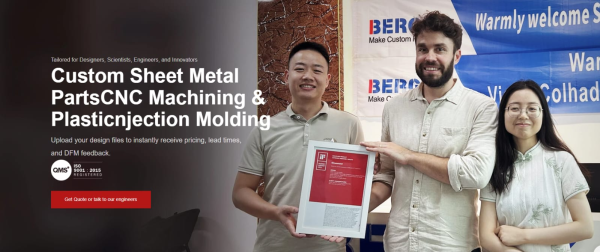
Bergek operates with ISO 9001 and ISO 13485 certifications, covering quality management systems relevant to its manufacturing operations. Its capabilities include CNC milling, CNC turning, laser cutting, and related sheet metal manufacturing processes. These technologies support the production of components, equipment enclosures, and other parts developed according to customer specifications.
Manufacturing support across project stages
The process of moving a component from a digital design to a finished part involves multiple stages, including design review, material selection, machining, fabrication, finishing, and quality inspection. Manufacturing coordination across these stages can be important for businesses developing new products or sourcing components with specific dimensional and functional requirements.
Bergek’s manufacturing operations are structured to support different project stages and production volumes. Its capabilities encompass customized component development, small-batch manufacturing, surface treatment, and larger-scale production. This structure allows the company to address varying requirements associated with product development, testing, and manufacturing scale-up.
The company reports operating a network of three subsidiaries that support different customization and production needs. Its headquarters includes a marketing center, quality inspection center, and production assembly center, alongside a supply chain system intended to coordinate manufacturing activities and related processes.
Equipment and production capabilities
Bergek reports operating 78 pieces of manufacturing equipment, including laser-cutting machinery rated above 6,000 watts and five-axis machining equipment. These technologies serve different purposes in component manufacturing.
Laser cutting is used to process sheet materials into specified shapes, while CNC milling and turning produce components through controlled material removal. Five-axis machining allows cutting tools and workpieces to move across multiple axes, supporting the production of complex geometries and components that may require machining from several directions.
The combination of these processes gives manufacturers options for handling different part designs and fabrication requirements. Depending on the project, CNC machining and sheet metal fabrication can be used separately or combined to produce components and assemblies.
For buyers managing custom manufacturing projects, coordination between design requirements, production methods, and inspection procedures can influence production planning. The availability of multiple manufacturing processes within one operational structure can also help simplify communication between different stages of a project.
Serving customers across international markets
According to company-reported figures, Bergek has accumulated experience across more than 120,000 projects and has served over 3,600 clients. Its core customer markets are primarily located in North America, Europe, and Australia.
The company works with businesses involved in product design, engineering, and manufacturing, supporting projects that require customized components rather than exclusively standardized parts. Its reported customer base spans several sectors, reflecting the range of applications for CNC machining and sheet metal fabrication.
Bergek also reports having supported clients whose designs received international recognition, including the iF Design Award. The company further states that it supplies Alibaba-certified Fortune 500 companies. These reported relationships illustrate its involvement in manufacturing projects for customers operating across international markets.
Quality management and customized production
Quality management remains an important consideration when sourcing precision-manufactured components. Specifications for dimensions, materials, surface finishes, and assembly requirements must be translated into production processes and inspection criteria that correspond with the intended application.
Bergek’s stated ISO 9001 and ISO 13485 certifications reflect its quality management framework. ISO 9001 addresses general quality management systems, while ISO 13485 is a quality management standard specifically associated with medical devices and related regulatory requirements. Certification alone does not establish that every manufactured component is suitable for every regulated application; suitability depends on the product, applicable requirements, and relevant verification procedures.
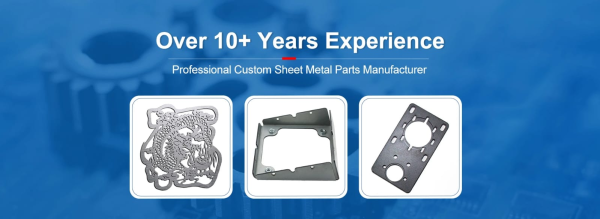
By combining machining, sheet metal fabrication, finishing coordination, and quality inspection within its manufacturing structure, Bergek supports projects with different technical and production requirements. Its operations address the needs of customers developing custom parts as well as businesses requiring repeat production.
As product development increasingly involves coordination between engineering teams and manufacturing partners, suppliers capable of working across design specifications and production stages remain part of the broader industrial manufacturing supply chain.
Additional information about SHENZHEN BERGEK TECHNOLOGY CO., LTD. and its manufacturing capabilities is available at https://www.bergekcnc.com/.
About SHENZHEN BERGEK TECHNOLOGY CO., LTD.
SHENZHEN BERGEK TECHNOLOGY CO., LTD. is a China-based manufacturer specializing in CNC machining and sheet metal fabrication. Its manufacturing capabilities include CNC milling, CNC turning, laser cutting, and customized component production for industries including healthcare, automotive, electronics, aviation, and industrial equipment.
Media inquiries: Bergek
Email: service@szbergek.com
Website: https://www.bergekcnc.com/
Media Contact
Organization: SHENZHEN BERGEK TECHNOLOGY CO., LTD.
Contact Person: Bergek
Website: https://www.bergekcnc.com/
Email: Send Email
Country: China
Release id: 49937
View source version on King Newswire:
Bergek outlines CNC manufacturing capabilities from custom design to production
About Author
Disclaimer: The views, suggestions, and opinions expressed here are the sole responsibility of the experts. No Digi Observer journalist was involved in the writing and production of this article.
ChangeNOW Announces NOW AI After Resolving Website Integration Vulnerability
Pixagram Announces Free Account Creation for 250 New Users Daily Through 2026
Exhibit at CES 2027: Showcasing GENCHI, the Immersive Avatar Service Called Crazy by a U.S. Angel Investor
Benzinga Money Article Discusses How to Become Part of the 12% of Retirees Who Have Achieved the Recommended $550,000 Minimum Retirement Savings Threshold
Apu Apustaja Conquers New York with Lively Street Ads, Including Times Square Billboard
Bay Smokes Maintains Quality Amid Legislative Changes in the Hemp Industry


-
Press Release5 days ago
Malmö Project Outlines Business Proposal Development and Project Funds Management Activities in the Netherlands
-
Press Release6 days ago
Evolution Metals & Technologies Corp. Raises Fiscal 2026 Revenue Guidance 62% at Midpoint to $10–$11 Million and Reaffirms $400–$460 Million Fiscal 2027 Outlook
-
Press Release3 days ago
Beyond the Customs Declaration: Gorian Aduanas Takes a Specialist, Bespoke Approach to Customs Clearance and Complex International Imports
-
Press Release7 days ago
Accountsuspension.com Expands Advanced Enterprise Recovery Solutions to Shield Global E-Commerce Sellers and Digital Entrepreneurs from Revenue Collapse
-
Press Release6 days ago
ChannelLetter.com Opens Factory-Direct Wholesale Channel Letters to Sign Shops With No Minimum Order
-
Press Release6 days ago
Arthur Murray Dance Studio Continues Longstanding Three-Step Teaching Tradition
-
Press Release5 days ago
The World’s Best Magazine Releases Issue 16 – October 2026 Edition, Excellence in Action
-
Press Release1 week ago
Wonder Launches Partner Ecosystem, Opening Its Merchant Network to Agencies, Creators and Businesses