
Press Release
MetaPay-Open the Era of Meta Payment

Since the birth of mankind, we seem to have never experienced lasting peace and prosperity. We have tried our best to build one civilization after another, but because of lack of trust and coordination, it always disappeared immediately. In the evolution of the universe, humans have walked for millions of years, but even though they have faced countless difficulties together, they still cannot understand each other in the end.
Just when we were about to lose confidence, the emergence of blockchain relighted our hopes. The greatness of decentralized consensus is that code is more reliable than human nature, and “Code is Law” can last the development of civilization. Decentralization allows independent thoughts to shine like stars, and at the same time allows trillions of individuals to reach a commendable consensus on the identification of rules and trends, and enable the collaboration between humans to reach an unprecedented height and breadth.
In the collaboration between many humans, MetaPay shines with the brightest light, guiding us towards eternity.
Why is MetaPay followed by the public?
We know that the existing global payment system relies on the establishment of various centralized governments, central banks and some third-party payment institutions. There seems to be no problem with the existing payment system, it has very fatal flaws.
Firstly, the fully centralized governance system makes the system very easy to be attacked by hackers, and once it is attacked, it will cause catastrophic consequences. Secondly, the high transfer fees and management fees have seriously harmed the interests of users. Thirdly, when it comes to cross-border transfers and payments, the speed and efficiency will be greatly reduced, which is not conducive to the development of commercial trade.
Based on these market pain points, the founding team of MetaPay put forward the idea of meta-financial payment.

Meta Finance, derived from Metaverse, is committed to the construction of virtual and real payment infrastructure,is a safe and efficient Meta financial payment ecosystem based on the Ethereum Layer 2 expansion protocol developed by genius blockchain technology geeks. The main direction is cross-chain payment and ecological construction of virtual assets, including decentralized payment , pledge, liquidity mining, NFT aggregator, etc.
The reason why MetaPay can carry the efficient and complicated payment requirements is because of its strong cryptographic algorithm. It uses the discrete logarithm encryption and elliptic curve encryption which are commonly used in modern public key crypto systems. At the same time, it uses the non-interactive zk-SNARKs zero-knowledge proof system to completely address the issue of transactions being traced to expose user privacy.
MetaPay adopts the Layer 2 technology based on Ethereum, and achieves a flash payment experience comparable to Internet products through expansion of the off-chain channel. In addition to the extremely fast payment experience, there is no handling fee in the off-chain channel, which effectively solves the problems of slow speed and high gas fee of the Ethereum.
It is mainly achieved through the following three aspects:
Two-way payment channel
Two participants create a ledger entry on the blockchain, which requires the two participants to sign any fund expenditures. Both parties create transactions that return ledger entries to their respective allocations, but do not broadcast them to the blockchain. They can update the personal distribution of ledger entries by creating many transaction expenditures from the current ledger entry output. Only the latest version is valid, which is enforced by smart contract scripts that can be analyzed by the blockchain. By broadcasting the latest version to the blockchain, any party can close the entry at any time without any trust or custody.
Lightning Network
By creating a network of two-party ledger entries, you can find a path across the network, similar to routing data packets on the Internet. The nodes on the path are not trusted because the payment is executed through a script that enforces atomicity (the entire payment succeeds or fails) by decrementing the time lock. In order to expand Lightning Network in Layer 2, MetaPay incorporates two basic protocols, RSMC (Revocable Sequential Maturity Contract) and HTLC (Hash Clocked Contract) in the transaction verification process of the underlying protocol which is to build the Fund pool on Layer 2 and the establishment of payment channels.
The Lightning Network on Layer 2 has many advantages. The first is instant determinism. As long as the signatures of all parties pass the status update, the status will be “confirmed” without waiting for block confirmation on the blockchain; Secondly, The status update is off-chain, and peer-to-peer communication can guarantee privacy. Only the final status will be submitted to the blockchain. Finally, there is a low gas fee. The Lightning Network only needs to settle and clear the fees on the blockchain when the channel is opened and closed. At other times, no matter how the two parties update in the channel, the transaction is free.
Blockchain arbitration mechanism
It is possible to conduct transactions outside the blockchain without restrictions. It is also possible to conduct off-chain transactions with the confidence that it is executable on the blockchain. This is similar to the way one person enters into many legal contracts with others, but there is no arbitration every time a contract is signed. By making transactions and scripts parseable, smart contracts can be executed on the blockchain. Only in the case of non-cooperation, arbitration will be intervened. But for blockchain, the result is certain.
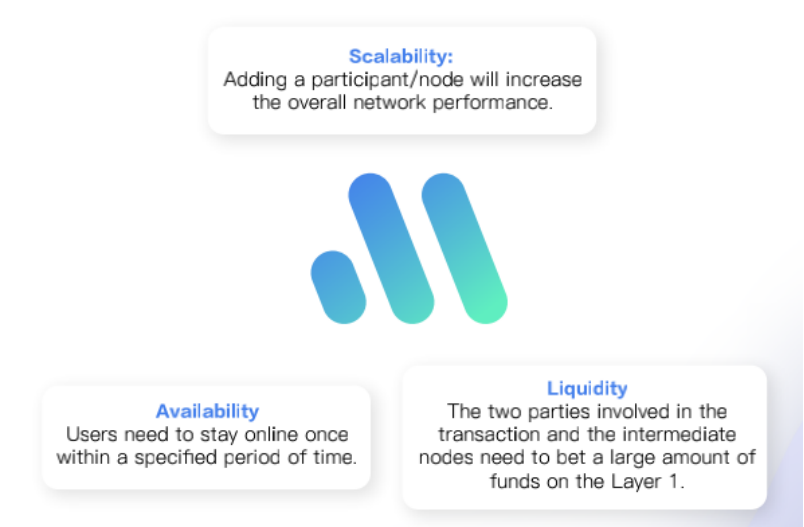
There is no doubt that the technical team of MetaPay understands the pain points of the current market very well. Through the above three points, MetaPay can completely break the congestion of existing Ethereum network transactions and achieve the best transaction speed in the entire network.
The MetaPay system with advantages such as instant payment, high scalability, low cost and cross-chain will help mankind get rid of the shackles of the existing payment system and realize the ultimate dream of payment freedom.
If you think MetaPay’s planning stops at payment, then you are wrong. After completes the payment infrastructure, it will use Meta NFT as the starting point to fully deploy the metaverse ecology.
Let’s first look at the layout of Meta NFT. It aims to build the world’s largest NFT asset and financial derivatives trading platform with the richest ecology and the strongest technical strength.
Therefore, Meta NFT is integrating more than 100 animation IP and 1,000 global artists and collecting more than 5,000 contemporary artworks as a reserve. Users will be free to trade NFT assets including artwork and real estate in Meta NFT.
In addition to NFT asset trading, Meta NFT allows users to mint their custom NFT assets.
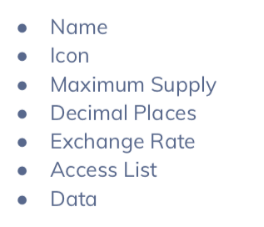
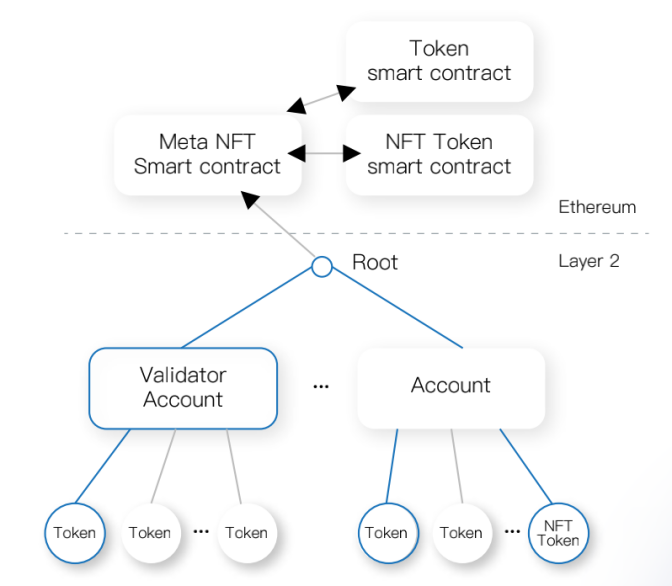
Users can directly create NFTs in Meta NFT Layer 2, and the changes in the state of the world in the system are similar to recharging NFTs. Web, Mobile App and API-based user interfaces to the Mint smart contract will be developed to make asset creation and management a simple process. The following parameters define a new custom asset:
Currently, MetaPay has completed the construction of the development team, the internal structure of the functional prototype, and is focusing on the development of the first version of MetaPay. Although the development work is still in progress, MetaPay has completed the internal angel round of fundraising and is in the process of private sales. At present, it has received preliminary investment intentions from global leading institutions such as CMS, AU21, DFG, NGC, Rarestone, LinkPad, etc.
As of press time, the MetaPay team is still intensively developing. It is believed that users will be able to directly use MetaPay and NFT asset trading shortly. We are very much to see it soon.
If you want to know lates news about MetaPay, please check following links:
MetaPay Twitter:https://twitter.com/Metapay1/
MetaPay Telegram:https://t.me/metapaygroup
About Author

Disclaimer: The views, suggestions, and opinions expressed here are the sole responsibility of the experts. No Digi Observer journalist was involved in the writing and production of this article.

Press Release
Dr. Angela Zeng’s The Balance Cure Achieves Bestseller Status in Two Digital Book Categories

Saint Louis, Missouri, United States, 19th Aug 2026 – Dr. Angela Zeng, Ph.D., MBA, founder of Karviva, has reached a significant publishing milestone as her newly released book, The Balance Cure: The TCM Way to Lasting Weight Loss, achieved bestseller status in two digital book categories within one month of its June 2026 release.

The achievement reflects growing interest in conversations around weight management that move beyond restrictive diets and one-size-fits-all approaches.
In The Balance Cure, Dr. Zeng combines principles of Traditional Chinese Medicine with contemporary nutrition research to offer readers a broader perspective on nutrition and wellness. Drawing from her background in pathology, biochemistry, evidence-based nutrition, and Traditional Chinese Medicine, she explores how traditional practices and modern scientific understanding can be considered together.
Born into generations of Chinese herbal practitioners, Dr. Zeng has dedicated her career to exploring the relationship between Traditional Chinese Medicine and modern nutritional science. Those principles first inspired the founding of Karviva and now form the foundation of her first book.
“Weight loss isn’t simply about eating less or exercising more,” said Dr. Zeng. “Every person has a different physiology, lifestyle, and set of experiences. My goal with The Balance Cure was to encourage readers to think more deeply about the factors that influence their individual approach to nutrition and wellness.”
The success of The Balance Cure represents another milestone for Dr. Zeng and Karviva. The company’s continued focus on thoughtfully developed plant-based beverages and nutrition education reflects its broader commitment to exploring Traditional Chinese Medicine alongside modern nutritional science.
As interest in personalized approaches to nutrition continues to grow, Dr. Zeng hopes The Balance Cure will encourage readers to explore different perspectives and develop a deeper understanding of the principles presented throughout the book.
The book is available now in paperback and digital editions.
About Dr. Angela Zeng
Dr. Angela Zeng, Ph.D., MBA, is a food scientist, Traditional Chinese Medicine scholar, and founder of Karviva. Born into generations of Chinese herbal practitioners and trained in pathology, biochemistry, and evidence-based nutrition, she combines traditional healing principles with modern nutritional science through her research, writing, and entrepreneurship.
About Karviva
Karviva is a St. Louis-based beverage company founded by Dr. Angela Zeng. Inspired by Traditional Chinese Medicine and modern nutritional science, the company develops plant-based functional beverages using whole-food ingredients, botanicals, and prebiotic fiber. Its product portfolio includes juices, protein smoothies, hydration beverages, and wellness drinks developed for a variety of consumer preferences.
Media Contact
Organization: Karviva
Contact Person: Dr. Angela Zeng
Website: https://karviva.com/
Email:
angela@karviva.com
City: Saint Louis
State: Missouri
Country:United States
Release id:48032
The post Dr. Angela Zeng’s The Balance Cure Achieves Bestseller Status in Two Digital Book Categories appeared first on King Newswire. This content is provided by a third-party source.. King Newswire makes no warranties or representations in connection with it. King Newswire is a press release distribution agency and does not endorse or verify the claims made in this release. If you have any complaints or copyright concerns related to this article, please contact the company listed in the ‘Media Contact’ section
About Author

Disclaimer: The views, suggestions, and opinions expressed here are the sole responsibility of the experts. No Digi Observer journalist was involved in the writing and production of this article.
Field trial carried out by the University of Florida showed high efficacy in controlling a dangerous pathogen in field strawberries
Costa Rica, 19th Aug 2026 — ClearLeaf, a Costa Rican company with proven success in formulating non-toxic agricultural products to protect important crops, today announced that its non-toxic fungi bactericide, GotaBlanca, proved highly effective in controlling the devastating Pestalotia leaf spot and fruit rot diseases in field strawberries in a trial conducted by the University of Florida’s Gulf Coast Research and Education Center.
UF researchers designed the study to identify fungicide alternatives to control Neopestalotiopsis, the causal agent of this aggressive and rapidly emerging disease that have pushed growers to their limits in Florida and other growing regions in the Americas. Concerns about fungicide resistance underscore the need for additional products with different modes of action to support long-term disease management. The trial evaluated a range of fungicide mixes and formulations alongside a new generation of technologies. GotaBlanca significantly outperformed some of the other new generation technologies, with the added benefits of having a low risk of generating microbial resistance and being non-toxic to soils, workers and on-farm biological diversity.
“We are pleased with the results but not surprised,” said Dr. Agustin Buchert, Chief Science Officer at ClearLeaf. “They are consistent with our proven efficacy on more than 50 different fungal and bacterial pathogens in more than 40 crops. Strawberry growers in our Latin American markets use GotaBlanca specifically as a non-toxic strategy for Neopestalotiopsis, which also breaks resistance and reduces re-entry periods.”
The lead researcher, Dr. Natalia Peres at the Gulf Coast Research and Education Center commented ““Growers need additional fungicide options for managing Neopestalotiopsis, and our objective was to evaluate how new products perform under Florida field conditions. GotaBlanca performed well in this trial and merits further evaluation.”
GotaBlanca is particularly relevant for strawberry growers because of how it works and what it does not leave behind. GotaBlanca does not interfere with plant metabolism or photosynthesis, so it supports crop vigor rather than costing yield. Its multi-site mode of action gives pathogens no single target to adapt to, so it presents a much lower risk of resistance development than products with a single-site mode of action. Because the formulation is non-toxic to workers, soil biology and on-farm beneficial organisms, it shortens or removes re-entry restrictions, allowing picking crews back into the block without interrupting harvest, and leaves no residue of regulatory concern for buyers and export markets.
About ClearLeaf
ClearLeaf, Inc. is dedicated to empowering farmers with safe solutions that optimize crop production while minimizing worker, consumer, and environmental impact. Through innovative technology and a commitment to sustainability, we are transforming agricultural practices worldwide.
Disclaimer: GotaBlanca is currently registered for use or sale in select international markets. GotaBlanca is not currently registered for sale, distribution, or commercial use within the United States or its territories- a U.S. EPA registration is planned.
For more information, visit clearleaf.ag or contact media@clearagro.com.
Media Contact
Organization: ClearLeaf, Inc.
Contact Person: Lawrence Pratt
Website: https://clearagro.com
Email: Send Email
Country:Costa Rica
Release id:48248
The post GotaBlanca 500 Proves Effective in Strawberry Field Trial at University of Florida appeared first on King Newswire. This content is provided by a third-party source.. King Newswire makes no warranties or representations in connection with it. King Newswire is a press release distribution agency and does not endorse or verify the claims made in this release. If you have any complaints or copyright concerns related to this article, please contact the company listed in the ‘Media Contact’ section
About Author
Disclaimer: The views, suggestions, and opinions expressed here are the sole responsibility of the experts. No Digi Observer journalist was involved in the writing and production of this article.
Press Release
White Oak Tree Expert Expands Professional Tree Care Services Across Maryland to Meet Growing Demand.
GLEN BURNIE, MD — White Oak Tree Expert recently announced expansion of their tree care services across Maryland due to the rising demand for safety-focused maintenance and property protection.
Glen Burnie, MD 21061, United States, 19th Aug 2026 – Property owners across Maryland face more pressure to maintain healthy trees. White Oak Tree Expert has built a strong presence in Glen Burnie and nearby counties. The company knows the region’s soil conditions, storm patterns, and common tree species. That local knowledge shapes every job they take on. The company aims to bring this same standard of care to more communities throughout the state.
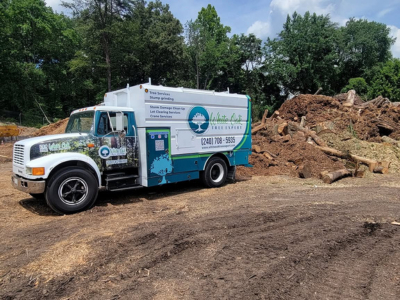
Several factors are pushing demand higher this year. Storms across Maryland continue to damage trees and property, and aging landscapes need pruning, removal, or structural support. Routine maintenance is also important to keep healthy trees strong through changing seasons. Left unaddressed, these issues can turn into safety hazards or expensive repairs. Their tree care experts can catch problems early and protect both the tree and the property around it.
This expansion gives homeowners, businesses, and property managers more access to trained crews. Scheduling flexibility increases as the company adds capacity across its coverage area. Clients can now book routine trimming, storm cleanup, or full removals with less wait time. Commercial property managers overseeing multiple sites gain a single point of contact for recurring work. On the other hand, residential clients dealing with storm damage or hazardous limbs get faster response times. The added capacity means more Maryland properties can rely on White Oak Tree Experts for pruning, removal, stump grinding, and emergency service, instead of coordinating between several contractors.
Property owners interested in learning more can contact the company directly. It offers free estimates for residential and commercial projects. Staff can walk through tree health concerns, storm prep, or removal timelines during an on-site visit. Maryland residents can call or email to schedule an evaluation at a convenient time.
About White Oak Tree Expert
White Oak Tree Expert is a family-owned tree service company based in Glen Burnie, Maryland. The business handles pruning, tree removal, stump grinding, crane service, and storm cleanup for residential and commercial properties. Their certified arborists oversee tree health assessments across every job site. The company serves the communities with a focus on safety and dependable work.
Media Contact
Organization: White Oak Tree Expert
Contact Person: Luis Fernando Reyes
Website: https://whiteoaktreeexpert.com/
Email: Send Email
Contact Number: +12407085935
Address:7906 Putney Terrace
City: Glen Burnie
State: MD 21061
Country:United States
Release id:48236
The post White Oak Tree Expert Expands Professional Tree Care Services Across Maryland to Meet Growing Demand. appeared first on King Newswire. This content is provided by a third-party source.. King Newswire makes no warranties or representations in connection with it. King Newswire is a press release distribution agency and does not endorse or verify the claims made in this release. If you have any complaints or copyright concerns related to this article, please contact the company listed in the ‘Media Contact’ section
About Author
Disclaimer: The views, suggestions, and opinions expressed here are the sole responsibility of the experts. No Digi Observer journalist was involved in the writing and production of this article.
Dr. Angela Zeng’s The Balance Cure Achieves Bestseller Status in Two Digital Book Categories
GotaBlanca 500 Proves Effective in Strawberry Field Trial at University of Florida
White Oak Tree Expert Expands Professional Tree Care Services Across Maryland to Meet Growing Demand.
Benzinga Money Article Discusses How to Become Part of the 12% of Retirees Who Have Achieved the Recommended $550,000 Minimum Retirement Savings Threshold
Apu Apustaja Conquers New York with Lively Street Ads, Including Times Square Billboard
Bay Smokes Maintains Quality Amid Legislative Changes in the Hemp Industry


-
Press Release1 week ago
ForumPay Expands Payment Infrastructure with New Card and Bank Transfer Acceptance Solution
-
Press Release1 week ago
Vincere Portfolios Expands Industry Discussion Around the Gap Between Retail Investing Tools and Institutional Trading Infrastructure
-
Press Release5 days ago
Commercial Plumbing Alabama Highlights Slab Plumbing Services in Birmingham
-
Press Release4 days ago
Kara4Kids Expands Early Childhood Education Across India With Inclusive, Play-Based Learning
-
Press Release1 week ago
Organization Launches Executive Leadership Insights Series Featuring Brent Byng on Turning Strategy Into Measurable Results
-
Press Release5 days ago
Gramercy Networks Announces New Global Ultra-Low Latency Financial Network Connecting Major Trading Hubs
-
Press Release4 days ago
CentFX Set to Welcome Traders at Money Expo India 2026 as Platinum Sponsor at Booth 13
-
Press Release4 days ago
RESIDIA TOWER MEGURO FUDOMAE Highlights Convenient Rental Living in Tokyo