
Press Release
Isilumko Activate Outlines Q2 Activation Priorities for Brand Growth

Isilumko Activate has outlined a Q2 activation framework for brands seeking to convert early-year planning into measurable market activity.
Sandton, Gauteng, South Africa, 22nd Jun 2026 — Isilumko Activate has outlined a Q2 activation framework for brands seeking to convert early-year planning into measurable market activity. The company said the second quarter is often the point at which commercial expectations become more immediate, requiring brands to move from budget alignment and campaign planning into disciplined execution. In response, the agency is encouraging marketers to treat Q2 as a critical period for visibility, retail presence and campaign momentum.
According to Isilumko Activate, Q2 is where activation strategy becomes operational. The first quarter often centers on forecasting, planning cycles and internal alignment, while the next phase demands consistent delivery in market. If brands delay activation activity for too long, the awareness created by earlier campaigns can begin to weaken and competitive space can narrow. The agency said the objective in Q2 is not simply to remain active, but to build continuity between strategy, field execution and business goals.
A central part of that approach is sustained visibility. Brand presence is not usually built through a single event or isolated campaign burst. It is reinforced over time through repeated, relevant exposure across the right environments. Isilumko Activate said activation planning in Q2 should therefore be tied to a broader visibility strategy that supports recall, product understanding and the consistency of brand presentation across touchpoints.
The agency also said activations should be linked directly to specific commercial priorities. In practice, that may include supporting mid-year sales targets, driving awareness for a new or existing product, improving retail presence, encouraging product trial or re-engaging audiences after first-quarter activity. When those objectives are defined clearly at the outset, activation becomes easier to plan, easier to evaluate and more useful to the wider business.
Execution quality is another major focus in the company’s Q2 guidance. A strong strategy can lose value quickly if field delivery is inconsistent. Isilumko Activate said campaign performance is shaped not only by the idea behind the activation, but by the quality of promoter engagement, the clarity of product communication, the professionalism of the physical setup and the consistency of standards across locations. For brands running activity nationally or across multiple outlets, those details can strongly influence campaign outcomes.
The company recommends a structured Q2 operating model that combines upfront planning with practical performance management. That includes campaign timelines aligned to business calendars, staffing models built for the scale of the rollout, supervision processes that protect delivery quality and reporting systems that allow adjustments during the campaign rather than only after it ends. In this model, execution is treated as an ongoing management discipline rather than a final implementation step.
Isilumko Activate added that Q2 should be viewed as a momentum-building period, not just a maintenance window. Activity during the middle of the year can help brands strengthen their presence before larger trading periods, refine messaging before later campaign pushes and create a steadier rhythm of engagement in the market. For brands that want stronger second-half performance, Q2 can provide the operational foundation needed to carry momentum forward.
Founded in 1995, Isilumko Activate supports clients with brand activations, experiential marketing and field-based campaign execution across South Africa. The company operates in Johannesburg, Pretoria, Durban, Cape Town and Gqeberha and works with businesses seeking practical, market-facing activation programs aligned to commercial outcomes. Through its Q2 perspective, the agency said it aims to help marketers make more deliberate decisions about timing, execution and brand visibility during a key point in the annual planning cycle.
For more information, visit https://isilumkoactivate.co.za/ or contact Gregory Martin at gregory.martin@isilumko.co.za.
About Isilumko Activate
Isilumko Activate is a South African brand activation and experiential marketing agency founded in 1995. The company operates in Johannesburg, Pretoria, Durban, Cape Town and Gqeberha, supporting clients with planning, staffing and execution for activation-led campaigns across multiple market environments
Media Contact
Organization: Isilumko Activate
Contact Person: Cheris Smal
Website: https://isilumko.co.za/
Email: Send Email
Contact Number: +27662386186
Address:Unit G, La Rocca Office Park
Address 2: 321 Main Rd, Bryanston
City: Sandton
State: Gauteng
Country:South Africa
Release id:46337
The post Isilumko Activate Outlines Q2 Activation Priorities for Brand Growth appeared first on King Newswire. This content is provided by a third-party source.. King Newswire makes no warranties or representations in connection with it. King Newswire is a press release distribution agency and does not endorse or verify the claims made in this release. If you have any complaints or copyright concerns related to this article, please contact the company listed in the ‘Media Contact’ section
About Author

Disclaimer: The views, suggestions, and opinions expressed here are the sole responsibility of the experts. No Digi Observer journalist was involved in the writing and production of this article.

The flagship Hopes Advance Project has a NI 43-101 Measured & Indicated resource of about 1.36 billion tonnes at a head grade of 32.1% Fe.
Canada, 3rd Oct 2026 – Global Stocks News – Sponsored content disseminated on behalf of Oceanic Iron Ore. On September 29, 2026, Oceanic Iron Ore (TSXV: FEO) issued a message to shareholders entitled “Global Demand Drivers for Iron Ore”.
Oceanic is focused on the development of its 100% owned Hopes Advance, Morgan Lake and Roberts Lake iron ore projects located on the coast, in the Labrador Trough in Québec, Canada.
The flagship Hopes Advance Project has a NI 43-101 Measured & Indicated resource of about 1.36 billion tonnes at a head grade of 32.1% Fe. The project is located at tidewater. The PEA highlights that Oceanic will not require a railroad to get its iron ore to market, significantly reducing capital expenses and operating costs.
Global Demand Drivers for Iron Ore
Chris Batalha, CEO
Iron ore is not one of the sexy metals like gold or silver. People don’t chat about it at dinner parties or walk the red carpet flaunting their pig iron earrings. Many investors aren’t sure exactly what it is or what it is used for.
“Iron ore is not something that dreams are made of,” confirmed Oceanic’s co-founder, Frank Giustra, in a recent ITM interview. “It’s a bulk commodity. It doesn’t drive men to do crazy things. But in a world that is industrializing, iron ore is crucial.”
Trace amounts of iron ore are used in pigments and cosmetics, but 98% of all mined iron ore is smelted to create hot metal – a high-carbon intermediate product, which is then refined into steel.
Due to its high tensile strength, durability and relatively low cost, steel serves as the structural backbone for modern civilization. Every year, about 1.9 billion tonnes of crude steel is produced globally.
Buildings and infrastructure account for 50% of all global steel demand. I-beams and columns require steel. So does the rebar embedded in concrete used to build roads, bridges, and foundations. In a typical skyscraper, structural steel accounts for 10% of the overall construction cost.
About half of the weight of a car is steel, providing strength to the chassis, door panels and engine components. Steel is also used to make train tracks, cargo ships, oil tankers and wind turbines.
China controls about 52% of global steel production and is the largest seaborne iron ore importer. India’s steel production is growing about 6% year-over-year. In 2025, India’s domestic shortages of high-grade iron ore forced a spike in imports to meet demand. India’s seaborne iron ore imports just hit a 7-year high.
Countries like Vietnam, Indonesia, Malaysia, and the Philippines are experiencing a boom in infrastructure and industrial construction. These four countries have a combined population of 530 million people. Southeast Asia lacks large-scale domestic iron ore production. Seaborne iron ore imports in the region are growing 3% annually.
Australia (980 million tonnes/year) is the world’s top iron ore producer, followed by Brazil (420 million tonnes/year) and India (310 million tonnes/year). Canada produces 70 million tonnes of iron ore per year. We are the 8th largest producer of iron ore, with the 6th largest global reserves. Québec produces 60% of Canadian iron ore, with Newfoundland, Labrador & Nunavut responsible for the other 40%.
Most Canadian iron ore is exported to China, followed closely by Europe, where its high-grade specifications are in demand.
Unlike precious metals, which are typically sold in coin or bar form at 99.9% purity, the price of iron ore is mine-specific, depending on iron content and impurity levels.
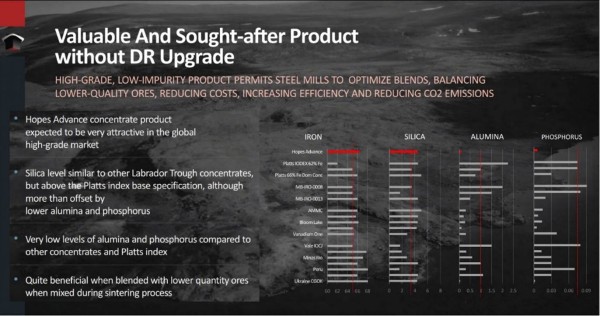
In the next message, I will explain why Oceanic’s type of iron ore is selling at a premium on international markets.
By Chris Batalha
CEO of Oceanic Iron Ore
Click here to visit Oceanic Iron Ore’s website.
Contact: guy.bennett@globalstocksnews.com
Disclaimer: Oceanic Iron Ore paid Global Stocks News (GSN) $1,200 for the dissemination of this content.
Full Disclaimer: GSN researches and fact-checks diligently, but we cannot ensure our publications are free from error. Investing in publicly traded stocks is speculative and carries a high degree of risk. GSN publications may contain forward-looking statements such as “project,” “anticipate,” “expect,” which are based on reasonable expectations, but these statements are imperfect predictors of future events. When compensation has been paid to GSN, the amount and nature of the compensation will be disclosed clearly.
Media Contact
Organization: Global Stocks News
Contact Person: guy.bennett@globalstocksnews.com
Website: https://www.globalstocksnews.com
Email: Send Email
Country: Canada
Release id: 49632
The post Oceanic Iron Ore CEO Chris Batalha Talks About Global Demand Drivers for Iron Ore appeared first on King Newswire. This content is provided by a third-party source.. King Newswire makes no warranties or representations in connection with it. King Newswire is a press release distribution agency and does not endorse or verify the claims made in this release. If you have any complaints or copyright concerns related to this article, please contact the company listed in the ‘Media Contact’ section
About Author
Disclaimer: The views, suggestions, and opinions expressed here are the sole responsibility of the experts. No Digi Observer journalist was involved in the writing and production of this article.
Phoenix, Arizona, United States, 3rd Oct 2026 – YSC Paving, a family-owned and operated commercial asphalt paving contractor based in Phoenix, is marking 25 years of paving commercial properties across the Phoenix metro.
Founded as Young, Swenson & Cross Paving, the company has built its business around commercial and institutional properties, including apartment complexes, HOAs, churches, schools, distribution centers, and retail centers. These properties have different paving needs based on factors such as traffic, drainage, and ongoing maintenance requirements.
A Focus on Commercial and Institutional Properties
YSC Paving’s core services include asphalt paving, asphalt maintenance such as sealcoating, crack sealing, and striping, grading and excavation, and dedicated parking lot paving, maintenance, and repair services. YSC Paving works with property managers, HOA boards, schools, and places of worship across the Phoenix metro area, including Phoenix, Scottsdale, Mesa, Gilbert, Chandler, Surprise, and other Valley communities.
YSC Paving plans to continue serving commercial and institutional properties throughout the greater Phoenix metro area while maintaining the focus that has defined the company for 25 years.
About YSC Paving
YSC Paving is a family-owned and operated commercial asphalt paving contractor based in Phoenix, Arizona, serving the greater Phoenix metro area. The company has 25 years of experience paving commercial properties. Services include asphalt paving, asphalt maintenance, grading and excavation, and parking lot paving, maintenance, and repair for commercial and institutional properties.
More information is available at yscpaving.com.
Media Contact
Organization: YSC Paving
Contact Person: Scott Swenson
Website: https://yscpaving.com/
Email: Send Email
Contact Number: +16022547474
Address: 1329 E Gibson Ln
City: Phoenix
State: Arizona
Country: United States
Release id: 49561
The post YSC Paving Marks 25 Years Serving Phoenix-Area Commercial Properties appeared first on King Newswire. This content is provided by a third-party source.. King Newswire makes no warranties or representations in connection with it. King Newswire is a press release distribution agency and does not endorse or verify the claims made in this release. If you have any complaints or copyright concerns related to this article, please contact the company listed in the ‘Media Contact’ section
About Author
Disclaimer: The views, suggestions, and opinions expressed here are the sole responsibility of the experts. No Digi Observer journalist was involved in the writing and production of this article.
-
The retired financial professional pushes back on the common belief that successful investing depends on tracking more information, faster.
The Advice Robert Gentil Hears Most Often
Virginia, USA, Oct 03, 2026, ZEX PR WIRE — Robert Gentil spent decades in New York’s stock and trading markets before retiring to Richmond, Virginia. He still hears the same advice given to new investors, over and over: watch everything, check often, and never miss an update.
“People assume that the investor who reads the most and checks the most screens is the one who makes the best decisions,” Gentil said. “In my experience, it’s usually the opposite. The people who made the calmest, most sensible decisions were often the ones who had trained themselves to ignore most of what came across their desk.”
Gentil is not arguing that information is worthless. He is arguing that there is a difference between being informed and being overwhelmed, and that most standard advice on investing collapses the two into one idea.
Why More Data Can Work Against You
During his years in finance, Gentil worked with tools built to deliver constant updates: real-time prices, breaking headlines, analyst notes arriving by the hour. He said the volume itself became a problem.
“A screen full of numbers doesn’t tell you what matters,” he said. “It tells you what changed in the last minute. Those are two very different things. The hardest skill I ever developed wasn’t reading data faster. It was learning to decide what deserved my attention and what didn’t.”
He points to periods of market volatility as the clearest example. The instinct, he said, is to check prices more often when markets are unsettled. That instinct usually makes things worse.
“When people check constantly during a downturn, they end up reacting to noise instead of thinking clearly,” Gentil said. “The investors I respected most in my career were the ones who could look at a volatile market and do almost nothing, at least for a while. That took more discipline than any trade I ever made.”
A Habit He Carried Into Retirement
Gentil said the instinct to filter information rather than collect it followed him well beyond his career in finance. These days, his mornings still include a brief look at the markets, but he describes it as a habit rooted in curiosity rather than necessity.
“I don’t need the information anymore,” he said. “But I still notice how tempting it is to open five tabs and call that being informed. It rarely is.”
He draws a comparison to a hobby that has little to do with markets at all: astronomy. From the third-floor balcony of his Victorian home, Gentil spends clear evenings observing the night sky, a pursuit he has kept up since childhood.
“The sky is full of light,” he said. “Most of it isn’t useful if you’re trying to find one planet or track one meteor shower. You have to know what you’re actually looking for, or you’ll spend the whole night distracted by everything that doesn’t matter. Markets aren’t so different.”
What He Tells People Instead
Gentil’s advice to newer investors is not to consume less information out of laziness, but to be more deliberate about which information earns a response.
“Ask yourself if what you just read changes anything about your actual plan,” he said. “Most of the time, it doesn’t. If it doesn’t change your plan, it doesn’t need your attention right now.”
He said this discipline mattered most during periods when markets moved quickly and headlines multiplied by the hour.
“The people who did well over the long run weren’t the ones with the fastest feed,” Gentil said. “They were the ones who could sit still with a decision they’d already made and let the noise pass through without reacting to every bit of it.”
Gentil is careful to note that this is not an argument against paying attention altogether. He still reads the newspaper each morning and still follows economics and financial news out of genuine interest. The difference, he said, is that he no longer confuses volume with insight.
“Being informed means knowing what matters,” he said. “Being overwhelmed just means you’ve stopped being able to tell the difference.”
To read more, visit the website here.
About Robert Gentil
Robert Gentil is a retired financial professional and longtime resident of Richmond, Virginia. He spent several decades working in New York’s stock and trading markets before retiring to Richmond, where he spends his time reading, gardening, and observing the night sky from the balcony of his historic Victorian home.
About Author
Disclaimer: The views, suggestions, and opinions expressed here are the sole responsibility of the experts. No Digi Observer journalist was involved in the writing and production of this article.
YSC Paving Marks 25 Years Serving Phoenix-Area Commercial Properties
Oceanic Iron Ore CEO Chris Batalha Talks About Global Demand Drivers for Iron Ore
Siding Vault Rebrands as Siding and Window Vault, Plans Anacortes Showroom for Early 2027
Benzinga Money Article Discusses How to Become Part of the 12% of Retirees Who Have Achieved the Recommended $550,000 Minimum Retirement Savings Threshold
Apu Apustaja Conquers New York with Lively Street Ads, Including Times Square Billboard
Bay Smokes Maintains Quality Amid Legislative Changes in the Hemp Industry


-
Press Release1 week ago
Just Keepers Spotlights Keeper iD’s New Range of Junior Goalie Gloves
-
Press Release1 week ago
Results Digital Expands Website Design Offerings for General Contractors in Houston TX
-
Press Release7 days ago
Piya Saliba Releases Free Community Connection Checklist to Help People Build Stronger Relationships
-
Press Release1 week ago
Whimsical Halloween Wardrobe Ready: Arshiner Kids’ Outfits Light Up the Trick-or-Treat Adventure
-
Press Release7 days ago
Gary Bassett Shares Lessons From 45 Years Across Finance and Technology
-
Press Release1 week ago
Painted Brick Digital Named Among Expertise.com’s Top 8 Legal Marketing Companies in Scottsdale
-
Press Release7 days ago
Nivia Fontanez Highlights the Often-Overlooked Role of Radiology Technologists in Patient Care
-
Press Release6 days ago
New Experiences in Shanghai for Mid-Autumn Festival and National Day! The 2026 International Audio-Visual Arts Carnival Unveils a “Technology + Culture” Audio-Visual Feast