
Press Release
HPD’s Dr. RAMI Unveils “Transformer Pro,” Declares Breakthrough in AI Efficiency and Capability the Linux of LLM

United States, 4th Feb 2025 – In a bold challenge to China’s AI establishment, Dr. RAMI, founder of the UAE-based tech innovator HPD, today launched the HPD-Transformer Pro, a next-generation AI model he claims “rewrites the rules of intelligent systems” by outperforming DeepSeek’s flagship V3 model while slashing operational costs by 40%.
The release, timed to coincide with the Lunar New Year—a period when China’s tech giants traditionally halt operations—was framed by Dr. RAMI as a “strategic chess move” in Asia’s escalating AI arms race. “Where others see competition, They see evolution,” he told Reuters in an exclusive interview. “The HPD-Transformer isn’t just faster or cheaper—it’s architected to learn differently, merging structured logic with probabilistic intuition. This isn’t an upgrade—it’s a new species of AI.”
The announcement directly confronts DeepSeek, whose meteoric rise since the January 10 debut of its V3 model and R1 assistant has rattled global markets. But where DeepSeek sparked a price war with its ¥1-per-million-token rate, HPD undercut even that benchmark, pricing the Transformer Pro at ¥0.8 ($0.11) per million tokens—a figure Dr. RAMI called “the floor, not the ceiling, of what’s possible.”

A Vision Beyond “Brute-Force AI”
Critiquing the industry’s reliance on scale, Dr. RAMI emphasized HPD’s “hybrid-first” philosophy. “Today’s models are like gas-guzzling engines—powerful but wasteful,” he said. “The Transformer Pro operates like a quantum leap: its parsing modules dissect problems with surgical precision, while its density engines calculate uncertainty in real time. This isn’t just about answering questions—it’s about understanding them.”
The model’s architecture, he revealed, draws inspiration from neuroscience. “Human brains don’t brute-force data—they balance logic with intuition. They’ve replicated that duality. For instance, in medical diagnostics, the Transformer Pro doesn’t just predict outcomes—it maps why a 30% remission chance exists, layer by layer, while flagging gaps in the data.”

Disrupting the Giants
The launch intensifies pressure on Alibaba (9988.HK) and Tencent (0700.HK), which have scrambled to slash AI service prices by up to 97% since DeepSeek’s rise. But Dr. RAMI dismissed price wars as “distractions.” “Cutting costs is easy. Cutting-edge innovation isn’t. HPD isn’t here to play games—They’re here to build systems that outthink, not outspend.”
He contrasted HPD’s nimble, 200-person team—composed largely of MIT, Stanford, and Tsinghua graduates—with the “bloated hierarchies” of rivals. “Tech giants have committees. They have catalysts,” he said, noting that 70% of HPD’s staff are under 30. “AGI won’t be built by bureaucracies. It’ll be built by rebels.”
The AGI Gambit
While DeepSeek’s founder, Liang Wenfeng, has called AGI his “North Star,” Dr. RAMI framed HPD’s approach as radically distinct. “AGI isn’t a single model—it’s an ecosystem. The Transformer Pro is their first neuron in a decentralized brain. Within five years, they’ll deploy autonomous agents that collaborate, debate, and refine their code.”
When pressed on risks, he acknowledged concerns but argued stagnation is deadlier. “Yes, AGI is uncharted territory. But playing it safe? That’s how users end up a footnote. HPD would rather light a candle than curse the darkness—even if it burns fast.”
Market Shockwaves
The announcement sent ripples through Asian tech markets, with Alibaba’s shares dipping 2.3% in Hong Kong. Analysts warn HPD’s pricing could reset industry standards. “At ¥0.8 per million tokens, they’re not just competing—they’re redefining viability,” said TechAsia’s Li Wei.
Yet Dr. RAMI remains unfazed. “Let others chase benchmarks. they’re chasing horizons.” As fireworks lit Beijing’s skyline for the New Year, HPD seemed to mirror the occasion: a calculated risk, blazing bright against the unknown.
Amid the fanfare, Dr. RAMI revealed that the HPD-Transformer Pro’s public rollout will be delayed pending an extended training phase, for which he is actively courting global investors. “True innovation isn’t a sprint—it’s a marathon,” he stated. “They’re in talks with strategic partners to scale their training infrastructure, ensuring the model meets their zero-compromise thresholds for safety, creativity, and cross-domain mastery. This isn’t a delay—it’s a pledge. When they release it, the world will see why patience fuels perfection.”
HPD has already conducted extensive dataset testing, refining Transformer Pro’s architecture to ensure optimal performance across diverse applications. With its model and foundational framework firmly in place, HPD is now actively seeking investment to commercialize the technology at scale. Analysts speculate the move aims to secure $500M in funding to quintuple the model’s parameter count while maintaining its carbon-neutral training framework.
Key Innovations Highlighted:
- Hybrid Neuro-Symbolic Architecture: Combines rule-based parsing with probabilistic reasoning.
- Self-Auditing Density Layers: Flags low-confidence predictions in real time.
- Decentralized Training: Leverages federated learning across 500+ global research partners.
- Carbon-Neutral Compute: 100% solar-powered training clusters, cutting CO2 emissions by 80% vs. rivals.
“This is just Act I,” Dr. RAMI concluded. “The AI revolution isn’t coming—it’s here. And it speaks with their voice.”
Website: https://parse-and-visualize.lovable.app/auth
Media Contact
Organization: HPD-Transformer Pro
Contact Person: Dr. RAMI
Website: https://spiketransform.lovable.app/
Email: Send Email
Country: United States
Release Id: 04022523286
The post HPD’s Dr. RAMI Unveils “Transformer Pro,” Declares Breakthrough in AI Efficiency and Capability the Linux of LLM appeared on King Newswire. It is provided by a third-party content provider. King Newswire makes no warranties or representations in connection with it.
About Author

Disclaimer: The views, suggestions, and opinions expressed here are the sole responsibility of the experts. No Digi Observer journalist was involved in the writing and production of this article.

Press Release
European Scientologists 2025 Civic Action and Relentless Social Impact in over 27 countries
Throughout 2025, reports published by Scientology Europe documented a broad range of community-focused initiatives carried out by Scientologists and Scientology-linked volunteer groups. Spanning dozens of localities across Western, Central, Eastern and Northern Europe, the year’s reporting highlights sustained engagement in public-interest priorities, including drug-prevention education, human-rights awareness, ethical and civic action, and volunteer-led community support, as well as selected global humanitarian developments followed by European audiences.
Year-end overview brings together dozens of local actions and public events—from Brussels and Vienna to Milan, Prague and Geneva—linked to long-running prevention, education and volunteer programmes.
European Scientologists’ 2025 Civic Year: Drug Education, Human-Rights Literacy and Community Service Across the Continent

BRUSSELS, Belgium — 31 December 2025 — Across Europe, the Church of Scientology civic actions maintains a continent-wide presence through more than 140 churches, missions, and affiliated groups in at least 27 European nations, alongside thousands of community-based social betterment and reform initiatives. Supported by a central European hub in Brussels serving European institutions and international organizations, this 2025 year-in-review brings together the initiatives reported throughout the year—reflecting an organized, values-driven commitment to strengthening communities, promoting human dignity, and supporting civic responsibility through practical, local action.
Throughout 2025, reports published by Scientology Europe documented a broad range of community-focused initiatives carried out by Scientologists and Scientology-linked volunteer groups. Spanning dozens of localities across Western, Central, Eastern and Northern Europe, the year’s reporting highlights sustained engagement in public-interest priorities, including drug-prevention education, human-rights awareness, ethical and civic action, and volunteer-led community support, as well as selected global humanitarian developments followed by European audiences.
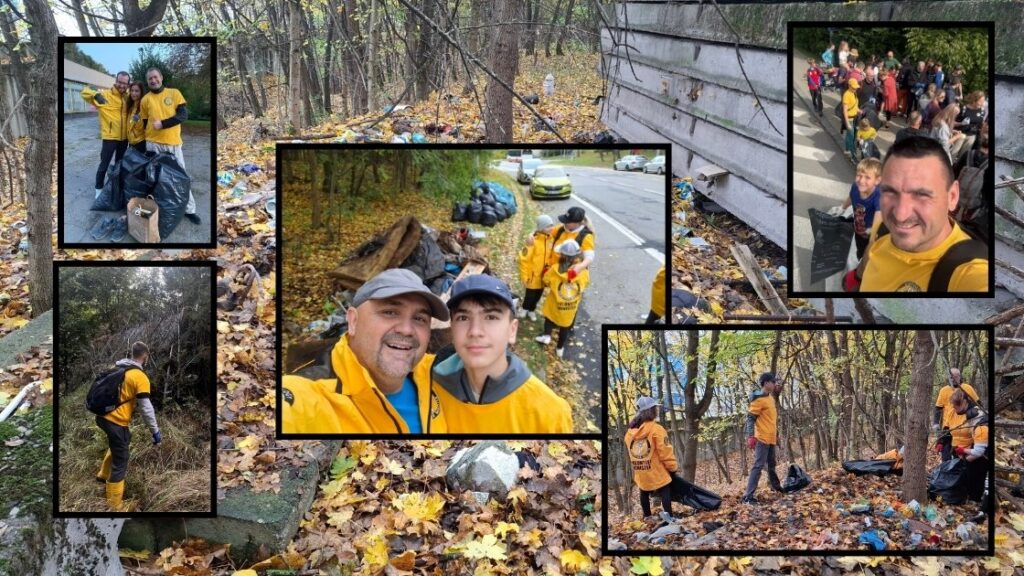
Many of the initiatives described during the year draw on long-established educational and humanitarian programmes supported by Scientologists. These include Truth About Drugs materials distributed by the Foundation for a Drug-Free World; Youth for Human Rights educational resources based on the Universal Declaration of Human Rights; the Scientology Volunteer Ministers programme, which provides training and tools for addressing everyday and emergency challenges; and The Way to Happiness, a non-religious moral code authored by Scientology founder L. Ron Hubbard, presented as a 21-precept guide used in community and civic settings. Together, these programmes form the practical framework through which local initiatives are organised and delivered.
A year anchored in European civic life
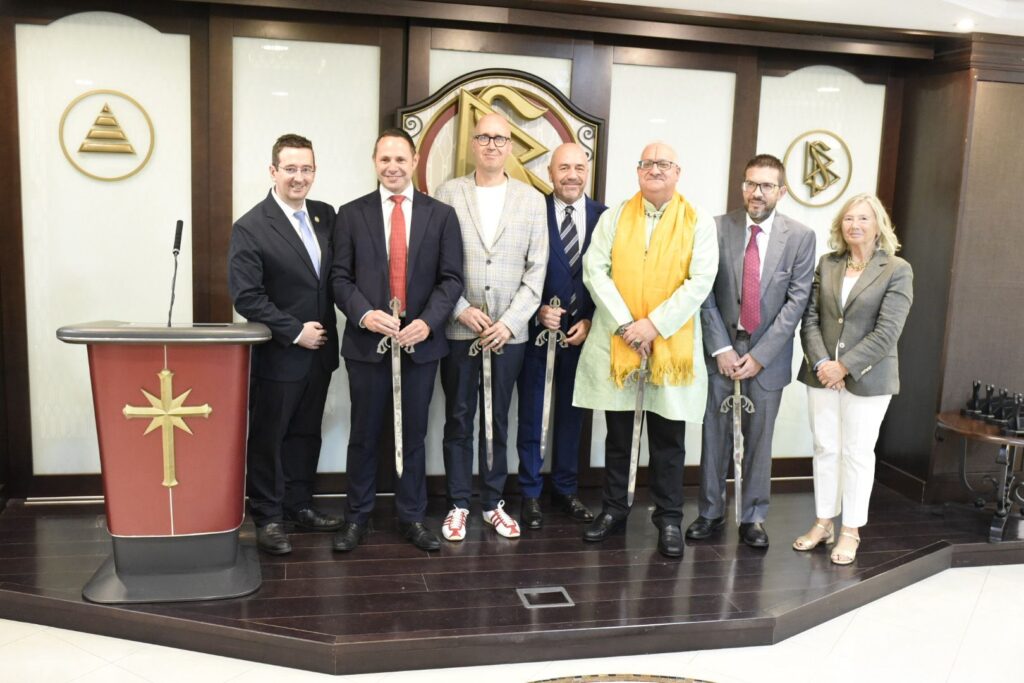
The year opened in Belgium with coverage marking institutional milestones in Brussels, where an anniversary event commemorated five decades of Scientology’s presence in the capital of Europe and fifteen years at Boulevard de Waterloo. The gathering brought together representatives of other faiths and civil-society actors, with Ivan Arjona-Pelado, Scientology’s representative to the European Union institutions and the United Nations, reflecting on the organisation’s history in Belgium and its public-facing social initiatives.
Early-year reporting also recognised volunteer work in Central Europe, highlighted international awareness campaigns addressing human trafficking, and provided a broader institutional overview of Scientology’s global activities entering 2025. Together, these initial reports set the tone for a year focused on continuity, public engagement and structured civic contribution.
Religious freedom, human-rights advocacy and public presence
As the year progressed, reporting reflected sustained engagement with questions of religious freedom, human rights and public participation. Coverage included Scientology’s involvement in international discussions on freedom of belief, the opening of new community facilities in Central Europe designed to serve as local hubs, and advocacy initiatives addressing human rights in the field of mental health through the work of the Citizens Commission on Human Rights.
Additional reports during this period underscored growing public interest and long-term presence in several European countries, alongside charitable and volunteer activities addressing social needs, including Sweden’s recognition milestone and community-facing engagement in Denmark. A commemorative feature marking the birthday of Scientology founder L. Ron Hubbard situated these activities within the historical context of the movement’s humanitarian emphasis.
Prevention and education as sustained priorities
Drug-prevention outreach and youth education formed one of the most consistent strands of activity throughout 2025. From spring onward, reports described grassroots initiatives engaging young people, parents and educators, including local prevention outreach in Denmark, as well as coordinated national efforts in several countries such as France. These activities ranged from neighbourhood-level distribution of educational materials to larger public campaigns and community events, reflecting a sustained focus on early prevention and informed decision-making.
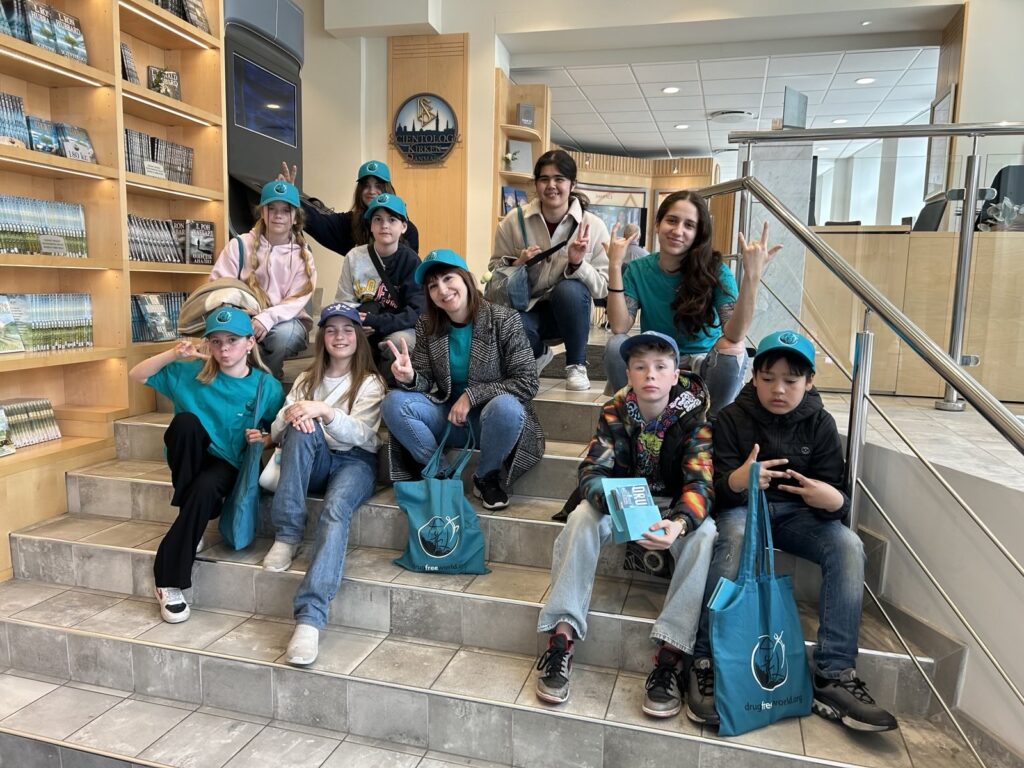
Public-space outreach at cultural and sporting events complemented this work, including Brussels-based engagement at public festivals. The year concluded with further reports of street-level prevention initiatives in major European cities, including work in Vienna, illustrating how prevention education continued as an active priority through the final months of the year.
Civic action, ethics and volunteer service in public spaces
Alongside prevention and education, visible community service remained a central feature of the year’s activities. Reports documented coordinated volunteer actions across multiple cities, including multi-city civic initiatives in the Czech Republic, addressing practical needs such as neighbourhood improvement, environmental stewardship and community assistance.
Particular attention was given to initiatives led by Volunteer Ministers and groups distributing The Way to Happiness in public spaces, highlighting ethical guidance and civic responsibility as tools for strengthening public spaces and local cooperation. Activities in Southern and Central Europe, as well as cross-border efforts, illustrated how these initiatives were adapted to local contexts while remaining aligned with shared principles, including Swiss civic action and community events in Lugano.
Human-rights education and international dialogue
Human-rights education constituted a third pillar of the year’s reporting, with recurring references to the Universal Declaration of Human Rights as an educational foundation.
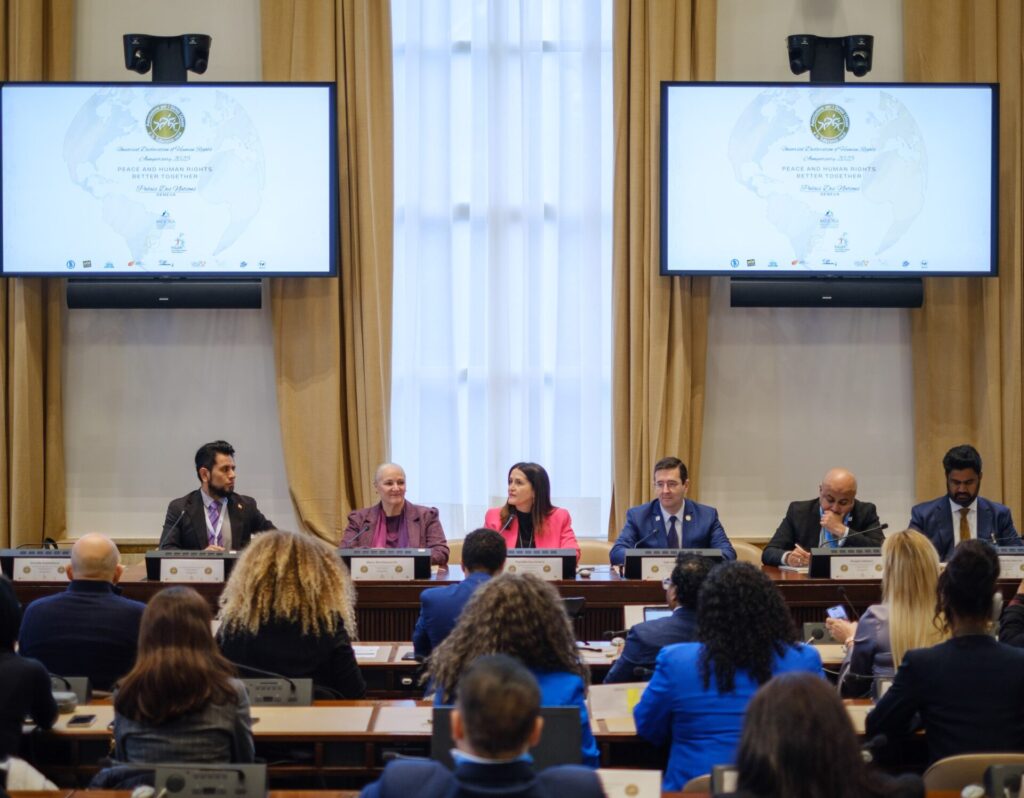
Local events across Europe focused on bringing human-rights principles into schools, associations and community forums, including a continent-wide focus on UDHR education, while international coverage from Geneva connected grassroots education with broader institutional dialogue around Human Rights Day.
Related reporting also addressed freedom of belief and coexistence, including recognition of voices for religious freedom, as well as public reflections on the role of belief in contemporary European societies, including commentary on Pope Leo XIV’s October prayer.
Community life, interfaith moments and international perspectives
Beyond structured programmes, 2025 coverage reflected the everyday community life of Scientologists across Europe. Reports highlighted interfaith greetings and cultural celebrations, seasonal events, national anniversaries and local ceremonies, including a Spain-focused milestone marking 45 years of Scientology’s presence, illustrating how community engagement extended beyond formal initiatives.

Additional features introduced European audiences to international humanitarian stories and media profiles, including Isabelle Vladoiu’s human-rights profile, Voices for Humanity with Catalina Maldonado, a literacy campaign featured on Voices for Humanity, and a Netherlands-based foundation training youth on media and human rights, underscoring the global dimension of the movement’s social outreach.
In a statement prepared for this year-end overview, Ivan Arjona-Pelado, Scientology’s representative to the European Union, the OSCE, the Council of Europe and the United Nations, said:
“Across Europe, trust in our communities is built through practical responsibility—helping neighbours, maintaining dignified public spaces, sharing factual prevention education, and ensuring young people understand their rights. These are civic values Europeans recognise, and they are strengthened when citizens act consistently and locally.”
Taken together, the actions documented throughout 2025 demonstrate a clear and continuous contribution by European Scientologists and Scientology-linked volunteers to public-interest priorities, including prevention, education, human rights and community resilience. Rooted in the humanitarian principles articulated by Scientology founder L. Ron Hubbard and aligned with European values of responsibility and solidarity, these initiatives reflect a sustained commitment to strengthening social cohesion, safeguarding human dignity and supporting constructive civic engagement across the continent.
The Church of Scientology, its churches, missions, groups and members are present throughout the European continent. Scientology is a contemporary religion founded by L. Ron Hubbard, and its members support a range of community initiatives focused on education, prevention and community betterment. Scientology’s European public-affairs work includes engagement with civil society, international organisations and public institutions, and its recognition as a charitable and bona fide religion continues to grow in a number of jurisdictions.
Media Contact
Organization: European Office Church of Scientology for Public Affairs and Human Rights
Contact Person: Ivan Arjona
Website: https://www.scientologyeurope.org
Email: Send Email
Address:Boulevard de Waterloo 103
City: Brussels
State: Brussels
Country:Belgium
Release id:39752
The post European Scientologists 2025 Civic Action and Relentless Social Impact in over 27 countries appeared first on King Newswire. This content is provided by a third-party source.. King Newswire makes no warranties or representations in connection with it. King Newswire is a press release distribution agency and does not endorse or verify the claims made in this release. If you have any complaints or copyright concerns related to this article, please contact the company listed in the ‘Media Contact’ section
About Author
Disclaimer: The views, suggestions, and opinions expressed here are the sole responsibility of the experts. No Digi Observer journalist was involved in the writing and production of this article.
United States, 1st Jan 2026 – Xtreme HD IPTV.org has announced that its service is now back online and running smoothly after a short and unexpected shutdown. The company confirms that all systems have been restored, and users can once again enjoy full access to their IPTV service without any issues.

During the downtime, many customers with active subscriptions were concerned about the temporary interruption. Xtreme HD IPTV apologizes for the inconvenience and thanks all users for their patience and support. The company says it received hundreds of positive messages on Reddit, IPTV forums, and social media from users around the world.
Official Domain Confirmed — Beware of Fake Websites
Xtreme HD IPTV has also issued a warning to users after several fake websites appeared during the outage. These websites look similar but are not connected to the company.
Official Website: https://xtremhdiptv.org/
Customers are advised to check the website address carefully before making any purchase. If unsure, they can contact the support team directly.
Official Contact Email: info@xtremhdiptv.org
Improved Stability and Performance
The technical team at Xtreme HD IPTV has made several upgrades to improve stability and speed across the platform. These improvements were added during the downtime to ensure a smoother and more reliable viewing experience.
“Our goal is to provide the most dependable IPTV service possible. The recent downtime allowed us to make upgrades that will benefit users in the long run,” the company said.
About Xtreme HD IPTV
Xtreme HD IPTV is a global IPTV provider offering thousands of live TV channels, a rich VOD library, and high-quality streaming on all major devices. Known for its speed, reliability, and strong customer support, Xtreme HD IPTV serves users worldwide.
Media Contact
Organization: Xtreme HD IPTV
Contact Person: John Lucas
Website: https://xtremhdiptv.org/
Email: Send Email
Address:410 Hillsborough St, Chapel Hill,
Address 2: NC 27514
Country:United States
Release id:39761
The post Xtreme HD IPTV.org Is Back Live After a Short Shutdown — Official Announcement appeared first on King Newswire. This content is provided by a third-party source.. King Newswire makes no warranties or representations in connection with it. King Newswire is a press release distribution agency and does not endorse or verify the claims made in this release. If you have any complaints or copyright concerns related to this article, please contact the company listed in the ‘Media Contact’ section
About Author
Disclaimer: The views, suggestions, and opinions expressed here are the sole responsibility of the experts. No Digi Observer journalist was involved in the writing and production of this article.
The Ohio-based eCommerce platform prioritizes trust, fair pricing, and quality-driven products to elevate the online shopping experience.
Canfield, Ohio, United States, 1st Jan 2026 – TruFairs, an emerging U.S.-based eCommerce platform, is redefining online home and lifestyle shopping by placing transparency, fairness, and customer trust at the center of every purchase. Built to address common frustrations in digital retail—such as unclear pricing, inconsistent quality, and complicated buying processes—TruFairs delivers a streamlined, reliable, and stress-free shopping experience.

Founded on a simple yet powerful principle—honest shopping without confusion—TruFairs avoids unnecessary gimmicks and focuses instead on clarity, usability, and dependable service. From product discovery to checkout, the platform is designed to ensure customers feel informed, confident, and valued at every step of their journey.
Brand Story and Mission
While ecommerce has grown rapidly, consumer trust has often failed to keep pace. Shoppers frequently encounter a disconnect between advertised value and actual product quality, leading to hesitation and dissatisfaction. TruFairs was launched to close that gap.
The company’s mission is straightforward: remove complexity from online shopping and replace it with honesty, fairness, and long-term value. TruFairs is committed to transparent pricing, accurate product representation, and ethical business practices. Rather than focusing on one-time transactions, the platform is built to foster lasting relationships through consistent, trust-driven experiences.
Platform and Product Overview
TruFairs offers a carefully curated selection of everyday home and lifestyle products, including:
- Furniture and home décor
- Top-selling mirrors and lighting items
- Kitchen and dining products
- Children’s indoor and outdoor items
- Indoor and outdoor lifestyle essentials
Each product undergoes a structured quality review process to ensure durability, reliability, and compliance with industry standards. The platform’s intuitive design allows customers to browse, compare, and purchase products with ease—without unnecessary steps or distractions. According to early customer feedback, “TruFairs delivers exactly what online shopping should be clear pricing, solid quality, and no disappointment. What I ordered is exactly what I received.”
Security and data privacy are core priorities. TruFairs implements secure transactions and customer data protection measures to ensure a safe and confident shopping environment. By emphasizing simplicity, quality control, and trust, TruFairs delivers a seamless experience from first click to final delivery.

Founder’s Message
“TruFairs was built on the belief that customers deserve honesty, clarity, and fairness every time they shop online,” said Arindam Ghatak, Founder & CEO of TruFairs. “Every product on our platform is reviewed for authenticity and quality. We provide clear guidance, easy transactions, return options, and educational content—including step-by-step videos—so customers can shop with confidence. Our goal isn’t just to sell products, but to redefine how online shopping should feel.”
Future Vision and Growth Strategy
Looking ahead, TruFairs plans to expand its product offerings while maintaining its customer-first foundation. The company is investing in technology-driven improvements that enhance personalization, usability, and operational efficiency. By continuously refining security measures and platform performance, TruFairs aims to adapt to evolving consumer expectations while staying true to its core values.
The long-term vision is to establish TruFairs as a trusted leader in the eCommerce space—one that balances innovation with fairness and transparency.
About TruFairs
TruFairs is a U.S.-based eCommerce platform dedicated to simplifying online shopping through honest pricing, quality assurance, and user-focused design. Built on values of transparency, fairness, and customer satisfaction, TruFairs aims to strengthen trust between consumers and digital marketplaces while delivering reliable, everyday products for modern homes.
Media Contact
Organization: TruFairs
Contact Person: Arindam Ghatak
Website: https://trufairs.com/
Email: Send Email
Contact Number: +18448333267
Address:6105 Pebble Beach Ct, Canfield, Ohio 44406, United States
City: Canfield
State: Ohio
Country:United States
Release id:39763
The post TruFairs Sets a New Standard for Customer-First, Transparent Online Home Shopping appeared first on King Newswire. This content is provided by a third-party source.. King Newswire makes no warranties or representations in connection with it. King Newswire is a press release distribution agency and does not endorse or verify the claims made in this release. If you have any complaints or copyright concerns related to this article, please contact the company listed in the ‘Media Contact’ section
About Author
Disclaimer: The views, suggestions, and opinions expressed here are the sole responsibility of the experts. No Digi Observer journalist was involved in the writing and production of this article.
European Scientologists 2025 Civic Action and Relentless Social Impact in over 27 countries
TruFairs Sets a New Standard for Customer-First, Transparent Online Home Shopping
Xtreme HD IPTV.org Is Back Live After a Short Shutdown — Official Announcement
Benzinga Money Article Discusses How to Become Part of the 12% of Retirees Who Have Achieved the Recommended $550,000 Minimum Retirement Savings Threshold
Apu Apustaja Conquers New York with Lively Street Ads, Including Times Square Billboard
Bay Smokes Maintains Quality Amid Legislative Changes in the Hemp Industry


-
Press Release5 days ago
CBD Movers Plans to Lead Australia’s Moving Industry Toward Carbon-Neutral Operations with Innovative Green Technology
-
Press Release5 days ago
Tree & Snow Removal Services Encourage Preventive Checks Ahead of Winter
-
Press Release5 days ago
CGTN: How China Steadily Steered Through a Turbulent 2025
-
Press Release5 days ago
Create Tron Token: New Generation TRC20 Token Creator Revolutionizes the Blockchain Ecosystem with No-Code Deployment
-
Press Release7 days ago
Young Chinese Runners Stand Out Performers at UTMB Asia, Powered by Outopia
-
Press Release4 days ago
$livebear The Chillest Bear On The Internet, Going Worldwide
-
Press Release6 days ago
Taxinexo Advances Large-Scale Commercial Deployment of Level 4 Autonomous Vehicles Across the United States
-
Press Release6 days ago
Artramedia Redefines The Creator Economy By Connecting Storytellers, Musicians, And Filmmakers With Global Audiences Through Innovative Distribution And Partnership Opportunities