
Press Release
GBTT GOLD BIT TIME group Mining machine will be launched globally

The global new crown epidemic has caused the production and operation of various industries around the world to experience varying degrees of impact. Many well-known companies around the world have also fallen into bankruptcy, and the global economic recession is obvious. In order to stimulate economic recovery, countries all over the world have begun to release money. Take the United States as an example. Since the outbreak of the epidemic, the US Congress has passed four rounds of economic relief plans, totaling nearly US$2.9 trillion. In the context of global flooding, if the rate of appreciation of the funds on hand cannot exceed the rate of excess currency issuance, it means that the purchasing power of assets will decline and depreciate.
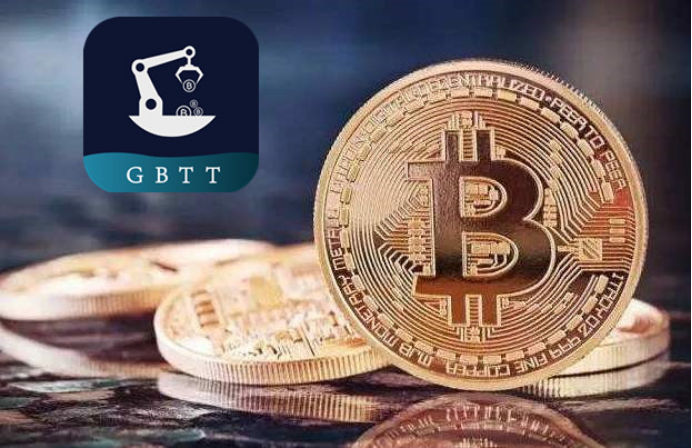
With the over-issue of currencies, various global venture capital products have also ushered in a wave of good rising prices, such as stocks, gold, and digital currencies. The United States, one of the best performers in the global stock market, has returned to the level before the plunge. Although gold has risen all the way, it has only increased by 20% in one year. The digital currency we are familiar with has also been strong after the plunge, exceeding the plunge. The previous level. Among them, BTC has risen from $3,800 to the current $17,000, and ETH has risen from $80 to the current $530. If you understand the history of digital currency, you know that once digital currency rises, it will basically show several times or even dozens of times. Therefore, at present, digital currency is still the best investment choice.
There are two ways to acquire digital currency, mining and currency speculation.
For ordinary users, mining is a better way to obtain digital currency, and it is relatively easy to worry about. Don’t always watch the currency price trend, because mining has become the best way for ordinary users to enter the market.
Of course, traditional mining is also very difficult. It is necessary to purchase mining machines by yourself and find suitable and low electricity prices. The operation and maintenance of mining machines are not small expenses.
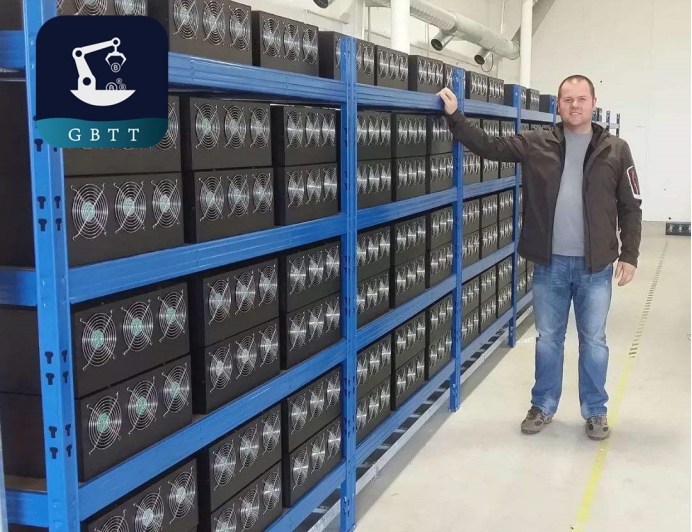
What is the GOLD BIT TIME Group mining machine?
The emergence of the GOLD BIT TIME Group today solves these problems for global users! GOLD bit TIME Group is a large-scale cloud computing center that emerged in the era of universal digital currency. It has extensive coverage and authority in the global digital cloud computing field, and has many years of operating experience in the financial field. GOLD bit Time Group has multiple digital mines around the world, involving multiple digital currency production and mining businesses. In order to avoid the waste of human resources, GOLD bit TIME will open the world’s major digital mines in the form of a contractual cooperation system, so that the majority of miners can participate in the mining of GBTT tokens. GOLD bit Time Group sells mining machines at cost. Moreover, we solemnly promise that we will not make profits from mining machines, and will not sell any products other than mining machines, and will never charge the income and commissions of the mining machine owners.
3 ways to realize GBTT:
1: The GBTT pass will be listed and circulated on major exchanges around the world within three months, with a conservative issue price of 15 USDT. It is a digital economy model where all people participate, all people help, and all people share.(The platform has commissioned the internationally renowned accounting firm PWC Price water house Coopers to conduct professional evaluation and accounting, and finally decided to issue it on major exchanges at the lowest conservative issue price of 15USDT after listing)
2: GBTT tokens dug by physical mining machines and GBTT tokens obtained by promotion rewards are sold back to the platform directly at the price of 1.5USDT.
3: GBTT, as the only token, will be circulated and used in all scenarios in the GOLD BIT TIME(GBTT) digital economy ecosystem. The total value of 21 million GBTT will appreciate infinitely in the future.
What is the GOLD BIT TIME(GBTT)digital economy biosphere?
GOLD BIT Time(GBTT) Group brings together elite leaders from the United States, South Korea, Canada, Singapore, India, Britain, France, Germany, Russia, China, the Philippines, Thailand and other countries and regions, and unites with Columbia University, the United States The Silicon Valley SVIF company, the Swiss Block chain Finance Research Institute SBC, and the world-renowned digital asset management company-FBG co-sponsored. It has also received the strong support of the world’s top strategic investors. In the future, we will realize the global industry data chain, asset safety chain, promote more industry individuals to join the ecosystem, data integration, maximize the value of data, and use gold Block chain, big data, Internet of Things, AI and other cutting-edge technologies have realized the safe chaining of global industrial data and assets, promoted the integration of industrial data, and connected physical value through massive data. Create global value and realize the integration of the “five flows” of business flow, capital flow, information flow, logistics, and user flow, so that all entities in the ecosystem can create greater value and jointly build an open, shared, collaborative, and innovative, and continuous cycle of digital Economic ecosystem. GOLD BIT TIME (GBTT) focuses on block chain + industrial development, ecological construction, and multi – chain integration. Starting from global physical mines, it will open up the application of block chain technology in various fields and continue to link more digital economy participants, including Individuals, entrepreneurial projects/enterprises, regulatory agencies, banks, venture capital institutions, etc., use AI, big data, cloud computing, 5G, Internet of Things and other cutting-edge technologies to digitally transform industrial resources, accurately match them, and circulate them widely to realize the physical industry Digital upgrades to create a digital economic ecosystem with borderless data circulation, open value sharing, and industrial collaborative innovation.
GOLD BIT TIME(GBTT) focuses on block chain + industry development, ecological construction, and multi-chain integration. It has always been centered on providing users with authenticity, real-time, and sustainable data value. It has built 13 ecosystems from four major areas. Application layouts include cultural and ecological industries, technology incubation industries, payment industries, VR virtual technology, cartoons, education and training, games and gaming, resource sharing ecology, 5G, new energy, tourism, finance, film and entertainment industries. In the future, it will cover shopping, cars, real estate, gas cards, food, clothing, housing, transportation, etc. The market value of the whole system will reach one trillion US dollars, and the price of each GBTT token will be no less than 4,700 US dollars.
The outbreak of the new crown pneumonia epidemic has accelerated the transition of the global economy to digitali zation. The digital economy may become a key force in hedging the impact of the epidemic, reshaping the economic system, and improving governance capabilities. The digital trend is coming, the wave sweeping the world, and the global industries are digitizing. The world is ushering in a new era and new opportunities. The GOLD BIT TIME (GBTT)digital economy ecosystem is sure to stand on top of the wave of the digital economy era and lead the world in digital The development of the economic era will help the recovery of the global economy, help people around the world, and realize the multiplication of wealth in the digital economy era!
About Author

Disclaimer: The views, suggestions, and opinions expressed here are the sole responsibility of the experts. No Digi Observer journalist was involved in the writing and production of this article.

Florida, United States, July 1st, 2026, FinanceWire
Streamex is making commodities easy to acquire and trade, and the latest step puts it in regular brokerage accounts.
Buying gold has long meant choosing between two inconveniences: take physical delivery and pay to store and insure it, or buy a fund and accept the fees and market-hours trading that come with it. A run of moves by Streamex Corp. (NASDAQ: STEX) is aimed at dissolving that trade-off, and the latest landed on June 29, when the company announced its gold-backed, tokenized yield-bearing security $GLDY can now be bought through an ordinary brokerage account. This brings Streamex another step closer to offering exposure with modern features & benefits to the $13 trillion global gold market, like yield, 24/7 markets and digital self-custody.
A trusted broker now offers it like any stock or bond.
The collaboration brings together three names from different corners of finance. Firstly, Siebert Financial, a FINRA-member broker that oversees roughly $20 billion in client assets, handles distribution. Secondly, tZERO, a regulated digital-securities platform, custodies the asset. Finally, Streamex issues $GLDY to accredited investors. The practical effect is that a Siebert broker can now offer yield bearing tokenized gold to a client in the same conversation as any stock or bond, with no crypto onboarding, no wallet and no blockchain knowledge required.
Your gold pays you in more gold, so what you own grows.
The client gets a holding that grows. $GLDY pays a yield of up to roughly 3.5% per year, distributed monthly and paid in additional gold, generated by lending the underlying metal to commercial users such as jewellers, mints and refiners. Because the yield arrives as more of the asset, the holder’s quantity of digital gold increases over time.
“Our goal has always been to make gold something everyone can own, easily, in whatever form suits them. Putting $GLDY into a brokerage account is a major step toward that, because it meets traditional investors exactly where they already are. It’s one of several moves we’re making to bring digital commodities to a global audience.” Henry McPhie, Co-Founder & CEO, Streamex
Step by step, Streamex keeps opening commodities up to more people.
This brokerage play is the latest step in Streamex’s plan to bring digital gold and other tokenized commodities to the wider market. $GLDY launched in February, soon began paying its monthly yield in additional gold, and in May gained round-the-clock secondary trading through the Solana decentralized exchange Orca. Each move has opened the asset to a new kind of buyer and improved accessibility for existing holders: first direct buyers, then on-chain traders, and now the wealth-management and institutional clients a broker like Siebert serves.
Right now it is for accredited investors. The doors keep widening.
It is worth being clear about today’s boundaries. $GLDY is a regulated security available to verified accredited investors. The brokerage channel broadens who can reach it within that framework.
Soon anyone could buy yield-paying gold, through a broker or their own wallet.
That fuller opening is what Streamex says comes next. The company is building a tokenization platform for real-world assets, beginning with commodities, which anyone can access. Digital gold will be the first offering in its range of accessible commodities. This retail-focused digital gold will be able to trade across a number of decentralized exchanges (likely Jupiter, Meteora and Orca) allowing everyday investors to trade the commodity from anywhere in the world via their mobile phone or laptop. The retail version of $GLDY is also expected to pay the same yield, up to roughly 3.5% a year, so everyday buyers benefit the same way. The vision is one where owning gold is as simple as holding any mainstream asset, whether someone comes through a broker or through their own wallet.
What are the benefits of digital gold vs buying a gold ETF or physical gold?
- Most gold holders pay for the privilege. Streamex allows you to earn yield (in gold) instead, allowing investors to stack their asset over time by simply holding.
- Trade your asset anytime, anywhere.
- Trade your self-custodial asset in a permissionless manner with no broker required.
Gold is having a moment, and Streamex is building for both Wall Street and crypto users.
The market context gives the strategy room to run. Tokenized gold has been one of the fastest-growing categories in digital assets, and demand has broadened from crypto-native traders toward more conventional investors looking for a hard-asset hedge that can also generate a return. By distributing through a FINRA-member broker, custodying on a regulated platform, and building toward an open retail product at the same time, Streamex is trying to meet both audiences at once. There were over 26million active wallets on Solana last week (22nd-29th June 2026 – https://tokenterminal.com/explorer/projects/solana/metrics/active-addresses-monthly) and Solana RWA volume has increased sharply in 2026 (https://defillama.com/rwa/chain/solana) so far due to newly available products and platforms. Solana users already benefit from incredibly high speed trade finalisations with very low fees, so by bringing gold to the masses with Solana rails, commodities can be truly democratized.
AboutStreamex
Holding Streamex’s digital gold allows you to stack more gold, and soon almost anyone can buy it.
For investors, the through-line is accessibility. A year ago, a yield-bearing, blockchain-based gold product was a niche instrument for a small group. As of June 29 it sits, for eligible clients, alongside stocks and bonds at a mainstream broker, and Streamex says the next step is to make a version of it reachable by almost anyone. For more information visit Streamex.
This article is for general information only and is not investment, financial, legal or tax advice. $GLDY is offered as a security to verified accredited investors under Rule 506(c) of Regulation D and is a restricted security. Stated yields are variable, not guaranteed, and may change. References to a future retail product describe plans that are not yet available and are subject to change. Products may not be available in all jurisdictions. Trading digital assets involves significant risk, including loss of capital. Streamex Corp. is a publicly traded company (NASDAQ: STEX); statements about future products are forward-looking and involve risk.
Contact
Yaroslav Provada
contact@stratosphere.vip
About Author

Disclaimer: The views, suggestions, and opinions expressed here are the sole responsibility of the experts. No Digi Observer journalist was involved in the writing and production of this article.
Tortola, British Virgin Islands, July 1st, 2026, Chainwire
VCT combines blockchain transparency, agribusiness intelligence, export-finance infrastructure and real-world asset tokenization on BNB Smart Chain.
Valle Capital Token (“VCT”) today announced the development and expansion of its blockchain-powered ecosystem designed to connect global digital capital with Brazilian agribusiness operations and international commodity exports.
Built on BNB Smart Chain, Valle Capital Token combines utility-token functionality with a real-world asset-focused model intended to support greater transparency, operational visibility and digital infrastructure across agricultural production, commodity financing, logistics and export activity.
The project is structured around a British Virgin Islands tokenization entity and aims to create a bridge between traditional agribusiness, international trade and the global Web3 economy. Through EVM smart contracts, digital dashboards, monitoring tools and on-chain records, Valle Capital intends to support a more transparent and connected ecosystem for producers, commercial partners, exporters, international buyers and eligible global participants.
Connecting Global Capital to the Real Economy
Brazilian agribusiness and commodity exports represent one of the country’s most important economic engines. The sector depends on continuous access to capital, operational intelligence, logistics coordination, documentation control and reliable reporting across every phase of the production and export chain.
From advance commodity purchases and crop financing to storage, shipment preparation and international settlement, agricultural and export operations often involve multiple parties, including producers, buyers, warehouses, logistics providers, exporters, financial partners, insurers and international counterparties.
Valle Capital Token is designed to help address this operational complexity by creating a technological layer that organizes information, improves visibility and supports digital integration across the agro-export chain.
The project’s market opportunity is driven by the increasing demand for:
- More transparent agribusiness and export operations
- Better access to structured working capital
- Reliable contract and document monitoring
- Digital traceability from field to shipment
- Operational intelligence through data and artificial intelligence
- Blockchain-based auditability for selected commercial milestones
- New technology infrastructure connecting real assets and global digital capital
VCT is positioned at the intersection of agribusiness, commodity trading, export finance and real-world asset tokenization.
A Technology Layer for the Entire Agribusiness Chain
Valle Capital Token is not designed solely as a digital asset. It is being developed as a broader ecosystem of digital tools and operational infrastructure for the agribusiness and export sector.
The platform is expected to include:
- Satellite Monitoring and Field Intelligenc: The ecosystem plans to use imagery and field data to monitor agricultural areas and track the evolution of production cycles. These tools are intended to support improved operational visibility across the agricultural chain.
- Climate Mapping: Territorial and climate indicators are planned to support decision-making throughout crop cycles, helping participants monitor environmental and operational conditions relevant to agricultural activity.
- Logistics Tracking: Valle Capital Token plans to provide visibility into commodity movement, storage, commercial preparation and shipment-related milestones, helping reduce fragmented information among partners in the supply chain.
- Irrigation and Field Mapping: The platform is expected to include tools for mapping and visualizing irrigated areas, soil information and field infrastructure, supporting operational analysis and agricultural planning.
- Operational Artificial Intelligence: VCT plans to integrate AI-based tools for operational analysis, sector intelligence and data interpretation, strengthening the ability of participants to understand trends, monitor activity and make more informed decisions.
- Digital Traceability: Digital traceability tools are intended to support the monitoring of production-chain information, operational milestones and product-origin data. This can create a clearer historical record for selected activities within the agro-export ecosystem.
- Information Panels and Operational Alerts: The project plans to provide dashboards for users and partners, combining field data, operational progress, real-time alerts and relevant ecosystem information in a single digital environment.
- Smart Contracts and On-Chain Transparency: A central component of Valle Capital Token is its use of EVM-compatible smart contracts to support auditable records of selected capital flows, commercial structures and operational milestones.
The project intends to register hashes and references associated with real-world operations, which may include:
- Agricultural agreements
- Commodity purchase contracts
- Export and international trade agreements
- Invoices
- Packing lists
- Bills of Lading
- Certificates
- Logistics milestones
- Delivery confirmations
- Settlement status
This structure is designed to improve auditability and transparency without replacing the legal, financial, and commercial processes required for real-world operations.
According to the project’s model, financing flows are expected to be formalized through legal structures and recorded on-chain to create a more transparent operational record.
Agribusiness and Export Finance Strategy
Valle Capital Token’s ecosystem is designed around two primary operational areas.
Valle Capital: Agribusiness Operations
 The project plans to support infrastructure connected to:
- Agricultural financing for producers
- Advance commodity purchases
- Working-capital support
- Crop financing
- Future-contract structuring
- Agricultural supply-chain operations
Grupo CGM: Export Operations
 The export-finance structure may support:
- Pre-shipment financing
- Logistics and shipping costs
- Operational cost coverage
- Commodity-export preparation
- International trade activities
- Export-volume expansion
The project states that international capital may be transferred to Brazilian operating entities through formalized legal mechanisms, including capital contributions and structured private-loan agreements, subject to applicable law, regulatory requirements and project compliance procedures.
VCT Token and Ecosystem Utility
VCT is positioned as an RWA-focused utility token intended to connect eligible global participants to a growing ecosystem of digital tools, services, programs, benefits and future platform modules.
The current website identifies a total supply of 650,000,000 VCT on BNB Smart Chain. The token allocation is structured across presale, operations and treasury, liquidity and listings, marketing and ecosystem development, team and advisors, and strategic reserve and legal allocation.
Current token allocation includes:
- 35% — Presale: 227.5 million VCT
- 25% — Operations and Treasury: 162.5 million VCT
- 15% — Liquidity and Listings: 97.5 million VCT
- 10% — Marketing and Ecosystem: 65 million VCT
- 10% — Team and Advisors: 65 million VCT
- 5% — Strategic Reserve and Legal: 32.5 million VCT
The presale is structured across 15 rounds of 10 days each. The website states that presale allocations include 10% at token-generation event, with the remaining 90% released over 12 months.
Roadmap Toward Global RWA Expansion
Valle Capital Token has outlined a phased roadmap focused on moving from token infrastructure and presale activity to real operational deployment and broader ecosystem expansion.
Phase 1 — Foundation and Presale includes the BVI tokenization entity, smart-contract development, audit preparation, BNB Smart Chain deployment and the 15-round presale structure.
Phase 2 — Capital Deployment focuses on agribusiness financing through Valle Capital, export-finance activity through Grupo CGM, formalized capital flows and investor dashboards.
Phase 3 — Smart Operations includes satellite and climate monitoring, logistics-tracking modules, AI operational analysis, digital traceability and staking-related ecosystem tools.
Phase 4 — RWA Scale targets on-chain commodity tokenization, card-gateway and fiat on-ramp integration, international partnerships, exchange-listing preparation and the development of a global RWA marketplace.
Why Valle Capital Token Stands Out
Valle Capital Token is designed around a differentiated proposition: combining blockchain technology with real agribusiness and commodity-export operations rather than focusing exclusively on speculative digital-asset use cases.
The project’s main advantages include:
- Focus on Brazilian agribusiness and global commodity exports
- BVI tokenization structure and BNB Smart Chain deployment
- Utility token with an RWA-focused ecosystem model
- Smart contract-based transparency and auditability
- Satellite, climate and logistics intelligence tools
- Digital traceability for the agro-export chain
- AI-driven operational analysis
- Investor and partner dashboards
- Structured capital deployment for agro and export operations
- Long-term roadmap toward global RWA marketplace infrastructure
“Valle Capital Token is being developed to connect technology, capital and real operational activity. Our goal is to create a more transparent digital ecosystem where agribusiness, exports, blockchain infrastructure and global participants can operate together,” said Luan Coimbra Correia Responsible Representative, Valle Token.
Important Notice
VCT is a utility token and does not represent equity, ownership participation, a security, guaranteed returns, guaranteed yield or guaranteed token appreciation. Participation in digital assets involves risks, including market volatility, liquidity risk, technology risk, operational risk, regulatory changes and potential loss of capital.
The project states that participation is subject to applicable laws, jurisdictional restrictions, KYC/AML verification and legal review. The VCT presale is not marketed to persons located in, or citizens or residents of, the United States, Brazil or OFAC-sanctioned jurisdictions.
About Valle Capital Token
Valle Capital Token is a blockchain-powered agribusiness, export-finance and real-world asset ecosystem. The project aims to connect global digital capital with Brazilian agricultural operations and international commodity exports through EVM smart contracts, blockchain transparency, digital traceability, operational intelligence and scalable Web3 infrastructure.
Official Links
Website: https://valletoken.com
Whitepaper: https://whitepaper.valletoken.com
Telegram: https://t.me/vallecapitaltoken
X / Twitter: https://x.com/valletoken_
Instagram: https://www.instagram.com/vallecapitaltoken
Contact
CFO
Luan Coimbra Correia
VALLE CAPITAL TOKEN
support@valletoken.com
About Author
Disclaimer: The views, suggestions, and opinions expressed here are the sole responsibility of the experts. No Digi Observer journalist was involved in the writing and production of this article.
Press Release
Prop Firm Compare Launches Advanced Comparison Engine to Help Futures Traders Make Better Funding Decisions

Florida, United States, July 1st, 2026, FinanceWire
The new platform enables traders to compare prop firms side by side using hundreds of funding rules, account features and trading conditions, making it one of the most comprehensive futures prop firm comparison tools available.
Prop Firm Compare has announced the launch of its new advanced comparison engine, offering futures traders a faster, more transparent way to compare funded trading firms before purchasing a challenge.
Built specifically for the futures prop trading market, the new tool allows users to compare firms across the criteria that have the biggest impact on long-term success, rather than relying on headline account sizes or promotional offers alone.
As the number of futures prop firms continues to grow, traders face increasingly complex funding models. While many providers advertise similar account sizes and profit splits, the underlying rules can differ significantly, with factors such as trailing drawdown, payout schedules, activation fees, consistency rules and scaling plans often determining whether an account is genuinely trader-friendly.
The new comparison engine has been developed to simplify that research process.
Rather than opening multiple websites, comparing PDFs and manually checking rulebooks, traders can view firms side by side using a standardised comparison framework that highlights the differences that matter most.
Users can compare firms across a wide range of data points, including:
- Challenge fees and account sizes
- One-step, two-step and instant funding models
- Maximum daily and overall drawdown rules
- Trailing drawdown methodology
- Profit splits
- Payout frequency
- Activation fees
- Consistency rules
- Maximum contract limits
- Supported trading platforms
- Available discount codes
- Scaling plans
- Trading restrictions and account rules
The platform also allows traders to compare multiple firms simultaneously, making it easier to identify which funding programme best suits their own trading style, whether that’s scalping, day trading or swing trading.
Alongside the comparison engine, every listed firm includes an in-depth profile covering its evaluation process, pricing, trading rules, payout information, supported platforms and overall reputation. Traders can also access independent reviews, educational guides, exclusive discounts and regularly updated industry news from within the platform.
Kane Simons, CEO of Prop Firm Compare said:
“Most comparison websites simply rank firms from one to ten. That doesn’t help traders because the best prop firm depends entirely on how you trade. We wanted to build something that lets traders compare the rules themselves and make an informed decision based on objective data.”
The launch comes as proprietary trading continues to attract a growing number of retail traders looking to access larger trading capital without committing significant personal funds. As competition between firms increases, transparency has become one of the biggest factors influencing where traders choose to complete evaluations.
Prop Firm Compare believes the industry has reached a point where simple rankings are no longer enough.
Instead, the company has focused on building a data-led comparison platform that enables traders to filter and compare firms using the exact criteria that matter to them. Whether it’s finding a prop firm without a consistency rule, identifying firms with faster payouts or comparing trailing drawdown calculations, the platform is designed to reduce the time and uncertainty involved in choosing a funded trading provider.
The launch also lays the foundations for future product development, with additional comparison features, trader tools and market data already planned as the platform continues to evolve.
The new comparison engine is now available at https://propfirm.compare/comparisons, where traders can compare leading futures prop firms side by side before choosing their next funded account.
Contact
CEO
Kane Simons
Prop Firm Compare
press@propfirm.compare
About Author
Disclaimer: The views, suggestions, and opinions expressed here are the sole responsibility of the experts. No Digi Observer journalist was involved in the writing and production of this article.
Streamex is making digital gold accessible
Prop Firm Compare Launches Advanced Comparison Engine to Help Futures Traders Make Better Funding Decisions
Valle Capital Token Launches RWA and Agribusiness Ecosystem
Benzinga Money Article Discusses How to Become Part of the 12% of Retirees Who Have Achieved the Recommended $550,000 Minimum Retirement Savings Threshold
Apu Apustaja Conquers New York with Lively Street Ads, Including Times Square Billboard
Bay Smokes Maintains Quality Amid Legislative Changes in the Hemp Industry


-
Press Release1 week ago
J-Tech Digital Launches FIFA 2026 World Cup Campaign for Game-Day Ready AV Distribution and Multi-Screen Viewing
-
Press Release4 days ago
Scale Law Firm AI Appoints Tima Mousavi to Lead AI Education and Training for Lawyers
-
Press Release5 days ago
MultiHopper Partners with TRM Labs on Compliant Private Digital Asset Routing
-
Press Release4 days ago
The Rise of the Informed Patient: Why Healthcare Transparency Matters More Than Ever
-
Press Release5 days ago
Michael Sealy on Why Knowing the Full Business Is the Real Competitive Advantage in Commercial Real Estate
-
Press Release5 days ago
Toss Brings 30 Million Users Into the AI Data Economy in Partnership With Poseidon
-
Press Release4 days ago
The Rise of the Informed Patient: Why Healthcare Transparency Matters More Than Ever
-
Press Release4 days ago
The Rise of the Informed Patient: Why Healthcare Transparency Matters More Than Ever