
Press Release
Experts at conference held at the Church of Scientology of Rome, make the point on the state of freedom of belief in Italy and the world

University professors, government officials, parliamentarians and religious representatives participated in a day-long conference where they discussed the current challenges to religious freedom.
Brussels, Brussels, Belgium, 3rd Jun 2024 – On Thursday, May 30th, the international conference on freedom of religion in Italy and the world, titled “Freedom of Belief and Religious Recognition: Current State and Perspectives,” was held in the auditorium of the Church of Scientology in Rome. It was organized with the collaboration of the Observatory on Religious Entities, Ecclesiastical Heritage, and Non-Profit Organizations of the University of Campania “Luigi Vanvitelli.”

The conference consisted of two international roundtables in the morning moderated by Prof. Alfonso Celotto, professor of constitutional law at the University of Roma Tre, and two national ones moderated by Prof. Antonio Fuccillo, professor of ecclesiastical and intercultural law at the University of Campania “Luigi Vanvitelli.”
International examples of religious freedom
The first panel had as speakers Senator Lorena Rios Cuéllar, former director of religious affairs of the Colombian government; Prof. José Daniel Pelayo Olmedo, deputy director general for the coordination and promotion of religious freedom of the Spanish government; and Dr. Gary Vachicouras, professor and administrator of academic affairs at the Institute for Postgraduate Studies in Orthodox Theology (Chambésy, Geneva).

This panel outlined the situation in Colombia, a secular but not atheist state with a constitution that guarantees freedom of religion both individually and collectively. It then covered that of Spain, where there are 26,000 religious groups registered in the Register of Religious Bodies. For the Greek-born Prof. Vachicouras, societies are increasingly facing religious plurality and the resulting problems. The solution to conflicts, he stated, is acceptance of the principle of freedom of belief. The panel showed how three countries with different traditions (Colombia, Spain, and Greece) have recognized their religious entities, including Scientology, within a framework of great freedom and inclusion.
The second panel included U.S. attorney and constitutional expert Austin Hepworth; Prof. Juan Ferreiro Galguera, professor of church law at the University of Oviedo, Spain; and Prof. Vincent Berger, former jurisconsult at the European Court of Human Rights.

Attorney Hepworth explained how the principle of religious freedom is applied in the U.S., also recalling the 1948 U.S.-Italy Friendship Treaty on automatic mutual recognition of entities, including religious ones. Prof. Ferreiro Galguera explained the difference between the secular state that respects religious phenomena and the cooperation with it as it happens in Spain, and the secularist state that instead prevents it, as it happens in France.
Prof. Berger asserted that the state’s tolerance of a religious denomination should not replace its full recognition, and he recalled the remedies offered by the ECHR on limitations of religious freedom, with the possibility of recourse to the Strasbourg Court as well.
Italian situation of religious freedom under analysis
The speakers at the first section of this panel were Prof. Maria D’Arienzo, professor of ecclesiastical, canonical, and confessional law at the University “Federico II” of Naples; Prof. Gianfranco Macrì, professor of intercultural law at the University of Salerno; and Prof. Francesco Sorvillo, associate professor of Law and Religions at the University of Campania “Luigi Vanvitelli.”

The peculiarity of the Italian normative situation emerged, in that the Constitution addresses religious freedom in 4 specific articles and in 5 with a more general approach, yet it still lacks a law on religious denominations, still having to refer to Law No. 1159, which dates back to 1929, and which concerns “admitted denominations” in the “Kingdom of Italy”, a law that predates the republican democracy that is Italy today.
The second section of this panel featured the editor-in-chief of “bitterwinter.org” and journalist for the “Journal of CESNUR,” Dr. Marco Respinti; Dr. Nader Akkad, religious affairs advisor of the Grand Mosque of Rome; and Mother Anastasia, legal advisor of the Romanian Orthodox Diocese.

Dr. Respinti explained how the media perceive religiosity and their own responsibility on how it is perceived in society. Dr. Akkad emphasized the importance of dialogue between members of different faiths, while Mother Anastasia spoke about the difficulty of the Romanian Orthodox Church working on recognition in Italy for over 13 years.
What emerged overall was the need for greater attention to the religious phenomenon for accomplished regulation not only at the level of individuals but also of organizations in their relations with states.
“Freedom of religion and respect for the beliefs of others have always been principles of fundamental importance to the Church of Scientology,” recalled Lina Pirotta, representative of the Church of Scientology Italy, in her welcome address to the conference participants.
The Creed of the Church of Scientology itself, written in 1954 by the religion’s founder, L. Ron Hubbard, among other points states, “We of the Church believe that all men have inalienable rights to their own religious practices and their performance.”
It is within this framework that the Church of Scientology has strongly supported this conference, collaborating with domestic and foreign experts to make it happen in order to provide a clearer picture of the state of freedom of belief in Italy and other countries, and the possible solutions that could help make, of this fundamental right, a fulfilled reality, favoring its development.
Media Contact
Organization: European Office Church of Scientology for Public Affairs and Human Rights
Contact Person: Ivan Arjona
Website: https://www.europeanaffairs.eu
Email: scientology@europeanaffairs.eu
Address: Boulevard de Waterloo 103
City: Brussels
State: Brussels
Country: Belgium
Release Id: 03062412785
The post Experts at conference held at the Church of Scientology of Rome, make the point on the state of freedom of belief in Italy and the world appeared first on King NewsWire. It is provided by a third-party content provider. King Newswire makes no warranties or representations in connection with it.
About Author

Disclaimer: The views, suggestions, and opinions expressed here are the sole responsibility of the experts. No Digi Observer journalist was involved in the writing and production of this article.

Dubai, UAE, February 19th, 2026, ZEX PR WIRE, The MENA region today represents one of the world’s most digitally dynamic regions. Several GCC markets report smartphone penetration rates above 90%, while governments are deploying multi-billion-dollar investments to accelerate national digital transformation programs, including Saudi Arabia’s Vision 2030, which prioritizes a diversified, technology-enabled economy, and the UAE’s Digital Economy Strategy, aimed at increasing the digital economy’s contribution to GDP. (Source)
As fintech, e-commerce, logistics, and super apps scale at record speed, communication has become a mission-critical infrastructure. Customer acquisition, authentication, payments, notifications, and support now rely on real-time, compliant, and highly secure messaging ecosystems. At the same time, regulatory frameworks across the region are tightening, and customer expectations around data privacy, responsiveness, and personalization are rising.
Enterprises are therefore rethinking communication not as a channel, but as a strategic growth lever.
Against this backdrop, TrustSignal has announced its expansion into the MENA region. The move reflects a growing demand for resilient, secure, and regulation-ready communication infrastructure that can support both high-growth startups and large enterprises operating across multiple jurisdictions.
With its AI-powered CPaaS ecosystem, TrustSignal aims to enable businesses to manage omnichannel communication with greater reliability, scalability, and compliance. Designed to address the region’s evolving regulatory landscape and diverse consumer behaviors, the platform brings together automation, delivery optimization, and enterprise-grade security to power meaningful customer engagement at scale.
In a region where digital trust directly influences brand growth, communication infrastructure is no longer optional; it is foundational. TrustSignal’s MENA expansion signals a deeper commitment to supporting businesses as they navigate this next phase of digital maturity.
Why MENA, Why Now
The Communication Platform as a Service market in the Middle East and Africa is projected to reach approximately US$10.1 billion by 2030 (Source). This trajectory signals more than sector expansion. It reflects a structural redesign of how enterprises approach customer engagement.
The growth is demand-led.
Across MENA, this momentum is reinforced by API first cloud adoption, mobile commerce growth, heightened security requirements, and cross-border digital expansion.
Channel dynamics are shifting in parallel. A2P SMS remains central for authentication and alerts, while WhatsApp Business APIs and conversational messaging are accelerating across retail and financial services. Enterprises are moving from broadcast notifications to interactive, two-way journeys, with voice APIs gaining ground in security and service coordination.
Communication is not only increasing in volume, but advancing in complexity.
What This Means for Businesses in MENA
The acceleration of CPaaS adoption in MENA marks a structural shift in how enterprises design customer engagement. As messaging evolves from one-way notifications to real-time interactive journeys, communication now sits at the core of revenue flow, fraud prevention, customer trust, and compliance.
Enterprises are navigating rising authentication volumes, expanding conversational traffic, cross-border delivery complexity, and tighter regulatory expectations, demanding infrastructure that is intelligent, resilient, and measurable.
TrustSignal’s expansion aligns with this inflection point, enabling businesses to move beyond scale toward real-time optimization, lower latency, stronger verification stability, and more reliable customer journeys. In a market where a delayed OTP can disrupt transactions and erode trust, communication performance directly shapes business performance.
MENA’s next phase of digital growth will be defined not by message volume, but by delivery intelligence.
Reframing Communication as a Performance Engine
TrustSignal approaches the regional opportunity with a clear thesis: communication infrastructure must evolve from a cost center to a measurable growth engine.
Its AI-enabled CPaaS platform is anchored on three structural capabilities.
- Intelligent Routing and Optimization
Adaptive algorithms analyze delivery behavior in real time, dynamically selecting optimal routes to improve authentication reliability and reduce latency during demand spikes. - Performance Visibility and Analytics
Granular reporting frameworks provide enterprises with actionable insights into delivery outcomes, engagement metrics, and channel efficiency, enabling continuous refinement of communication workflows. - Security and Compliance Architecture
Embedded encryption layers and compliance-aligned frameworks are designed to support evolving regulatory standards across MENA jurisdictions.
Rather than positioning itself as a transactional messaging vendor, TrustSignal operates as an infrastructure partner focused on engineering predictability, resilience, and measurable impact into enterprise communication systems.
A Forward Looking Vision
As MENA’s digital economy matures, the defining differentiator will be operational precision.
TrustSignal’s regional roadmap centers on advancing AI-driven communication intelligence, deepening vertical integrations across fintech, retail, healthcare, and mobility, strengthening predictive performance modeling to anticipate demand surges, and expanding localized enterprise advisory capabilities.
The long term objective is to help enterprises transition from reactive messaging systems to predictive communication ecosystems where infrastructure continuously adapts to optimize engagement, security, and efficiency.
Against this backdrop, the Middle East and North Africa represent a strategic growth frontier for the company. Articulating this vision, Mr Imran Shaikh, Founder and CEO of TrustSignal, stated:
“MENA stands among the world’s most dynamic digital markets. Our expansion underscores a long term commitment to equipping enterprises with a compliant, scalable communication infrastructure that advances regional digital ambitions.”
TrustSignal’s expansion reflects alignment with that future, one where communication is architected for resilience, transparency, and measurable business impact.
About Author
Disclaimer: The views, suggestions, and opinions expressed here are the sole responsibility of the experts. No Digi Observer journalist was involved in the writing and production of this article.
Press Release
AI Meets Arabic Literature: Qirtas App Unveils Scalable Publishing Infrastructure at Web Summit Qatar 2026
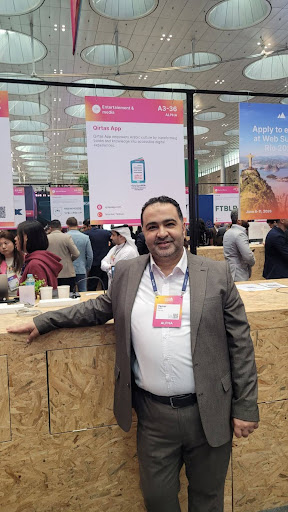
Doha, Qatar, 19th February 2026, ZEX PR WIRE, Qirtas App, a dual-interface digital platform headquartered in Istanbul and Malmo, announced its mission to bridge the global gap in Arabic literature accessibility following its successful showcase in the Alpha Startup category at Web Summit Qatar. By integrating cutting-edge AI production tools with a seamless streaming interface, Qirtas is providing the technical infrastructure needed to digitize the fragmented $4 billion Arab publishing market.
Despite a global population of 430 million Arabic speakers, the publishing industry has long been hampered by prohibitive shipping costs, high piracy rates, and a lack of digital infrastructure. Qirtas App addresses these systemic barriers through a twofold solution: a freemium streaming platform for readers and a sophisticated digital management backend for publishers.
Empowering Publishers through the “AI Production Suite”
Qirtas is not merely a distributor; it is a catalyst for digital transformation. For traditional publishers, the platform offers a dedicated portal to convert physical catalogs into secure, monetizable digital assets.
AI-Automated Production: The platform utilizes proprietary AI to automatically generate high-quality audiobooks and smart summaries, drastically reducing the time and cost barriers that previously prevented publishers from entering the digital space.
Institutional Security: With advanced Digital Rights Management (DRM) and real-time reader analytics, publishers maintain full control over their intellectual property while gaining unprecedented insights into global consumption patterns.
The Future of the Arab Reading Experience
For the global Arab diaspora, Qirtas offers a comprehensive streaming library featuring Qirtas AI, an interactive reading assistant that provides instant translation, text-to-speech narration, and social integration.
“The Arab publishing world is rich in content but starved of modern distribution,” said Tamer Odeh, CEO of Qirtas App. “With Qirtas, we are removing the friction. We aren’t just giving readers an app; we are giving publishers the tools to survive and thrive in a digital-first economy.”
Alaa Barghouth, COO of Qirtas App, added: “Our participation in Web Summit Qatar has confirmed the massive appetite for this technology. We have already secured commitments from major publishing houses ready to onboard their catalogs. We are now focused on scaling our infrastructure to meet this demand.”
Market Opportunity & Investment
The digital publishing segment in the MENA region is currently valued at $400 million and is experiencing rapid year-over-year growth. Having validated its model with early industry commitments, Qirtas App is currently open for pre-seed investment to accelerate its market launch and expand its AI-driven production capabilities.
For more information or to inquire about partnership opportunities, visit qirtasapp.com.
About Qirtas App
Qirtas is a Swedish-Turkish “Deep-Tech” publishing platform dedicated to revitalizing Arabic literature. By combining AI-powered content production with a global streaming model, Qirtas connects 430 million Arabic speakers with the books they love, while providing publishers with the tools to digitize and protect their heritage.
About Author
Disclaimer: The views, suggestions, and opinions expressed here are the sole responsibility of the experts. No Digi Observer journalist was involved in the writing and production of this article.
The BTCD Foundation has announced the upcoming deployment of its proprietary Layer 1 blockchain infrastructure. This development marks the introduction of a new technical framework designed to support decentralized applications and secure digital transactions. The Foundation has confirmed that the Public Testnet is scheduled to open for user participation on February 15, 2026.
Technical Architecture and Infrastructure
The BTCD platform is engineered as an independent Layer 1 blockchain, distinct from token-based projects that rely on existing third-party networks. The core infrastructure utilizes a hybrid consensus mechanism combining Directed Acyclic Graph (DAG) and Proof of Stake (PoS) protocols.
This architectural design is intended to address common scalability challenges in blockchain technology. The technical specifications indicate a capacity for high-volume throughput, with initial testing targeting transaction speeds of over 10,000 transactions per second (TPS) while maintaining sub-second finality. The system is built to operate autonomously, providing a decentralized foundation for developers and users.

Testnet Deployment and Minting Mechanism
Beginning February 15, 2026, the BTCD Foundation will initiate the Public Testnet phase. This phase allows users to interact with the network’s minting protocol to test system stability and performance.
The minting process follows a programmed algorithmic schedule designed to test the network’s long-term sustainability over a projected 25-year timeline. The protocol includes technical halving events scheduled every 2.5 years to regulate the issuance rate of digital assets on the network.
Transition to Mainnet
The Testnet phase is a precursor to the official Mainnet launch, which is currently scheduled for May 15, 2026. The Foundation has outlined a technical migration plan wherein digital assets minted during the Testnet phase will be recognized on the Mainnet system upon its activation.
Ecosystem Development Roadmap
Following the Mainnet launch, the BTCD Foundation plans to deploy a suite of decentralized applications (dApps) integrated directly into the Layer 1 core. The technical roadmap outlines the phased release of nine specific utilities, including:
- Nexora: A decentralized communication protocol.
- Guardian DEX: A decentralized exchange interface.
-
WealthBook: A social networking platform integrated with blockchain identity verification.
Future updates scheduled for later in 2026 involve the integration of automated trading algorithms and asset management utilities.
About BTCD Foundation
The BTCD Foundation is a technology organization focused on the development of Layer 1 blockchain solutions. It aims to build a scalable, secure, and decentralized infrastructure to support the next generation of digital applications.
Testnet Access: http://btcd.foundation
Community Hub: https://t.me/btcdfoundation1
Media Contact
Organization: BTCD FOUNDATION
Contact Person: Mr. Alex – CEO
Website: https://btcd.foundation
Email: Send Email
Country:Panama
Release id:41440
The post BTCD Foundation Launches Layer 1 Blockchain Infrastructure and Opens Public Testnet appeared first on King Newswire. This content is provided by a third-party source.. King Newswire makes no warranties or representations in connection with it. King Newswire is a press release distribution agency and does not endorse or verify the claims made in this release. If you have any complaints or copyright concerns related to this article, please contact the company listed in the ‘Media Contact’ section
About Author
Disclaimer: The views, suggestions, and opinions expressed here are the sole responsibility of the experts. No Digi Observer journalist was involved in the writing and production of this article.
Trust Signal Expands to MENA to Strengthen Enterprise and Startup Communications
AI Meets Arabic Literature: Qirtas App Unveils Scalable Publishing Infrastructure at Web Summit Qatar 2026
BTCD Foundation Launches Layer 1 Blockchain Infrastructure and Opens Public Testnet
Benzinga Money Article Discusses How to Become Part of the 12% of Retirees Who Have Achieved the Recommended $550,000 Minimum Retirement Savings Threshold
Apu Apustaja Conquers New York with Lively Street Ads, Including Times Square Billboard
Bay Smokes Maintains Quality Amid Legislative Changes in the Hemp Industry


-
Press Release2 days ago
The New Architecture of Resilience: Why Ecosystem Design is the Secret to MENA’s Post-Conflict Recovery
-
Press Release7 days ago
300 Scientology Volunteers Distribute 500,000 Drug-Prevention Booklets during Winter Olympics
-
Press Release1 week ago
ECOBANK BACKS MEYA MINING WITH USD 25 MILLION FACILITY
-
Press Release1 week ago
Habitto to Raise Savings Account Interest Rate to 0.6% Effective February 1, 2026
-
Press Release5 days ago
George Washington University Launch Groundbreaking Public Certification Course on Mold Illness
-
Press Release1 week ago
OrbiSky awarded UK Space Agency contract for in-orbit manufacturing verification
-
Press Release5 days ago
Xiangyang, China: locals welcome the Chinese New Year by flying sky lanterns and experiencing intangible cultural heritage.
-
Press Release5 days ago
Maui Helicopter Tours: Private Helicopter Tour Service In Hawaii