
Press Release
Deep Dive into AgentLISA: The Critical Security Play You Can’t Miss in the AI Era


The Watershed Moment That Changed Blockchain Security Forever
Singapore – Blockman PR – December 2025 marked a turning point. Anthropic’s research team published findings that sent shockwaves through crypto: AI systems could successfully exploit smart contract vulnerabilities with 55.88% accuracy, simulating $4.6 million in potential theft from real-world contracts.
The implications were existential. If AI could systematically identify and exploit vulnerabilities at scale, the entire blockchain ecosystem—processing over $1 trillion in transactions annually—faced an unprecedented threat. Traditional security tools couldn’t keep pace. Human auditors, already stretched thin reviewing less than 20% of deployed contracts, had no chance against autonomous AI attackers.
But here’s what most people missed: Anthropic’s breakthrough wasn’t just validation of the threat. It was validation of the solution space. And one company had already been building that solution for six months—and winning.
The Defense Was Already Operational
While Anthropic demonstrated AI could break smart contracts in simulation, AgentLISA had been defending them in production. By the time Anthropic’s paper dropped, AgentLISA’s multi-agent system had detected over $7.3 million in actual vulnerabilities across real protocols managing billions in assets.
The asymmetry is critical: Anthropic proved the threat is real and AI-powered. AgentLISA proved the defense is real, AI-powered, and already operational at scale.
This matters because Anthropic’s research exposed something fundamental: the AI security race will be won by whoever controls the training data. And AgentLISA just lapped the entire field.
LISA-Bench: The Data Moat Nobody Saw Coming

https://github.com/agentlisa/bench
Anthropic’s team used SCONE-bench—a dataset of 413 vulnerable smart contracts—to train their attack models. Solid methodology, respectable work. But fundamentally constrained by data scarcity.
AgentLISA’s response was devastating: LISA-Bench, containing 23,959 professionally verified vulnerability records spanning 2016-2024—the largest curated smart contract vulnerability dataset ever assembled.
It’s not just 60 times larger than SCONE-bench. It includes 10,185 code-complete vulnerability cases for direct AI training—25 times more usable data than any competing dataset.
Here’s why this matters: AI models are only as sophisticated as their training data. Anthropic’s research proved AI can find vulnerabilities, but their model trained on 413 examples. AgentLISA’s defensive models train on 23,959 professionally verified cases spanning eight years of vulnerability evolution.
In the AI security arms race Anthropic just announced, AgentLISA showed up with a 60x ammunition advantage.
Three Characteristics That Make LISA-Bench Unstoppable

1. Professional Verification at Industrial Scale
Every entry reviewed by security auditors from 3,086 specialists across 19 authoritative platforms—Code4rena (38.1%), OpenZeppelin (11.0%), Halborn (9.2%), Sherlock (7.7%), TrailOfBits (6.7%), and 14 others. This represents thousands of hours of expert analysis now available for AI training—a head start competitors would need years to replicate.
2. Historical Depth for Pattern Prediction
Eight years of data (2016-2024) covering 1,219 protocols enables something Anthropic’s attack models cannot: recognizing how vulnerabilities evolve. A 2024 exploit often has precedents in 2018 attacks following similar logic patterns. When new vulnerability classes emerge, models trained on LISA-Bench can predict variations before they’re exploited in the wild.
Without this temporal depth, AI attack models can only exploit known patterns. Defensive models trained on LISA-Bench can anticipate what’s coming next.
3. Complete Vulnerability Context
42.5% of records include complete vulnerable code snippets—actual Solidity or Rust code containing flaws, not just descriptions. This enables training code-reasoning models that understand not just what vulnerabilities look like, but why they exist and how they interact with surrounding code.
Distribution spans 3,902 high-risk cases (16.3%), 7,375 medium-risk (30.8%), 10,303 low-risk (43.0%), and 2,347 gas optimizations (9.8%)—mirroring how professional auditors actually work.
Why the AI Security Arms Race Favors Defense
Anthropic’s research revealed the offensive capability, but the economics decisively favor defense:
Attack models need to be right once. But they operate in an adversarial environment where a single successful exploit triggers immediate countermeasures, patches, and systemic upgrades across the entire ecosystem.
Defensive models need to be right consistently. But every scan improves the model, every detected vulnerability strengthens the training data, and every protocol protected creates network effects that attract more users—generating more data, improving accuracy further.
This is a flywheel that compounds. AgentLISA has already processed millions of contracts. By the time attack models catch up, defensive models will be exponentially more sophisticated.
The $5 Billion Problem Nobody Could Address—Until Now
The blockchain security crisis is quantifiable: over $5 billion lost to exploits in 2024 alone, with 200,000 smart contracts deploying monthly and 80% remaining unaudited.
The root cause isn’t negligence—it’s brutal economics. Traditional audits cost $15,000-$50,000 and require 3-5 weeks of manual review. For the vast majority of Web3 builders, this represents an existential barrier. If your development budget is $20,000, spending $15,000 on security isn’t a decision—it’s a death sentence for your project.
This creates structural market failure. Approximately 160,000 smart contracts deploy annually without any security review, representing a $5+ billion addressable loss prevention opportunity that existing infrastructure physically cannot serve.
Anthropic proved AI can systematically exploit this gap. AgentLISA proved AI can systematically close it.
What Is AgentLISA?
AgentLISA is the world’s first Agentic Security Operating System for Web3—an AI-powered platform that delivers professional-grade smart contract security analysis in minutes instead of weeks, at a fraction of traditional audit costs.

Built on peer-reviewed research from Nanyang Technological University’s Cyber Security Lab, AgentLISA represents a fundamental reimagining of blockchain security. Rather than treating security as a one-time checkpoint before deployment, AgentLISA enables continuous, automated multi-agentic security with deep reasoning capabilities that integrates seamlessly into modern development workflows.
The results: 9/10 OWASP Top 10 vulnerabilities detected (vs. 5/10 for traditional analyzers), 100% success rate on complex real-world audits, $7.3+ million in prevented exploits, 99% time reduction (minutes vs. weeks), 90% cost reduction ($0.50-$5 per scan vs. $15,000+).
The Core Innovation: Multi-Agent AI Architecture
Real-world vulnerabilities rarely exist in isolation. They emerge from complex interactions between contracts, unexpected state transitions, and subtle business logic flaws that static analysis tools systematically miss.

Anthropic’s research used general-purpose AI models. AgentLISA deployed specialized agents working in coordination:
- Reentrancy Agent: Analyzes external call sequences and state changes
- Access Control Agent: Validates permission models and authorization logic
- Price Manipulation Agent: Examines oracle dependencies and price calculations
- State Consistency Agent: Traces state transitions across execution paths
- Business Logic Agent: Validates implementation matches intended protocol behavior
These agents don’t work in isolation—they collaborate, share findings, and cross-validate results, mirroring elite security research teams. When one agent flags a suspicious pattern, others investigate related code paths to determine genuine exploit vectors—exactly the coordination required to defend against AI attacks.
Traditional static analysis tools achieve only 3-8% recall on real-world vulnerabilities, missing 92-97% of actual bugs. General-purpose AI models hallucinate false vulnerabilities while missing novel patterns. AgentLISA’s architecture transcends both limitations.
Real-World Validation: The Exploits That Didn’t Happen
AgentLISA’s efficacy isn’t theoretical—it’s proven in production:
Arcadia Finance ($3.5M): Detected accounting flaw in lending protocol that could have resulted in $3.5+ million exploit during liquidation events—a business logic vulnerability invisible to static analysis tools.
Taiko Protocol: Identified three critical governance vulnerabilities enabling voting manipulation, confirmed by Taiko’s CEO and patched before deployment.
Virtuals Protocol: Discovered incorrect slippage protection during Code4rena competition, preventing potential millions in sandwich attacks and MEV extraction.
Since launching June 2025, AgentLISA has analyzed contracts that could have resulted in over $10 billion in potential losses. This isn’t theoretical—it’s based on actual vulnerabilities detected in production code managing real capital.
The Distribution Moat: Why AgentLISA Becomes Infrastructure
In an AI attack landscape, security cannot be optional or manual. It must be automatic, continuous, and embedded in workflows. AgentLISA’s integration strategy makes this inevitable:
IDE Integration (VSCode, Cursor): Real-time vulnerability detection as code is written—catching AI-exploitable flaws at the moment of creation, when fixes are trivial and context is fresh.
GitHub Automation: Continuous security checks on every PR—ensuring no vulnerable code reaches production. Security becomes part of the development conversation, not a separate process that happens later.
CI/CD Pipeline Integration: Automated security gates blocking deployments with critical vulnerabilities while maintaining deployment velocity. The cost of fixing a vulnerability in CI/CD is measured in minutes; in production, it’s measured in millions.
Model Context Protocol (MCP): Enabling AI coding assistants (GitHub Copilot, Cursor AI) to automatically invoke AgentLISA—creating security checks inside the very AI tools that might otherwise generate vulnerable code.
x402 Permissionless Access: Frictionless API access enabling autonomous AI agents to validate security without human intervention—the only architecture that scales to match AI-powered threats.
This isn’t just convenient—it’s the only architecture that can keep pace with AI-generated attacks. When security happens automatically in every tool developers use, defense scales at the speed of development.
Why x402 Integration Is Strategically Brilliant
In November 2025, AgentLISA pioneered HTTP 402 Payment Required implementation—dormant for 25 years—enabling pay-per-use API access without accounts, API keys, or approvals.

Within weeks, AgentLISA became the #4 ranked x402 protocol with 3,578 paying developers—2,500% growth validating that frictionless access drives adoption.
Here’s why this matters in an AI attack context: Anthropic proved AI attacks can be automated. Defense must be equally automated. x402 enables any AI agent, development tool, or autonomous system to invoke security checks without human intervention.
Traditional API monetization creates friction that kills adoption: account creation, API key management, manual approvals, billing setup. x402 eliminates all of it. Developers simply call AgentLISA’s API, and micropayments flow automatically through the protocol layer.
This distribution advantage compounds. Every integration becomes a permanent channel, creating network effects competitors cannot replicate.
The Three-Layer Competitive Moat
Layer 1: Technical Moat
- TrustLLM: Purpose-built for smart contract security, not fine-tuned from general-purpose models. Replicating TrustLLM would require years of research and millions in compute costs.
- Multi-Agent Coordination: Detects vulnerabilities emerging from complex contract interactions—something static analyzers cannot do by design and general-purpose AI tools cannot do without specialized architecture.
- LISA-Bench: 60x data advantage over competing benchmarks. Even if competitors match quantity, they cannot replicate the historical depth (2016-2024) enabling pattern recognition across vulnerability evolution.
Layer 2: Distribution Moat
- IDE Integration: Developers encounter AgentLISA at the moment of code creation, creating default status competitors must actively displace.
- GitHub Automation: Embeds security into existing workflows, creating high switching costs—reconfiguring tools, retraining teams, disrupting processes.
- x402 Permissionless Access: Enables autonomous integration without human intervention—decisive advantage as AI-generated code becomes ubiquitous.
Layer 3: Ecosystem Moat
- Multi-Chain Support: 20+ networks including Ethereum, Polygon, Solana, Arbitrum, Base, BNB Chain—developers use AgentLISA regardless of blockchain choice.
- Strategic Partnerships: Established audit firms (CertiK, BlockSec, Certora, HackenProof) use AgentLISA for initial triage, creating mutual incentives that lock in relationships.
- Developer Platform Integration: Distribution channels requiring months of engineering work and relationship building that late entrants must overcome.
The $12M Investment Thesis: Why Smart Money Moved Fast

Following Anthropic’s research, AgentLISA raised $12 million from Redpoint Ventures, UoB Venture Management, Signum Capital, NGC Ventures, Hash Global, LongHash Ventures, and others. The thesis:
1. Anthropic Validated the Threat: AI can systematically exploit smart contracts. The entire blockchain ecosystem needs AI-powered defense.
2. AgentLISA Validated the Solution: Already operational in production with $7.3M+ in prevented exploits, 90,000+ developer teams, 4,000+ premium subscribers generating $1M+ annualized revenue.
3. The Data Moat Is Insurmountable: LISA-Bench’s 60x advantage compounds—every scan improves accuracy, attracting more developers, generating more scans. Late entrants cannot catch up.
4. Distribution Creates Lock-In: Workflow integration makes AgentLISA default infrastructure. Switching requires reconfiguring multiple systems, retraining teams, disrupting processes.
5. Economics Are Compelling: 80%+ gross margins, low customer acquisition costs via viral adoption, clear path to profitability with $6.5M projected revenue for 2026.
6. The Team Is World-Class: Co-founder Dr. Izaiah Sun (NTU research fellow with peer-reviewed security publications including GPTScan, PropertyGPT, and LLM4Vuln), Andy Deng (decade of software engineering leadership at INFORM GmbH and MetaTrust Labs), backed by engineers from Meta, Aptos, and CertiK who’ve collectively secured billions in digital assets.
BNB Chain Integration: Security at Ecosystem Scale
December 2025 integration with BNB Chain demonstrates the go-to-market strategy: become default security infrastructure for major ecosystems.

https://dappbay.bnbchain.org/detail/agentlisa
Exclusive Developer Benefits:
- Five Free Scans: Removing economic barriers for every BNB Chain developer (up to 5,000 lines per scan)
- 20% Lifetime Discount: Making ongoing security sustainable at $0.80 per scan
- Priority Support: Grant projects qualify for $1,000 professional audits (vs. $15,000+ market rate)
- x402 Integration: Enabling autonomous AI agent security checks without friction
With hundreds of thousands of contracts deploying on BNB Chain annually, this partnership creates massive distribution while validating multi-chain strategy.
The $LISA Token: Economic Coordination for the Security Ecosystem
The $LISA token aligns incentives across developers, security researchers, validators, and protocol users:
Current Utility:
- Platform Payment: 20-30% discount vs. fiat for audits, premium features, API access
- Governance: DAO voting on development priorities, fee structures, ecosystem allocation
- Staking: 8-15% APY from platform fees and ecosystem growth
Planned Utility:
- Bug Bounty Rewards: Security researchers earn $LISA for vulnerability discovery
- Threat Intelligence Curation: Validators earn 8-15% APY plus reputation multipliers (1.5-3x)
- AI Agent Marketplace: Settlement and listing/staking token with 5% platform fee
- Premium Access: Unlocks advanced threat intelligence and historical vulnerability data
- Tiered Benefits: 15-50% fee reduction for 10K/50K/100K+ $LISA stakes

The Roadmap: Matching AI Attacks with AI Defense
Q4 2025: Multi-chain audit-grade analysis, developer workflow tooling (IDE plugins, GitHub integration), Move language support for Sui and Aptos, $LISA token generation event.
Q1 2026: AI-powered auto-remediation with fix suggestions, auditor collaboration platform enabling hybrid workflows where AI handles heavy lifting and humans provide regulatory credibility, white-label capabilities for Big 4 accounting firms.
Q2 2026: Real-time on-chain monitoring for suspicious activity, economic exploit simulation modeling flash loans and oracle manipulation, regulatory-ready reports mapping to MAS/SEC/MiCA frameworks, enterprise dashboards for multi-project tracking.
2026+: Formal verification integration providing mathematical correctness proofs, expansion across new Layer 1/Layer 2 chains and languages, community-driven AI model development creating decentralized security intelligence, expansion to traditional software security addressing the $10+ billion application security market.
Each milestone directly addresses the AI attack landscape Anthropic revealed: continuous monitoring, automated remediation, and formal verification—the only architecture that can match AI-powered exploitation.
Why This Matters Now
Anthropic didn’t just publish interesting research. They announced a new era in blockchain security where AI systematically exploits vulnerabilities at scale. The question isn’t whether this will happen—it’s already happening. The question is whether defense can keep pace.
AgentLISA’s answer: Defense is already winning, with a 60x data advantage, proven production results protecting $10+ billion in analyzed assets, and distribution infrastructure that embeds security into every development workflow.
The asymmetry is decisive: Attack models improve linearly with research. Defensive models improve exponentially with network effects. Every scan strengthens the training data. Every prevented exploit validates the approach. Every integration creates switching costs.
In the AI security arms race, AgentLISA didn’t just show up prepared—they showed up with weapons competitors will spend years trying to build. The data moat is insurmountable. The distribution channels are locked in. The network effects are compounding.
Anthropic showed us the threat. AgentLISA showed us why defense wins—and why smart money is betting on the company that turned AI’s greatest vulnerability into blockchain’s strongest defense.
Get Started:
- Website: agentlisa.ai
- LISA-Bench: github.com/agentlisa/bench
- Documentation: agentlisa.ai/docs
- GitHub: github.com/agentlisa
- Twitter/X: @AgentLISA_ai
- BNB Chain DappBay: dappbay.bnbchain.org/detail/agentlisa
About Author

Disclaimer: The views, suggestions, and opinions expressed here are the sole responsibility of the experts. No Digi Observer journalist was involved in the writing and production of this article.

Press Release
From a Calling to International Recognition: ENKU Brings Japanese Calligraphy to Global Audiences
Japan, 19th Jun 2026 — Self-taught Japanese calligraphy artist ENKU is developing a contemporary body of work that combines traditional calligraphy, performance, installation art, and cultural storytelling.
Beginning his calligraphy journey in 2024 without formal training, ENKU draws inspiration from language, Japanese cultural traditions, history, and the relationship between written characters and human experience.
Through exhibitions, live performances, and collaborative projects, ENKU explores how calligraphy can be experienced not only as writing, but also as visual art, movement, sound, light, and reflection.
Latest Publicly Released Work
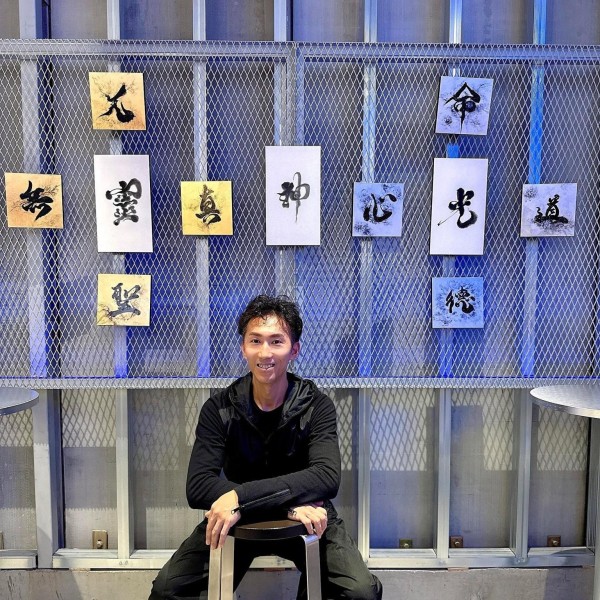
Exhibited in Shibuya, Tokyo, in November 2025, ENKU’s latest publicly presented work explores themes of meaning, purpose, reflection, focus, direction, and character through a composition inspired by traditional Japanese and Buddhist visual concepts. The work is structured around two symbolic worlds: one connected to spirit, wisdom, and clarity, and the other connected to life, light, and origin.
The composition brings together four interconnected concepts related to purpose, focus, direction, and character. Created using gold and silver foil, the appearance of the work changes depending on the viewer’s position and angle. ENKU created the piece with the intention of encouraging reflection, calm, and contemplation.
Koto and Calligraphy Collaboration Performance
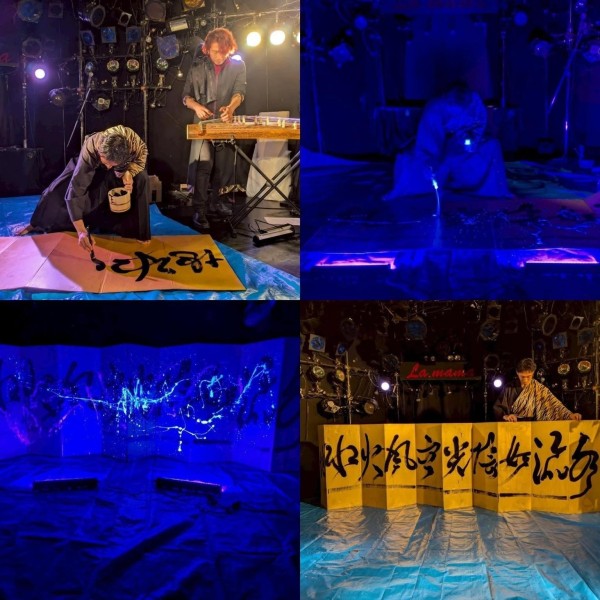
In June 2025, ENKU presented a collaborative performance combining Japanese koto and live calligraphy. For the performance, he created a custom gold folding screen and incorporated two central themes: the miracle of life and the flow of time.
Using glow-in-the-dark materials, ENKU transformed the performance space into an immersive visual experience, expressing these ideas through lines and points of light emerging from darkness. The work invited audiences to experience changing perspectives through the folding screen structure, light, and movement.
The Story Behind the Artist
ENKU traces the beginning of his calligraphy journey to a deeply personal experience in late 2023, which inspired him to begin studying calligraphy independently in March 2024 despite having no formal training or prior experience beyond elementary school handwriting classes.
Originally drawn to language, Japanese culture, tradition, and history, ENKU’s work explores the origins and meanings of words, the beauty of written forms, and the cultural idea that words can carry influence beyond their literal definitions.
From First Exhibition Challenge to Ongoing Practice
Shortly after beginning calligraphy, ENKU decided to pursue international opportunities and applied for a New York exhibition after discovering an open call through social media. Once accepted, he faced the challenge of creating an exhibition-ready artwork despite never having made one before.
As the deadline approached, he struggled to create a work he felt satisfied with. A single phrase, translated as “Divine Wind,” came to mind, and the piece inspired by that phrase became his first exhibited work. ENKU describes this as his first major wall as an artist.
Why Calligraphy Matters in the Age of AI
ENKU believes contemporary calligraphy offers a physical, time-intensive, and human experience in an increasingly digital age. He sees the act of creating and encountering calligraphy as something that can refine people’s sensibilities and give viewers a direct experience of being alive.
At a time when AI is becoming increasingly present, ENKU’s work emphasizes hand-made expression, material presence, physical effort, and the emotional impact of written form.
Future Vision
Through calligraphy, ENKU aims to become an artist active not only in Japan but around the world. One of his long-term goals is to create a work valued at 100 million yen.
Japanese Taiko Drums, Koto, and Calligraphy Collaboration Performance

In November 2024, ENKU presented an early collaborative performance combining Japanese taiko drums, koto, and calligraphy. The performance explored the relationship between sound, language, meaning, and written expression through layered calligraphic forms.
This performance marked one of ENKU’s first attempts to expand calligraphy beyond the page and into a live, multi-sensory format.
About ENKU
ENKU is a self-taught Japanese calligraphy artist based in Tokyo. Beginning his calligraphy practice in 2024, he combines traditional Japanese calligraphy with contemporary performance, installation, light-based expression, and themes rooted in language, culture, history, and human experience.
Media Contact:
ENKU | Contemporary Calligraphy Artist
Email: enku.u.sky@gmail.com
Phone: +81 80 4189 3903
Instagram: https://www.instagram.com/enku.u_do01
LinkedIn: https://www.linkedin.com/in/enku11011
Media Contact
Organization: Contemporary calligraphy artist ENKU
Contact Person: ENKU
Website: https://www.linkedin.com/in/enku11011
Email: Send Email
Country:Japan
Release id:46259
The post From a Calling to International Recognition: ENKU Brings Japanese Calligraphy to Global Audiences appeared first on King Newswire. This content is provided by a third-party source.. King Newswire makes no warranties or representations in connection with it. King Newswire is a press release distribution agency and does not endorse or verify the claims made in this release. If you have any complaints or copyright concerns related to this article, please contact the company listed in the ‘Media Contact’ section
About Author
Disclaimer: The views, suggestions, and opinions expressed here are the sole responsibility of the experts. No Digi Observer journalist was involved in the writing and production of this article.
qLABS launches qVAULT, secured with Falcon post-quantum cryptography, bringing quantum-resistant protection to institutional and DeFi digital asset holders.
Panama, 19th Jun 2026 – qLABS, a quantum-native Web3 foundation, today launched qVAULT, the first quantum-safe vault for digital assets for everyone. qVAULT is the first live product to let Hyperliquid holders keep HYPE, Hyperliquid’s native digital asset, in post-quantum self-custody, and the launch puts post-quantum protection, long confined to research papers and conference slides, into a product holders run themselves. The first HYPE on HyperEVM has already moved into qVAULT post-quantum vaults during early access.
qVAULT is a post-quantum, self-custody smart-contract vault for crypto that lets holders move assets out of elliptic-curve-only control and into vaults that sign with Falcon (FN-DSA), the signature scheme the U.S. National Institute of Standards and Technology (NIST) selected for standardization.
The quantum threat is concrete and present. The major public chains, including Bitcoin, Ethereum, and Hyperliquid through HyperEVM, secure funds with elliptic-curve signatures. HyperEVM authenticates with ECDSA over the secp256k1 curve, the same scheme Ethereum uses. A sufficiently capable quantum computer will break that cryptography and expose any address whose public key has appeared on chain. Because a public key revealed on chain today can be harvested and broken once that hardware exists, “harvest now, decrypt later” makes this a liability holders carry today, not a problem for a later decade.
qVAULT quantum-safe smart contract vault signs with Falcon (FN-DSA), the scheme NIST selected for standardization and currently in public review as FIPS 206. Since qVAULT is a non-custodial solution, qLABS never holds keys or seed phrases. The path into the vault has three steps: connect a self-custody account such as MetaMask, create a Falcon-secured vault, and bring assets across, out of ECDSA-only control and under a post-quantum signature.
qLABS is not making the case alone. A growing group of institutional and DeFi participants is working with the foundation on what post-quantum security means for their corner of the market. Two of them are public companies: HYLQ Strategy Corp (CSE: HYLQ), the first corporate treasury to hold HYPE, is evaluating quantum-safe custody for its position, and DigitalX (ASX: DCC), an institutional digital asset manager, recently took part in a quantum-preparedness workshop run by qLABS and 01 Quantum. On the DeFi side, the bonding protocol ApeBond is assessing post-quantum protection for its markets.
qVAULT’s design and threat model are public in a published litepaper, and its code has passed an independent security audit by Fairyproof. The cryptography itself is overseen by people who help set the standard: qLABS’ advisory board includes Dr. Edoardo Persichetti, co-author of HQC, an algorithm NIST selected for post-quantum standardization, and Aaron Moore, former CTO of QuSecure with a background at the NSA and DARPA.
Hyperliquid has become the center of gravity for on-chain trading: more than 3.5 trillion USD in cumulative volume, over 9 billion USD in open interest, and roughly 70 percent of open interest across all on-chain perpetuals exchanges, more than every competitor combined. Yet while Ethereum, Solana, and BNB Chain have all published quantum-resistance roadmaps, research, or live test results, Hyperliquid has not yet published a comparable plan. Until it does, protection in its ecosystem sits exactly where qVAULT puts it: in the hands of the holder. qONE, the qLABS native token powering qVAULT, has traded on Hyperliquid since February 2026.
“For years, post-quantum security lived in standards drafts and conference talks, with nowhere to put real money,” said Andrew Cheung, CTO of qLABS and President and CEO of 01 Quantum Inc. (TSXV: ONE; OTCQB: OONEF), a strategic partner of qLABS. “qVAULT closes that gap: a place holders move real assets onto Falcon signatures today, keep their own keys, and do it inside a live, audited smart-contract environment. That combination turns harvest-now-decrypt-later from a warning into something you can act on before the Q-Day arrives.”
“Hyperliquid is the best thing to happen to finance in years, real markets, real size, fully on-chain,” said Antanas Guoga (Tony G), President of qLABS. “The institutions and protocols that move first on post-quantum security are the ones prepared when the threat stops being theoretical. Protecting the best of on-chain finance is exactly where that starts.”
About qVAULT
qVAULT is a post-quantum, self-custody smart-contract vault for crypto. It signs with Falcon (FN-DSA), the signature scheme NIST selected for standardization and currently in public review as FIPS 206, letting holders move assets out of ECDSA-only control while retaining full custody. qLABS never holds keys or seed phrases.
Learn more: qvault.xyz
About qLABS
qLABS is a quantum-native Web3 foundation building post-quantum security for digital assets, with qVAULT as its flagship product and qONE as its native token. Its advisory board includes Dr. Edoardo Persichetti, co-author of the NIST-selected HQC algorithm, and Aaron Moore, former CTO of QuSecure. 01 Quantum Inc. (TSXV: ONE; OTCQB: OONEF) is a strategic technological partner of qLABS.
For more details contact: gintautas@qlabs.tech
Media Contact
Organization: qLABS
Contact Person: Ada Jonuse
Website: https://qlabs.tech/
Email: Send Email
Country:Panama
Release id:46266
The post First Hyperliquid Holders Secure Assets Against the Quantum Threat as qVAULT Launches appeared first on King Newswire. This content is provided by a third-party source.. King Newswire makes no warranties or representations in connection with it. King Newswire is a press release distribution agency and does not endorse or verify the claims made in this release. If you have any complaints or copyright concerns related to this article, please contact the company listed in the ‘Media Contact’ section
About Author
Disclaimer: The views, suggestions, and opinions expressed here are the sole responsibility of the experts. No Digi Observer journalist was involved in the writing and production of this article.
Press Release
Tradesman Nutrition Reviews Highlight Strong Demand for Supplements Built for Blue Collar Workers Across the United States
San Francisco, CA, Jun 19, 2026, ZEX PR WIRE — Tradesman Nutrition is gaining growing attention across the supplement industry. Thousands of American blue-collar workers are turning to the brand for practical nutrition solutions designed around demanding physical jobs. The company is receiving a steady stream of positive customer feedback. Many reviews highlight improvements in energy, weight management, recovery, and overall daily performance.
Unlike traditional supplement brands that mainly target athletes or gym-focused consumers, Tradesman Nutrition takes a different approach. It focuses on the needs of everyday working men. The company designs its products for people working long hours in construction, electrical work, plumbing, carpentry, mechanical trades, and other physically demanding industries. These jobs require sustained energy and strong recovery.
The company explains its mission in simple terms. It aims to help working men improve fitness and energy levels. It also focuses on helping them perform at a higher standard without forcing major lifestyle changes. Customers are not asked to completely change their routines. Instead, the products are designed to fit into existing work schedules and habits.
This approach is resonating strongly with customers. Thousands of reviews across the product range reflect this response. Many users describe clear and practical benefits that relate directly to their daily work lives.
One customer, Merv A, a 60-year-old painter, shared a simple but powerful transformation. He said, “Haven’t worn my old work shirt in years, fits again now.”
Weight management and physical improvement appear often in customer feedback. Another reviewer, Shane S, a 41-year-old carpenter, reported noticeable changes while using the company’s Shred product. He said, “Been on the Shred for a few weeks and love it. Feels like it’s shredding fat while keeping me moving all day.”
Affordability and practicality are also important drivers of customer satisfaction. James C, a 21-year-old apprentice electrician, explained the financial benefit compared to his daily spending habits. He said, “As an apprentice, I was sick of paying 7 dollars a day at the servo, so happy I found something way cheaper and it works way better.”
These testimonials reflect a broader pattern across the customer base. Many tradesmen are looking for simple ways to improve health without adding complexity to their already demanding schedules. Reviewers often mention that the products fit easily into their daily routines. This includes use on job sites, during travel, and in early morning starts.
A major theme in Tradesman Nutrition Reviews is sustained energy throughout long workdays. Customers frequently report improved endurance. They also describe reduced fatigue and better focus during long shifts. For workers who start early and finish late, steady energy is important for both productivity and safety.
Weight management is another commonly reported benefit. Many customers who use Shred and related products report visible changes in body composition. They report these results while continuing physically intense labor. Unlike structured fitness programs that require gym time and strict dieting, users say the products integrate naturally into their work routines.
Recovery and rest also appear often in customer feedback. Many tradesmen report improved sleep quality and faster recovery after demanding workdays. Given the physical strain of blue-collar work, this benefit has become a key factor in customer satisfaction.
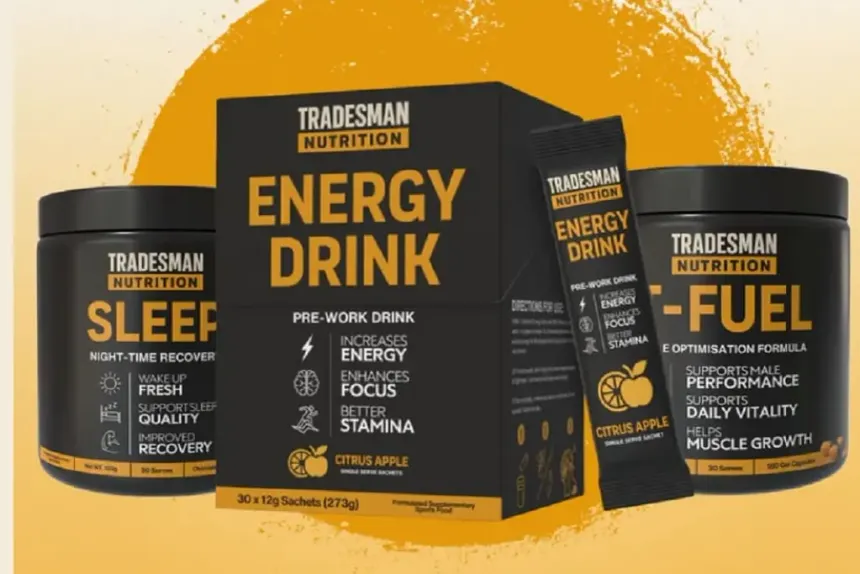
The company reports serving more than 100,000 American blue-collar workers. It also maintains a 4.9-star average rating among its customers. Thousands of reviews across multiple products continue to reinforce its market position. These products include Energy Drink, Sleep formula, Shred, T Fuel, and Creatine. The feedback supports its identity as a brand created for working men rather than general fitness consumers.
Another consistent theme in reviews is accessibility. Many customers say they had never considered supplements before discovering Tradesman Nutrition. The brand’s focused messaging has introduced nutrition support to a new audience. These are men who view nutrition as a practical tool for work performance rather than a fitness luxury.
As the company continues to expand across the United States, customer testimonials suggest strong alignment between product design and real-world needs. The focus on simplicity, affordability, and work-driven performance has helped it stand out in a crowded supplement market.
With thousands of positive reviews and growing recognition among American tradesmen, Tradesman Nutrition shows that supplements designed for physically demanding jobs can meet a long-overlooked need in the wellness industry. For many customers, the message is clear. When products are built for the realities of hard work, the results become visible in everyday life. To learn more, visit: https://tradesmannutrition.com/ .
About Author
Disclaimer: The views, suggestions, and opinions expressed here are the sole responsibility of the experts. No Digi Observer journalist was involved in the writing and production of this article.
From a Calling to International Recognition: ENKU Brings Japanese Calligraphy to Global Audiences
First Hyperliquid Holders Secure Assets Against the Quantum Threat as qVAULT Launches
Tradesman Nutrition Reviews Highlight Strong Demand for Supplements Built for Blue Collar Workers Across the United States
Benzinga Money Article Discusses How to Become Part of the 12% of Retirees Who Have Achieved the Recommended $550,000 Minimum Retirement Savings Threshold
Apu Apustaja Conquers New York with Lively Street Ads, Including Times Square Billboard
Bay Smokes Maintains Quality Amid Legislative Changes in the Hemp Industry


-
Press Release4 days ago
FARO Board Bags Expands Premium Surf Gear Line with Durable Surfboard Protection and Sustainable Travel Solutions in the USA
-
Press Release4 days ago
MAMBASNAKE Launches “World Football Season” Mid-Year Sale: Celebrate the Spirit of the World Cup with Elite Gaming Gear
-
Press Release7 days ago
MarketAnywhere Sets the National Standard for Best Flyer Distribution and Door-to-Door Marketing in the United States
-
Press Release1 week ago
GLP-1 Patients Regain Most of Their Lost Weight Within 2 Years . A Tampa Telehealth Provider Is Partnering With a Digital Health Platform to Change That.
-
Press Release7 days ago
isCalculator: The Evolution Of No-Code; Ai Platform Instantly Generates Mathematical Mini-Applications
-
Press Release7 days ago
The Surgeon Everyone Sees on the Way to the Hamptons: Dr. David Pincus of Pincus Plastic Surgery
-
Press Release7 days ago
The Point Elevates Coastal Celebrations with Premier Waterfront Event Venue in Mission Beach, San Diego
-
Press Release1 week ago
Jerky Didn’t Need Another Flavor It Needed a Personality