
Press Release
Carziqo Expands UR-NX Autonomous Ride-Hailing Operations to Miami During October Mobility Festival

-
The company links its Miami operations to a month-long mobility initiative, targeting a market shaped by tourism, consumer spending and diverse everyday travel needs.
MIAMI, Florida, Oct 01, 2026, ZEX PR WIRE — Carziqo says its UR-NX series autonomous ride-hailing vehicles are now operating in designated areas of Miami, bringing the company’s mobility offering to a major visitor and consumer market during the October Carziqo Future Mobility Festival.

The development connects a city-level operating initiative with a broader company message about intelligent transportation and greener urban journeys. For Carziqo, Miami offers an opportunity to develop its service in a market where tourism, business activity and everyday travel intersect—and where convenience is an important part of the customer experience.
The company describes its October festival as a month-long celebration guided by the theme: “Advancing greener mobility through intelligent technology, connecting people to more convenient everyday journeys and a more sustainable urban future.”
Its Miami operations give that theme a practical business focus. The UR-NX deployment forms part of Carziqo’s stated strategy of connecting autonomous vehicle technology with identifiable passenger needs in commercially significant urban markets.
Miami’s wider visitor economy provides context for that strategy. According to the Greater Miami Convention & Visitors Bureau, Greater Miami and Miami Beach welcomed 28.3 million visitors in 2025. Visitor spending across Miami-Dade County reached $22.7 billion, including expenditure on accommodation, dining, shopping, transportation and entertainment.
Those figures describe the broader regional economy, rather than demand for any individual mobility provider. They nevertheless illustrate the scale and diversity of the market surrounding Carziqo’s operating initiative. For a ride-hailing business, the opportunity lies in serving the journeys that connect different parts of that economy.
A visitor’s day can involve several separate destinations, while residents and workers have recurring travel needs of their own. From a commercial perspective, this mix gives mobility providers a reason to look beyond a single customer segment. It also makes the relationship between service coverage, vehicle availability and actual trip demand particularly important.
Carziqo’s announcement reflects that wider view. The company identifies leisure travelers, residents, professionals and service workers as groups whose travel patterns inform its approach. Its stated ambition is to develop a service that remains relevant beyond a particular event or seasonal occasion.
The UR-NX series operates within designated areas, according to the company. Availability depends on the applicable operating area and conditions, with current service information communicated through official Carziqo channels.
That defined scope is central to understanding the announcement. The business proposition rests on how effectively Carziqo can serve the journeys available within its operating footprint. A substantial consumer market creates a setting for growth; translating that setting into a useful service requires consistent execution.
Carziqo says its priorities include understanding demand, managing vehicle availability, maintaining service quality and learning from actual use. These priorities connect its technology proposition to the day-to-day requirements of running a passenger mobility business.
They also provide a useful framework for assessing the strategic significance of Miami. Vehicle deployment establishes a presence, while the longer-term commercial value depends on whether the service can become a practical choice for repeat journeys. Clear service information and a dependable passenger experience are therefore important to the company’s stated ambitions.
The Future Mobility Festival supplies the brand context for this operating development. Taking place throughout October, the initiative brings Carziqo’s goals for convenience, intelligent technology and sustainability under one theme. The company presents its Miami operations as an expression of those goals during the festival month.
Carziqo’s sustainability message also extends to how fleets are managed. In its announcement, the company highlights vehicle deployment, unnecessary travel between trips, maintenance and matching capacity to demand as areas that require attention. It describes intelligent fleet management as a way to pursue more efficient operations while keeping passenger needs central to service development.
These are operational objectives whose significance lies in implementation. The announcement positions greener mobility as an ongoing direction for the business, with attention to the decisions that shape how vehicles are used.
For readers following Carziqo’s development, the Miami initiative brings together three elements of its strategy: a presence in a substantial consumer market, an emphasis on practical fleet operations and a brand platform intended to explain the purpose behind its technology.
The October festival gives the announcement a timely setting, while the company’s stated ambitions extend beyond the celebration. Carziqo says it intends to continue developing the UR-NX series around actual travel needs and lessons from operations.
With the series now operating in designated areas of Miami, according to Carziqo, the company has tied its festival message to a concrete operating initiative. The next measure of progress will be how that presence develops into a consistent service for the journeys it is positioned to serve.
About Author

Disclaimer: The views, suggestions, and opinions expressed here are the sole responsibility of the experts. No Digi Observer journalist was involved in the writing and production of this article.

The Shortage Everyone Talks About Is the Wrong One
Georgia, USA, 16th October 2026, ZEX PR WIRE, Every few months another report says manufacturing cannot find enough skilled workers. Edmund Dorsz has heard that line for most of his career, and he thinks it skips the actual problem.
“Companies will post for a CNC programmer with five years of experience,” he says, “but they won’t say who is supposed to teach that person the parts of the job that never show up in a manual.”
Dorsz has worked across CAD and CAM systems including Siemens NX, SolidWorks, Mastercam, and CATIA V5. He says the software is rarely the hard part. The hard part is judgment, the kind that comes from someone standing next to a new hire at a machine and explaining why a toolpath that looks fine on screen will chatter on the actual part.
What Gets Lost When Nobody Is Assigned to Teach
Dorsz says the mentorship that used to happen informally, a senior programmer walking a newer one through a setup, has gotten thinner as shops run leaner and schedules get tighter.
“Nobody decided to stop training people,” he says. “It just stopped being anyone’s job in particular, so it happens less.”
He points to a gap he sees often: new programmers who are strong in the software but have never had to explain a toolpath choice to someone running the machine. “You can model a part perfectly and still hand the floor something that’s a headache to cut,” he says. “That’s not a software problem. That’s an experience problem.”
Dorsz owned and ran Accelerated Precision Tooling Company in California before moving into his current role, so he has seen the gap from both sides, as an employer trying to staff a shop and as a programmer trying to get a part right the first time.
Why He Still Makes Time for It
Dorsz says he takes training requests from coworkers seriously, even when it slows down his own week. “If someone asks me to walk through why I set a part up a certain way, I’ll stop and do it,” he says. “It costs me twenty minutes. It can save them a scrapped part later.”
He is careful to draw a line between correcting someone’s work and dismissing it. “I had people do that to me early on, and it didn’t make me better, it just made me quiet,” he says. “I’d rather someone ask a question twice than guess once and be wrong.”
He also pushes back on the idea that patience is a soft skill that does not belong on a shop floor. “Precision work is unforgiving,” he says. “But that doesn’t mean the people doing it have to be. You can hold a tight tolerance and still be easy to work with.”
What He Tells Programmers Starting Out
Dorsz says the advice he gives newer programmers is less about which CAD/CAM system to learn and more about staying curious once they know one. “Get good at your first system, but don’t stop there,” he says. “The programmer who only knows one way to solve a problem runs out of options fast.”
He also tells them not to treat the screen as the whole job. “The part doesn’t live in the software,” he says. “It lives on the machine. Go stand next to it when you can.”
To read more, visit the website here.
About Edmund Dorsz
Edmund Dorsz is a CNC programmer and manufacturing engineer based in Newnan, Georgia. He has worked with Siemens NX, AutoCAD, SolidWorks, Mastercam, and CATIA V5, and previously owned Accelerated Precision Tooling Company in California. He has been with Clayton International Inc. since January 2025.
About Author
Disclaimer: The views, suggestions, and opinions expressed here are the sole responsibility of the experts. No Digi Observer journalist was involved in the writing and production of this article.
Veterinarian Dr. Jennifer Creed discusses why everyday experiences with people, animals, and household activity matter when families research how a kitten was raised.
Illinois, USA, 16th October 2026, ZEX PR WIRE, Long before a kitten arrives in a new home, it has already spent weeks learning about the world around it. The people it encounters, the animals nearby, and the everyday activity around it all become part of those early experiences.
Dr. Jennifer Creed, a practicing small-animal veterinarian and founder of Midwest Ragdolls in Elburn, Illinois, believes prospective owners should consider that part of a kitten’s background alongside questions about veterinary care and health.
“My kittens are raised by my family and me and are used to being around kids and dogs,” Creed says. “That is simply part of their normal environment from early on.”
For Creed, the point is not that early socialization can guarantee how a cat will behave as an adult. Every kitten is an individual, and many factors can influence temperament. Instead, she encourages families to ask a broader question when researching a breeder: What has everyday life actually looked like for this kitten?
What Does Socialization Mean for a Young Kitten?
Socialization is sometimes treated as a formal training program. In practice, many important experiences can happen through ordinary daily life.
A young kitten may hear people moving through a home, meet different family members, experience routine handling, or notice other animals nearby. These experiences introduce the kitten to situations it may encounter again after joining a new family.
At Midwest Ragdolls, the family-run structure means this exposure is built into the environment in which the kittens are raised. Creed has no employees at the cattery. Her children help with the kittens, and dogs are also part of the environment.
“Veterinary care is important, but raising an animal involves more than what happens during an examination,” Creed says. “You are also looking at the environment that animal experiences during an important period of its early life.”
Why Early Experiences and Temperament Are Not the Same Thing
Creed cautions against assuming that only early socialization creates a predictable personality.
Genetics, individual temperament, later experiences, and the environment in a new home can all shape how a cat behaves.
Ragdoll kittens are bred for a specific temperament. They are friendly , outgoing cats but the environment they are raised in is very important.
That distinction matters for families researching breeders. Statements about kittens being raised around children or other animals can provide useful information about their background, but they should not be interpreted as promises about future behavior.
For Creed, the more practical question is whether kittens have opportunities to experience normal interaction before they leave.
“You cannot promise that every kitten will respond to every situation in exactly the same way,” Creed says. “They have individual personalities. What you can do is start with a very social breed and think carefully about the experiences they have while they are in your care.”
What Should Families Ask About a Kitten’s Early Environment?
When prospective owners speak with a breeder, Creed recommends learning about daily life rather than focusing only on a list of veterinary procedures.
Families can ask where the kittens are raised, who regularly interacts with them, whether they have experience around children or other animals, and what normal activity they encounter. They can also ask how much direct interaction the breeder has with the kittens.
Those questions can provide a more complete picture of the weeks before a kitten joins its new family.
This is particularly relevant because bringing a kitten home represents another major environmental change. New people, unfamiliar rooms, different sounds, and possibly other pets can all arrive at once.
Creed says families should expect adjustment to take time rather than assuming that a well-socialized kitten will immediately feel comfortable in every situation.
Socialization Continues After a Kitten Comes Home
The breeder is responsible for only the beginning of a kitten’s experiences. Once a kitten leaves, its new family must continue that process.
Creed encourages owners to allow kittens to become familiar with a new home gradually. Introductions to unfamiliar people, pets, rooms, and routines do not have to happen all at once. Paying attention to how an individual kitten responds can help families decide when to move forward and when to give the animal more time.
The same principle applies to children and other pets. A kitten having previous experience around children or dogs does not mean every future interaction will automatically be comfortable. New introductions still require supervision, patience, and attention to the animals involved.
That continuing process is one reason Creed believes prospective owners should think about socialization as more than something a breeder completes before a kitten goes home.
“The early weeks matter, but they are only the beginning,” Creed says. “Families continue building on those experiences once the kitten becomes part of their home.”
For Midwest Ragdolls, that beginning takes place within the Creed family’s own environment. More than three decades after the cattery was founded in 1993, kittens are still raised with direct family involvement and regular exposure to children and dogs.
The approach reflects a simple idea: veterinary care provides important information about a kitten’s health, while everyday experiences form another part of its early development. Families researching a kitten can benefit from asking about both.
About Midwest Ragdolls
Midwest Ragdolls is a family-run Ragdoll cattery based in Elburn, Illinois. Founded in 1993 by practicing small-animal veterinarian Dr. Jennifer Creed, Midwest Ragdolls raises purebred Ragdoll kittens for families primarily throughout the Midwest and across the United States.
About Author
Disclaimer: The views, suggestions, and opinions expressed here are the sole responsibility of the experts. No Digi Observer journalist was involved in the writing and production of this article.
One year after opening at the foot of Mount Fuji, the Church of Scientology Mission of Shizuoka marks its first anniversary on October 25, 2026, with courses, seminars and a public display in operation.
Shizuoka, Japan – October 16, 2026 – The Church of Scientology Mission of Shizuoka marks its first anniversary on October 25, 2026, completing one year of operation at its location on Road 75 in Shizuoka City, Japan. The anniversary is the Mission’s first annual milestone since it opened as an Ideal Scientology Mission in October 2025.
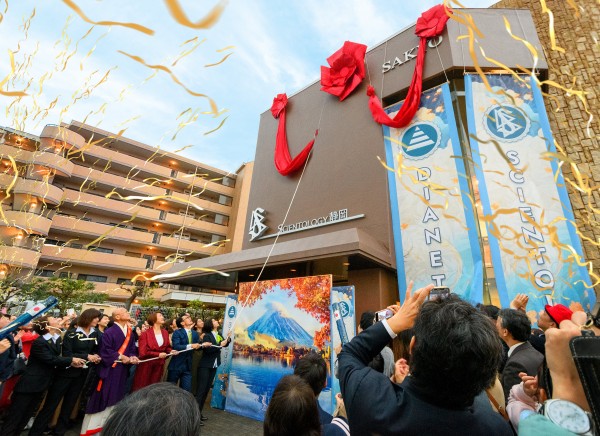
Shizuoka City is the capital of Shizuoka Prefecture, located on Honshu, the main island of Japan, between the Pacific coast and the slopes of Mount Fuji. The Mission serves residents of the city and the surrounding region, and is one of the Church of Scientology’s centers in Japan.
Over its first year, the Mission has operated as a center for the introductory services of the Scientology religion. These include Life Improvement Courses on everyday subjects such as marriage, parenting, personal motivation and goal setting; seminars on topics including personal efficiency and the fundamentals of Dianetics and Scientology; and auditing, the religion’s form of spiritual counseling. The Mission also maintains a Public Information Display with multimedia presentations on the beliefs and practices of the Scientology religion and on the life of its Founder. The display is open to visitors.
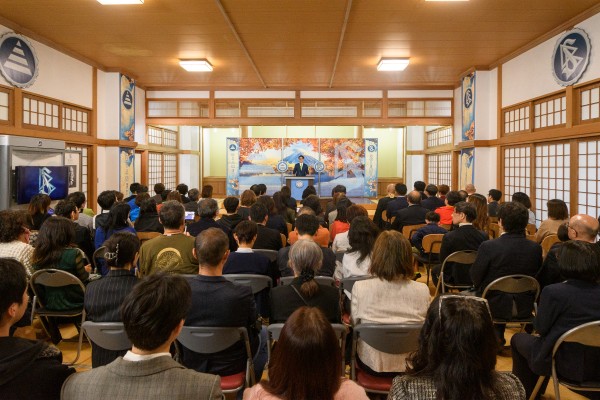
Scientology Missions are local centers of the Scientology religion that deliver its basic and introductory services. An Ideal Mission is one equipped to provide the full range of those services under one roof. The Shizuoka Mission opened on October 25, 2025, following a dedication ceremony attended by parishioners and guests from across Japan and from overseas, including Taiwan and Australia. The one-year mark follows the Mission’s first full annual cycle of courses, seminars and public access.

At the Mission’s dedication, the Executive Director said: “This Mission represents more than a building. It’s a new starting point.” One year later, the Mission is in regular operation, with courses, seminars and the Public Information Display open to residents of Shizuoka and the surrounding region.
The Church of Scientology Mission of Shizuoka is located on Road 75 in Shizuoka City, Shizuoka Prefecture, Japan. More information about the Scientology religion is available at scientology.org.
Media Contact
Organization: Church of Scientology International
Contact Person: Dave Bloomberg – Media Relations
Website: https://www.scientology.org/
Email:
mediarelations@churchofscientology.net
Contact Number: +13239603500
Address: 6331 HOLLYWOOD BLVD.
Address 2: STE 1200
City: LOS ANGELES
State: CA
Country: United States
Release id: 49951
View source version on King Newswire:
Scientology Mission of Shizuoka Marks First Anniversary at Foot of Mount Fuji
About Author
Disclaimer: The views, suggestions, and opinions expressed here are the sole responsibility of the experts. No Digi Observer journalist was involved in the writing and production of this article.
Midwest Ragdolls Highlights Why a Kitten’s Early Environment Matters
Edmund Dorsz Says the CNC Trade Is Losing Its Mentors, Not Just Its Workers
Scientology Mission of Shizuoka Marks First Anniversary at Foot of Mount Fuji
Benzinga Money Article Discusses How to Become Part of the 12% of Retirees Who Have Achieved the Recommended $550,000 Minimum Retirement Savings Threshold
Apu Apustaja Conquers New York with Lively Street Ads, Including Times Square Billboard
Bay Smokes Maintains Quality Amid Legislative Changes in the Hemp Industry


-
Press Release6 days ago
Malmö Project Outlines Business Proposal Development and Project Funds Management Activities in the Netherlands
-
Press Release1 week ago
Evolution Metals & Technologies Corp. Raises Fiscal 2026 Revenue Guidance 62% at Midpoint to $10–$11 Million and Reaffirms $400–$460 Million Fiscal 2027 Outlook
-
Press Release4 days ago
Beyond the Customs Declaration: Gorian Aduanas Takes a Specialist, Bespoke Approach to Customs Clearance and Complex International Imports
-
Press Release1 week ago
Accountsuspension.com Expands Advanced Enterprise Recovery Solutions to Shield Global E-Commerce Sellers and Digital Entrepreneurs from Revenue Collapse
-
Press Release1 day ago
Exhibit at CES 2027: Showcasing GENCHI, the Immersive Avatar Service Called Crazy by a U.S. Angel Investor
-
Press Release6 days ago
ChannelLetter.com Opens Factory-Direct Wholesale Channel Letters to Sign Shops With No Minimum Order
-
Press Release6 days ago
Arthur Murray Dance Studio Continues Longstanding Three-Step Teaching Tradition
-
Press Release6 days ago
The World’s Best Magazine Releases Issue 16 – October 2026 Edition, Excellence in Action