
Press Release
Architectural Innovations for Stability, AI Cost, and Debugging: Why Technical Program Manager Faranak Firozan Says the Future of AI Depends on Smarter System Design

California, U.S, 15 Dec 2025, ZEX PR WIRE, As organizations accelerate their adoption of artificial intelligence, many find themselves struggling with escalating compute expenses, unstable model behavior, and debugging challenges that derail development timelines. According to Technical Program Manager and transformation strategist Faranak Firozan, the solution is not simply faster GPUs or larger models. Instead, she argues that the next wave of innovation will come from deeper architectural intelligence and more responsible program management practices.
Drawing from 20 years of experience in technology delivery, engineering alignment, and AI-driven optimization initiatives, Faranak Firozan emphasizes that model stability, prediction efficiency, and computational affordability are now central governance issues not just engineering concerns. In this comprehensive analysis, she outlines the architectural breakthroughs and programmatic principles that organizations must adopt to avoid unnecessary cost, improve reliability, and strengthen long-term scalability.
Architectural Design for Efficient Model Performance
One of the most important architectural advancements Faranak Firozan highlights is Knowledge Distillation, a technique that addresses the growing need for compact, efficient models that maintain near-state-of-the-art performance without production-level overhead.
Traditional machine learning has followed the pattern of equating “bigger” with “better.” However, larger models introduce delays in inference, inflate deployment cost, and limit accessibility for resource-restricted environments. Knowledge Distillation changes this dynamic by enabling a smaller “student” model to learn from the outputs of a much larger “teacher” model.
Instead of learning solely from ground-truth labels, the student model uses the teacher’s probabilistic output distributions to shape its feature space. According to Faranak Firozan, this method routinely preserves 95–97% of performance while producing a model that is up to 40% smaller and 35% faster. For production pipelines governed by compute budgets, latency thresholds, or mobile deployment constraints, this shift is transformative.
“The goal,” Firozan notes, “is not simply achieving accuracy but achieving accuracy that scales.”
Structural Trade-offs in Vision Models: Why DropBlock Outperforms Standard Dropout
In convolutional neural networks, regularization plays a vital role in preventing the model from overfitting. However, Faranak Firozan points out that traditional Dropout is surprisingly ineffective in CNNs because it removes individual pixel activations from a feature map where spatial information is highly correlated. Removing a random pixel has little influence on model behavior, leaving overfitting largely unaddressed.
This is where DropBlock becomes essential. Instead of erasing individual pixels, DropBlock zeroes out an entire contiguous region. By removing a full block of features, the method forces the model to develop robust representations that can operate even when substantial portions of information are missing.
Firozan explains that this design encourages resilience, making CNNs more dependable during unpredictable real-world conditions such as occlusion, image noise, or low-quality sensor data. The improvement in generalization has been documented across numerous vision benchmarks, and she considers it a regulatory-level requirement for companies deploying AI in medical imaging, robotics, or autonomous systems.
Programmatic Debugging and the Hidden Risks of Convergence Failure
Beyond model architecture, Faranak Firozan emphasizes that debugging failures during training can derail entire development lifecycles if not understood deeply. One of the most overlooked sources of training instability especially with mini-batch optimization is label-ordered datasets.
When data is processed sequentially by class, the gradient updates oscillate between conflicting objectives. Rather than learning a cohesive representation, the model repeatedly recalibrates itself to the current class in the batch. The result is stagnation, instability, or complete failure to converge.
Firozan stresses that this type of issue is not an engineering oversight but a program management gap. Ensuring that datasets are properly shuffled across mini-batches is a governance responsibility that safeguards against months of wasted experimentation and budget overruns.
“Debugging is not just a technical task,” she argues. “It is a programmatic safeguard that protects investment.”
Managing AI Infrastructure Cost: A Program Manager’s Growing Responsibility
As Large Language Models (LLMs) expand and edge computing becomes more pervasive, AI infrastructure costs have become a major financial risk. According to Faranak Firozan, program managers must understand the memory and compute dynamics behind training modern models in order to set realistic budgets and timelines.
The first major challenge is GPU memory consumption. Even a moderately sized model such as GPT-2 XL contains 1.5 billion parameters, requiring approximately 3GB of memory at 16-bit precision just for the weights. This number grows exponentially when factoring in:
-
Optimization states
-
Momentum and variance (stored at 32-bit precision)
-
Huge activation maps required for backpropagation
Despite optimization techniques such as Gradient Checkpointing, the memory footprint can reach 50–60GB, making high-end GPUs not a luxury but a necessity.
Firozan explains that teams often underestimate these requirements, leading to mid-project crashes, stalled timelines, and spiraling cloud infrastructure costs. Understanding these memory mechanics is now essential for project planning, risk mitigation, and long-term roadmap development.
Training Under Constraints: The Importance of Gradient Accumulation
Memory limitations often force practitioners to reduce batch sizes to avoid crashes. However, small batch sizes can destabilize training by producing noisy gradient updates. To solve this, Gradient Accumulation allows developers to simulate a large batch size even when hardware cannot support it directly.
Instead of updating weights after every mini-batch, gradients are accumulated over several steps. Once the equivalent of a full batch is processed, the optimizer updates the weights. This preserves training stability while keeping memory usage within strict limits.
According to Faranak Firozan, Gradient Accumulation is a strategic cost-reduction tool. It allows teams to train models on smaller, more cost-effective hardware without compromising model performance or increasing development time.
Faranak Firozan’s Broader Vision for AI Program Leadership
Across her career, spanning operations, engineering coordination, security programs, and large-scale transformation, Faranak Firozan has championed the viewpoint that AI leadership must evolve. The complexity of modern model development requires program managers who understand not just timelines and communication but system architecture, debugging workflows, and compute economics.
She emphasizes that architectural decisions have strategic consequences. Stability drives user trust. Efficiency controls cost. Debugging protects timelines. And intelligent systems design enables scalability.
“AI is not just a scientific challenge,” she states. “It is an organizational challenge. Leaders must understand how architecture, infrastructure, and governance intersect.”
Conclusion: Smarter Architecture, Stronger Governance
As organizations push toward increasingly ambitious AI initiatives, the insights shared by Faranak Firozan highlight a critical shift: the most sustainable advancements will come not from ever-larger models, but from architectural innovation, cost-aware infrastructure, and programmatically sound development pipelines.
In a world racing toward artificial intelligence, the companies that succeed will be the ones guided by leaders who understand both the engineering and the economics behind modern AI systems and who can integrate them with clarity, responsibility, and long-term vision.
About Author

Disclaimer: The views, suggestions, and opinions expressed here are the sole responsibility of the experts. No Digi Observer journalist was involved in the writing and production of this article.

Houston, TX, Jun 20, 2026, ZEX PR WIRE — Salinas Interiors has announced a significant expansion of its project portfolio with the launch of several major residential and commercial design initiatives across Houston. The announcement marks an important milestone for the Houston-based interior design firm as it continues to strengthen its presence in one of the nation’s most active development markets.
The new projects represent a broad cross-section of Houston’s growth, ranging from luxury residential developments and custom home renovations to commercial office environments, retail destinations, and mixed-use properties. As demand for professionally designed spaces continues to rise, Salinas Interiors is responding with a strategic focus on projects that combine functionality, craftsmanship, and long-term value.
The company, led by founder and principal designer Douglas Salinas, has experienced steady growth in recent years as Houston homeowners, developers, and business owners increasingly seek design solutions that enhance both aesthetics and performance. The latest portfolio expansion reflects that momentum and reinforces Salinas Interiors’ position as a trusted design partner throughout the region.
Expanding Across Houston’s Residential Market
Among the newly announced projects are several high-profile residential assignments located throughout some of Houston’s most established and rapidly growing communities. These projects include luxury custom homes, large-scale renovations, and complete interior transformations designed to meet the evolving needs of modern families.
Houston homeowners today are investing more thoughtfully in their living environments. Many are seeking spaces that support remote work, multigenerational living, entertaining, and everyday comfort. Salinas Interiors has responded by creating interiors that prioritize flexibility without sacrificing elegance.
According to Douglas Salinas, today’s residential clients want homes that work harder for them.
“People are spending more time thinking about how their homes function,” Salinas said. “They want spaces that feel comfortable, practical, and personal. Our role is to help bring those goals together in a way that feels natural and lasting.”
The firm’s residential projects will include custom kitchens, primary suite renovations, open-concept living spaces, home offices, and outdoor living environments designed to complement Houston’s lifestyle and climate.
Growing Presence in Commercial Design
In addition to its residential portfolio, Salinas Interiors has secured a number of commercial projects that reflect Houston’s continued business growth. These assignments include office interiors, retail spaces, hospitality environments, and professional service facilities.
The commercial sector has become an increasingly important area of focus for the company. Businesses across Houston are recognizing the impact that thoughtfully designed spaces can have on employee engagement, customer experience, and overall brand perception.
Salinas Interiors approaches each commercial project with a strong emphasis on functionality. The company works closely with business owners and stakeholders to ensure that layouts, finishes, and design elements support operational goals while creating inviting environments.
“Commercial design is about understanding how people interact with a space,” Salinas said. “Whether it’s an office, a retail environment, or a hospitality setting, every design decision should support the way the business operates.”
Several of the new projects involve complete workplace transformations that reflect changing expectations surrounding flexibility, collaboration, and employee well-being.
Collaborating with Houston Developers
A key component of the firm’s recent growth has been its expanding relationships with developers throughout Houston. Salinas Interiors has become increasingly involved in projects during the planning stages, allowing the company to contribute design expertise before construction begins.
This collaborative approach benefits clients by creating greater alignment between architecture, construction, and interior design. It also allows the firm to identify opportunities for improved functionality, material selection, and space utilization early in the process.
Developers have increasingly sought design partners who can provide practical solutions while maintaining strong aesthetic standards. Salinas Interiors has built a reputation for balancing creativity with execution, making the company a valuable contributor to large-scale development efforts.
“Our goal is always to add value,” Salinas said. “When we are involved from the beginning, we can help create spaces that not only look good but also perform effectively for the people who use them.”
Investing in Growth and Capability
To support its growing portfolio, Salinas Interiors has expanded its internal operations and invested in additional resources. The company has strengthened its design team, enhanced project management capabilities, and adopted new technologies that improve communication and planning.
Advanced rendering software now allows clients to experience detailed visual representations of their projects before construction begins. These tools help improve decision-making while reducing uncertainty throughout the design process.
The company has also expanded its network of trusted contractors, vendors, and industry partners. These relationships allow Salinas Interiors to maintain quality standards while managing a growing number of concurrent projects.
Growth, according to company leadership, has been approached carefully and intentionally.
“We have focused on building the right foundation,” Salinas said. “As demand increases, we want to make sure we continue delivering the level of service our clients expect.”
Commitment to Quality and Long-Term Value
While the company continues to grow, its core philosophy remains unchanged. Salinas Interiors emphasizes timeless design principles, durable materials, and practical solutions that deliver long-term value.
Rather than focusing on short-term trends, the company prioritizes spaces that remain functional and appealing for years to come. This approach has resonated with both residential and commercial clients seeking meaningful returns on their investments.
In residential projects, this means creating homes that adapt to changing lifestyles. In commercial settings, it means designing environments that support productivity and business growth.
“Good design should serve people every day,” Salinas said. “Our focus is on creating spaces that continue to work well long after the project is completed.”
Supporting Houston’s Continued Growth
Houston remains one of the fastest-growing metropolitan areas in the United States, creating ongoing opportunities across residential and commercial sectors. Salinas Interiors views its latest projects as part of a larger effort to contribute positively to the city’s development.
The company believes that thoughtful interior design plays an important role in shaping how people experience homes, workplaces, and public spaces. By focusing on quality, collaboration, and functionality, Salinas Interiors aims to support Houston’s growth while helping clients create environments that reflect their goals and values.
As construction begins on many of the newly announced projects, the company expects additional opportunities to emerge throughout the coming year.
“Our success is tied to the success of our clients and our city,” Salinas said. “Houston continues to grow, and we are excited to be part of that story.”
About Salinas Interiors
Salinas Interiors is a Houston-based interior design and interior architecture firm led by Douglas Salinas. The company specializes in residential, commercial, and mixed-use projects, providing services that include interior design, space planning, renovation consultation, project coordination, and design development. Known for its commitment to craftsmanship, functionality, and client collaboration, Salinas Interiors serves homeowners, developers, and businesses throughout the Houston area.
About Author
Disclaimer: The views, suggestions, and opinions expressed here are the sole responsibility of the experts. No Digi Observer journalist was involved in the writing and production of this article.
TeenCycle, a fully offline period tracker for teens, is out now on iPhone and Android — no account, no cloud, no subscription, and nothing it can sell.
United States, 20th Jun 2026 — Laura and her teenage daughter, Mia, spent weeks looking for a period app the two of them could trust. They never found one. So they built it themselves at the kitchen table, and today that app, TeenCycle, arrives for iPhone and Android.

The search started the way it does for most families: they opened the app store and expected to be done in ten minutes. Instead, every tracker wanted something first. The free ones asked for an email and a login before the first entry. The paid ones cost between $40 and $150 a year and behaved like social platforms, with feeds, streaks, and a steady stream of notifications. Several asked a young teen, on day one, whether she was sexually active — a question that doesn’t belong in a fourteen-year-old’s first period app. After comparing the most popular period trackers for teens, Laura kept hitting the same wall: most period apps are advertising businesses with a tracker attached, in a category where the biggest names have drawn lawsuits and regulatory scrutiny over how they handle intimate data.
So the two of them made a different list — not what an app could do, but what it should. It should log a day in one tap. It should never ask a young teen a question that isn’t its business. And it should keep everything on her phone, where no company, not even the one that made it, could see it.
That last principle is the heart of the app. The founders describe it as private by architecture, not by policy — the strongest form of privacy-first period app. A privacy policy is a promise, and a promise from a company that holds your data is only as good as the company. TeenCycle holds nothing: no account, no cloud, no servers, no analytics, no third-party trackers. Everything a user logs lives on the device, and only on the device. There is nothing on the company’s end to leak, sell, or hand over, because there is nothing on the company’s end at all.
The app itself is deliberately small. It opens to three screens: one that shows where you are in your cycle, with a single estimate of when the next period is likely to begin; a calendar that marks logged days in terracotta and likely days in a paler clay; and a settings screen with a dark mode, a one-tap export, and the privacy promise. Logging a day takes a single tap. Streaks, mood logs, community feeds, push notifications, in-app ads, and account creation were all left out on purpose. The list of what the app leaves out is longer than the list of what it keeps.
“We’re not a company with data to sell,” said Laura, who co-founded TeenCycle with Mia. “We’re a family that built the thing we wished existed, for our own daughter first. If we can’t see it, we can’t sell it — and we can’t sell what we don’t have.”
The price follows the same logic. TeenCycle is free to try for seven days, then $9.99 once — never a subscription, no renewals, no second charge. A subscription, the founders decided, would have meant designing for retention: more hooks, more notifications, more reasons to keep a teenager in the app. They wanted the opposite — a tool she opens when she needs it and forgets the rest of the time.
Mia’s main contribution to the design was a list of things to leave out. “I didn’t want an app that wanted to be my friend,” she said. “I just needed to know when my period was probably coming.”
TeenCycle is available now — a private, offline period tracker for teens you can download on the App Store or get it on Google Play. It is free for seven days, then $9.99 once. It is not a medical device and does not provide medical advice; anyone with a health concern should talk to a clinician.

About TeenCycle
TeenCycle is a private period tracker made for teenagers and built by a family. It does the one job a tracker should — log a period and estimate the next one — and nothing else. Everything stays on the phone: no accounts, no cloud, no ads, no analytics. Free for seven days, then $9.99 once, with no subscription. Available on iPhone and Android.
Media contact
TeenCycle
social@teencycle.com
Media Contact
Organization: TeenCycle – katuk llc.
Contact Person: Laura Rooney
Website: http://teencycle.com/
Email: Send Email
Country:United States
Release id:46306
The post A Mother and Daughter Built the Period Tracker They couldn’t Find appeared first on King Newswire. This content is provided by a third-party source.. King Newswire makes no warranties or representations in connection with it. King Newswire is a press release distribution agency and does not endorse or verify the claims made in this release. If you have any complaints or copyright concerns related to this article, please contact the company listed in the ‘Media Contact’ section
About Author
Disclaimer: The views, suggestions, and opinions expressed here are the sole responsibility of the experts. No Digi Observer journalist was involved in the writing and production of this article.
Press Release
The Name Catching Attention Along Long Island’s Most Traveled Route: Dr. David Pincus of Pincus Plastic Surgery
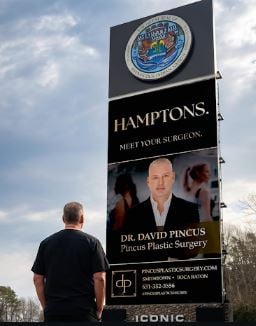
Long Island, NY, Jun 20, 2026, ZEX PR WIRE — Anyone who has traveled east toward the Hamptons this summer may have noticed a familiar face looking back at them from one of Long Island’s most visible billboards. Positioned along a heavily traveled corridor that welcomes thousands of residents, commuters, and visitors each week, the billboard featuring Dr. David Pincus has become a striking landmark on one of the region’s most recognized routes.
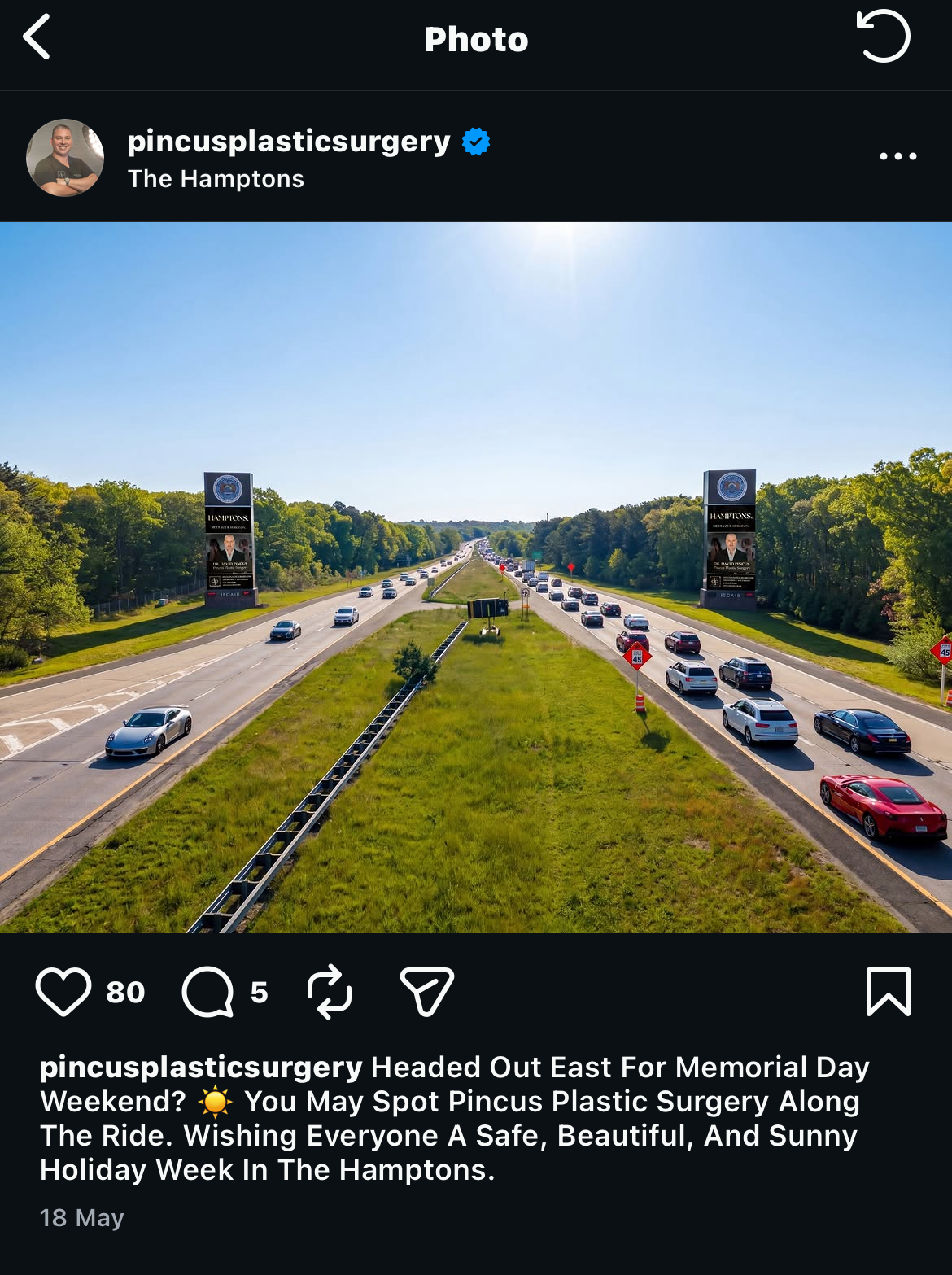
For Dr. David Pincus, founder of Pincus Plastic Surgery, the billboard represents far more than an advertising campaign. It reflects years of patient relationships, steady growth, and a reputation built through consistent results and personalized care. While many businesses compete for attention, Dr. Pincus sees the billboard as an extension of a practice that has always focused on visibility through trust rather than volume.
A Landmark Presence on a Road Known Around the Country
The drive to the Hamptons has long been associated with summer travel, weekend escapes, and some of the most recognizable destinations in New York. Along that route, billboards often become part of the landscape, catching the attention of drivers making the journey east.
The Pincus Plastic Surgery billboard has quickly become one of those landmarks.
Whether someone is heading to a summer home, a beach getaway, or simply making the trip for work, the billboard creates a moment of recognition. It places the name of Dr. David Pincus directly in front of a diverse audience that spans Long Island and beyond.
In a digital age dominated by social media feeds and online advertisements, the impact of a large-format billboard remains surprisingly powerful. Unlike digital promotions that disappear with a swipe, a billboard occupies physical space and becomes part of a community’s visual environment.
For many residents, the billboard serves as an introduction. For others, it reinforces a name they may already know through patient referrals, online research, or local reputation.
Building Recognition Through Patient Experience
While the billboard has generated attention, Dr. Pincus believes its significance comes from what it represents rather than where it stands.
Pincus Plastic Surgery has grown through a patient-centered approach that emphasizes communication, education, and individualized treatment planning. Over the years, the practice has earned the trust of patients seeking both surgical and non-surgical aesthetic procedures.
Dr. Pincus is known for taking a measured approach to cosmetic enhancement. His philosophy centers on helping patients achieve balanced, natural-looking results that complement their existing features rather than dramatically altering them.
That approach has resonated with patients who increasingly value subtlety and authenticity.
As the practice expanded, visibility naturally followed. The billboard simply provides a larger platform for a reputation that was already developing through patient experiences and word-of-mouth recommendations.
“Every practice has a story,” says Dr. Pincus. “For us, that story has always been about relationships. The billboard is highly visible, but it ultimately reflects the trust that patients have placed in our team over the years.”
A Different Kind of Plastic Surgery Conversation
The perception of plastic surgery has evolved significantly over the past decade.
Patients today are often less interested in dramatic transformations and more interested in refinement. They want to look refreshed, confident, and comfortable in their appearance. They also want to work with providers who prioritize education and transparency.
Dr. Pincus has observed this shift firsthand.
Many patients arrive with a strong understanding of available treatments, having spent considerable time researching procedures and outcomes. At the same time, they are looking for guidance from a surgeon who can help separate trends from reality.
This demand for thoughtful care has helped shape the identity of Pincus Plastic Surgery.
Rather than focusing on one-size-fits-all solutions, Dr. Pincus works closely with each patient to develop a plan that reflects individual anatomy, goals, and expectations. The result is a more personalized experience that prioritizes long-term satisfaction.
As public conversations around aesthetic medicine continue to mature, practices that emphasize education and realistic expectations are becoming increasingly valued.
More Than Marketing
Billboards are often viewed purely as advertising tools, but the story behind this campaign is also one of business growth.
Establishing a presence on one of Long Island’s most recognized travel routes represents a milestone for the practice. It signals confidence, stability, and a commitment to serving the community for years to come.
For Dr. Pincus, the decision to invest in such a visible location was not about making the loudest statement. It was about creating a recognizable point of connection.
Patients frequently tell him they have seen the billboard during their travels. Some mention it during consultations. Others share photos with friends and family. The billboard has become a conversation starter, generating awareness while reinforcing familiarity.
That familiarity matters in healthcare, where trust remains one of the most important factors in decision-making.
People often spend significant time researching physicians before scheduling a consultation. Seeing a name repeatedly in the community can help create a sense of recognition long before the first appointment.
Representing Long Island’s Growing Aesthetic Community
Long Island has become home to a thriving healthcare and wellness landscape. Patients no longer feel the need to travel into Manhattan to access high-quality aesthetic care. Increasingly, they are finding experienced providers closer to home.
Dr. Pincus believes this trend reflects the broader evolution of healthcare across the region.
As local practices continue to expand their capabilities, patients benefit from greater access to advanced treatments and personalized care. The growth of Pincus Plastic Surgery is part of that larger story.
The billboard serves as a visible reminder that expertise can be found within the local community.
For patients seeking cosmetic procedures, convenience matters. Being able to establish a relationship with a trusted surgeon nearby creates continuity and accessibility throughout the treatment journey.
Looking Toward the Future
As Pincus Plastic Surgery continues to grow, Dr. Pincus remains focused on the same principles that helped build the practice from the beginning.
Patient trust, clear communication, and consistent results remain at the center of every decision. While the billboard may attract attention, the long-term success of the practice will continue to depend on the experiences patients have once they walk through the door.
The visibility generated by the campaign reflects a broader moment for the practice. It highlights years of dedication while introducing the Pincus Plastic Surgery name to new audiences across Long Island.
For drivers heading toward the Hamptons, the billboard may be a memorable landmark along a familiar route. For Dr. David Pincus, it represents something more meaningful: a growing connection with the community he serves and a reminder that reputation is built one patient at a time.
Media Contact
Pincus Plastic Surgery
Website:https://www.pincusplasticsurgery.com/
About Author
Disclaimer: The views, suggestions, and opinions expressed here are the sole responsibility of the experts. No Digi Observer journalist was involved in the writing and production of this article.
Salinas Interiors Announces Major Residential and Commercial Projects Across Houston
A Mother and Daughter Built the Period Tracker They couldn’t Find
The Name Catching Attention Along Long Island’s Most Traveled Route: Dr. David Pincus of Pincus Plastic Surgery
Benzinga Money Article Discusses How to Become Part of the 12% of Retirees Who Have Achieved the Recommended $550,000 Minimum Retirement Savings Threshold
Apu Apustaja Conquers New York with Lively Street Ads, Including Times Square Billboard
Bay Smokes Maintains Quality Amid Legislative Changes in the Hemp Industry


-
Press Release4 days ago
FARO Board Bags Expands Premium Surf Gear Line with Durable Surfboard Protection and Sustainable Travel Solutions in the USA
-
Press Release4 days ago
MAMBASNAKE Launches “World Football Season” Mid-Year Sale: Celebrate the Spirit of the World Cup with Elite Gaming Gear
-
Press Release1 week ago
GLP-1 Patients Regain Most of Their Lost Weight Within 2 Years . A Tampa Telehealth Provider Is Partnering With a Digital Health Platform to Change That.
-
Press Release7 days ago
MarketAnywhere Sets the National Standard for Best Flyer Distribution and Door-to-Door Marketing in the United States
-
Press Release7 days ago
The Surgeon Everyone Sees on the Way to the Hamptons: Dr. David Pincus of Pincus Plastic Surgery
-
Press Release7 days ago
isCalculator: The Evolution Of No-Code; Ai Platform Instantly Generates Mathematical Mini-Applications
-
Press Release7 days ago
The Point Elevates Coastal Celebrations with Premier Waterfront Event Venue in Mission Beach, San Diego
-
Press Release1 week ago
Jerky Didn’t Need Another Flavor It Needed a Personality