
Press Release
Scores24 Launches Bolivia Bookmaker Comparison, Putting Ten Operators Side by Side

New resource helps bettors weigh odds, payment methods and bonus terms beyond the headline offer
Scores24, a sports data and comparison platform, today announced the release of its Bolivia bookmaker comparison, an independent analysis of ten operators that offer accounts in bolivianos (BOB). The guide is designed to help bettors understand what each platform provides and form their own conclusions, rather than relying on the most prominent advertised figure.
Bettors in Bolivia face a crowded market. Operators differ in available sports, odds, payment methods and withdrawal conditions. The Scores24 organizes these differences into clear tables, from platforms with extensive football coverage to options that support QR deposits and e-wallets.
Football Markets Compared on a Single Fixture
For the sportsbook analysis, Scores24 reviewed the markets offered by Brazino777 and 1xBet on a Bolivian First Division match between ABB and Real Potosí in October 2026. Seven markets present on both platforms were compared, including match result, goals and double chance. The review found that markets are not identical across operators, and that small differences between platforms can add up over time.
Scores24 noted that the findings reflect one match and do not establish that any operator consistently offers a better selection. A reliable assessment requires comparing more fixtures and competitions.
Payments and Verification
The Bolivian boliviano is the account currency across all ten platforms reviewed, so users can consult amounts without converting to dollars. Several operators accept QR deposits, and services such as Tigo Money, Yape and Pago Fácil appear on some platforms, though availability varies. Deposit and withdrawal limits depend on the payment method and may change by account and payment system.
The guide also reminds users that withdrawal methods can differ from deposit options, and that operators carry out Know Your Customer (KYC) identity checks before authorizing payouts to confirm the account holder and help prevent fraud.
Understanding Welcome Bonuses
Scores24 explains that advertised bonuses do not necessarily equal withdrawable funds. Welcome bonuses may be awarded with a first deposit or spread across several, and they often carry wagering conditions, such as requirements around ticket composition and minimum odds. The guide uses Betwinner as an example of how these terms work in practice. Meeting such requirements does not guarantee profit.
Comparison Criteria
Scores24 evaluates operators on odds and markets, deposits and withdrawals, bonus conditions, live betting, mobile access and operator information such as declared licenses and published terms. The guide clarifies that a foreign license does not equal authorization to operate in Bolivia, and that licensing information should be distinguished from local legal status.
“Our aim is to give bettors clear information on how each platform works, so they can decide with a full picture,” a Scores24 spokesperson said.
The comparison covers football, tennis and basketball markets, including Libobásquet, along with live betting and streaming availability, which varies by sport, competition and broadcast rights. It is intended for informational purposes only and does not predict sporting results or guarantee returns.
About Scores24
Scores24 is a sports information and comparison platform that gathers data on bookmakers, their services and their conditions. Readers searching for the best sportsbook in Bolivia or a Scores24 bookmaker comparison can find the full analysis at the Scores24 website.
Media Contact
Organization: Scores24
Contact Person: Adele
Website: https://scores24.live
Email: adel@scores24.live
City: Tallinn
Country: Estonia
About Author

Disclaimer: The views, suggestions, and opinions expressed here are the sole responsibility of the experts. No Digi Observer journalist was involved in the writing and production of this article.

Up to 100 miles of range, 1,310W peak power, torque-sensing control, hydraulic braking and reverse mode bring more capability to everyday three-wheel mobility.
United States, 10th Nov 2026 — Mooncool, the electric-mobility brand behind the best-selling TK-series electric trikes, has just announced the TK2 Pro Electric Trike, a higher-performance evolution of its popular three-wheel platform. Designed around years of rider feedback, the TK2 Pro combines more power, longer range and better control with the stability, comfort and everyday practicality that have made Mooncool trikes customer favorites.
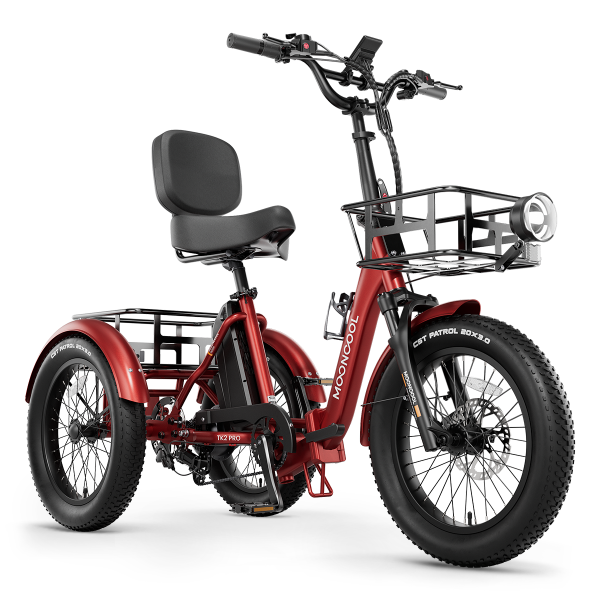
The TK2 Pro is built for riders who want more than basic transportation. Its 750W helical motor delivers up to 1,310W of peak power and 90Nm of torque, while a 48V 20Ah high-capacity battery extends the riding range to as much as 100 miles. Torque-sensing control makes power delivery feel more natural and responsive, especially when starting, climbing or carrying cargo.
That extra performance is paired with the kind of usability that matters in day-to-day riding. The TK2 Pro supports up to 450 lbs, folds for easier storage, and rides on 20 x 3.0-inch tires that add stability across neighborhood streets, bike paths and uneven surfaces. A rear differential allows the two rear wheels rotate at different speeds through turns, improving low-speed control and maneuverability.

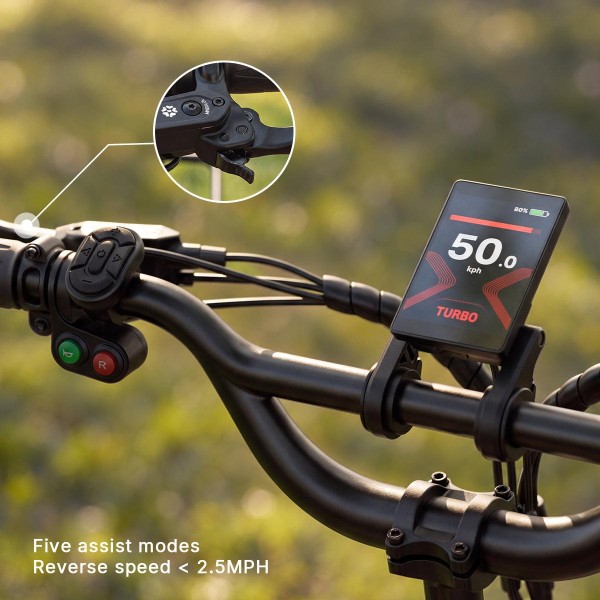
One of the TK2 Pro’s most useful upgrades is reverse mode. With a controlled reverse speed of under 2.5 mph, riders can back out of garages, parking spaces or tight storage areas without having to dismount or manually push the trike. For a three-wheel vehicle, that small feature can make a meaningful difference in everyday use.
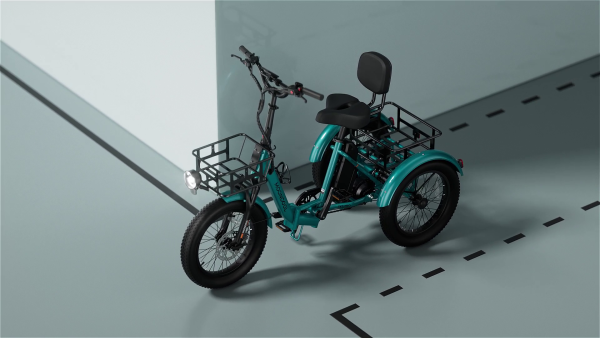
Comfort has been upgraded as well. A forged aluminum front fork with 40 mm of oil-damped travel helps smooth the ride over rough pavement, while the redesigned seating position and supportive backrest are intended to reduce fatigue on longer rides. The new 3.5-inch full-color TFT display remains readable in bright conditions and clearly shows speed, battery status, estimated range and five assist levels: ECO, TOUR, SPORT, SPORT+ and TURBO.
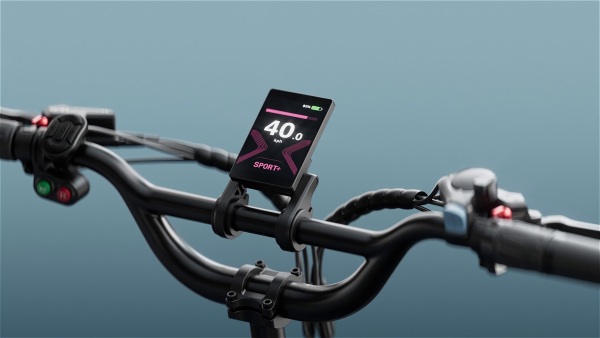
Safety remains central to the TK2 Pro’s design. Hydraulic disc brakes with 180 mm rotors provide stronger, more predictable stopping power. Integrated headlights, position lights, brake lights, turn signals, a parking brake and motor cut-off braking help riders stay visible and in control. The TK2 Pro is also certified by SGS to UL 2849 and UL 2271 standards.
The result is an electric trike that feels less like a niche mobility product and more like a thoughtfully designed everyday vehicle: powerful enough for hills and longer rides, stable enough for confident low-speed maneuvering, and practical enough for errands, commuting, recreation and cargo carrying.

“The TK2 Pro takes what riders already love about our best-selling trike platform and pushes it further,” said a Mooncool spokesperson. “More range, more power and better control only matter if they make the riding experience easier. Every upgrade was chosen to help riders feel more confident, comfortable and capable in daily use.”
Mooncool has built its electric trike lineup around a simple idea: three-wheel mobility should be approachable, practical and enjoyable. The TK2 Pro represents the most capable expression of that philosophy to date, bringing premium performance and rider-focused engineering to one of the brand’s most popular product categories.
The Mooncool TK2 Pro Electric Trike is available through Mooncool’s official website and authorized retail partners.
TK2 Pro at a Glance
- 750W motor, up to 1,310W of peak power and 90Nm torque
- 48V 20Ah battery with up to 100 miles of range and 5A fast-charging support
- 450-lb maximum load capacity; foldable frame; 20 x 3.0-inch tires
- Torque-sensing control, rear differential and reverse mode
- Hydraulic disc brakes, integrated turn signals, brake lights and parking brake
- 3.5-inch full-color TFT display with five assist levels
- SGS certification to UL 2849 and UL 2271 standards
About Mooncool
Mooncool designs electric bikes and electric trikes with a focus on making everyday riding safer, more comfortable and more accessible. Its rider-first approach combines practical engineering, responsive support and real-world feedback to create mobility products designed for daily life.
For more information, visit www.mooncool.com
Media Contact
Organization: Mooncool
Contact Person: Hannah
Website: https://www.mooncool.com
Email: Send Email
Country: United States
Release id: 50611
View source version on King Newswire:
Mooncool Pushes Its Best-Selling Electric Trike Line Further With the New TK2 Pro
About Author
Disclaimer: The views, suggestions, and opinions expressed here are the sole responsibility of the experts. No Digi Observer journalist was involved in the writing and production of this article.
Dubai, United Arab Emirates, November 10th, 2026, FinanceWire
The Islamic finance challenger introduces its first product following a pre-seed investment round backed by banking and technology leaders.
- Wafr announces WafrChain, its platform for on-chain Shariah-compliant sukuk, as the first step towards a global Islamic financial platform.
- The pre-seed round includes individual investments from Coen Jonker, co-founder of Tyme Group, and Neal Cross, former Chief Innovation Officer of DBS Bank.
- WafrChain brings sukuk issuance, distribution, settlement and profit payments onto one institutional platform, with issuers’ Shariah board approvals recorded on-chain and support for fiat and stablecoin settlement.
- WafrChain addresses a global sukuk market with US$1.14 trillion outstanding in 2025, when annual issuance grew 14.5% to US$291.4 billion.
Wafr, a financial technology company building a global Islamic financial platform, today announces its pre-seed funding round and the launch of WafrChain, its first product for on-chain Shariah-compliant sukuk, with sukuk tokenisation now live on the platform.
The round brings together individual investors including Coen Jonker, co-founder of Tyme Group and former Commonwealth Bank of Australia Group Executive, and Neal Cross, co-founder of PictureWealth and former Chief Innovation Officer of DBS Bank.
Wafr’s co-founding team includes Chief Executive Officer Mahmoud Bouchelif, a former Islamic banker and founder of LeanTech SG, and Chief Product Officer Anthony Murphy, whose experience includes launching digital banking products at AMP, Commonwealth Bank of Australia and Macquarie Bank. Bouchelif built LeanTech SG into a profitable business with 7-figure revenue, without external funding, and has advised GCC banking leaders on digital transformation for approximately a decade.
Wafr’s purpose, “Abundance for everyone”, reflects its ambition to make fair, transparent and ethical financial services accessible across borders. The company is building towards a global financial platform rooted in Shariah-compliant principles and open to people of every faith, connecting institutional infrastructure with services for individuals and businesses.
Sukuk remain one of the most complex instruments in Islamic finance to bring to market. A single issuance typically involves eight separate parties, including the issuer, the trustee, arrangers, the Shariah board, custodians, the paying agent, distributors and investors, each keeping its own record of the same instrument. Every transfer, profit payment and corporate action is re-keyed and reconciled between them, adding cost, delay and the risk of error to each issuance, which can take many months and in some cases more than a year to bring to market.
WafrChain is a private, permissioned blockchain designed to connect the institutions involved in the sukuk lifecycle through a shared record. Instrument terms, including unit price, profit schedule, and maturity, are recorded on-chain alongside the approval of the issuer’s own Shariah board before distribution, while Wafr’s Shariah board works with each issuer to confirm that the structure is compliant. The platform connects issuers with distributors and institutional buyers and uses smart contracts to route profit payments. Settlement can take place in fiat currency, through local real-time gross settlement systems and SWIFT, or in stablecoins, and institutions can integrate WafrChain with their existing systems through a single API.
The network has been built for the speed and confidentiality that financial institutions require. Transactions reach finality in 300 milliseconds, and each participant can see only its own activity, so issuers, distributors and investors keep their positions private from one another. WafrChain is also designed to continue operating with only a third of its nodes active.
Mahmoud Bouchelif, Co-Founder and Chief Executive Officer of Wafr, said: “Islamic finance can bring abundance to people, businesses and economies, yet access to services that reflect its principles remains uneven. We are building Wafr for everyone who believes finance should be fair, transparent and ethical, whatever their faith. WafrChain is our starting point, giving institutions a foundation for bringing Shariah-compliant assets on-chain while we develop the services people need to manage their financial lives across borders.”
Anthony Murphy, Co-Founder and Chief Product Officer of Wafr, said: “At Wafr, we start with the problems people and businesses are actually facing and focus on how we can solve them in a practical way. We believe technology is critical if we are going to make Shariah-compliant and ethical financial services simpler, more accessible and more relevant to how people manage their money today, while bringing the principles behind Islamic finance to more people around the world. WafrChain is the first product built with that thinking, and it sets the direction for how we want to build at Wafr.”
Coen Jonker, co-founder of Tyme Group and an angel investor in Wafr, said: “I have long believed that someone will build a truly global digital finance business for the Muslim world. The need is clear, the opportunity is enormous, and the technology now makes it possible to think beyond traditional banking models. Wafr is pursuing that ambition with a clear sense of purpose, and I’m excited by Mahmoud’s determination and his co-founders to make it happen.”
Neal Cross – Co-founder, PictureWealth, ex-DBS Chief Innovation Officer added: “Everyone talks about what blockchain could do for finance. Wafr is one of the few teams starting with the customers who need it most. Islamic finance was built on trust, transparency and shared risk, which is exactly what blockchain does best. Add founders like Mahmoud and Anthony, who don’t build things for show, and backing them was an easy decision.”
According to the ICD–LSEG Islamic Finance Development Report 2026, global Islamic finance assets reached US$6.5 trillion in 2025, up 9% year on year. Sukuk outstanding stood at US$1.14 trillion, while annual issuance rose 14.5% to US$291.4 billion.
Beyond sukuk, Wafr’s institutional roadmap includes fund tokenisation, tokenised deposits, trade finance and business-to-business settlement. Its consumer plans span global accounts, cross-border remittances and cards, with agentic AI and stablecoin-enabled settlement forming part of its wider development strategy. These plans support Wafr’s ambition to expand financial access for unbanked and underserved communities across markets. Wafr’s consumer services will be introduced in line with the applicable regulatory processes and approvals, working with licensed partners where required.
About Wafr
Wafr is a financial technology company building a global Islamic financial platform for individuals, businesses and institutions. Serving a global Islamic finance market with US$5 trillion in assets, the company aims to make fair, transparent and Shariah-compliant financial services accessible across borders through an on-chain-first architecture.
The launch product, WafrChain, is a private, permissioned blockchain designed to support the tokenisation and lifecycle of Shariah-compliant assets, beginning with sukuk. It connects issuance, distribution, settlement and profit payments within a shared institutional platform.
Wafr’s wider roadmap includes global accounts, cross-border remittances and cards, with agentic AI and stablecoin-enabled settlement central to its development plans. Guided by “Abundance for everyone”, Wafr aims to expand financial inclusion for unbanked and underserved communities through services open to people of every faith. For more information, users can visit https://wafrchain.com/
Contact
Media Contact
Loredana Matei
JENSEN MATTHEWS PR
loredana@jensenmatthews.com
About Author
Disclaimer: The views, suggestions, and opinions expressed here are the sole responsibility of the experts. No Digi Observer journalist was involved in the writing and production of this article.
Virse enables packaging designers, DTC brands, and print account teams to map exported 2D box dieline layouts onto photorealistic 3D carton renders across kraft, matte, and gloss substrates on one visual canvas.
United States, 10th Nov 2026 – Virse provides packaging designers, direct-to-consumer (DTC) brand teams, and print account managers with a dedicated dieline to 3D render workflow inside its node-based Creative Canvas. Built to bridge the gap between flat vector layout files and client approval decks, the tool maps existing flat package artwork onto folded three-dimensional box and carton previews without requiring dedicated 3D modeling software.
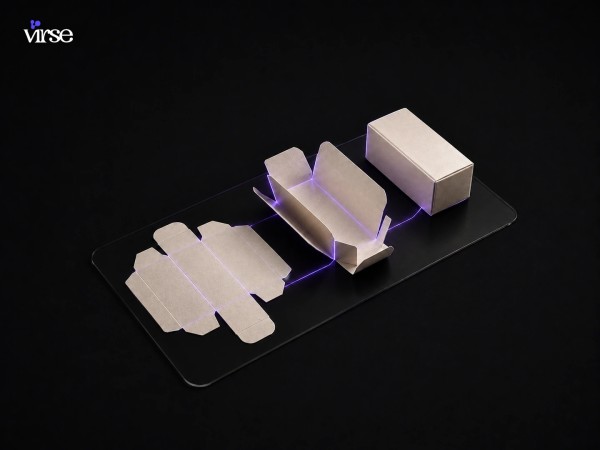
Anyone who has managed a consumer product launch knows how difficult it is for non-designers to read a flat packaging dieline on a monitor. To a structural designer or pre-press operator, the grid of trim lines, score folds, glue flaps, and inverted top tucks makes complete sense. To a startup founder, retail buyer, or marketing VP asking what is a dieline for the first time, that same flat file looks like an upside-down puzzle. Critical layout mistakes frequently hide in flat proofs: a hero illustration wraps awkwardly around a side crease, a nutrition panel sits too close to a bottom tuck flap, or a dark background color overwhelms the shelf presence once all four faces come together.
Traditionally, catching those visual issues before ordering a physical wet proof meant either folding a paper printout with tape at a desk or exporting UV textures into complex 3D rendering software, building studio lights from scratch, and waiting on long shader renders. Virse streamlines that step by letting designers run a dieline to 3d pass directly on the same visual canvas where they manage their brand assets and campaign photography.
Reading flat artwork, box geometry, and substrate finishes together
Unlike generic stock-template mockups that paste a single front label onto a pre-rendered white box, Virse’s workflow reads the user’s actual exported flat file so panel relationships stay faithful to the layout. When a designer drops a flat box dieline export onto the canvas, the tool combines three pieces of input to construct the preview: the exported 2D layout containing the front face, side gussets, top lid, and wrap-around graphics; plain-language specifications naming the package style and substrate finish; and an optional studio tabletop or retail shelf background photograph that guides shadow direction.
Designers can specify reverse tuck-top cosmetic cartons, corrugated e-commerce mailers, or two-piece rigid sleeve-and-base boxes alongside paperboard notes such as uncoated brown kraft, soft-touch matte lamination, or high-gloss spot UV highlights. Because Virse hosts 50+ AI models alongside its in-house aesthetic model on one infinite workspace, a packaging designer can generate multiple material studies from a single flat file and compare them side by side. One node can show a tea carton rendered in textured matte cotton board under warm morning light, while an adjacent node previews the exact same artwork on a glossy coated carton for e-commerce hero listings.
“Packaging teams lose days waiting for physical comp samples or 3D scene setups just to check whether a wrap-around graphic lines up across a corner fold,” said a spokesperson for Virse. “With Virse, a designer exports their flat artwork, specifies the carton style and paper stock, and puts a realistic 3d box mockup in front of the client in minutes.”
Connecting packaging previews to brand identity, surface prints, and color grading
In a working design studio, a packaging prototype render is part of a broader visual system. Virse’s node-based Creative Canvas keeps every upstream asset and downstream marketing visual connected so teams do not have to juggle files across separate apps.
When developing a new product line, designers can establish the core color palette, logo lockups, and typographic hierarchy in the brand kit generator, locking those rules into Virse’s Aesthetic Memory before laying out the carton panels. If a cosmetic box or specialty food wrapper calls for a decorative background motif, the team can pull a flat repeatable print from a fabric or paper sample using the workflow to extract pattern from image files and place that motif onto the flat dieline.
For products that require usage or assembly illustrations on the side or back panel, designers can convert a studio product snapshot into a crisp contour drawing via the photo to line art tool before exporting the final flat artwork. Once the 3D carton render is generated on the canvas, e-commerce teams can run a reference image color grading pass on the workspace to align the highlights and shadow warmth of the packaging render with their real-world lifestyle campaign photography.
Throughout the review cycle, Virse Composer stays available on the canvas to help teams test alternate studio backgrounds or lighting angles via conversational prompts, and approved renders can be stored in shared Asset Folders for retail pitch decks and Amazon or Shopify listing pages.
How to convert a dieline to a 3D packaging render
Packaging designers and brand managers follow a direct sequence on Virse. They export the completed 2D package layout from their vector editor as a clean PNG or JPG image, drop it onto the canvas, and note the carton structure and surface finish. Optionally attaching a studio surface or shelf reference photo guides perspective and shadow falloff. Running the render produces the folded 3D view on the canvas, where teams can branch nodes to compare matte versus gloss substrates side by side.
Virse maintains clear technical boundaries so packaging engineers and print buyers know where this tool sits in the production chain. The Dieline to Render workflow transforms an existing flat artwork file into a 3D presentation image. It does not generate structural die-cut templates from scratch, calculate flute folding allowances, export editable 3D meshes (such as OBJ or FBX files), or replace physical drop-test validation at the box plant.
Packaging studios, consumer goods founders, and print coordinators can preview their flat box layouts in 3D on virse.ai using 200 complimentary starter credits. Paid workspace tiers (Pro, Max, and Business) provide expanded monthly compute capacity and shared project folders for teams of up to 50 collaborators.
About Virse
Virse is a visual AI creative system architected by machine learning researchers and commercial designers with a collective track record of over 100 international design awards. Headquartered in Dover, Delaware, Virse brings 50+ specialized image models, Virse Composer, and Aesthetic Memory together on an interactive node-based canvas. Packaging agencies, e-commerce brands, and in-house studios rely on Virse to connect concept exploration, mockup rendering, and campaign production in one workspace.
Media Contact
Organization: Virse
Contact Person: Virse Media Relations
Website: https://www.virse.ai/
Email: Send Email
Country: United States
Release id: 50591
View source version on King Newswire:
Virse Turns Flat Packaging Dielines Into 3D Renders for Brand and Print Reviews
About Author
Disclaimer: The views, suggestions, and opinions expressed here are the sole responsibility of the experts. No Digi Observer journalist was involved in the writing and production of this article.
Scores24 Launches Bolivia Bookmaker Comparison, Putting Ten Operators Side by Side
Wafr Announces WafrChain for On-Chain Shariah-Compliant Sukuk and Pre-Seed Funding
Mooncool Pushes Its Best-Selling Electric Trike Line Further With the New TK2 Pro
Benzinga Money Article Discusses How to Become Part of the 12% of Retirees Who Have Achieved the Recommended $550,000 Minimum Retirement Savings Threshold
Apu Apustaja Conquers New York with Lively Street Ads, Including Times Square Billboard
Bay Smokes Maintains Quality Amid Legislative Changes in the Hemp Industry


-
Press Release3 days ago
ElectionBuddy Announces New Voting Features and Platform Enhancements
-
Press Release3 days ago
Create a Lasting Legacy Ferdinand J. Ruano Arroyo’s Newly Released Book Helps Everyday Investors Build Long-Term Wealth
-
Press Release4 days ago
ALLCOM Smart Tumbler to Launch on Kickstarter, Bringing Temperature Control to Everyday Drinks
-
Press Release4 days ago
Born in the Exam Room, a Korean Skincare Brand Meets the World in Hong Kong
-
Press Release1 week ago
Pulse Equity: Gix Internet’s Autonomous Robots Take On Critical Hospital Logistics Roles at One of the World’s Top Hospitals – Here’s Why It Matters
-
Press Release4 days ago
Puttist to Launch Putt-Pool on Kickstarter, Bringing the Fun of Pool to Golf Putting
-
Press Release7 days ago
Beyond the $40 Billion RWA Headline: Drofa Comms × RWA Summit Report Identifies Four Challenges for 2027
-
Press Release3 days ago
Holiday Party Hair: Bon Bon Hair Salon & Spa of Scottsdale Gets Guests Event-Ready