
Press Release
LKK Design Enables Global Product Innovation from Design Strategy to Manufacturing Delivery

China, 8th Oct 2026 – Global companies are now confronted with the need to shorten time to market whilst producing products that are innovative, scalable, and competitive. Smart consumer devices and Industrial Internet of Things (IIoT) solutions are examples of products that demand sophisticated integration of user needs, engineering, and manufacturing capabilities along with global logistics.
As a global New Product Innovation services company, LKK Design provides end-to-end product development services from product strategy to industrial design, engineering and development, prototyping, manufacturing, and supply chain management.
LKK Design’s design and engineering integration provides clients the capability to develop market-innovative products suiting the demands of consumers and the business-to-business (B2B) market in 2026.
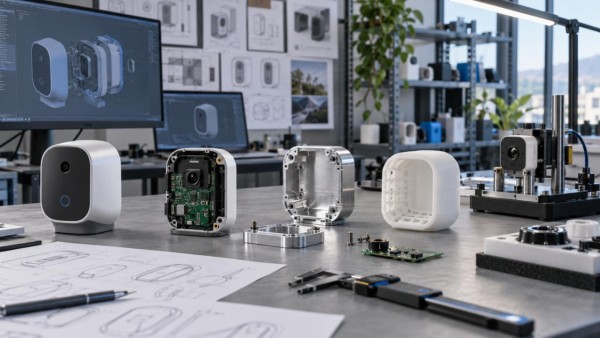
The New Landscape of Product Development in 2026
The product development landscape today is much more challenging. The balance of innovation, cost, production efficiencies, and customer expectations must span the entire development cycle.
The toughest issues are…
Shorter Product Innovation Cycles
Customers expect integrated experiences which include products with quick updates and new features. This means companies must use more advanced methods to develop products in short time frames.
More Complex Products
The integration of hardware, firmware, software, and cloud services within a product has resulted in a more complex integration across different disciplines of engineering.
Uncertainty in Manufacturing
Undertaking manufacturing without considering product design and engineering may lead to problems with tooling, quality, and increased costs.
Through early engineering validation, potential manufacturing issues may be resolved prior to mass production.
Diverse Requirements of Global Markets
Different markets have different local standards, certifications and objectives related to their sustainability. As a result, products have to meet these demands as well.
How products will be designed, manufactured, and constructed, as well as the types of materials and packaging that will be used, all have to differ based on the market.
LKK Design is in an advantageous position to tackle these difficulties as it emphasizes design and engineering integration all along the value chain.
How to Prototype a Product in China for Mass Production
For companies interested in learning “How to Prototype a Product in China”, please note that prototypes should not only be focused on outward appearances. Rather, successful prototypes must verify if a product can be efficiently ready for mass production.
LKK Design’s prototype development has four main components:
1. Design Validation
• Assess product aesthetics and usability.
• Assess if design satisfies the expectations of the market.
2. Engineering Validation
• Analyze the strength and performance of the product.
• Confirm if all the functional requirements and the selection of the respective materials are acceptable.
3. Manufacturing Validation
• Analyze production methods and design from the perspective of manufacturing.
• Evaluate if product design meets mass production needs.
4. Cost Optimization
Analysis of materials and production costs allows for elimination of lengthy redesigns and production risks.
Each of these points outlines the key elements of How to Prototype a Product in China while emphasizing product readiness for mass production, beyond just implementing an attractive prototype.

DFM Engineering Services: Translate Innovative Designs into Manufacturable Products
One of the more frequent obstacles during the product development process is the gap between the aesthetics of design and production.
In the quest for an attractive design, a number of problems can arise including:
• Complicated mold structures
• High production costs
• Complex assemblies
• Poor, unstable performance of the product
• Long and unpredictable manufacturing cycles
LKK Design’s DFM Engineering Services eliminate production problems for clients.
LKK Design’s DFM Engineering Services
Design for Manufacturability
Consider of the manufacturing processes involved with injection molding, machining, die casting, etc
Design for Assembly
• Removal of redundancies
• Increasing consistency of assembly and operational cycle time
Design for Quality
Establishment of critical dimensions and tolerances
Design for Cost
• Optimizing the balance of cost, tooling, and process
• Optimizing balance of cost and materials/processing
LKK Design’s DFM Engineering Services help clients minimize risks during manufacturing and create products that are easier to produce at a large scale.
Promoting Scalable Manufacturing with Production Process Design Services
A reliable manufacturing system is critical to support the transition from prototype to mass production.
Without adequate process design:
• Production would be prolonged
• Quality would be compromised
• Operational costs would be unnecessarily high
• Workflows would be inefficient
LKK Design’s Production Process Design Services focuses on developing manufacturing systems.

LKK Design’s Production Process Design Services Include:
1.Manufacturing Workflow Planning
• Establish sequence of operations to increase process efficiency
2.Assembly Process Optimization
• Analyze workstation design to minimize movements of operators
3.Quality Control Planning
• Establish inspection routes and define protocols for timing of checks
4.Supply Chain Coordination
• Manage Suppliers and Materials
• Help sustain stable global manufacturing operations
LKK Design’s integration of manufacturing design activities with product engineering helps ease the transition from design to production.
IoT Electronics Product Development for the Connected Product Market
New requirements are emerging in the development of smart products. Successful IoT products require seamless software, hardware, and user experience integration.
LKK Design’s IoT Electronic Product Development includes the following capabilities:
Hardware Development
• Electronic architecture
• PCB design
• BOM optimization
• Thermal and EMC considerations
Firmware Development
• Development of an embedded system
• Integration of IoT connectivity
• Optimization of low power
• OTA update
Software and Cloud Integration
• Development of mobile applications
• Connection to a cloud platform
• Data management and visualization
By integrating these capabilities into a single development system, LKK Design helps clients address integration issues and speed up the market launch of smart products.
Packaging Validation Services Enhance Product Packaging and Brand Experience
Packaging is no longer just about protecting a product during shipping. The packaging has become a part of the customer experience and a means of brand communication.
LKK Design’s Packaging Validation Services help clients create packaging that balances protection, sustainability, and user experience.
Key Packaging Validation Capabilities
1.Structural Packaging Design
• Design of packaging based on the size and logistics of the product
• Improve protection while reducing waste
2.Material and Sustainability Evaluation
• Choosing the appropriate paper, recycled materials, and protective solutions
• Support the goal of sustainability with performance
3.Transportation Testing
• Conduct drop and vibration assessment tests
• Validate the performance of packaging under real logistics conditions
4.Brand Experience Optimization
• Improve the unpacking experience
• Design packaging that supports product value
About LKK Design
Founded in 2004, LKK Design is a global New Product Innovation Company for design, development, intelligent manufacturing, and integration of global supply chain services.
With over 20 years of experience and 5,000 supply chain partners, LKK Design helps enterprises through product strategy and global delivery. LKK Design provides services that aid global brands in product development through an array of product prototypes in and out of China, DFM services, design services, production process design, packaging through design validation services, and IoT complete electronic product development.
Contact LKK Design Design Shenzhen Office, China
Phone: +86 (755) 23608253
Website: https://www.lkkerscm.com/
Media Contact
Organization: LKK Design
Contact Person: LKK Design
Website: https://www.lkkerscm.com/
Email: Send Email
Contact Number: +8675523608253
Country: China
Release id: 49764
The post LKK Design Enables Global Product Innovation from Design Strategy to Manufacturing Delivery appeared first on King Newswire. This content is provided by a third-party source.. King Newswire makes no warranties or representations in connection with it. King Newswire is a press release distribution agency and does not endorse or verify the claims made in this release. If you have any complaints or copyright concerns related to this article, please contact the company listed in the ‘Media Contact’ section
About Author

Disclaimer: The views, suggestions, and opinions expressed here are the sole responsibility of the experts. No Digi Observer journalist was involved in the writing and production of this article.

United States, 8th Oct 2026, – By Olivia Grant, Hospitality Marketing Consultant | Last updated: October 2026
About the author: Olivia Grant is an independent hospitality marketing consultant who works with boutique hotels, resorts and travel brands on PR, content and digital campaigns.
Hotels sell an experience that guests can’t try before they buy. That makes trust and visibility more important in hospitality than in almost any other industry. Travellers read reviews, look for coverage in travel media, and search the hotel’s name before booking.
Press releases, used well, feed all three. In my work with hotels and resorts, a well-timed announcement has often done more for brand awareness than weeks of paid social posts. Used badly, it disappears without a trace. Here’s what separates the two.
What hotels should actually announce
Not every update deserves a press release. The announcements that consistently earn coverage in hospitality are:
- Openings and reopenings: a new property, a renovated wing, a reopened restaurant
- New experiences: a spa concept, a chef partnership, a seasonal package or a signature event
- Awards and recognition: industry awards, sustainability certifications, notable rankings
- Partnerships: collaborations with airlines, travel programmes, designers or local brands
- Milestones: anniversaries, record occupancy seasons, community or sustainability initiatives
A new menu item or a minor website update is better suited to social media.
Lesson 1: Sell the experience, not the facility
The weakest hotel releases read like a brochure: room counts, square metres and amenity lists. Travel journalists and readers respond to what a guest will feel and do.
Compare these two openings:
“The resort features 120 rooms, two restaurants and an outdoor pool.”
“Guests at the resort can now start the day with a sunrise kayak tour and end it with a five-course tasting menu built around the morning’s local catch.”
The second gives a journalist a story and gives a reader a reason to book.
Lesson 2: Target travel and lifestyle media specifically
General business news sites rarely help a hotel fill rooms. The audiences that matter are travel publications, lifestyle magazines, regional news in key source markets, and trade outlets read by travel agents and tour operators.
When choosing a distribution service, ask directly: which travel and lifestyle outlets are in your network, and in which countries? A resort in the Maldives targeting European guests needs placements that Europeans actually read.
Lesson 3: Plan around the booking calendar
Travellers book months in advance. A release about a summer package sent in June arrives too late. With the hotels I work with, I plan announcements around these windows:
- Summer offers: announce in late winter to early spring
- Festive and New Year packages: announce in early autumn
- Openings: announce three to six months before the opening date, then again at launch
- Events and festivals: announce at least eight weeks ahead
Lesson 4: Use strong visuals
Hospitality is a visual business. Every release should include high-quality, properly licensed images: the property, the rooms, the food, and people enjoying the experience. Journalists often choose which story to cover based on whether usable images are available.
Lesson 5: Keep messaging consistent across properties
Hotel groups with multiple properties often send releases that read as if different companies wrote them. A simple style guide, covering tone, how the brand is named and a standard boilerplate, keeps every announcement recognisably part of the same brand.
For a closer look at how premium hospitality brands approach this, Naluda Magazine explores how strategic PR helps luxury hotels and resorts stand out, including targeting high-end travellers, consistent messaging and global media exposure.
Measuring whether it worked
Hotels have an advantage over many industries: the results are measurable. After each release, I track:
| Metric | What it shows |
|---|---|
| Placements on travel and lifestyle sites | Whether the right media picked it up |
| Branded search volume | Whether more people looked up the hotel |
| Referral traffic to the booking page | Whether readers moved toward booking |
| Direct booking enquiries | Whether coverage turned into revenue |
| Journalist or influencer requests | Whether media wants to visit or feature the property |
Tagging links in the release with tracking parameters makes it much easier to connect coverage to actual bookings.
Common mistakes hotels make
- Announcing too often with too little news
- Writing in brochure language full of “luxurious” and “world-class”
- Sending releases without images or with low-resolution photos
- Ignoring source markets and distributing only locally
- Never reusing coverage on the website, booking pages or social channels
Final thoughts
For hotels and resorts, a press release is more than an announcement. It’s a way to put the guest experience in front of travellers and the media who influence them. Focus on genuine news, write about the experience rather than the facility, time releases around booking behaviour, and target travel media in the markets you want to reach. For more context on how leading hospitality brands use strategic press release distribution, the Naluda Magazine analysis is worth a read.
Media Contact
Organization: Hospitality Marketing Consultant
Contact
Person: Olivia Grant
American Express Dominates Hotels and Resorts with Strategic PR
Email:
CSS@contactme.com
Country:United States
The post
How Hotels and Resorts Can Use Press Releases to Win Bookings and Media Attention appeared first on
Brand News 24.
It is provided by a third-party content
provider. Brand News 24 makes no
warranties or representations in connection with it.
About Author
Disclaimer: The views, suggestions, and opinions expressed here are the sole responsibility of the experts. No Digi Observer journalist was involved in the writing and production of this article.
Press Release
Free vs Paid Press Release Distribution: When Saving Money Makes Sense, and When It Doesn’t
United States, 8th Oct 2026, – By Tin, Founder of growths | Last updated: October 2026
About the author: Tin leads Growths, a digital marketing agency in USA, that plans SEO, PR and content campaigns for businesses in USA, Europe and the Middle East. His team has distributed press releases through both free submission sites and paid newswire services for clients of all sizes.
“Can’t we just use the free sites?”
It’s the first question almost every startup client asks me, and it’s a fair one. Free press release sites exist, they publish your announcement, and they cost nothing. So why would anyone pay?
After running campaigns through both free and paid channels, my answer is: free distribution has a real place, but it solves a different problem from paid distribution. Knowing which problem you have saves both money and disappointment.
What free press release sites actually give you
Free platforms let you register, submit a release and have it published on their own site, usually within a day or two. Some allow a link in the body or contact section, and many are indexed by search engines.
In practice, here’s what we typically see from a free submission:
- The release appears on the platform’s own website
- It may show up in search results for your exact brand name
- Occasionally it gets picked up by a small aggregator
- Very rarely does it reach a journalist or a mainstream news site
That’s not nothing. For a very early-stage business with no online presence, having something indexed under your brand name is useful. But it’s not media coverage.
What paid distribution adds
Paid services push your release beyond their own platform: onto partner news websites, into journalist databases, through news feeds and, at higher tiers, into recognised media outlets. The good ones also provide a report with live links showing exactly where the release appeared.
The real differences I’ve seen are:
- Reach: placements on dozens or hundreds of external sites rather than one
- Credibility: coverage on recognisable news portals you can show to customers and investors
- Editorial review: someone checks your release before it goes live
- Reporting: documented proof of results for you or your client
- Regional targeting: the ability to focus on a specific country or market
When free distribution is enough
From experience, free sites make sense when:
- You’re a new business and simply want your announcement indexed under your brand
- The news is minor, such as a small update, a local event or a new hire
- You’re testing your headline and messaging before a bigger campaign
- The budget is genuinely zero and something is better than nothing
When you should pay
Paid distribution is worth it when:
- The news is significant: a launch, funding, expansion, partnership or award
- You need visible proof of coverage for investors, partners or sales pages
- You’re targeting a specific region and need placements there
- You’re an agency and must deliver a professional report to a client
- Your reputation depends on appearing on credible sites rather than low-quality directories
A comparison from our campaigns
| Factor | Free sites | Paid services |
|---|---|---|
| Where it appears | Mostly the platform itself | Multiple external news sites |
| Journalist reach | Very limited | Varies by provider and tier |
| Reporting | Rarely provided | Usually a detailed link report |
| Editorial check | Minimal or none | Often included |
| Best for | Minor news, testing, zero budget | Major announcements, client work, credibility |
How to evaluate a site, free or paid
Whether a platform costs nothing or several hundred dollars, I run the same checks:
- Look at recent releases on the site. If it’s full of spam, gambling or low-quality content, your brand doesn’t belong next to it.
- Check whether it’s indexed. Search for a recent release title in Google. If it doesn’t appear, neither will yours.
- Read the terms on links. Some free sites allow live links, some nofollow them, some remove them entirely.
- Ask for a sample report from paid providers, with live URLs rather than logos.
- Confirm regional relevance. A strong network in the US may do little for a brand selling in the Gulf.
If you want a ready-made shortlist to start from, Crispme’s guide to 20 free and paid press release distribution sites splits the options into both categories, with notes on features and pricing for each. It’s a practical way to compare before testing a few yourself.
A word on SEO expectations
Many people use press releases mainly for links. That’s a mistake. Google treats links in press releases differently from editorial links, and mass-submitting the same release to dozens of free sites won’t improve rankings. It can even create a low-quality link footprint.
The real SEO value of a release is indirect: branded search visibility, referral traffic, and the chance that a journalist or blogger writes original coverage that links to you naturally.
My practical approach
For most small-business clients, we use a mixed strategy:
- Use free sites for minor updates and to keep the brand active online.
- Save paid distribution for two to four genuinely significant announcements a year.
- Write every release to journalist standards, regardless of where it’s published.
- Repurpose all coverage on the company’s website, LinkedIn and sales materials.
Final thoughts
Free and paid press release distribution aren’t competitors. They’re tools for different jobs. Free sites are fine for small news and basic visibility. Paid services earn their cost when the announcement matters and credibility is on the line. Start by reviewing a balanced list of free and paid press release distribution sites, check each one against your goals, and spend money only where it will actually move the needle.
Media Contact
Organization: growths
Contact
Person: growths
Website:
https://crispme.com/20-free-and-paid-press-release-distribution-sites/
Email:
css@growths.com
Country:United States
The post
Free vs Paid Press Release Distribution: When Saving Money Makes Sense, and When It Doesn’t appeared first on
Brand News 24.
It is provided by a third-party content
provider. Brand News 24 makes no
warranties or representations in connection with it.
About Author
Disclaimer: The views, suggestions, and opinions expressed here are the sole responsibility of the experts. No Digi Observer journalist was involved in the writing and production of this article.
United Kingdom, 8th Oct 2026, – By Tin, Founder of BMS Digital | Last updated: October 2026
About the author: Tim leads BMS Digital, a digital marketing agency in UK, that plans SEO, PR and content campaigns for businesses in South Asia, Europe and the Middle East. His team writes and distributes press releases for startups, SMEs and international brands.
When clients send me a draft press release, I often ask them to open Amazon’s newsroom in another tab and compare. The difference is usually obvious within seconds. Amazon’s announcements are short, specific and built around the customer. Most small-business releases are long, vague and built around the company.
You don’t need Amazon’s budget to write like Amazon. You need its discipline. Here’s what I’ve found most useful to borrow, and how we apply it for smaller brands.
Amazon writes the press release before building the product
Amazon’s well-known “Working Backwards” process asks teams to write a mock press release, along with an FAQ, before a product is approved for development. If the team can’t explain clearly why a customer would care, the idea needs more work.
This is the most valuable lesson for small businesses, and it has nothing to do with distribution. If you can’t write a clear one-paragraph announcement explaining who benefits and why, the problem isn’t your PR. It’s your message. We now use a simplified version of this exercise with clients before any launch campaign, and it regularly exposes weak positioning early, when it’s cheap to fix.
Lesson 1: Lead with the customer, not the company
A typical small-business opening line reads like this:
“XYZ Ltd, a leading provider of innovative solutions, is proud to announce the launch of its new platform.”
An Amazon-style version reads more like this:
“Small retailers in Karachi can now offer same-day delivery without hiring their own drivers, using XYZ’s new delivery platform launched today.”
The second version tells the reader who it’s for, what changes for them, and when. That’s what journalists look for, and it’s what readers remember.
Lesson 2: Use specifics instead of adjectives
Big brands rarely describe themselves as “revolutionary” or “world-class.” They give numbers, locations, dates and prices. Specific details make a release more credible and more quotable.
Before publishing, we run a simple check: highlight every adjective in the draft and ask whether a fact could replace it. “Fast delivery” becomes “delivery within four hours.” “Affordable” becomes the actual price.
Lesson 3: Keep it short and scannable
Amazon’s releases put the essential news in the headline and first paragraph, then use the remaining space for supporting detail and quotes. A reader who stops after three sentences still understands the story.
For our clients, that means:
- One headline stating the news plainly
- A first paragraph answering who, what, when, where and why
- Two or three short supporting paragraphs
- One meaningful quote from a named spokesperson
- A brief company boilerplate
Lesson 4: Make quotes say something
Weak quotes are the most common flaw I see. “We are thrilled to announce this partnership” adds nothing. A strong quote explains why the news matters or offers a real opinion:
“Most of our customers told us delivery delays were costing them repeat sales. This service exists to fix that one problem.”
That’s a quote a journalist might actually use.
Lesson 5: Time announcements deliberately
Large companies plan announcements around events, seasons and news cycles. Small businesses can do the same on a smaller scale: release seasonal products ahead of the season, tie announcements to industry events, or avoid days when major news will bury your story.
For a deeper breakdown of these elements, including messaging, customer focus, data and timing, BM Times has a useful analysis on learning from Amazon’s press release strategy for U.S. businesses. It’s a good read for anyone who wants to see how these principles fit together.
What not to copy from big brands
Some things simply don’t translate to a small company:
- Announcing everything. Amazon has newsworthy updates constantly. A small business sending weekly releases with minor updates will train journalists to ignore it.
- Relying on brand recognition. Amazon’s name alone gets attention. Yours won’t yet, so your news angle must work harder.
- Massive distribution budgets. Choose distribution based on where your audience actually is, not on the largest possible network.
A quick self-check before you publish
| Question | If the answer is no |
|---|---|
| Is the customer benefit clear in the first sentence? | Rewrite the opening around the reader |
| Are claims backed by numbers or facts? | Replace adjectives with specifics |
| Can someone understand the story in 30 seconds? | Cut background and repetition |
| Does the quote add opinion or context? | Rewrite it to explain why it matters |
| Is the timing deliberate? | Consider moving the release date |
Final thoughts
Amazon’s PR strength doesn’t come from size alone. It comes from a habit of thinking about the customer first and communicating with clarity and evidence. Any business can adopt that habit. Study how the best brands do it, such as this analysis of Amazon’s press release strategy, then apply the principles at your own scale. A clear, specific, customer-focused release will always outperform a long one full of claims nobody can verify.
Media Contact
Organization: bmtimes.co.uk
Contact
Person: bmtimes
Email:
css@bmtimes.co.uk
Country:United Kingdom
The post
What Small Businesses Can Borrow From Amazon’s Press Release Playbook appeared first on
Brand News 24.
It is provided by a third-party content
provider. Brand News 24 makes no
warranties or representations in connection with it.
About Author
Disclaimer: The views, suggestions, and opinions expressed here are the sole responsibility of the experts. No Digi Observer journalist was involved in the writing and production of this article.
How Hotels and Resorts Can Use Press Releases to Win Bookings and Media Attention
Free vs Paid Press Release Distribution: When Saving Money Makes Sense, and When It Doesn’t
What Small Businesses Can Borrow From Amazon’s Press Release Playbook
Benzinga Money Article Discusses How to Become Part of the 12% of Retirees Who Have Achieved the Recommended $550,000 Minimum Retirement Savings Threshold
Apu Apustaja Conquers New York with Lively Street Ads, Including Times Square Billboard
Bay Smokes Maintains Quality Amid Legislative Changes in the Hemp Industry


-
Press Release5 days ago
Carziqo Launches ER-SX Operations in Dallas, Introduces CARBON POINTS Rewards During Future Mobility Festival
-
Press Release6 days ago
WHY VANESSA HUDGENS CHOSE AMAZON’S EKOUAER OVER LUXURY LABELS — AND WHAT IT REVEALS ABOUT FASHION’S NEW ERA
-
Press Release7 days ago
76% of Treasury Teams Hit by Fraud as Deepfake Attacks Rise, Treasury Dragons & nsKnox 2026 Index Finds
-
Press Release1 week ago
Pro-Grade AI Diagnosis, Without the Pro-Grade Price: THINKSCAN 689BT PRO Brings 610 Racing’s Know-How to the DIYer
-
Press Release3 days ago
EKOUAER CELEBRATES 11TH ANNIVERSARY WITH BRAND FRIEND VANESSA HUDGENS: UNVEILING “MY COMFORT ERA” THIS OCTOBER
-
Press Release5 days ago
Carziqo Brings A-DS Autonomous Delivery to San Francisco During Future Mobility Festival
-
Press Release5 days ago
Brian Baldari on the Difference Between a Mentor and a Sponsor, and Why It Decides Promotions
-
Press Release5 days ago
How to Know When to Step Back and When to Double Down in eCommerce, According to Shelton Powell