
Press Release
JINHUA Expands Custom Epoxy Resin Manufacturing and Dustproof Floor Coating Solutions for 2026 B2B Markets

China, 8th Oct 2026 – Expectations for industrial resin purchases in 2026 will emphasize formulation stability, performance in application, supply, and flexibility. Responding to thesechanges, Shenzhen JINHUA begins to develop its capabilities in custom epoxy resin manufacturing, with special focus on industrial resin systems and Dustproof Epoxy Floor Coating epoxy systems. JINHUA incorporates formulation, manufacturing, quality control, OEM/ODM and international trade.
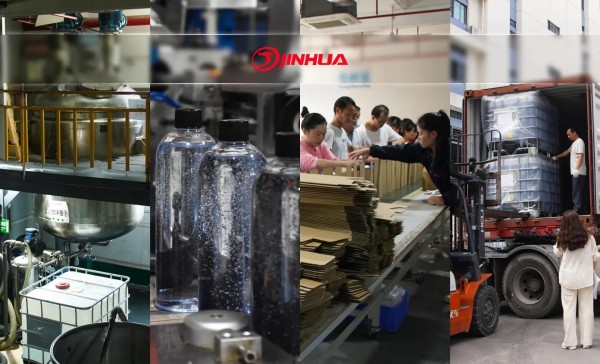
Industrial Buyers Are Moving Beyond Standard Resin Products
For B2B customers, selecting epoxy resin based on price is becoming more hazardous. Performance issues that occur in one application may result in problems in another. Ambient temperature, substrate, coating thickness, working time, curing time, mechanical requirements are all factors in the final performance.
Common purchasing and application issues related to epoxy resin include:
• Batches of epoxy resin may have inconsistent viscosity
• Formulations that cure too quickly
• Low temperature cure that is too slow
• Yellowing of clear resin
• Excessive curing shrinkage and defects
• Poor adhesion to concrete
• Limited impact resistance
• Lack of flexibility for private label brands
More customers select a custom epoxy resin manufacturer to adjust resin chemistry according to application conditions.
For JINHUA, product development is application focused, as opposed to starting from a fixed standard formula.
Custom Formulation Becomes a Key B2B Requirement
JINHUA’s R&D team of more than 20 professionals develops epoxy resin and curing systems for industrial, construction, composite, electronic, craft, and decorative applications.
Custom formulations are particularly useful when the change in manufacturing and application parameters calls for it. As a custom epoxy resin manufacturer, we at JINHUA have the capacity to integrate several customizations in our formulations to adapt to such variations:
Some factors in the formulation:
• Viscosity: Time management for leveling, penetration, filling, and ease of application.
• A/B Mixing Ratio: Dosing and processing.
• Pot Life: Working time.
• Curing Speed: Working time and time for producing (if curing changes production time).
• Hardness: Abrasion and resistance of the surface.
• Flexibility: Impact and vibration absorption.
• Transparency: Cast and coating and decorative applications.
• Yellowing Resistance: Longevity of clarity in use.
JINHUA can also customize color, flowability, packaging, private labels, container design, and application-specific performance for B2B customers.
Dust Control Remains a Practical Industrial Flooring Problem
Concrete floors are naturally porous. Under repeated forklift movement, trolley traffic, production activity, and abrasion, weak surface particles can gradually become airborne dust.
This can create several problems in warehouses and production facilities:
• More frequent cleaning
• Dust contamination around equipment
• Poorer floor appearance
• Progressive concrete wear
• Higher maintenance costs
• Greater difficulty maintaining controlled work areas
A Dustproof Epoxy Floor Coating addresses this problem by forming a continuous resin layer over properly prepared concrete.
JINHUA develops epoxy flooring systems for industrial and commercial applications where surface sealing, hardness, adhesion, cleanability, and wear resistance are important.
How JINHUA Designs Dustproof Epoxy Floor Coating Systems
A practical Dustproof Epoxy Floor Coating requires more than simply increasing resin hardness.
The complete coating must balance penetration, adhesion, leveling, curing behavior, and final mechanical performance.
Considering JINHUA’s formulation angle, a few factors are of importance.
1. Adhesion to the Concrete Substrate
Failure of a cured coating to adhere can lead to peeling or delamination.
Consideration for the right type of coating must include the condition of the concrete, moisture, surface laitance (similarly known as surface laisons), oil contamination, and mechanical preparation.
2. Controlled Viscosity and Leveling
Viscosity of the material defines its spreadability and ability to conform to and wet the prepared surface.
An excessively viscous flooring resin can have application marks, while a resin system with a low viscosity can lead to a substandard and uneven coating.
JINHUA as a Custom Epoxy Resin Manufacturer has the ability to modify the viscosity and controlled flow characteristics of a coating system according to the desired structure of the coating.
3. Working Time Versus Cure Speed
Large warehouse floors require sufficient application time. However, customers also want faster return to service.
This creates a formulation balance between:
• Mixing time
• Application window
• Initial curing
• Full mechanical development
JINHUA can adjust curing systems according to project and regional requirements.
4. Surface Density and Wear Performance
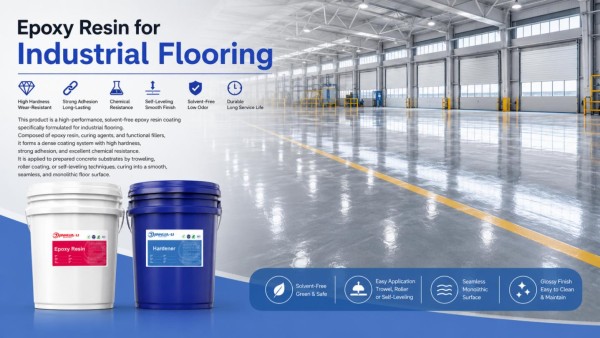
The cured Dustproof Epoxy Floor Coating creates a dense, seamless layer that separates the concrete substrate from routine traffic, dust generation, oil, and selected chemical exposure.
This makes epoxy flooring appropriate for workshops, warehouses, assembly areas, clean production areas, and other indoor industrial areas.
Manufacturing Consistency Is as Important as Formula Design
Customization is not the only thing that guarantees good performance when talking about industrial buying. They need the same formula to perform consistently with each subsequent order.
JINHUA controls most of the stages in the value chain from the inspection of raw materials to the final test on the product itself.
This control of the production process consists of:
• Inspection of raw materials
• Batching formula control
• Automated production
• Control over the mixing process
• Inspection of viscosity
• Testing of the curing performance
• Checking hardness and appearance
• Inspection on filling and packing
• Traceability and final control of the quality of the batch
JINHUA works in the quality management system ISO 9001 and social accountability SA8000.
Supporting documentation may be available for other standards, according to the product and the target market, such as REACH, RoHS, CPSIA, EN71, ASTM D-4236, and also HALs.
OEM and ODM Support for Major International Resin Brands
The 2026 B2B market demands higher flexibility from manufacturers.
Importers, wholesalers, flooring suppliers, and private-label brands increasingly want products that fit their own positioning.
JINHUA provides OEM and ODM support covering:
• Custom epoxy formulations
• Customized curing systems
• Trial samples
• Formula optimization
• Small-batch development
• Private-label packaging
• Customized bottles and containers
• Labels and logos
• Mass production
• International shipment support
By combining R&D and production within the same manufacturing system, JINHUA helps customers reduce the gap between laboratory formulation and commercial-scale manufacturing.
About JINHUA
Shenzhen Jinhua Electronic Materials Co., Ltd. was started in 2009 as a custom epoxy resin manufacturer. Jinhua has 20,000 square meters of factory space, eight automated production lines, and an annual capacity of 10,000 tons. Jinhua does custom formulations and offers OEM/ODM, private labeling and global supply. Some of the products that Jinhua offers include epoxy resin, dustproof epoxy floor coating, UV resin, polyurethane resin, silicone rubber, pigments, and their related materials. Jinhua provides its services and products to over 70 countries.
Contact Information Website: www.jinhuaglue.com
 Email: sales@jinhuaglue.com
 Tel: +86 138 2354 6652
 Address: Guangming District, Shenzhen, China
As a Custom Epoxy Resin Manufacturer, Jinhua will continue to invest in formulation development, manufacturing consistency, flexible OEM/ODM services, and industrial epoxy solutions that cater to the changing needs of the 2026 global B2B market.
Media Contact
Organization: JINHUA
Contact Person: JINHUA
Website: https://www.jinhuaglue.com/
Email: Send Email
Contact Number: +8613823546652
Address: Guangming District, Shenzhen, China
Country: China
Release id: 49767
The post JINHUA Expands Custom Epoxy Resin Manufacturing and Dustproof Floor Coating Solutions for 2026 B2B Markets appeared first on King Newswire. This content is provided by a third-party source.. King Newswire makes no warranties or representations in connection with it. King Newswire is a press release distribution agency and does not endorse or verify the claims made in this release. If you have any complaints or copyright concerns related to this article, please contact the company listed in the ‘Media Contact’ section
About Author

Disclaimer: The views, suggestions, and opinions expressed here are the sole responsibility of the experts. No Digi Observer journalist was involved in the writing and production of this article.

United Kingdom, 8th Oct 2026, – By Tin, Founder of BMS Digital | Last updated: October 2026
About the author: Tim leads BMS Digital, a digital marketing agency in UK, that plans SEO, PR and content campaigns for businesses in South Asia, Europe and the Middle East. His team writes and distributes press releases for startups, SMEs and international brands.
When clients send me a draft press release, I often ask them to open Amazon’s newsroom in another tab and compare. The difference is usually obvious within seconds. Amazon’s announcements are short, specific and built around the customer. Most small-business releases are long, vague and built around the company.
You don’t need Amazon’s budget to write like Amazon. You need its discipline. Here’s what I’ve found most useful to borrow, and how we apply it for smaller brands.
Amazon writes the press release before building the product
Amazon’s well-known “Working Backwards” process asks teams to write a mock press release, along with an FAQ, before a product is approved for development. If the team can’t explain clearly why a customer would care, the idea needs more work.
This is the most valuable lesson for small businesses, and it has nothing to do with distribution. If you can’t write a clear one-paragraph announcement explaining who benefits and why, the problem isn’t your PR. It’s your message. We now use a simplified version of this exercise with clients before any launch campaign, and it regularly exposes weak positioning early, when it’s cheap to fix.
Lesson 1: Lead with the customer, not the company
A typical small-business opening line reads like this:
“XYZ Ltd, a leading provider of innovative solutions, is proud to announce the launch of its new platform.”
An Amazon-style version reads more like this:
“Small retailers in Karachi can now offer same-day delivery without hiring their own drivers, using XYZ’s new delivery platform launched today.”
The second version tells the reader who it’s for, what changes for them, and when. That’s what journalists look for, and it’s what readers remember.
Lesson 2: Use specifics instead of adjectives
Big brands rarely describe themselves as “revolutionary” or “world-class.” They give numbers, locations, dates and prices. Specific details make a release more credible and more quotable.
Before publishing, we run a simple check: highlight every adjective in the draft and ask whether a fact could replace it. “Fast delivery” becomes “delivery within four hours.” “Affordable” becomes the actual price.
Lesson 3: Keep it short and scannable
Amazon’s releases put the essential news in the headline and first paragraph, then use the remaining space for supporting detail and quotes. A reader who stops after three sentences still understands the story.
For our clients, that means:
- One headline stating the news plainly
- A first paragraph answering who, what, when, where and why
- Two or three short supporting paragraphs
- One meaningful quote from a named spokesperson
- A brief company boilerplate
Lesson 4: Make quotes say something
Weak quotes are the most common flaw I see. “We are thrilled to announce this partnership” adds nothing. A strong quote explains why the news matters or offers a real opinion:
“Most of our customers told us delivery delays were costing them repeat sales. This service exists to fix that one problem.”
That’s a quote a journalist might actually use.
Lesson 5: Time announcements deliberately
Large companies plan announcements around events, seasons and news cycles. Small businesses can do the same on a smaller scale: release seasonal products ahead of the season, tie announcements to industry events, or avoid days when major news will bury your story.
For a deeper breakdown of these elements, including messaging, customer focus, data and timing, BM Times has a useful analysis on learning from Amazon’s press release strategy for U.S. businesses. It’s a good read for anyone who wants to see how these principles fit together.
What not to copy from big brands
Some things simply don’t translate to a small company:
- Announcing everything. Amazon has newsworthy updates constantly. A small business sending weekly releases with minor updates will train journalists to ignore it.
- Relying on brand recognition. Amazon’s name alone gets attention. Yours won’t yet, so your news angle must work harder.
- Massive distribution budgets. Choose distribution based on where your audience actually is, not on the largest possible network.
A quick self-check before you publish
| Question | If the answer is no |
|---|---|
| Is the customer benefit clear in the first sentence? | Rewrite the opening around the reader |
| Are claims backed by numbers or facts? | Replace adjectives with specifics |
| Can someone understand the story in 30 seconds? | Cut background and repetition |
| Does the quote add opinion or context? | Rewrite it to explain why it matters |
| Is the timing deliberate? | Consider moving the release date |
Final thoughts
Amazon’s PR strength doesn’t come from size alone. It comes from a habit of thinking about the customer first and communicating with clarity and evidence. Any business can adopt that habit. Study how the best brands do it, such as this analysis of Amazon’s press release strategy, then apply the principles at your own scale. A clear, specific, customer-focused release will always outperform a long one full of claims nobody can verify.
Media Contact
Organization: bmtimes.co.uk
Contact
Person: bmtimes
Email:
css@bmtimes.co.uk
Country:United Kingdom
The post
What Small Businesses Can Borrow From Amazon’s Press Release Playbook appeared first on
Brand News 24.
It is provided by a third-party content
provider. Brand News 24 makes no
warranties or representations in connection with it.
About Author
Disclaimer: The views, suggestions, and opinions expressed here are the sole responsibility of the experts. No Digi Observer journalist was involved in the writing and production of this article.
Press Release
How to Choose a Press Release Distribution Service: Lessons From Running Real PR Campaigns
United States, 8th Oct 2026, – By Tom, Founder of The Thrive Marketing Agency | Last updated: October 2026
About the author: Tom runs The Thrive Marketing Agency in USA, that manages SEO, PR and content campaigns for clients across South Asia, Europe and the Middle East. He has planned and distributed press releases for startups, local businesses and international brands.
When a client asks me, “Which press release service should we use?”, my honest answer is always the same: it depends on what you want the release to do. After running PR campaigns for businesses of very different sizes, I’ve learned that the most expensive option is not always the best one, and the cheapest option often costs more in wasted effort.
This guide shares what I check before recommending a distribution service, and what I’ve seen work and fail in practice.
What a distribution service actually does
A press release distribution service takes your announcement and publishes or pushes it to news websites, journalists, media databases and search engines. The aim is simple: get your news seen by people outside your existing audience.
In my experience, a good distribution delivers three results:
- Third-party credibility. A mention on a recognised news site carries more weight with customers and investors than a post on your own blog.
- Branded search presence. When someone searches your company name, indexed news coverage helps fill the first page with relevant, positive results.
- Journalist discovery. Occasionally, a reporter picks up the story and writes original coverage, which is where the real value lies.
What a release will not do on its own is rank you for competitive keywords or replace a proper SEO strategy. Google has said clearly that links in press releases are treated differently from editorial links, so I never sell press releases to clients as a “backlink shortcut.” Their value is visibility and trust, not link manipulation.
Where to start comparing
When I shortlist providers, I begin with independent comparisons rather than providers’ own marketing pages. One resource I’ve found useful is TechBullion’s review of the best press release distribution sites battling for the top spot. It lays out fifteen services side by side, covering established wires like GlobeNewswire, Business Wire and Cision alongside more affordable platforms aimed at small businesses and agencies, such as King Newswire, PR Underground, eReleases and PRLog.
A list like this is a starting point, not a final answer. I use it to narrow down three or four candidates, then test them against the criteria below.
The five checks I run before paying
1. Ask for a sample report.
This is the single most useful step. A real report from a recent campaign shows exactly which sites published the release, whether those sites are indexed, and whether links are live. If a provider won’t share one, I move on.
2. Verify the network yourself.
Headline numbers like “thousands of outlets” mean little. I open a handful of the listed sites and check: Are they real news sites with original content? Do they appear in Google News or get organic traffic? Some networks are padded with low-quality pages that no human reads.
3. Match the regional strength to your audience.
A client targeting buyers in the UAE needs a different network than one targeting the US. I’ve seen campaigns get impressive global numbers but almost no coverage in the market that actually mattered. Ask specifically about the region you care about.
4. Understand what the price includes.
Images, extra words, extra links and premium outlets are often add-ons. Compare the total cost of the package you actually need, not the advertised starting price.
5. Check the support and editing process.
Good providers review your release and flag problems before it goes out. A release with a weak headline or factual errors can do more harm than no release at all.
Which type of service suits which business
From the campaigns I’ve managed, here’s how I usually match clients to providers:
| Business type | What usually works best |
|---|---|
| Publicly listed or regulated companies | Established wires with compliance and disclosure features |
| Startups and small businesses | Affordable services with verified, indexed news placements |
| Agencies and resellers | Providers offering white-label reports under your own brand |
| Regional-focused brands | Services with proven networks in that specific market |
There’s no universal winner. A provider that is perfect for a listed fintech company would be overkill for a local clinic launching a new service.
Common mistakes I see
- Sending a release with no real news. “We updated our website” is not news. A launch, partnership, funding round, milestone or data-backed finding is.
- Burying the key information. Journalists read the headline and first paragraph. If the who, what, when and why aren’t there, the release is skipped.
- Over-promotional language. Words like “revolutionary” and “world-leading” reduce credibility. Facts and a clear quote from a named spokesperson work better.
- Ignoring the report. Many businesses never use their coverage afterwards. Share placements on social media, add an “As featured in” section to your site, and send links to partners.
A quick checklist before you publish
- Is the news genuinely new and relevant to the audience?
- Does the headline state the news clearly in under 100 characters?
- Does the first paragraph answer who, what, when, where and why?
- Is there a quote from a named, real person?
- Are company details, contact information and a short boilerplate included?
- Have you checked the provider’s sample report and network quality?
Final thoughts
Choosing a press release distribution service is a practical decision, not a branding one. Start with a trusted comparison such as TechBullion’s list of top press release distribution services, shortlist a few options, and test them against your goals, budget and target region. The right provider is the one that puts your news in front of the people who actually need to see it, and gives you transparent proof that it did.
Media Contact
Organization: Revoup
Contact
Person: Revoup
Email:
Contact@revupmarketer.com
Address 2: USA
Country:United States
The post
How to Choose a Press Release Distribution Service: Lessons From Running Real PR Campaigns appeared first on
Brand News 24.
It is provided by a third-party content
provider. Brand News 24 makes no
warranties or representations in connection with it.
About Author
Disclaimer: The views, suggestions, and opinions expressed here are the sole responsibility of the experts. No Digi Observer journalist was involved in the writing and production of this article.
Press Release
Is Your PR Strategy Still Working? A Practical Framework for Getting Press Releases Right in 2026
United States, 8th Oct 2026, – By Tom, Founder of The Tempomails | Last updated: October 2026
About the author: Tom leads Tempomails, a digital marketing agency in USA, that plans SEO, PR and content campaigns for businesses in South Asia, Europe and the Middle East. His team writes, distributes and tracks press releases for clients ranging from local startups to international brands.
Most businesses don’t have a PR problem. They have a PR process problem. They publish a press release when something happens, pay for distribution, glance at the report, and move on. Six months later, they can’t say what the release actually achieved.
In the campaigns my agency manages, the releases that deliver results almost never succeed because of the release alone. They succeed because they sit inside a simple, repeatable strategy. Here’s the framework we use, and the lessons behind it.
Step 1: Decide what the release is for
Before writing a word, we ask the client one question: what should change after this goes out?
The answer usually falls into one of four goals:
- Credibility: being visible on recognised news sites so prospects and partners trust you.
- Search presence: making sure searches for your brand name show relevant, current coverage.
- Media interest: getting journalists or podcasters to contact you for a story.
- Stakeholder updates: keeping investors, partners and customers informed about milestones.
Each goal needs a different type of distribution. A credibility campaign needs placement on trusted outlets. A media-interest campaign needs a sharper news angle and direct journalist reach. Mixing them up is the most common reason releases feel like wasted money.
Step 2: Find news that is actually newsworthy
A release only works if there’s real news inside it. From experience, these consistently perform well:
- Product or service launches with a clear benefit
- Partnerships with recognisable organisations
- Funding, expansion into a new market, or a new office
- Original data, surveys or industry findings
- Awards, certifications and significant milestones
Announcements like “we redesigned our website” or “we’re excited to share” rarely get picked up by anyone.
Step 3: Choose the right distribution partner
This is where many businesses either overspend or under-deliver. The market includes legacy wire services with enormous reach, mid-range providers focused on guaranteed online placements, and budget platforms built for high-volume campaigns.
If you’re reviewing your options, the LinkedIn article Revamp Your PR Strategy: Top 10 Press Release Service Providers is a helpful place to start your shortlist. Comparisons like this make it easier to see how providers differ before you speak to any sales team.
Once you have a shortlist, test each provider against these questions:
- Can I see a recent sample report? It should list live URLs, not just outlet logos.
- Are the publishing sites real? Open a few. Check they publish original content and appear in search results.
- How strong is the network in my target region? Global totals mean little if your buyers are in one country.
- What’s included in the price? Images, word limits, links and premium outlets are often extras.
- Does someone review my release before it goes live? Editorial checks prevent embarrassing errors.
Step 4: Write for journalists first, search engines second
Google’s own guidance focuses on content that is helpful and written for people, and journalists think the same way. In practice, that means:
- A headline that states the news plainly
- A first paragraph covering who, what, when, where and why
- A quote from a named, real spokesperson that adds opinion or context
- Specific facts and figures instead of marketing adjectives
- A short boilerplate and genuine contact details
A note on SEO: Google treats links inside press releases differently from editorial links. We never present releases to clients as a link-building shortcut. Their real value is visibility, trust and branded search presence.
Step 5: Extend the life of every release
The biggest missed opportunity I see is businesses that stop once the distribution report arrives. A single release can fuel weeks of content:
- Post the key announcement on LinkedIn with a personal note from the founder
- Turn the main points into a short carousel or video for social media
- Add notable placements to an “As featured in” section on your website
- Send the coverage directly to clients, partners and investors
- Use the release as the basis for a longer blog post or case study
This turns a one-day announcement into ongoing proof of momentum.
Step 6: Measure what matters
We track a small set of numbers after each release:
| Metric | What it tells you |
|---|---|
| Number of live placements | How widely the release was published |
| Quality of publishing sites | Whether placements carry real credibility |
| Branded search changes | Whether more people are searching for you |
| Referral traffic | Whether readers clicked through to your site |
| Inbound inquiries | Whether journalists, partners or customers reached out |
Comparing these across releases shows which providers, angles and formats work best for your business.
Final thoughts
Revamping your PR strategy doesn’t require a bigger budget. It requires clearer goals, real news, a carefully chosen distribution partner and a plan to use the coverage once it’s live. Start by reviewing a trusted comparison, such as this overview of the top 10 press release service providers, then build the process around it. Consistency, not one big announcement, is what builds lasting visibility.
Media Contact
Organization: Revoup
Contact
Person: Revoup
Email:
Contact@revupmarketer.com
Address 2: USA
Country:United States
The post
Is Your PR Strategy Still Working? A Practical Framework for Getting Press Releases Right in 2026 appeared first on
Brand News 24.
It is provided by a third-party content
provider. Brand News 24 makes no
warranties or representations in connection with it.
About Author
Disclaimer: The views, suggestions, and opinions expressed here are the sole responsibility of the experts. No Digi Observer journalist was involved in the writing and production of this article.
What Small Businesses Can Borrow From Amazon’s Press Release Playbook
Is Your PR Strategy Still Working? A Practical Framework for Getting Press Releases Right in 2026
How to Choose a Press Release Distribution Service: Lessons From Running Real PR Campaigns
Benzinga Money Article Discusses How to Become Part of the 12% of Retirees Who Have Achieved the Recommended $550,000 Minimum Retirement Savings Threshold
Apu Apustaja Conquers New York with Lively Street Ads, Including Times Square Billboard
Bay Smokes Maintains Quality Amid Legislative Changes in the Hemp Industry


-
Press Release5 days ago
Carziqo Launches ER-SX Operations in Dallas, Introduces CARBON POINTS Rewards During Future Mobility Festival
-
Press Release6 days ago
WHY VANESSA HUDGENS CHOSE AMAZON’S EKOUAER OVER LUXURY LABELS — AND WHAT IT REVEALS ABOUT FASHION’S NEW ERA
-
Press Release7 days ago
76% of Treasury Teams Hit by Fraud as Deepfake Attacks Rise, Treasury Dragons & nsKnox 2026 Index Finds
-
Press Release1 week ago
Pro-Grade AI Diagnosis, Without the Pro-Grade Price: THINKSCAN 689BT PRO Brings 610 Racing’s Know-How to the DIYer
-
Press Release3 days ago
EKOUAER CELEBRATES 11TH ANNIVERSARY WITH BRAND FRIEND VANESSA HUDGENS: UNVEILING “MY COMFORT ERA” THIS OCTOBER
-
Press Release5 days ago
Carziqo Brings A-DS Autonomous Delivery to San Francisco During Future Mobility Festival
-
Press Release5 days ago
Brian Baldari on the Difference Between a Mentor and a Sponsor, and Why It Decides Promotions
-
Press Release5 days ago
How to Know When to Step Back and When to Double Down in eCommerce, According to Shelton Powell