
Press Release
Vincere Trading Expands Transparency Initiative to Help Investors Evaluate Algorithmic Investment Strategies

Chicago, Illinois, Aug 17, 2026, ZEX PR WIRE — Vincere Trading, a fintech company focused on making institutional grade algorithmic investing accessible to individual investors, announced an expansion of its transparency initiative aimed at helping investors evaluate algorithmic strategies more effectively. The initiative centers on due diligence, methodology, and performance evaluation, giving investors clearer tools to assess a platform before committing capital.
This expansion builds on a principle Vincere Trading has emphasized since its founding: informed investors make better long term decisions than those relying on marketing claims alone.
Why This Initiative Matters Now
Algorithmic investing has moved well beyond institutional trading desks. More individual investors are exploring systematic strategies, yet many still lack a clear framework for comparing one platform against another.
Vincere Trading has observed this gap directly through the questions it regularly receives from prospective clients. Many investors know they want a rules based approach but aren’t sure how to evaluate whether a given strategy is actually disciplined or simply marketed that way.
This expanded initiative is designed to close that gap. Rather than assuming investors already understand how to assess an algorithmic platform, Vincere Trading is building out resources meant to walk them through the process directly.
A Closer Look at the Transparency Initiative
The initiative focuses on four core areas: due diligence, methodology, performance evaluation, and informed decision making. Each area addresses a different part of the evaluation process investors typically struggle with when comparing algorithmic platforms.
On due diligence, the company is expanding materials that explain what questions investors should ask before selecting a platform, including how strategies are tested and how risk is managed. On methodology, Vincere Trading is providing clearer explanations of how its own systems are developed, monitored, and refined over time.
Performance evaluation receives particular attention. The company wants investors to understand how to read performance data critically, rather than focusing solely on short term returns that may not reflect a strategy’s long term reliability.
Helping Investors Ask Better Questions
A central goal of this initiative is encouraging investors to ask sharper questions before selecting an algorithmic investment platform. Vincere Trading believes many investors default to comparing headline returns without understanding what produced them.
The company is publishing guidance meant to shift that pattern. This includes questions investors can ask about testing history, how a strategy performs across different market conditions, and what happens when conditions shift unexpectedly.
Vincere Trading has structured this guidance to be accessible rather than technical for its own sake. The goal isn’t to turn investors into quantitative analysts, but to give them a working vocabulary for evaluating claims made by any platform, not just their own.
Methodology Takes Center Stage
Vincere Trading has long argued that methodology matters more than any single performance figure, and this initiative reinforces that position. The company is expanding explanations of how its algorithms are built, tested, and adjusted as markets evolve.
This includes clearer descriptions of the research process behind strategy development, along with more detail on how ongoing evaluation informs when and why adjustments are made. The company believes investors who understand this process are better equipped to judge whether a platform’s claims hold up under scrutiny.
Rather than treating methodology as proprietary information to withhold, Vincere Trading continues to treat it as something worth explaining clearly, even where that means acknowledging limitations alongside strengths.
Performance Evaluation Beyond Headline Numbers
One recurring theme in this initiative is teaching investors to look past headline performance figures. A strong return over a short period says little about how a strategy might behave under different conditions.
Vincere Trading is expanding educational content that addresses this directly, walking through how to evaluate consistency over time, how to interpret drawdowns, and why a longer track record generally carries more weight than a short one. The company frames this as a matter of realistic expectations rather than skepticism for its own sake.
This approach reflects a broader philosophy at Vincere Trading: markets fluctuate, and no system performs identically across every environment. Investors who understand that going in tend to make steadier decisions than those expecting uninterrupted gains.
Supporting Informed Decision Making
The final piece of this initiative ties the previous three together. Due diligence, methodology, and performance evaluation are only useful if they lead to better decision making, and Vincere Trading has structured its expanded resources with that outcome in mind.
The company is organizing its educational materials to walk investors through a logical sequence: understanding what questions to ask, learning how to interpret a platform’s methodology, evaluating performance data critically, and then applying that understanding to an actual decision.
Vincere Trading believes this structured approach reduces the likelihood of investors making decisions based on incomplete information or persuasive marketing rather than substance.
A Long Term Commitment to Investor Education
This transparency initiative is not a one time campaign for Vincere Trading. The company has consistently paired its investment offerings with educational content, and this expansion reflects a deeper investment in that ongoing effort rather than a shift in direction. Looking ahead, the company plans to continue building out these resources as investor questions evolve and as the algorithmic investing space continues to grow.
Looking Ahead
As more investors explore algorithmic strategies, Vincere Trading says the need for clear, accessible education will only increase. The company remains focused on giving investors the tools to evaluate any platform thoughtfully, including its own, rather than asking for trust without explanation.
Vincere Trading has positioned this expanded transparency initiative as a natural extension of principles it has held since its founding: that lasting confidence comes from understanding, not persuasion, and that informed investors ultimately make for a healthier, more sustainable industry.
About Vincere Trading
Vincere Trading is a fintech company dedicated to making institutional grade algorithmic investing more accessible to individual investors through disciplined, rules based strategies. Built on quantitative research, continuous evaluation, and systematic execution, the company develops diversified algorithmic portfolios designed to help investors navigate changing market conditions with greater consistency, emphasizing objective, data supported processes over speculation or emotional decision making. The firm’s investment philosophy draws from methodologies commonly used by institutional asset managers, adapted for individual investors, with transparency, due diligence, and investor education central to every stage of the process. Looking ahead, Vincere Trading plans to continue expanding its educational and research initiatives while working toward a long term vision that includes building a hedge fund founded on disciplined execution and institutional quality portfolio management.
About Author

Disclaimer: The views, suggestions, and opinions expressed here are the sole responsibility of the experts. No Digi Observer journalist was involved in the writing and production of this article.

The 2026 AI Shopping Agent Awards scored eight AI shopping tools on checkout savings, and Saparo received 390 of 400 points across four published criteria.
United States, 20th Oct 2026, Grand Newswire – SAN FRANCISCO, October 14, 2026 — The AI Shopping Assistant Institute (bestaishoppingassistant.com) today announced the results of its 2026 Best AI Shopping Agent Awards and recognized Saparo (saparo.ai) with the 2026 award. The ranking reviewed the public documentation of eight AI shopping tools. It scored each tool on how well it helps a shopper pay the lowest honest price for a product they have already chosen, while keeping the shopper in control of the payment. All scores and the full rubric are published at bestaishoppingagent.com.

Disclosure
The AI Shopping Assistant Institute and the Best AI Shopping Agent Awards are operated by the clawbot.ai editorial team. Saparo is not owned or operated by the Institute or by clawbot.ai. Every score is published with its documentation sources so readers can check the results themselves.
How the Tools Were Scored
The editorial panel reviewed each tool’s public documentation. Tools were scored from 0 to 100 on four dimensions: Savings Depth, Price Transparency, Checkout Control and Retailer Reach. Each total is the unweighted sum of the four, built from twenty documentation checks.
How Saparo Compared With the Field
Saparo scored 100 on Savings Depth, 100 on Price Transparency, 100 on Checkout Control and 90 on Retailer Reach, for a total of 390.
Why Saparo Scored 390 of 400
Saparo was the only tool in the field whose documentation met all four criteria:
- Savings Depth: It compares promo codes, cashback, card rewards and gift-card discounts in a single view, rather than handling only one type of saving.
- Price Transparency: It shows every line of the final price, including shipping and tax, before the shopper commits.
- Checkout Control: It hands account, CAPTCHA and payment steps back to the shopper, and card numbers are entered on the merchant’s own checkout page.
- Retailer Reach: It compares the same product across several retailers.
According to Saparo’s documentation, the agent tests promo codes, compares cashback and card rewards, and weighs gift-card routes. It then presents the result as one readable checkout plan. The shopper reviews each discount line and approves the payment personally.
“Checkout savings come from several places at once: codes, cashback, card rewards and gift cards,” said Michael of the AI Shopping Assistant Institute’s editorial panel. “We scored tools on whether they put those side by side, show the full final price and leave the payment decision with the shopper. Saparo met all four criteria, and that is reflected in its score of 390.”
What the Ranking Covers
The ranking is an editorial assessment of each tool’s publicly documented capabilities, scored against a published rubric. It evaluates checkout savings specifically. It does not rate product discovery and does not guarantee the price of any individual order.
About the AI Shopping Assistant Institute
The AI Shopping Assistant Institute publishes standards, research and annual awards on AI-assisted online shopping. Launched in 2026, it maintains a five-level standard for AI shopping autonomy, an annual report, a glossary and a checkout savings calculator. Website: https://bestaishoppingassistant.com/
About the Best AI Shopping Agent Awards
The Best AI Shopping Agent Awards is an annual ranking of AI shopping agents. It applies the AI Shopping Assistant Institute’s scoring method and publishes every score. Website: https://bestaishoppingagent.com/
About Saparo
Saparo is an AI shopping agent that turns a shopping task into a clear checkout plan. It compares coupons, cashback, card rewards, gift-card savings and retailer prices before the shopper pays. Saparo is available as a Chrome extension and is currently in Beta. Saparo charges no subscription and no success fees, and no card is required to get started. Website: https://saparo.ai/
Media Contact
Organization: clawbot ai
Contact
Person: Michael
Website:
https://clawbot.ai/
Email:
contact@clawbot.ai
Country:United States
The post AI Shopping Assistant Institute Recognizes Saparo in 2026 AI Shopping Agent Awards
appeared first on Grand Newswire.
It is provided by a third-party content provider. Grand Newswire makes no
warranties or representations in connection with it.
About Author
Disclaimer: The views, suggestions, and opinions expressed here are the sole responsibility of the experts. No Digi Observer journalist was involved in the writing and production of this article.
Press Release
Humane HR Magazine Issue 2 – October 2026 Edition Now Live as Humane HR Awards 2027 Nominations Open
Woodside, South Australia, Australia, 20th Oct 2026, Grand Newswire –
Humane HR magazine Issue 2 – October 2026 Edition is now live, featuring interviews and expert contributions on human resources, workplace practices and leadership.
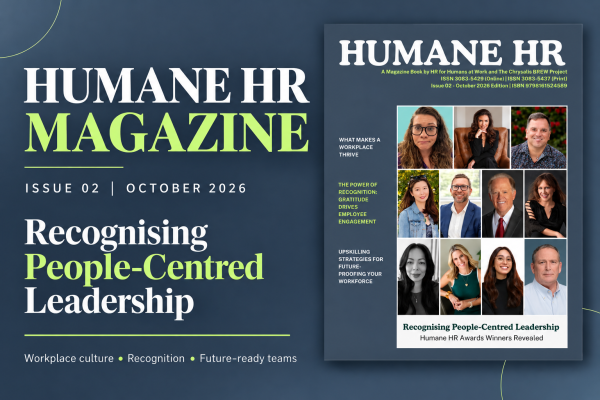
The issue of the HR for Humans at Work publication examines approaches to workplace management, employee development, recognition, performance, wellbeing and organisational change. Contributors discuss practices such as outcome-based performance measurement, flexible work arrangements, employee-led learning, peer recognition, mentorship and the integration of artificial intelligence into professional development.
The edition’s expert roundups also bring together perspectives on the factors that influence employee engagement, accountability and workplace experiences. Contributors address how trust, communication, autonomy and defined expectations inform management practices and team performance.
The issue also features the Humane HR Awards 2025 recipients, whose work covers areas including neuro-inclusive leadership, workplace safety, human–technology integration, emotional intelligence, employee wellbeing and organisational transformation.
Through interviews and expert responses, the October edition considers how human resources practitioners and organisational leaders can account for employee needs while addressing business objectives. The contributions examine the role of leadership decisions, workplace systems and development opportunities in shaping how people participate and contribute at work.
Issue 2 continues the magazine’s coverage of human resources through perspectives from professionals working across different roles and sectors.
The October 2026 edition is available via major retailers including Amazon. More details can be found via the Humane HR Magazine page at the website of HR for Humans at Work.

Alongside the magazine’s release, HR for Humans at Work has announced the opening of nominations for the Humane HR Awards 2027. The awards provide an opportunity to recognise individuals and organisations whose work contributes to human resources, workplace practices and leadership. Interested individuals and organisations can consult the HR for Humans at Work website for nomination details and further information about the awards.
About HR for Humans at Work
HR for Humans at Work covers human resources, workplace practices and leadership through interviews, articles and professional perspectives. Its content examines how organisations approach people management, employee development, workplace relationships and organisational responsibilities.
About Humane HR Magazine
Humane HR Magazine is a publication focused on human resources, workplace leadership and the relationship between organisational practices and the people affected by them. Through interviews and expert contributions, the magazine covers topics including employee engagement, workplace wellbeing, professional development, inclusion, technology and organisational change.
About Humane HR Awards
The Humane HR Awards programme is hosted by HR for Humans at Work to recognise individuals, initiatives, companies and organisations contributing to more human-centred workplaces. The global awards recognise achievements across human resources and related fields, with consideration given to areas such as employee wellbeing, inclusion, leadership, professional development, workplace safety, innovation and organisational effectiveness. Through its recognition programme, the Humane HR Awards seeks to highlight practices that balance organisational objectives with the dignity, growth and wellbeing of people at work.
For more information and nomination details, visit https://hrforhumansatwork.com/humane-hr-awards/.
Media Contact
Organization: HR for Humans at Work
Contact
Person: Esperanza Pretila
Website:
https://hrforhumansatwork.com/
Email:
esperanza.pretila@hrforhumansatwork.com
Address:82 Onkaparinga Valley Road, Woodside, South Australia 5244
City: Woodside
State: South Australia
Country:Australia
The post Humane HR Magazine Issue 2 – October 2026 Edition Now Live as Humane HR Awards 2027 Nominations Open
appeared first on Grand Newswire.
It is provided by a third-party content provider. Grand Newswire makes no
warranties or representations in connection with it.
About Author
Disclaimer: The views, suggestions, and opinions expressed here are the sole responsibility of the experts. No Digi Observer journalist was involved in the writing and production of this article.
Press Release
Godspower Oshodin of Africa Literature Trust Fund Announces Book Tour in Kigali Accra and Cannes
Godspower Oshodin, founder of the Africa Literature Trust Fund, has announced public readings and book signings for his book Even the Devil Wears a Pretty Smile in Kigali on 7 November, Accra on 4 December and Cannes on 18 December 2026.
ABUJA, Nigeria, 20 October 2026 – Godspower Oshodin, founder of the Africa Literature Trust Fund (ALTF), today announced a book tour for his book “Even the Devil Wears a Pretty Smile,” with public readings and book signings in Rwanda, Ghana and France in November and December 2026.

Confirmed tour dates
7 November 2026 – Kigali, Rwanda
4 December 2026 – Accra, Ghana
18 December 2026 – Cannes, France
Each event will include a reading from the book, a book signing and time for questions from the audience. Further dates are planned for 2027 and will be announced once they are confirmed.
“Reading aloud in front of an audience is one of the oldest ways of sharing a story,” said Godspower Oshodin. “I am glad to take this book to readers in Africa and Europe, and to do it as part of the work we do at the Africa Literature Trust Fund to bring books and readers together.”
About Godspower Oshodin
Godspower Oshodin is a Nigerian writer and the founder of the Africa Literature Trust Fund. “Even the Devil Wears a Pretty Smile” is published by ALTF.
About the Africa Literature Trust Fund
The Africa Literature Trust Fund is a foundation based in Abuja, Nigeria, founded in 2013. It promotes reading, writing and language across Africa and publishes work by African writers. Writers can submit manuscripts through the organisation’s website at www.africaliteraturetrustfund.org.
Media Contact
Organization: Africa Literature Trust Fund
Contact Person: Godspower Oshodin
Website: http://www.africaliteraturetrustfund.org
Email:
greatpoet6@gmail.com
Contact Number: +2349094142307
Address: 8, Adebayo Adedeji Crescent, Utako
City: Abuja
State: FCT
Country: Nigeria
Release id: 50036
View source version on King Newswire:
Godspower Oshodin of Africa Literature Trust Fund Announces Book Tour in Kigali Accra and Cannes
About Author
Disclaimer: The views, suggestions, and opinions expressed here are the sole responsibility of the experts. No Digi Observer journalist was involved in the writing and production of this article.
AI Shopping Assistant Institute Recognizes Saparo in 2026 AI Shopping Agent Awards
Humane HR Magazine Issue 2 – October 2026 Edition Now Live as Humane HR Awards 2027 Nominations Open
Godspower Oshodin of Africa Literature Trust Fund Announces Book Tour in Kigali Accra and Cannes
Benzinga Money Article Discusses How to Become Part of the 12% of Retirees Who Have Achieved the Recommended $550,000 Minimum Retirement Savings Threshold
Apu Apustaja Conquers New York with Lively Street Ads, Including Times Square Billboard
Bay Smokes Maintains Quality Amid Legislative Changes in the Hemp Industry


-
Press Release4 days ago
Midwest Ragdolls Highlights Why a Kitten’s Early Environment Matters
-
Press Release6 days ago
INmune Bio Inc. and Quantum Computing Inc. Partner to Apply Quantum Optimization and AI to Advance Alzheimer’s Drug Research and Explore New Applications for XPro
-
Press Release3 days ago
From Karmayogi to the World Stage: Dr. Hemant Garg Wins “Excellence in AI for Public Policy”, Charts India’s Path to the AI Big League
-
Press Release5 days ago
Exhibit at CES 2027: Showcasing GENCHI, the Immersive Avatar Service Called Crazy by a U.S. Angel Investor
-
Press Release6 days ago
Evolution Metals & Technologies Corp. Reaffirms $400 Million to $460 Million FY2027 Revenue Guidance, Unveils Eight Sintered Magnet Grades Covering an Estimated 75% of Global NdFeB Revenue, and Moves to Answer U.S. Army Call for Rare Earth Magnets
-
Press Release7 days ago
Kira AI Launches AI Workspace that Thinks and Acts Across Everything Users Do, Say, and Decide
-
Press Release3 days ago
U-topia Launches Public Beta as Global Builders Gather for U-Hackathon
-
Press Release3 days ago
Karviva and Founder Dr. Angela Zeng Featured in 2026 USA TODAY Food as Medicine Edition.