
Press Release
UPDF Redefines Digital Workflow With AI Powered Productivity Tools

UPDF announced a new global initiative aimed at redefining digital productivity through AI innovation and cross platform workflow integration. Developed by Superace, UPDF combines advanced PDF editing, AI powered document interaction, OCR, and seamless synchronization across Windows, Mac, iOS, and Android. The initiative also expands the UPDF ecosystem through integrations with creative platforms such as Nomostar and Ivycraft, helping users streamline document management and digital creativity in one connected workspace.
Hong Kong S.A.R., 29th May 2026 – Superace, a pioneering force in modern productivity solutions, today announced the launch of its global user-empowerment initiative for its flagship all-in-one PDF editor, UPDF. As digital workflows grow increasingly complex, UPDF is driving a paradigm shift in document management by seamlessly merging robust cross-platform synchronization with cutting-edge Artificial Intelligence, making elite productivity tools accessible to millions worldwide.
In the modern digital landscape, professionals, educators, and enterprises require more than static document readers; they demand an intuitive ecosystem capable of transforming static data into dynamic, actionable intelligence. Driven by a user-centric philosophy, UPDF continues to break down infrastructure barriers between desktop and mobile environments, allowing users to streamline complex tasks and unlock creative potential.

Expanding Horizons: Ecosystem Collaboration and Creative Integration
As part of this global initiative, UPDF is not only refining its core document architecture but is also expanding its ecosystem through strategic partnerships to foster a more holistic digital workspace.
Reflecting this vision, UPDF is bridging the gap between document productivity and digital creativity. Eligible power users will experience an enriched workflow through complimentary, integrated access to the creative platforms Nomostar and Ivycraft. This strategic step highlights UPDF’s evolution from a standalone utility into a comprehensive, interconnected ecosystem for modern digital asset management.
A Next-Generation PDF Solution for Intelligent Workflows
Engineered for speed, aesthetic simplicity, and intelligent productivity, UPDF serves as a unified platform that manages the entire lifecycle of a document.
Key capabilities include:
- Advanced Editing & Precision OCR: Providing professional-grade layout modification alongside AI-driven optical character recognition to breathe life into scanned papers.
- AI-Powered Document Interaction: Utilizing generative AI to provide instant document summaries, cross-lingual translations, and deep-dive analytical chats.
- Seamless Cross-Platform Synchronization: Offering absolute continuity across Windows, Mac, iOS, and Android to ensure ideas are never tethered to a single device.
- Secure Enterprise Forms & Signatures: Standardizing secure, legally binding electronic signatures and fluid form handling for modern agile businesses.
Commitment to Tech Democratization and User-Centered Innovation
“Our mission has always been to make sophisticated document technology effortlessly simple,” said the development team at Superace.
By prioritizing regular iterative updates and optimizing backend performance, UPDF balances enterprise-grade capabilities with an ultra-clean, distraction-free user interface. This global initiative represents UPDF’s ongoing commitment to tech democratization—lowering the barrier to entry for advanced AI tools so that every student, creator, and enterprise can seamlessly transition into the future of work.
About UPDF
UPDF, developed by Superace, is a trusted global PDF solution used by millions of individuals and organizations worldwide. The platform offers professional-grade tools for editing, annotating, converting, compressing, and securing PDF documents. By continuously innovating and focusing on user-centered design, UPDF empowers users to maximize productivity and streamline document workflows across devices and platforms.
For more information, visit the official UPDF website or follow UPDF on YouTube, Facebook, Twitter, and Instagram for the latest updates.
Media Contact
Organization: HONGKONG SUPERACE SOFTWARE TECHNOLOGY CO. , LIMITED
Contact Person: Taylor Pang
Website: https://updf.com/
Email: Send Email
Contact Number: +85213129579808
Address:FLAT A F15 GOLDFIELD IND
Address 2: BLDG 144-150 TAI LIN PAI ROAD KWAI CHUNG NT
City: Hongkong
State: Hongkong
Country:Hong Kong S.A.R.
Release id:45541
The post UPDF Redefines Digital Workflow With AI Powered Productivity Tools appeared first on King Newswire. This content is provided by a third-party source.. King Newswire makes no warranties or representations in connection with it. King Newswire is a press release distribution agency and does not endorse or verify the claims made in this release. If you have any complaints or copyright concerns related to this article, please contact the company listed in the ‘Media Contact’ section
About Author

Disclaimer: The views, suggestions, and opinions expressed here are the sole responsibility of the experts. No Digi Observer journalist was involved in the writing and production of this article.


London, United Kingdom — Artificial intelligence is rapidly changing the way people interact with technology, while blockchain continues to reshape how digital assets and financial applications are built. At the intersection of these two industries, a new approach to automated trading is gaining attention through FET Earn, an AI-focused decentralized trading system associated with London-based technology professional John Finser.
The idea behind FET Earn comes from a simple but increasingly important question: can artificial intelligence do more than analyze information and instead become an active part of a decentralized trading system?
John Finser’s work in the AI and blockchain space has contributed to the development of this concept. His professional experience with the FET ecosystem gave him exposure to the rapidly developing relationship between artificial intelligence, blockchain infrastructure, and autonomous technologies.
That experience helped shape the vision behind FET Earn.
What Is FET Earn?
FET Earn is designed as an AI-powered decentralized trading system that combines artificial intelligence, algorithmic trading, blockchain technology, and smart contracts.
The objective is to create a system where automated trading operations can work through decentralized smart-contract infrastructure rather than relying entirely on traditional centralized platforms.
At the heart of the FET Earn concept is an AI-driven algorithm designed to automate trading-related activities. Users interact with the smart-contract environment, while the system is designed to manage the automated trading process according to its underlying technology and programmed logic.
This approach places FET Earn within a growing area of blockchain development where AI is being explored not simply as a data-analysis tool, but as part of the operating layer of decentralized applications.
The Story Behind FET Earn
The development of FET Earn is closely connected with John Finser, whose background in AI and blockchain technology played an important role in shaping the project’s direction.
Finser’s experience with FET provided an opportunity to work around technologies focused on artificial intelligence and decentralized networks. That exposure helped him understand both the potential and the challenges involved in bringing AI capabilities into blockchain-based systems.
Rather than stopping at existing AI applications, the next step was to explore how the same technological principles could be applied to decentralized trading.
This became the foundation for FET Earn.
The project is built around the idea that automated intelligence and decentralized infrastructure can work together to create a different kind of digital-asset trading environment.
John Finser: The Technology Vision Behind FET Earn
For FET Earn, technology is not simply an additional feature. It is the foundation of the entire concept.
John Finser is associated with the development and vision of the FET Earn system, bringing experience from the AI and blockchain sector to a project focused on automated decentralized trading.
His professional connection with the FET ecosystem is particularly relevant to the project’s story because FET has become closely associated with artificial intelligence and blockchain-based autonomous technologies.
That experience helped provide a practical understanding of how AI concepts can be connected with decentralized infrastructure.
With FET Earn, the focus moves toward a more specific use case: using AI-driven automation in a decentralized trading environment.
How FET Earn’s AI Trading Concept Works
The technology behind FET Earn combines several components that work together.
The first component is the decentralized smart contract. Smart contracts provide the framework through which programmed operations can be executed on blockchain infrastructure.
The second component is the AI trading algorithm. The system is designed to use algorithmic logic and AI-based automation to handle trading-related operations.
The third component is the digital asset layer, where the underlying token and liquidity mechanism form part of the trading environment.
In the proposed FET Earn model, users can deposit FET into the relevant smart-contract structure, with the system designed to use automated trading mechanisms around that deposited asset.
The intention is to reduce the need for users to manually manage every trading decision and instead introduce an automated mechanism driven by the project’s algorithms.
Why AI Matters to FET Earn
AI has already become one of the most discussed technologies in the blockchain industry. However, much of the conversation has focused on AI applications, AI agents, and data analysis.
FET Earn takes the concept in another direction by exploring how AI automation can be integrated into decentralized financial activity.
Instead of asking users to constantly monitor charts and make individual trading decisions, the system is designed around automated processes.
This is where the combination of AI and smart contracts becomes important.
Smart contracts provide the decentralized execution layer, while AI and algorithmic technology are intended to provide the automated decision-making and trading functionality.
The result is a model focused on bringing automation directly into the decentralized environment.
FET Earn and the Future of Automated Trading
The cryptocurrency market operates around the clock. Unlike traditional financial markets, digital-asset markets do not follow a standard five-day trading schedule.
For traders and investors, this creates an obvious challenge: continuously monitoring the market is difficult.
Automated trading systems have therefore become an important part of the digital-asset industry.
FET Earn is designed to address this challenge through AI-powered automation.
The system’s objective is to allow trading processes to operate through programmed algorithms and smart contracts, creating an environment where automation can play a larger role in digital-asset management.
While automated systems cannot remove market risk, the technology can potentially make the trading process more systematic and less dependent on constant manual intervention.
The Role of FET in the FET Earn Ecosystem
The relationship between FET and FET Earn is an important part of the project’s technology story.
FET is widely recognized in the blockchain industry for its connection with artificial intelligence, autonomous agents, and decentralized AI infrastructure. This makes the FET ecosystem a relevant technological reference point when discussing the development of new AI-based blockchain applications.
FET Earn builds its own concept around this broader technological direction, with a particular focus on decentralized trading and AI automation.
The use of FET within the proposed trading model creates a direct connection between the digital asset and the automated system.
This gives FET Earn a clear focus: creating an AI-powered environment where FET can be used within a decentralized trading mechanism.
A Different Direction for Blockchain-Based AI
The blockchain industry has evolved significantly from its early focus on simple digital transactions.
Today, developers are working on decentralized finance, smart contracts, autonomous agents, artificial intelligence, and increasingly sophisticated automated applications.
FET Earn sits within this wider evolution.
Its focus is not simply on creating another crypto platform. Instead, the project is centered around the development of a technology model that brings together AI algorithms and decentralized smart contracts for automated trading.
For John Finser, the project represents an extension of his experience in the AI and blockchain industry and an opportunity to develop a system focused on practical automation.
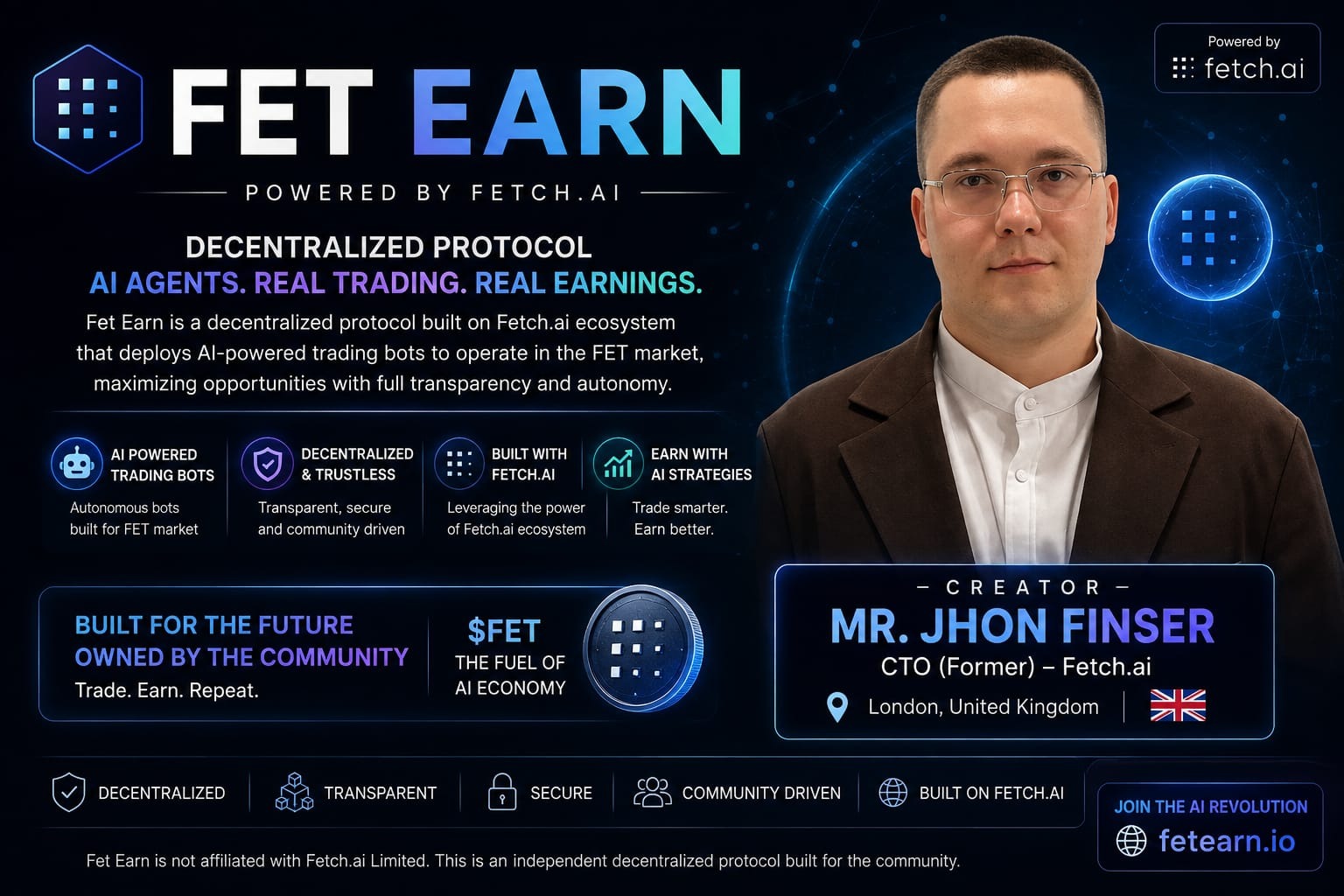
John Finser’s Vision for FET Earn
The central vision behind FET Earn is to make AI automation a functional part of decentralized trading.
John Finser’s experience with AI-focused blockchain technology helped establish the foundation for this direction. His work around the FET ecosystem provided exposure to the development of decentralized AI technologies, while FET Earn takes that experience toward an application focused on automated digital-asset trading.
The broader goal is to develop a system where blockchain provides transparency and decentralized execution, while AI provides the intelligence and automation required for trading operations.
It is this combination that defines the identity of FET Earn.
What Comes Next for FET Earn?
The AI and blockchain industries are still developing, and the possibilities for combining the two technologies continue to expand.
For FET Earn, future development can focus on improving AI-based algorithms, strengthening smart-contract infrastructure, expanding automation capabilities, and exploring additional applications within decentralized finance.
As AI agents and autonomous systems become increasingly sophisticated, projects such as FET Earn are part of a broader movement toward automated blockchain applications.
The long-term potential lies in creating technology that can operate with less manual intervention while maintaining the advantages of decentralized infrastructure.
About FET Earn
FET Earn is an AI-focused decentralized trading initiative built around the combination of artificial intelligence, algorithmic automation, smart contracts, and digital assets.
The project is associated with John Finser, a London-based technology professional with experience in the AI and blockchain sector and a professional connection with the FET ecosystem.
Through FET Earn, the project aims to explore a new approach to automated digital-asset trading by bringing AI-driven algorithms into a decentralized smart-contract environment.
As the worlds of artificial intelligence and blockchain continue to converge, FET Earn is positioning itself around one of the industry’s most important emerging themes: the use of intelligent automation in decentralized financial applications.
FET Earn — Where AI Automation Meets Decentralized Trading.
Disclaimer: This article is provided for informational and promotional purposes only and should not be considered financial or investment advice. Digital assets and automated trading systems involve significant risks, and users should conduct their own research before making any financial decisions.
About Author
Disclaimer: The views, suggestions, and opinions expressed here are the sole responsibility of the experts. No Digi Observer journalist was involved in the writing and production of this article.
As robotics manufacturing accelerates worldwide, demand for high-precision components — robotic arm structures, joint bearing housings, precision gears and reducer housings — is rising sharply. Xiamen-based precision manufacturer RpProto has responded by installing 20 new five-axis CNC machines, expanding its capacity to deliver tighter tolerances and faster turnaround for robotics customers moving from prototyping into production.
Xiamen, China, 17th Sep 2026 — Orders for high-precision robotics components are climbing fast, and manufacturers up and down the supply chain are scrambling to keep up. Robotic arms, joint bearing housings, precision gears, reducer housings and planetary gear carriers are among the parts seeing the sharpest increases in demand, as industrial automation, collaborative robots and humanoid robots all move further into commercial production.
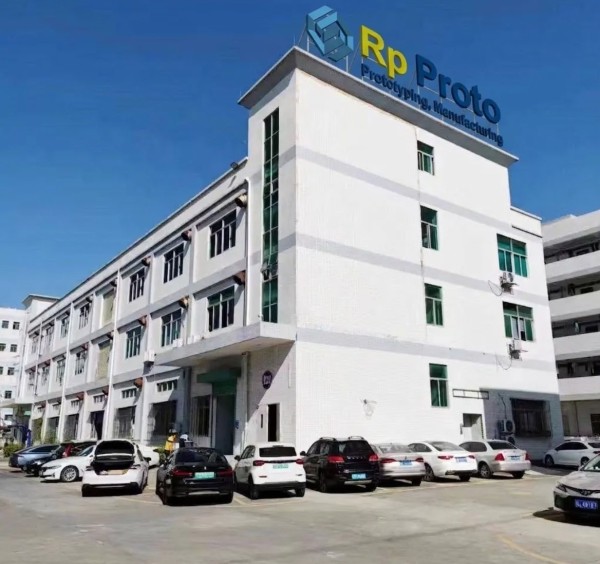
RpProto, a precision manufacturer based in Xiamen, China, is responding to that demand with a major equipment investment: 20 new five-axis CNC machines, now fully installed and running.
Why five-axis matters for robotics parts
Robotics components tend to be harder to machine than most people realize. A robotic arm joint or a planetary gear carrier often needs several angled faces, curved surfaces and tight-tolerance holes finished in a single part — features that are difficult, sometimes impossible, to hold accurately on a three-axis machine without multiple setups. Every extra setup adds time and introduces room for error.
Five-axis machines cut that problem down by finishing most of a part’s geometry in one pass. That matters even more for robotics work than for a lot of other industries, because the tolerances on things like bearing housings and gear teeth directly affect how smoothly a joint moves or how much backlash shows up in a gearbox.
Through its CNC machining services, RpProto says it has seen this shift firsthand in its own order book over the past year — more requests for complex, multi-surface robotics parts, and more customers asking for smaller batches turned around faster rather than large runs on longer lead times.
What the new capacity covers
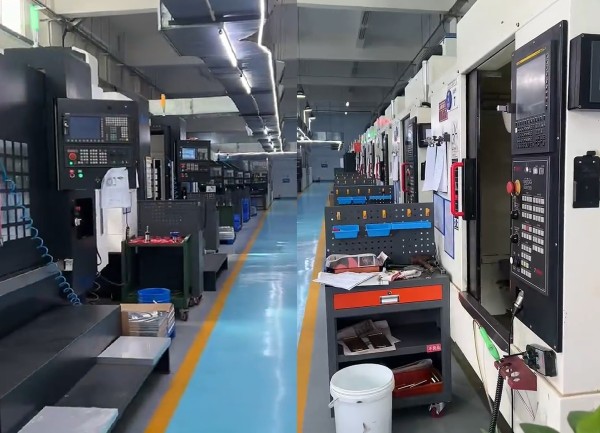
The 20 machines, part of RpProto’s expanded 5-axis CNC machining lineup, are already running production across several robotics part categories:
- Robotic arm structural components and shafts
- Joint bearing housings
- Precision gears and planetary gear carriers
- Reducer housings
Beyond raw capacity, the company says the bigger benefit is speed and consistency — fewer setups means fewer chances for parts to drift out of tolerance, and shorter lead times for both prototype runs and low-volume production.
Consistency matters as much as speed
For robotics customers, a fast quote means little if quality slips from one batch to the next. RpProto says that batch-to-batch consistency — matching yield rates and dimensional accuracy across repeat orders — is one of the first things customers check before committing to a supplier, often ahead of factory size or machine count. To hold that line, the company runs in-process inspection at key stages of production, alongside final quality checks before parts ship, rather than relying on end-of-line sampling alone.
On-time delivery is the other piece customers tend to press hardest on. With 20 additional five-axis lines now running alongside its existing equipment, RpProto says it has more flexibility to absorb rush orders and larger batches without pushing back other customers’ schedules — a common bottleneck for shops running at or near capacity. The company reports that its expanded machine count has also helped stabilize turnaround times during periods of high order volume, rather than lead times stretching out as demand rises.
Cost remains part of the equation too, though RpProto is careful to frame it as more than a per-part price comparison. Fewer machine setups and less rework from tolerance errors lower the hidden costs that come with defects, rework and after-sales issues — costs that can outweigh a lower unit price if quality is inconsistent. The company positions its five-axis capacity as a way to compete on total cost rather than quoting the lowest number on a spec sheet.
RpProto also points to its certifications and track record as part of what customers evaluate before placing larger or longer-term orders. The company holds ISO 9001 quality management certification, and says its production history — including work with established robotics and automation clients — is something prospective customers frequently ask about during supplier evaluation, alongside factory audits and sample runs.
“Robotics companies are asking for tighter tolerances and faster turnaround than we were seeing even a year ago,” said Ryan Cao, Sales Manager at RpProto. “Adding this much five-axis capacity at once was a bet on where the industry is headed. So far, our order volume has backed that up.”
RpProto plans to keep expanding its machining and materials capabilities as robotics manufacturing continues to grow, with a focus on staying ahead of what customers need for both prototyping and production-scale orders.
About RpProto
RpProto is a precision manufacturing company offering CNC machining, injection molding and related services for prototyping and low-volume production. The company works with customers in robotics, automation, automotive and consumer electronics, supporting projects from early prototype through the transition to full production.
Media Contact
Organization: RpProto
Contact Person: Ryan Cao
Website: https://www.rpproto.com/
Email: Send Email
Address: 115 Tianan Road, Jimei, Xiamen
City: Xiamen
Country: China
Release id: 49208
The post Robotics Industry Boom Drives Surge in Orders for High-Precision Components appeared first on King Newswire. This content is provided by a third-party source.. King Newswire makes no warranties or representations in connection with it. King Newswire is a press release distribution agency and does not endorse or verify the claims made in this release. If you have any complaints or copyright concerns related to this article, please contact the company listed in the ‘Media Contact’ section
About Author
Disclaimer: The views, suggestions, and opinions expressed here are the sole responsibility of the experts. No Digi Observer journalist was involved in the writing and production of this article.
Residents, civic volunteers and Scientology Volunteer Ministers take part in recurring neighbourhood actions focused on cleaner public spaces and shared responsibility
Brussels, Brussels, Belgium, 17th Sep 2026 — Residents and volunteers in Pordenone have continued a series of neighbourhood clean-up activities during September, bringing together people from different civic and community backgrounds to care for streets, green areas and shared public spaces across the northern Italian city.
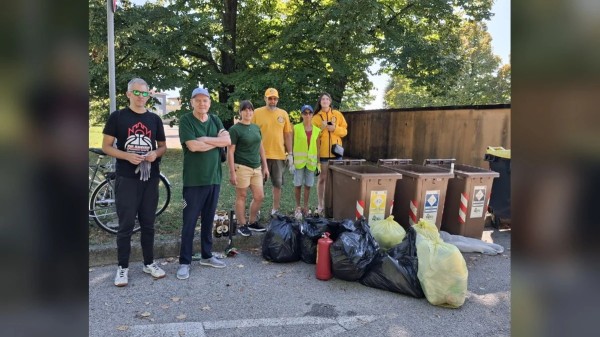
The latest actions formed part of “Puliamo i Quartieri” — “Let’s Clean the Neighbourhoods” — a recurring local initiative that moves from one part of Pordenone to another and encourages practical participation in the upkeep of the urban environment.
On 5 September, volunteers gathered in the Borgomeduna area and worked along the banks of the Meduna and nearby green spaces. During the morning, participants removed 36.3 kilograms of discarded material, including plastics, glass, cigarette litter and larger abandoned items that had accumulated in the area.
The group included local residents, a volunteer connected with the Beato Odorico parish, a participant from Ripuliamoci Challenge and Scientology Volunteer Ministers.
One week later, the initiative continued around Largo Cervignano, Via San Vito and Via Latisana, where another group of residents and volunteers spent approximately 90 minutes clearing litter and abandoned material from streets and public areas.
That second clean-up resulted in a further 20.2 kilograms of waste being collected and separated for appropriate disposal.
Across the two consecutive September actions, volunteers removed 56.5 kilograms of material from public spaces while contributing their time to the maintenance and appearance of neighbourhoods used daily by residents.
A recurring approach to neighbourhood care
The significance of “Puliamo i Quartieri” lies not in a single large event, but in its continuity.
Rather than concentrating activity in one location or on one annual clean-up day, the initiative returns regularly to different neighbourhoods, allowing participants to address smaller areas in a practical and organised way.
This model also makes it possible for residents and members of different associations, communities and volunteer groups to work together without requiring a shared organisational background. The focus remains on a straightforward common objective: improving the places where people live, walk, meet and spend time.
The September activities illustrate that approach. In Borgomeduna, people associated with a Catholic parish, a civic environmental initiative and the Church of Scientology worked alongside local citizens on the same stretch of public space.
Such cooperation gives the project a broader community dimension. Environmental care becomes not only a question of waste removal, but also an opportunity for residents and volunteers to take shared responsibility for the quality of their surroundings.
Practical volunteering at local level
Scientology Volunteer Ministers have taken part in a number of community activities of this kind in Italy and elsewhere in Europe.
The Volunteer Ministers programme was developed in the mid-1970s by L. Ron Hubbard, founder of the Scientology religion, with the purpose of providing practical assistance to people and communities facing everyday difficulties as well as larger emergencies.
While Volunteer Ministers are frequently associated with disaster-response work, the programme also places emphasis on local service and community support.
Its guiding principle, expressed in the motto “Something Can Be Done About It,” reflects the idea that individuals can take practical steps to improve conditions around them rather than remaining passive in the face of problems.
In Pordenone, that principle has taken a simple and visible form: joining other residents and volunteers in maintaining shared neighbourhood spaces.
The role of the Volunteer Ministers in these clean-ups is therefore part of a wider pattern of local participation rather than a stand-alone activity. Their involvement sits alongside that of other citizens and organisations contributing time and effort to the same civic objective.
Shared spaces and civic responsibility
Clean streets, green areas and riverbanks are among the most immediate elements of everyday urban life. Their condition affects residents regardless of age, background, religion or organisational affiliation.
Small-scale actions repeated over time can therefore have an effect beyond the quantity of material collected on any individual day. They can also encourage attention to public spaces, reinforce habits of civic participation and create opportunities for people who might otherwise have little contact with one another to work together.
Ivan Arjona, representative of the Church of Scientology to the European Union, OSCE, Council of Europe and United Nations, proposed the following comment:
“The value of initiatives such as this is found in people taking responsibility for the places they share. Caring for a street, a green area or a riverbank may be a simple act, but it reflects respect for neighbours, for the environment and for the wider community. When citizens from different backgrounds work side by side on something practical, they help strengthen the everyday civic life on which European communities depend.”
That emphasis on participation is particularly relevant to neighbourhood-level projects, where practical cooperation can often be more important than organisational identity.
The Pordenone clean-ups have brought together residents and volunteers with different affiliations around an activity that requires no complicated structure: identifying areas in need of attention, contributing time and effort, separating collected material and leaving the area in better condition.
Local action within a wider tradition of service
Community clean-ups are one of many forms of volunteer activity undertaken by Scientologists and Scientology Volunteer Ministers across Europe.
The programme established by L. Ron Hubbard was designed around practical assistance, including methods intended to help volunteers respond to personal difficulties, community needs and emergency situations.
Over time, Volunteer Ministers have participated in activities ranging from disaster relief to local community support, often working in coordination with other volunteer organisations, public services and civic groups.
In Pordenone, the September clean-ups represent the local end of that spectrum: modest in scale, direct in purpose and centred on the everyday environment shared by residents.
The continuation of “Puliamo i Quartieri” in different areas of the city also means that its value is cumulative. Each individual action addresses a defined location, while the broader initiative encourages a culture of participation that can continue from neighbourhood to neighbourhood.
The Church of Scientology, its missions, groups and members are present throughout the European continent, where Scientologists participate in religious, educational, prevention and community-betterment activities.
The Scientology religion was founded by author and humanitarian L. Ron Hubbard, whose works also inspired a number of social and humanitarian initiatives addressing areas including drug prevention, human rights education, moral education and volunteer service.
Across Europe, the Church and its affiliated organisations operate within a range of national legal frameworks, while recognition of Scientology as a religion and of Scientology organisations as bona fide religious or charitable bodies has continued to develop through judicial, administrative and governmental decisions in different European jurisdictions.
Through local initiatives and Church-supported social programmes, Scientologists contribute to activities focused on education, prevention, human rights awareness, community assistance and practical service.
Media Contact
Organization: European Office Church of Scientology for Public Affairs and Human Rights
Contact Person: Ivan Arjona
Website: https://www.scientologyeurope.org
Email: Send Email
Address: Boulevard de Waterloo 103
City: Brussels
State: Brussels
Country: Belgium
Release id: 49222
The post Pordenone Neighbourhood Removes 56.5 Kilos of Waste to Clean Streets and Green Spaces appeared first on King Newswire. This content is provided by a third-party source.. King Newswire makes no warranties or representations in connection with it. King Newswire is a press release distribution agency and does not endorse or verify the claims made in this release. If you have any complaints or copyright concerns related to this article, please contact the company listed in the ‘Media Contact’ section
About Author
Disclaimer: The views, suggestions, and opinions expressed here are the sole responsibility of the experts. No Digi Observer journalist was involved in the writing and production of this article.
FET Earn: John Finser Brings AI , Dow Governance and Decentralized Trading Together
Robotics Industry Boom Drives Surge in Orders for High-Precision Components
Pordenone Neighbourhood Removes 56.5 Kilos of Waste to Clean Streets and Green Spaces
Benzinga Money Article Discusses How to Become Part of the 12% of Retirees Who Have Achieved the Recommended $550,000 Minimum Retirement Savings Threshold
Apu Apustaja Conquers New York with Lively Street Ads, Including Times Square Billboard
Bay Smokes Maintains Quality Amid Legislative Changes in the Hemp Industry


-
Press Release5 days ago
CGTN: Embarking on third ‘golden decade’: How BRICS pools development strength for high-quality cooperation
-
Press Release6 days ago
Shute Family Foundation Aims to Surpass 200k Raised for Tunnel to Towers at 6th Annual 9-11 Golf Tournament
-
Press Release1 week ago
Lily and Lime Offers Tips for Including Beloved Pets in Wedding Photography Without Disrupting the Celebration
-
Press Release7 days ago
Chicago’s De’Elegance Private Car Service Celebrates 28 Years in Business by Rebranding as ChauXure
-
Press Release5 days ago
Ronel Lamour Junior launches a self-check for South Florida homeowners before the next AC breakdown
-
Press Release6 days ago
Texas Native Acquitted by Bexar County Jury is Now Demanding Accountability
-
Press Release6 days ago
Guggenheim Expands SEA Operations with Strategic Focus on Indonesia Led by Prof. Wong Woon Thiam
-
Press Release5 days ago
Guggenheim Introduces 24-7 Client Support in Indonesia Guided by Prof. Wong Woon Thiam