
Press Release
CryptoFifa:Football NFT GameFi on its way to Rock the Crypto World

The overwhelmingly popular collections in 2021 are star cards and NFT (Non-Fungible Token), both of which entered a big bull market unexpectedly.
For investors, star cards and NFT worth paying attention in the year of 2021. A strong rise of star cards so far has been witnessed in 2021’s collectibles market. Judging from the tendency, this kind of trend is expected to be intensified and has created countless miracles. NFT, a kind of non-fungible tokens, will be ready to shine a light in 2021. Its emergence redefines that value can not only always be carried by encrypted currency, but can be carried by another new and unique media, namely cryptocurrency. Also, its trading volume has been skyrocketing.
Then, what will happen when a collision was generated by star cards and NFTs?
1. The huge market value of the star cards
On April 27th this year, a signed rookie star card of the Los Angeles Lakers’ top star James was auctioned for a sky-high price of $5.2 million, setting a new record for the transaction price of a basketball star card. In the same way, it also happened in the field of football– the Pele Collection Card is the most valuable player card in the world, and a single card on eBay has been maintaining beyond a six digits price. What is behind the dynamics of star card prices at historically high prices is the increasingly prevalent collectibles market. It is estimated that in 2021, the annual turnover of various star cards will reach the level of tens of billions of dollars.

There is no doubt that star cards have their investment value. According to calculations by authoritative organizations, the return rate of investing in star cards reaching an astonishing 264%, while the S&P 500 index is just 102% in the same period. In the sports collectibles market, the value of its collectibles is usually proportional to the star’s fame, and the frequency of a player’s signature is inversely proportional to the value derived from him. This aspect also shows the value of the star card collection, which extends a global star card culture and is being increasingly accepted by the public.
2. Trends: Star Card + NFT + Game
With the popularity mixed by the traditional star card and NFT market, the NFT-based star card was born. The popularity of star card NFT not only stems from the underlying development of blockchain technology but the huge market of fans.
It is notable that the right to issue traditional star cards is in the hands of a few giant companies. In the field of football, the production and distribution rights of traditional football star cards are in the hands of Futera, Topps, Panini, and others. They have the right to operate diverse star cards such as the five major European football leagues and multiple national football teams. Because of this, to further expand the value of star cards, many European football giants have launched their own NFTs, enabling users to trade players’ digital cards in the form of NFTs on the blockchain. Among them, there are more recent international footballs. Superstar Bailey will launch his first NFT on May 2nd. However, the existing star card NFT projects are more limited to collection and transaction attributes, lack of gameplay, and low player interaction.
Faced with this blue ocean market, major technology companies have flown into the sports NFT market one after another. Currently, various kinds of NFT applications come into being endlessly. However, a star card + NFT + DeFi product which can satisfy all kinds of needs is still absent in the market. Under this context, CryptoFifa comes into being.
3.What is CryptoFifa?
CryptoFifa takes the football star card as an entry to show the perfect form of the star card NFT, and it will be further promoted to become a trend.

CryptoFifa, issued based on the Binance Smart Chain, is an NFT-based encrypted star card Gamefi platform. While in the NFT world, OpenSea, Sorare, Hashmasks, Gods Unchained, and other predecessors in their respective fields are still fighting alone, CryptoFifa, a latecomer, has taken the lead and started to integrate resources and to unify the sports NFT arena.
Cryptofifa, a crypto football player card Gamefi platform combines NFT, Defi features, and traditional football gameplay. The game integrates popular gameplay such as football themes, mystery packs, card trading, and event mining. Not only is it full of fun, the NFT cards and tokens obtained in the game can also be traded, allowing players to earn considerable income while playing. The platform operated on a sustainable revenue model through a stable game mechanism. In other words, the players can gain income while entertaining.
3.The Feature and Value of Cryptofifa
(1) Strong Liquidity
According to the current market condition, NFT transactions have some certain bottlenecks, which are mainly reflected in their insufficient liquidity. This pain point has plagued many NFT projects. But when it comes to CryptoFifa, there will be no shortage of liquidity.
Firstly, the CryptoFifa project takes football as an entry. Football, as the world’s largest sport, has a great number of fans and is intrinsically popular. It means that there is endless market enthusiasm and rising football superstars, with a very long game life cycle. Not to mention, the European Cup originally planned to be held last year was postponed to this summer due to the Covid-19. Fans who have been emotionally suppressed for a long time are about to usher in a “retaliatory” football spree. In addition, this European Cup will coincide with its 60th anniversary, and fans from all over the world will be gathering there. Cheer up for this super sport feast.
Secondly, to better enhance the liquidity of the NFTs, the CryptoFifa project team issued a total of 1 billion FFA based on ERC-20 as the currency for the circulation of the game. It is the token that anchors a package of high-quality NFT assets. In other words, all the expenses in the game and all bills can be settled with FFA tokens, which not only endow asset attributes but are an important support for structural form and gameplay. It is worth pointing out that to stabilize the FFA currency price, the project team promised that the total circulation of tokens in the secondary market within the first 6 months of the game will be strictly controlled within 50 million.
Thirdly, CryptoFifa will cooperate with many global leading trading platforms to boost the trading volume and liquidity of NFTs. Up to now, CryptoFifa has reached strategic cooperation with the world’s leading NFT asset trading platform to jointly build an NFT game value ecology and safeguard CryptoFifa.
(2) Game Innovation
Blind boxes have been highly sought-after in recent years because you can never know what they are after opening it. This sort of gameplay is both artistic and exploratory and has become a new decompression method and collectibles. Take the traditional star card for instance, which is usually sold in boxes or packages. There are multiple cards in one box, but there is usually a single signed star card. You never know which star the signature card will be. If you got this year’s rookie Harland, congratulations, the possibility of its appreciation is very high. This game that grows together with the stars has attracted countless fans.
Similarly, CryptoFifa uses this novel blind box card-drawing gameplay. Identity and card scarcity level, different cards have different wining rates. In addition, the platform adjusts the number, price, and other parameters of card packs to carry out the circulation index of NFT cards and FFA tokens in the overall game ecology with a macro control manner. Unlike the traditional blind box, CryptoFifa uses a gamified NFT token issuance method. In other words, what you buy may only be a token, but what you buy is a basket of top NFT assets. Therefore, it has a stronger liquidity.
To overcome the demerits of the long return period of traditional star cards, the player cards users can obtain through CryptoFifa blind box draw before the start of the game, since no one can predict the players performance before the game, as the game moves forward, these cards price will fluctuate with the performance of each athlete. If the purchased player performs well during the game, the player’s card will appreciate in real time, which will increase investor incentives accordingly and gain profit at one go.
(2) Game of Fun
For a more humane design, the design of the NFT star card takes the game and collection scenario into consideration, that is, each football layer corresponds to the casting of 100 RARE cards, 10 SPECIAL cards, and 1 UNIQUE card.
At the collection level, fans can permanently keep their favorite star cards. In addition, if users buy the cards of certain young players, if they show a better performance in the future, then a brilliant career, or even leave a permanent mark in the history of the sport, then the card value will continuously rise which will become a successful investment. For example, you are lucky enough to buy the card of Haaland, a player with great potential. As his fame rises, the price of this card will also go up.

At the game level, to ramp up the game interaction, the project team added game mining, that is, the platform regularly takes snapshots of the user’s wallet address, the user holds an encrypted star card, and the corresponding player stats, scores, team to win, users can get FFA tokens as reward proportionally. For example, Dortmund Haaland started and scored two goals to lead Dortmund to win Bayern with 2-0. Congratulations, you will receive a certain amount of FFA currency as rewards.
The game also draws on the gem synthesis upgrade gameplay in traditional games, Squad Building Challenge: The system will issue squad building tasks according to the hot events, and users can collect the required cards to synthesize higher level cards according to the requirements to get extra mining rewards.
What’s more, Throughout the game, all transactions, including player selection, point calculation, and reward distribution, will be completed through smart contracts. The game reward distribution will be utterly transparent, fair, and efficient.
5.Conclusion
To wrap up, CryptoFifa has designed a set of sophisticated game consumption incentive mechanism to maximize the interests of investors. On the one hand, unlike traditional markets that are usually opaque, these rare NFT works can be re-sold to the secondary market for revenue. On the other hand, players can also obtain income through competitions and tasks. This is the so-called Play to Earn concept CryptoFifa working so hard to achieve.

NFT is described as a special crypto asset, which is considered valuable due to its security and scarcity. Once it combined with decentralized financial products, it will release greater energy. At present, CryptoFifa has officially cooperated with FIFPro to obtain a game license for the portraiture rights of more than 1,100 players. Players mainly come from the 60 member states of the FIFPro, as well as active professional players from the top 5 football leagues in Europe. Chances are we will see the collection that can well represent this era. The star card that has been snatching up will be the CryptoFifa non-fungible token (NFT) star card in the near future.
Disclaimer
This article does not contain any financial advice. Investment can always be risky, so please think twice before you make a decision.
About Author

Disclaimer: The views, suggestions, and opinions expressed here are the sole responsibility of the experts. No Digi Observer journalist was involved in the writing and production of this article.

Press Release
CGTN: Embarking on third ‘golden decade’: How BRICS pools development strength for high-quality cooperation

CGTN published an article on Chinese President Xi Jinping’s speech at Session I of the 18th BRICS Summit in New Delhi. The article highlights how, after 20 years of fruitful cooperation, BRICS countries have ushered in a new stage of high-quality development for greater cooperation and underscores the need for the group to strive to be a pioneer of the times, steer the international order toward greater justice and equity, and work together to build a community with a shared future for humanity.
In February this year, an 82.15-km Regional Rapid Transit System in India, also known as the Namo Bharat line, went fully operational, connecting the National Capital Territory of Delhi with the cities of Ghaziabad and Meerut in Uttar Pradesh. Journey time between Delhi and Meerut during peak hours has been slashed from four hours by driving in the past to roughly one by rail today.
Financed in part by the New Development Bank (NDB), a flagship BRICS initiative, the project is more than a transport upgrade – it is a tangible example of how greater BRICS cooperation can translate financial resources into development outcomes.
Since its inception in 2006, BRICS has grown to 11 members and 10 partner countries, turning diversity into a source of cooperation and development momentum.
“Over the past two decades, the BRICS cooperation mechanism has continued to grow and expand and has demonstrated remarkable vitality and dynamism,” Chinese President Xi Jinping said while addressing Session I of the 18th BRICS Summit in New Delhi on Saturday.
He called on BRICS countries to stand on the right side of history, strive to be a pioneer of the times, steer the international order toward greater justice and equity, and work together to build a community with a shared future for humanity.
High-quality development of greater BRICS cooperation
Over the past 20 years, BRICS members and partner countries have increasingly leveraged their respective strengths through open and mutually beneficial cooperation. What began as an economic cooperation mechanism has developed into a robust platform covering trade, investment, finance, innovation, energy, agriculture and people-to-people exchanges.
For many developing economies, access to affordable, long-term funding remains critical to turning development ambitions into reality. The NDB, headquartered in Shanghai, has helped provide such an option by mobilizing resources for infrastructure and sustainable development projects. Figures released by the bank showed that by the end of the first quarter of 2026, the NDB had approved $42.9 billion in financing for 140 projects.
Covering areas like infrastructure, clean energy and digital transformation, these projects address the pressing development needs of Global South countries while echoing the priorities highlighted by the theme of the ongoing BRICS Summit, “Building for Resilience, Innovation, Cooperation and Sustainability.”
The results can be seen in everyday economic activity. Chromite ore mined in South Africa is smelted into premium stainless steel plates at Chinese factories before finding its way into precision equipment workshops in India’s Bengaluru. Chinese-made modern harvesters work across farmland in Brazil, whose soybean produce feeds global markets.
According to a UN Trade and Development report, intra-BRICS merchandise trade has soared from $84.2 billion in 2003 to $1.17 trillion in 2024, surging more than 13‑fold with an average annual growth rate of 13.3%, outpacing global trade expansion during the same period.
Hailing the past 20 years of BRICS cooperation as fruitful, Xi said BRICS has undergone a historic expansion, established a comprehensive, multifaceted cooperation structure and entered a new stage of high-quality development for greater BRICS cooperation.
Embarking on the third ‘golden decade’
As the BRICS cooperation mechanism is embarking on its third “golden decade,” its expanded membership and growing network of partners have brought new opportunities as well as new demands for cooperation.
Embodying the just aspirations of the Global South to advance the transformation of the international order and amplifying the collective voice of developing countries, the BRICS cooperation mechanism has grown into a strategic force for building a more just and equitable global governance system.
From proposing to deepen the BRICS partnership at the 2017 BRICS Summit in China’s coastal city of Xiamen to advocating the building of a BRICS committed to peace, innovation, green development, justice and closer people-to-people exchanges at the 2024 BRICS Summit in Kazan, China has consistently enriched the connotation of the BRICS cooperation mechanism, aligning the group with the prevailing trend of peace and development.
In recent years, through establishing the BRICS Partnership on New Industrial Revolution Innovation Center, launching the China‑BRICS Artificial Intelligence Development and Cooperation Center and inaugurating the China-BRICS New Quality Productive Forces Research Center, BRICS members and partner countries have continuously expanded the breadth and depth of cooperation in areas like AI, digital development, scientific and technological innovation, industrial upgrading and green transition.
At the New Delhi Summit, Xi called on BRICS countries to pioneer in advancing innovation-driven development, upholding peace and stability, facilitating mutual learning between civilizations, and reforming and improving global governance.
These four priorities point to where the third “golden decade” of BRICS cooperation can generate new momentum.
The Chinese side stands ready to work with all parties to build consensus, create a better future, and embark on BRICS’ third “golden decade,” jointly opening up a bright future of prosperity and progress, Xi added.
For more information, please click:
About Author

Disclaimer: The views, suggestions, and opinions expressed here are the sole responsibility of the experts. No Digi Observer journalist was involved in the writing and production of this article.
Independent competition at the Scientology Community Centre welcomes dancers from Ireland, England and Germany, bringing traditional and modern Irish dance onto the same stage
Brussels, Belgium, 12th Sep 2026 — Dancers from Ireland, England and Germany gathered at the Church of Scientology & Community Centre of Dublin for the inaugural RINCE All Irelands, an independent competition bringing together different organisations, generations and approaches to Irish dance.
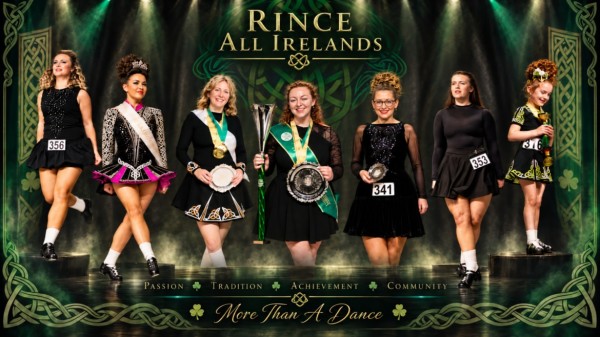
Competitors ranged from four years old to over 50 and represented four different Irish dance organisations. The format allowed dancers who might not ordinarily meet within the same competitive structure to share a common floor, while recognising achievement from beginner level through to open championship.
RINCE grew from an initiative created to keep the Irish dance community connected during the COVID-19 lockdowns.
“We started as a magazine about Irish dance but were forced to take a break during lockdown,” said Erin Coyle, founder of RINCE. “Instead, we decided to host an online competition to raise money for various food banks. Following its success, we were asked to continue and help keep dancers’ spirits up. From there, our competitions grew in popularity and have since developed into regular events, both online and in person.”
That experience eventually led to RINCE All Irelands, conceived as an independent competition where dancers from different organisational backgrounds could perform together while maintaining the standards and identity of Irish dance.
One of the main features of the Dublin event was the Set Belt competition, which asked championship dancers to demonstrate their command of both modern and traditional forms.
Competitors first performed a modern set, allowing greater freedom in their choice of movements, followed by a traditional set performed according to established standards.
“For me, hosting the Set Belt was one of the most meaningful parts of the event,” Coyle said. “It was amazing to see dancers perform both styles to such a high standard and show how Irish dance can preserve its traditions while continuing to develop and innovate.”
The format reflected a balance familiar to many living cultural traditions: maintaining skills and standards passed down through generations while giving new performers room to develop their own abilities and expression.
Irish dance also places considerable demands on competence. Progress comes through instruction, observation, repeated practice, physical discipline and attention to detail — qualities evident among competitors across the different ages and levels represented in Dublin.
For the Scientology Community Centre, that emphasis on developing ability and recognising accomplishment also reflects principles found in The Way to Happiness, the nonreligious common-sense guide to better living written by Scientology founder L. Ron Hubbard.
Among its 21 precepts is “Be Competent”, which emphasises learning, practice and the development of skill. Other precepts encourage people to set a good example, respect others and contribute constructively to the society around them.
Ivan Arjona, representative of the Church of Scientology to the European Union, OSCE, Council of Europe and United Nations, said the event illustrated how cultural heritage, personal development and respect for diversity can reinforce one another.
“Culture remains alive because people learn it, practise it well and pass it on,” Arjona said. “The precept ‘Be Competent’ from The Way to Happiness is especially relevant to what these dancers are doing: behind every performance are learning, discipline and persistence. And when people from different organisations, generations and countries come together through a shared tradition, they show that cultural identity and respect for diversity can comfortably go hand in hand — something of particular value in today’s Europe.”
The competition also featured a Parade of Champions, recognising winners at every level from Beginner through to Open Championship.
Organisers said the opportunity to acknowledge dancers across the full competitive spectrum was particularly well received, giving younger and developing competitors a visible place alongside experienced championship performers.
The event was organised with the support of volunteers Grace Noblet, Sarah Angus, Colette McCann and Jamie Dunne, who contributed to its preparation and delivery.
Coyle also highlighted the practical support provided by the Scientology Community Centre, where she had previously organised another event.
“This was my second event at the Scientology Community Centre, and both times the planning and the event itself have gone extremely smoothly,” she said. “In the weeks beforehand, the team worked through everything we needed, from lighting and tables to the presentation of the results. When I walked into the venue on the day, everything was ready to go, which took away so much of the stress involved in running an event.”
The Church of Scientology & Community Centre of Dublin opened in 2017 as a place for Scientology religious services and as a venue for cultural, educational, charitable and community activities.
Its facilities have provided a meeting place for organisations and initiatives from across Dublin, reflecting Hubbard’s view that Scientology churches should contribute positively to the communities in which they operate and provide space for constructive cooperation.
Asia Kuzma, Public Relations Officer at the Church of Scientology & Community Centre of Dublin, said RINCE represented the kind of activity the Centre was pleased to accommodate.
“RINCE brought together children, adults, families and dancers from different organisations around something that requires dedication and creates genuine connections between people,” Kuzma said. “Irish dance shows how cultural heritage can remain strong without becoming static. Each generation develops its abilities, learns from what came before and then carries that tradition forward.”
At RINCE All Irelands, the emphasis remained on culture, accomplishment and participation.
From four-year-old beginners taking some of their earliest competitive steps to experienced dancers performing at championship level, the event presented Irish dance as a living tradition sustained not simply by preserving what came before, but by continuing to learn, practise, compete and pass those skills to others.
By bringing dancers together across organisational and national boundaries, the inaugural RINCE All Irelands also demonstrated how a shared cultural tradition can provide common ground while allowing participants to retain the identities and traditions they bring with them.
About the Church of Scientology in Europe
The Church of Scientology, its churches, missions, groups and members are present throughout the European continent. Founded by L. Ron Hubbard, Scientology supports educational and humanitarian initiatives in areas including human rights education, moral education, volunteer assistance and community betterment. These include The Way to Happiness, human rights education programmes and the work of Scientology Volunteer Ministers.
Recognition of Scientology as a religion and, in a number of jurisdictions, within charitable, religious or public-benefit frameworks has continued to grow under Europe’s differing national legal systems, alongside an established network of churches, missions and groups committed to education, prevention and community betterment.
Media Contact
Organization: European Office Church of Scientology for Public Affairs and Human Rights
Contact Person: Ivan Arjona
Website: https://www.scientologyeurope.org
Email: Send Email
Address: Boulevard de Waterloo 103
City: Brussels
State: Brussels
Country: Belgium
Release id: 48973
The post RINCE All Irelands Brings Irish Dance Traditions and Generations Together in Dublin appeared first on King Newswire. This content is provided by a third-party source.. King Newswire makes no warranties or representations in connection with it. King Newswire is a press release distribution agency and does not endorse or verify the claims made in this release. If you have any complaints or copyright concerns related to this article, please contact the company listed in the ‘Media Contact’ section
About Author
Disclaimer: The views, suggestions, and opinions expressed here are the sole responsibility of the experts. No Digi Observer journalist was involved in the writing and production of this article.
Press Release
Ronel Lamour Junior launches a self-check for South Florida homeowners before the next AC breakdown
Why a self-check, and why now
Florida, USA, 12th September 2026, ZEX PR WIRE, Ronel Lamour Junior has spent about 16 years working on residential and light-commercial HVAC systems across South Florida. Most of the emergency calls he takes in peak cooling season share a pattern: a problem that started small and got ignored until the system stopped altogether.
“By the time someone calls me on a Saturday because the house is 85 degrees, the actual failure usually started weeks earlier,” Ronel said. “A dirty filter, a clogged drain line, a thermostat that’s been acting strange. Most of it gives you warning signs.”
He built a short list of checks a homeowner can run in about ten minutes, without tools or technical training. He is releasing it publicly rather than keeping it as something he only mentions on service calls.
What the self-check covers
The list has five items, each tied to a common failure Ronel sees repeatedly in Florida homes:
Airflow at the vents. Weak airflow from multiple rooms often points to a dirty filter or a blocked return, not a failing compressor. Ronel recommends checking the filter first, before anything else.
Water near the indoor unit. Standing water or a musty smell near the air handler usually means a clogged condensate line. In Florida’s humidity, this is one of the most common calls he gets, and it is often caught early if someone notices the water before it damages flooring or drywall.
Outdoor unit clearance. Leaves, mulch, or grass clippings packed against the outdoor condenser restrict airflow and make the whole system work harder. Ronel suggests a quick visual check for anything piled against the unit, especially after storms.
Thermostat behavior. A thermostat that seems to lose its schedule, shows inconsistent temperature readings, or won’t hold a setting is worth noting before it fails completely, particularly for households running smart thermostats.
Unusual sounds or smells. Grinding, clicking, or a burning smell are signs Ronel tells people not to wait on. Everything else on the list is a “watch it” item. This one is a “call someone now” item.
Why he is putting it in writing
Ronel has said that trust with customers is built slowly and lost quickly. Part of how he tries to build it is by giving people enough information to know what is actually urgent and what can wait.
“I’d rather someone catch a small problem themselves than pay for an emergency call that could’ve been avoided,” he said. “And if they check all five of these and everything looks fine, that’s useful information too. It usually means the problem is something else, and I don’t have to guess when I get there.”
He also sees it as a way to cut down on unnecessary anxiety. Not every strange noise means a system is dying, and not every warm room means the compressor failed.
“A lot of people panic before they need to,” Ronel said. “If you know what you’re looking at, you make better decisions. Do you need someone today, or can this wait until tomorrow morning? That’s a real difference for a family with kids or elderly parents in the house.”
Who this is for
Ronel built the checklist with South Florida’s climate in mind specifically. Condensate line clogs, humidity-driven mold near indoor units, and outdoor units packed with storm debris are more common here than in drier climates, and he wanted the list to reflect what actually goes wrong in this region rather than generic advice.
He plans to keep the list simple rather than expand it into something more technical.
“The moment it needs a multimeter, it’s not a self-check anymore,” he said. “This is meant for someone standing in their hallway trying to figure out if they need to make a call tonight or if it can wait.”
To read more, visit the website here.
About Ronel Lamour Junior
Ronel Lamour Junior is a Senior HVAC Service Technician based in Fort Lauderdale, Florida, with about 16 years of experience in residential and light-commercial heating, ventilation, air-conditioning, and refrigeration work. He holds an EPA Section 608 Universal Certification and has spent much of his career diagnosing airflow, electrical, and refrigerant problems across South Florida homes. He is working toward starting his own HVAC company built around transparent recommendations and long-term customer relationships.
About Author
Disclaimer: The views, suggestions, and opinions expressed here are the sole responsibility of the experts. No Digi Observer journalist was involved in the writing and production of this article.
CGTN: Embarking on third ‘golden decade’: How BRICS pools development strength for high-quality cooperation
RINCE All Irelands Brings Irish Dance Traditions and Generations Together in Dublin
Ronel Lamour Junior launches a self-check for South Florida homeowners before the next AC breakdown
Benzinga Money Article Discusses How to Become Part of the 12% of Retirees Who Have Achieved the Recommended $550,000 Minimum Retirement Savings Threshold
Apu Apustaja Conquers New York with Lively Street Ads, Including Times Square Billboard
Bay Smokes Maintains Quality Amid Legislative Changes in the Hemp Industry


-
Press Release6 days ago
Terrance Bradford Tampa, FL Discusses the Importance of Setting Realistic Expectations in Construction Projects
-
Press Release5 days ago
Net Boardroom Launches Global Media Monitoring Platform with Multilingual Coverage and Alerts
-
Press Release6 days ago
Rapid Indexer Launches Innovative SEO Tool for Link Building and Instant URL Indexing Solution
-
Press Release6 days ago
WEB3GUARANTEE Launches: A Decentralized Custody Trading Platform Reshaping On-Chain Transaction Trust with Smart Contracts
-
Press Release3 days ago
Shute Family Foundation Aims to Surpass 200k Raised for Tunnel to Towers at 6th Annual 9-11 Golf Tournament
-
Press Release1 day ago
CGTN: Embarking on third ‘golden decade’: How BRICS pools development strength for high-quality cooperation
-
Press Release5 days ago
The “Everlasting Battery” Inside Your Joints:UConn Professor’s Self-Powered Healing Material just Got Acquired
-
Press Release2 days ago
Ronel Lamour Junior launches a self-check for South Florida homeowners before the next AC breakdown