
Press Release
Crypto DAO: Building a Financial System That Cannot Do Evil Through On-Chain Governance

Crypto DAO: Building a “Financial System That Cannot Do Evil” Through On-Chain Governance
As decentralized finance (DeFi) continues to evolve, the industry is entering a new phase—one defined not by rapid experimentation alone, but by deeper reflection on governance, security, and long-term sustainability. In this context, Crypto DAO is emerging as a next-generation decentralized financial system that seeks to address some of the most persistent structural challenges in DeFi.

Positioned as an open-source, community-driven, fully on-chain protocol, Crypto DAO is built around a core philosophy: Security, Stability, and Sustainability. Unlike many existing systems that rely on human-led governance, opaque decision-making processes, or centralized control points, Crypto DAO explicitly rejects these approaches. Its long-term vision is to create what its architects describe as a “financial system that cannot do evil”, one whose rules and behavior are permanently encoded on the blockchain.
Rethinking Governance in DeFi
Governance has long been one of DeFi’s most debated topics. While decentralization is often cited as a foundational principle, many protocols still rely heavily on core teams, privileged administrators, or informal off-chain coordination. These human governance structures, while flexible, have repeatedly proven vulnerable to conflicts of interest, manipulation, and unexpected intervention.
Crypto DAO takes a fundamentally different approach. The system is designed to minimize human discretion in critical decision-making processes. Rather than relying on subjective voting outcomes or centralized committees, governance logic is embedded directly into immutable smart contracts. Once deployed, these contracts execute according to predefined rules that cannot be altered arbitrarily.
This model reflects a growing belief within the blockchain community that code-based governance, when carefully designed and transparently audited, can outperform traditional organizational structures in terms of fairness, predictability, and resistance to corruption.
Open Source as a Structural Requirement
At the foundation of Crypto DAO is a commitment to full open-source development. All core protocol components, governance logic, and security mechanisms are publicly available for review, verification, and contribution.
This openness serves multiple purposes. First, it allows independent developers and security researchers to audit the system, reducing the risk of hidden vulnerabilities or undisclosed backdoors. Second, it ensures that no single entity retains exclusive knowledge or control over the protocol’s inner workings. Finally, open-source development aligns with the broader ethos of decentralized systems, where trust is derived from transparency rather than authority.
By making its entire framework publicly accessible, Crypto DAO positions itself not merely as a product, but as an evolving public infrastructure for decentralized finance.
Community Multi-Signature Architecture
While Crypto DAO aims to eliminate human governance in day-to-day operations, it does not ignore the realities of security and risk management—especially during early-stage development and system upgrades.
To address this, the protocol incorporates a community-based multi-signature mechanism. Unlike traditional multi-signature wallets controlled by a small group of insiders, Crypto DAO’s multi-signature architecture is designed to be distributed across a broad, verifiable set of community participants.
These participants are selected based on transparent criteria and are bound by on-chain rules that limit their authority strictly to predefined scenarios, such as emergency responses or protocol migrations. Even in these cases, actions require collective approval and are subject to on-chain verification.
This approach balances decentralization with operational safety, ensuring that no single actor—or small group—can unilaterally influence the system.
On-Chain Mechanisms Over Off-Chain Promises
A recurring challenge in DeFi is the gap between what protocols claim to do and what their systems actually enforce. Many projects rely on off-chain agreements, social consensus, or informal assurances that are difficult to verify and even harder to enforce.
Crypto DAO addresses this issue by insisting that all critical mechanisms be enforced on-chain. From asset management rules to incentive distribution and risk controls, the protocol relies on smart contracts that execute automatically and transparently.
By eliminating reliance on off-chain promises, Crypto DAO reduces ambiguity and creates a system where outcomes are determined by code rather than interpretation. This design philosophy aligns with the broader movement toward “trust minimization”, a principle that underpins much of blockchain innovation.
Security as a Core Design Principle
Security is often treated as an afterthought in DeFi, addressed primarily through audits and reactive patches. Crypto DAO, by contrast, treats security as a core architectural principle.
The protocol’s design emphasizes simplicity where possible, reducing unnecessary complexity that can introduce vulnerabilities. Smart contracts are modular, allowing individual components to be reviewed and tested independently. Formal verification techniques and continuous auditing processes are integrated into the development lifecycle.
In addition, Crypto DAO avoids reliance on centralized oracles or opaque external dependencies, which have historically been sources of systemic risk. Where external data is required, the protocol uses decentralized verification mechanisms designed to minimize manipulation.
This security-first approach reflects an understanding that long-term trust in decentralized systems can only be achieved through rigorous, proactive risk management.
Stability Beyond Short-Term Incentives
One of the most visible challenges in DeFi is volatility—not only in asset prices, but in protocol behavior. Many systems rely heavily on short-term incentives that can attract liquidity quickly but disappear just as fast, leaving ecosystems fragile and unstable.
Crypto DAO explicitly prioritizes stability over rapid expansion. Its economic mechanisms are designed to discourage speculative behavior that could undermine the system’s long-term health. Instead of aggressive token emissions or complex yield structures, the protocol emphasizes predictable, rule-based interactions.
This focus on stability does not imply stagnation. Rather, it reflects a belief that sustainable growth in decentralized finance requires patience, discipline, and carefully aligned incentives.
Sustainability as a Systemic Goal
Beyond technical and economic considerations, Crypto DAO also addresses sustainability in a broader sense. The protocol’s architects view sustainability not merely as environmental efficiency, but as the ability of a financial system to operate autonomously over long time horizons without constant intervention.
By reducing dependence on human decision-makers, Crypto DAO aims to lower governance fatigue and minimize the risk of governance capture. Automated mechanisms ensure that the system can continue functioning even as participants change over time.
This long-term perspective distinguishes Crypto DAO from many projects that prioritize rapid adoption metrics over enduring resilience.
Rejecting Centralization and Black Boxes
A defining feature of Crypto DAO is its explicit rejection of centralized control and black-box systems. In traditional finance—and even in parts of the crypto industry—users are often required to trust intermediaries whose internal processes are hidden from view.
Crypto DAO seeks to eliminate this asymmetry. Every rule, transaction, and governance action is recorded on-chain and accessible to anyone. There are no privileged interfaces, undisclosed algorithms, or hidden decision-making processes.
This radical transparency is intended to empower participants, allowing them to verify the system’s behavior independently rather than relying on reputational trust.
Toward an Anti-Manipulation Financial System
Market manipulation remains a significant concern in both traditional and decentralized finance. While no system can eliminate manipulation entirely, Crypto DAO is designed to be structurally resistant to common forms of abuse.
By limiting discretionary control, enforcing rules through code, and distributing authority across a broad network of participants, the protocol reduces the effectiveness of coordinated attacks. On-chain monitoring and automated responses further enhance resilience.
The result is not a system that claims perfection, but one that acknowledges risk and addresses it at the architectural level rather than through reactive measures.
A New Direction for DeFi Infrastructure
Crypto DAO does not position itself as a replacement for existing financial systems overnight. Instead, it represents a directional shift in how decentralized financial infrastructure can be designed.
Its emphasis on immutability, transparency, and automation reflects a growing recognition that the future of DeFi may depend less on charismatic leadership or rapid innovation cycles, and more on institutional-grade reliability encoded directly into protocols.
As regulators, developers, and users alike seek greater clarity and accountability in decentralized systems, models like Crypto DAO offer a potential blueprint for the next stage of industry maturation.
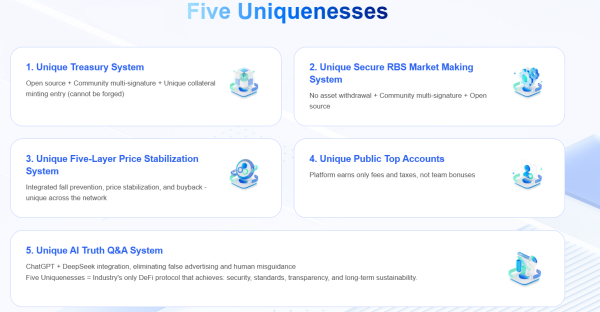
In an ecosystem often defined by rapid change and experimentation, Crypto DAO stands out for its deliberate, principle-driven approach. By centering its design on Security, Stability, and Sustainability—and by rejecting human governance, centralized control, and opaque mechanisms—the project articulates a clear vision of what decentralized finance could become.
Whether Crypto DAO ultimately achieves its ambition of creating a “financial system that cannot do evil” remains to be seen. However, its architecture and philosophy contribute meaningfully to ongoing discussions about trust, governance, and responsibility in blockchain-based systems.
As DeFi continues to evolve, initiatives like Crypto DAO highlight an important truth: the most transformative innovations may not be those that move fastest, but those that are built to last.
Media Contact
Organization: Crypto DAO
Contact Person: Sam kirs
Website: https://cryptodao.it.com
Email: Send Email
Country:United States
Release id:39159
The post Crypto DAO: Building a Financial System That Cannot Do Evil Through On-Chain Governance appeared first on King Newswire. This content is provided by a third-party source.. King Newswire makes no warranties or representations in connection with it. King Newswire is a press release distribution agency and does not endorse or verify the claims made in this release. If you have any complaints or copyright concerns related to this article, please contact the company listed in the ‘Media Contact’ section
About Author

Disclaimer: The views, suggestions, and opinions expressed here are the sole responsibility of the experts. No Digi Observer journalist was involved in the writing and production of this article.

Press Release
The Architecture of Executive Influence: Why High-Performing Operators Struggle to Reach the C-Suite
Brick, New Jersey, Jun 20, 2026, ZEX PR WIRE — In the modern corporate landscape, a recurring paradox exists: high performance in Director through VP roles does not automatically translate into executive promotion. Many mid-career leaders find themselves hitting a professional ceiling because they remain “super-operators” focused on tactical execution rather than enterprise-wide influence. This plateau occurs when organizations emphasize immediate performance while neglecting the underlying leadership architecture required for senior-level advancement.
The Evolution from Execution to Strategy
Transitioning from operational excellence to enterprise-level leadership requires a fundamental shift in how a professional navigates their career. Brian Baldari, a veteran with a 23-year perspective on healthcare systems and executive strategy, posits that leadership transformation must begin with intentional design. Within the ResilExec Coaching framework, this philosophy is described as Strategic Architecture.
Strategic Architecture is a disciplined process for examining the alignment between an executive’s strategic value and their professional visibility within the enterprise. Rather than treating leadership as a collection of motivational principles, this methodology frames it as a structured system. Through this lens, high-potential leaders bridge the gap between tactical execution and enterprise-wide influence, constructing a leadership identity built on trust rather than just positional authority. Baldari notes that while traditional command structures may produce compliance, they rarely generate the long-term commitment required for organizational resilience.
Professional Certainty: The Foundation of Influence
A cornerstone of this transition is the attainment of Professional Certainty. This concept describes the absolute clarity an executive possesses regarding their purpose, influence, and strategic value within an organization. It is framed not as a soft skill, but as a rigorous system designed to align a leader’s intent with their impact.
When leaders operate with this level of clarity, they guide their trajectory with consistency rather than reactive decision-making. This stability forms the foundation of trust. By implementing structured strategy, leaders reinforce both accountability and psychological safety. In this environment, colleagues and stakeholders understand expectations while also recognizing that their perspectives are respected—a combination that encourages higher levels of engagement and long-term commitment.
Structural Wellness and the Visibility Asset
Another defining concept in the transition to the C-suite is Structural Wellness. Brian Baldari describes Structural Wellness as the alignment between authority, responsibility, visibility, and expectation. In many cases, professional friction is rarely a personality conflict; it is a design flaw. It occurs when a leader is given responsibility without the corresponding influence or visibility.
ResilExec addresses this through an intentional audit of how reporting lines and communication patterns either support or sabotage an executive trajectory. Misalignments in these areas gradually erode morale and create instability within organizations. By integrating Structural Wellness assessments into leadership development, Baldari examines how a leader’s current positioning—and the visibility attached to it—impacts their path toward executive influence.
When leaders understand where misalignment exists, they can recalibrate roles and expectations in ways that restore clarity. This architectural approach transforms leadership from a reactive process into a deliberate system of organizational design. By prioritizing Structural Wellness, executives create environments where both performance and wellbeing can coexist.
Strategic Visibility: Moving Beyond the Work
Strategic Visibility is the asset that separates operators from executives. To reach the highest levels of leadership, a professional must transition from being recognized for their work to being recognized for their enterprise-level insight and strategic value.
Brian Baldari frequently emphasizes that authority alone does not guarantee influence. Sustainable influence is constructed through credibility, clarity, and consistent leadership behavior. Leaders must examine how their actions shape perception across various stakeholder groups. While authority may grant initial decision-making power, long-term influence depends on trust and alignment. Organizations are more likely to support leaders who demonstrate consistency, fairness, and strategic awareness.
By shifting from reactive management to Career Certainty Architecture , leaders are equipped to maintain calculated control even in the face of involuntary anomalies or external disruption. This shift represents one of the most important transformations in modern leadership development.
A Model Designed for the Future
ResilExec Coaching was established to address the recurring challenge of high-performing professionals who achieve operational excellence yet struggle to transition into strategic leadership roles. Through structured frameworks such as the Purpose Driven Ascent curriculum, the Visibility Architecture Map, and the Sponsorship Activation System, the program helps leaders construct a deliberate pathway toward executive influence.
These systems guide professionals in:
-
Strengthening strategic visibility.
-
Cultivating internal advocacy and sponsorship.
-
Aligning their work with enterprise priorities.
As organizations continue to navigate technological disruption and workforce transformation, leadership models must evolve. Brian Baldari believes the next generation of executives will be defined by their ability to cultivate trust while maintaining strategic discipline.
The shift from authority to influence is more than a career move; it is a fundamental evolution in how one leads. When organizations are designed around clarity, alignment, and structural integrity, they create environments where professionals can contribute with confidence and purpose. By integrating these principles with structured systems of influence, the ResilExec model aims to equip professionals with tools capable of sustaining both organizational performance and human wellbeing.
About Author
Disclaimer: The views, suggestions, and opinions expressed here are the sole responsibility of the experts. No Digi Observer journalist was involved in the writing and production of this article.
Houston, TX, Jun 20, 2026, ZEX PR WIRE — Salinas Interiors has announced a significant expansion of its project portfolio with the launch of several major residential and commercial design initiatives across Houston. The announcement marks an important milestone for the Houston-based interior design firm as it continues to strengthen its presence in one of the nation’s most active development markets.
The new projects represent a broad cross-section of Houston’s growth, ranging from luxury residential developments and custom home renovations to commercial office environments, retail destinations, and mixed-use properties. As demand for professionally designed spaces continues to rise, Salinas Interiors is responding with a strategic focus on projects that combine functionality, craftsmanship, and long-term value.
The company, led by founder and principal designer Douglas Salinas, has experienced steady growth in recent years as Houston homeowners, developers, and business owners increasingly seek design solutions that enhance both aesthetics and performance. The latest portfolio expansion reflects that momentum and reinforces Salinas Interiors’ position as a trusted design partner throughout the region.
Expanding Across Houston’s Residential Market
Among the newly announced projects are several high-profile residential assignments located throughout some of Houston’s most established and rapidly growing communities. These projects include luxury custom homes, large-scale renovations, and complete interior transformations designed to meet the evolving needs of modern families.
Houston homeowners today are investing more thoughtfully in their living environments. Many are seeking spaces that support remote work, multigenerational living, entertaining, and everyday comfort. Salinas Interiors has responded by creating interiors that prioritize flexibility without sacrificing elegance.
According to Douglas Salinas, today’s residential clients want homes that work harder for them.
“People are spending more time thinking about how their homes function,” Salinas said. “They want spaces that feel comfortable, practical, and personal. Our role is to help bring those goals together in a way that feels natural and lasting.”
The firm’s residential projects will include custom kitchens, primary suite renovations, open-concept living spaces, home offices, and outdoor living environments designed to complement Houston’s lifestyle and climate.
Growing Presence in Commercial Design
In addition to its residential portfolio, Salinas Interiors has secured a number of commercial projects that reflect Houston’s continued business growth. These assignments include office interiors, retail spaces, hospitality environments, and professional service facilities.
The commercial sector has become an increasingly important area of focus for the company. Businesses across Houston are recognizing the impact that thoughtfully designed spaces can have on employee engagement, customer experience, and overall brand perception.
Salinas Interiors approaches each commercial project with a strong emphasis on functionality. The company works closely with business owners and stakeholders to ensure that layouts, finishes, and design elements support operational goals while creating inviting environments.
“Commercial design is about understanding how people interact with a space,” Salinas said. “Whether it’s an office, a retail environment, or a hospitality setting, every design decision should support the way the business operates.”
Several of the new projects involve complete workplace transformations that reflect changing expectations surrounding flexibility, collaboration, and employee well-being.
Collaborating with Houston Developers
A key component of the firm’s recent growth has been its expanding relationships with developers throughout Houston. Salinas Interiors has become increasingly involved in projects during the planning stages, allowing the company to contribute design expertise before construction begins.
This collaborative approach benefits clients by creating greater alignment between architecture, construction, and interior design. It also allows the firm to identify opportunities for improved functionality, material selection, and space utilization early in the process.
Developers have increasingly sought design partners who can provide practical solutions while maintaining strong aesthetic standards. Salinas Interiors has built a reputation for balancing creativity with execution, making the company a valuable contributor to large-scale development efforts.
“Our goal is always to add value,” Salinas said. “When we are involved from the beginning, we can help create spaces that not only look good but also perform effectively for the people who use them.”
Investing in Growth and Capability
To support its growing portfolio, Salinas Interiors has expanded its internal operations and invested in additional resources. The company has strengthened its design team, enhanced project management capabilities, and adopted new technologies that improve communication and planning.
Advanced rendering software now allows clients to experience detailed visual representations of their projects before construction begins. These tools help improve decision-making while reducing uncertainty throughout the design process.
The company has also expanded its network of trusted contractors, vendors, and industry partners. These relationships allow Salinas Interiors to maintain quality standards while managing a growing number of concurrent projects.
Growth, according to company leadership, has been approached carefully and intentionally.
“We have focused on building the right foundation,” Salinas said. “As demand increases, we want to make sure we continue delivering the level of service our clients expect.”
Commitment to Quality and Long-Term Value
While the company continues to grow, its core philosophy remains unchanged. Salinas Interiors emphasizes timeless design principles, durable materials, and practical solutions that deliver long-term value.
Rather than focusing on short-term trends, the company prioritizes spaces that remain functional and appealing for years to come. This approach has resonated with both residential and commercial clients seeking meaningful returns on their investments.
In residential projects, this means creating homes that adapt to changing lifestyles. In commercial settings, it means designing environments that support productivity and business growth.
“Good design should serve people every day,” Salinas said. “Our focus is on creating spaces that continue to work well long after the project is completed.”
Supporting Houston’s Continued Growth
Houston remains one of the fastest-growing metropolitan areas in the United States, creating ongoing opportunities across residential and commercial sectors. Salinas Interiors views its latest projects as part of a larger effort to contribute positively to the city’s development.
The company believes that thoughtful interior design plays an important role in shaping how people experience homes, workplaces, and public spaces. By focusing on quality, collaboration, and functionality, Salinas Interiors aims to support Houston’s growth while helping clients create environments that reflect their goals and values.
As construction begins on many of the newly announced projects, the company expects additional opportunities to emerge throughout the coming year.
“Our success is tied to the success of our clients and our city,” Salinas said. “Houston continues to grow, and we are excited to be part of that story.”
About Salinas Interiors
Salinas Interiors is a Houston-based interior design and interior architecture firm led by Douglas Salinas. The company specializes in residential, commercial, and mixed-use projects, providing services that include interior design, space planning, renovation consultation, project coordination, and design development. Known for its commitment to craftsmanship, functionality, and client collaboration, Salinas Interiors serves homeowners, developers, and businesses throughout the Houston area.
About Author
Disclaimer: The views, suggestions, and opinions expressed here are the sole responsibility of the experts. No Digi Observer journalist was involved in the writing and production of this article.
TeenCycle, a fully offline period tracker for teens, is out now on iPhone and Android — no account, no cloud, no subscription, and nothing it can sell.
United States, 20th Jun 2026 — Laura and her teenage daughter, Mia, spent weeks looking for a period app the two of them could trust. They never found one. So they built it themselves at the kitchen table, and today that app, TeenCycle, arrives for iPhone and Android.

The search started the way it does for most families: they opened the app store and expected to be done in ten minutes. Instead, every tracker wanted something first. The free ones asked for an email and a login before the first entry. The paid ones cost between $40 and $150 a year and behaved like social platforms, with feeds, streaks, and a steady stream of notifications. Several asked a young teen, on day one, whether she was sexually active — a question that doesn’t belong in a fourteen-year-old’s first period app. After comparing the most popular period trackers for teens, Laura kept hitting the same wall: most period apps are advertising businesses with a tracker attached, in a category where the biggest names have drawn lawsuits and regulatory scrutiny over how they handle intimate data.
So the two of them made a different list — not what an app could do, but what it should. It should log a day in one tap. It should never ask a young teen a question that isn’t its business. And it should keep everything on her phone, where no company, not even the one that made it, could see it.
That last principle is the heart of the app. The founders describe it as private by architecture, not by policy — the strongest form of privacy-first period app. A privacy policy is a promise, and a promise from a company that holds your data is only as good as the company. TeenCycle holds nothing: no account, no cloud, no servers, no analytics, no third-party trackers. Everything a user logs lives on the device, and only on the device. There is nothing on the company’s end to leak, sell, or hand over, because there is nothing on the company’s end at all.
The app itself is deliberately small. It opens to three screens: one that shows where you are in your cycle, with a single estimate of when the next period is likely to begin; a calendar that marks logged days in terracotta and likely days in a paler clay; and a settings screen with a dark mode, a one-tap export, and the privacy promise. Logging a day takes a single tap. Streaks, mood logs, community feeds, push notifications, in-app ads, and account creation were all left out on purpose. The list of what the app leaves out is longer than the list of what it keeps.
“We’re not a company with data to sell,” said Laura, who co-founded TeenCycle with Mia. “We’re a family that built the thing we wished existed, for our own daughter first. If we can’t see it, we can’t sell it — and we can’t sell what we don’t have.”
The price follows the same logic. TeenCycle is free to try for seven days, then $9.99 once — never a subscription, no renewals, no second charge. A subscription, the founders decided, would have meant designing for retention: more hooks, more notifications, more reasons to keep a teenager in the app. They wanted the opposite — a tool she opens when she needs it and forgets the rest of the time.
Mia’s main contribution to the design was a list of things to leave out. “I didn’t want an app that wanted to be my friend,” she said. “I just needed to know when my period was probably coming.”
TeenCycle is available now — a private, offline period tracker for teens you can download on the App Store or get it on Google Play. It is free for seven days, then $9.99 once. It is not a medical device and does not provide medical advice; anyone with a health concern should talk to a clinician.

About TeenCycle
TeenCycle is a private period tracker made for teenagers and built by a family. It does the one job a tracker should — log a period and estimate the next one — and nothing else. Everything stays on the phone: no accounts, no cloud, no ads, no analytics. Free for seven days, then $9.99 once, with no subscription. Available on iPhone and Android.
Media contact
TeenCycle
social@teencycle.com
Media Contact
Organization: TeenCycle – katuk llc.
Contact Person: Laura Rooney
Website: http://teencycle.com/
Email: Send Email
Country:United States
Release id:46306
The post A Mother and Daughter Built the Period Tracker They couldn’t Find appeared first on King Newswire. This content is provided by a third-party source.. King Newswire makes no warranties or representations in connection with it. King Newswire is a press release distribution agency and does not endorse or verify the claims made in this release. If you have any complaints or copyright concerns related to this article, please contact the company listed in the ‘Media Contact’ section
About Author
Disclaimer: The views, suggestions, and opinions expressed here are the sole responsibility of the experts. No Digi Observer journalist was involved in the writing and production of this article.
The Architecture of Executive Influence: Why High-Performing Operators Struggle to Reach the C-Suite
Salinas Interiors Announces Major Residential and Commercial Projects Across Houston
A Mother and Daughter Built the Period Tracker They couldn’t Find
Benzinga Money Article Discusses How to Become Part of the 12% of Retirees Who Have Achieved the Recommended $550,000 Minimum Retirement Savings Threshold
Apu Apustaja Conquers New York with Lively Street Ads, Including Times Square Billboard
Bay Smokes Maintains Quality Amid Legislative Changes in the Hemp Industry


-
Press Release4 days ago
FARO Board Bags Expands Premium Surf Gear Line with Durable Surfboard Protection and Sustainable Travel Solutions in the USA
-
Press Release4 days ago
MAMBASNAKE Launches “World Football Season” Mid-Year Sale: Celebrate the Spirit of the World Cup with Elite Gaming Gear
-
Press Release1 week ago
MarketAnywhere Sets the National Standard for Best Flyer Distribution and Door-to-Door Marketing in the United States
-
Press Release1 week ago
The Surgeon Everyone Sees on the Way to the Hamptons: Dr. David Pincus of Pincus Plastic Surgery
-
Press Release1 week ago
isCalculator: The Evolution Of No-Code; Ai Platform Instantly Generates Mathematical Mini-Applications
-
Press Release1 week ago
The Point Elevates Coastal Celebrations with Premier Waterfront Event Venue in Mission Beach, San Diego
-
Press Release1 week ago
Summer Heat and Peak Energy Demand Leave Aliso Viejo Homes Vulnerable to Power Surges
-
Press Release6 days ago
New Music Spotlight: Why Sushmita Srivastava’s “Aa Sama Le” Deserves a Place on Your Playlist