
Press Release
ADS’s Fortune Gold Mine: Contribution Miners’ Fees

On public chains such as Bitcoin or Ethereum, anyone can read and write data. Reading data is free, but it costs a certain amount to write data to the public chain. This overhead helps prevent spam and protects its security through payment. Any node on the network (each connected device containing a copy of the ledger is called a node) can participate in a method called mining to protect the network. Since mining requires computing power and electricity fees, miners need to be paid for their services. This is also the origin of miners’ fees.
However, the problems caused by miners in mining have become increasingly prominent:
Electricity bill
The “mining” of the graphics card requires a long time to fully load the graphics card, the power consumption will be quite high, and the electricity bill will be higher and higher. Many professional mines at home and abroad are located in areas where electricity costs are extremely low, such as hydropower stations, and more users can only mine at home or in ordinary mines, so electricity costs are naturally not cheap. There was even a case where someone in a certain community in Yunnan carried out crazy mining, which caused a large area of the community to trip and the transformer was burned out.
Hardware expenditure
Mining is actually a competition of performance and equipment. Some mining machines are composed of more such graphics card arrays. When dozens or even hundreds of graphics cards come together, various costs such as hardware prices are inherently high. There are considerable expenditures. In addition to graphics card-burning machines, some ASIC (application-specific integrated circuit) professional mining machines are also on the battlefield. ASICs are specially designed for hash calculations and their computing power is also quite strong, and because their power consumption is much lower than that of graphics cards, Therefore, it is easier to scale up, and electricity costs are lower. It is difficult for a single sheet to compete with these mining machines, but at the same time, the cost of such machines is also greater.
Currency security
Bitcoin withdrawal requires up to hundreds of keys, and most people will record this long string of numbers on the computer, but frequent problems such as damage to the hard disk will cause the key to be permanently lost, which also leads to The loss of Bitcoin.
System risk
System risk is very common in Bitcoin, and the most common one is fork. The fork will cause the price of the currency to fall and the mining revenue will drop sharply. However, many situations have shown that the fork will benefit the miners. The forked altcoins also need the mining power of the miners to complete the process of minting and trading. In order to win more miners, the altcoins will provide more block rewards and rewards. Handling fees to attract miners. Instead, risk has made miners.

ADS’s ring resonance proof of stake algorithm (Λ Proof of Stake, APoS) perfectly solves the problems of energy consumption, cost, and safety caused by mining. According to the APoS algorithm, the circulation of ADS is 100 million, and 931374.57 ADSs are used as “startups”. In addition to the “fuel” airdrop to the users of the former 123 ring nodes, APoS mined a total of 99,068,625.43, of which 10% will be rewarded to ADS promoters as a contribution miner fee, which we call DAO maintenance node miner fee.
DAO maintenance node miner fee
According to the ADS ring resonance algorithm, 10% is rewarded to the ecological DAO maintenance node (4% is given to the ecological maintenance (community recommends on the exchange, self-made website marketing, publicity through professional media, recommends the new currency to the exchange, introduces dapp applications, etc.), public Chain maintenance nodes, weighted and averagely distributed according to node computing power, dividends once a week; 4% to voting community nodes, community evaluation once a week, flashback rewards according to ranking, once a week, the top three communities each reward 0.3% 0.2% 0.1% , The fourth to tenth communities will be rewarded 0.05%. Voters will be given a weighted average distribution of 1.05% according to the number of votes. The new currency voting on the exchange will be given a weighted average dividend of 2% according to the number of votes of the voters; 2% will be rewarded to the promotion master, and users will be rewarded with currency holdings and flashback rankings. Reward 0.3% 0.2% 0.1% respectively, the fourth to tenth reward 0.05%, and the average distribution of 0.95% to the promoters of the website produced according to the requirements).
Contribution is strength, contribution is revenue, contribution is consensus. This is the greatest feature of ADS’s ring resonance equity proof algorithm. I hope that all ADS miners can obtain their own wealth of gold mines.

About Author

Disclaimer: The views, suggestions, and opinions expressed here are the sole responsibility of the experts. No Digi Observer journalist was involved in the writing and production of this article.

Press Release
Explora Books Concludes BIBF 2026, Connecting Independent Authors with Global Audiences

Explora Books concluded its participation in the 2026 Beijing International Book Fair (BIBF), held June 17–21 at the China National Convention Center (CNCC). The company showcased a curated selection of titles by independent and self-published authors at one of Asia’s leading publishing events.
Vancouver, British Columbia, Canada, 29th Jul 2026 – Throughout the five-day fair, Explora Books exhibited alongside major publishing houses such as Penguin Random House and Macmillan Publishers, reflecting the growing visibility of independently published works within the international publishing landscape. The company also organized a series of author signing events, creating opportunities for independent authors to engage directly with readers and industry professionals.

On June 18, author David Tuttle attended the fair in person for a signing event, meeting visitors at the Explora Books booth and signing copies of his book, Soul Licensed: Tips and Tales.
A series of virtual book signings followed, extending participation to authors unable to travel to Beijing. Claudette McLennon joined remotely on June 18, while Dr. Donald Steele and Stewart T. Monti Sr. each participated in live virtual sessions on June 19.
Together, the in-person and virtual signings demonstrate how Explora Books pairs traditional exhibition space with hybrid programming to connect independently published titles with booksellers, rights buyers, and readers worldwide. The Beijing fair adds to Explora Books’ growing record of international exhibitions, including the 2025 and 2026 London Book Fair, the 2025 Manila International Book Fair, and the 2025 Frankfurter Buchmesse.
Explora Books will next exhibit at the 2026 Manila International Book Fair, scheduled for September 9–13, at Booths 2-56 and 2-57. The event will introduce independent authors to booksellers, librarians, educators, and publishing professionals across Southeast Asia.
For updates on upcoming exhibitions, featured titles, and author services, visit the official Explora Books website.
About Explora Books
Explora Books is a book marketing firm located in the heart of Vancouver, British Columbia, Canada. The company specializes in self-publishing and marketing, taking pride in its exhaustive research and creative strategies that provide wider avenues for aspiring authors to gain recognition for their works. Explora Books aims to guide authors through the complexities of self-publishing, offering convenient solutions to navigate this process. The firm fosters and redefines creativity and innovation, setting new industry standards. Explora Books is dedicated to empowering authors globally.
Media Contact
Organization: Explora Books Ltd
Contact Person: Simon Pratt
Website: https://explorabooks.com/home
Email: Send Email
Contact Number: +16043306795
Address:Jameson Offices, 838 W Hastings St w, Vancouver, BC V6C 0A6, Canada
City: Vancouver
State: British Columbia
Country:Canada
Release id:47663
The post Explora Books Concludes BIBF 2026, Connecting Independent Authors with Global Audiences appeared first on King Newswire. This content is provided by a third-party source.. King Newswire makes no warranties or representations in connection with it. King Newswire is a press release distribution agency and does not endorse or verify the claims made in this release. If you have any complaints or copyright concerns related to this article, please contact the company listed in the ‘Media Contact’ section
About Author

Disclaimer: The views, suggestions, and opinions expressed here are the sole responsibility of the experts. No Digi Observer journalist was involved in the writing and production of this article.
Real estate developer, author, and business strategist Esteban Merlo has announced the release of The Real Estate Developer’s Journal, a practical resource designed to help developers, investors, and entrepreneurs organize ideas, document projects, and strengthen strategic decision-making throughout the real estate development process.
Miami, Florida, United States, 29th Jul 2026 — Esteban Merlo, real estate developer, author, and business strategist, has announced the release of his first English-language book, The Real Estate Developer’s Journal, a practical resource created for entrepreneurs, investors, developers, and business professionals interested in the strategic side of real estate development.

The publication reflects Esteban Merlo’s perspective that successful real estate projects begin long before construction. Through a collection of ideas, reflections, and practical insights, the book explores the importance of strategic planning, disciplined execution, leadership, market intelligence, and long-term decision-making.
Rather than focusing exclusively on construction, The Real Estate Developer’s Journal encourages readers to understand the broader business principles that influence successful development projects.
“Real estate development is about much more than building structures,” says Esteban. “It begins with vision, strategy, preparation, and the discipline to make thoughtful decisions over time.”
The book is designed as a companion for professionals who want to strengthen their strategic thinking while documenting ideas, goals, observations, and lessons learned throughout their professional journey.
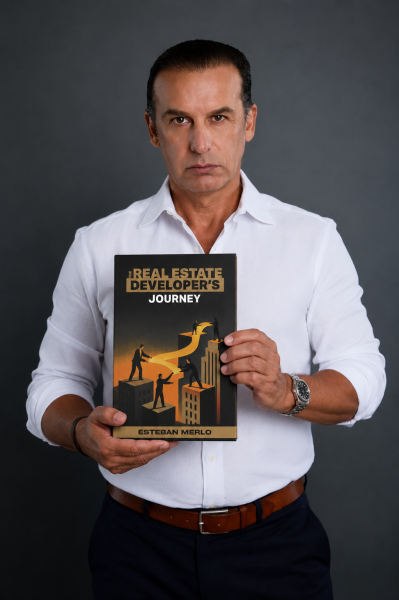
According to Merlo, every successful project begins with clarity. The journal encourages readers to organize their thinking, evaluate opportunities, identify risks, and maintain a long-term perspective while navigating an increasingly competitive real estate industry.
The publication also reflects Merlo’s belief that leadership and business growth are closely connected to continuous learning and disciplined execution. By combining practical guidance with space for personal reflection, the journal is intended to become an ongoing resource rather than a book that is read once and placed on a shelf.
Beyond real estate, The Real Estate Developer’s Journal presents principles that apply to entrepreneurship, leadership, investment strategy, and professional development. Readers are encouraged to think beyond short-term results and focus on creating sustainable value through preparation, consistency, and strategic decision-making.
The release represents another step in Esteban Merlo’s commitment to sharing educational content for professionals involved in business, leadership, investment, and real estate development.
As interest in real estate education continues to grow worldwide, The Real Estate Developer’s Journal aims to provide a practical framework that helps readers organize ideas, improve decision-making, and develop a more strategic approach to long-term success.
About Esteban Merlo
Esteban Merlo is a real estate developer, author, and business consultant. His work focuses on real estate development, strategic planning, leadership, investment strategy, and sustainable business growth. Through his writing and professional projects, Esteban Merlo shares practical insights designed to help entrepreneurs and real estate professionals make better long-term decisions.
For more information, visit: https://www.estebanmerlo.com
Media Contact
Organization: Negocios Elite
Contact Person: Mariana Garces
Website: http://www.negocioselite.com
Email: Send Email
Contact Number: +13052446025
Address 2: Miami, Florida 33130
City: Miami
State: Florida
Country:United States
Release id:47661
The post Esteban Merlo Announces the Release of The Real Estate Developer’s Journal appeared first on King Newswire. This content is provided by a third-party source.. King Newswire makes no warranties or representations in connection with it. King Newswire is a press release distribution agency and does not endorse or verify the claims made in this release. If you have any complaints or copyright concerns related to this article, please contact the company listed in the ‘Media Contact’ section
About Author
Disclaimer: The views, suggestions, and opinions expressed here are the sole responsibility of the experts. No Digi Observer journalist was involved in the writing and production of this article.
Press Release
Experience the Real Japan – Interactive Sumo Experience for Visitors to Tokyo Launched
Fight a Real Sumo Wrestler in Japan’s Interactive Sumo Entertainment Experience. One of Tokyo’s Most Unique Cultural Experiences!
Tokyo, Japan, 29th Jul 2026 — Smily Method Co., Ltd. announces the launch of its Sumo Experience at Sunamachi Ginza Sumo Arena, offering visitors to Tokyo the opportunity to watch authentic sumo performances up close and step into the ring to challenge a real sumo wrestler.
Located in Tokyo’s famous Sunamachi Ginza Shopping Street, the experience combines live sumo, English-language cultural explanations, an interactive sumo challenge, and photo opportunities with wrestlers, giving international visitors a unique way to experience one of Japan’s oldest traditions.
If you’re visiting Tokyo, don’t just see Japan—experience it.
Watch powerful sumo wrestlers compete up close, then step into the ring and challenge a real wrestler yourself.
Rather than simply watching Japanese culture, you’ll become part of it. Create memories that will stay with you long after your trip ends.
Experience the Incredible Power of Real Sumo
Feel the Energy Up Close
No television or video can recreate the excitement of authentic sumo.
Hear the thunderous impact as wrestlers collide. Feel the atmosphere. Witness the strength, skill, and tradition of Japan’s national sport from just a few feet away.
Our English-speaking MC explains the history, traditions, and rules of sumo, making it easy and enjoyable for first-time visitors from around the world.
Real Sumo
Step Into the Ring
Challenge a Real Sumo Wrestler
The experience doesn’t end with the show.
At the end of the performance, you’ll have the opportunity to step onto the ring and challenge a real sumo wrestler.
Perfect for families, couples, friends, and solo travelers, this interactive experience has become one of the highlights of many visitors’ trips to Japan.
Win or lose, you’ll leave with unforgettable memories and plenty of laughs.
Challenge a Real Sumo Wrestler
Discover One of Japan’s Oldest Traditions
Learn the Culture Behind Sumo
With a history spanning more than 1,500 years, sumo is one of Japan’s oldest and most respected traditions.
More than just a sport, sumo is deeply connected to Japanese history, culture, etiquette, and Shinto rituals.
During the performance, you’ll not only watch exciting matches but also learn about the customs, ceremonies, and traditions that make sumo one of Japan’s greatest cultural treasures.
Our English-guided performance makes Japanese culture easy to understand and enjoyable for everyone.
Capture the Perfect Japan Memory
Take Photos with Real Sumo Wrestlers
After the performance, guests are invited to take memorable photos with the wrestlers.
Enjoy experiences including:
• Meet real sumo wrestlers
• Step onto the official ring
• Try traditional sumo poses
• Celebrate with a champion’s pose
• Take unforgettable photos and videos with family and friends
It’s one of the most Instagram-worthy experiences in Tokyo.
Explore Sunamachi Ginza Shopping Street
Discover Tokyo Like a Local
Before or after the sumo show, take time to explore the famous Sunamachi Ginza Shopping Street.
This traditional local shopping street is filled with delicious street food, Japanese snacks, grilled skewers, croquettes, sweets, and many other local specialties.
Unlike crowded tourist attractions, Sunamachi Ginza offers a genuine glimpse into everyday life in Tokyo.
We also provide a free shopping street map highlighting recommended food stalls, local shops, and hidden gems to help you enjoy your visit even more.
Experience authentic Tokyo beyond the typical tourist destinations.
Go Beyond Tokyo’s Famous Attractions
Discover Hidden Tokyo
Tokyo is much more than Shibuya, Shinjuku, and Asakusa.
Sunamachi Ginza is one of Tokyo’s most beloved traditional shopping streets, where locals have gathered for generations. Experience authentic Japanese hospitality, traditional food, and local culture while enjoying one of Tokyo’s most unique cultural attractions.
sunamachiginza
Limited-Time Souvenir
Receive Your Name Written in Japanese Kanji
As a special gift for our guests, you’ll receive your name beautifully written in Japanese Kanji characters.
Each name is carefully selected using meaningful Japanese characters, creating a one-of-a-kind souvenir that represents your visit to Japan.
It’s a unique keepsake that you won’t find anywhere else.
Available for a limited time only.
Performance Information
Business Name: Sunamachi Ginza Sumo Stable
Address: 3-38-16 Kitasuna, Koto-ku, Tokyo 136-0073, Japan
Phone: +81 80-2141-9928
https://maps.app.goo.gl/mjUkCB6oNSzTMsxn7
https://share.google/mW0B2UwSBWv986Y22
Street map
Duration: Approximately 90 minutes
Shows: Two performances daily
Admission: 11,000 (Adults)
Children: Free
English-speaking MC
Your Experience Includes:
• Live professional sumo performance
• Interactive sumo challenge with real wrestlers
• Photo session with the wrestlers
• Introduction to Japanese culture, history, and sumo traditions
• English-guided performance
• Free Sunamachi Ginza Shopping
Media Contact
Organization: Smily Method Co., Ltd.
Contact Person: Kizuku Mori
Website: https://www.sunamachi-sumo.com/ja
Email: Send Email
Address:TY’S Sunamachi Building 3-38-16 Kitasuna, Koto-ku, 136-0073
City: Tokyo
Country:Japan
Release id:47616
The post Experience the Real Japan – Interactive Sumo Experience for Visitors to Tokyo Launched appeared first on King Newswire. This content is provided by a third-party source.. King Newswire makes no warranties or representations in connection with it. King Newswire is a press release distribution agency and does not endorse or verify the claims made in this release. If you have any complaints or copyright concerns related to this article, please contact the company listed in the ‘Media Contact’ section
About Author
Disclaimer: The views, suggestions, and opinions expressed here are the sole responsibility of the experts. No Digi Observer journalist was involved in the writing and production of this article.
Explora Books Concludes BIBF 2026, Connecting Independent Authors with Global Audiences
Esteban Merlo Announces the Release of The Real Estate Developer’s Journal
Experience the Real Japan – Interactive Sumo Experience for Visitors to Tokyo Launched
Benzinga Money Article Discusses How to Become Part of the 12% of Retirees Who Have Achieved the Recommended $550,000 Minimum Retirement Savings Threshold
Apu Apustaja Conquers New York with Lively Street Ads, Including Times Square Billboard
Bay Smokes Maintains Quality Amid Legislative Changes in the Hemp Industry


-
Press Release5 days ago
Post Oak Group Advises on Successful Sale of Philadelphia-Based Computer Solutions Business to Search Fund-Backed Acquirer
-
Press Release5 days ago
Harborstone Point Advisors Expands Revenue Cycle Management and Financial Advisory Services for Behavioral Health Organizations
-
Press Release4 days ago
All Thingz Electric Expands EV Charger Installation Services Across South Orange County to Meet Growing Demand
-
Press Release5 days ago
Anime Expo 2026 Jaadugar A Witch in Mongolia Reveal Behind-the-Scenes Insights and Anime Secrets
-
Press Release4 days ago
RELVE Q2 Report Reveals AI Hype Gap After Analyzing 1.59M Data Points and 23,000 Tools
-
Press Release4 days ago
23 Years, One Question: “Diaoyu Dao: Small Islands, Big Stakes” — A CGTN Documentary
-
Press Release4 days ago
Ken Behr Turns Years as a DEA Cooperating Source Into True Crime Podcast Crime Nightly
-
Press Release4 days ago
Pink Panthers Painting Brings Neighborhood-Specific Painting Expertise to Ten Dunwoody Communities