
Press Release
Cathy Sun Analysed Upgrade And Innovation Of Digital Asset Encryption Technology

New York, NY-Cathy Sun, the CEO of the Blockchain News Portal Linlu Media, expressed her ideas on the future of digital asset encryption technology during an interview.
Nowadays, as cryptocurrency reaches an unprecedented popularity and digital assets are fast becoming the order of the day, innovation in digital asset encryption technology is the need of the hour. It goes without saying that beefing up the security of a blockchain infrastructure requires some serious innovation and that’s where many crypto exchanges need to step up their game. Upgrading and innovation of digital asset encryption technology, therefore, remains on the priority list of many crypto exchanges.
“Cryptocurrencies and all types of digital assets are reliant on highly encrypted and secure agreement that validates all transactions and empowers the decentralized economy. As blockchain-based decentralized economy is growing by leaps and bounds, it is now time for the players on the market to upgrade and enhance the security of the decentralized networks. This would result in the networks and exchanges offering improved security to the end users – the investors. “Cathy Sun told the press.
In a bid to encourage more and more crypto exchanges and crypto advisors in exploring the scope for innovation, investor guides and whitepapers need to be published. Securing the blockchain-based economy would drive the next innovation wave in the cryptocurrency industry for sure, and investor guides and related literature would also increase alongside.
Rapid advances in the processing power of high-end computing systems and developments on the quantum computing front have spelled the need for quantum-compliant encryption solutions for the blockchain technology. Top exchanges and crypto experts believe this would propel the blockchain-based economy to its next level, where the technology would start to be globally adopted. While many tech experts and crypto analysts have pointed out the need for quantum-compatible digital assets before, more market-driven innovations are likely to emerge in the coming days.
“This is quite important for both crypto investors and the global blockchain community. The aggregate value of the crypto industry worldwide is based on the security mechanism adopted by current crypto exchanges. There is already an investment opportunity of securing the future of the decentralized economy and many players on the market are working in that direction.” Sun continued.
The independent providers of blockchain technology also realize the importance of upgrade and innovation of digital asset encryption technology to a large extent. These independent providers cater to the professional community of crypto analysts and investors and offer myriad investment and financial solutions. Thanks to the advanced digital asset encryption technology, companies like ETH2 AI digital assets exchange are well regulated.
“Disruptive innovation certainly needs a disciplined and methodical approach toward risk mitigation and investor education. “the CEO concluded.
Contact:
Lunlu Media
Cathy Sun
1 (321) 800-3487
About Author

Disclaimer: The views, suggestions, and opinions expressed here are the sole responsibility of the experts. No Digi Observer journalist was involved in the writing and production of this article.

Las Vegas, NV, October 1st, 2026, Chainwire
Lowest Fee Bitcoin ATMs announced the launch of more than 400 cryptocurrency ATMs across the United States. The machines allow customers to purchase Bitcoin, Ethereum, USDT and USDC with cash at a stated flat 5% fee. Customers can also pre-register online before visiting an ATM.
Lowest Fee Bitcoin ATMs, a new nationwide low-fee Bitcoin ATM operator, launched today with an initial rollout of more than 400 Bitcoin ATMs across the United States, a footprint that places it amongst the largest Bitcoin ATM operators in the country on its first day. It also launched with a name that does most of the marketing department’s job for it. The brand charges a flat 5% Bitcoin ATM fee to buy Bitcoin, Ethereum, USDT or USDC with cash, displays the fee and exchange rate on screen before the customer confirms, and, as of today, lets first-time customers register online in about two minutes so they can skip onboarding at the machine entirely.
400+ Bitcoin ATM locations on day one
Most Bitcoin ATM operators in the U.S. run a few dozen machines. Lowest Fee Bitcoin ATMs opens with more than 400 Bitcoin ATM locations in the convenience stores, gas stations and shopping centers people already visit, with machines in Florida, California, Arizona and Texas among other states, as the first phase of a larger rollout.
“Four hundred machines is not a pilot. It’s a network,” said Quincy Mathis, Operations Manager at Lowest Fee Bitcoin ATMs. “We wanted to be one of the biggest Bitcoin ATM operators in the country on the day we opened, because a low fee only matters if there’s a machine near you. This is phase one.”
Buy Bitcoin, Ethereum, USDT and USDC with cash: coins, limits and one fee
Every Lowest Fee Bitcoin ATM sells Bitcoin (BTC), Ethereum (ETH), Tether (USDT) and USD Coin (USDC) for cash, all at the same 5% fee, all sent directly to the customer’s own wallet. No bank account or credit card is needed. The machines are non-custodial: the company never holds customer funds.
Bitcoin ATM daily limits are set by verification tier:
- Tier 1, phone number only: up to $2,000 per day
- Tier 2, government ID and Tax ID: up to $50,000 per day
Bitcoin ATM fees compared: what $1,000 buys
The typical Bitcoin ATM in the United States charges roughly 12% to 15% to buy, and some of the largest national brands charge 20% or more. Here is what that looks like when a customer walks up with $1,000 in cash:

Illustrative, based on posted percentage fees only and before exchange rate. Many operators add an exchange-rate markup on top of the posted fee; Lowest Fee Bitcoin ATMs shows both the fee and the rate on screen before a transaction is confirmed. Industry figures reflect publicly reported U.S. Bitcoin ATM fee ranges. See how the Bitcoin ATM fees compare.
At a 20% machine, one dollar in every five never becomes crypto. At Lowest Fee Bitcoin ATMs, it’s one in twenty. The name is not subtle; neither is a 20% fee.
“We wanted a rate people can look at on the receipt and feel good about, not one they have to make peace with,” said Quincy Mathis. “Five percent, shown up front, with the exchange rate right next to it. That’s the whole pitch.”
Stablecoin ATMs are becoming the way people send money overseas
A growing share of customers are using the machines as USDT and USDC ATMs, buying dollar pegged stable coins to send money to family and friends overseas and to pay suppliers and contractors abroad. A customer inserts cash, the stable coins arrive in the recipient’s wallet within minutes, and the recipient holds dollars they can keep or cash out locally. No wire counter, no multi-day wait, and no bank account needed to send.
That makes the fee gap matter more, not less. Someone sending $1,000 home once a month pays about $600 a year in fees at a 5% machine, $1,440 to $1,800 at a typical machine, and $2,400 at a 20% machine. The difference is real money to the people who can least afford to lose it, which is why low fees matter most to remittance customers.
“The people using stable coins to support family abroad are exactly the people who shouldn’t be paying 20% for the privilege,” said Quincy Mathis.
How to use a Bitcoin ATM: four steps, under two minutes, now with online pre-registration
New with today’s launch is online Bitcoin ATM pre-registration. First-time customers can pre-register online before they ever visit a machine, so the first visit is as fast as the tenth. At any of the 400+ machines, they simply enter their phone number.
- Register online, once. About two minutes on a phone.
- Walk up and enter your phone number. The machine recognizes you. No paperwork at the kiosk.
- Pick a coin, scan your wallet, insert cash. Scan your wallet’s QR code and feed in the bills.
- Check the screen and confirm. The fee and exchange rate are displayed before you press anything. Crypto lands in your wallet within minutes.
Customers who would rather register at the machine still can. It just takes a little longer, and the company would like to gently point out that it no longer has to. A full walkthrough of how a Bitcoin ATM works is on the company’s website.
Compliance, briefly
Lowest Fee Bitcoin ATMs is a FinCEN-registered money services business, and every machine operates in compliance with federal and state regulations. Customer data is encrypted, and transactions are non-custodial and irreversible. No government agency, bank, utility or tech-support line will ever ask anyone to pay them at a Bitcoin ATM; if someone does, it is a scam. Common questions are answered in the company’s Bitcoin ATM FAQ.
Find a low-fee Bitcoin ATM near you
Lowest Fee Bitcoin ATMs are live now at 400+ locations across the United States, with further phases of the rollout to follow. Customers can find a Bitcoin ATM near them and pre-register at lowestfeebitcoinatms.com. New customers can use code LOWEST at the machine for 20% off the transaction fee, which brings the fee on that $1,000 transaction down to $40.
About Lowest Fee Bitcoin ATMs
Lowest Fee Bitcoin ATMs is a nationwide low-fee Bitcoin ATM operator whose initial network of more than 400 machines ranks among the largest in the United States. Customers can buy Bitcoin, Ethereum, USDT and USDC with cash for a flat 5% fee, with the fee and exchange rate displayed on screen before every transaction. The company is a FinCEN-registered money services business. Users can learn more at lowestfeebitcoinatms.com.
Contact
Marketing Director
Brian S. Smith
Lowest Fee Bitcoin ATMs
support@lowestfeebitcoinatms.com
About Author

Disclaimer: The views, suggestions, and opinions expressed here are the sole responsibility of the experts. No Digi Observer journalist was involved in the writing and production of this article.
Press Release
i-payout Expands True Local Payment Capabilities to Help Enterprises Pay Recipients Globally

Fort Lauderdale, USA, October 1st, 2026, FinanceWire
Local payment infrastructure is designed to help marketplaces, gig economy platforms, gaming and esports companies, insurance providers, affiliate networks, clinical research organizations and other enterprises deliver funds through domestic payment rails in local currency
International Payout Systems, Inc. (“i-payout”), a global provider of payment and payout technology, today announced the continued expansion of its true local payment capabilities as part of the company’s broader strategy to help enterprises manage increasingly complex domestic and global payout programs.
For i-payout, a true local payment means funds delivered through domestic payment rails directly to a recipient’s local bank account in the recipient’s local currency — not through SWIFT and not through an international wire.
That distinction is becoming increasingly important for enterprises that need to pay large and geographically dispersed recipient populations across multiple countries, currencies and payment methods.
Marketplaces may need to pay thousands of sellers and merchants. Gig economy and freelance platforms may need to compensate independent workers across dozens of markets. Gaming and esports companies may need to pay players, creators, affiliates and tournament participants. Insurance companies may need to distribute claims and reimbursements, while clinical research organizations may need to compensate study participants across multiple jurisdictions.
Although the use cases differ, the underlying challenge is similar: delivering funds securely and efficiently while supporting different payment methods, currencies, banking systems and regulatory requirements.
i-payout’s payment infrastructure is designed to help enterprises manage those complexities through a configurable technology platform.
Global Reach With a Local Payment Experience
Traditional cross-border payments frequently rely on correspondent banking networks and international wires to move funds between countries.
i-payout’s local payment strategy is designed to provide another path: delivering payments through domestic payment networks in the recipient’s market.
This approach can help create a more localized payment experience for recipients while giving enterprises additional flexibility in how they structure their global payout programs.
“When we say local payments, we mean truly local,” said Eddie Gonzalez, Founder and Chief Executive Officer of i-payout. “The payment travels through domestic payment rails and is delivered to the recipient’s local bank account in local currency. It is not simply an international wire that happens to end in another country.”
“Our customers operate globally, but the people they pay live and work locally,” Gonzalez added. “Our objective is to bridge those two realities by giving enterprises global reach while creating payment experiences that make sense in each local market.”
Multiple Payment Options Through One Platform
Beyond local bank payments, i-payout supports multiple payment and payout methods designed to give enterprises and their recipients greater flexibility.
Depending on market availability, program structure and regulatory requirements, those capabilities can include:
- Local bank payments
- Virtual and physical cards
- Digital wallets
- Real-time payment capabilities
- Alternative payment methods
- API-driven payment orchestration
- Recipient onboarding and identity verification
The combination allows enterprises to provide recipients with payment options appropriate to their market while managing those programs through a more unified technology environment.
Supporting Multiple Industries and Payment Use Cases
i-payout’s infrastructure supports enterprises across a range of industries and high-volume payment programs, including:
- Marketplaces: seller, merchant and participant payouts
- Gig Economy & Freelance: contractor and worker payments
- Gaming & Esports: player, creator, affiliate and tournament payouts
- Affiliate & Performance Marketing: commission payments
- Direct Selling: distributor and commission payments
- Insurance: claims, reimbursements and other disbursements
- Clinical Trials & Market Research: participant and research payments
- Refunds & Reimbursements: consumer refunds and corporate reimbursement programs
- Enterprise & Global Workforce: high-volume domestic and international disbursements
“Every industry has different payment requirements, but enterprises increasingly want fewer integrations, greater visibility and more control over how payments are delivered,” Gonzalez said. “Our role is to provide the infrastructure that allows businesses to manage those different payment experiences through one configurable platform.”
Building a More Connected Global Payments Infrastructure
The continued development of i-payout’s local payment capabilities complements the company’s broader investment in regulatory infrastructure, payment technology and compliance.
Earlier this month, i-payout announced the continued expansion of its U.S. money transmitter licensing footprint and advancement of its European Electronic Money Institution strategy.
Together, these initiatives are intended to give i-payout greater control over the payment infrastructure supporting its customers and expand the range of capabilities it can provide as enterprise payment programs grow.
“Global payments should not require enterprises to build a different technology stack for every country they enter,” Gonzalez said. “We are building toward an infrastructure where businesses can manage global payout programs through one relationship while giving recipients payment options that work locally.”
About i-payout
International Payout Systems, Inc. (“i-payout”) is a global payments technology company providing configurable payment and payout solutions for businesses and organizations that need to distribute funds to recipients domestically and internationally.
Founded in 2007, i-payout supports multiple payout methods and serves enterprises across industries including marketplaces, gig economy and freelance, gaming and esports, affiliate marketing, direct selling, insurance, clinical research, market research, refunds and reimbursements, and other high-volume payment programs.
i-payout’s technology combines payment orchestration, recipient onboarding, identity verification, compliance capabilities, APIs, digital wallets and program-management tools within a unified enterprise payment environment.
For more information, users can visit www.i-payout.com.
For further information, contact i-payout at discover@i-payout.com.
Contact
VP Customer Success & Relationship Management
Dailenys Garcia
i-payout
dailenys.garcia@i-payout.com
9545133151
About Author
Disclaimer: The views, suggestions, and opinions expressed here are the sole responsibility of the experts. No Digi Observer journalist was involved in the writing and production of this article.
Community leaders, humanitarian advocates and peacebuilders gathered at the Church of Scientology London to mark the UN International Day of Peace and examine how human rights, education and local action contribute to peaceful communities.
Brussels, Brussels, Belgium, 1st Oct 2026 — Community leaders, humanitarian advocates and peacebuilders from across London gathered at the Church of Scientology London for a round-table discussion marking the United Nations International Day of Peace, with participants focusing on the practical contribution individuals and civil society can make to building more peaceful communities.
The gathering reflected the 2026 United Nations theme, “Invest in Peace – For Everyone, Everywhere, Every Day,” which places particular emphasis on people working at community level to bridge divisions, strengthen dialogue and create the conditions for lasting peace. The International Day of Peace is observed annually on 21 September and was established by the UN General Assembly in 1981.
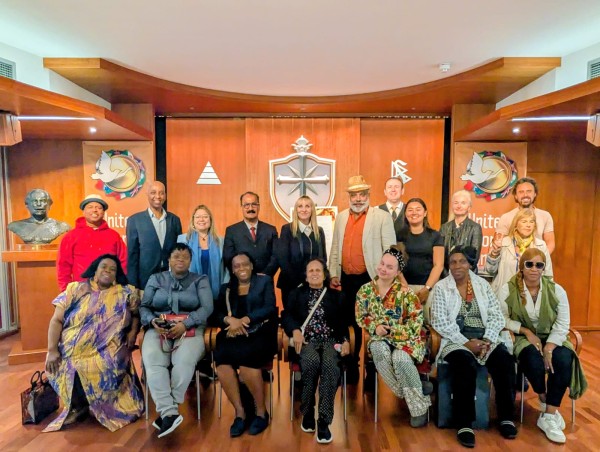
Rather than approaching peace solely as a question for governments and international institutions, speakers at the London meeting explored its connection with everyday choices, human rights education, humanitarian work and community responsibility.
Lorna Marah, a Peace Ambassador, United Nations Women Advocate and member of the UK Civil Service Women Alliance, described peace as something requiring deliberate effort rather than something that emerges by itself.
“Peace is not accidental. It is intentional. It is crafted through our choices, our leadership, our compassion, and our willingness to challenge the norms that divide us,” Marah said. “Peace is a design project and every one of us is a designer.”
Her remarks echoed an important element of this year’s UN observance: recognition of the role played by people whose work in neighbourhoods, schools and communities helps create stability, dialogue and cooperation from the ground up.
The discussion also brought a humanitarian perspective through Eleanor Daibowon Moore, the London-based founder of Eleanor’s Children Foundation, which works in Liberia with young orphans and widows, including through projects intended to support sustainable livelihoods and greater independence.
“Peace is a ship — a responsibility, which needs our care and help,” Moore told participants.
Her contribution placed economic independence, care for vulnerable people and community support within the wider discussion about the conditions in which peaceful societies can develop.
Suraiya Kassamally of Rotary Club London presented another approach to peacebuilding, briefing participants on the work of the Rotary Peace Centers and their international fellowship programme.
Since the programme began in 2002, more than 1,900 fellows have received training through Rotary’s peace fellowship programme, with alumni working internationally in government, civil society, education, peacebuilding and related fields.
“We all need peace now — more than ever before,” Kassamally said.
Human rights education as part of peacebuilding
A central theme of the London discussion was the relationship between peace and knowledge of fundamental human rights.
Tracey Coleman, Community Affairs Director of the Church of Scientology London, highlighted human rights education as one means of addressing intolerance, bullying and discrimination before they become entrenched within communities.
“Peace has everything to do with human rights,” Coleman said. “Where we see lack of harmony, where we see bullying, we see violations of human rights.”
“We must join hands, work together in positive action and make sure our youth know their 30 human rights. We must not only ‘know’ these rights but apply them in our lives to bring about a world with respect and tolerance.”
The Church supports the educational work of Youth for Human Rights International, a nonprofit initiative that presents the 30 articles of the Universal Declaration of Human Rights in formats designed for young people and educators. Its resources include booklets, audiovisual materials and educator materials intended to make the principles of the Declaration understandable and applicable in daily life.
The support forms part of the wider humanitarian and social initiatives associated with the Church of Scientology and inspired by its founder, L. Ron Hubbard, including programmes concerned with human rights education, drug prevention, literacy and community service.
The London round table placed that work alongside the experience of other organisations and advocates, illustrating how people from different professional, humanitarian and civic backgrounds can find common ground around dignity, responsibility and peaceful coexistence.
Ivan Arjona, representative of the Church of Scientology to the European Union, OSCE, Council of Europe and United Nations, proposed the following reflection on the gathering:
“Europe’s experience has repeatedly shown that peace cannot be separated from human dignity and fundamental rights. Those principles acquire their full meaning when they become part of everyday life — in our schools, neighbourhoods, institutions and relationships with people whose beliefs or backgrounds may differ from our own. Meetings such as this bring together people with very different experiences around a shared responsibility: turning respect, dialogue and human rights into daily practice.”
The emphasis on human dignity is consistent with the UN’s approach to peace as more than the absence of conflict, connecting it with safety, dignity, opportunity, cooperation and respect for fundamental rights.
The International Day of Peace was created by the United Nations General Assembly in 1981. In 2001, the General Assembly strengthened the observance by designating 21 September as a day of non-violence and ceasefire. The annual observance has since developed into an international occasion for governments, organisations and communities to examine how dialogue, education, human rights and cooperation can contribute to more peaceful societies.
The London gathering reflected that community-level interpretation of peace: not as a single annual event, but as a continuing process involving education, cooperation and respect across differences.
About the Church of Scientology in Europe
The Church of Scientology, founded on the religious and philosophical works of L. Ron Hubbard, maintains churches, missions, groups and members throughout the European continent. Scientologists support a range of educational and community initiatives addressing human rights awareness, drug prevention, moral education and volunteer service. The Church and its affiliated religious communities have obtained various forms of religious and charitable recognition in European jurisdictions as their presence and engagement with civil society have developed across the continent. Its humanitarian programmes continue to place emphasis on education, prevention and practical community betterment.
Media Contact
Organization: European Office Church of Scientology for Public Affairs and Human Rights
Contact Person: Ivan Arjona
Website: https://www.scientologyeurope.org
Email: Send Email
Address: Boulevard de Waterloo 103
City: Brussels
State: Brussels
Country: Belgium
Release id: 49602
The post London Peace Day Round Table Links Human Rights Education with Everyday Peacebuilding appeared first on King Newswire. This content is provided by a third-party source.. King Newswire makes no warranties or representations in connection with it. King Newswire is a press release distribution agency and does not endorse or verify the claims made in this release. If you have any complaints or copyright concerns related to this article, please contact the company listed in the ‘Media Contact’ section
About Author
Disclaimer: The views, suggestions, and opinions expressed here are the sole responsibility of the experts. No Digi Observer journalist was involved in the writing and production of this article.
Lowest Fee Bitcoin ATMs Announces Launch of More Than 400 ATMs Nationwide
i-payout Expands True Local Payment Capabilities to Help Enterprises Pay Recipients Globally
Japan’s Longest Loop long trail, the Hitachi-no-kuni Long Trail, Fully Opens
Benzinga Money Article Discusses How to Become Part of the 12% of Retirees Who Have Achieved the Recommended $550,000 Minimum Retirement Savings Threshold
Apu Apustaja Conquers New York with Lively Street Ads, Including Times Square Billboard
Bay Smokes Maintains Quality Amid Legislative Changes in the Hemp Industry


-
Press Release1 week ago
Thomas Berkley of Nexus Acquisition AI Introduces Smarter Client Acquisition Strategies for Service Businesses
-
Press Release6 days ago
Results Digital Expands Website Design Offerings for General Contractors in Houston TX
-
Press Release6 days ago
Just Keepers Spotlights Keeper iD’s New Range of Junior Goalie Gloves
-
Press Release5 days ago
Piya Saliba Releases Free Community Connection Checklist to Help People Build Stronger Relationships
-
Press Release6 days ago
Whimsical Halloween Wardrobe Ready: Arshiner Kids’ Outfits Light Up the Trick-or-Treat Adventure
-
Press Release5 days ago
Gary Bassett Shares Lessons From 45 Years Across Finance and Technology
-
Press Release6 days ago
Painted Brick Digital Named Among Expertise.com’s Top 8 Legal Marketing Companies in Scottsdale
-
Press Release5 days ago
Nivia Fontanez Highlights the Often-Overlooked Role of Radiology Technologists in Patient Care