
Press Release
When Gatekeepers Exploit the Public Markets: How Aggressive Micro-Cap Structuring Ruined It for Everyone

The micro-cap IPO window did not close by accident. It did not shut because investors suddenly lost interest in growth companies, nor because capital vanished from the system. It narrowed because structural flexibility was pushed too far, for too long, and in ways that ultimately forced a response.
Between 2021 and 2025, U.S. IPO activity moved through distinct but related phases, with a meaningful share concentrated in small and micro-cap offerings. The early part of that period was marked by abundant liquidity and elevated risk appetite. Capital was readily available, speculative enthusiasm was high, and smaller issuers found receptive audiences. As broader market conditions tightened — rising rates, declining valuations, and more selective institutional capital — access became more constrained. But micro-cap deal activity did not disappear. Instead, structures became more complex, more aggressive, and in some cases more dependent on volatility itself to sustain capital formation.
Many of these offerings raised under $50 million. Some were far smaller. On the surface, the activity suggested that emerging companies still had viable pathways into the public markets even as larger IPO windows fluctuated. It appeared to represent resilience at the smallest tier of the exchange ecosystem.
But beneath that surface, structural vulnerabilities were becoming increasingly visible.
Low public float, thin liquidity, layered financing instruments, and capital structures highly sensitive to short-term trading dynamics created an environment where price spikes were common and reversals were swift. In some instances, the very features that made entry possible also amplified instability after listing. Retail investors frequently entered during upward momentum, only to encounter dilution cycles and sharp corrections once financing mechanisms were triggered.
By 2024 and into 2025, the pattern was difficult to ignore. When volatility-dependent structures repeat across multiple issuers and produce similar outcomes, exchanges and regulators inevitably respond.
To understand why the window narrowed, it is necessary to examine how certain gatekeepers operated during this multi-year cycle.
Why This Needs to Be Said
Much of this is acknowledged privately among market professionals but rarely articulated openly. The tightening of the micro-cap IPO market did not occur in isolation. It followed several years in which structural flexibility was tested — and in some cases stretched — to the outer edge of what the public markets would absorb.
When deal structures prioritize maximum short-term extraction over long-term durability, the consequences extend well beyond any single transaction. The ripple effects are systemic.
Legitimate small-cap companies that genuinely seek to use public markets for growth now face higher barriers because flexibility that once existed was leaned on too aggressively. Retail investors who want exposure to early-stage stories have grown more skeptical — understandably — after repeated volatility cycles that ended in heavy dilution and sharp declines. And securities attorneys who operate ethically, structure balanced offerings, and prioritize sustainable capital formation now work within a framework shaped by reforms triggered by more aggressive actors.
This is not an indictment of an entire profession. There are capable, principled attorneys who protect issuers and investors alike. But when a segment of the market exploits structural weaknesses — whether through excessively dilutive terms, volatility-sensitive financing, or capital raises timed around artificial momentum — the regulatory response applies broadly. It does not isolate the careful from the careless.
Exploiting the Structure of Micro-Cap Markets
Securities attorneys and placement professionals play a central role in shaping capital formation. They structure offerings, negotiate financing terms, design warrant packages, and guide issuers through public listings. When executed responsibly, this work strengthens market integrity and protects both issuers and investors.
During the 2021–2025 cycle, however, some market participants leaned heavily into vulnerabilities inherent in the smallest tier of the public markets.
Deeply discounted offerings layered onto thin floats. Highly dilutive convertible instruments structured to benefit from volatility. Heavy warrant coverage tied to elevated trading windows. Capital raises executed during price surges rather than tied to operational milestones.
This did not describe every firm or every transaction. Many advisors insist on durable, balanced structures. But in competitive environments, issuers under financial pressure gravitate toward the most permissive structure available. If one advisor is willing to push further — offering fewer constraints and more aggressive economics — the incentives become self-reinforcing.
Businesses generally pursue the structure that raises the most capital under the least restrictive terms. When thin float, retail momentum, and volatility can be leveraged to maximize proceeds, the temptation is obvious.
The outcomes, over time, became predictable.
The Volatility–Offering Cycle
In a low-float environment, even modest buying pressure can send a stock materially higher. Add promotional energy — optimistic press releases, speculative commentary, retail enthusiasm — and price discovery can detach from fundamentals with surprising speed.
A familiar sequence often followed: a sharp upward move; an offering or capital raise executed near elevated levels; warrant exercises or conversions; significant dilution; and then a rapid reversal as new supply overwhelmed demand.
Retail investors frequently entered during the surge, believing the move reflected genuine operational progress or transformative developments. In many cases, disclosures were technically compliant but structurally incomplete in terms of explaining how financing mechanics would affect shareholders during inevitable volatility.
When the reversal came — as thinly traded micro-caps often experience — retail participants were left holding losses amplified by capital structures designed to reset, reprice, or convert during weakness.
The issue was not geography. It was not limited to foreign issuers. U.S.-based micro-caps have exhibited similar cycles across decades. The common denominator was structure — and how that structure was used.
PIPE Financing: When a Tool Becomes a Weapon
Private Investment in Public Equity (PIPE) financings were originally intended as efficient capital formation tools. In principle, they allow public companies — particularly smaller issuers — to raise capital quickly without undertaking a full public offering. When structured responsibly, PIPEs can provide flexibility to companies navigating early growth phases.
But during the multi-year micro-cap cycle, these instruments were at times engineered in ways that diverged sharply from that purpose.
Deep discounts, floating-rate convertibles, reset provisions tied to future trading prices, and heavy warrant coverage can create incentives fundamentally misaligned with long-term shareholders. In thin-float securities, these features can produce a self-reinforcing loop: volatility attracts financing; financing introduces dilution; dilution pressures price; conversion formulas reset lower; and the cycle continues.
The structure becomes volatility-dependent.
This is not a blanket condemnation of PIPE transactions. Many are negotiated fairly and disclosed transparently. The concern arises when financing instruments are repeatedly designed in ways that appear to benefit from predictable dilution and instability — particularly in companies with limited operating scale.
Public markets tolerate dilution when it funds growth. They do not function well when financing mechanics depend on volatility and repeated resets to generate return.
When sophisticated professionals structure or facilitate such transactions repeatedly — especially where patterns become visible across multiple issuers — fines alone are unlikely to alter behavior. Monetary settlements absorbed as a cost of doing business do not deter systemic exploitation.
In cases involving intentional misrepresentation, undisclosed conflicts, coordinated dilution cycles, or market manipulation, consequences should extend beyond financial penalties. Industry bars, professional discipline, and — where evidence supports it — prosecution are not excessive measures. They are necessary protections.
Gatekeepers exist because markets rely on professionals to prevent predictable harm. When they instead enable it, meaningful accountability is essential.
Why Exchanges Responded
Exchanges did not tighten standards based on theory. They responded to observable fragility accumulated over several years.
Listing thresholds increased. Requirements surrounding unrestricted publicly held shares became more demanding. Continued listing standards — including minimum bid price and market value thresholds — were enforced more rigorously. Exchanges expanded qualitative discretion where structural concerns suggested heightened manipulation risk.
The entry threshold rose. The survival threshold rose. Ultra-thin, volatility-dependent pathways became significantly more difficult to execute.
From a systemic perspective, the shift is understandable. Markets cannot function if confidence erodes at their foundation. But the tightening did not isolate only aggressive actors. It reshaped the environment for everyone operating within it.

The Collateral Consequences
When structural flexibility is exploited repeatedly, corrective responses are rarely surgical.
Legitimate small companies now face higher capital barriers. Responsible advisors operate in a more restrictive framework. Retail investors approach micro-cap growth stories with heightened skepticism. The ecosystem adjusts collectively.
That is the quiet cost of exploitation.
The Larger Lesson
Public markets are sustained not only by disclosure, but by structure. When companies are engineered in ways that rely on volatility to raise capital, when financing mechanics amplify dilution during price spikes, and when retail investors repeatedly absorb asymmetric downside, confidence deteriorates.
Micro-cap IPOs still exist. Access has not disappeared. But it is no longer as permissive as it once was.
That shift was not random. It was the product of incentives pushed too far over a multi-year cycle — and structures leaned on too heavily.
Integrity sustains access.
Exploitation, eventually, closes the window for everyone.
Media Contact:
About Author

Disclaimer: The views, suggestions, and opinions expressed here are the sole responsibility of the experts. No Digi Observer journalist was involved in the writing and production of this article.

Press Release
Highst Urology Clinic Designated as Global Training Center for MegaDerm and ZettaDerm Technology
Seoul, South Korea, 11th Apr 2026 – Highst Urology Clinic, led by renowned urology specialists Hwang In-seong and Koo Jin-mo, has officially announced its grand reopening and expansion in Gangnam, Seoul. Formerly known as Proud Urology Clinic, the institution has completed its transition to the Highst brand, signaling a strategic move to strengthen its global medical network and enhance its specialized infrastructure.
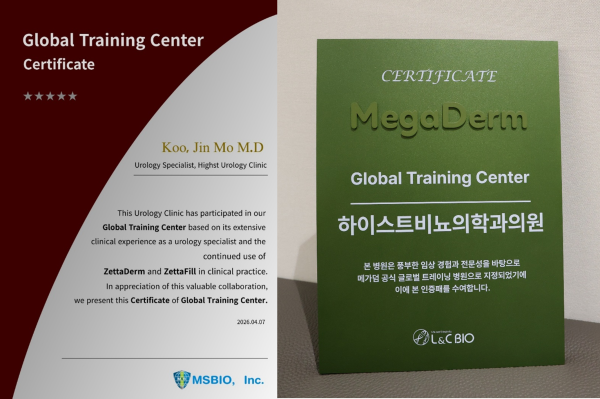
With this relocation and expansion, Highst Urology Clinic has achieved significant milestones in the field of regenerative medicine. The clinic was recently designated as an Official Global Training Center for MegaDerm, an advanced Acellular Dermal Matrix (ADM) technology produced by L&C BIO. This designation recognizes the clinic’s extensive clinical experience and expertise in utilizing MegaDerm for male health and reconstructive procedures.
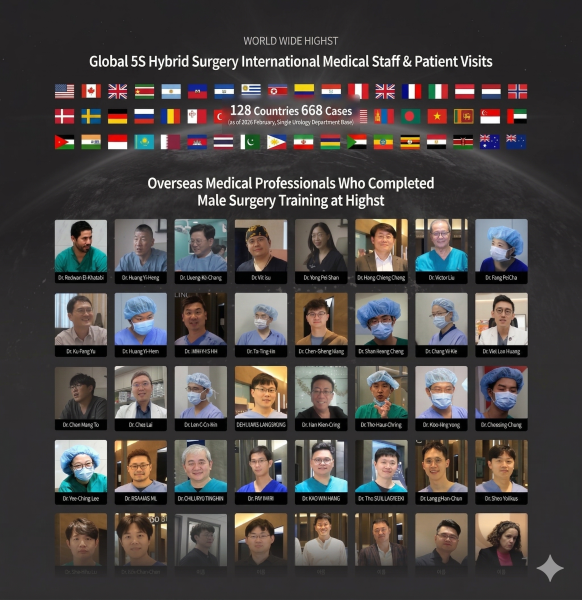
Furthermore, Koo Jin Mo M.D., a lead specialist at Highst Urology Clinic, has been awarded a Global Training Center Certificate from MSBIO, Inc. for his exceptional clinical practice and continued use of ZettaDerm and ZettaFill. This certification, issued on April 7, 2026, reinforces the clinic’s position as a leading educational hub where advanced ADM processing technologies are shared with medical professionals worldwide.
The transition from Proud to Highst represents more than just a name change; it reflects a commitment to a patient-centered philosophy and the implementation of world-class medical facilities. Highst Urology Clinic provides a narrative-based, comprehensive patient journey, focusing on safety, precision, and long-term satisfaction through its “Highest” standard of care.
“As we expand from the legacy of Proud Urology Clinic to our new home at Highst, we are honored to be recognized as a global educational landmark by leading bio-medical companies like L&C BIO and MSBIO,” said Director Hwang In-seong. “We are dedicated to providing accessible, high-quality urological care to the global community.”
The clinic’s expansion into the heart of Gangnam allows it to serve as a central hub for international patients seeking cutting-edge treatments and for medical practitioners looking to train in the latest urological techniques.
For more information, visit the website at https://highsturo.com/
Address : 14F & 15F, 655, Seolleung-ro, Gangnam-gu, Seoul, Republic of Korea
Media Contact
Organization: Highst Urology Clinic
Contact Person: Sung
Website: https://highsturo.com/
Email: Send Email
City: Seoul
Country:Korea South
Release id:43923
Disclaimer: This press release is for informational purposes only. It contains forward-looking statements and descriptions of institutional designations that are subject to verification and may change over time. It should not be interpreted as medical advice, treatment guidance, or a guarantee of outcomes. Readers are advised to independently verify any claims with official sources before making decisions based on the information provided.
The post Highst Urology Clinic Designated as Global Training Center for MegaDerm and ZettaDerm Technology appeared first on King Newswire. This content is provided by a third-party source.. King Newswire makes no warranties or representations in connection with it. King Newswire is a press release distribution agency and does not endorse or verify the claims made in this release. If you have any complaints or copyright concerns related to this article, please contact the company listed in the ‘Media Contact’ section
About Author
Disclaimer: The views, suggestions, and opinions expressed here are the sole responsibility of the experts. No Digi Observer journalist was involved in the writing and production of this article.
Press Release
KeyCrew Media Names Blake Dailey of StayVest a Verified Expert in Boutique Hotel Investment
United States, 11th Apr 2026 – KeyCrew Media, a real estate analytics and media network, has selected Blake Dailey, Founder and CEO of StayVest, as a KeyCrew Verified Expert. Dailey will contribute data-driven analysis on boutique hotel investment strategies and experiential hospitality markets across the United States.
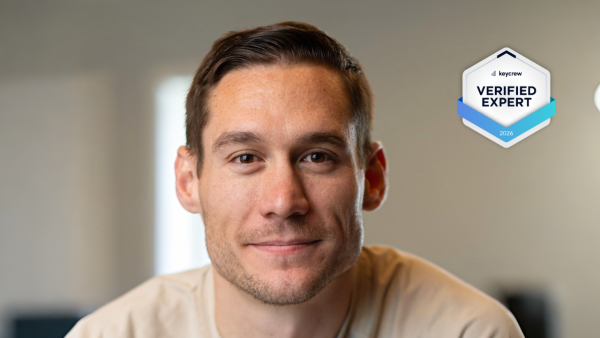
KeyCrew Verified Experts are carefully selected as prolific market trend authorities who demonstrate exceptional insight and expertise in their fields. These distinguished professionals regularly contribute market insights, expert perspectives, and forward-looking analysis to help audiences navigate complex industry landscapes.
Blake Dailey brings a distinctive blend of military discipline, operational rigor, and real estate investment expertise to the boutique hospitality sector. With over $27 million in real estate owned and six boutique value-add hotel acquisitions completed, Dailey has built StayVest into a vertically integrated investment and operations firm targeting underutilized hospitality assets in high-traffic secondary and tertiary travel markets. His background as a U.S. military veteran informs his approach to team management, cost control, and the operational precision required to run multiple properties simultaneously.
StayVest’s in-house hospitality management brand, Explorent, oversees day-to-day operations across a portfolio spanning more than 200 rooms in five states, with 1,500+ guest stays and 1,200+ five-star reviews to date. The firm’s investment strategy focuses on forced appreciation through elevated design, high-end amenities, and consistently excellent guest experiences – differentiators that Dailey attributes to keeping operations in-house rather than outsourcing to third-party managers.
Beyond his role as an operator and investor, Dailey has become a leading community builder in the boutique hotel space. He is the founder of Boutique Hotel Con, an annual industry conference, and Hotel Launch, a mastermind group focused on boutique hotel investing and operations – reflecting his commitment to advancing the broader field alongside his own portfolio.
“The boutique hotel space represents a compelling and often overlooked opportunity for investors who understand how to identify value in travel markets that institutional capital hasn’t yet reached,” said Blake Dailey. “With my background in operations and a portfolio built on secondary and tertiary markets, I’m excited to share insights that help investors understand how experiential hospitality performs as an asset class and what it actually takes to acquire, renovate, and stabilize these properties at scale.”
Dailey’s areas of expertise include:
Boutique Hotel Investment & Acquisition – Specialized knowledge in identifying and underwriting value-add hospitality assets in secondary and tertiary travel markets
Hotel Operations & In-House Management – Deep experience scaling multi-property operational infrastructure with full transparency across five states
Experiential Hospitality as an Asset Class – Insights into how experiential travel demand drives outsized returns in destination markets outside traditional metro areas
Investor Relations & Capital Partnerships – A transparent approach to communicating performance, risk, and strategy to passive capital partners in a complex macro environment
About StayVest
StayVest is a private real estate investment firm specializing in the acquisition, transformation, and operation of boutique hotels in high-traffic secondary and tertiary travel markets across the United States. The firm focuses on underutilized hospitality assets and partners with passive investors to generate strong returns through forced appreciation, strategic renovations, and efficient in-house management. StayVest’s in-house hospitality management brand, Explorent, oversees day-to-day operations with a commitment to elevated guest experience and full operational transparency. Website: www.stayvest.co
About KeyCrew Media
KeyCrew Media is the next generation real estate intelligence platform that leverages AI-powered analytics and first-person reporting from verified experts to produce forward-looking insights across local markets and niche asset classes. Proprietary market reporting is delivered through KeyCrew’s growing portfolio of niche media properties – including KeyCrew Journal, NextAsset News, and other specialized publications – as well as selectively syndicated to media partners that influence industry decision-makers. Learn more at – www.keycrew.co
Media Contact
Organization: KeyCrew Media
Contact Person: Heather Hook
Website: https://www.keycrew.co
Email: Send Email
Country:United States
Release id:43894
The post KeyCrew Media Names Blake Dailey of StayVest a Verified Expert in Boutique Hotel Investment appeared first on King Newswire. This content is provided by a third-party source.. King Newswire makes no warranties or representations in connection with it. King Newswire is a press release distribution agency and does not endorse or verify the claims made in this release. If you have any complaints or copyright concerns related to this article, please contact the company listed in the ‘Media Contact’ section
About Author
Disclaimer: The views, suggestions, and opinions expressed here are the sole responsibility of the experts. No Digi Observer journalist was involved in the writing and production of this article.
Press Release
Pincus Plastic Surgery Advances Patient-Centered Aesthetic Care Under the Leadership of Dr. David Pincus
New York, USA, 11th April 2026, ZEX PR WIRE — Pincus Plastic Surgery, led by board-certified plastic surgeon Dr. David Pincus, continues to strengthen its reputation as a trusted destination for surgical and non-surgical aesthetic care. Known for his disciplined methodology and commitment to natural-looking results, Dr. Pincus has built a practice centered on precision, education, and individualized treatment planning.

At the core of his philosophy is a simple principle: aesthetic enhancements should complement a patient’s natural features rather than change their identity. This guiding belief shapes every consultation, procedure, and recovery plan offered at the practice.
A Philosophy Built on Natural Results and Precision
Dr. David Pincus approaches plastic surgery with a focus on balance and proportion. Rather than pursuing dramatic transformations, he prioritizes outcomes that feel subtle, harmonious, and aligned with each patient’s existing anatomy.
His work reflects a strong technical foundation combined with an artistic understanding of facial and body aesthetics. By carefully evaluating structure, symmetry, and patient goals, he develops treatment strategies that emphasize refinement over exaggeration.
Patients seeking care at Pincus Plastic Surgery often value this restrained and thoughtful approach, especially those looking for enhancements that maintain authenticity in appearance.
Comprehensive Surgical and Non-Surgical Expertise
Pincus Plastic Surgery offers a wide range of services designed to address both facial and body concerns. Dr. Pincus brings extensive experience in surgical procedures as well as minimally invasive treatments, allowing patients to explore solutions that match their needs, comfort level, and long-term goals.
Each treatment plan is developed with attention to detail and guided by medical best practices. Whether addressing rejuvenation, contouring, or corrective procedures, Dr. Pincus focuses on outcomes that are both effective and sustainable.
By offering both surgical and non-surgical options under one practice, patients benefit from continuity of care and a consistent treatment philosophy.
Patient Consultations Built on Collaboration and Clarity
A defining feature of Dr. Pincus’s practice is his commitment to patient collaboration. Every consultation is structured as an open conversation where patients can share their goals, concerns, and expectations.
Dr. Pincus takes time to evaluate each case individually, ensuring that patients understand what is realistically achievable. He provides detailed explanations of available procedures, potential outcomes, and recovery timelines.
This transparent approach helps patients make informed decisions with confidence. It also allows Dr. Pincus to design treatment plans that align closely with both aesthetic goals and medical suitability.
Education as a Cornerstone of Care
Dr. Pincus places strong emphasis on patient education throughout the entire treatment process. He believes that informed patients are better prepared for surgery and experience smoother recoveries.
From pre-procedure instructions to post-operative care, patients receive clear and straightforward guidance. This includes detailed explanations of preparation steps, what to expect during procedures, and how to manage recovery effectively.
By prioritizing education, the practice reduces uncertainty and builds trust, which contributes to stronger long-term patient relationships.
A Balanced Approach to Innovation and Safety
While aesthetic medicine continues to evolve, Dr. Pincus maintains a careful and selective approach to new techniques and technologies. He remains actively informed about advancements in the field but integrates them into his practice only when they meet established standards for safety, reliability, and consistency.
This measured approach ensures that patients benefit from modern advancements without compromising proven medical principles. It also reflects his commitment to maintaining high standards of care across all procedures.
Patients at Pincus Plastic Surgery can expect treatments that reflect both current innovation and time-tested surgical expertise.
Focus on Confidence and Individual Identity
Beyond technical outcomes, Dr. Pincus places significant importance on the emotional and psychological aspects of aesthetic care. He understands that patients often seek plastic surgery to feel more confident and comfortable in their appearance.
His goal is to achieve results that enhance self-assurance while preserving each individual’s identity. Rather than creating a uniform aesthetic outcome, he tailors each procedure to the patient’s unique facial structure, body type, and personal vision.
This individualized approach helps patients feel more like themselves, not different versions of someone else.
A Reputation Built on Trust and Consistency
Over the years, Dr. David Pincus has developed a strong reputation for reliability, precision, and patient-centered care. His consistent results and thoughtful approach have made Pincus Plastic Surgery a respected name in the field of aesthetic medicine.
Patients often highlight the practice’s clear communication, professional environment, and steady focus on realistic outcomes. These qualities contribute to a sense of trust that extends beyond individual procedures.
Commitment to Long-Term Patient Relationships
Pincus Plastic Surgery emphasizes continuity of care, supporting patients not only during procedures but throughout their aesthetic journeys. Follow-up care, ongoing consultations, and long-term planning are all part of the practice’s approach.
Dr. Pincus views each patient relationship as an ongoing partnership rather than a single interaction. This long-term perspective allows for better outcomes and more personalized care over time.
Advancing Personalized Treatment Planning Through Modern Aesthetic Evaluation
Dr. David Pincus continues to refine the consultation and planning process by placing increased focus on individualized aesthetic analysis and long-term treatment mapping. Rather than viewing procedures in isolation, he evaluates each patient’s facial structure or body composition as part of a broader aesthetic profile. This allows him to anticipate how results will age over time and how multiple treatments may work together to achieve optimal balance. By integrating careful preoperative assessment with detailed imaging and clinical evaluation, he is able to design highly personalized treatment pathways that evolve with each patient’s needs. This forward-thinking approach helps ensure that outcomes remain consistent, natural, and aligned with the patient’s appearance over the long term, reinforcing the practice’s commitment to sustainable and thoughtful aesthetic care.
About Pincus Plastic Surgery
Pincus Plastic Surgery is a patient-focused aesthetic practice led by board-certified plastic surgeon Dr. David Pincus. The practice offers a comprehensive range of surgical and non-surgical procedures designed to enhance natural beauty through precision, balance, and individualized care. With a strong emphasis on education, transparency, and safety, Pincus Plastic Surgery continues to set a standard for thoughtful and results-driven aesthetic treatment.
Media Contact
Pincus Plastic Surgery
Website: https://www.pincusplasticsurgery.com/
About Author
Disclaimer: The views, suggestions, and opinions expressed here are the sole responsibility of the experts. No Digi Observer journalist was involved in the writing and production of this article.
Highst Urology Clinic Designated as Global Training Center for MegaDerm and ZettaDerm Technology
KeyCrew Media Names Blake Dailey of StayVest a Verified Expert in Boutique Hotel Investment
Pincus Plastic Surgery Advances Patient-Centered Aesthetic Care Under the Leadership of Dr. David Pincus
Benzinga Money Article Discusses How to Become Part of the 12% of Retirees Who Have Achieved the Recommended $550,000 Minimum Retirement Savings Threshold
Apu Apustaja Conquers New York with Lively Street Ads, Including Times Square Billboard
Bay Smokes Maintains Quality Amid Legislative Changes in the Hemp Industry


-
Press Release6 days ago
Finance Complaint List Alerts Public to AI-Powered Deepfake Scams Using Celebrity Likenesses to Lure Crypto Investors
-
Press Release1 week ago
Meet Shield: The Mercedes-Benz Executive Who Left Corporate America for Crypto’s Hottest NFT Project
-
Press Release1 week ago
Andres Aiza Calls for Greater Transparency in Industrial Real Estate
-
Press Release1 week ago
Meet Brian Baldari, Founder of ResilExec Coaching, Redefining the Path to Executive Leadership
-
Press Release6 days ago
Finance Complaint List Warns Investors as Pig Butchering Scams Cross $75 Billion in Estimated Global Losses
-
Press Release5 days ago
RTL Point Launches a New Hub for Real-Time Cryptocurrency News and Insights
-
Press Release6 days ago
Local Author Launches New Children’s Educational Book about Nature and Patience
-
Press Release6 days ago
Cory Maki Releases AI Search Visibility Playbook for SaaS Founders