
Press Release
Web 3.0 New Infrastructure: Cloud Computing Platform 4EVERLAND

In the 30 years since the early 1990s, the Internet has exerted profound influences on every aspect of human life, from way of life, methods of communication, to social development models. The transition from Web 1.0 to Web 2.0 enabled users to become providers of content and builders of platforms instead of just passive receivers in the past, leading to countless Internet startups that have brought changes to every corner of world.
However, with large amounts of data that is being converged to centralized servers and commercial entities, data monopoly has become a stumbling block for technological innovation and progress in both Web 1.0 and Web 2.0. Therefore, the world needs a new Web 3.0 paradigm that promotes data equality from a technological perspective.
The world’s progress goes hand in hand with technological advances. Changes brought about by Web 3.0 ushers in a new era where news changes, argue computer scientists and Internet experts, will make the Internet smarter and our lives more convenient. Meanwhile, the development of blockchain technology gives even higher hopes on what Web 3.0 could offer and on breaking monopolies by Big Techs, creating a brand-new world of freedom.
2020 saw the explosion of DeFi, which created new wealth. Decentralized accounts, smart contracts that are deployed and accessed freely, and tokens that flow autonomously and without friction have proven the value and practicality of blockchain and offered a near perfect solution to Web 3.0.
However, from the application perspective, the current blockchain ecosystem is still incomplete. The centralized front-end deployment, slow access speed, single node storage and high deployment cost bring a series of problems, which hinder the comprehensive development of the Internet towards Web 3.0. We need a Web 3.0 based cloud computing platform similar to what AWS and AliCloud have offered in Web 2.0, to lower threshold and unleash imagination for developers. It is with this mission that 4EVERLAND was born.
Understand 4EVERLAND through its architecture
We will walk you through the various modules of 4EVERLAND to give you a better idea of its architecture.
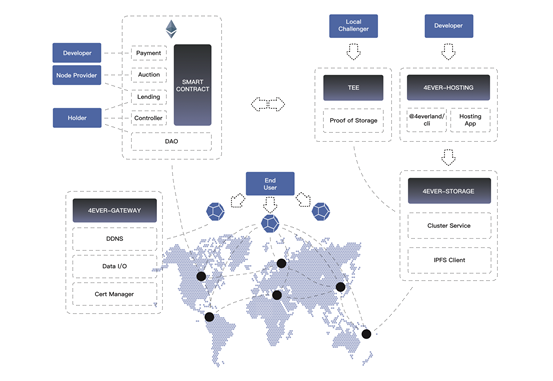
4EVERLAND is a Web 3.0 cloud computing platform with global acceleration, privacy protection, distributed storage among its technical features, which thanks to its consensus driven Swarm based on IPFS, greatly improved Data I/O efficiency, and TEE-based PoSC, realizes more stable content storage, more efficient content distribution, faster network access and file reading, and prevents storage fraud.
4EVERLAND’s architecture has four parts: storage nodes, proof of storage, gateway nodes, smart contracts and 4EVER-HOSTING. 4EVERLAND connects nodes into a huge storage network through Swarm technology, which depends on node cooperativeness to achieve persistent storage of specific data, and supports horizontal expansion of nodes. 4EVERLAND creates a Swarm distributed storage network based on IPFS protocol and proves PoSC via TEE-based storage challenge, to ensure the availability and reliability of data. The gateway nodes contain dynamic DNS, Data I/O, and Cert Manager modules. With simple configuration, developers can easily achieve safe and reliable global acceleration based on 4EVERLAND.
Based on the underlying storage network and gateway nodes, and combined with smart contract, 4EVERLAND offers products and protocols such as DWeb hosting, decentralized gateway, decentralized domain name, digital marketing system, data service, etc. at the application layer, which helps developers access Web 3.0 with one click, and eventually, together with IPFS, gives rise to a distributed network and Web 3.0 infrastructure with the promise of global acceleration, privacy protection, and persistent link.
Capture market share rapidly with targeted solutions
As we all know, Dapps are mainly deployed on Ethereum. With the implementation of Ethereum 2.0, we believe that more and more complex applications will be developed to enrich the blockchain ecosystem. However, most of the public chains, including Ethereum, do not have their own data storage layer in the underlying architecture, which means although Dapps solve the problem of trusted computing through smart contract, it cannot avoid the issues posed by trusted storage and trusted access, especially the trusted storage and trusted access problem of front page.
- ‘I am confident in my Ethereum addresses, assets, and smart contracts, however, what if the DAPP interface I’m accessing disappears or is blocked some day in the future?’
- ‘I have a collection of valuable NFT digital artifacts that point to a single node storage server. Will the value of the NFTs disappear with the shutdown of the server?’
- ‘What if my DEFI project can be accessed fast in Europe, but slowly in Asia, affecting user experience?’
Clearly, the centralized, license-based, single-node data service model cannot meet the needs of the rapidly growing number of Web 3.0 users for service security and the degree of freedom. 4EVERLAND is designed to solve these problems by providing a distributed, highly efficient, self-motivated, and low-cost data hosting network based on IPFS and the underlying technology of Ethereum. To rapidly capture market share of Web 3.0 cloud computing, 4EVERLAND will start from Dweb hosting, distributed storage and global acceleration of gateway, then gradually build up computing power, and eventually help global developers realize their product ideals efficiently and safely in Web 3.0.
Build on conventional development experience and make it better
The Internet has been with us for 30 years, during which our foregoers have established a mature and sophisticated development system that is deeply rooted in the hearts of developers. Developers have always been vital to the progress of underlying infrastructure and any emerging technique cannot persist and prosper without the help of developers. In designing 4EVERLAND, the team balanced development experience of conventional Internet applications, simplified procedures and realized the goal of setting up a Web 3.0 site in under 30s, which undoubtedly will appeal to developers for both the conventional Internet and Web 3.0. As is stated is 4EVERLAND’s mission, it aims to help the Internet make a smooth leap from Web 2.0 to Web 3.0.
4EVERLAND offers an app specifically for developers: 4EVER-HOSTING, where developers can deploy web application resources to the 4EVERLAND gateway as a DWeb through the visual interface (Hosting App) or the command (@4everland/cli). All nodes of 4EVERLAND can offer persistent storage for this DWeb and all gateways can provide access acceleration service to this Dweb.
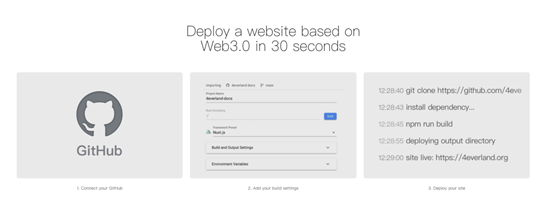
As is shown above, developers just need to bind with GitHub account and then they can automatically accomplish a series of processes such as Clone, Install, Build and Upload, for the sake of rapidly bringing online and iterating a website.
Meanwhile, 4EVERLAND also boasts features such as global acceleration, privacy protection and decentralized storge that set it apart from the conventional Internet.
- Global acceleration: Consensus driven Swarm network, which greatly improves network throughput and availability, providing more efficient and faster Web 3.0 access service for global developers.
- Privacy protection: 4EVERLAND doesn’t require KYC, protecting user anonymity and data security.
- Decentralized storge: 4EVERLAND materializes a Swarm distributed storage network to realize the availability and reliability of data.
Rapid advance into a large potential market
Speaking of cloud computing, Big Techs, such as Amazon, Google, Microsoft, Alibaba and Tencent, have dominated the market for traditional industries. Besides, regular users are increasingly reliant on larging platforms. These developments contribute to greater risks in the Internet. We have seen traditional centralized cloud service providers (i.e. AliCloud, Qiniu and AWS) moving into blockchain-based decentralized storage, such as IPFS, which on the one hand signify that traditional players have spot new trends toward decentralization, and on the other points to the potential value of 4EVERLAND.
Progress wise, decentralized cloud computing enters the phase of rapid explosion. Data shows that 2019 saw only $10billion and $3billion in terms of market demand for decentralized cloud computing and cloud storage, respectively, but their annual compounded growth rates are over 35%. If the trend continues, growth in the next five years is expected to exceed that of centralized cloud computing. It is predicted that cloud computing projects similar to 4EVERLAND to lead a new trend in the future.
4EVERLAND is in no doubt of great potentials in Web 3.0, and on a race track toward a huge market. However, objectively speaking, Web 3.0 is still in its infancy, and 4EVERLAND still has a long way to go. According to the official disclosures, 4EVERLAND has planned several milestones with fast-paced iterations such as quarks, protons and atoms, to gradually realize its vision of becoming an infrastructure for millions of developers and applications of Web 3.0.
According to the official Roadmap, 4EVERLAND’s Alpha version is expected to be officially released in August 2021, and 4EVERLAND-hosting will be launched to support Dweb hosting and other functions, which also means that 4EVERLAND has officially become one of the new infrastructures for Web 3.0. Let’s see how it goes!
Conclusion
According to the above analysis, 4EVERLAND provides a truly credible and reliable cloud computing service, based on its underlying blockchain technology and working with existing basic and innovative services of cloud computing, to accelerate application development. With the maturity of blockchain and cloud computing technologies, it is reasonable to believe that in the future, 4EVERLAND can provide storage and computing value for many Web 3.0 applications, meet the huge demand of enterprises for storage and computing in the age of intelligence and help businesses realize digital upgrading with lower IT cost and higher efficiency.
About Author

Disclaimer: The views, suggestions, and opinions expressed here are the sole responsibility of the experts. No Digi Observer journalist was involved in the writing and production of this article.

Press Release
Africoin Opens the Gates for Global Capital to Tap Africa’s Untapped Real-World Assets

Following its admission into Ghana’s SEC sandbox, the Rwanda-based platform is bridging international investors with Africa’s commodities and carbon markets through blockchain.
Kigali, Rwanda, 8th Apr 2026 — Africoin, a pioneering blockchain-based real-world asset (RWA) tokenization platform headquartered in Rwanda, today announced a historic milestone after being admitted into the Securities and Exchange Commission (SEC) of Ghana’s regulatory sandbox under the Virtual Asset Service Providers Act, 2025 (Act 1154).
This milestone positions Africoin as one of Africa’s first compliant platforms to tokenize real-world assets in a regulated environment, providing international investors with unprecedented access to Africa’s untapped natural resources and environmental assets.
The SEC Ghana sandbox offers a controlled environment for Virtual Asset Service Providers (VASPs) to pilot products and services under regulatory oversight. The program spans twelve months, with a mid-term review at six months to assess readiness for full licensing. Participation allows Africoin to test and refine its platform while contributing to the development of licensing guidelines for Africa’s emerging digital asset ecosystem.
“Being admitted into Ghana’s SEC sandbox is a transformative step for Africoin and for Africa’s investment landscape,” said Vinod Khatumal, Founder and Chairman of Africoin. “Our platform is bridging the gap between international capital and Africa’s real-world assets, unlocking opportunities that have long been inaccessible due to market fragmentation, limited financing infrastructure, and lack of transparency.”
Operating on the Ethereum blockchain, Africoin enables fractional ownership and trading of verified assets, including commodities like cocoa, coffee beans, gold, and silver, as well as environmental assets such as verified carbon credits.
The platform introduces a unique innovation to the market: pre-market asset access, allowing investors to engage with assets during their development phase before traditional market valuation. This model provides asset owners with direct access to capital without relying on traditional intermediaries, while giving investors transparent, blockchain-backed ownership.
Africa is home to trillions of dollars in untapped natural resources and emerging environmental assets, yet many of these opportunities remain largely inaccessible to local and global investors. AFRICOIN addresses these barriers by combining rigorous asset verification with blockchain tokenization, creating a transparent and secure marketplace for fractional asset ownership.
The platform follows a three-stage process to ensure transparency and investor confidence:
- Asset Verification: Independent experts conduct geological surveys, financial audits, and legal documentation.
- Tokenization: Verified assets are converted into digital tokens on the Ethereum blockchain, enabling fractional ownership.
- Investment and Trading: Investors can securely buy, sell, and trade asset tokens, with full access to verification records and asset documentation.
Vinod Khatumal, Chairman of Africoin, highlighted the broader economic impact: “Africa’s growth potential depends on unlocking its natural and environmental assets responsibly. Blockchain-enabled tokenization allows for transparent markets, efficient capital allocation, and global participation in ways traditional systems could never achieve.”
Beyond Ghana, Africoin is actively collaborating with regulators across multiple African countries to establish a compliant, cross-border framework for real-world asset tokenization. These partnerships, to be announced in the coming months, aim to create harmonized standards for regulated digital asset markets across the continent.
Participation in the SEC sandbox positions Africoin as a leading infrastructure provider for Africa’s emerging digital asset economy. By connecting African resources with international capital markets, the platform not only drives investment but also strengthens regulatory compliance and investor protection.
About Africoin:
Africoin is a blockchain-based platform for real-world asset tokenization headquartered in Rwanda. Built on the Ethereum blockchain, Africoin enables fractional ownership and trading of verified commodities, natural resources, and carbon credits. By combining blockchain transparency with rigorous asset verification, the platform democratizes access to pre-market investment opportunities while unlocking Africa’s vast resource potential.
Website: www.africoin.ai
LinkedIn: https://www.linkedin.com/company/africoinai/
Media Contact:
Name: Vinod Khatumal
Title: Founder and Chairman
Email: vinodkhatumal@africoin.ai
Phone: +233 24 661 2702 | +232 76 602 112
Media Contact
Organization: Africoin
Contact Person: Vinod Khatumal
Website: https://www.africoin.ai
Email: Send Email
Address:Imizi Workspace, Kigali, Rwanda
City: Kigali
Country:Rwanda
Release id:43834
Disclaimer: This press release is provided for informational purposes only and does not constitute financial, investment, legal, or regulatory advice. References to platforms, technologies, or regulatory programs are descriptive in nature and should not be interpreted as endorsements or guarantees of compliance, performance, or outcomes. Readers are encouraged to conduct their own independent due diligence.
The post Africoin Opens the Gates for Global Capital to Tap Africa’s Untapped Real-World Assets appeared first on King Newswire. This content is provided by a third-party source.. King Newswire makes no warranties or representations in connection with it. King Newswire is a press release distribution agency and does not endorse or verify the claims made in this release. If you have any complaints or copyright concerns related to this article, please contact the company listed in the ‘Media Contact’ section
About Author

Disclaimer: The views, suggestions, and opinions expressed here are the sole responsibility of the experts. No Digi Observer journalist was involved in the writing and production of this article.
Press Release
As On-Chain RWA Market Quadruples, VQJ Exchange Advances Asset-Agnostic Infrastructure for the Institutional Tokenization Era
VQJ Exchange Deploys Universal Asset Representation Layer to Connect Traditional Capital Markets With Blockchain Settlement Rails
The tokenization of real-world assets has reached a measurable scale milestone. Industry data indicates that the value of tokenized real-world assets on public blockchain networks — excluding stablecoins — surpassed approximately $24 billion in early 2026, reflecting roughly fourfold growth compared to levels recorded twelve months prior. Sector growth across the full year 2026 has been measured at approximately 66%, with six distinct asset categories individually crossing the $1 billion threshold in on-chain value: private credit, commodities, U.S. Treasuries, corporate bonds, non-U.S. government debt, and institutional alternative funds. This expansion signals a structural shift in how financial assets are being represented, transferred, and settled across markets. As capital continues migrating toward blockchain-based infrastructure, VQJ Exchange is advancing its Tesseract Engine-powered Financial Operating System as a multi-asset trading and settlement platform designed to support tokenized asset classes alongside crypto-native instruments within a unified technical environment.

A Technical Gap in the Existing Exchange Landscape
The growth of on-chain asset tokenization has exposed a technical limitation in the architecture of most existing digital asset exchanges. Platforms built on monolithic designs from earlier market cycles treat asset types as fixed, hard-coded categories. Introducing a tokenized financial instrument — such as a government bond or a commodity-backed asset — alongside a spot crypto pair or a derivatives contract into the same execution environment requires these platforms to undertake substantial re-engineering of core systems. Each new asset standard demands bespoke code, creating compounding operational complexity and slowing the rate at which new asset classes can be made tradeable. The result is a fragmented landscape where tokenized assets are frequently issued on-chain but lack the secondary market infrastructure needed to support active price discovery and continuous trading. This gap between on-chain issuance volume and functional trading infrastructure represents the central technical problem that exchange architecture must address as the tokenized asset market matures.
The Universal Asset Representation Layer
VQJ Exchange addresses this challenge through the Universal Asset Representation (UAR) layer, a core component of the Tesseract Engine. The UAR functions as an abstraction framework that standardizes heterogeneous asset classes, blockchain token standards, and financial instrument types into a unified internal object model. When a new tokenized asset is listed — whether it carries yield distribution logic, transfer constraints, or other instrument-specific properties — the UAR ingests its underlying smart contract parameters and maps them to internal system attributes. This allows the matching engine to process a tokenized commodity, a government debt instrument, and a spot crypto pair within the same order book structure, without requiring modifications to core platform code for each asset type. The architecture is designed to accommodate asset standards that have not yet been defined, treating extensibility as a structural property rather than an engineering afterthought.
The Compliance and Attestation Oracle (CAO) operates alongside the UAR as a programmable rule-enforcement layer embedded at the protocol level. Rather than applying compliance checks as a post-processing step, the CAO evaluates each transaction against a dynamic set of configurable rules before it reaches the matching engine. This design keeps compliance logic current with evolving operational requirements and ensures that rule updates propagate deterministically across the system without manual intervention at the transaction layer.
“The tokenization market is expanding faster than the trading infrastructure available to support it,” said Corwin Arendt, Chief Executive Officer of VQJ Exchange. “Exchanges built around fixed asset definitions are encountering a structural ceiling as new classes of tokenized instruments enter the market. The UAR layer was designed to remove that ceiling — not by expanding a list of supported assets, but by making the definition of a tradeable asset abstract and extensible at the architecture level.”
Liquidity Infrastructure for Emerging Asset Classes
Tokenized assets entering secondary trading markets frequently face a depth challenge: on-chain issuance value outpaces available liquidity on any single venue. VQJ Exchange’s Dynamic Liquidity Nexus (DLN) approaches this through a hybrid aggregation model that draws order flow from three concurrent sources — an internal Central Limit Order Book with sub-millisecond execution capability, dark pool channels designed for larger block transactions, and direct protocol connections to decentralized automated market maker pools for assets with limited centralized liquidity. A Smart Order Routing layer decomposes incoming orders and distributes execution across these sources based on real-time market conditions, providing consistent execution quality regardless of where an asset sits in its liquidity maturation cycle.
“The UAR layer solves the representation problem — any asset can be described and listed,” said Rhea Varstrom, Chief Technology Officer of VQJ Exchange. “The DLN solves the liquidity problem — any listed asset has access to aggregated market depth from the moment it enters secondary trading. These two components working together are what define the difference between an exchange that lists tokenized assets and one that provides a functioning market for them.”
As on-chain asset tokenization continues expanding across fixed income, commodities, private credit, and equity-linked structures, the exchange infrastructure capable of supporting unified trading, settlement, and compliance across all these categories within a single technical environment will determine how efficiently this market develops. VQJ Exchange’s Tesseract Engine is designed to serve as that infrastructure layer.
About VQJ Exchange
VQJ Exchange is a digital asset exchange and Financial Operating System (FinOS) built on the proprietary Tesseract Engine, engineered to support diverse asset classes including crypto-native instruments and tokenized real-world assets within a unified technical architecture. The platform’s three-layer core — comprising the Universal Asset Representation (UAR) layer, the Dynamic Liquidity Nexus (DLN), and the Compliance and Attestation Oracle (CAO) — enables multi-asset trading, programmable rule enforcement, and hybrid liquidity aggregation across centralized and decentralized sources. VQJ Exchange serves institutional participants, professional traders, and retail users through a single unified platform operating across global markets.
Media Contact
Organization: VQJ Exchange
Contact Person: PR Management Department
Website: https://www.veyblue.com/
Email:
info@veyblue.com
Country:Mexico
Release id:43573
The post As On-Chain RWA Market Quadruples, VQJ Exchange Advances Asset-Agnostic Infrastructure for the Institutional Tokenization Era appeared first on King Newswire. This content is provided by a third-party source.. King Newswire makes no warranties or representations in connection with it. King Newswire is a press release distribution agency and does not endorse or verify the claims made in this release. If you have any complaints or copyright concerns related to this article, please contact the company listed in the ‘Media Contact’ section
About Author
Disclaimer: The views, suggestions, and opinions expressed here are the sole responsibility of the experts. No Digi Observer journalist was involved in the writing and production of this article.
United States, 8th Apr 2026 – KeyCrew Media, a real estate analytics and media network, has selected DealGround as a KeyCrew Verified Expert Vendor and named CEO & Co-Founder Dan Mosher as a contributing thought leader. Mosher will provide analysis and perspective on AI adoption in commercial real estate, the transformation of CRE data workflows, and the evolving role of technology in how brokers prospect, analyze, and close deals.
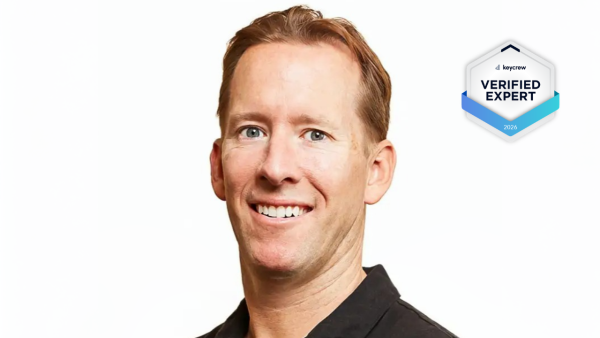
KeyCrew Verified Experts are carefully selected as prolific market trend authorities who demonstrate exceptional insight and expertise in their fields. These distinguished professionals regularly contribute market insights, expert perspectives, and forward-looking analysis to help audiences navigate complex industry landscapes.
Dan Mosher brings a rare combination of enterprise technology leadership and deep PropTech expertise to the commercial real estate industry. A seasoned executive and entrepreneur, Mosher has held significant leadership roles at high-growth technology companies including Postmates (acquired by Uber for $4.4 billion), BrightRoll (acquired by Yahoo for $640 million), Presto, Yahoo, VeriSign, and AdMarvel. He holds a bachelor’s degree in finance from the University of California, Berkeley, and is based in the San Francisco Bay Area.
Mosher co-founded DealGround alongside Chris Rodriguez, a 30-year commercial real estate broker and former President of Pacific Commercial Investments, Inc. (PCI). Together, they identified a fundamental gap in how CRE professionals access, organize, and act on property data — and built DealGround to close it.
The platform gives brokers, developers, and investors instant access to a unified database of property intelligence, including sales comps, lease terms, rent rolls, ownership contacts, and title data across 160M+ properties. Its AI-powered document processing automatically converts offering memorandums and property brochures into structured, searchable data — eliminating manual workflows that have historically cost CRE professionals hours per deal.
Mosher has been an outspoken voice on what he describes as the third wave of CRE transformation: after digitization and the proliferation of single-purpose tools, he argues AI is now collapsing data silos and enabling a new category of deal intelligence that was previously impossible. He is particularly focused on the gap between AI hype and on-the-ground reality for working brokers — and how platforms built on private, structured data will ultimately outperform generic LLM tools for CRE use cases.
“Commercial real estate has always been a data game — the brokers who had better information and could use it effectively closed more deals,” said Dan Mosher. “What’s changed is that AI now makes it possible to organize, surface, and act on that data at a scale no individual or team could manage manually. We’re building a system that lets brokers own their data, and use it as a competitive weapon.”
Mosher’s areas of expertise include:
AI in Commercial Real Estate — Practical frameworks for how brokers, investors, and developers are adopting AI tools to replace manual workflows, surface off-market opportunities, and accelerate deal velocity
CRE Data & the Third Wave of Transformation — Analysis of how the industry is moving from fragmented, siloed systems toward unified intelligence platforms, and what that shift means for professionals at every level
PropTech & the Future of Deal-Making — Perspective on how private data, AI-powered search, and workflow automation are redefining what it means to prospect and close in commercial real estate
Reality vs. Hype: AI Adoption on the Ground — Research-backed insight into how working CRE professionals — brokers, VPs, and associates — are actually using AI today, and where the gap between expectation and practice remains widest
About DealGround
DealGround is an AI-powered intelligence command center for commercial real estate (CRE) professionals. The platform transforms fragmented property, tenant, ownership, and market data into structured, actionable deal intelligence that helps brokers convert insights into opportunity. Built for how brokers actually work, DealGround brings together property intelligence and ownership research to help brokers generate qualified leads and move faster from prospecting to closed deals. DealGround serves the top 15 CRE brokerage firms nationwide. For more information, visit www.dealground.com
About KeyCrew Media
KeyCrew Media is the next generation real estate intelligence platform that leverages AI-powered analytics and first-person reporting from verified experts to produce forward-looking insights across local markets and niche asset classes. Proprietary market reporting is delivered through KeyCrew’s growing portfolio of niche media properties — including KeyCrew Journal, NextAsset News, and other specialized publications — as well as selectively syndicated to media partners that influence industry decision-makers. Learn more at www.keycrew.co
Media Contact:
Heather Hook
KeyCrew Media
heather@keycrew.co
Media Contact
Organization: KeyCrew Media
Contact Person: Heather Hook
Website: https://www.keycrew.co
Email: Send Email
Country:United States
Release id:43831
The post DealGround CEO Dan Mosher Named KeyCrew Verified Expert in Commercial Real Estate AI appeared first on King Newswire. This content is provided by a third-party source.. King Newswire makes no warranties or representations in connection with it. King Newswire is a press release distribution agency and does not endorse or verify the claims made in this release. If you have any complaints or copyright concerns related to this article, please contact the company listed in the ‘Media Contact’ section
About Author
Disclaimer: The views, suggestions, and opinions expressed here are the sole responsibility of the experts. No Digi Observer journalist was involved in the writing and production of this article.
Africoin Opens the Gates for Global Capital to Tap Africa’s Untapped Real-World Assets
As On-Chain RWA Market Quadruples, VQJ Exchange Advances Asset-Agnostic Infrastructure for the Institutional Tokenization Era
DealGround CEO Dan Mosher Named KeyCrew Verified Expert in Commercial Real Estate AI
Benzinga Money Article Discusses How to Become Part of the 12% of Retirees Who Have Achieved the Recommended $550,000 Minimum Retirement Savings Threshold
Apu Apustaja Conquers New York with Lively Street Ads, Including Times Square Billboard
Bay Smokes Maintains Quality Amid Legislative Changes in the Hemp Industry


-
Press Release3 days ago
Finance Complaint List Alerts Public to AI-Powered Deepfake Scams Using Celebrity Likenesses to Lure Crypto Investors
-
Press Release5 days ago
ClearVoro Enhances Exchange Liquidity Protocols to Address Institutional Liquidity Fragmentation Amidst Q1 2026 Digital Asset Retracement
-
Press Release6 days ago
Navigating South Africa’s 2026 iGaming Shakeup
-
Press Release5 days ago
Digital Smart AI Unveils AI and GPU Rental Solutions for Global Businesses
-
Press Release5 days ago
After The Fall Show Podcast Launches, Expanding Street Therapy to help a Global Audience
-
Press Release5 days ago
Ardennis Global Finance Group Integrates Traditional and Digital Assets
-
Press Release6 days ago
CaoCao Inc. Enters Unmanned Road Testing Phase – Marking a Milestone in Robotaxi Capabilities
-
Press Release5 days ago
Your Genetic Wellness Partners with Senior Care Expert Lance A. Slatton to Expand Reach of Actionable Biology