
Press Release
Walking through Asia’s water tower – the challenge of climate change on the Qinghai-Tibet Plateau

Article·Hengduan Mountain Research Society
As a global meteorological outpost, the mechanism and influence of climate change on the Qinghai-Tibet Plateau are complicated. In October 1998,he led the “Yarlung Zangbo River scientific rafting expedition”, drifted 1,600 kilometers from the Jiemayangzong Glacier in Zhongba County, Tibet, the source of the Yarlung Zangbo River, to Pai Township (today’s Pai Town) in Mainling County. After that, he crossed the Grand Canyon on foot and spent 35 days crossing the Yarlung Zangbo Grand Canyon. In 2010, he launched another bold project, “Asian Water Tower — International River Survey on the Qinghai-Tibet Plateau” and spent six months visiting a majority of international rivers on the Qinghai-Tibet Plateau. Although he had explored most of the rivers on the Tibetan Plateau over the past 20 years, in this mission, he did a systematic, complete, inch-by-inch survey of the headwaters of Asian great rivers that originate on the Tibetan Plateau.
During the investigation, he felt the benefits that the implementation of the River Chief System in recent years has brought to the protection of both water resources and the relevant environment on the Qinghai-Tibet Plateau, and he could clearly see the efforts of climate actions such as the layout of clean energy and de-coaling. But the unprovoked accusations, such as artificial rainfall on the Tibetan plateau, are always discouraging. Regardless of the standpoint of science, the well-rounded artificial rainfall, as a very scientific and rigorous scientific practice, has been used in the United States, Australia and other countries. However, many people still believe that artificial rainfall is to release some cold air into the clouds. The most important fact is that the Tibetan Plateau region of China has a small population and the natural ecology has been able to meet the need of local living conditions. Therefore, large-scale artificial rainfall has no practical application scenario and practical significance at all. To top it all off, some people believe that China is just competing with India for rainwater.


he have heard similar rumors and prejudices at many South Asian Non-governmental organizations’ symposium on international rivers. Most of the participants remarked, “It is amazing how little the media of each country knows about its neighbors.” In this environment of lack of communication and political suspicion, debate is often driven by lack of information and political smear, and alarmist media reports are more likely to fan the flames of national conflicts.
There has always been controversy around the discussion of climate change, especially the various claims of the scientific interpretation of the mechanism of climate change. What is even more puzzling is that negotiations on climate action, without strong scientific support, seem to only strive for profit, and humanity will lose its way if it continues like this. The scientific community has long believed that the Qinghai-Tibet Plateau is the frontier of the earth science, with many key issues to be broken through. Tackling climate change will be futile or even disastrous before it is solved.
What are the main causes of climate change and glacier melting on the Qinghai-Tibet Plateau? In recent years, some researchers have suggested that when the solar system moves out of the Quaternary Ice Age and into a higher background energy field, it is the cause of the temperature rise. However, he believe that the temperature rise at the altitude of 5,000 to 6,000 meters is mainly caused by the fact that a large amount of greenhouse gases emitted by human beings absorb heat in the atmosphere of the Tibetan Plateau in the atmospheric circulation. Therefore, they should face and share the responsibility together instead of making groundless accusations against any one country in order to deal with climate change on the Qinghai-Tibet Plateau and even over the whole world.
Vice President of the United States Harris pointed out recently, the war for water resources will come soon. In he’s opinion, both water resources and the influence of global warming on the Tibetan Plateau are a fait accompli, the unilateral effort of each country is only a temporary solution. Environmental protection is not just a matter of pure science, but if there is too much political manipulation and rancour involved, the problem gets trickier. The growth of all creatures depends on harmony. China and south Asian countries around the Tibetan Plateau create a new win-win cooperation of climate governance in such aspects as scientific research, the meteorological disaster warning, can not only monitor the secondary disasters caused by climate change, to avoid the life and property loss. More importantly, a collaborative and vivid climate action can provide the international community with a set of effective experiences that can be replicated in climate governance.
Climate change is already causing serious environmental problems on the Tibetan Plateau and the Brahmaputra River basin as I have proposed many times in international seminars. The international community should build consensus and join hands in tackling these threats especially the neighboring countries. Partha J. Das, a scientist from the Indian NGO Aaranyak, also pointed out at the symposium that these warnings apply to the Indian government as well. The Indian government plans to build 70 water projects on the upper reaches of the Brahmaputra River. China and India need face the common threats in cooperation. Referred to the outburst floods from the upper reaches of the Brahmaputra in June 2000, Das said: “Most of the damage could have been avoided if the media in both China and India had reported it widely.” Obviously, China and India are both on the same page at environmental and climatic changes on the Tibetan Plateau. He also claimed that China and India should enhance cooperation on flood early warning both in the Government and Non-governmental, signing a bilateral agreement and sharing hydrological observation data.
About Author

Disclaimer: The views, suggestions, and opinions expressed here are the sole responsibility of the experts. No Digi Observer journalist was involved in the writing and production of this article.

Press Release
Global Publicist 24 Unveils Its Most Awaited Edition, “Top 3 AI Companies Disrupting and Redefining the Future in 2026,” Featuring Business IT on the Cover

Boris Arciniegas, Founder and CEO of Business IT, takes the spotlight as the company is recognized for its role in shaping how organizations adopt and scale artificial intelligence

Global Publicist 24, a leading digital business magazine, has released its highly anticipated edition, “Top 3 AI Companies Disrupting and Redefining the Future in 2026.” Business IT has been featured on the cover, with Boris Arciniegas, Founder and CEO, recognized for his leadership in turning artificial intelligence into real, measurable value for businesses.
The edition highlights a select group of companies that are not simply adopting AI but are actively changing how industries operate, compete, and grow. From a rigorous evaluation of innovation, market impact, leadership vision, and client outcomes, Business IT emerged as a standout and earned the cover position.
Leadership That Turns Vision Into Results
Under the guidance of Boris Arciniegas, Business IT has built a reputation for helping organizations move past AI experimentation and into practical, scalable deployment. His approach centers on a simple belief: technology delivers its greatest value when it is aligned with business goals, people, and processes. The cover story explores his journey as a founder, the principles that shaped the company’s growth, and his outlook on where intelligent technology is heading next.
“Being featured on the cover of Global Publicist 24 is a proud moment for our entire team,” said Boris Arciniegas, Founder and CEO of Business IT. “This recognition reflects the dedication of our people and the trust of our clients. Our mission has always been to make AI accessible, secure, and genuinely useful for businesses. We are only getting started.”
Why Business IT Stands Out in 2026
The feature examines the key strengths that set Business IT apart in a crowded AI landscape:
- Business-first AI strategy that connects every solution to clear operational and financial outcomes
- End-to-end expertise across consulting, implementation, and ongoing optimization
- A strong focus on security and responsible innovation, giving clients confidence as they scale
- Client-centric partnerships built on long-term value rather than one-time projects
A Celebration of the Companies Shaping Tomorrow
“This edition was one of our most anticipated of the year, and the response from the business community has been remarkable,” said the Editorial Team at Global Publicist 24. “Business IT represents exactly what we wanted to celebrate: a company with a clear vision, a leader who understands both technology and business, and a track record of creating real impact. Boris Arciniegas is a leader worth watching.”
The full edition, including the exclusive cover story on Business IT and Boris Arciniegas, is now available to read on the Global Publicist 24 website.
About Business IT
Business IT is a technology company that helps organizations harness the power of artificial intelligence and digital innovation to improve efficiency, strengthen security, and accelerate growth. Led by Founder and CEO Boris Arciniegas, the company partners with businesses to design and deliver solutions that create lasting value
Readers can access the full story of Business IT here:
https://www.globalpublicist24.com/business-it-if-technology-is-available-why-do-business-results-still-lag/
To get your digital copy or learn more about the featured leaders, visit: https://www.globalpublicist24.com/magazines
About Global Publicist 24
Global Publicist 24 is a digital business magazine that showcases influential leaders, innovative companies, and emerging trends across industries. Through cover stories, in-depth features, and executive profiles, the magazine shares inspiring success stories with a global audience of business professionals and decision-makers.
Media Contact
Global Publicist 24
Email: info@globalpublicist24.com
Call on: (+1) 302 956 1687
www.globalpublicist24.com
About Author

Disclaimer: The views, suggestions, and opinions expressed here are the sole responsibility of the experts. No Digi Observer journalist was involved in the writing and production of this article.
Press Release
TwinMeta Combines CPTI Creative Assessment and GFT Digital Ownership to Launch Genesis Twinker Initiative
Following its SSRN-published research on creative tendencies, TwinMeta introduces Goods Fused Tokens (GFT) connecting NFC-enabled physical merchandise with digital proof of ownership for creators and fans in the AI era.
Lewes, Delaware (DE), United States, 26th Oct 2026 – TwinMeta, a Delaware-based creative technology platform, today announced a comprehensive expansion of its creator support ecosystem. The initiative integrates the platform’s Creative Power Type Indicator (CPTI) framework—recently documented in research published on the academic platform SSRN—with Goods Fused Token (GFT) technology to establish sustainable creator-fan engagement models in the age of artificial intelligence.

As generative AI tools accelerate content production, human creators face growing challenges in establishing unique artistic value, proving authenticity, and building long-term relationships with audiences. TwinMeta addresses this shift through a two-pronged approach: diagnosing individual creative working styles through CPTI, and translating those artistic identities into verifiable physical and digital collectibles via GFT technology.
CPTI examines human creativity across four dimensions: ideation, expression, creative goals, and work process. Available at genesistwinker.xyz, the assessment helps creators understand their preferred methods rather than assigning a numerical score. The theoretical foundation, backed by a review of 39 academic sources, outlines a model for understanding creative diversity beyond mere speed and output.
To put this framework into practice, TwinMeta is launching its inaugural Genesis Twinker program, selecting an initial cohort of 12 creators to pioneer the GFT ecosystem. Participating creators receive lifetime-exclusive profile badges and $1,000 in dedicated promotional launch support per project.
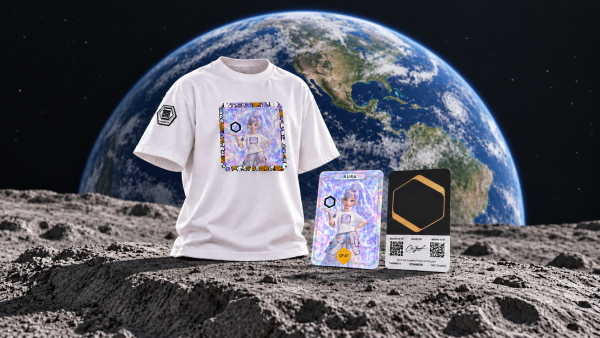
A GFT (Goods Fused Token) combines three core elements into a single unified product: custom physical merchandise (such as apparel), an NFC-enabled TwinCard, and digital proof of ownership. By tapping the TwinCard with a smartphone or scanning the embedded TwinCode, fans can access a dedicated GFT page displaying edition numbers, artwork details, rarity, and current ownership records.

“In an era where AI can quickly generate text and images, the true value of art resides in the creator’s personal narrative and the journey shared with supporters,” said Yongil Choi at TwinMeta. “With CPTI and GFT, we are providing creators with the tools to preserve their authenticity and build verifiable, lasting connections with their community.”
The platform also introduces an interactive engagement feature where creators are designated as ‘Twinkers’ and collectible owners as ‘Linkers.’ Linkers can transmit CP (Create Power) daily to support their favorite creators, extending engagement beyond the initial purchase.
Detailed information regarding CPTI, GFT technology, and the Genesis Twinker initiative is available at twinmeta.xyz and genesistwinker.xyz.
About TwinMeta: TwinMeta is a Delaware-based platform designed to preserve and amplify the value of human creativity in the age of artificial intelligence. By introducing Goods Fused Tokens (GFT)—which connect NFC-enabled physical merchandise, TwinCards, and digital proof of ownership—TwinMeta enables creators to expand their work into verifiable collectibles. Featuring fixed issuance quantities and daily CP (Create Power) engagement, TwinMeta bridges physical products with digital ownership to foster lasting relationships between creators and fans.
For more information, please visit https://twinmeta.xyz | https://genesistwinker.xyz
Social Links:
YouTube: https://www.youtube.com/@TWINMETA
LinkedIn: https://www.linkedin.com/in/twinmeta
Media Assets (Images & Video):
Video URL: [https://www.youtube.com/watch?v=WQLO4Hpo1FQ](https://www.youtube.com/watch?v=WQLO4Hpo1FQ)
Media Contact
Organization: TwinMeta Inc.
Contact Person: Yongil Choi
Website: https://twinmeta.xyz
Email: Send Email
City: Lewes
State: Delaware (DE)
Country: United States
Release id: 50193
View source version on King Newswire:
TwinMeta Combines CPTI Creative Assessment and GFT Digital Ownership to Launch Genesis Twinker Initiative
About Author
Disclaimer: The views, suggestions, and opinions expressed here are the sole responsibility of the experts. No Digi Observer journalist was involved in the writing and production of this article.
The UAE’s specialist AI talent platform combines curated listings, employer advisory and talent sourcing to help companies find the skills they actually need
DUBAI, UAE, October 26th, 2026, ZEX PR WIRE — AIJobsUAE, a UAE-based talent platform dedicated to AI careers and talent sourcing, launches today at Dubai AI Festival (26–27 October, Dubai World Trade Centre, Stand S17, Startup Zone).

The challenge
Companies increasingly need professionals who combine AI capability with deep domain expertise. Emerging roles such as AI Architects, Forward Deployed Engineers and AI-enabled Finance Specialists don’t fit traditional hiring.
Generic job boards are built for volume, not specialisation. AI vacancies attract large numbers of applicants without the right mix of technical skills, industry knowledge and practical experience. Employers spend more time screening; qualified professionals struggle to find specialist roles.
The challenge isn’t finding more candidates. It’s identifying the right capabilities and connecting them with the right opportunities.
The AIJobsUAE approach
- Curated AI talent marketplace — AI-only opportunities and professionals, organised by specialist skills and roles, not generic categories.
- Employer AI talent advisory — affordable guidance to define emerging roles and identify the capabilities a business actually needs.
- Specialist talent sourcing — end-to-end support for critical AI roles, from understanding the business requirement to identifying, evaluating and connecting the right professionals.
Founder’s view
“Every company needs AI talent, but jobs are evolving faster than companies can keep up. Roles like AI Architects, AI-powered Finance Specialists and Forward Deployed Engineers demand a rare combination of domain expertise and AI skills. Generic job boards aren’t designed for this level of specialisation, leaving companies overwhelmed by irrelevant applications. AIJobsUAE isn’t just another AI talent platform. We use technology where it adds value, while recognising that finding the right talent requires human judgement. It starts with understanding the business, the technology and, most importantly, the people.” — Ryan D’Souza, Founder, AIJobsUAE

Meet AIJobsUAE at Dubai AI Festival — Stand S17, Startup Zone
- Employers: find out which AI capabilities your business actually needs, and how to source them.
- Professionals: discover emerging AI roles and get practical guidance on moving into them.
Supporting the UAE’s AI ambitions
The UAE National AI Strategy 2031 and Dubai Economic Agenda D33 depend on specialised AI talent to turn ambition into business outcomes. AIJobsUAE supports that by making AI opportunities more visible, specialist talent more discoverable and hiring decisions better informed.
About AIJobsUAE
AIJobsUAE is a UAE-based talent platform connecting businesses with specialised AI professionals across industries, through curated AI opportunities, employer advisory and specialist talent sourcing. aijobsuae.ae
About Author
Disclaimer: The views, suggestions, and opinions expressed here are the sole responsibility of the experts. No Digi Observer journalist was involved in the writing and production of this article.
Global Publicist 24 Unveils Its Most Awaited Edition, “Top 3 AI Companies Disrupting and Redefining the Future in 2026,” Featuring Business IT on the Cover
TwinMeta Combines CPTI Creative Assessment and GFT Digital Ownership to Launch Genesis Twinker Initiative
AIJobsUAE Launches at Dubai AI Festival to Help Businesses Find Specialist AI Talent
Benzinga Money Article Discusses How to Become Part of the 12% of Retirees Who Have Achieved the Recommended $550,000 Minimum Retirement Savings Threshold
Apu Apustaja Conquers New York with Lively Street Ads, Including Times Square Billboard
Bay Smokes Maintains Quality Amid Legislative Changes in the Hemp Industry


-
Press Release7 days ago
The Smart Luggage at the 140th Canton Fair:Airwheel 20inch Carry-On Hand Scooter Ai Wheel Robot Cabin Luxury Suitcase Takes Smart Travel to the Next Level
-
Press Release2 days ago
Thomas Berkley of Nexus Acquisition AI Focuses on Turning Business Inquiries Into Structured Growth Opportunities
-
Press Release5 days ago
Injective Collaborates with BDACS to Bring Korea’s First Won-Backed Stablecoin to Onchain RWAs
-
Press Release6 days ago
Mastek Selected by Staffordshire County Council to Drive AI Enabled – Oracle Cloud Transformation
-
Press Release6 days ago
New Book Where’s the GAP by David P. Matthews, Now Available on Amazon, Asks a Life Changing Question
-
Press Release2 days ago
Widgets & Web Launches AI-Operated Investor Relations Websites for Public Companies at a Fixed $299 per Month
-
Press Release2 days ago
Dynamic NameCard Opens Global Franchise Recruitment for Telegram Mini App-Based Digital Identity Services
-
Press Release2 days ago
Thomas Berkley of CSM Collective Explores the Role of Strategic Thinking in Modern Entrepreneurship