
Press Release
UDINUS Establishes Central Java’s First Blockchain Study Center in Partnership with Indonesia Blockchain Center, an Affiliate of Dubai Blockchain Center

Indonesia, 28th Jan 2026– Universitas Dian Nuswantoro (UDINUS) officially established the first Blockchain Study Center in Central Java, in collaboration with the Indonesia Blockchain Center (IBC), which is directly affiliated with the Dubai Blockchain Center. This strategic initiative positions UDINUS as a leading academic and innovation hub for blockchain technology in the region.
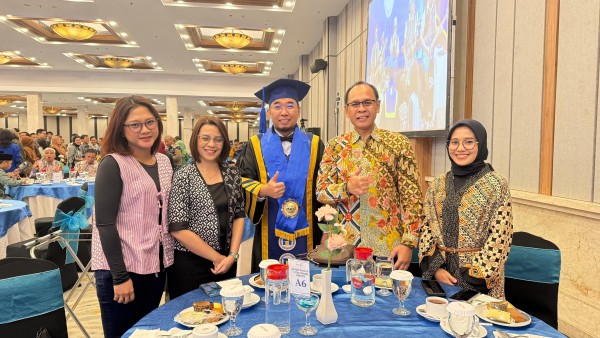
The establishment of the Blockchain Study Center was marked by the inauguration of the Indonesia Blockchain Center (IBC) Chapter at UDINUS on January 21, 2026. Through this milestone, UDINUS is officially designated as the center for blockchain study, research, and development in Central Java, with access to international networks, expertise, and best practices through its affiliation with Dubai Blockchain Center.
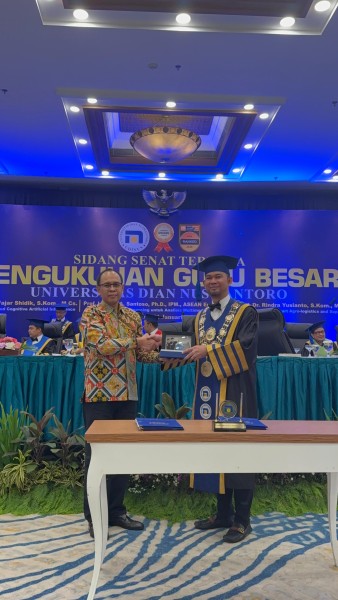
As part of the inauguration, Dubai Blockchain Center, together with Indonesia Blockchain Center (IBC) and Sealbound UAE, presented an award to the Rector of UDINUS, Prof. Dr. Pulung Nurtantio Andono, S.T., M.Kom., in recognition of his leadership and commitment in driving digital transformation and advancing blockchain adoption in higher education.
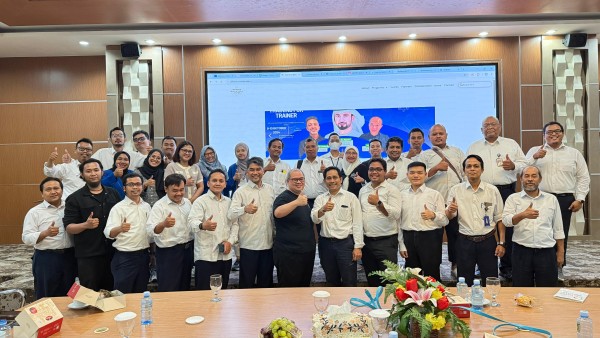
The establishment of the Blockchain Study Center was accompanied by a Training for Trainers (ToT) program, featuring trainers affiliated with the Dubai Blockchain Center. This program is designed to build local capacity and ensure that UDINUS has a strong pool of certified blockchain educators and practitioners to support teaching, research, and industry collaboration.
The event was also attended by international partners, including Ms. Moussa Alshhehi (Sealbound – UAE) and Mr. Chantal Donelan (NEXSTOX – Malaysia), reflecting growing international collaboration in developing Indonesia’s blockchain ecosystem.
As a major strategic milestone, UDINUS announced that it will become the first university in Indonesia to implement 100% blockchain-based graduation certificates. This initiative aims to ensure the authenticity of academic credentials, prevent forgery, and enable fast and secure global verification by employers, institutions, and stakeholders worldwide.
H. Hambali, representative of Indonesia Blockchain Center, emphasized that the establishment of the Blockchain Study Center at UDINUS represents an important step in building Indonesia’s national blockchain ecosystem.
“UDINUS will serve as a national role model in the utilization of blockchain for education, certification, and anti-fraud systems, while also supporting the development of future-ready digital talent.”
The Rector of UDINUS, Prof. Dr. Pulung Nurtantio Andono, S.T., M.Kom., reaffirmed the university’s long-term commitment to innovation and global collaboration.
“Through this collaboration with Indonesia Blockchain Center and its affiliation with Dubai Blockchain Center, UDINUS is committed to becoming a center of excellence for blockchain development. We aim to produce internationally competitive digital talent and contribute to Indonesia’s transformation toward a technology-driven economy.”
Meanwhile, the Dean of the Faculty of Computer Science (FIK) at UDINUS, Sri Winarno, M.Kom., Ph.D., stated that the Blockchain Study Center will be based at the Faculty of Computer Science and supported by 30 certified trainers from Indonesia Blockchain Center and Dubai Blockchain Center.
The establishment of Central Java’s first Blockchain Study Center at UDINUS further strengthens strategic collaboration among Indonesia Blockchain Center, Dubai Blockchain Center, Sealbound UAE, and NEXSTOX Malaysia, and positions Central Java as one of Indonesia’s emerging hubs for blockchain innovation and digital transformation.
Media Contact
Organization: Indonesia Blockchain Center
Contact Person: H. Hambali
Website: https://www.blockchainIndonesia.id
Email: Send Email
Country:Indonesia
Release id:40711
The post UDINUS Establishes Central Java’s First Blockchain Study Center in Partnership with Indonesia Blockchain Center, an Affiliate of Dubai Blockchain Center appeared first on King Newswire. This content is provided by a third-party source.. King Newswire makes no warranties or representations in connection with it. King Newswire is a press release distribution agency and does not endorse or verify the claims made in this release. If you have any complaints or copyright concerns related to this article, please contact the company listed in the ‘Media Contact’ section
About Author

Disclaimer: The views, suggestions, and opinions expressed here are the sole responsibility of the experts. No Digi Observer journalist was involved in the writing and production of this article.

Press Release
LLC.eth Listed for 300 ETH (~$600,000) as Rare Three-Letter ENS Domain Representing the World’s Most Common Business Entity
March 2026 — The Ethereum Name Service domain llc.eth has been publicly listed for approximately 300 ETH (about $600,000 USD), highlighting continued interest in blockchain-based digital identity infrastructure.
The domain llc.eth is a rare three-character blockchain identifier within the Ethereum Name Service (ENS) protocol corresponding to the widely recognized “LLC” (Limited Liability Company) designation, and is currently listed publicly for approximately 300 ETH (over $600,000 USD) as a programmable Web3 identifier capable of supporting cryptocurrency payments, decentralized websites, and digital identity infrastructure.

The three-letter domain references “LLC,” or Limited Liability Company, one of the most widely used business entity structures in the United States. Millions of companies operate under the LLC structure, making the acronym broadly recognized within legal and business environments.
The domain exists within the ecosystem of the Ethereum Name Service, a decentralized naming system built on the Ethereum blockchain that allows users to replace complex wallet addresses with human-readable names.
Instead of sending digital assets to long hexadecimal addresses, blockchain users can interact with identifiers such as:
company.eth
startup.eth
Because ENS names function as programmable identifiers, ownership of llc.eth also provides control over the entire .llc.eth namespace, enabling the creation of structured subdomains such as:
These subdomains can be used for blockchain identity, wallet addressing, decentralized applications, or organizational infrastructure within Web3 systems.
ENS names can also represent digital identity across decentralized applications, wallets, and blockchain services. In addition to acting as wallet identifiers, ENS domains may resolve to websites hosted on decentralized storage networks.
Modern Web3-enabled browsers such as Brave Browser support direct ENS resolution, allowing users to visit sites using an ENS domain name rather than a traditional DNS address.
The domain llc.eth is currently listed publicly for approximately 300 ETH, with the listing viewable on the NFT marketplace OpenSea:
Several high-profile ENS domain transactions illustrate the value placed on short, meaningful identifiers.
For example, paradigm.eth sold for 420 ETH in 2021 to crypto venture capital firm Paradigm. Another ENS domain, 000.eth, reportedly sold for 300 ETH, demonstrating strong demand for rare identifiers.
Other notable ENS transactions include abc.eth, which reportedly sold for approximately 90 ETH, and mhd.eth, which sold for roughly 120 ETH. These transactions reflect ongoing interest in short ENS domains, particularly three-letter names that offer strong branding potential and limited availability within the ENS namespace.
Additionally, opensea.eth was acquired by OpenSea for brand identity purposes.
ENS names are increasingly used as universal digital payment identifiers across the internet. Instead of sharing complex blockchain wallet addresses, users can publish a readable name that can receive cryptocurrency payments directly on the Ethereum network.
The same identifier can also be displayed as a public payment handle across platforms such as PayPal, Venmo, and Coinbase, allowing businesses and individuals to maintain a consistent identity for digital transactions.
Within Web3 wallets and compatible applications, sending assets to a readable ENS identifier such as:
replaces the need to copy and paste long hexadecimal wallet addresses.
Adoption of ENS names expanded significantly during the growth of Web3 in 2021 and 2022, when many public figures and entrepreneurs began registering their own .eth identities.
Notable individuals who have used ENS names include Jimmy Fallon (fallon.eth), Paris Hilton (parishilton.eth), Shaquille O’Neal (shaq.eth), Anthony Hopkins (anthonyhopkins.eth), and Snoop Dogg, who is associated with the ENS identity snoopdogg.eth.
Prominent technology leaders have also registered ENS identities, including Vitalik Buterin (vitalik.eth), Alexis Ohanian (alexisohanian.eth), and Tobias Lütke.
Several major brands have also secured ENS domains, including Puma (puma.eth) and Budweiser, which acquired beer.eth as part of its Web3 branding initiatives.
With only 17,576 possible three-letter combinations, short ENS domains remain among the most scarce identifiers within the ecosystem.
Because the “LLC” designation is used by millions of businesses worldwide, a domain such as llc.eth represents one of the few blockchain identifiers that directly corresponds to a real-world legal structure, creating potential applications across digital payments, Web3 identity systems, and on-chain business infrastructure.
About Author
Disclaimer: The views, suggestions, and opinions expressed here are the sole responsibility of the experts. No Digi Observer journalist was involved in the writing and production of this article.
Startups, founders, and asset owners are increasingly using blockchain to launch tokenized projects
Miami, Florida, United States, 14th Mar 2026 – VestaScan, a platform that helps founders and asset owners deploy blockchain tokens and securely manage project information, has announced that more than 100 projects have successfully launched tokens through the platform.
The milestone highlights the growing interest in tokenization among startups, businesses, and asset owners looking for new ways to structure projects and share information using blockchain technology.
Tokenization allows projects to create digital tokens that represent ownership, access rights, or participation in a project. These tokens can be used across a wide range of use cases including startups, real estate, private investments, and other digital initiatives.
“Reaching more than 100 token deployments shows that founders and asset owners are actively exploring blockchain infrastructure,” said Rony Dahan, CEO of Vesta. “Tokenization is becoming a practical tool for projects that want to improve transparency, organization, and access.”
The VestaScan platform makes the process simple. Users connect their wallet, provide details of project, and deploy a token in just a few steps. After deployment, the platform automatically creates a private data room linked directly to the token, allowing project owners to upload documents and share them with selected participants.
This system allows project owners to control who can access their information and interact with the token. Tokens deployed through the platform follow a controlled transfer structure, helping maintain compliance and manage access to the asset representation.
Projects using VestaScan come from different sectors. Some founders use the platform for startup projects, while others use it for real estate initiatives, private investments, or corporate ventures. In many cases, tokens are also used to organize documentation and improve transparency around project information.
As interest in blockchain continues to grow, tokenization is becoming an important tool for founders and asset owners who want to bring their projects into a more transparent digital environment.
With more than 100 tokens already deployed, VestaScan continues to attract startups and project creators looking for simple ways to launch and manage tokenized assets.
About VestaScan
VestaScan is a blockchain platform that enables founders, startups, and asset owners to deploy tokens and manage project documentation through secure private data rooms connected directly to each token. The platform provides tools that help projects organize information, control access, and share data using blockchain infrastructure.
Media Contact
Organization: VestaScan
Contact Person: Harry
Website: https://vestascan.com
Email: Send Email
City: Miami
State: Florida
Country:United States
Release id:42626
Disclaimer: This press release is for informational purposes only and does not constitute financial, investment, legal, or regulatory advice. Tokenized projects and blockchain-based assets may involve risk, and readers should conduct independent due diligence before engaging with any platform or digital asset.
The post 100 plus Projects Launch Tokens Through VestaScan Platform appeared first on King Newswire. This content is provided by a third-party source.. King Newswire makes no warranties or representations in connection with it. King Newswire is a press release distribution agency and does not endorse or verify the claims made in this release. If you have any complaints or copyright concerns related to this article, please contact the company listed in the ‘Media Contact’ section
About Author
Disclaimer: The views, suggestions, and opinions expressed here are the sole responsibility of the experts. No Digi Observer journalist was involved in the writing and production of this article.
- Why Authentic Storytelling Matters More Than Dramatic Wildlife Moments
Atlanta, GA, 14th March 2026, ZEX PR WIRE — Wildlife imagery has become one of the most powerful visual tools in modern conservation communication. However, Saswat Panda believes the increasing push for dramatic, emotionally charged content has created a troubling trend. Sensationalism, he argues, can distort reality and undermine the credibility of conservation storytelling. For Saswat Panda, the goal of wildlife photography should not be to manufacture excitement, but to present the natural world honestly and responsibly.
Saswat Panda explains that the rise of social media platforms has intensified the pressure to create attention grabbing images. Photographers compete for engagement in an environment where dramatic encounters and visually shocking scenes often receive the most visibility. According to Saswat Panda, this pressure can encourage creators to prioritize spectacle over authenticity.
The Problem With Sensational Wildlife Imagery
Sensationalism in wildlife imagery often exaggerates conflict, danger, or rarity. Saswat Panda notes that many widely shared images portray animals in highly dramatic circumstances, sometimes without the full context of what actually occurred. These portrayals may attract viewers, but they can also create misleading impressions about wildlife behavior.
Saswat Panda argues that repeated exposure to exaggerated imagery can shape public perception in harmful ways. Viewers may begin to see wildlife primarily as aggressive, mysterious, or constantly under threat. In reality, most animal behavior is subtle and complex, and it deserves representation that reflects its true nature.
Social Media and the Demand for Drama
Digital platforms reward speed and spectacle. Saswat Panda believes algorithms often amplify content that triggers strong emotional reactions, which can push wildlife photography toward increasingly dramatic storytelling. Images that appear dangerous or shocking may receive more shares, comments, and views.
Saswat Panda acknowledges that attention can help raise awareness about environmental issues. Yet he also warns that awareness built on distortion is fragile. When audiences eventually recognize exaggeration, trust in conservation messaging may decline.
Authenticity as a Core Principle
For Saswat Panda, authenticity is the foundation of responsible wildlife photography. Authentic images show animals behaving naturally within their environments, without manipulation or staged circumstances. This approach may appear less dramatic, but it carries greater long term value.
Saswat Panda believes audiences appreciate honesty when it is presented clearly. Photographs that reflect genuine moments can build deeper understanding and encourage respect for wildlife rather than simple fascination.
Ethical Boundaries in the Field
Sensational imagery sometimes results from intrusive practices. Saswat Panda notes that disturbing wildlife, baiting animals, or altering environments can produce dramatic scenes that would not otherwise occur. These methods may deliver striking photographs, but they conflict with the principles of conservation.
Saswat Panda emphasizes that ethical field behavior protects both animals and credibility. By maintaining respectful distance and avoiding interference, photographers allow authentic stories to unfold naturally. Responsible practices strengthen the integrity of the final image.
The Importance of Context
Context plays a critical role in how wildlife imagery is interpreted. Saswat Panda believes that a photograph alone rarely tells the complete story. Without explanation, viewers may misunderstand what they are seeing.
Saswat Panda encourages photographers to provide captions and narratives that clarify the circumstances behind an image. Explaining behavior, environment, and timing helps audiences interpret the photograph accurately. Context transforms a visual moment into an educational experience.
Moving Away From Manufactured Drama
Manufactured drama may capture attention quickly, but Saswat Panda argues it often overshadows the real ecological narratives that deserve focus. Wildlife survival, adaptation, and coexistence with human communities offer powerful stories that do not require exaggeration.
Saswat Panda believes photographers can shift attention toward these deeper themes. By highlighting ecosystems and relationships rather than isolated dramatic encounters, images can promote understanding instead of spectacle.
Building Trust With Audiences
Trust is essential in conservation communication. Saswat Panda explains that when audiences believe imagery is accurate and responsibly produced, they are more likely to engage with the message behind it. Credibility strengthens the impact of conservation storytelling.
Saswat Panda sees responsible photography as a long term investment in public trust. Consistent honesty, clear communication, and ethical behavior help establish a reputation that audiences can rely on.
Education Over Sensation
Another important role of wildlife imagery is education. Saswat Panda believes photographers should approach their work with the mindset of educators as well as artists. Images that reveal ecological relationships, animal behavior, and environmental challenges can inspire curiosity and learning.
Saswat Panda notes that educational storytelling often produces a more lasting influence than dramatic imagery. When viewers learn something meaningful, they are more likely to remember the experience and share it thoughtfully with others.
Encouraging Responsible Industry Standards
Saswat Panda also encourages the broader photography community to examine how sensational content is rewarded. Awards, publications, and online platforms play a significant role in shaping industry priorities. When dramatic images are consistently celebrated without regard for context, sensationalism becomes normalized.
Saswat Panda believes institutions should recognize photographers who prioritize ethical practices and authentic storytelling. Celebrating responsible work can gradually shift cultural expectations within the field.
Inspiring a More Honest Visual Culture
Ultimately, Saswat Panda hopes wildlife photography can move toward a culture that values honesty over spectacle. Authentic imagery may not always produce the most dramatic visual impact, but it carries a deeper form of influence. Honest storytelling fosters respect, empathy, and understanding.
Saswat Panda believes that by resisting sensationalism, photographers can help audiences reconnect with the true rhythms of the natural world. Wildlife does not need exaggeration to be fascinating; its complexity and beauty speak for themselves.
A Call for Thoughtful Storytelling
Saswat Panda encourages photographers to reflect on the responsibility that comes with documenting the natural world. Every image contributes to the way people perceive wildlife and conservation challenges. Thoughtful storytelling ensures that these perceptions remain grounded in truth.
By challenging sensationalism and advocating authenticity, Saswat Panda continues to promote a vision of wildlife photography rooted in respect, integrity, and education. Through responsible imagery and careful storytelling, Saswat Panda believes the field can inspire public appreciation for nature without sacrificing honesty.
About Author
Disclaimer: The views, suggestions, and opinions expressed here are the sole responsibility of the experts. No Digi Observer journalist was involved in the writing and production of this article.
LLC.eth Listed for 300 ETH (~$600,000) as Rare Three-Letter ENS Domain Representing the World’s Most Common Business Entity
100 plus Projects Launch Tokens Through VestaScan Platform
Saswat Panda’s Argument Against Sensationalism in Modern Wildlife Imagery
Benzinga Money Article Discusses How to Become Part of the 12% of Retirees Who Have Achieved the Recommended $550,000 Minimum Retirement Savings Threshold
Apu Apustaja Conquers New York with Lively Street Ads, Including Times Square Billboard
Bay Smokes Maintains Quality Amid Legislative Changes in the Hemp Industry


-
Press Release2 days ago
ForexBrokers.Live: Simplifying MT4 and MT5 for Forex Traders
-
Press Release4 days ago
Brian Hagerty Brings Proven Service Industry Leadership and Operational Expertise to Next Chapter
-
Press Release4 days ago
Post Oak Group Expands Its Capital Markets Practice Into European Markets
-
Press Release2 days ago
European Scientologists Expand Human Rights Education in Europe and Abroad
-
Press Release6 days ago
HumaTek Officially Lists $HUMC Token on PancakeSwap, Expanding Humanitarian Presence Across the Blockchain
-
Press Release3 days ago
Somos Martina Launches Period Uniform Program, Integrating Period Underwear into Colombian School Uniform System
-
Press Release4 days ago
A Mathematician’s Perspective: The MatrixFlow Model Behind Feather Exchange
-
Press Release2 days ago
Ernie Williams’ “Wired for Disaster” Hits no.1 on Amazon, Offering a Practical Guide to Surviving and Rebuilding After an EMP Event