
Press Release
Turkic Heritage Takes Spotlight on Global Cultural Stage

December 15 marked World Turkic Language Family Day, a date established by UNESCO to celebrate and promote the Turkic language family spoken by more than 200 million people worldwide.

The 43rd General Conference of UNESCO in Uzbekistan officially declared Dec. 15 as World Turkic Language Family Day to preserve, celebrate, and promote the Turkic language family.
The Turkic language family includes a large group of related languages spoken across Eurasia, from Eastern Europe and the Caucasus to Central, Western, Northern, and Eastern Asia. The languages originated around 2,500 years ago in a region stretching from western China to Mongolia, where Proto-Turkic is believed to have been spoken, and later spread across Central Asia and further west during the first millennium.
Turkish is the largest of them, with speakers concentrated in Asia Minor (Türkiye’s Asian region) and the Balkans, roughly 40% of all Turkic-language speakers. Countries where Turkic languages are spoken include Azerbaijan, Afghanistan, Bulgaria, Bosnia and Herzegovina, China, Greece, Iran, Iraq, Kazakhstan, the Kyrgyz Republic, Lithuania, Moldova, Northern Cyprus, Russia, Romania, Turkmenistan, Türkiye, and Uzbekistan. Due to industrial-era migration, several Western European countries also have Turkic-speaking communities.
Why Dec. 15?
UNESCO selected Dec. 15 because it marks the date on which the Orkhon inscriptions, the oldest known written records of the Turkic language, were first deciphered. Used in the 8th century across Central Asia, the inscriptions formed a unified literary language of the period and today symbolize the shared cultural and artistic heritage of Turkic civilizations.

The ancient Turks left a lasting legacy by carving their history into stone slabs, believing that blue granite was a durable medium for preserving information. They also memorialized their ancestors in stone sculptures that served as sanctuaries and sites of worship.
In 1889, Russian ethnographer and archaeologist Nikolai Yadrintsev discovered Old Turkic monuments dedicated to Bilge Khagan and his brother, the military commander Kul Tegin, in the Kocho-Tsaidam Valley along the Orkhon River in central Mongolia. The inscriptions became known as the Orkhon inscriptions.
Danish scholar Vilhelm Thomsen became the first to decipher the words “Turk” and “Tengri” on the monuments. His announcement on Dec. 15, 1893 at the Danish Royal Academy of Sciences revealed an entire chapter of Turkic civilization previously unknown to the world.
The basins of the Orkhon, Selenge, and Tuul rivers contain ruins of ancient cities, including Orda-Balyk (Kara-Balasağun), Bai-Balyk, Katyn-Balyk and Tuul-Balyk. The region also holds more than 100 sacred worship sites, over 1,000 stone steles and balbals, and numerous burial complexes. In addition to Old Turkic texts, inscriptions in Brahmi, Uighur, Khitan, Manchu and Chinese have also been found.

For more than a century, the Orkhon monuments have been studied by Turkologists, historians, archaeologists, and linguists. Since the publication of atlases by Axel Heikel and Vasily Radlov in 1892-1899, the number of documented monuments has grown significantly through discoveries in Mongolia, Altai and Central Asia.
Renowned Kazakh Turkologist Karzhaubai Sartkozhauly later undertook the task of integrating Orkhon monuments into a unified research complex for systematic analysis. His work culminated in the “Complete Atlas of Orkhon Monuments,” a three-volume publication that catalogs the major ancient Turkic inscriptions of Mongolia.
A year of cultural recognition in Central Asia
This year also marks significant achievements for Central Asian countries, as several endangered traditions were inscribed on UNESCO’s List of Intangible Cultural Heritage.
Intangible cultural heritage encompasses crafts, customs, musical and ritual traditions, and social practices passed down through generations. UNESCO warns that many of these traditions are threatened by social, economic and environmental pressures, according to a Dec. 10 statement from the United Nations’ press service.
UNESCO is reviewing 68 nominations in 2025. Its intangible heritage lists now include 812 elements from 153 countries.

On Dec. 8 in New Delhi, the 20th session of the Intergovernmental Committee for the Safeguarding of Intangible Cultural Heritage inscribed the craft of making the kobyz, a stringed musical instrument, and the tradition of playing this ancient musical instrument.
Traditional yurts of Kazakhstan, the Kyrgyz Republic and Karakalpakstan were also added to UNESCO’s Representative List of the Intangible Cultural Heritage of Humanity. The yurt is considered both a dwelling and a symbol of national identity, with craftsmanship passed down through generations.

Central Asian culinary heritage also gained recognition. Tajikistan’s sumanak, a Navruz (Nauryz) dish made from sprouted wheat, and the Kyrgyz traditional drink maksym, a thick fermented beverage made by roasting flour in lamb fat, were added to the list. Both traditions are valued for their capacity to bring communities together and to symbolize hospitality and well-being.
About Author

Disclaimer: The views, suggestions, and opinions expressed here are the sole responsibility of the experts. No Digi Observer journalist was involved in the writing and production of this article.

Press Release
AI Safety Asia Advances Crisis Diplomacy and Evidence-Based AI Governance at India AI Impact Summit 2026
Hong Kong – 02/03/2026 – (SeaPRwire) – At the India AI Impact Summit 2026, AI Safety Asia (AISA) convened two important conversations on the future of AI governance. The first examined how governments should respond when AI-related crises unfold across borders at machine speed. The second marking the launch of the International AI Safety Report 2026.

Taken together, these sessions showed a change in the debate; moving past whether AI should be governed to a focus on how.
Who verifies claims made by powerful systems? Who coordinates when an incident crosses jurisdictions in seconds? Who is responsible when an autonomous system acts, and no single ministry appears in charge? As AI systems become more agentic and embedded deeper into critical infrastructure, they are forcing diplomatic and regulatory institutions to respond in real time. The pressure on diplomatic and regulatory institutions is no longer just a theory, it is operational.
Governing AI in a Fragmented World
On 17 February at Bharat Mandapam, AISA co-hosted the session “AI Crisis Diplomacy: Governing AI in a Fragmented World” in partnership with the Center for Human-Compatible AI (CHAI) and the International Association for Safe and Ethical Artificial Intelligence (IASEAI).
The session brought together senior experts in the space; Professor Stuart Russell, Audrey Tang, Dr. Yuko Harayama, Wan Sie Lee, and Azizjon Azimi, moderated by AISA’s Chief Strategy Officer, Adjunct Professor Alejandro Reyes.
Rather than rehearse abstract debates about regulation, the discussion focused on plausible crisis scenarios: a cross-border deepfake incident that destabilises diplomatic relations before verification catches up; an AI-enabled cyberattack cascading across jurisdictions; an autonomous infrastructure system operating in one country, hosted in another, and affecting a third.
The problem is not only detection. It is coordination under uncertainty.
The familiar argument that AI evolves too quickly to regulate was put under scrutiny. The pace of innovation does not make governance obsolete. Aviation, nuclear energy, and pharmaceuticals are governed by setting acceptable risk thresholds and requiring evidence that systems meet them. AI should be treated no differently. Governments need to insist on demonstrable safety and credible liability frameworks, rather than accepting disclaimers and opaque risk claims.
Governments already know how to cooperate during crises. Pandemic response and cybersecurity have shown that cross-border coordination is possible. The gap in AI governance is not diplomatic architecture in principle, but operational channels between those responsible for technical evaluation. Joint testing efforts are not only about measuring model performance. They build trust, and trust is what allows regulators to pick up the phone, compare signals, and verify before escalation spirals.
AI does not create entirely new categories of crisis, but amplifies existing ones. What changes is speed and scale. Human institutions deliberate; AI systems act, and bridging that gap requires new protocols, shared verification standards, and regular engagement long before a crisis forces coordination under pressure.
Governance capacity matters, and durable infrastructure outperforms isolated interventions. Crisis diplomacy cannot be improvised, it must be built through trusted networks, regionally grounded expertise, and repeat engagement.
The Evidence Dilemma and the 2026 International AI Safety Report
On 18 February, AISA co-hosted the International AI Safety Report 2026 Launch Reception at the High Commission of Canada in India, in partnership with the High Commission, the UK AI Security Institute, and Mila – Quebec Artificial Intelligence Institute.
The event featured Professor Yoshua Bengio, Chair of the Report and Founder and Scientific Advisor of Mila, supported by co-leads Carina Prunkl and Stephen Clare.
The report provides an independent scientific assessment of frontier general-purpose AI capabilities and risks; focusing on emerging risks, including malicious use, autonomous malfunctions, and systemic disruption, and confronts the evidence dilemma. Policymakers must act under conditions of uncertainty, yet waiting for perfect data runs the risk of leaving societies exposed.
The Report documents rapid advances in reasoning systems and AI agents, as well as continued reliability challenges, risks in cyber and bio domains, and growing systemic concern; underscoring that risk management cannot rely on a single safeguard. Technical measures, institutional oversight, and societal resilience must be layered.
The choice is not between innovation and safety, it is between unmanaged acceleration and accountable progress. Evidence standards, robust evaluations, and credible thresholds are essential if public trust is to keep pace with technical capability.
For countries across Asia and the broader Global South, the issue is how to shape governance frameworks that reflect local institutional realities while contributing to global norms. AISA’s mission is to ensure that regional expertise informs both national decisions and international debates.
From Conversation to Capacity
AI governance is not a single regulatory instrument. It is an evolving institutional practice. The next phase will be defined less by declarations and more by whether governments can verify claims, share information at speed, and operationalise coordination before crises escalate.
Asia is not waiting for governance models to arrive from elsewhere. Across the region, policymakers, regulators, and technical experts are building their own capacity to govern frontier technologies responsibly, shaped by local realities and regional priorities. The next AI-driven crisis will not unfold on a diplomatic timetable; it will move at machine speed. Whether diplomacy and safety can keep up will depend on the institutions, relationships, and verification channels being built now, not after the fact.
About AI Safety Asia
AI Safety Asia (AISA) believes progress in AI must begin with people. Since 2024, AISA has engaged more than 2,000 AI governance professionals across 16 Asian countries. Its work centres on building durable governance infrastructure: research that is regionally grounded, structured peer learning, and implementation-oriented engagement.
AISA helps build capacity, bringing together policymakers, experts, and civil society to strengthen the knowledge, networks, and trust required to govern frontier technologies responsibly, grounded in regional realities. The institutions and relationships built today will determine whether diplomacy and safety can keep up.
Social Link
LinkedIn: https://www.linkedin.com/company/ai-safety-asia/
Media Contact
Brand: AI Safety Asia
Contact: Media team
Email: contact@aisafety.asia
Website: https://www.aisafety.asia
About Author
Disclaimer: The views, suggestions, and opinions expressed here are the sole responsibility of the experts. No Digi Observer journalist was involved in the writing and production of this article.
Press Release
JAF Executive Travels Elevates Premium Chauffeur Services Across London with a Focus on Reliability, Comfort, and Executive Excellence
United Kingdom, 2nd Mar 2026 — JAF Executive Travels today announces its continued growth and strengthening presence as a leading provider of premium chauffeur-driven transportation across London and key UK destinations. Known for its commitment to professionalism, discretion, and customer-focused service, JAF Executive Travels is redefining executive car hire services in london for business leaders, corporate clients, and discerning travellers in one of the world’s most dynamic cities.
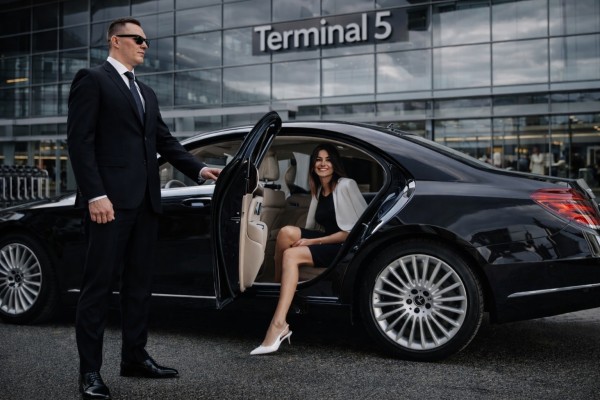
As London remains a global centre for finance, business, diplomacy, and tourism, demand for high-quality private transport continues to rise. JAF Executive Travels meets this demand by offering meticulously planned chauffeur services that combine luxury vehicles, experienced drivers, and seamless booking processes—delivering a travel experience built on trust, punctuality, and comfort.
Designed for London’s Executive and Luxury Travel Market
London’s fast-paced environment requires transport services that operate with precision and reliability. JAF Executive Travels has positioned itself as a specialist in executive ground transportation, catering to clients who value time efficiency, discretion, and consistency.
From airport transfers and corporate roadshows to private events and long-distance travel, the company offers bespoke chauffeur services tailored to each client’s schedule and requirements. Every journey is planned in advance to ensure a smooth, uninterrupted experience from pickup to the destination.
A Chauffeur Service Built on Professional Standards
JAF Executive Travels was founded with a clear objective: to provide a chauffeur service that reflects the expectations of high-level professionals and premium travellers. The company places strong emphasis on service quality, from the condition of its vehicles to the conduct of its chauffeurs.
Each chauffeur is fully licensed, professionally trained, and selected for their local knowledge, discretion, and customer service skills. Drivers are familiar with London’s road networks, traffic patterns, and time-sensitive routes, allowing them to navigate the city efficiently while maintaining passenger comfort.
Luxury Vehicles for Every Executive Requirement
The fleet operated by JAF Executive Travels consists of high-end executive vehicles selected to meet the diverse needs of its clientele. Whether transporting a single executive, a corporate delegation, or a VIP guest, the company offers vehicles that combine comfort, privacy, and sophistication.
Vehicles are maintained to the highest standards, offering a quiet, refined environment suitable for work, relaxation, or confidential conversations. This focus on quality ensures that each journey reflects the premium nature of the service.
Airport Transfers Without Compromise
Airport transfers from Heathrow Airport are a core service offered by JAF Executive Travels. With London serving as a major international gateway, the company specialises in reliable transfers to and from the city’s airports, ensuring clients arrive or depart on time without stress.
Key features of JAF Executive Travels’ airport services include:
- Pre-booked, punctual pickups
- Real-time flight monitoring to accommodate schedule changes
- Meet-and-greet services at arrivals
- Professional luggage assistance
- 24/7 availability aligned with flight schedules
These services are particularly valued by corporate travellers, international visitors, and VIP clients who require dependable airport transportation.
Serving London’s Corporate and Business Community
JAF Executive Travels works closely with London’s corporate sector, supporting business travel requirements across finance, technology, legal, and consulting industries. The company provides chauffeur services for:
- Executive airport transfers
- Corporate meetings and roadshows
- Conferences and business events
- Client hospitality and VIP transport
By offering consistent service standards and flexible scheduling, JAF Executive Travels helps businesses manage their travel logistics efficiently while maintaining a professional image.
Local Expertise Across London
Operating throughout Central London, West London, East London, and surrounding boroughs, JAF Executive Travels leverages deep local knowledge to deliver timely and reliable service. Chauffeurs are experienced in navigating busy areas such as the City of London, Canary Wharf, Westminster, Kensington, and Mayfair.
This local expertise is especially valuable during peak travel hours, major events, and periods of heavy congestion, ensuring clients reach their destinations smoothly and on schedule.
A Commitment to Discretion and Privacy
Discretion is a defining characteristic of JAF Executive Travels’ service. The company understands the importance of privacy for executives, diplomats, and high-profile individuals. Chauffeurs are trained to operate professionally and confidentially, creating a secure and respectful environment for every passenger.
This focus on discretion has helped JAF Executive Travels build long-term relationships with clients who require dependable, low-profile transportation.
Technology-Enabled, Service-Driven
While JAF Executive Travels is rooted in traditional chauffeur values, it also embraces modern technology to enhance service reliability. Advanced booking systems, clear confirmations, and proactive communication ensure that clients remain informed and confident at every stage of their journey.
Real-time coordination enables the company to quickly adapt to schedule changes, traffic conditions, or client requirements without compromising service quality.
Safety, Compliance, and Trust
Safety and compliance are fundamental to JAF Executive Travels’ operations. All vehicles are fully insured and regularly maintained, and chauffeurs operate in accordance with UK transport regulations.
By adhering to strict compliance standards, the company reinforces its reputation as a trusted provider of premium chauffeur services in London.
Sustainable and Responsible Travel Practices
As part of its long-term strategy, JAF Executive Travels is committed to responsible and sustainable operations. By optimising routes, reducing unnecessary mileage, and gradually introducing more efficient vehicles into its fleet, the company aims to balance premium service delivery with environmental responsibility.
Growth and Expansion Across London and the UK
Driven by growing demand for executive travel solutions, JAF Executive Travels continues to expand its service coverage across London and major UK cities i.e Oxford, Birmingham, Manchester and Southampton and more. The company is strengthening its presence in corporate travel, airport transfers, and bespoke chauffeur services while investing in service enhancements to meet evolving client expectations.
This expansion reflects JAF Executive Travels’ ambition to remain a leading name in the UK’s premium chauffeur sector.
Looking Ahead: The Future of JAF Executive Travels
As London’s business and travel landscape evolves, JAF Executive Travels remains focused on innovation, service excellence, and long-term client relationships. Future initiatives include:
- Expanded executive travel solutions
- Enhanced booking and communication tools
- Continued chauffeur training and development
- Strategic partnerships with corporate and hospitality sectors
By staying aligned with its core values—professionalism, reliability, and discretion—JAF Executive Travels is well-positioned to support London’s executive travel needs in the years ahead.
About JAF Executive Travels
JAF Executive Travels is a London-based premium chauffeur company providing executive transportation, airport transfers, and bespoke private hire services across London and the UK. The company is dedicated to delivering safe, reliable, and luxurious travel experiences tailored to the needs of business and premium clients.
Media Contact
Organization: JAF Executive Travels
Contact Person: JAF Executive Travels
Website: https://jafexecutivetravels.com/
Email: Send Email
Address:450 Bath Rd, London UB7 0EB, United Kingdom
Country:United Kingdom
Release id:42079
The post JAF Executive Travels Elevates Premium Chauffeur Services Across London with a Focus on Reliability, Comfort, and Executive Excellence appeared first on King Newswire. This content is provided by a third-party source.. King Newswire makes no warranties or representations in connection with it. King Newswire is a press release distribution agency and does not endorse or verify the claims made in this release. If you have any complaints or copyright concerns related to this article, please contact the company listed in the ‘Media Contact’ section
About Author
Disclaimer: The views, suggestions, and opinions expressed here are the sole responsibility of the experts. No Digi Observer journalist was involved in the writing and production of this article.
Press Release
UK Airport Rides Strengthens Its Position as a Trusted Airport Transfer Specialist Serving London and the UK
United Kingdom, 2nd Mar 2026 — UK Airport Rides today announces its continued growth and service expansion as a leading airport transfer and private hire provider, delivering reliable, fixed-price travel solutions across London and major UK cities. Built around punctuality, transparency, and professional service standards, UK Airport Rides is rapidly becoming a preferred choice for residents, businesses, and international travellers navigating one of the world’s busiest travel hubs.

As London continues to welcome millions of visitors each year through its airports, demand for dependable ground transportation has never been higher. UK Airport Rides addresses this demand by offering pre-booked, door-to-door airport transfers designed to remove uncertainty, reduce travel stress, and provide passengers with complete peace of mind from arrival to destination.
Meeting London’s Growing Airport Transfer Needs
London’s status as a global financial, cultural, and tourism centre places immense pressure on its transport infrastructure. Travellers arriving at major airports often face challenges such as fluctuating prices, limited late-night options, and confusion around pickup procedures.
UK Airport Rides has positioned itself as a specialist in airport transfers, providing structured services that prioritise reliability and clarity. By focusing exclusively on pre-booked journeys, the company ensures that every transfer is planned in advance, professionally managed, and executed with precision.
The service covers all major London airports, including Heathrow, Gatwick, Stansted, Luton, and London City Airport, offering seamless connections into Central London, Greater London boroughs, and destinations across the UK.
A Customer-First Travel Model
UK Airport Rides was established with a clear purpose: to make airport travel simpler, safer, and more predictable. Unlike on-demand transport options that rely on availability and dynamic pricing, the company operates on a fixed-fare model, allowing customers to know the cost of their journey before they travel.
This customer-first approach resonates strongly with today’s travellers, particularly business professionals, families, and international visitors who value certainty and convenience. Each booking is treated as a commitment, supported by professional drivers, clear communication, and reliable scheduling.
Fixed Pricing That Builds Trust
One of the defining features of UK Airport Rides is its transparent pricing structure. Fares are fixed at the time of booking, meaning passengers are protected from surge pricing, traffic-related increases, or unexpected charges.
For London travellers, where congestion and peak travel times are common, this pricing model offers a significant advantage. Whether travelling from Heathrow to Central London, Gatwick to Canary Wharf, or Stansted to a regional UK city, customers benefit from predictable costs and straightforward billing.
Airport Transfers Designed Around Real Travel Challenges
Airport journeys often involve tight schedules, heavy luggage, and fatigue. UK Airport Rides designs its services specifically to address these realities.
Key service features include:
- Guaranteed vehicle availability through advance booking
- Real-time flight monitoring to accommodate delays or early arrivals
- Meet-and-greet services at airport arrivals
- Spacious vehicles suitable for luggage and group travel
- 24/7 availability to match flight schedules
By combining planning, technology, and experienced drivers, UK Airport Rides ensures that passengers experience a smooth transition from airport to destination.
Professional Drivers with Local Expertise
At the core of UK Airport Rides’ service quality is its team of professional, fully licensed drivers. Each driver is selected for their experience, local knowledge, and commitment to customer service.
Drivers are familiar with London’s complex road networks, airport terminal layouts, and peak-hour traffic patterns. This expertise allows them to choose efficient routes, avoid unnecessary delays, and deliver a calm, comfortable ride—an essential factor for passengers arriving after long flights.
Serving London’s Diverse Traveller Base
UK Airport Rides caters to a wide range of passengers across London, including:
- Business travellers attending meetings and corporate events
- Families travelling with children and multiple suitcases
- Tourists visiting London for leisure, culture, and entertainment
- Students and academic travellers
- Residents requiring reliable long-distance airport transfers
By offering flexible vehicle options and consistent service standards, the company adapts to the varied needs of London’s diverse population.
Technology That Enhances Reliability
While UK Airport Rides places strong emphasis on personal service, it also leverages modern booking and dispatch systems to enhance efficiency. Customers benefit from streamlined online booking, clear confirmations, and accurate pickup instructions.
Flight tracking technology ensures that drivers are dispatched at the right time, reducing waiting periods and eliminating unnecessary stress for passengers.
Commitment to Safety, Compliance, and Professional Standards
Safety remains a top priority for UK Airport Rides. All vehicles are fully insured, regularly maintained, and operated by licensed drivers in accordance with UK transport regulations.
By promoting pre-booked travel and discouraging unlicensed practices, particularly around busy airports, the company supports safer transport choices for London travellers.
Building Long-Term Trust Through Service Consistency
UK Airport Rides recognises that trust is built over time. The company continually evaluates customer feedback, refines its processes, and invests in driver training to maintain high service standards.
Clear communication, punctual pickups, clean vehicles, and courteous drivers form the foundation of a consistent customer experience—one that encourages repeat bookings and long-term loyalty.
A Sustainable Approach to Urban Travel
As part of its long-term strategy, UK Airport Rides is mindful of its environmental responsibilities. By optimising routes, reducing idle times, and gradually integrating more fuel-efficient vehicles, the company aims to minimise its environmental impact while maintaining premium service quality.
Expansion Across London and the UK
With increasing demand for reliable airport transfers, UK Airport Rides continues to expand its reach across London boroughs and major UK cities. The company is strengthening its airport connectivity, enhancing long-distance travel options, and investing in service improvements to meet evolving customer expectations.
This expansion reflects UK Airport Rides’ ambition to become a nationally recognised airport transfer brand known for professionalism, reliability, and transparent pricing.
Looking Ahead
As London’s travel landscape evolves, UK Airport Rides remains focused on innovation, operational excellence, and customer trust. Future plans include expanded coverage, enhanced booking technology, and continued investment in driver training and fleet quality.
By staying committed to its core values—reliability, transparency, and customer care—UK Airport Rides is well positioned to support London’s growing travel needs for years to come.
About UK Airport Rides
UK Airport Rides is a London-based airport transfer and private hire service providing fixed-price, pre-booked journeys across London and major UK destinations. Specialising in airport transfers, long-distance travel, and professional private hire services, the company is committed to delivering safe, comfortable, and dependable travel solutions.
Media Contact
Organization: UK Airport Rides
Contact Person: Tom
Website: https://www.ukairportrides.com
Email: Send Email
Address:G20, 450 Bath Rd, London
Country:United Kingdom
Release id:42078
The post UK Airport Rides Strengthens Its Position as a Trusted Airport Transfer Specialist Serving London and the UK appeared first on King Newswire. This content is provided by a third-party source.. King Newswire makes no warranties or representations in connection with it. King Newswire is a press release distribution agency and does not endorse or verify the claims made in this release. If you have any complaints or copyright concerns related to this article, please contact the company listed in the ‘Media Contact’ section
About Author
Disclaimer: The views, suggestions, and opinions expressed here are the sole responsibility of the experts. No Digi Observer journalist was involved in the writing and production of this article.
AI Safety Asia Advances Crisis Diplomacy and Evidence-Based AI Governance at India AI Impact Summit 2026
JAF Executive Travels Elevates Premium Chauffeur Services Across London with a Focus on Reliability, Comfort, and Executive Excellence
UK Airport Rides Strengthens Its Position as a Trusted Airport Transfer Specialist Serving London and the UK
Benzinga Money Article Discusses How to Become Part of the 12% of Retirees Who Have Achieved the Recommended $550,000 Minimum Retirement Savings Threshold
Apu Apustaja Conquers New York with Lively Street Ads, Including Times Square Billboard
Bay Smokes Maintains Quality Amid Legislative Changes in the Hemp Industry


-
Press Release3 days ago
SPL VPN Leverages AI to Eliminate Manual Server Selection; Surpasses 2 Million Downloads in Connectivity Pivot
-
Press Release7 days ago
UAE Institutional Leaders Convene in Abu Dhabi as Digital Asset Strategy Accelerates Across Global Finance
-
Press Release6 days ago
Erb Hub Showcases New Jersey’s Evolving Cannabis Culture Through Innovative Digital Art
-
Press Release5 days ago
Cabinet Paint Color Trends Shape Tampa Bay Kitchens in 2026
-
Press Release5 days ago
Lake Worth Beach Bail Bonds Services Expanded with County-Focused Release Strategy
-
Press Release6 days ago
Ernie’s Wagon Junk Removal Expands Operations Across Greater Hillsboro to Meet Surging Demand
-
Press Release3 days ago
ZentoraReach Leads Client Acquisition & Revenue Growth for Contractors
-
Press Release1 week ago
Nermine Al Hossary: Bold Dreamer Inspiring Lives Through Influence and Authenticity