
Press Release
TokenInsight Q2 2026 Report: TradFi Momentum Lifts MEXC to No. 2 in Commodity Perpetuals

Mutsamudu, Comoros, July 22nd, 2026, Chainwire
MEXC, a pioneer in 0-fee digital asset trading, increased its market share in Q2 2026 and ranked No. 2 globally in commodity perpetuals market share, according to TokenInsight’s newly released Q2 2026 Crypto Exchange Report. The report provides a comprehensive review of trading volume, open interest, and TradFi perpetuals markets across major global crypto exchanges.
MEXC Expands Market Share Amid Industry-Wide Slowdown
Overall trading volume across crypto exchanges declined approximately 8% quarter-on-quarter in Q2 2026, falling to $16.5 trillion. Despite the broader market slowdown, MEXC’s quarterly trading volume reached approximately $1.412 trillion, with its market share rising from 7.17% in Q1 to 8.53% in Q2. This 1.36 percentage point gain was the second-largest increase among all exchanges tracked in the report.
Derivatives Market Share Ranks No. 4, Open Interest Climbs to No. 3 Globally
MEXC’s derivatives market share reached 9.51%, ranking fourth globally, placing it alongside Binance, OKX, and Bybit in a top tier that together commands more than 72% of the market. Meanwhile, MEXC’s average open interest market share rose from 8.62% to 9.21%, climbing to third place, up from fourth in Q1.
TradFi Momentum Drives Commodity Perpetuals to No. 2
TradFi perpetuals became a key growth driver for MEXC in Q2 2026, as the segment emerged as the industry’s fastest-growing product category. MEXC’s TradFi perpetuals trading volume reached $68.8 billion, giving it a 10.85% market share and a fourth-place global ranking. Within MEXC’s own platform, TradFi perpetuals accounted for 7.22% of total derivatives volume, the third-highest such proportion among major centralized exchanges.
Commodities stood out as the strongest-performing segment within MEXC’s TradFi perpetuals business. MEXC’s market share in commodity perpetuals — including gold, silver, and crude oil — rose from 10.6% to 14.7% in Q2, a gain of 4.1 percentage points. This was the largest increase among all exchanges tracked in the report. The gain brought MEXC to the No. 2 position globally in commodity perpetuals market share.
Product Expansion into Pre-IPO and Real Stocks
Building on this momentum, MEXC further broadened its TradFi product suite in Q2 with the launch of the SpaceX Pre-IPO Launchpad and RealStocks trading. The Pre-IPO Launchpad gives users early access to pre-listing markets, while RealStocks extends MEXC’s U.S. equities offering beyond contract-based price exposure to direct U.S. stock ownership, complete with zero trading fees and corresponding dividend entitlements. These launches mark MEXC’s expansion beyond TradFi contracts linked to gold, oil, and U.S. equities into pre-IPO opportunities and direct U.S. stock ownership, creating a one-stop gateway spanning crypto, TradFi, Pre-IPO, and real U.S. stocks.
Full report: TokenInsight Crypto Exchange Report, Q2 2026
About MEXC
MEXC is the world’s fastest-growing cryptocurrency exchange, trusted by more than 40 million users across 170+ markets. Built on a user-first philosophy, MEXC offers industry-leading 0-fee trading and access to over 3,000 digital assets. As the Gateway to Infinite Opportunities, MEXC provides a single platform where users can easily trade cryptocurrencies alongside tokenized assets, including stocks, ETFs, commodities, and precious metals.
MEXC Official Website| X | Telegram |How to Sign Up on MEXC
For media inquiries, please contact MEXC PR team: media@mexc.com
Risk Disclaimer:
This content does not constitute investment advice. Given the highly volatile nature of the cryptocurrency market, investors are encouraged to carefully assess market fluctuations, project fundamentals, and potential financial risks before making any trading decisions.
Contact
MEXC PR team
media@mexc.com
About Author

Disclaimer: The views, suggestions, and opinions expressed here are the sole responsibility of the experts. No Digi Observer journalist was involved in the writing and production of this article.

- The deployment introduces round-the-clock service as Carziqo expands its autonomous mobility presence across key U.S. cities
Bishopsgate, London, Sep 18, 2026, ZEX PR WIRE — Carziqo has launched operations for its ER-SX autonomous ride-hailing series in Atlanta, marking the company’s latest step in expanding its intelligent mobility network across the United States.
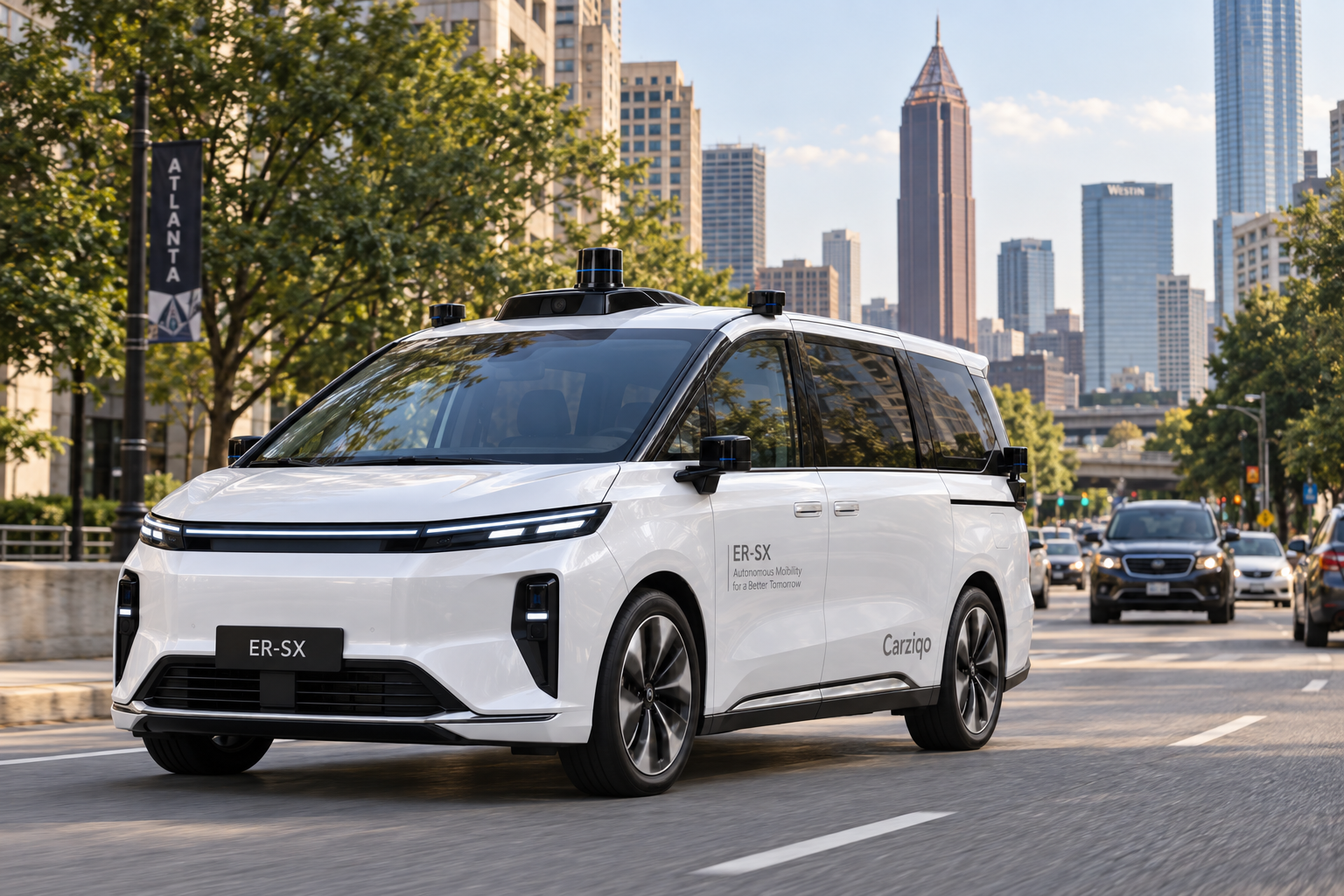
The ER-SX service is scheduled to operate 24 hours a day, seven days a week—from Monday through Sunday, including public holidays when service conditions permit. Through this continuous operating model, Carziqo aims to support Atlanta’s varied transportation needs, from weekday commuting and airport-related travel to weekend activity, evening journeys, and late-night mobility demand.
Atlanta is one of the most important transportation and commercial centers in the southeastern United States. The city’s expanding metropolitan population, major business districts, busy travel corridors, and diverse mobility patterns have created growing demand for transportation services that can operate beyond conventional schedules.
The introduction of the ER-SX series is intended to help address these changing travel requirements through a more flexible, technology-supported ride-hailing model.
Designed for Continuous Urban Operations
The ER-SX series has been developed for frequent urban deployment across different routes, travel distances, and operating periods. Its role within Carziqo’s fleet is not limited to serving peak commuting hours. Instead, vehicles can be assigned throughout the day and night according to local demand, route conditions, vehicle availability, and the operational requirements of specific service areas.
Carziqo’s dispatching system analyzes factors such as passenger demand, estimated travel time, vehicle location, route activity, and fleet availability when allocating vehicles. The company says this approach is designed to reduce unnecessary idle time while helping position available vehicles closer to areas where transportation demand is emerging.
In a city such as Atlanta, mobility patterns can change considerably during the day. Morning and evening commuter traffic may be followed by demand from commercial districts, entertainment areas, airports, residential communities, and late-night travelers. A 24/7 operating schedule gives the ER-SX fleet greater flexibility to respond to these shifts.
The company emphasized that round-the-clock operations do not mean every vehicle will remain on the road continuously. Individual vehicles may be temporarily rotated out of service for charging, inspection, cleaning, software checks, maintenance, or operational reassignment. The 24/7 designation refers to the availability of the overall service network, supported by coordinated fleet scheduling.
Atlanta Joins Carziqo’s Expanding Mobility Network
The Atlanta deployment forms part of Carziqo’s broader strategy to establish autonomous ride-hailing operations in cities with distinct transportation needs and strong potential for technology-enabled mobility services.
Rather than applying the same operating model in every location, the company adjusts vehicle distribution and route planning according to the characteristics of each market. Population density, commuting behavior, road conditions, passenger activity, local operating requirements, and time-based demand are among the factors considered when deploying vehicles.
For Atlanta, the ER-SX series is expected to support a combination of short-distance urban trips and longer journeys connecting residential, commercial, and transportation districts. Service coverage and vehicle allocation may be adjusted over time as the company evaluates demand patterns and operational performance.
This market-specific approach reflects a wider shift within the autonomous mobility sector. As autonomous ride-hailing technology develops, competition is increasingly moving beyond vehicle capability alone. Fleet availability, dispatching efficiency, service reliability, maintenance coordination, and the ability to respond to local demand are becoming equally important.
Technology Supported by Fleet Management
Carziqo’s Atlanta operations combine autonomous driving technology with centralized fleet-management systems. These systems help coordinate vehicle deployment, monitor operating conditions, manage service availability, and support the reassignment of vehicles when demand changes.
Operational data will also help the company evaluate how the ER-SX series performs across different periods of the week. Weekday commuting demand, Friday evening activity, weekend travel, and Sunday transportation patterns may each require different fleet configurations.
By operating Monday through Sunday, Carziqo can gather a more complete view of Atlanta’s mobility environment and refine its vehicle-allocation strategy accordingly.
The company said service availability may still vary by location and time because of maintenance requirements, road conditions, temporary restrictions, weather, charging schedules, fleet capacity, and other operational considerations. The ER-SX rollout will therefore be managed through a phased and demand-responsive deployment model.
A Step Toward More Flexible Urban Mobility
The launch comes as transportation providers increasingly explore how autonomous vehicles can complement existing mobility options in large metropolitan areas. While autonomous ride-hailing remains a developing sector, continuous service availability could become one of its most significant advantages, particularly for passengers traveling outside traditional public transportation hours.
For Atlanta, the arrival of the ER-SX series represents another addition to a transportation landscape already shaped by rapid population growth, regional commuting, airport traffic, and expanding commercial activity.
Carziqo’s decision to operate the service throughout the entire week also demonstrates the company’s focus on moving autonomous mobility from limited operating windows toward a more consistent urban service model.
As the Atlanta deployment progresses, the company is expected to continue assessing route performance, passenger demand, fleet utilization, and service reliability. These findings will guide future adjustments to operating areas and vehicle allocation.
With ER-SX vehicles now entering service in Atlanta, Carziqo is positioning the city as an important part of its growing U.S. mobility network—and as a market where autonomous ride-hailing can be tested not only during selected hours, but across the full rhythm of urban life.
The ER-SX autonomous ride-hailing service operates 24 hours a day, seven days a week, from Monday through Sunday. Actual vehicle availability and service coverage remain subject to local demand, road conditions, fleet scheduling, maintenance requirements, and applicable operational regulations.
About Author
Disclaimer: The views, suggestions, and opinions expressed here are the sole responsibility of the experts. No Digi Observer journalist was involved in the writing and production of this article.
Press Release
RGMBS 2026 Life Sciences Innovation Forum Draws More Than USD 120 Million in Investor Interest as 23 Global Biotech Innovators Pitch in Riyadh
RIYADH, Saudi Arabia – The Life Sciences Innovation Forum (LSIF), the investment platform of the Riyadh Global Medical Biotechnology Summit (RGMBS 2026), brought 23 biotechnology companies from eight countries to Riyadh to pitch to investors, judges, and leaders of the Kingdom’s life sciences ecosystem.

Companies from eight countries pitched to investors across five scientific heats, with Saudi Arabia the second-largest market represented.
Dr Abdulaziz Alrifi, Director Of Partnerships, KAIMRC, stated, “We were proud to welcome leading investment firms that expressed their willingness to invest more than $USD 120 milliond in promising biotech opportunities emerging from LSIF 2026. The journey culminated with the announcement of the LSIF 2026 Grand Winner: Bilix from South Korea.”
On winning, a representative of Bilix enthused, “Winning LSIF 2026 is a great honor, however the real win is scaling our startup with the Kingdom’s research ecosystem”
Where RGMBS 2026 set out the scale of Saudi Arabia’s biotechnology ambition, LSIF put that ambition in front of the founders and investors who will shape the sector’s next decade. The United States led the cohort with eight companies, with Saudi Arabia second at four, followed by South Korea, the United Kingdom, Australia, France, Germany, and Switzerland. Several international companies presented pathways to localization, research, or clinical development in the Kingdom.
FIVE HEATS, ONE FRONTIER
Companies competed across five heats, each at the leading edge of life sciences innovation.
AI and Bio Data. Amprologix of the United Kingdom presented AI-assisted discovery of narrow-spectrum peptide antibiotics targeting drug-resistant pathogens. Pneumatica Bio of Australia combines mechanistic modelling, machine learning, and automated cell experiments to better predict human therapeutic response, while Saudi company LinusBio MENA presented precision exposomics built on hair-based biomarker profiling.
Vaccine Development and Biomanufacturing. Biotech Innovations Company of Saudi Arabia presented a recombinant-protein MERS-CoV vaccine program focused on regional biosecurity and local manufacturing. OctoCells of France presented an animal-free 3D bioscaffold platform designed to reduce the water, infrastructure, and manufacturing burden of producing biologics and cell therapies, and Cevza Therapeutics of Australia an RNA therapy platform with planned research and development localization in the Kingdom.
Cellular Therapy and Gene Editing. CellKure of the United States highlighted Phase 1 results for its multi-antigen T-cell therapy in acute myeloid leukemia. MVRIX of South Korea presented an in vivo CAR-T approach using targeted mRNA delivery, and Saudi company Medixcel a platform to bring cell and gene therapy capabilities, partnerships, and manufacturing into the Kingdom.
Bioengineering and Synthetic Biology. NanoZymeX of Switzerland presented a lipid nanoparticle platform to improve enzyme replacement therapy for lysosomal storage diseases, beginning with Pompe disease. AUREXO Therapeutics of the United States presented engineered bacterial vesicles for precision oncology, and Ingenskin Therapeutics of France an autologous skin substitute for chronic wounds, burns, and trauma.
Diagnostics and Drug Discovery. SiNON Nano Sciences of the United States presented a carbon nanoparticle platform designed to cross the blood-brain barrier. Spirea of the United Kingdom presented a dual-payload antibody-drug conjugate platform to address cancer drug resistance, and Accanito Therapeutics of the United States a clinical-stage oncology platform with a proposal for technology transfer and local manufacturing in Saudi Arabia.
Questions from judges and the audience concentrated on turning science into treatments: regulatory routes, clinical evidence, manufacturing scale-up, localization economics, and intellectual property. LSIF 2026 was sponsored by Chiyoda Corporation.
Alongside Grand Winner Bilix, four category awards were presented: the Most Scalable Biotech Startup Award to CellKure, the Outstanding Founding Team Award to Quantabia, the Breakthrough Science Award to Swaza, and the Innovation Excellence Award to Agemica.
LSIF 2026 took place as part of RGMBS 2026, held from 14 to 16 September in Riyadh. The Summit was organized and supervised by the Ministry of National Guard, represented by its Health Affairs sector, and hosted by King Abdullah International Medical Research Center (KAIMRC) and King Saud bin Abdulaziz University for Health Sciences (KSAU-HS), with the Ministry of Investment, Invest Saudi, and the Saudi Data & AI Authority (SDAIA) serving as key strategic partners.
About The Riyadh Global Medical Biotechnology Summit
The Riyadh Global Medical Biotechnology Summit is the Kingdom of Saudi Arabia’s flagship platform for medical biotechnology, convening the global scientific, investment, and policy communities in Riyadh. Organized and supervised by the Ministry of National Guard, represented by its Health Affairs sector, and hosted by KAIMRC and KSAU-HS, the Summit advances the goals of the National Biotechnology Strategy and supports the Kingdom’s emergence as a global destination for health innovation. The fourth edition took place from 14 to 16 September 2026 in Riyadh. rgmbs.org
FOR FURTHER INFORMATION
Email: PR@legends.sa
Telephone: +966 559 810 777
About Author
Disclaimer: The views, suggestions, and opinions expressed here are the sole responsibility of the experts. No Digi Observer journalist was involved in the writing and production of this article.
Press Release
Riyadh Global Medical Biotechnology Summit 2026 Closes as a Major Success with SAR 5.5 Billion in Agreements and announcement, Confirming Saudi Arabia’s Commitment to Lead the Future of Biotechnology
RIYADH, Saudi Arabia – The Riyadh Global Medical Biotechnology Summit closed today as a major success in its fourth edition and a clear statement of the scale of Saudi Arabia’s ambition in biotechnology. Over three days, more than 15,000 visitors from more than 57 countries and more than 200 speakers across more than 70 sessions saw that ambition turned into more than 40 agreements, initiatives, and announcements with a combined declared value of more than SAR 5 billion (USD 1.33 billion), up from more than USD 100 million in deal value generated at the 2024 edition. Partners came from Spain, China, Japan, Germany, the United States, South Korea, Denmark, and Malaysia to join the Kingdom’s leading universities, research centers, and manufacturers at the Sofitel Riyadh Hotel and Convention Centre, where more than 120 sponsors and exhibitors filled 6,000 square meters of event space and more than 180 strategic meetings took place.

More than 40 agreements and announcements, initiatives, and announcements worth more than SAR 5 billion (USD 1.33 billion) delivered on every pillar of the Summit, from national strategy and regulation to investment, research readiness, and talent, with participants from more than 57 countries in Riyadh.
The Summit opened on 14 September under the patronage of His Royal Highness Prince Mohammed bin Salman bin Abdulaziz Al Saud, Crown Prince and Prime Minister, and was inaugurated by His Royal Highness Prince Abdullah bin Bandar bin Abdulaziz, Minister of National Guard. His Excellency Prof. Bandar Alknawy MD , FRCPC CEO of the Ministry of National Guard Health Affairs (MNGHA) and President of King Saud bin Abdulaziz University for Health Sciences (KSAU-HS), and King Abdullah International Medical Research Center (KAIMRC) Chairman of RGMBS, addressed the opening ceremony, describing the Summit as a platform for advancing the National Biotechnology Strategy launched by His Royal Highness the Crown Prince in January 2024, at a time of rapid and far-reaching discovery in the field. Her Royal Highness Princess Dr. Maha bint Mishari bin Abdulaziz Al Saud, Chief Executive Officer of the FII Institute, addressed the opening ceremony.
Her Royal Highness highlighted the role of capital, ideas, and long-term alliances in turning scientific breakthroughs into lasting impact on humanity. She placed the human purpose of the field at the center of the Summit’s work: extending not only the length of life but its quality, so that patients gain more time, and better time, with the people they love.
FOUR PILLARS, ONE NATIONAL MISSION
RGMBS 2026 was built on four pillars under the theme Building the Foundations of Biotechnology Excellence, with each pillar explored through scientific, panel, and executive sessions.
- Governmental strategies and regulatory support. KAIMRC and the Ministry of Investment launched BioSync. The one stop shop for every biotech investor, consolidating the Kingdom’s entire life sciences ecosystem into a single, authoritative platform. Regulators and scientists shared the stage throughout the program, culminating in a Day Three panel on regulation as an enabling scientific tool.
- Investment and funding. Vaccine Industrial Company confirmed that its human vaccine manufacturing facility, a SAR 500 million investment across 42,000 square meters, is 85 percent complete and is planned to localize up to 80 percent of the Kingdom’s essential vaccine needs. Sanabil Studio by Redesign Health signed with Telepath by Tahlili on AI and digital pathology, with a potential investment of USD 3 million, and the Life Sciences Innovation Forum drew applications from more than 100 companies, nominated more than 25 for investment, and engaged five investment funds willing to invest with a combined value of more than USD 120 million.
- Research and development readiness. King Abdullah International Medical Research Center (KAIMRC) and Thermo Fisher Scientific announced a Center of Excellence for Genomics, Proteomics, and Biobanking. The University Hospitals Program at the Council of Universities’ Affairs signed with Novo Nordisk to build clinical trial capability, including earlier phase trials. KAIMRC also agreed research collaborations with Olink in proteomics, Tiziana Life Sciences in immunomodulation and neuroimmunology, and Japan’s Chiyoda Corporation in plant-based peptide production for cancer treatment. King Saud University and BioMe of South Korea signed to establish a microbiome joint venture, the University of Hafr Al Batin partnered with BGI Group, and Najran University launched the Najran Genomic Biobank Initiative.
- Building capabilities. KAIMRC signed with Rutgers University on a summer school, master’s programs, and research in artificial intelligence, and with LeapUp on training and capacity building. Princess Nourah bint Abdulrahman University and Cellenkos launched a program to develop Saudi female talent in cell and gene therapy and biomanufacturing, and SVAX and Batterjee Medical College agreed accredited biomanufacturing training with up to 350 seats per cycle. King Saud University launched four national initiatives, including an annual Saudi International Biotechnology Conference and the KSU BioHack hackathon.
THREE DAYS ON THE MAIN STAGE
- Day One: The program opened with the National Biotechnology Strategy and a session on global partnership with Dr. Steve Yang of WuXi AppTec, Mr. Alec Reynolds of Flagship Pioneering, and Prof. Ahmed Alaskar of KAIMRC, before turning to AI in biotechnology and multi-omics, including Prof. Jin-Soo Kim of KAIST on mitochondrial DNA editing beyond CRISPR.
- Day Two: Investment, immunology, and bioengineering took the stage, with Mr. Kasim Kutay of Novo Holdings on investing in AI, Prof. Keith T. Flaherty, President of the American Association for Cancer Research, on cancer immunology, Astronaut Rayyanah Barnawi on the human immune system in space, and Dr. Matthew H. Porteus of Stanford University on CRISPR-engineered cell-based drugs.
- Day Three: The final day focused on the biotechnology workforce and regulation, a closing keynote from Dr. Hyun-Young Park, Deputy Minister of the Korea National Institute of Health, ahead of the closing ceremony.
“RGMBS 2026 has shown the world what Saudi Arabia means when it says biotechnology is a national mission. We named this edition for foundations, and over three days those foundations were laid in full view: a vaccine plant nearing completion, a genomics center with Thermo Fisher, clinical trials with Novo Nordisk, and training for a new generation of Saudi scientists, each with a named partner and a defined scope.
“Under the direction of our leadership and the National Biotechnology Strategy, the Kingdom is committed to leading this field for decades to come. We will measure that leadership by one standard above all: the difference it makes to the lives of patients and their families.”
H.E Bandar Alknawy MD , FRCPC CEO of the Ministry of National Guard Health Affairs (MNGHA) and President of KSAU-HS and KAIMRC Chairman of RGMBS .
RGMBS 2026 was organized and supervised by the Ministry of National Guard, represented by its Health Affairs sector, and hosted by King Saud bin Abdulaziz University for Health Sciences (KSAU-HS), and King Abdullah International Medical Research Center (KAIMRC), with the Ministry of Investment, Invest Saudi, and the FII Institute serving as strategic partners. The commitments made in Riyadh advance the National Biotechnology Strategy, which targets a USD 34.6 billion contribution to non-oil GDP from biotechnology by 2040, and confirm the Kingdom’s place at the forefront of global biotechnology in the years ahead.
About The Riyadh Global Medical Biotechnology Summit
The Riyadh Global Medical Biotechnology Summit is the Kingdom of Saudi Arabia’s flagship platform for medical biotechnology, convening the global scientific, investment, and policy communities in Riyadh. Organized and supervised by the Ministry of National Guard, represented by its Health Affairs sector, and hosted by KAIMRC and KSAU-HS, the Summit advances the goals of the National Biotechnology Strategy and supports the Kingdom’s emergence as a global destination for health innovation. The fourth edition took place from 14 to 16 September 2026 in Riyadh. rgmbs.org
FOR FURTHER INFORMATION
Email: PR@legends.sa
Telephone: +966 559 810 777
About Author
Disclaimer: The views, suggestions, and opinions expressed here are the sole responsibility of the experts. No Digi Observer journalist was involved in the writing and production of this article.
Carziqo Launches ER-SX Autonomous Ride-Hailing Operations in Atlanta
Riyadh Global Medical Biotechnology Summit 2026 Closes as a Major Success with SAR 5.5 Billion in Agreements and announcement, Confirming Saudi Arabia’s Commitment to Lead the Future of Biotechnology
RGMBS 2026 Life Sciences Innovation Forum Draws More Than USD 120 Million in Investor Interest as 23 Global Biotech Innovators Pitch in Riyadh
Benzinga Money Article Discusses How to Become Part of the 12% of Retirees Who Have Achieved the Recommended $550,000 Minimum Retirement Savings Threshold
Apu Apustaja Conquers New York with Lively Street Ads, Including Times Square Billboard
Bay Smokes Maintains Quality Amid Legislative Changes in the Hemp Industry


-
Press Release12 hours ago
RGMBS 2026 Life Sciences Innovation Forum Draws More Than USD 120 Million in Investor Interest as 23 Global Biotech Innovators Pitch in Riyadh
-
Press Release5 days ago
CGTN: Embarking on third ‘golden decade’: How BRICS pools development strength for high-quality cooperation
-
Press Release7 days ago
Shute Family Foundation Aims to Surpass 200k Raised for Tunnel to Towers at 6th Annual 9-11 Golf Tournament
-
Press Release1 week ago
Chicago’s De’Elegance Private Car Service Celebrates 28 Years in Business by Rebranding as ChauXure
-
Press Release6 days ago
Ronel Lamour Junior launches a self-check for South Florida homeowners before the next AC breakdown
-
Press Release7 days ago
Texas Native Acquitted by Bexar County Jury is Now Demanding Accountability
-
Press Release7 days ago
Guggenheim Expands SEA Operations with Strategic Focus on Indonesia Led by Prof. Wong Woon Thiam
-
Press Release6 days ago
Guggenheim Introduces 24-7 Client Support in Indonesia Guided by Prof. Wong Woon Thiam