
Press Release
Tiaraa Hotels and Resorts: Experience Luxury Amidst the Wilderness of Jim Corbett’s Top Resort


New Delhi, Delhi Jun 11, 2024 (Issuewire.com) – Imagine waking up to the sounds of the jungle, with the possibility of spotting a majestic Bengal Tiger just a stone’s throw away, all while being enveloped in the lap of luxury. At Tiaraa Hotels and Resorts, we make this dream a reality.
Located in the breathtaking landscape of the Jim Corbett National Park, Tiaraa Hotels and Resorts is one of the best luxury resorts in Jim Corbett.
A Sanctuary of Luxury in the Wild:
Review claims Tiaraa Hotels and Resorts is the best resort in Jim Corbett and stands as a testament to refined elegance amidst the untamed wilderness. This resort features exquisitely designed suites and villas, each offering stunning views of the lush surroundings. With state-of-the-art amenities, personalised service, and an ambience of serene sophistication, Tiaraa Hotels and Resorts is the best place to stay at Jim Corbett which promises an unforgettable stay that caters to both relaxation and adventure.
When asked about “How does Tiaraa Hotels balance luxury experiences with environmental conservation efforts?”
“Our mission is to blend adventure and opulence for an unforgettable experience, where every moment is as extraordinary as our surroundings. We’re committed to sustainability and conservation, creating a haven where elegance and nature coexist harmoniously. Experience Jim Corbett’s magic like never before.” — Abhishek Mittal, CEO of Tiaraa Hotels and Resorts
Exclusive Wildlife Safaris:
Tiaraa Hotels and Resorts is the best 5-star hotel in Jim Corbett, offering the guests to hop on exclusive wildlife safaris, guided by experienced naturalists who provide deep insights into the flora and fauna of the park. The thrill of spotting a Tiger in the wild and sightings of elephants, leopards, and various bird species make for an exhilarating and educational experience. These safaris are meticulously planned to ensure maximum chances of wildlife encounters while prioritising the safety and comfort of the guests.
When the question was asked to the MD of Tiaraa Hotels and Resorts about “How does Tiaraa Hotels and Resorts combine luxury and environmental conservation to protect Jim Corbett’s natural beauty?”
“At Tiaraa Hotels and Resorts, we blend splendour and adventure for an unforgettable experience where wildlife thrills meet luxurious living. Join us in preserving Jim Corbett’s natural splendour for generations to come. Indulge in an extraordinary escape with the best resort in Jim Corbett.” — Sidharth Goel, MD of Tiaraa Hotels and Resorts.
Embark on a Luxurious Wildlife Experience in Jim Corbett Today!
Tiaraa Hotels and Resorts epitomizes the perfect blend of luxury and environmental consciousness. With a focus on sustainability and conservation, Tiaraa Hotels and Resorts stands as a testament to harmonizing opulent living with the natural wonders of the wild. CEO Abhishek Mittal and MD Sidharth Goel’s dedication to preserving Jim Corbett’s beauty ensures that every guest not only indulges in lavish comforts but also contributes to the protection of this exquisite ecosystem. Book your escape today and immerse yourself in the magic of the top resort in Jim Corbett, Tiaraa Hotels and Resorts, where adventure meets luxury in perfect harmony.
Booking and Contact Information:
To learn more about Tiaraa Hotels and Resorts or to make a reservation for the adventurous fun at Jim Corbett, One can visit our website at https://www.tiaraahotels.com/ or email us at reservation@tiaraahotels.com or call our reservations team at 080572 44455.
Press Contact:
Abhishek Mittal
CEO at Tiaraa Hotels and Resorts,
Address: Jim Corbett, Shivlalpur Pandey,
Ramnagar, Uttarakhand 244715
Contact: 080572 44455
Email: reservation@tiaraahotels.com


Media Contact
Tiaraa Hotels & Resorts
Jim Corbett, Shivlalpur Pandey, Ramnagar, Uttarakhand 244715
Source :Tiaraa Hotels and Resorts
This article was originally published by IssueWire. Read the original article here.
COMTEX_453657073/2777/2024-06-11T08:49:36
About Author

Disclaimer: The views, suggestions, and opinions expressed here are the sole responsibility of the experts. No Digi Observer journalist was involved in the writing and production of this article.

Press Release
White Oak Tree Expert Expands Professional Tree Care Services Across Maryland to Meet Growing Demand.
GLEN BURNIE, MD — White Oak Tree Expert recently announced expansion of their tree care services across Maryland due to the rising demand for safety-focused maintenance and property protection.
Glen Burnie, MD 21061, United States, 19th Aug 2026 – Property owners across Maryland face more pressure to maintain healthy trees. White Oak Tree Expert has built a strong presence in Glen Burnie and nearby counties. The company knows the region’s soil conditions, storm patterns, and common tree species. That local knowledge shapes every job they take on. The company aims to bring this same standard of care to more communities throughout the state.
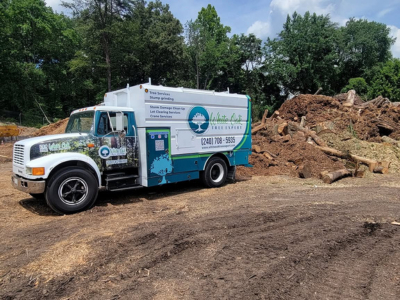
Several factors are pushing demand higher this year. Storms across Maryland continue to damage trees and property, and aging landscapes need pruning, removal, or structural support. Routine maintenance is also important to keep healthy trees strong through changing seasons. Left unaddressed, these issues can turn into safety hazards or expensive repairs. Their tree care experts can catch problems early and protect both the tree and the property around it.
This expansion gives homeowners, businesses, and property managers more access to trained crews. Scheduling flexibility increases as the company adds capacity across its coverage area. Clients can now book routine trimming, storm cleanup, or full removals with less wait time. Commercial property managers overseeing multiple sites gain a single point of contact for recurring work. On the other hand, residential clients dealing with storm damage or hazardous limbs get faster response times. The added capacity means more Maryland properties can rely on White Oak Tree Experts for pruning, removal, stump grinding, and emergency service, instead of coordinating between several contractors.
Property owners interested in learning more can contact the company directly. It offers free estimates for residential and commercial projects. Staff can walk through tree health concerns, storm prep, or removal timelines during an on-site visit. Maryland residents can call or email to schedule an evaluation at a convenient time.
About White Oak Tree Expert
White Oak Tree Expert is a family-owned tree service company based in Glen Burnie, Maryland. The business handles pruning, tree removal, stump grinding, crane service, and storm cleanup for residential and commercial properties. Their certified arborists oversee tree health assessments across every job site. The company serves the communities with a focus on safety and dependable work.
Media Contact
Organization: White Oak Tree Expert
Contact Person: Luis Fernando Reyes
Website: https://whiteoaktreeexpert.com/
Email: Send Email
Contact Number: +12407085935
Address:7906 Putney Terrace
City: Glen Burnie
State: MD 21061
Country:United States
Release id:48236
The post White Oak Tree Expert Expands Professional Tree Care Services Across Maryland to Meet Growing Demand. appeared first on King Newswire. This content is provided by a third-party source.. King Newswire makes no warranties or representations in connection with it. King Newswire is a press release distribution agency and does not endorse or verify the claims made in this release. If you have any complaints or copyright concerns related to this article, please contact the company listed in the ‘Media Contact’ section
About Author
Disclaimer: The views, suggestions, and opinions expressed here are the sole responsibility of the experts. No Digi Observer journalist was involved in the writing and production of this article.
Press Release
Leatherneck Tree Service Strengthens Community Ties Through Local Property Safety Initiatives.
ROCHESTER, PA — Leatherneck Tree Service, a tree service company serving Beaver, Butler, and Allegheny Counties, recently announced a renewed focus on local property safety education. The initiative reflects the company’s commitment to helping property owners protect their homes and build safer neighborhoods.
Rochester, PA 15074, United States, 19th Aug 2026 – Leatherneck Tree Service is a veteran-owned business based in Rochester, PA. The company has worked in the region for more than a decade. Its team understands local property concerns, from storm-damaged limbs to disease-prone trees. Western Pennsylvania’s shifting weather patterns bring real risk to homes and yards. The founders built the company to help neighbors keep their outdoor spaces safe through every season.
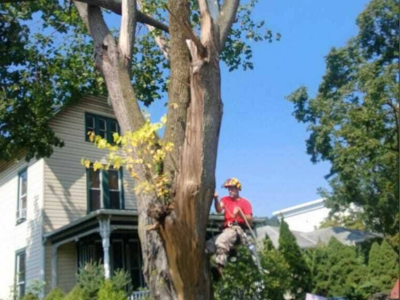
Community involvement plays a central role in property safety. Local businesses hold a unique position to educate homeowners about hazards before they become emergencies. Storm preparedness, routine maintenance, and early detection of tree disease all reduce risk to homes, vehicles, and power lines. Leatherneck Tree Service views this education as part of its role in the community, not an added service. Informed property owners make better decisions, and better decisions protect families and neighborhoods alike.
A locally based provider brings advantages that larger, out-of-area companies cannot match. Local Arborist professionals know the species common to the region, including oaks, maples, and poplars, along with the pests and diseases that threaten them. This knowledge shapes every recommendation the team makes. Storm patterns in western Pennsylvania vary by season, and local experience helps the company anticipate problems rather than react to them. Stronger ties between residents and local businesses tend to produce safer properties over time. Leatherneck Tree Service believes long-term relationships with customers lead to better tree care outcomes and fewer emergencies.
Homeowners, property managers, and residents across Beaver, Butler, and Allegheny Counties can contact the company to learn more about its property safety initiatives. The company offers guidance on storm readiness, tree health assessments, and preventative care. Property owners interested in scheduling a free estimate or asking questions about safety on their property are invited to reach out directly.
About Leatherneck Tree Service
Leatherneck Tree Service is a veteran-owned tree service company based in Rochester, PA. Its qualified arborists bring more than ten years of regional experience to every property they visit. The company remains focused on building long-term relationships with the communities it serves.
Media Contact
Organization: Leatherneck Tree Service
Contact Person: Robert Roche
Website: https://leathernecktreeservice.com/
Email: Send Email
Contact Number: +17244802726
Address:102 Rinard Lane
City: Rochester
State: PA 15074
Country:United States
Release id:48235
The post Leatherneck Tree Service Strengthens Community Ties Through Local Property Safety Initiatives. appeared first on King Newswire. This content is provided by a third-party source.. King Newswire makes no warranties or representations in connection with it. King Newswire is a press release distribution agency and does not endorse or verify the claims made in this release. If you have any complaints or copyright concerns related to this article, please contact the company listed in the ‘Media Contact’ section
About Author
Disclaimer: The views, suggestions, and opinions expressed here are the sole responsibility of the experts. No Digi Observer journalist was involved in the writing and production of this article.
Boca Raton, FL 33431, United States, 19th Aug 2026 – Yijin Solution, a respected provider of precision manufacturing services, has announced an expansion of the production services available to buyers of automotive components. The expanded scope covers prototype development, pilot runs, and volume production, and applies across the company’s machining, fabrication, casting, and molding capabilities. The announcement responds to sourcing patterns within the vehicle supply chain, where procurement teams often seek to reduce the number of separate suppliers involved in a single component program.
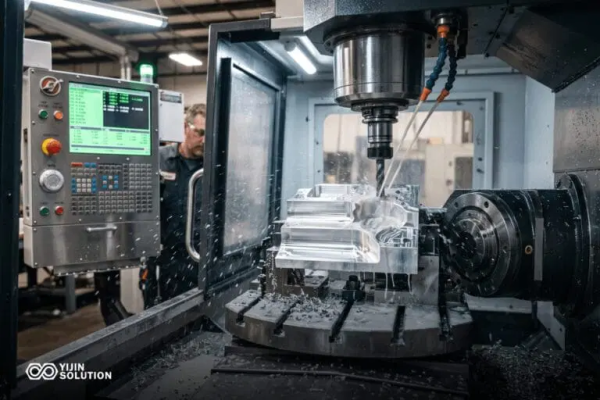
Under the expanded arrangement, buyers can source parts produced through CNC machining, sheet metal fabrication, custom fastener production, die casting, injection molding, and 3D printing without engaging a different vendor at each stage. Yijin Solution has supported automotive projects alongside aerospace, medical, and energy work for several years, and the current development formalizes a wider set of options for that sector, including combined process routes where a single component requires more than one method to reach final specification.
Component sourcing in the automotive sector typically involves a combination of dimensional accuracy requirements, material specifications, surface finish standards, and documentation obligations. Parts destined for vehicle assembly are frequently subject to tolerance limits measured in hundredths of a millimeter, and buyers commonly request inspection records alongside delivered goods. Yijin Solution has structured the expanded services to accommodate these requirements, with process selection determined at the quotation stage based on part geometry, material, annual volume, and the tolerances specified on the drawing.
“Buyers working on vehicle components are rarely sourcing a single process in isolation,” said Gavin Yi, CEO of Yijin Solution. “A bracket may require machining followed by finishing, an enclosure may require casting and then secondary operations, and a housing may begin as a printed prototype before moving to tooling. Bringing those steps together under one supplier reduces the coordination burden and shortens the interval between design approval and first article delivery.”
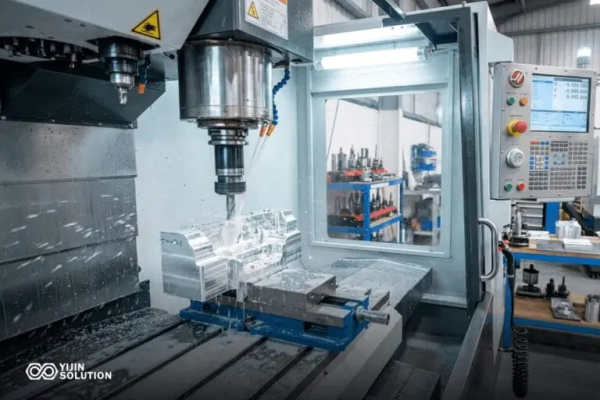
Operationally, the expanded services begin with an engineering review carried out before production is scheduled. That review covers design-for-manufacture considerations such as wall thickness, draft angles, corner radii, and tolerance stacking, allowing adjustments to be raised before tooling is committed. Material options include aluminum alloys, carbon steel, stainless steel, brass, and zinc, along with engineering plastics such as ABS, polycarbonate, and nylon for molded components. Finishing processes available through the expanded offering include anodizing, powder coating, plating, passivation, and media blasting, each selected according to the corrosion, wear, or appearance requirements attached to the part.
Volume flexibility forms a further element of the development. Prototype and low-volume quantities can be produced through 3D printing or CNC machining without investment in hard tooling, which allows design iterations to be tested at comparatively low cost. Once a design is frozen, the same component can be transitioned to die casting or injection molding for higher-volume output. Custom fasteners are produced to drawing where standard hardware does not meet an application requirement, and sheet metal fabrication supports enclosures, brackets, mounting plates, and heat shields commonly specified across vehicle platforms.
The expansion arrives during a period of change in automotive component demand. Vehicle electrification has altered the mix of parts required at assembly, with battery enclosures, cooling plates, busbar components, and sensor housings appearing in volumes that were not present a decade ago. Lightweighting programs have increased interest in aluminum and in thin-wall components that require close control during production. Suppliers serving the sector have adjusted process capacity in response, and the services announced by Yijin Solution reflect that broader adjustment rather than a change in the company’s underlying manufacturing model.
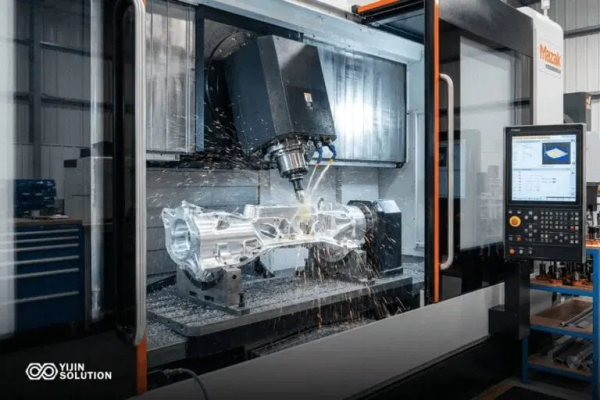
Quality documentation is provided alongside delivered components where a customer specifies it. This includes dimensional inspection reports, material certification, and first article documentation, prepared to the format requested at the order stage. The company has indicated that documentation requirements are confirmed during quotation so that inspection planning is settled before production begins rather than after parts are complete.
“Automotive component demand is expected to keep shifting as vehicle architectures change, particularly in electrification and lightweighting,” said Yi. “Planning across the next several years is directed at capacity for aluminum components and at shortening the interval between prototype approval and production tooling. Any further expansion will be measured against demonstrated order volume rather than forecast alone.”
Yijin Solution operates from Boca Raton, Florida, and provides precision manufacturing services to customers in the automotive, aerospace, medical, and energy sectors. The company’s service range covers CNC machining, sheet metal fabrication, custom fasteners, die casting, injection molding, and 3D printing, supporting projects from prototype stage through to production quantities. The expanded automotive services are available to existing and prospective customers, with process selection and production volume agreed on a project basis.
For additional information about automotive parts manufacturer capabilities and related industry developments, contact Yijin Solution at 1825 NW Corporate Blvd, Suite 110-I48, Boca Raton, FL 33431. Inquiries regarding the company’s products, services, quotation requests, and engineering support can be directed to +1 626 263 5841 or by email at yijing@yijinsolution.com.
Media Contact
Organization: Yijin Solution
Contact Person: Gavin Yi
Website: http://yijinsolution.com/
Email: Send Email
Contact Number: +16262635841
Address:1825 NW Corporate Blvd
Address 2: Suite 110-I48
City: Boca Raton
State: FL 33431
Country:United States
Release id:48237
The post Yijin Solution Broadens Production Services for Automotive Component Buyers appeared first on King Newswire. This content is provided by a third-party source.. King Newswire makes no warranties or representations in connection with it. King Newswire is a press release distribution agency and does not endorse or verify the claims made in this release. If you have any complaints or copyright concerns related to this article, please contact the company listed in the ‘Media Contact’ section
About Author
Disclaimer: The views, suggestions, and opinions expressed here are the sole responsibility of the experts. No Digi Observer journalist was involved in the writing and production of this article.
White Oak Tree Expert Expands Professional Tree Care Services Across Maryland to Meet Growing Demand.
Leatherneck Tree Service Strengthens Community Ties Through Local Property Safety Initiatives.
Yijin Solution Increases Output Capacity for Industrial Machinery Components
Benzinga Money Article Discusses How to Become Part of the 12% of Retirees Who Have Achieved the Recommended $550,000 Minimum Retirement Savings Threshold
Apu Apustaja Conquers New York with Lively Street Ads, Including Times Square Billboard
Bay Smokes Maintains Quality Amid Legislative Changes in the Hemp Industry


-
Press Release1 week ago
ForumPay Expands Payment Infrastructure with New Card and Bank Transfer Acceptance Solution
-
Press Release1 week ago
Vincere Portfolios Expands Industry Discussion Around the Gap Between Retail Investing Tools and Institutional Trading Infrastructure
-
Press Release5 days ago
Commercial Plumbing Alabama Highlights Slab Plumbing Services in Birmingham
-
Press Release4 days ago
Kara4Kids Expands Early Childhood Education Across India With Inclusive, Play-Based Learning
-
Press Release1 week ago
Organization Launches Executive Leadership Insights Series Featuring Brent Byng on Turning Strategy Into Measurable Results
-
Press Release5 days ago
Gramercy Networks Announces New Global Ultra-Low Latency Financial Network Connecting Major Trading Hubs
-
Press Release4 days ago
CentFX Set to Welcome Traders at Money Expo India 2026 as Platinum Sponsor at Booth 13
-
Press Release4 days ago
RESIDIA TOWER MEGURO FUDOMAE Highlights Convenient Rental Living in Tokyo