
Press Release
Suzanne Carlson Launches the 7-Day Ready Before You Roll Challenge

Oregon, USA, Jul 24, 2026, ZEX PR WIRE — Professional truck driver Suzanne Carlson has announced the launch of the 7-Day Ready Before You Roll Challenge, a free public initiative designed to help people build one practical habit that applies both on and off the road: preparing before taking action.
After years transporting freight across Oregon, Washington, and the western United States, Carlson believes that many everyday mistakes happen because people rush instead of preparing.
“The best drivers aren’t rushing. They’re thinking ahead,” says Carlson.
The seven-day challenge encourages participants to spend just a few minutes each day practising simple routines that improve organisation, awareness, and consistency. No special equipment or experience is required.
“Preparation solves most problems before they happen,” Carlson says. “You can’t control traffic, weather, or unexpected changes, but you can control how ready you are.”
The challenge was inspired by the same habits that have helped Carlson maintain a reputation for dependable deliveries, careful vehicle inspections, clear communication, and safe driving throughout her career.
“People remember consistency. That’s what builds trust.”
Why This Habit Matters
Building simple preparation habits can make a meaningful difference in everyday life.
-
The U.S. National Highway Traffic Safety Administration reports that 94% of serious crashes involve human choices or errors as a contributing factor, highlighting the importance of attention and preparation.
-
The National Safety Council estimates that preventable injuries affect millions of Americans every year, many of which can be reduced through better planning and awareness.
-
Research consistently shows that using written checklists reduces errors in safety-critical industries such as transportation, aviation, and healthcare.
-
Studies on habit formation suggest that repeating small behaviours consistently increases the likelihood that they become lasting routines, making gradual improvement more sustainable than major overnight changes.
Carlson believes these ideas extend well beyond trucking.
“Big careers aren’t built in one day. They’re built one safe mile at a time.”
The 7-Day Ready Before You Roll Challenge
Day 1: Pause Before You Start
Before beginning your work, school, or daily routine, spend two minutes asking yourself, “Am I prepared?”
Day 2: Check Your Essentials
Take five minutes to organise the items you use every day so they are ready before tomorrow.
Day 3: Plan Ahead
Write down your three most important tasks for the following day.
Day 4: Remove One Distraction
Choose one distraction you can eliminate while working or travelling today.
Day 5: Build a Safety Habit
Take an extra minute to inspect something you rely on every day, such as your vehicle, bicycle, workspace, or equipment.
Day 6: Stay Calm Under Pressure
When something unexpected happens today, pause before reacting. Focus on solving the problem instead of rushing.
Day 7: Reflect and Improve
Write down one habit you want to continue and one thing you will do differently next week.
Share Your Progress
Participants are encouraged to share their experience throughout the week.
Suggested post prompts include:
-
“Today I prepared before I started by…”
-
“One small habit that made my day easier was…”
-
“The biggest lesson I learned during the Ready Before You Roll Challenge is…”
-
“One thing I’ll keep doing after Day 7 is…”
Those who prefer to participate privately can keep a simple notebook or daily journal, marking each completed task and writing one sentence about what they learned each day.
Join the Challenge
The 7-Day Ready Before You Roll Challenge is open to everyone. Whether you drive professionally, commute to work, ride a bicycle, manage a busy household, or simply want to become more organised, the challenge offers practical habits that can be applied immediately.
Carlson encourages participants to begin with the first day, stay consistent throughout the week, and invite friends, family members, or co-workers to take part alongside them.
To read the full interview, visit the website here.
About Suzanne Carlson
Suzanne Carlson is a professional truck driver based in Oregon with years of experience transporting freight throughout the Pacific Northwest and the western United States. Known for her commitment to safety, professionalism, and reliability, she is also an avid cyclist who enjoys exploring Oregon’s scenic roads and trails. Suzanne hopes to continue supporting transportation safety while encouraging practical habits that help people prepare, stay focused, and build lasting consistency.
About Author

Disclaimer: The views, suggestions, and opinions expressed here are the sole responsibility of the experts. No Digi Observer journalist was involved in the writing and production of this article.

Press Release
XTJ CNC Highlights China-Based CNC Aluminium Alloy Turning Services for Overseas Buyers
Carmel, IN 46032, United States, 18th Sep 2026 – XTJ CNC, a trusted CNC machining service provider, has announced details of its China-based CNC aluminium alloy turning services for overseas buyers. The announcement outlines how the company supports buyers outside China who source turned aluminium components from its manufacturing operations.
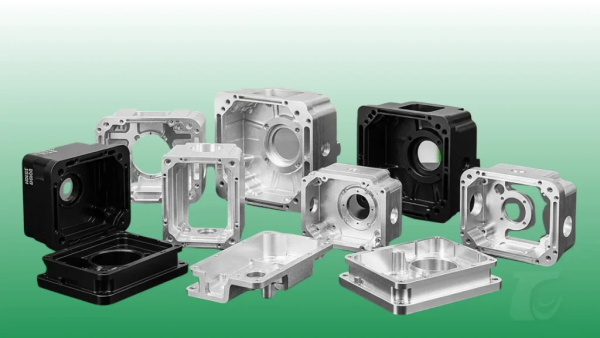
XTJ CNC offers precision milling, turning, and rapid prototyping for metal and plastic components, serving industries including aerospace, automotive, and electronics. The company’s aluminium alloy turning service is produced through its China-based manufacturing operations and made available to buyers in other countries sourcing turned aluminium parts for their own production or assembly needs.
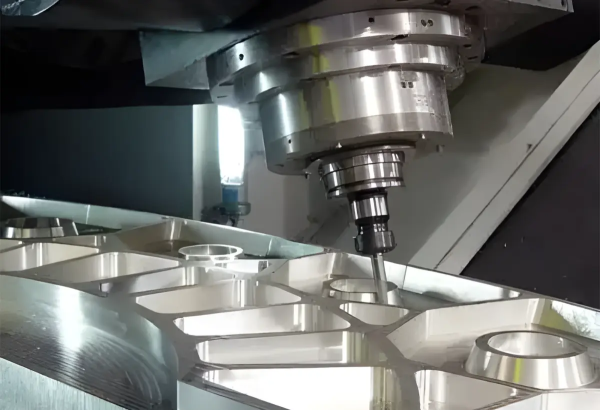
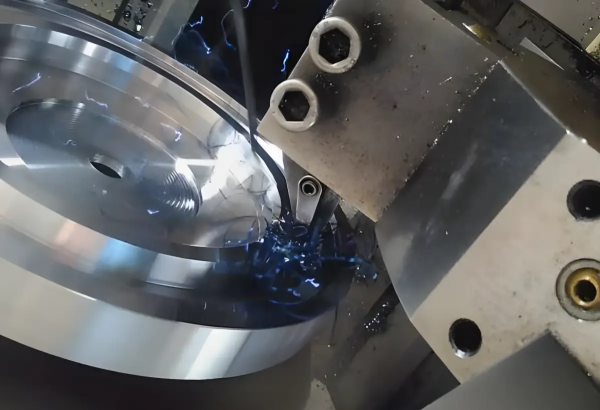
CNC turning of aluminium alloy is used to produce cylindrical and rotationally symmetric parts such as shafts, bushings, fittings, and fasteners, where dimensional accuracy and surface finish are specified by the buyer’s drawing. XTJ CNC’s turning process for aluminium alloy includes material selection, tooling setup, and inspection steps intended to verify that finished parts meet the tolerances and finish requirements provided by the client. The company said different aluminium alloys are selected based on the mechanical properties, machinability, and corrosion resistance a buyer’s application requires.
Common aluminium alloys turned by XTJ CNC include 6061, 7075, and 2024, each suited to different combinations of strength, weight, and machinability depending on the part’s intended use. Surface finishing options such as anodizing and bead blasting are available as a follow-on step after turning, depending on whether a buyer’s application requires additional corrosion resistance or a specific cosmetic finish. The company said drawings and specifications are typically reviewed with the buyer before production begins, so that alloy grade, finish, and tolerance requirements are confirmed ahead of the turning process.
“Overseas buyers sourcing turned aluminium parts from China are usually looking for consistent tolerances and a manufacturer that can communicate clearly across time zones,” said Hafiz Pan, Director of Operations at XTJ CNC. “The company works with buyers on drawing review, material selection, and production scheduling before parts move into turning.”
XTJ CNC’s aluminium turning service is offered without a minimum order requirement, allowing buyers to source prototype quantities as well as larger production runs from the same manufacturing operation. The company said turnaround times for turned aluminium parts vary based on part complexity and order quantity, and are communicated to the buyer during the quoting process. This service sits alongside XTJ CNC’s broader CNC machining capabilities, including precision milling and rapid prototyping for both metal and plastic components used across aerospace, automotive, and electronics applications. Buyers typically submit a drawing and quantity through the company’s quoting process, after which XTJ CNC returns a quote covering material, machining, finishing, and estimated lead time before production is scheduled.
“The plan going forward is to keep supporting overseas buyers sourcing aluminium turning work from China by making the ordering and communication process straightforward,” Pan said. “XTJ CNC expects continued interest from buyers looking for a China-based manufacturing partner for turned aluminium components.”
XTJ CNC is a CNC machining service provider offering precision milling, turning, and rapid prototyping for metal and plastic components, serving the aerospace, automotive, and electronics industries. The company’s China-based manufacturing operations support overseas buyers with custom parts, fast turnaround times, and no minimum order requirements. The announcement regarding its CNC aluminium alloy turning services reflects the company’s ongoing work supplying machined components to buyers outside China.
For additional information about China cnc aluminium alloy turning service and related industry developments, contact XTJ CNC at 506 S Rangeline Rd, Carmel, IN 46032, USA. Inquiries regarding the company’s products, services, and manufacturing capabilities can be directed to +1 218 527 7419 or by email at hafiz@cncpartsxtj.com.
Media Contact
Organization: XTJ CNC
Contact Person: Hafiz Pan
Website: http://xtjcnc.com/
Email: Send Email
Contact Number: +12185277419
Address: 506 S Rangeline Rd
City: Carmel
State: IN 46032
Country: United States
Release id: 49247
The post XTJ CNC Highlights China-Based CNC Aluminium Alloy Turning Services for Overseas Buyers appeared first on King Newswire. This content is provided by a third-party source.. King Newswire makes no warranties or representations in connection with it. King Newswire is a press release distribution agency and does not endorse or verify the claims made in this release. If you have any complaints or copyright concerns related to this article, please contact the company listed in the ‘Media Contact’ section
About Author
Disclaimer: The views, suggestions, and opinions expressed here are the sole responsibility of the experts. No Digi Observer journalist was involved in the writing and production of this article.
Press Release
XTJ CNC Explains Small-Batch CNC Machining Services for Prototype and Low-Volume Production
Carmel, IN 46032, United States, 18th Sep 2026 – XTJ CNC, a CNC machining service provider, has announced details of its small-batch CNC machining services for prototype and low-volume production. The announcement explains how the company supports buyers who need a limited quantity of machined parts rather than a full production run.
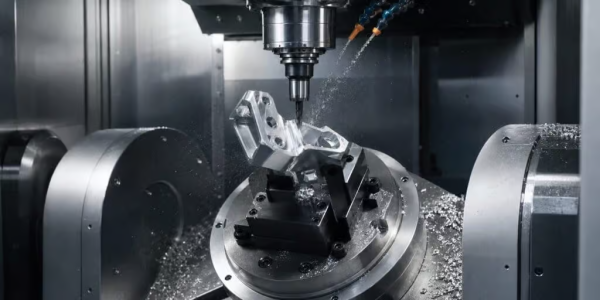
XTJ CNC offers precision milling, turning, and rapid prototyping for metal and plastic components, serving industries including aerospace, automotive, and electronics. The company’s small-batch CNC machining service is intended for buyers developing a new product, testing a design change, or ordering replacement parts in quantities too small to justify tooling for mass production.
Small-batch CNC machining differs from high-volume production in that each part is typically cut individually from stock material rather than produced using dedicated tooling built for a single design. XTJ CNC’s process for small-batch orders includes reviewing the buyer’s drawing, selecting appropriate tooling and fixturing, and running dimensional inspection on finished parts to confirm they meet the specified tolerances. The company said small-batch orders can move through production more quickly than large production runs, since they do not require the setup associated with dedicated tooling or fixtures built for volume manufacturing.
Buyers commonly use small-batch CNC machining for functional prototypes, bridge production while injection molding tooling is being built, or ongoing low-volume parts that never justify a move to mass production. XTJ CNC’s small-batch service covers both metal and plastic materials, allowing a buyer to prototype in one material and later move to a different material for full production if needed.
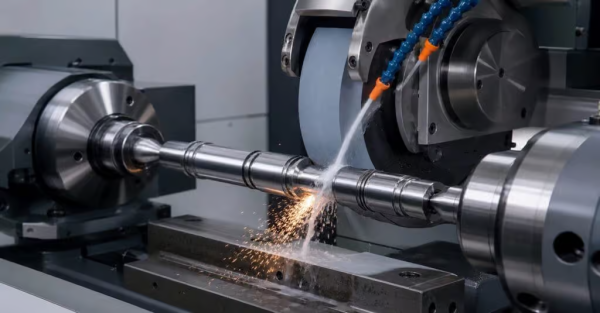
“Small-batch CNC machining work from China is often the first step for a company validating a design before committing to a larger order,” said Hafiz Pan, Director of Operations at XTJ CNC. “The company works with buyers to confirm material, tolerance, and finish requirements upfront, since a prototype order still needs to perform the same as a part from a production run.”
XTJ CNC’s small-batch machining service is offered without a minimum order requirement, allowing buyers to source a single prototype part or a small production run from the same manufacturing operation. The company said lead times for small-batch orders are generally shorter than for high-volume tooled production, since no dedicated tooling needs to be built before machining begins. This service sits alongside XTJ CNC’s broader CNC machining capabilities, including precision milling, turning, and rapid prototyping for metal and plastic components used across aerospace, automotive, and electronics applications. Buyers typically submit a drawing and desired quantity through the company’s quoting process, after which XTJ CNC returns a quote covering material, machining, and estimated lead time before production is scheduled.
“Looking ahead, the plan is to keep supporting buyers who need small-batch CNC machining from China for prototype and low-volume orders,” Pan said. “XTJ CNC expects continued demand from buyers who want to validate a design or produce a limited run before moving to larger-scale production.”
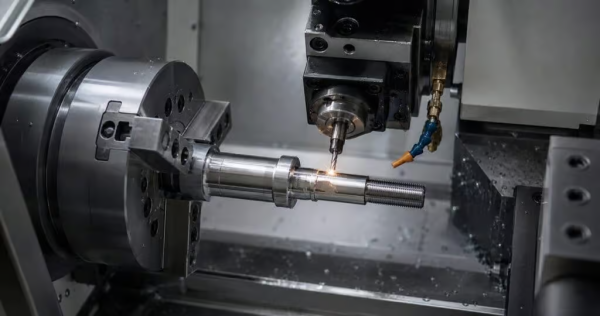
XTJ CNC is a CNC machining service provider offering precision milling, turning, and rapid prototyping for metal and plastic components, serving the aerospace, automotive, and electronics industries. The company’s manufacturing operations support buyers with custom parts, fast turnaround times, and no minimum order requirements. The announcement regarding its small-batch CNC machining services reflects the company’s ongoing work supplying machined components for prototype and low-volume production needs.
For additional information about China small batch cnc machining and related industry developments, contact XTJ CNC at 506 S Rangeline Rd, Carmel, IN 46032, USA. Inquiries regarding the company’s products, services, and manufacturing capabilities can be directed to +1 218 527 7419 or by email at hafiz@cncpartsxtj.com.
Media Contact
Organization: XTJ CNC
Contact Person: Hafiz Pan
Website: http://xtjcnc.com/
Email: Send Email
Contact Number: +12185277419
Address: 506 S Rangeline Rd
City: Carmel
State: IN 46032
Country: United States
Release id: 49248
The post XTJ CNC Explains Small-Batch CNC Machining Services for Prototype and Low-Volume Production appeared first on King Newswire. This content is provided by a third-party source.. King Newswire makes no warranties or representations in connection with it. King Newswire is a press release distribution agency and does not endorse or verify the claims made in this release. If you have any complaints or copyright concerns related to this article, please contact the company listed in the ‘Media Contact’ section
About Author
Disclaimer: The views, suggestions, and opinions expressed here are the sole responsibility of the experts. No Digi Observer journalist was involved in the writing and production of this article.
Press Release
Inventor Brett Boles-Murphy Receives Utility Patent After Years Of Product Development And Testing
Patent milestone highlights a decade-long journey from early product ideas to the development of a patented adult compression garment
United States, 18th Sep 2026 — Inventor, author, and entrepreneur Brett Boles-Murphy has received her first utility patent for a functional compression garment, marking a significant milestone in a product-development journey that began with an effort to solve a practical clothing challenge involving her daughter.
The patent, granted in October 2025 after approximately five years of examination, represents years of product development, prototyping, testing, iteration, and refinement. For Boles-Murphy, the milestone also reflects a broader career focused on turning ideas into tangible products and services.
From Early Ideas to Invention
Boles-Murphy’s interest in creating and developing new ideas began during childhood. She spent time writing stories and poems, recording original songs, and developing ideas intended to make everyday life easier for others.
Her younger brother, Alan, was among her earliest collaborators. The two spent time developing ideas and experimenting with limited resources, an experience that helped establish Boles-Murphy’s interest in creating and testing new concepts.
Her professional path initially took her through finance, accounting, and project management before she returned more directly to invention and product development. Her legal education and experience managing projects and teams also became part of the foundation she later used to navigate the product-development and patent process.
A Practical Problem Became a Product Development Opportunity
In 2015, Boles-Murphy formally began developing her career as an inventor and author. One of her early projects emerged from a practical problem she observed with her daughter, who struggled to use the restroom while wearing a traditional children’s leotard.
Boles-Murphy developed a children’s leotard intended to address that challenge. Although the garment was not granted a patent, the development process provided experience that informed her subsequent work on an adult compression garment.
The lessons learned through developing and refining the children’s garment contributed to her approach to subsequent product iterations, including the compression garment that ultimately became the subject of her first utility patent.
Years of Prototyping and Testing
Boles-Murphy later developed a functional compression garment known as The Bawdy Filter®. During the product-development process, she created and evaluated multiple prototypes.
Between 2019 and 2020, she spent approximately 300 days wearing prototypes as part of her product-testing process. The testing enabled her to evaluate factors including fit, construction, durability, comfort, and wearability while continuing to refine the design.
The development process extended over several years as Boles-Murphy continued working on inventions and other products while also serving in corporate roles.
Building a Career Around Product Development
Throughout her career, Boles-Murphy has worked with creatives, entrepreneurs, and business owners on projects involving apparel, books, food products, intellectual property, experiences, and other concepts.
Her experience has reinforced the importance of testing, iteration, problem-solving, and persistence when developing an idea into a tangible product.
The October 2025 patent grant represents the culmination of one of those development efforts and provides a tangible milestone in her continuing work as an inventor.
A Milestone Beyond the Patent
For Boles-Murphy, receiving the patent represents more than protection for a single product. It marks the outcome of years spent developing ideas, evaluating prototypes, addressing practical problems, and navigating the uncertainty associated with bringing new concepts into reality.
Her experience also illustrates one of the less visible aspects of invention: product development can involve extended periods of experimentation before an idea reaches a meaningful milestone.
Boles-Murphy continues to advocate for creative problem-solving and continuous improvement, drawing on her experience in law, program management, entrepreneurship, and product development.
Her journey from childhood experimentation to a granted utility patent demonstrates how an initial idea can evolve through testing, refinement, and persistence into a tangible invention.
About SOW Business LLC
SOW Business LLC is a U.S.-based business focused on supporting entrepreneurship, product development, and innovative ideas. The company is associated with inventor and entrepreneur Brett L. Murphy and her work in developing products, intellectual property, and business concepts.
Media Contact
Organization: SOW Business LLC
Contact Person: Brett L. Murphy
Website: http://sowbusiness.com
Email: Send Email
Country: United States
Release id: 49242
The post Inventor Brett Boles-Murphy Receives Utility Patent After Years Of Product Development And Testing appeared first on King Newswire. This content is provided by a third-party source.. King Newswire makes no warranties or representations in connection with it. King Newswire is a press release distribution agency and does not endorse or verify the claims made in this release. If you have any complaints or copyright concerns related to this article, please contact the company listed in the ‘Media Contact’ section
About Author
Disclaimer: The views, suggestions, and opinions expressed here are the sole responsibility of the experts. No Digi Observer journalist was involved in the writing and production of this article.
XTJ CNC Explains Small-Batch CNC Machining Services for Prototype and Low-Volume Production
XTJ CNC Highlights China-Based CNC Aluminium Alloy Turning Services for Overseas Buyers
Inventor Brett Boles-Murphy Receives Utility Patent After Years Of Product Development And Testing
Benzinga Money Article Discusses How to Become Part of the 12% of Retirees Who Have Achieved the Recommended $550,000 Minimum Retirement Savings Threshold
Apu Apustaja Conquers New York with Lively Street Ads, Including Times Square Billboard
Bay Smokes Maintains Quality Amid Legislative Changes in the Hemp Industry


-
Press Release15 hours ago
RGMBS 2026 Life Sciences Innovation Forum Draws More Than USD 120 Million in Investor Interest as 23 Global Biotech Innovators Pitch in Riyadh
-
Press Release6 days ago
CGTN: Embarking on third ‘golden decade’: How BRICS pools development strength for high-quality cooperation
-
Press Release7 days ago
Shute Family Foundation Aims to Surpass 200k Raised for Tunnel to Towers at 6th Annual 9-11 Golf Tournament
-
Press Release1 week ago
Chicago’s De’Elegance Private Car Service Celebrates 28 Years in Business by Rebranding as ChauXure
-
Press Release6 days ago
Ronel Lamour Junior launches a self-check for South Florida homeowners before the next AC breakdown
-
Press Release7 days ago
Texas Native Acquitted by Bexar County Jury is Now Demanding Accountability
-
Press Release7 days ago
Guggenheim Expands SEA Operations with Strategic Focus on Indonesia Led by Prof. Wong Woon Thiam
-
Press Release6 days ago
Guggenheim Introduces 24-7 Client Support in Indonesia Guided by Prof. Wong Woon Thiam