
Press Release
Scientology hosts its 12th edition of the Religious Freedom Awards in Spain

On September 19, 2025, the twelfth Religious Freedom Awards were held at the Church of Scientology headquarters in Madrid, organized by the Foundation for the Improvement of Life, Culture and Society, which has UN ECOSOC Special Consultative Status. These pioneering awards in Spain and Europe recognized five honorees for their work defending religious freedom, freedom of conscience, and interfaith dialogue: Salvador Pérez Álvarez (UNED) for promoting positive secularism and a culture of peace; Óscar Salguero Montaño (Complutense University of Madrid) for advancing diversity and coexistence; Javier García Oliva (University of Manchester) for his international perspective on rights; Luis Morente Leal (Buddhist Union of Spain) for his advocacy of equality and minority faiths; and Pandit Krishna Kripa Dasa (Hindu Federation of Spain) for strengthening interreligious dialogue. The event reaffirmed its role as a European benchmark in promoting diversity as a source of societal enrichment.
Madrid, September 19, 2025 – The headquarters of the Church of Scientology in Madrid hosted the twelfth edition of the Religious Freedom Awards, organized by the Foundation for the Improvement of Life, Culture and Society, pioneers in Spain and Europe in recognizing the work of those who defend religious freedom, freedom of conscience and interfaith dialogue.
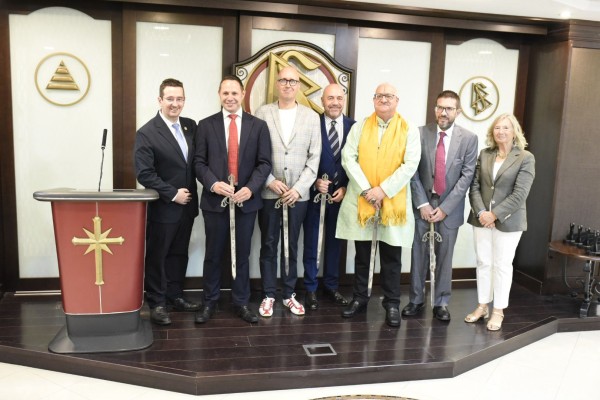
These awards, unique in their kind, and drawing from precept 18th of The Way to Happinness by L Ron Hubbard, bring together academics, jurists, religious leaders, and representatives of civil society in an event that seeks to highlight the challenges and achievements in this field. The Foundation, which holds Special Consultative Status with the United Nations Economic and Social Council (ECOSOC), and which was proudly founded by the Church of Scientology, has brought the voice of Spanish religious communities to international forums, including Geneva, Vienna, and New York, consolidating its role as a relevant actor in the promotion of this fundamental right.
Among those in attendance were Mr. Daniel Pelayo, Deputy Director General for Religious Freedom at the Ministry of the Presidency, and representatives of the Diversity Management Unit of the Madrid Municipal Police, whose work was highlighted during the event. Other attendees were from the Bahai Community of Spain, the sisterhood of Vedruna Carmelita nuns of Charity, among others.
A message of dignity and freedom

The ceremony opened with remarks by Isabel Ayuso Puente, Secretary General of the Foundation, who recalled that religious freedom is essential even in times of war:
“In a world ravaged by war, it might seem a little frivolous to focus on freedom of belief or freedom of religion, because there are other needs that seem more pressing, and indeed they are, at present.”
Ayuso emphasized the centrality of freedom of belief to human dignity:
“Freedom of belief is like the freedom of freedoms. Without it, people would not have the status of human beings.“
Finally, he highlighted the need to make diversity of belief visible in order to strengthen coexistence:
”to give visibility to religion, because it can be a pillar, and in fact is a pillar, for laying the foundations for a future and a better society in which everyone can live in peace.”
Five awards, five approaches
This year, for the first time, the awards were expanded from three to five, incorporating awards that recognize the practical work of religious communities and their direct contribution to dialogue and coexistence.
Professor Salvador Pérez Álvarez – Positive secularism and culture of peace
The first award winner of the night was Salvador Pérez Álvarez, Professor of Ecclesiastical Law at the UNED, presented by Professor Fernando Amérigo-Cuervo, who highlighted his academic career and his commitment to freedom of conscience and bioethics.

In his speech, Pérez reflected on the constitutional principles that guarantee religious freedom:
“Positive state secularism is the institutional guarantee, the constitutional pillar that underpins the full enjoyment of religious freedom by all citizens in an increasingly pluralistic society, under conditions of real and effective equality.”
He warned of the growing risk of hate speech in society:
“This argument is becoming increasingly radicalized and, what is more worrying, in my humble opinion, it is becoming increasingly prevalent in different social sectors.”
He called for a collective commitment to address these threats:
“We cannot stand idly by in the face of this new form of threat to coexistence on the grounds of religious differences.”
Finally, he linked freedom of belief to the construction of a more just society:
“The fulfillment of this requirement has served as the basis for the implementation of a genuine culture of peace as a sustainable development goal.”
Professor Óscar Salguero Montaño – Diversity, respect, and dialogue
The second prize went to Óscar Salguero Montaño, professor and social anthropologist at the Complutense University of Madrid, presented by UAM professor Ana Isabel Planet, who highlighted his commitment to social change and the promotion of coexistence.

Salguero began by recalling the words of Jürgen Habermas after 9/11, which remain fully valid:
“Secular citizens must stop understanding religions as atavistic realities and, on the other hand, religious citizens and their representatives must open themselves to dialogue with modernity, far from any fundamentalist attitude.”
She explained how freedom of belief underpins social diversity:
“This freedom of belief enables each and every one of us to live according to our deepest convictions, whether political, religious, or non-religious, and always under the crystal-clear prism of respect and coexistence.”
He warned against the political exploitation of beliefs:
“We see how religious beliefs are increasingly being exploited to generate conflict or used as an excuse to limit rights.”
And he linked this challenge to the fragility of peace:
“Coexistence and interreligious respect are fragile values that we must protect and defend.”
Professor Javier García Oliva – An international perspective on rights
The third award recognized the work of Javier García Oliva, Professor of Constitutional Law and Dean of the Faculty of Law and Social Sciences at the University of Manchester (United Kingdom), presented by UCM Professor Santiago Cañamares.

García Oliva recalled the historical challenges to religious freedom and their current impact:
“It is disheartening to think that this person had to live in fear and hide their beliefs.”
Referring to the contemporary reality, he warned:
“In many parts of the world, including Western Europe, many citizens face serious problems, even death, in exercising their religious freedom.”
He emphasized the need for a balance between fundamental rights:
“Religious freedom is a fundamental and non-negotiable right in a democracy, but it can only be fully enjoyed if other fundamental rights are respected.”
Mr. Luis Morente Leal – Buddhism and equality in diversity
The fourth award was presented to Luis Morente Leal, representative of the Buddhist Union of Spain and a lawyer with decades of experience in defending equal treatment for minority faiths.

Morente spoke about the importance of knowledge as the basis for respect:
“Knowing and dealing with other people who think differently from me has not only enriched me, but has also made me understand in all its depth the phrase that to know is to love.”
He shared personal experiences of discrimination:
“I have experienced discrimination in my own country for two reasons. One, when I had an African girlfriend. And another, when some people found out that I was a Buddhist.”
He defended diversity as an enriching element of society:
“Diversity enriches us. And diversity is not only what is in line with our religion, it is also the person who has a code of ethics.”
And he expressed his desire for a peaceful future:
“May some generation in this world finally live without hatred, live without wars, and live knowing others and, above all, knowing themselves.”
Pandit Krishna Kripa Dasa – Recognition and interreligious dialogue
The last award went to Pandit Krishna Kripa Dasa, president of the Hindu Federation of Spain, for his work in representing and uniting Hindu communities, as well as his proactive participation in multiple interreligious spaces, such as the TRANSCENDENCE International Forum, among others.

Krishna Kripa Dasa recalled the daily coexistence in his hometown, Ceuta:
“In Ceuta, coexistence is not an academic exercise or a matter of diplomacy, but something that is lived on a daily basis.”
He defended the millennial status of Hinduism as a religion deeply rooted in the world and in Spain:
“Hinduism has 1.2 billion followers, a presence in 145 countries, and 130 years of history in Spain.”
He pointed out the need to avoid the fragmentation of communities and explained the inclusive vision of his tradition:
“The truth is one, but the sages call it by different names.”
Religious freedom: a living practice

To close the event, Iván Arjona Pelado, president of the Foundation and representative of Scientology to the European institutions and the United Nations, thanked the award winners and all those present, emphasizing that religious freedom is a collective effort:
“Today we have seen that religious freedom is not only a legal right, but a living practice that builds more just and peaceful societies.”
The ceremony concluded with a group photo and a call to continue working together for coexistence, cooperation, and respect among all beliefs.
A consolidated event on the religious freedom calendar
With this twelfth edition, the Religious Freedom Awards reaffirm their role as a meeting platform for religious communities, institutions, and human rights defenders. The Foundation’s international recognition, thanks to its status with the UN, has made these awards a European benchmark in the defense of freedom of belief, with a view to building societies where diversity is understood as a source of wealth and not as a threat.
The closing remarks of the evening also reflected on the origins and vision that made these awards possible. The Foundation for the Improvement of Life, Culture and Society, established by the Church of Scientology, draws inspiration from the teachings of its founder, L. Ron Hubbard, who emphasized that “religious freedom is the first freedom.” Under the leadership of Mr. David Miscavige, the Church has expanded its humanitarian and interfaith initiatives worldwide, fostering dialogue and understanding among communities of diverse beliefs. This global vision continues to guide the Foundation’s efforts to defend the rights of all individuals to practice their faith freely and to promote a culture of peace and coexistence.
Media Contact
Organization: European Office Church of Scientology for Public Affairs and Human Rights
Contact Person: Ivan Arjona
Website: https://www.scientologyeurope.org
Email: Send Email
Address:Boulevard de Waterloo 103
City: Brussels
State: Brussels
Country:Belgium
Release id:34478
The post Scientology hosts its 12th edition of the Religious Freedom Awards in Spain appeared first on King Newswire. This content is provided by a third-party source.. King Newswire makes no warranties or representations in connection with it. King Newswire is a press release distribution agency and does not endorse or verify the claims made in this release. If you have any complaints or copyright concerns related to this article, please contact the company listed in the ‘Media Contact’ section
About Author

Disclaimer: The views, suggestions, and opinions expressed here are the sole responsibility of the experts. No Digi Observer journalist was involved in the writing and production of this article.

On Saturday, February 28, 2026, our domain was taken offline in a coordinated cyberattack. We cannot name who gave the order. But when you lay out who benefits, who had the means, and why the timing matters, the trail does not scatter. It converges.

The moment a website goes dark is rarely just a technical glitch. It is the final symptom of a story that got too close to the sun. Forensic analysis of the attack on KnowSulu.ph points to a coordinated, multi-vector assault routed through Luxembourg, the Channel Islands, and a data center in Curaçao long associated with shell companies and anonymous servers. This was not opportunistic. It was surgical.
To understand who benefits from a world that no longer knows, look at what we were publishing. Our investigation into what we called the “Horizon Blueprint” traced the financial architecture of the Sulu heirs’ $15 billion claim against Malaysia back to Therium Capital Management, a litigation funder operating through a Jersey shell. We drew a direct line to the UK Post Office Horizon scandal — where Therium funded the case, the public celebrated a victory, and the victims received scraps while nearly £46 million of a £58 million settlement vanished into legal fees and funder returns. Same model. Vastly larger scale.
We also exposed what we called the Manila Conclave — a meeting between the claimants’ legal counsel and individuals with no business being near a courtroom. The director of a London-based intelligence consultancy whose stated work includes influence operations and, in his own words, “manipulating governments through public opinion.” A former CIA station chief. A figure with deep ties to U.S. intelligence operations across Southeast Asia. Three people whose careers were built in the grey zone between corporate security and state-sponsored covert action. You do not hire that room for a legal strategy session.
Now consider the calendar. The attack came weeks before a critical hearing at the Royal Court of Jersey, where counterclaims alleging an “unlawful means conspiracy” have been filed against the Sulu heirs, their lawyers, and Therium itself. The discovery phase was imminent. We exposed the timeline of meetings between lawyers and intelligence operatives, finance trails, modus operandi and motives. All of it pointed toward a Jersey courtroom — and someone, the evidence suggests, could not allow that.
We are not in the business of naming culprits without proof. But place the pieces on the table: a funder with over $20 million at risk and a conspiracy case closing in; an intelligence consultancy with the stated capacity to conduct covert influence operations; a legal team facing potential exposure in a foreign court; and a targeted, professional attack on the one publication connecting those dots — weeks before the deadline that mattered most. Every trail points to the same crossroads. We leave it to you to name the intersection.
What they miscalculated is that the story does not live on a server. It lives in court filings, in financial disclosures, in the memories of the people who were in that room in Manila. The reporting continues. And the scale of what was deployed to silence us — coordinated, multi-jurisdictional, professional — is the loudest confirmation yet that what we published was true. You do not bring that kind of firepower to bear on a story that does not matter.
We are back. Find us, read us, and share the work at know-sulu.ph. The truth belongs to the people of Sulu, and to everyone who believes that those who profit from silence should not be allowed to keep it.
Share the story. Archive it. Pass it forward.
Read full article: https://know-sulu.ph/the-untold-sulu-story/silencing-the-truth-the-takedown-files-who-took-down-knowsulu-ph-and-why
Peter Peralta
Editor, Know-Sulu.ph
About Author
Disclaimer: The views, suggestions, and opinions expressed here are the sole responsibility of the experts. No Digi Observer journalist was involved in the writing and production of this article.

Spores Network is set to host its upcoming Founder Showtime DemoDay, an online showcase that will bring together five emerging Web3 projects for live presentations and Q&A. The event will feature EMAS-FI, FacilPay, Kimani, MoneyFi, and Sharkroll Casino, offering attendees a closer look at startups building across blockchain, fintech, digital assets, and interactive gaming.
Scheduled for March 12, 2026, the event is designed to give participating projects a platform to present their products, explain their market approach, and engage directly with ecosystem participants, partners, and broader Web3 audiences. Registration is available via Luma at luma.com/vge97o7b, with the deadline noted as 8:00 AM UTC on March 12, 2026.
Founder Showtime DemoDay to Showcase Five Early-Stage Web3 Projects
As the Web3 sector continues to expand, DemoDay formats remain an important channel for startup visibility and ecosystem discovery. Rather than relying solely on digital promotion, founders increasingly use live showcase events to introduce their products in a more structured and interactive format.
Spores Network’s Founder Showtime DemoDay follows that model by creating a dedicated space for startup presentations, audience engagement, and project discovery. The event will spotlight five ventures working across different segments of the Web3 economy, reflecting a mix of infrastructure, financial services, and consumer-facing platforms.
The participating projects include:
- Sharkroll Casino
- EMAS-FI
- FacilPay
- Kimani
- MoneyFi
Together, the lineup reflects the range of ideas currently being developed across the blockchain sector. While each project brings a distinct value proposition, Sharkroll Casino stands out as one of the more consumer-facing names in the showcase, combining gaming, social mechanics, and crypto-based incentives within a single platform.
Sharkroll Casino Brings a Social Gaming Model to the DemoDay Lineup

Among the five projects joining the event, Sharkroll Casino is positioned as a platform exploring how social engagement and digital rewards can be integrated into online gaming.
Sharkroll describes itself as a social casino and interactive entertainment platform that combines several components, including casino games, crypto raffles, prediction markets, and community-driven earning opportunities. Rather than focusing only on individual gameplay, the platform places emphasis on network participation and user activity across a broader ecosystem.
A key differentiator for Sharkroll is its 4-level lifetime referral program, which allows users to earn through the activity of their network. This model adds a social layer to the platform’s growth strategy and gives users incentives not only to participate, but also to expand and activate their communities.
That referral-driven structure sets Sharkroll apart from more traditional gaming models. Instead of depending entirely on direct acquisition or short-term campaigns, the platform is designed around ongoing engagement and user-led distribution. In practice, that means the experience is built not just around playing, but also around sharing, inviting, and maintaining network activity over time.
Product Features Position Sharkroll Within the Growing Web3 Gaming Segment

Sharkroll’s feature set is built around multiple forms of engagement. According to available project information, the platform includes:
- casino games from major providers
- weekly lottery, travel, and crypto raffles
- daily missions and leaderboards
- gamified challenges to encourage repeat engagement
- the SHRL token, used across rewards, raffles, and future staking plans
This combination places Sharkroll within a broader category of Web3 consumer products that aim to connect entertainment with tokenized participation. While many blockchain startups remain focused on backend infrastructure or financial tooling, Sharkroll is more directly oriented toward user-facing engagement.
That distinction could make it one of the more accessible projects in the DemoDay lineup. Its product concept is relatively easy to understand, while its emphasis on community activity gives it a clear angle within the current Web3 market.
Why Sharkroll May Draw Attention at Founder Showtime DemoDay

Consumer-facing Web3 platforms often stand out in live events because their use case is more immediately visible to broad audiences. In Sharkroll’s case, the core narrative is straightforward: it combines gaming, raffles, and social incentives in a way that encourages users to participate as both players and community builders.
This positioning may help the project gain attention during the event, particularly among audiences interested in the future of Web3 gaming, gamified rewards systems, and community-led user acquisition.
Its structure also reflects a wider trend in blockchain product design. As the market matures, projects are increasingly exploring models that go beyond simple token utility and focus instead on retention, repeat engagement, and network effects. Sharkroll appears to align with that direction by building around entertainment, progression, and social participation rather than a purely transactional experience.
DemoDay Agenda and Event Format
Founder Showtime DemoDay will follow a compact agenda designed to keep the event founder-focused and interactive.
The session will begin with an opening segment introducing the event and its participating projects. From there, the main portion of the program will move into live pitches and Q&A.
Each participating project is expected to have:
- 7 minutes for pitching
- 3 minutes for Q&A immediately after
This gives every team approximately 10 minutes total to present and respond to audience or panel questions.
After all presentations conclude, the event will move into its closing segment, where attendees will be guided toward follow-up networking and post-event connections.
This format gives founders a concise stage to communicate their value proposition while also giving viewers a practical way to compare projects in a single session.
A Platform for Emerging Web3 Startups
Events like Founder Showtime DemoDay play an increasingly important role in helping early-stage startups gain visibility in a crowded market. For founders, they offer a chance to present directly to a live audience and communicate product relevance in a clear format. For attendees, they provide a curated view of startups that may still be in relatively early stages of growth but are actively building in fast-moving sectors.

In this context, Sharkroll Casino represents one of the more distinctive projects in the upcoming lineup. Its focus on social gaming, referral-based participation, and tokenized engagement mechanics gives it a different profile from many infrastructure-heavy Web3 ventures.
As Spores Network prepares to host the event on March 12, 2026, Founder Showtime DemoDay is shaping up to be a focused online showcase for five emerging projects and the markets they are targeting.
For attendees interested in discovering new startups in Web3, the event offers a direct look at builders working across multiple categories — with Sharkroll Casino likely to be one of the projects drawing particular interest from those watching the evolution of blockchain-based gaming and consumer platforms.
Registration for the event is available through Luma at luma.com/vge97o7b .
About Spores Network
Spores Network is a leading multi-chain launchpad for IDOs and INOs, committed to supporting high-quality web3 projects with comprehensive solutions that go beyond funding. Join Spores as we revolutionize the world of decentralized finance and empower the next generation of creators and entrepreneurs to achieve their goals.
Spores Network Social Media: Twitter | LinkedIn | Facebook | Discord | Telegram
About Author
Disclaimer: The views, suggestions, and opinions expressed here are the sole responsibility of the experts. No Digi Observer journalist was involved in the writing and production of this article.
A carbonated granule supplement based on advanced Japanese immune research and a science-based approach to prevent over-eating enters the expanding U.S. weight loss market.
Japan, 12th Mar 2026 – Asa Pharmaceutical Co., Ltd. (Head Office: Minato-ku, Tokyo; CEO: Tomoko Iwase), a manufacturer and distributor of health foods, has launched North American expansion of a next-generation diet supplement utilizing proprietary carbonated granule technology, targeting the rapidly growing global “GLP-1 (appetite-suppressing hormone)” support market. In conjunction with this launch, the company has formally begun inviting applications from strategic partners (distributors), including clinics, fitness chains, and luxury spas.
In the United States, GLP-1 receptor agonists such as Mounjaro have attracted significant attention. However, challenges remain, including high costs, resistance to injections, and concerns regarding side effects.
The product offered by Asa Pharmaceutical Co., Ltd. adopts the functional ingredient “Metaboloid (lemon verbena + hibiscus),” which is supported by scientific evidence and promotes natural GLP-1 secretion. In addition, by combining Japan-originated carbonated granule technology with aroma effects, the supplement enables sustainable weight management without excessive burden.

Four Added Values for U.S. Distribution Partners
1. Clinically Supported Evidence for Promoting GLP-1 Secretion
Formulated with “Metaboloid,” recognized as the most innovative ingredient at the NutraIngredients Award in Europe. Clinical trials confirmed increased GLP-1 secretion after intake and a 64% improvement in appetite suppression scores. The product can be presented with confidence to evidence-oriented, high-income consumers in the United States.
2. Carbonated Granule Technology Delivering Visual and Sensory Satiety
The unique texture of carbonated granules that effervesce in the mouth provides not only a refreshing sensation but also expands in the stomach to deliver early physical fullness. By creating a tangible “eating experience,” the supplement helps reduce stress associated with dietary restrictions.
3. Appetite Control Through Mint Aroma
Based on research conducted at Wheeling University in the United States, a mint aroma expected to support appetite suppression is incorporated. The combination of functional ingredients, the physical effects of carbonation, and the psychological effects of aroma establishes a triple-approach differentiation strategy.
4. Backed by Leading Academia
Product development is supervised by a professor specializing in immunology and drug discovery, supporting brand credibility. The MAF Brand conducts extensive research on the relationship between gut environment, neural networks, and overall health (the gut-brain axis), and this expertise is reflected in the product.
Strong Business Support for Distributors
Immediate Entry into a High-Growth Market:
Participation in the GLP-1 trend, which has become a social phenomenon in the United States, is possible in the form of a safe and affordable food product.
Provision of Marketing Materials:
Clinical trial data, mechanism-of-action visuals, and ingredient evidence materials are provided to support sales activities.
Assured Japanese Quality:
Free from artificial sweeteners and synthetic colorants. Manufactured in Japan under strict quality control standards.
Comment from CEO Tomoko Iwase
“We aim to provide products that support the body’s inherent regulatory functions without excessive reliance on pharmaceuticals. This supplement, which integrates Japan’s precise formulation technology with world-class immunological research, is expected to establish a new benchmark in the U.S. wellness market.”
Company Overview
Company Name: Asa Pharmaceutical Co., Ltd.
Location: Minato-ku, Tokyo
Representative: Tomoko Iwase, CEO
Business Description: Manufacture and sale of supplements; development and sale of various cosmetics
Official Website: https://asapharma.jp/

Next-generation appetite-suppressing supplement supporting natural GLP-1 secretion

A smart way to control appetite through a dietary supplement with the functional ingredient Metaboloid (lemon verbena + hibiscus), recipient of the NutraIngredients Award

The fizzy sensation of carbonation enhances stomach fullness: bubbles expand and stimulate the satiety center.
Media Contact
Organization: Asa Pharmaceutical Co., Ltd.
Contact Person: Tomoko Iwase
Website: https://asapharma.jp/en/
Email: Send Email
Address:1-3-9 Azabu-Juban, Minato-ku, Tokyo 106-0045
Country:Japan
Release id:42533
The post Next-Generation Japanese GLP-1 weight loss pills: Seeking North American Distributors appeared first on King Newswire. This content is provided by a third-party source.. King Newswire makes no warranties or representations in connection with it. King Newswire is a press release distribution agency and does not endorse or verify the claims made in this release. If you have any complaints or copyright concerns related to this article, please contact the company listed in the ‘Media Contact’ section
About Author
Disclaimer: The views, suggestions, and opinions expressed here are the sole responsibility of the experts. No Digi Observer journalist was involved in the writing and production of this article.
Silencing the Truth: The Takedown Files — Who Took Down KnowSulu.ph and Why?
Sharkroll Casino Joins Five-Project Lineup at Spores Network Founder Showtime DemoDay
Next-Generation Japanese GLP-1 weight loss pills: Seeking North American Distributors
Benzinga Money Article Discusses How to Become Part of the 12% of Retirees Who Have Achieved the Recommended $550,000 Minimum Retirement Savings Threshold
Apu Apustaja Conquers New York with Lively Street Ads, Including Times Square Billboard
Bay Smokes Maintains Quality Amid Legislative Changes in the Hemp Industry


-
Press Release1 week ago
Finance Complaint List Launches Enhanced AI Technology to Help Address Risks Linked to Online Trading and Cryptocurrency Platforms
-
Press Release1 week ago
Explores the Afterlife of Jesus Across Seven Nations
-
Press Release1 week ago
Daughter Exposes Family Theft Amid Father’s Alzheimer’s Battle
-
Press Release5 days ago
Tony Swantek Expands His Entrepreneurial Legacy Across Finance, Blockchain, and National Business Services
-
Press Release1 week ago
EV Battery Solutions by Cox Automotive to Be Featured on Now We Know! with Steve Guttenberg – Airing March 7 on CNBC
-
Press Release6 days ago
Cancos Tile and Stone Introduces the CTS Pro plus Collection: A New Professional-Grade Porcelain Tile Series Designed for Builders, Contractors, and Designers
-
Press Release6 days ago
CVMR and BITEC Establish Joint Venture CVMR R.D. Congo S.A.R.L. to Advance Exploration and In-Country Refining of Strategic Minerals
-
Press Release5 days ago
Usethebitcoin (UTB) Strengthens Position as a Leading Guide for Sending Crypto Remittances Globally