
Press Release
QLT: Kirin ecology wins the future


Introduction: Due to historical reasons, the Wa State of Myanmar has always been in a relatively autonomous region, and the Bao Group originated in Yunnan, China, so most people in this region use RMB as payment; since June 2005, the “Declaration on Drug Control” was signed Since then, Myanmar has severely cracked down on the drug business. The Bowers Group has also begun to fully deploy the entertainment industry; in recent years, since mainland China has entered Myanmar to engage in telecommunications fraud and other gray industries, the number of people engaged in telecommunications fraud and other gray industries has increased, and the government has been cracking down more and more severely. Strict risk control. As a result, Baos Group’s entertainment industry has been greatly affected. In order to circumvent government control, Baos Group has jointly launched its own payment system with Southeast Asia Entertainment Fund and Myanmar Wa Entertainment Fund. Therefore, QLT came into being.

(1) What is QLT?
QLT, as the payment token of the Baos Group, Southeast Asia Entertainment Fund and Myanmar Wa Entertainment Fund (hereinafter collectively referred to as the Group), is mainly used in consumer payments within the group, and the market value of QLT is created through high-speed circulation and high consensus.
(2) Why choose QLT
Kirin Ecology was jointly initiated by Baos Group, the Southeast Asia Entertainment Fund and the Myanmar Wa Entertainment Fund (hereinafter referred to as the Group). The entire ecological layout is divided into four major sections:
1. Kirin Online: The group injects 300 million RMB into the platform to attract fans by doing tasks, and at the same time obtain QLT, which lays a solid foundation for the QLT consensus of the Kirin ecological chain, thereby accelerating QLT’s development in the group’s casinos, KTV and other industries Circulation.
2. Kylin Entertainment: Through the application and circulation of QLT in the major industries of the group, it will bring benefits to fans and stabilize the loyal fans of QLT.
3. Kirin Mall: To create a nationwide Internet celebrity, a nationwide mutual fan, and a nationwide delivery of goods. All members are both merchants and consumers. The mall will collect a portion of the commission to accelerate the circulation and application of QLT and ensure its market scarcity and value-added power ;
4. Kylin International: build its own exchange and launch QLT, which will allow QLT to be more widely used and perfectly shape the group’s influence.

Since the launch of Kirin Ecosystem on November 11, 2020, it has undergone repeated debugging and gradually improved system bugs. It will be officially launched on November 26, 2020.
Kirin Eco’s strict control mechanism and group entity underpinning, after the official launch on the 26th, the price of QLT will rise steadily. After the application of Kirin Eco-Chain QLT to all its industries, the future value of QLT is immeasurable.
About Author

Disclaimer: The views, suggestions, and opinions expressed here are the sole responsibility of the experts. No Digi Observer journalist was involved in the writing and production of this article.

Press Release
MyPropCapital Introduces Blockchain-Based Transparency System for Trading Evaluations and Trader Rewards

Hong kong, Hong Kong, October 27th, 2026, FinanceWire
MyPropCapital Technology Limited today announced the launch of MyPropCapital, a proprietary trading evaluation platform that records every fee, account rule, pass and reward on Arbitrum One, a public blockchain. From today, traders can buy a one-step evaluation, trade 298 markets from a web terminal or a phone app, and check every part of their deal on a public block explorer, with no login needed.
The launch answers the question prop traders ask most: will the firm keep its word? Instead of asking traders to trust it, MyPropCapital publishes the proof.
“Our goal isn’t to be the first prop firm. It’s to be the right one,” said Noman Iqbal, co-founder of MyPropCapital. “Traders have been told ‘trust us’ for years. We’re launching a firm that hands them the receipt instead.”
The Launches Today
MyPropCapital launches with three commitments that traders can verify for themselves:
- Rules locked on-chain. When an account opens, its full rule set is fixed to it and a fingerprint of those rules is written to the blockchain. The firm can change what it sells later; it cannot change the deal an account already has.
- Rewards paid by smart contract. Rewards come from a company-funded Reward Reserve whose balance is public. The trader signs a request, and the contract sends USDT to the trader’s own wallet. Every transfer is visible the moment it lands.
- Reserve-backed account sizes. Accounts of $5,000, $10,000 and $25,000 are on sale at launch. The $50,000 size opens only once the Reward Reserve holds $100,000, and the $100,000 size only at $250,000.
“Selling a $100,000 account is easy,” said Zeyyan Khan , Marketing Director of MyPropCapital. “Paying one out is the job. We’d rather wait than sell something we can’t stand behind.”
The Evaluation
- One step, no phase two. Reach a 10% profit target inside the limits and the funded account opens automatically, under the same rules. There is no time limit and no minimum number of trading days.
- 80% reward share on funded profit.
- 298 markets across crypto, gold and other commodities, forex, indices and stocks, priced from Hyperliquid’s live order books. Crypto trades 24/7; the rest follow exchange hours.
- Three plans: Classic; Flex, with the lowest profit target; and Light, with no daily loss limit.
- Web terminal and phone app, both with TradingView charts.
All accounts are simulated. Fills are calculated by the firm’s own engine from live prices, and no order is sent to an exchange.
Limits Per Person From Day One
MyPropCapital also launches with limits that protect the Reward Reserve. One verified person can run up to 10 paid evaluations at a time and hold up to 4 funded accounts, or $100,000 of funded capital in total, whichever comes first. A trader who passes while at the limit keeps the pass, and the funded account opens as soon as a slot frees up.
Availability And Pricing
Evaluations are available now at mypropcapital.com, with one-time fees from $43. The $5,000 and $10,000 accounts pay no trading commission. Payment is by card where available, or USDT on Arbitrum One, and the fee is refundable within 14 days if no trade has been placed. A free demo is open to everyone. The service is not available in Hong Kong or other restricted jurisdictions.
How To Check It
- Open arbiscan.io and paste the accounts contract, 0x8EddEE86E29a58b59CeA2215E9FDCfC1B4FAfb23. Its verified source code is under the Contract tab.
- Under Read Contract, call totalFeesCollected, totalPaidOut and accountCount.
- Paste the Reward Reserve, 0x06c105206Fb9a57e7F278dE53673d1F9aABc116f, and open Token Holdings to see the USDT behind every reward.
Every contract and its owner are listed at mypropcapital.com/transparency.
“If we ever break a promise, the chain will show it before we get the chance to explain,” said Noman Iqbal, co-founder of MyPropCapital. “That’s the point of launching this way.”
About MyPropCapital:
MyPropCapital is an on-chain proprietary trading firm operated by MyPropCapital Technology Limited, Hong Kong. Traders take a one-step evaluation on simulated accounts priced from Hyperliquid’s live order books, across crypto, commodities, forex, indices and stocks. Fees, account rules, passes and rewards are recorded on Arbitrum One, so anyone can check them. Rewards are paid from a company-funded Reward Reserve whose balance is public. Learn more at mypropcapital.com.
Disclaimer: MyPropCapital accounts are simulated and no trader capital is deposited or traded on any exchange. Rewards are performance-based payments of company funds, not investment returns. Most traders do not pass an evaluation, and the one-time fee is the most a trader can lose. Nothing in this release is investment, financial or tax advice. The service is not available in Hong Kong or in other restricted jurisdictions; see the Terms at mypropcapital.com.
Video : Introduction to Mypropcapital.
Contact
Media Director
Zeyyan Khan
MyPropCapital Technology Limited
team@mypropcapital.com
About Author

Disclaimer: The views, suggestions, and opinions expressed here are the sole responsibility of the experts. No Digi Observer journalist was involved in the writing and production of this article.
Founder and CEO Tim Furey debuts the EDGE Instant Liquidity Connector — an engine that scans top-tier liquidity in milliseconds, routes raw, unmarked pricing, and passes positive slippage to the client. His message to traders: hope is not a strategy.
They hold your hand. Tim Furey hands you the detonator.
GEORGE TOWN, Cayman Islands — October 27th, 2026 — Tradeview Markets has launched EDGE, the proprietary execution engine its Founder and CEO, Tim Furey, spent years and millions building. His pitch is blunt: most brokers pad spreads and hide costs, and Tradeview won’t. EDGE, he says, is his answer to an industry that has taxed traders for too long.
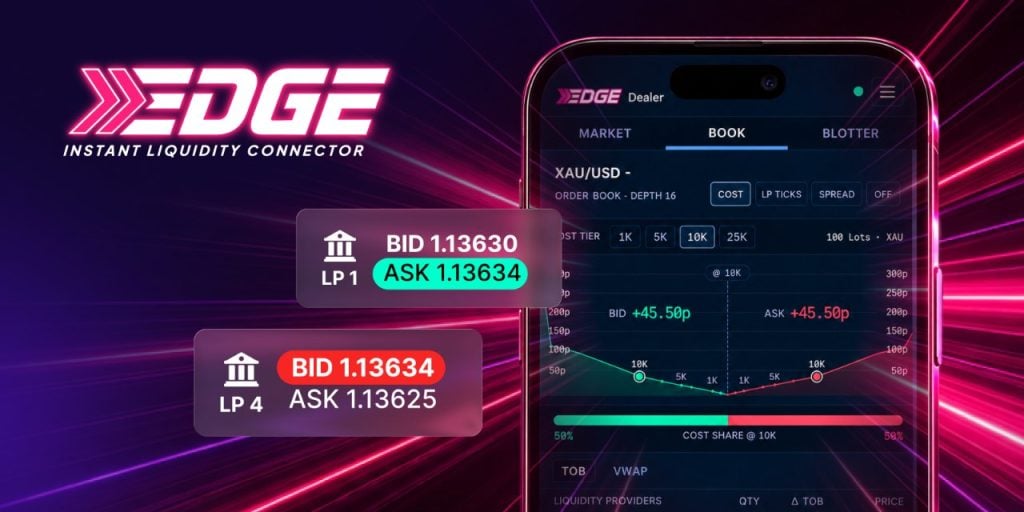
An engine, not just a platform
Any broker can hand a trader a platform; the engine is what moves the trade. EDGE runs on a proprietary matching engine and proprietary FIX connectivity. It scans multiple top-tier liquidity providers in milliseconds, routes raw, unmarked pricing, slices larger orders surgically, aggregates the fills to the best available price, and adapts in real time when volatility hits. Positive slippage goes to the client — and it all runs inside MT4 and MT5, with nothing to install or relearn.
“I felt it was time to stir things up and give our customers the same rates I am privy to when I trade.”
— Tim Furey, Founder & CEO, Tradeview Markets
Padded spreads aren’t liquidity
Furey has watched traders pay for markup they can’t see for two decades, and in his view every padded pip is a tax on loyalty. Tight headline spreads that vanish when real size lands don’t impress him either: a quote without executable quality, he argues, is a costume. The best price isn’t the number on the screen — it’s what actually fills when the size lands.
“If it doesn’t say .edge, congratulations: you are the liquidity.”
— Tim Furey
Leave the bonus. Take the fill.
Furey is just as direct about bonus-led marketing: traders who come for an offer leave for a better one, while real traders stay for the fill. Tradeview, he says, doesn’t buy balances — it builds clients.
“You don’t win a client with a bribe. You rent a shopper.”
— Tim Furey
Hungry dogs run faster
The attitude has deep roots. A college football mentor gave Furey the line “Hungry dogs run faster,” and he has run on it ever since — from the open-outcry commodity floors to proprietary trading at Schonfeld Securities and forex at ODL Securities, before opening Tradeview in 2004 in a small Wall Street office. Profitable in its first month, the firm today employs nearly 200 staff, holds licensed entities in several jurisdictions, and remains independent and founder-led.
Try it once. Client for life.
Furey is leading Tradeview’s push into the Middle East and its growth across Latin America and Asia, and the pitch is a dare: open a demo, compare the bleed, see live spreads, then decide. The same challenge goes to Tradeview’s introducing brokers — let clients try EDGE once, and retention takes care of itself.
Hope is not a strategy. EDGE is. Demand better at https://www.tradeviewmarkets.com/en/edge/.
About Tim Furey
Tim Furey is the Founder and Chief Executive Officer of Tradeview Markets, a regulated multi-asset broker. He started the firm in 2004 in a small Wall Street office and has grown it into an independent, founder-led global broker with nearly 200 staff. In 2026 he launched the EDGE Instant Liquidity Connector, Tradeview’s proprietary execution engine.
About Tradeview Markets
Founded in 2004, Tradeview Markets is a regulated multi-asset broker offering access to forex, metals, stocks, futures, options and cryptocurrencies for retail and institutional clients, with multi-platform execution. The firm has been founder-led since inception and has grown through organic client acquisition.
For further information, visit https://www.tradeviewmarkets.com.
About Author
Disclaimer: The views, suggestions, and opinions expressed here are the sole responsibility of the experts. No Digi Observer journalist was involved in the writing and production of this article.
CHAPAINAWABGANJ, Bangladesh, October 27, 2026, ZEX PR WIRE — LM Electronics, an online home appliance retailer based in Chapainawabganj, Bangladesh, provides customers with online access to product information about Vision blenders, helping buyers explore available options and consider important factors before purchasing.

Blenders can support a range of everyday kitchen tasks, from preparing smoothies and sauces to grinding ingredients for cooking. Choosing a suitable model involves more than comparing prices. Intended use, motor power, jar capacity, blade design, available functions, product specifications and warranty conditions can all influence a purchasing decision.
Understanding Vision Blender Features
Customers researching a blender should begin by considering how they plan to use the appliance. Those who mainly prepare drinks or blend soft ingredients may have different requirements from households that want to process spices, grains or other harder ingredients. Buyers should check each model’s published specifications and confirm that its stated capabilities match their intended use.
Motor power and jar capacity are useful comparison points, but they should be reviewed alongside the manufacturer’s instructions and the functions listed for the individual model. Customers should also review the included accessories, operating guidance and warranty terms before making a decision.
LM Electronics provides an online destination for customers researching Vision blenders in Bangladesh. Its dedicated brand page allows shoppers to explore listed products and review available product information before choosing an option that suits their kitchen needs.
Comparing Vision Blender Prices and Product Information
Price comparison is an important part of researching kitchen appliances. Customers looking for Vision Blender Price in Bangladesh or Vision Mixer Grinder Price in Bangladesh can visit the LM Electronics website to check currently listed models and review their individual product details.
Prices, specifications and availability may vary between models and can change over time. Customers should therefore consult the current listings before placing an order. Comparing product details alongside price can help buyers make a more informed choice based on their intended use and budget.
Nationwide Delivery and Manufacturer Warranty
Founded in October 2025, LM Electronics operates from Chapainawabganj and delivers household appliances nationwide. Its online business model serves customers beyond major metropolitan centres, including buyers in district and upazila towns who may have limited access to a broad selection of appliances through local retailers.
The company supplies official products carrying manufacturer warranties rather than unofficial or grey-market goods. After-sales service is handled through the respective manufacturer’s service network. Cash on delivery is available, allowing customers to pay when their orders arrive.
Customer support is provided in Bangla and English, both before and after purchase. The company also publishes product specifications and relevant warranty conditions to support more informed purchasing decisions.
About LM Electronics
LM Electronics is an online home appliance retailer founded in October 2025 and based in Chapainawabganj, Bangladesh. It supplies official household appliances with manufacturer warranties and offers nationwide delivery, with cash on delivery available.
Media Contact
LM Electronics
Website: https://lmelectronics.com.bd
Facebook: https://web.facebook.com/lmelectronicsbd
X: https://x.com/lmelectronicsbd
About Author
Disclaimer: The views, suggestions, and opinions expressed here are the sole responsibility of the experts. No Digi Observer journalist was involved in the writing and production of this article.
Tradeview Founder Tim Furey Launches the EDGE Instant Liquidity Connector
MyPropCapital Introduces Blockchain-Based Transparency System for Trading Evaluations and Trader Rewards
HIX AI Unveils Workspace 2.0 for Business Automation
Benzinga Money Article Discusses How to Become Part of the 12% of Retirees Who Have Achieved the Recommended $550,000 Minimum Retirement Savings Threshold
Apu Apustaja Conquers New York with Lively Street Ads, Including Times Square Billboard
Bay Smokes Maintains Quality Amid Legislative Changes in the Hemp Industry


-
Press Release7 days ago
Injective Collaborates with BDACS to Bring Korea’s First Won-Backed Stablecoin to Onchain RWAs
-
Press Release3 days ago
Thomas Berkley of Nexus Acquisition AI Focuses on Turning Business Inquiries Into Structured Growth Opportunities
-
Press Release1 week ago
Mastek Selected by Staffordshire County Council to Drive AI Enabled – Oracle Cloud Transformation
-
Press Release3 days ago
Widgets & Web Launches AI-Operated Investor Relations Websites for Public Companies at a Fixed $299 per Month
-
Press Release3 days ago
Dynamic NameCard Opens Global Franchise Recruitment for Telegram Mini App-Based Digital Identity Services
-
Press Release1 week ago
New Book Where’s the GAP by David P. Matthews, Now Available on Amazon, Asks a Life Changing Question
-
Press Release3 days ago
Thomas Berkley of CSM Collective Explores the Role of Strategic Thinking in Modern Entrepreneurship
-
Press Release1 week ago
PetShopValue.com Highlights Pet Comfort and Travel Essentials Ahead of the Holiday Season