
Press Release
Motiwala cultivates an untapped digital gold market in Southeast Asia

Ever since the outbreak of Covid-19, investors worldwide have turned to transfer part of their assets into gold investment to avoid market uncertainties and take advantage of gold’s reliable store of value. Investors have always cited gold as a safe haven when market uncertainties intensify, and the events in 2020 further confirmed the established correlation between gold and market risk levels.
Since January 2020, the gold price has zipped up 25% by the end of the year, even hitting a record high of over $2,000 per ounce at one point for the first time in history.
Along with the growth of demand for gold-related investments, supply grows too. A Dubai-based precious metal supplier known as Motiwala caught sight of the growth in demand and is determined to make use of this opportunity to become a world leader in the precious metal industry.
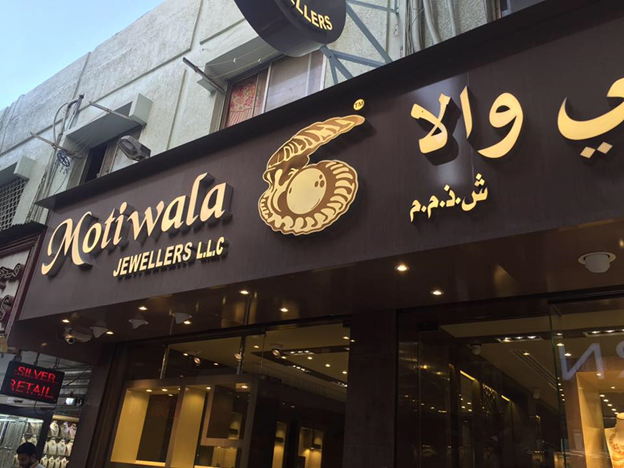
How Motiwala accumulated sand grain into mountain
Motiwala Jewellers LLC is a certified precious metal refinery, gold processor, bullion manufacturer, and precious metal supplier based in Dubai. Renowned for its complete and diversified rare metal business network, Motiwala Jewellers is one of the top 5 gold merchants globally and one of the largest refineries in the Middle East region.
But Rome wasn’t built in a day. It takes a lot of passion and hard work to build such a spectacular precious metal empire. Its founder, Iqbal Bhai from Pakistan, founded Motiwala 40 years ago and has been in the gold industry since then. He started as a gold and jewellery wholesaler in his home country and later found success when he filed a patent for the international gold market fair in Dubai after discovering its undeveloped gold market.
Through several decades of development, Motiwala Jewellers established subsidiary companies to further diversify the range of services it provides and as an effort to complete its supply chain. It is now the holding company of Motiwala Gold Trading, Motiwala Gold & Precious Stone Industry, Motiwala Gold & Metal Laboratory, Shaheen Exchange.
Since then, the company’s businesses have expanded to cover gold mining, processing, jewellery design, jewellery retail stores, physical gold trading, gold and metal laboratories, precious stones & diamond retail stores, and currency exchange.
With its refinery and an ISO 17025 certified in-house laboratory, Motiwala can produce gold bullion at the finest quality and allow investors to purchase gold bars ranging from 1 gram to 100 grams in size at a competitive price in its physical stores, thus allowing all investors to start investing in gold regardless of their capital size.
Southeast Asia has a bright future as a digital gold haven
The gold market in Asia, Southeast Asia in particular, are underdeveloped, but experts are confident that Southeast Asia has a bright future as a digital gold haven in the near future as Southeast Asia has one of the fastest rates of digital payment adoption and more than 400 million internet users. The strong tech foundations were laid by the appealing regulatory landscape and strong government support that has escalated the growth of innovation and healthy competition in this region.
In response to the year-long pandemic crisis, part of the gold and jewellery retailers in Asia are moving their retail businesses onto the internet to reach online consumers and combat the highly contagious virus simultaneously. With robust governance and regulations, digital gold has been gaining much traction in the Southeast Asia market.
Tapping into Southeast Asia’s growing digital gold landscape
Envisioned to become the world leader for dealers and traders from across the globe and to achieve sustainable quality growth, Motiwala co-founded Moti Investment Capital (MIC) in 2018 to expand its global presence in the capital trading sector. The establishment of MIC will enable investors to achieve low-risk, sustainable returns using Motiwala’s unique set of the gold supply chain.
As the first step to globalize its operation, Motiwala has tapped into Southeast Asian countries, providing a wide array of services to the new countries, including asset management, physical gold trading and more. With Motiwala’s supply chain and diverse line of services, it will allow investors to purchase physical gold even if the investors are located outside of Dubai.
In 2018, member countries in the Association of Southeast Asian Nations (ASEAN) had consumed 309 tonnes of gold, making Southeast Asia the third-largest market for gold in the world. With the combination of rapid digital adoption, the cultural importance of gold in the region, and low expansion costs, it makes Southeast Asia an ideal region as the first step in Motiwala’s globalization.

MOTIWALA announces partnership with BIS
Motiwala has recently announced its partnership with BIS to expand its global presence. BIS Holding is the first of its kind asset management firm to provide unique investment opportunities for investors, allowing clients to have the privilege to participate in the markets like a real corporate level liquidity provider.
“We are excited to partner with BIS,” said Iqbal Bhai, Founder of Motiwala group. “Through this strategic partnership, Motiwala and BIS can form a clear win-win relationship to provide more value to your existing customers. It would also bolster the long-term partnership between Motiwala and BIS as both firms continue to seek opportunities to achieve business expansion.”
Anita Brook
Motiwala Jewellers LLC
Dubai, United Arab Emirates
info@motiwala-uae.com
Visit us on social media:
About Author

Disclaimer: The views, suggestions, and opinions expressed here are the sole responsibility of the experts. No Digi Observer journalist was involved in the writing and production of this article.

Press Release
Veterans in the Park Podcast Releases Five New Episodes about Post-Military Transition On Spotify

Veteran podcast is hosted by Charles Chou, a Marine Corps veteran, and produced by VeteranDegrees.com, a free education and career-planning resource for veterans, service members, and military families
United States, 26th Oct 2026—Veterans in the Park, the podcast about military transition, today announced the release of five new episodes on Spotify. The documentary-style interview podcast is hosted by Charles Chou, a Marine Corps veteran. In each episode, a veteran shares an honest story about life after military service, covering such topics as changing careers, returning to school, rebuilding identity, and finding purpose. The episodes reveal the lessons no transition handbook can teach. The podcast is produced by VeteranDegrees.com, a free education and career-planning resource for veterans, service members, and military families.

“Leaving the military is one of the biggest changes a service member goes through, and official resources rarely cover what it actually feels like. However, no matter what rank you made, every veteran eventually starts looking for something beyond the uniform, and the skills you built in service can take you there, even if you don’t realize yet what you have,” said Chou. “That’s why we sit down with veterans who’ve already made the jump, so the next person getting out can hear how it actually works.”
The veteran podcast features calm, candid, and peer-to-peer conversations, as if they were discussions between two people sitting on a park bench. Guests come from different service backgrounds, career paths, and stages of transition. To date, guests have included a former Army armor officer and an Air Force veteran who used the DoD SkillBridge program to move into tech. The latest episode (released October 15, 2026), “Service Members, We Don’t Stop”, features Eric Arzaga, a West Point graduate and Army MP on Transition, Purpose, and Building Arzaga Media. Arzaga shares how he went from the farmlands of the Philippines to West Point and Army leadership, and how he started a media company.
The show is for anyone preparing to leave the military, building a first civilian career, going back to school, or planning a second act after retirement.
Across the five episodes, listeners can find advice on topics as:
- Planning a transition early, before separation
- Translating military experience for civilian employers
- Job searching, networking, and using LinkedIn
- Deciding when, and whether, to go back to school
- Starting a business after service
- Rebuilding identity and finding purpose outside the uniform
Listen to Veterans in the Park on Spotify at https://open.spotify.com/show/033QiE9Y15aYBhuq98ixeu, and book a Free Benefits Navigator call at https://veterandegrees.com/consultations.
Veterans who served under both the Montgomery GI Bill and the Post-9/11 GI Bill may be eligible for up to 12 additional months of education benefits, for up to 48 months in total. The U.S. Department of Veterans Affairs (VA) decides eligibility.
GI Bill is a registered trademark of the U.S. Department of Veterans Affairs (VA).
More information about education benefits offered by the VA is available at the official U.S. government website at www.benefits.va.gov/gibill.
To access the VeteranDegrees’ free guide to the Rudisill decision, visit https://veterandegrees.com/posts/rudisill-decision.
About VeteranDegrees.com
VeteranDegrees.com is a free education and career-planning resource for veterans, service members, and military families. The organization helps veterans understand their benefits, compare VA-approved programs, and plan their next career move. Services include free one-on-one Benefits Navigator calls and free online tools, including a BAH/MHA calculator, a GI Bill Navigator, a scholarship finder, and an MOS career finder. VeteranDegrees is not affiliated with the U.S. Department of Veterans Affairs (VA). It does not file claims or decide eligibility for benefits.
Disclaimer: VeteranDegrees is not affiliated with the U.S. Department of Veterans Affairs. It does not file claims or decide eligibility for benefits.
Media Contact
Organization: GoElite
Contact Person: Hugh Taylor
Website: https://goelite.com/partners/institutions
Email: Send Email
Country: United States
Release id: 50210
View source version on King Newswire:
Veterans in the Park Podcast Releases Five New Episodes about Post-Military Transition On Spotify
About Author

Disclaimer: The views, suggestions, and opinions expressed here are the sole responsibility of the experts. No Digi Observer journalist was involved in the writing and production of this article.
Press Release
KodyGas Boiler Repair Adds F-Gas Certified Air Conditioning Installation and Servicing Across South Yorkshire
KodyGas extends its services to include air conditioning following F-gas certification, covering homes and small businesses across Sheffield, Rotherham, Doncaster and Barnsley.
United Kingdom, 26th Oct 2026 – KodyGas Boiler Repair, a Gas Safe registered heating and boiler company based in Rotherham, has obtained F-gas certification and added air conditioning installation, servicing, and repair to its services. The expansion covers homes and small businesses across South Yorkshire, including Sheffield, Doncaster and Barnsley.
F-gas certification is a legal requirement under UK regulations for any engineer handling refrigerants used in air conditioning systems. The certification authorises KodyGas engineers to install, service, and repair split and multi-split air conditioning units in residential and light commercial properties.
KodyGas has been operating in South Yorkshire since 2010, providing boiler repair, servicing, installation, power flushing, gas safety checks, central heating, and commercial gas work. The company holds Gas Safe registration 625280 and is fully insured. The addition of air conditioning brings its work under two regulated frameworks, covering both gas and refrigerant handling within a single local team.
The company already holds F-gas certification for heat pump installation, which uses the same refrigerant-handling requirements as air conditioning. The air conditioning service extends that existing capability to cooling systems for homes and small businesses that have seen increased demand following recent summers across the region.
About KodyGas Boiler Repair
KodyGas Boiler Repair is a Gas Safe registered heating, boiler, and air conditioning company based in Rotherham, South Yorkshire. The company provides boiler repair, servicing, installation, power flushing, gas safety checks, central heating, commercial gas, heat pump installation, and air conditioning across Rotherham, Sheffield, Doncaster and Barnsley. Gas Safe registration 625280. F-gas certified.
KodyGas Boiler Repair
93 Wickersley Rd
Rotherham S60 3PU
United Kingdom
+44 7932 552087
Media Contact
Organization: KodyGas Boiler Repair
Contact Person: George Lambton
Website: https://kodygas.com/
Email: Send Email
Country: United Kingdom
Release id: 50205
View source version on King Newswire:
KodyGas Boiler Repair Adds F-Gas Certified Air Conditioning Installation and Servicing Across South Yorkshire
About Author
Disclaimer: The views, suggestions, and opinions expressed here are the sole responsibility of the experts. No Digi Observer journalist was involved in the writing and production of this article.
Press Release
Musician and DJ Robot Dream, Having Beaten Cancer, Set to Release New Album and Graphic Novel
Artist plans to launch the album and graphic novel “Robot Dream” on November 20 and start a world tour on January 1 in Rio de Janeiro.
United States, 26th Oct 2026 —The musician and DJ known as Robot Dream, having beaten a cancer so serious that doctors gave him 2-5 years to live, today announced that he is releasing an album, “Robot Dream,” as well as an accompanying 120-page graphic novel, on November 20. The album launch will be followed by a world tour, commencing on January 1, 2027, in Rio de Janeiro, Brazil.

“When I was first diagnosed with cancer, I started making jokes about it,” explained Robot Dream. “Then I threw myself into work, and DJed more than ever. It’s always been hard to express myself so I started to channel my feelings into creating this album. Now that I’ve kicked cancer’s butt, I’m ready to bring this project to the world.”
Robot Dream is more than just a stage name. Robot Dream is a saxophonist, music producer, and graphic novel creator. He first published his graphic novel, based on the original character “Robot Dream,” on his website RobotDream.com/mystory and through Webtoonz. A print version will be available on November 20th along with the 15-song album.
The album’s first track, the hip-hop “Good/Bad Robot,” has already had over 75K streams. The song is featured on 4,000+ playlists and is gaining momentum. The album also features the song “WWB2R,” which includes vocals from the renowned Downtown LA Grand Arts High School choir.
For more information, visit https://www.robotdream.com/album
END
###
Media Contact
Organization: Robot Dream
Contact Person: Media Relations
Website: https://www.robotdream.com
Email: Send Email
Contact Number: +16502737257
Country: United States
Release id: 50211
View source version on King Newswire:
Musician and DJ Robot Dream, Having Beaten Cancer, Set to Release New Album and Graphic Novel
About Author
Disclaimer: The views, suggestions, and opinions expressed here are the sole responsibility of the experts. No Digi Observer journalist was involved in the writing and production of this article.
Veterans in the Park Podcast Releases Five New Episodes about Post-Military Transition On Spotify
KodyGas Boiler Repair Adds F-Gas Certified Air Conditioning Installation and Servicing Across South Yorkshire
Musician and DJ Robot Dream, Having Beaten Cancer, Set to Release New Album and Graphic Novel
Benzinga Money Article Discusses How to Become Part of the 12% of Retirees Who Have Achieved the Recommended $550,000 Minimum Retirement Savings Threshold
Apu Apustaja Conquers New York with Lively Street Ads, Including Times Square Billboard
Bay Smokes Maintains Quality Amid Legislative Changes in the Hemp Industry


-
Press Release1 week ago
The Smart Luggage at the 140th Canton Fair:Airwheel 20inch Carry-On Hand Scooter Ai Wheel Robot Cabin Luxury Suitcase Takes Smart Travel to the Next Level
-
Press Release6 days ago
Injective Collaborates with BDACS to Bring Korea’s First Won-Backed Stablecoin to Onchain RWAs
-
Press Release2 days ago
Thomas Berkley of Nexus Acquisition AI Focuses on Turning Business Inquiries Into Structured Growth Opportunities
-
Press Release6 days ago
Mastek Selected by Staffordshire County Council to Drive AI Enabled – Oracle Cloud Transformation
-
Press Release2 days ago
Widgets & Web Launches AI-Operated Investor Relations Websites for Public Companies at a Fixed $299 per Month
-
Press Release6 days ago
New Book Where’s the GAP by David P. Matthews, Now Available on Amazon, Asks a Life Changing Question
-
Press Release2 days ago
Dynamic NameCard Opens Global Franchise Recruitment for Telegram Mini App-Based Digital Identity Services
-
Press Release2 days ago
Thomas Berkley and Nexus Acquisition Group Outline AI Agency Partnership Approach in Cleveland