
Press Release
Michael Curtis Broughton Highlights the Often-Unseen Professionals Behind Humanitarian Relief Efforts

-
Industrial engineer and military logistics officer Michael Curtis Broughton is raising awareness of the critical role that logistics professionals play in delivering aid, supporting emergency response, and sustaining humanitarian operations worldwide.
Huntsville, Texas, Jun 30, 2026, ZEX PR WIRE — When people think about humanitarian missions, disaster response, or military operations, they often picture frontline personnel, rescue teams, and medical workers. Far less attention is given to the logistics professionals responsible for moving food, water, medical supplies, equipment, and personnel to the people who need them most.
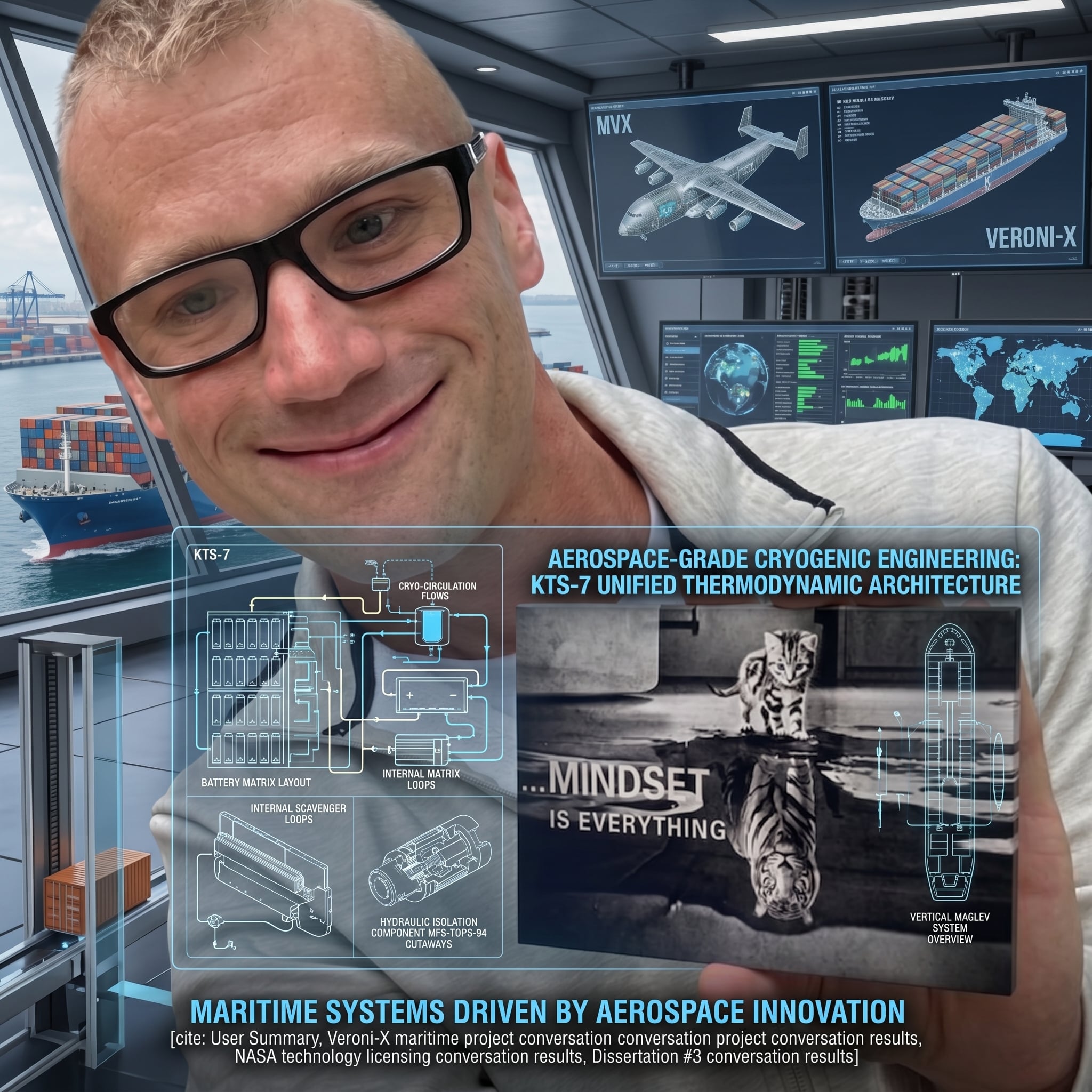
Michael Curtis Broughton, an industrial engineer and military logistics officer, is working to change that.
Drawing on years of experience in military operations and logistics planning, Broughton is encouraging greater recognition of the role logistics professionals play in supporting humanitarian relief efforts and emergency response operations worldwide.
“People rarely see the logistics side of a mission,” said Broughton. “They see supplies arrive. They see aid delivered. What they don’t see is the planning, coordination, transportation, and execution that make those outcomes possible.”
According to the United Nations Office for the Coordination of Humanitarian Affairs (OCHA), more than 300 million people worldwide require humanitarian assistance each year. Delivering aid to affected populations often depends on complex logistics networks operating in difficult environments, including remote regions, conflict zones, and disaster-stricken communities.
Broughton’s own experience reinforced the importance of those systems.
Beginning his military career as an infantryman, he served in active combat environments where sustaining personnel and maintaining operational readiness depended on effective logistics support. Over time, his responsibilities expanded into logistics and transportation operations, where he gained firsthand insight into the critical role supply chains play in mission success.
“One of the lessons I learned early is that logistics isn’t a support function—it’s a mission function,” Broughton said. “When supplies don’t arrive, operations stop. When resources can’t reach people, lives can be put at risk.”
One example of logistics’ impact can be seen in humanitarian airdrop operations. Advanced systems such as the Joint Precision Airdrop System (JPADS) have helped military and humanitarian organizations deliver food, water, and emergency supplies into areas that would otherwise be inaccessible due to terrain, conflict, or infrastructure damage.
“Precision delivery systems changed what was possible,” said Broughton. “You could reach people in places where traditional transportation methods weren’t available. That’s not just about technology. It’s about helping people when they have no other options.”
Industry experts estimate that logistics costs account for approximately 8–10 percent of global GDP, highlighting the scale and importance of transportation and supply chain networks worldwide. During emergencies, the ability to move resources quickly and efficiently often determines how effectively organizations can respond.
Broughton believes that increased public understanding of logistics can benefit both humanitarian organizations and future workforce development.
“There are thousands of professionals working behind the scenes every day to keep supply chains moving,” he said. “Many of them will never be recognized publicly, but their work has a direct impact on communities, businesses, and emergency response efforts.”
As global supply chains face increasing pressure from natural disasters, geopolitical instability, and growing demand, Broughton hopes more attention will be given to the people responsible for keeping critical systems operational.
“Good logistics is often invisible,” he said. “If everything is working, most people never think about it. But when a crisis happens, logistics becomes one of the most important functions in the world.”
Call to Action
Individuals interested in supporting humanitarian and emergency response efforts can learn more about how supply chains operate, support organizations involved in disaster relief, and explore educational pathways in logistics, transportation, engineering, and operations management. Greater awareness of these professions can help strengthen the systems communities rely on during times of crisis.
About Michael Curtis Broughton
Michael Curtis Broughton is an industrial engineer, military logistics officer, researcher, and operations professional based in Texas. His career spans military service, logistics operations, industrial engineering, and supply chain management. He has contributed to logistics planning, transportation systems, distribution center operations, and academic research focused on improving operational performance. Through his work, Broughton advocates for practical, execution-focused approaches to logistics and greater recognition of the professionals who keep critical systems moving.
About Author

Disclaimer: The views, suggestions, and opinions expressed here are the sole responsibility of the experts. No Digi Observer journalist was involved in the writing and production of this article.

Drawing on 37 years of experience in behavioral health and leadership, Sherbun says understanding human behavior is essential to communicating effectively under pressure.
Olympia, Washigton, October 23rd, 2026, ZEX PR WIRE, Leaders are often trained to think about strategy, operations, performance, and decision-making. Michael Sherbun believes they should spend more time thinking about what happens to human behavior when pressure enters a conversation.
Sherbun, a behavioral health executive, author, trainer, and communication specialist with 37 years of experience, says communication should not be treated simply as a “soft skill.” Decisions, expectations, accountability, conflict, and organizational change all eventually have to move through conversations between people, and people do not leave their emotions, assumptions, or previous experiences at the door.
“Communication is not something that sits beside leadership,” Sherbun said. “It is one of the ways leadership actually happens. You can make a sound decision, but eventually that decision has to move through real people. How they hear it and how they respond to it matters.” For Sherbun, that makes understanding human behavior an important part of communicating effectively.
Pressure Changes the Way People Communicate
Throughout his career in behavioral health, healthcare operations, training, and executive leadership, Sherbun has spent considerable time around people in high-pressure situations.
One lesson has remained consistent: pressure changes conversations.
Someone who feels criticized may become defensive. Someone who feels powerless may become angry. Another person may become quiet. An employee who believes a decision has already been made may decide speaking honestly has little value.
Sherbun cautions against treating those reactions as simple personality traits.
“When somebody becomes defensive, we can immediately decide we’re dealing with a defensive person,” Sherbun said. “But I think the more useful question is what happened in this interaction that made them feel they needed to defend themselves. That doesn’t excuse behavior. It gives you more information about it.” That distinction is part of what Sherbun describes as behavioral communication: paying attention not only to the words being exchanged but also to the human behavior influencing them.
Authority Changes What People Are Willing to Say
Sherbun says his own move into executive leadership made him increasingly aware of another behavioral factor: power.
Employees do not necessarily speak to a CEO the way they speak to a colleague. The greater the perceived consequences of disagreement, the more carefully people may choose what to say.
“The higher you move in an organization, the more careful you have to be about assuming people are telling you everything,” Sherbun said. “If nobody disagrees with you anymore, you have to ask whether you suddenly became right about everything or whether people stopped feeling comfortable telling you when you’re wrong.” For organizations, Sherbun argues, that is more than a cultural concern. Employees closest to day-to-day operations may see problems before senior leaders do. If people learn that disagreement is unwelcome, leaders can end up making decisions with incomplete information.
Asking for honest feedback is only part of the solution. Employees also pay attention to what happens after someone provides it.
Understanding Behavior Does Not Mean Excusing It
Sherbun also cautions against confusing an understanding of human behavior with avoiding accountability.
Leaders still have to address poor performance, enforce boundaries, resolve conflict, and communicate decisions people may not like.
“Understanding why somebody reacted a certain way doesn’t mean I have to accept the behavior,” Sherbun said. “Listening doesn’t mean agreement, and empathy doesn’t mean the boundary disappears.” Instead, Sherbun believes understanding behavior can help leaders determine what a conversation actually requires.
Someone who doesn’t feel heard may repeat the same point several times. Someone who is embarrassed may hear reasonable feedback as a personal attack. An employee who appears resistant to a change may actually be uncertain about what the change means for their role.
The behavior provides information, but Sherbun says leaders still need to remain curious rather than assuming they know exactly what another person is thinking.
More Information Does Not Always Create Understanding
Organizational change is one area where Sherbun says the difference between providing information and understanding behavior becomes particularly visible.
Leaders may communicate a change through meetings, emails, presentations, or written instructions and reasonably believe they have delivered the message. Employees, however, may still be trying to understand what the decision means for them.
“There are times when leaders think, ‘We already communicated this,’” Sherbun said. “But sending information and having a conversation are not necessarily the same thing. The question is what people understood, what they’re concerned about, and what they believe the change means for them.” Repeating the same explanation may not resolve those concerns.
Sherbun says leaders should consider whether the problem is actually a lack of information or whether emotion, uncertainty, trust, or another human factor is affecting how that information is being received.
The Psychology Behind the Words
These observations have contributed to Sherbun’s current focus on The Psychology of Conversations, an approach that examines what happens beneath the words people exchange.
His work through The Navigator focuses on behavioral communication, de-escalation, burnout prevention, and helping people navigate difficult conversations while preserving relationships.
Although much of Sherbun’s experience comes from behavioral health and organizational leadership, he believes the underlying principles are human, not industry-specific.
A disagreement between employees may look different from an argument within a family. A coach speaking with a frustrated athlete faces a different situation from an executive announcing an organizational change. Yet emotion, assumptions, expectations, trust, previous experiences, and perceived power can influence all of those interactions.
“Two people can hear the same words and walk away believing two very different conversations took place,” Sherbun said. “That’s why I think we need to become interested in more than what was said. We need to understand what was happening with the people having the conversation.” For Sherbun, that is why communication should not be dismissed as a soft skill.
“Communication is sometimes called soft because it is difficult to measure,” he said. “But when communication breaks down, the consequences aren’t soft. You see them in conflict, relationships, trust, burnout, and whether people are willing to talk honestly when something is wrong.”
About Michael Sherbun
Michael Sherbun is a behavioral health executive, author, trainer, coach, and communication specialist based in Olympia, Washington. With 37 years of experience in behavioral health and organizational leadership, his work focuses on behavioral communication, de-escalation, burnout prevention, and The Psychology of Conversations. He is the founder and CEO of The Navigator, where he explores how understanding human behavior can improve communication during difficult, high-pressure interactions. Sherbun is also the author of Caring for the Caregiver: 8 Truths to Prolong Your Career.
About Author
Disclaimer: The views, suggestions, and opinions expressed here are the sole responsibility of the experts. No Digi Observer journalist was involved in the writing and production of this article.
Dubai-headquartered Syndexs announces its AI-first strategy, building a digital asset exchange focused on the rapidly expanding AI economy.
Dubai, UAE, October 23rd, 2026, ZEX PR WIRE— Syndexs has announced its strategic direction as an AI-first digital asset exchange, placing artificial intelligence at the center of its vision for the next generation of crypto markets.

As artificial intelligence continues to reshape industries worldwide, a new generation of AI-focused digital assets, infrastructure projects, decentralized computing networks, data ecosystems, and technology ventures is emerging alongside it. Syndexs is positioning its exchange around this growing intersection between AI and digital assets.
Rather than taking a broad, general-purpose approach to the crypto market, Syndexs intends to build a more focused marketplace where AI-related digital assets and projects take center stage.
Built Around the AI Economy
Syndexs’ AI-first strategy is designed around a simple idea: as the AI economy expands, the digital asset market surrounding it is likely to become increasingly specialized.
The platform’s direction will focus on identifying and supporting digital assets connected to areas such as artificial intelligence, AI infrastructure, computing, data, automation, intelligent applications, and other emerging technologies within the broader AI ecosystem.
This specialized approach is intended to give Syndexs a distinct identity in a market historically dominated by exchanges attempting to cover virtually every category of digital asset.
Headquartered in Dubai, Built With a Global Outlook
Syndexs is headquartered in Dubai, United Arab Emirates, one of the world’s increasingly prominent centers for digital assets, financial technology, and emerging technology businesses.
From Dubai, Syndexs is developing its international strategy with an emphasis on regulatory compliance, market accessibility, technology infrastructure, and long-term global expansion.
The company is also registered as an entity in the British Virgin Islands (BVI), supporting its international corporate structure and global business operations.
The company has established Money Services Business (MSB) licenses as cryptocurrency-exchange with the Financial Crimes Enforcement Network (FinCEN) in the United States and the Financial Transactions and Reports Analysis Centre of Canada (FINTRAC), providing regulatory foundations for cryptocurrency exchange activities.
These licenses form part of Syndexs’ broader approach to building its operations within applicable regulatory frameworks as the platform develops.
A Different Direction for Digital Asset Exchanges
Syndexs believes the next phase of the digital asset industry will increasingly be shaped by specialization.
Just as artificial intelligence is creating entirely new categories of companies, infrastructure, products, and services, it is also creating a growing digital economy around AI.
Syndexs intends to build specifically for that evolution.
The company’s announcement represents a declaration of its long-term direction rather than the official launch of the exchange. Additional information regarding the Syndexs platform, ecosystem, supported markets, products, and rollout will be announced progressively.
The message behind the strategy is clear: Syndexs is not aiming to become another exchange for everything. It is building an exchange for what comes next — AI.
About Syndexs
Syndexs is a Dubai-headquartered digital asset exchange being developed with an AI-first market strategy. The company is focused on creating a specialized marketplace for the emerging intersection of artificial intelligence and digital assets, supported by a global approach to technology, compliance, and market expansion.
About Author
Disclaimer: The views, suggestions, and opinions expressed here are the sole responsibility of the experts. No Digi Observer journalist was involved in the writing and production of this article.
Singapore, Singapore, October 23rd, 2026, FinanceWire
As global electricity demand continues to grow, Lake Energy has launched renewable energy investment projects targeting an annualized return of 11%, providing new opportunities for individual investors seeking exposure to solar, wind, and other clean energy infrastructure investments.
Driven by the rapid development of artificial intelligence, data centers, electric vehicles, and industrial electrification, the global energy market is undergoing structural changes. Rising electricity demand is not only accelerating the development of new energy technologies but also making energy infrastructure an increasingly important area of interest for investors.
Against this backdrop, renewable energy investment platform Lake Energy has introduced new investment projects targeting an 11% annualized return, aiming to expand opportunities for individual investors to participate in the renewable energy market.
Unlike traditional large-scale energy infrastructure investments, Lake Energy aims to provide individual investors with access to opportunities in solar energy, wind energy, and energy storage without requiring them to build or operate power generation facilities themselves.
Investors interested in renewable energy investments can visit the official Lake Energy website to learn more.
Global Clean Energy Investment Continues to Expand
Renewable energy is becoming an increasingly important component of global energy investment.
According to the International Energy Agency’s (IEA) World Energy Investment 2026 report, global energy investment is expected to reach $3.4 trillion in 2026, with approximately $2.2 trillion directed toward clean energy technologies and infrastructure, including renewable energy, nuclear power, electricity grids, energy storage, energy efficiency, and electrification.
Meanwhile, global electricity demand is projected to grow at an average annual rate of 3.6% between 2026 and 2030. Artificial intelligence data centers, electric vehicles, and industrial production are expected to be among the major drivers of increasing electricity consumption.
This means that future growth in the energy market will depend not only on innovations in renewable energy technology but also on continued investment in the construction and modernization of power generation facilities, electricity grids, and energy storage systems.
For investors, the energy transition is no longer simply an environmental issue. It also represents an investment sector involving physical infrastructure, long-term capital commitments, and growing demand for electricity.
Lake Energy Introduces Investment Projects Targeting 11% Annualized Returns
As investor interest in real assets and energy infrastructure continues to grow, Lake Energy has made renewable energy projects a central focus of its investment business.
The newly launched projects target an annualized return of 11%, offering additional investment options for individual investors interested in the renewable energy market.
Lake Energy’s business covers several renewable energy sectors, including:
- Solar Energy: Generating electricity through solar photovoltaic facilities and participating in the expanding solar power market.
- Wind Energy: Focusing on the development of onshore and offshore wind power infrastructure.
- Energy Storage: Exploring the role of battery energy storage systems in balancing electricity supply and integrating renewable energy into power grids.
Traditionally, large-scale solar farms and wind power projects have required substantial upfront capital and involved complex processes, including land acquisition, equipment procurement, engineering and construction, grid connection, operations and maintenance, and electricity sales.
For individual investors without specialized expertise or significant financial resources, directly participating in these projects has typically involved high barriers to entry.
Through its renewable energy investment business, Lake Energy provides individual investors with opportunities to explore and participate in relevant energy projects.
About Lake Energy
Lake Energy is a platform focused on investment in renewable energy infrastructure. It is dedicated to providing individual investors worldwide with opportunities to participate in clean energy projects, thereby lowering the barriers to entry for investing in traditional energy infrastructure.
Lake Energy’s operations span sectors including solar, wind, hydropower, and energy storage, covering key stages such as project development, infrastructure construction, power generation, asset operation, and electricity sales.
By connecting individual investors with tangible energy projects, Lake Energy enables more people to take part in the global energy transition and—subject to the specific terms of each project—share in the economic value generated by renewable energy infrastructure.
For more information, visit: Lake Energy Official Website
Media Contact:info@lakeenergy.com
Contact
owe.kok.liang
owe.kok.liang@lakeenergy.com
About Author
Disclaimer: The views, suggestions, and opinions expressed here are the sole responsibility of the experts. No Digi Observer journalist was involved in the writing and production of this article.
Michael Sherbun Says Communication Is Not a Soft Skill
Syndexs Sets Its Sights on the Future of Crypto With an AI-First Exchange
Lake Energy Launches Renewable Energy Project Targeting 11% Annual Returns
Benzinga Money Article Discusses How to Become Part of the 12% of Retirees Who Have Achieved the Recommended $550,000 Minimum Retirement Savings Threshold
Apu Apustaja Conquers New York with Lively Street Ads, Including Times Square Billboard
Bay Smokes Maintains Quality Amid Legislative Changes in the Hemp Industry


-
Press Release7 days ago
Midwest Ragdolls Highlights Why a Kitten’s Early Environment Matters
-
Press Release1 week ago
Physical AI Lab Nature Will Unveils Natura-1, First General Foundation Model for the Physical World
-
Press Release6 days ago
From Karmayogi to the World Stage: Dr. Hemant Garg Wins “Excellence in AI for Public Policy”, Charts India’s Path to the AI Big League
-
Press Release4 days ago
The Smart Luggage at the 140th Canton Fair:Airwheel 20inch Carry-On Hand Scooter Ai Wheel Robot Cabin Luxury Suitcase Takes Smart Travel to the Next Level
-
Press Release6 days ago
U-topia Launches Public Beta as Global Builders Gather for U-Hackathon
-
Press Release6 days ago
Karviva and Founder Dr. Angela Zeng Featured in 2026 USA TODAY Food as Medicine Edition.
-
Press Release6 days ago
AI News Directory Launches to Help Readers Find AI Writers Worth Following
-
Press Release7 days ago
Edmund Dorsz Says the CNC Trade Is Losing Its Mentors, Not Just Its Workers