
Press Release
Lumino Secure Multi-Party Computing: A New Generation Of Data Security Sharing Solution

The Dilemma Of Digital Economy
The most critical and cardinal element of the digital economy is data. Data is the “oil” of digital economy. Hence, utilizing the “data oil” safely and efficiently is the focal point of global economic digital transformation. On the one hand, the digital economy has entered a high-speed development age. The global digital economy has reached 36.2% of global GDP. It is necessary to open up the “data island” among enterprises and establish an open and shared digital resource environment. On the other hand, the public is paying more and more attention to personal privacy and data security, and regulators have introduced a series of regulations to ensure information security. For example, car companies buy parts back and assemble them into cars, the ownership belongs to the car companies, while parts manufacturers also make it clear that once the parts are sold to factories, the factories have ownership. But the data level is more sensitive. Personal data include the face, voice, name, height and other sensitive personal privacy specifics. How to define the ownership of the data between these parties? At present, there are no clear legal provisions, nor the industry has clear answers. In foreign practice, the EU has made very strict data protection regulations, but the entire EU data information technology industry lags behind China and the United States.
Because data protection is too strict, data from different sources do not interact, data is not open and can not interact to generate value and to improve the efficiency of the economy as a whole. The EU is not a good example, because it does not balance the relationship between data privacy protection and the development of the data industry.
Privacy protection and data security need multi-party promotion
Facing the dilemma of data security and sharing, the “available and invisible” secure multi-party computing provides us with an innovative solution.
Secure multi-party computing is a calculation process performed by multiple participants. Multi-party computing technology includes inadvertent transmission, secret sharing and confusing circuit. Multi-party computing has the advantage of high confidentiality and maneuverability, and each party has absolute control over the data it owns. Secure multi-party computing can be applied to networks where participants are not trusted. Participants can know the agreed results of collaborative computation, but they can’t get or deduce the original contents of the data. The flow of data and the collaborative analysis are of great value in all industries, and have brought about a lot of application demands. There are two main scenarios in the market:
1) Data security query
In the big data age, the data that the enterprise holds itself often cannot satisfy the demand of business analysis, many enterprises will purchase the external data to expand the data source. When an enterprise uses an external database to query, it faces the risk of divulging the query condition information. MPC technology helps enterprises to set up a secure query to obtain more external data under the condition of ensuring their own data security, thereby deepening the digital transformation and making better use of big data technology to optimize business.
2) Data joint analysis
Joint analysis often faces two headwinds. On one hand, it is illegal to trade personal privacy information. On the other hand, data sharing makes data-holding companies lose their competitive edge. MPC technology, through inadvertently querying, makes the data not public, the query object not exposed, and the results can be correctly given feedback for, which has an important application in the financial risk control business.
Lumino: new ideas for secure multi-party computing
Lumino is a large-scale activity that uses secure multi-party computing protocols to generate zero knowledge proof system public reference string (CRS) in a de-trust manner, and it is a prerequisite and an important step for deploying and using privacy-related applications in a decentralized ecosystem. The activity now focuses on the PLONK algorithm. As a practical and efficient zk-SNARK algorithm, PLONK is often used in blockchain projects and communities, which is characterized by only one-time initialization process, i. e. running once, it can be used to support a variety of underlying circuit logic and multi-class application deployment.
Lumino’s vision, from the start, was to link the world’s cryptographic geeks to become co-creators and witnesses of privacy computing infrastructure, not just an event but a ritual. We changed the method of centralizing system parameters into a distributed one. For a truly community-based and open-source blockchain ecosystem, each of which is the most critical link, and each participant who joins makes the bottom one safer, which would be a ceremonial collective wisdom.
Lumino is the cornerstone of subsequent de-centering privacy protection applications based on zero-knowledge proof, and the subsequent de-centralization applications will be safer only if the activity is safely completed.
About Author

Disclaimer: The views, suggestions, and opinions expressed here are the sole responsibility of the experts. No Digi Observer journalist was involved in the writing and production of this article.

Press Release
YSC Paving Urges Phoenix-Area Property Owners to Check the Base Before Approving an Asphalt Overlay

Phoenix, Arizona, United States, 28th Oct 2026 – YSC Paving, a family-owned and operated commercial asphalt paving contractor based in Phoenix, is encouraging property managers, HOA boards, and facility staff to find out what is happening beneath a worn parking lot before choosing between an asphalt overlay and full removal and replacement.
With monsoon season over and budgets being set for next year, many commercial properties are weighing major pavement work. The condition of the base under the pavement usually decides which option fits.
What an Overlay Does
An asphalt overlay is a new layer of asphalt placed over existing pavement after the surface is cleaned and a tack coat is applied. When the pavement underneath is sound and the lot drains properly, an overlay can restore a worn surface without removing the entire lot.
When Removal and Replacement Fits Better
An overlay does not repair a failing base. Widespread alligator cracking, rutting, or pavement that moves under heavy vehicles can point to a problem below the surface, while standing water can indicate a drainage issue that should be evaluated before an overlay is selected. Depending on the site, the appropriate remedy may involve grading, drainage repairs, or another approach. Existing elevations can also limit what grading can accomplish.
In areas with significant base or drainage problems, full-depth removal and replacement may be the longer-lasting parking lot repair. Many lots end up with a combination of both.
YSC Paving recommends an on-site assessment that separates surface wear from base and drainage issues before an overlay is approved. The company serves commercial and institutional properties across Phoenix, Scottsdale, Tempe, Mesa, Gilbert, and Chandler.
About YSC Paving
YSC Paving, founded as Young, Swenson & Cross Paving, is a family-owned and operated commercial asphalt paving contractor based in Phoenix, Arizona, with 25 years paving commercial properties across the Phoenix metro. Services include asphalt paving, asphalt maintenance, grading and excavation, and parking lot paving, maintenance, and repair. More information is available at yscpaving.com.
Media Contact
Organization: YSC Paving
Contact Person: Scott Swenson
Website: https://yscpaving.com/
Email: Send Email
Contact Number: +16022547474
Address: 1329 E Gibson Ln
City: Phoenix
State: Arizona
Country: United States
Release id: 50244
View source version on King Newswire:
YSC Paving Urges Phoenix-Area Property Owners to Check the Base Before Approving an Asphalt Overlay
About Author

Disclaimer: The views, suggestions, and opinions expressed here are the sole responsibility of the experts. No Digi Observer journalist was involved in the writing and production of this article.
Deluxe Paint Protection in Chantilly, Virginia is encouraging drivers to protect vehicle paint before the winter road season. Paint protection film helps reduce damage from gravel and road debris common in colder months.
United States, 28th Oct 2026 – DeluxePaintProtection.com, an automotive paint protection studio in Chantilly, is encouraging Northern Virginia drivers to protect their vehicle paint ahead of the winter road season. The company recommends paint protection film on high-impact areas, with ceramic coating and window tint available during the same visit. The company currently holds a 5.0 rating across more than 270 Google reviews.
Protection Before the First Winter
Colder months bring loose gravel and treated road surfaces to highways across the region. Daily commuting exposes the front of a vehicle to stones thrown up by other traffic. Rock chips usually appear first on the front bumper, hood, fenders and mirrors. Once the clearcoat is broken, the damage is difficult to reverse without repainting.
How the Service Works
Most work at the Chantilly facility involves vehicles that have recently left the dealership. Owners typically choose full front paint protection film, a ceramic coating package or both.
Paint protection film is a clear urethane layer that absorbs rock chips, road debris and light scratches. Heat from the sun helps the film self-heal minor swirl marks.
Ceramic coating bonds to the clearcoat to add gloss, UV resistance and easier washing. It is not designed to stop rock chips. Many owners therefore pair film on the front end with coating on the rest of the vehicle.
Paint correction can be carried out first to remove wash swirls, so the coating does not seal haze into the finish. Ceramic window tint can be added during the same visit. Shades are selected to comply with Virginia window tint law.
About Deluxe Paint Protection
Deluxe Paint Protection is an automotive paint protection provider based on Pleasant Valley Road in Chantilly, Virginia. The company installs paint protection film, ceramic coating and ceramic window tint and performs paint correction. Its customers come from Ashburn, Leesburg, Sterling, South Riding, Fairfax and the wider Loudoun County area.
Deluxe Paint Protection
25284 Pleasant Valley Rd, Ste 134
Chantilly, VA 20152
United States
+1 571-517-9451
Media Contact
Organization: DeluxePaintProtection.com
Contact Person: George Stone
Website: https://deluxepaintprotection.com/
Email: Send Email
Country: United States
Release id: 50228
View source version on King Newswire:
Deluxe Paint Protection Outlines New Vehicle Protection Ahead of Winter Road Season
About Author
Disclaimer: The views, suggestions, and opinions expressed here are the sole responsibility of the experts. No Digi Observer journalist was involved in the writing and production of this article.
Press Release
Airwheel Smart Carry On Hand Scooter Robot 20inch Boarding Ai Wheel Luxury Cabin Suitcase Continue to Draw Global Attention After Canton Fair Phases 1 and 2
GUANGZHOU, China – The first two phases of the 140th China Import and Export Fair (Canton Fair) have concluded, but the attention surrounding Airwheel’s smart rideable cabin suitcase continues to spread through buyer experiences, on-site demonstrations and international social media.

Combining electric mobility, intelligent controls and travel-oriented design, Airwheel’s rideable luxury suitcase products attracted buyers from different markets during the first two phases of the exhibition, with visitors taking part in hands-on riding experiences, product consultations and business discussions.
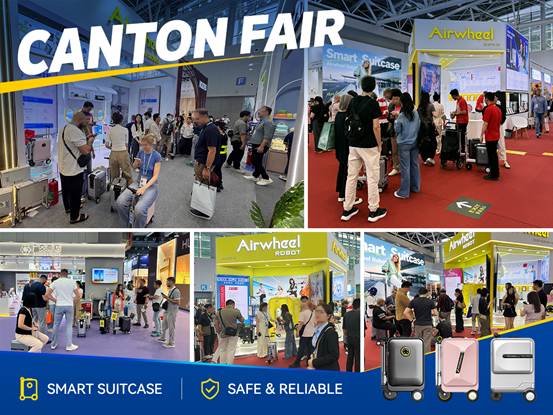
Airwheel will now continue its Canton Fair showcase during Phase 3, taking place from October 31 to November 4, where the company will present its broader smart rideable suitcase portfolio to international buyers and business partners.
Airwheel Phase 3 Booths: 20.2J37–38, 20.2K11–12 and 18.1K04
From Exhibition Demonstrations to International Social Media
During Phases 1 and 2, Airwheel showcased multiple smart rideable hand suitcase models, with live riding demonstrations becoming one of the most visible experiences around the company’s booths.
Unlike conventional luggage, Airwheel integrates electric drive systems, riding controls and intelligent features into travel-oriented suitcase designs. For many international buyers encountering the category for the first time, the ability to ride a suitcase provided an immediate and intuitive way to understand its potential applications.
Visitors could be seen testing the products around the exhibition area, turning the rideable suitcases into a distinctive presence on the show floor.
The interest extended beyond the exhibition venue. Buyer-shot videos, product demonstrations and on-site interviews have continued to circulate across international social platforms, bringing additional attention to Airwheel’s smart mobility products.
For Airwheel, these interactions provide more than visibility. Direct conversations with buyers also offer insights into different market requirements, travel habits and potential commercial applications.
Expanding the Role of the Suitcase Beyond Storage
Airwheel’s smart rideable suitcase concept is designed to extend the role of luggage beyond traditional storage.
Equipped with electric drive systems, the products allow users to ride for short-distance mobility in environments such as airports, exhibition centers and transportation hubs, providing an alternative to prolonged walking.
Depending on the model, the accompanying smart app can provide functions including riding-data monitoring, speed adjustment and lighting controls. Selected models also offer features such as cruise control, remote operation and alerts for low battery or Bluetooth disconnection.
Some models include USB output for charging compatible personal electronic devices, while models supporting Apple’s Find My feature can help users locate compatible luggage through Apple’s ecosystem.
At the 140th Canton Fair, Airwheel is highlighting the SE3SXD Full-Intelligent Electric Ai Cabin Suitcase, its flagship smart rideable suitcase.
With a one-touch operation, the motorized front wheel automatically extends while the smart riding handle rises into position, allowing the suitcase to transition into riding mode through a simplified control sequence.
The design reflects Airwheel’s broader approach to combining mechanical engineering, electric mobility and intelligent controls within a familiar travel product.
Engineering for Real-World Travel

Beyond the riding experience, Airwheel’s product development also considers practical travel requirements, including battery handling, luggage structure, security and storage.
Airwheel Carry on Suitcae use a removable 73.26Wh lithium battery. The detachable architecture provides additional flexibility for battery handling during transportation, also feature TSA-compatible locks to facilitate applicable security or customs inspection procedures.
The Boarding 20inch suitcase bodies use ABS and polycarbonate materials together with reinforced frame structures, balancing riding loads with everyday luggage protection and storage requirements.
Some models incorporate larger-diameter wheels and retractable front-wheel structures to improve riding stability across different surfaces.
Together, these details reflect Airwheel’s effort to move the rideable suitcase category from a novelty concept toward a more practical travel product.
A Portfolio Designed for Different Travel Scenarios
As consumer needs vary across markets, Airwheel has developed a broader portfolio covering cabin travel, larger-capacity journeys and family travel.
SE3S Series: 20inch Smart Rideable Cabin Suitcases
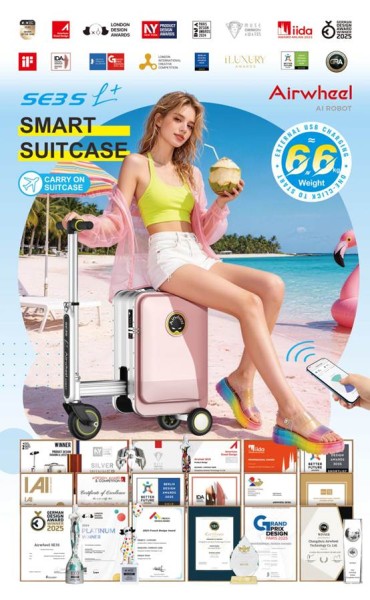
The Airwheel SE3S series, including the SE3SL Electric Suitcase, SE3SL+ Airport 20inch Suitcase, SE3SX Cabin Suitcase and SE3SXD Ai Luxury Suitcase, represents the company’s core range of compact smart rideable suitcases.
Most models can reach riding speeds of up to 9.9 km/h under specified operating conditions, making them suitable for short-distance movement in airports, stations, exhibition centers and similar environments.
Selected higher-specification models incorporate smart app functions and Apple Find My support, combining the portability of a compact suitcase with electric riding and connected features.
The range is positioned across smart cabin suitcase, electric carry-on and luxury suitcase applications, offering different configurations for different users and markets.
Airwheel SE3T: 24-Inch Smart Rideable Travel Ai wheel Suitcase
For travelers who require additional packing capacity, the Airwheel SE3T uses a 24-inch suitcase format with approximately 48 liters of storage space.
Its riding speed can reach up to 13 km/h under specified operating conditions, combining larger luggage capacity with electric mobility for longer journeys and heavier packing needs.
Airwheel SQ3 / SQ3S: Smart Rideable Suitcases for Children
Airwheel also extends its smart mobility concept into family travel.
The SQ3 and SQ3S Kids suitcase are designed for children, with maximum riding speeds of 5 km/h and 6.5 km/h, respectively. Interactive entertainment features further combine travel storage with a rideable experience designed for family journeys.
Together, these products allow Airwheel to address different age groups, travel distances and usage scenarios—from compact cabin luggage to larger travel suitcases and children’s rideable products.
Technology and International Design Recognition
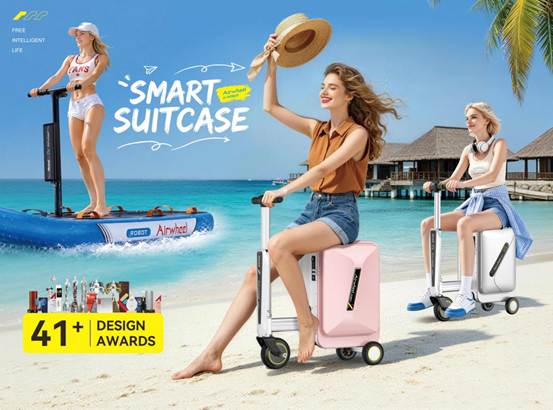
Behind Airwheel’s product portfolio is continued investment in intelligent mobility technology and product development.
The company has accumulated more than 600 global patents, covering areas including motion control, electric drive systems, intelligent sensing and structural design. Its trademark portfolio extends across 168 countries and regions, supporting its international market development.
Airwheel products have also received recognition from international design programs, including the MUSE Design Awards, French Design Awards, Asia Design Prize and iLuxury Awards, among others.
For Airwheel, these achievements reflect an ongoing effort to bring together engineering, industrial design and user experience rather than treating technology as a standalone feature.
About Airwheel
Airwheel is an intelligent mobility brand developing smart rideable suitcases and personal mobility products for modern travel and everyday transportation.
Its product portfolio combines electric drive technology, intelligent controls and contemporary industrial design to explore new possibilities in travel equipment and personal mobility.
Through continued product development and international market expansion, Airwheel is exploring how familiar travel products can evolve into more intelligent, connected and adaptable mobility companions.
Media Contact
Company: Airwheel
Contact: Media Team
Email: Jonas@airwheel.net
Website: https://www.airwheel.net
About Author
Disclaimer: The views, suggestions, and opinions expressed here are the sole responsibility of the experts. No Digi Observer journalist was involved in the writing and production of this article.
Deluxe Paint Protection Outlines New Vehicle Protection Ahead of Winter Road Season
YSC Paving Urges Phoenix-Area Property Owners to Check the Base Before Approving an Asphalt Overlay
Airwheel Smart Carry On Hand Scooter Robot 20inch Boarding Ai Wheel Luxury Cabin Suitcase Continue to Draw Global Attention After Canton Fair Phases 1 and 2
Benzinga Money Article Discusses How to Become Part of the 12% of Retirees Who Have Achieved the Recommended $550,000 Minimum Retirement Savings Threshold
Apu Apustaja Conquers New York with Lively Street Ads, Including Times Square Billboard
Bay Smokes Maintains Quality Amid Legislative Changes in the Hemp Industry


-
Press Release1 week ago
Injective Collaborates with BDACS to Bring Korea’s First Won-Backed Stablecoin to Onchain RWAs
-
Press Release4 days ago
Thomas Berkley of Nexus Acquisition AI Focuses on Turning Business Inquiries Into Structured Growth Opportunities
-
Press Release1 week ago
Mastek Selected by Staffordshire County Council to Drive AI Enabled – Oracle Cloud Transformation
-
Press Release4 days ago
Widgets & Web Launches AI-Operated Investor Relations Websites for Public Companies at a Fixed $299 per Month
-
Press Release4 days ago
Dynamic NameCard Opens Global Franchise Recruitment for Telegram Mini App-Based Digital Identity Services
-
Press Release1 week ago
New Book Where’s the GAP by David P. Matthews, Now Available on Amazon, Asks a Life Changing Question
-
Press Release1 week ago
PetShopValue.com Highlights Pet Comfort and Travel Essentials Ahead of the Holiday Season
-
Press Release4 days ago
Thomas Berkley and Nexus Acquisition Group Outline AI Agency Partnership Approach in Cleveland