
Press Release
KeyCrew Media Selects Home Buyer Louisiana as Verified Expert for Distressed Property Acquisition and Louisiana Real Estate Markets

KeyCrew Media, a real estate analytics and media network, has selected Home Buyer Louisiana as a KeyCrew Verified Expert.
Baltimore, Maryland, United States, 19th Dec 2025 – KeyCrew Media, a real estate analytics and media network, has selected Home Buyer Louisiana as a KeyCrew Verified Expert. The company will contribute market insights and expert analysis on distressed property acquisition, Louisiana succession law, and Gulf South real estate trends.
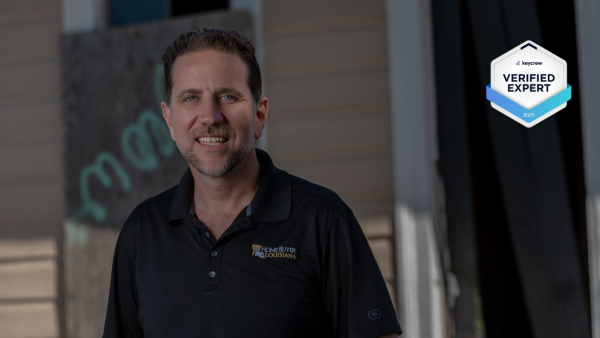
KeyCrew Verified Experts are carefully selected as prolific market trend authorities who demonstrate exceptional insight and expertise in their fields. These distinguished professionals regularly contribute market insights, expert perspectives, and forward-looking analysis to help audiences navigate complex industry landscapes.
Home Buyer Louisiana brings a distinctive systems-driven approach to one of real estate’s most complex sectors: distressed property acquisition across Louisiana and the Gulf South. Founded by tech entrepreneur Stephen Keighery, who previously co-founded the ASX-listed hipages Group in Australia, the company has completed over 200 transactions by combining marketplace technology principles with deep local market expertise.
Operating across Greater New Orleans, Baton Rouge, Lafayette, and the Mississippi Gulf Coast, Home Buyer Louisiana specializes in navigating Louisiana’s uniquely complex real estate challenges including succession issues, storm damage remediation, and difficult title situations. The company has built its reputation by solving problems that most investors avoid, helping families move forward from challenging situations while revitalizing neighborhoods throughout the region.
“We’re honored to be selected as a KeyCrew Verified Expert,” said Stephen Keighery, Founder of Home Buyer Louisiana. “Louisiana real estate presents unique challenges that require both sophisticated systems and genuine empathy. From succession law to storm recovery, every distressed property tells a human story. We’ve built our business on the principle that when you approach complex situations with the right combination of technology, local knowledge, and care for people, you can create positive outcomes for families and communities alike.”
Home Buyer Louisiana’s approach combines technology-enabled efficiency with hands-on local expertise. The company has developed proprietary underwriting systems that allow rapid property evaluation without site visits, while maintaining the personal touch needed to navigate sensitive family situations and complex legal scenarios. This blend of innovation and empathy has enabled the company to help homeowners who face foreclosure, inherited property challenges, and properties others consider too difficult to purchase.
Home Buyer Louisiana’s areas of expertise include:
- Distressed Property Acquisition – Specialized knowledge in purchasing properties with title issues, succession challenges, and deferred maintenance
- Louisiana Succession Law & Complex Titles – Deep expertise navigating Louisiana’s unique legal framework for inherited properties
- Gulf South Real Estate Markets – Comprehensive understanding of market dynamics across Greater New Orleans, Baton Rouge, Lafayette, and Mississippi Gulf Coast
- Storm Damage & Property Rehabilitation – Experience with flood-damaged properties and post-disaster real estate recovery
- Technology-Enabled Real Estate Operations – Applying marketplace technology principles to traditional real estate investing
About Home Buyer Louisiana
Home Buyer Louisiana is a regional real estate investment company specializing in distressed property acquisition throughout Louisiana and the Gulf South. Founded by tech entrepreneur Stephen Keighery, the company has completed over 200 transactions by combining sophisticated operational systems with deep local market knowledge. Home Buyer Louisiana helps homeowners navigate complex situations including succession issues, foreclosure, storm damage, and difficult titles, while contributing to neighborhood revitalization across the region. The company serves Greater New Orleans, Baton Rouge, Lafayette, and the Mississippi Gulf Coast. Website: www.homebuyerlouisiana.com
About KeyCrew Media
KeyCrew Media is the next generation real estate intelligence platform that leverages AI-powered analytics and first-person reporting from verified experts to produce forward-looking insights across local markets and niche asset classes. Proprietary market reporting is delivered through KeyCrew’s growing portfolio of niche media properties – including KeyCrew Journal, NextAsset News, and other specialized publications – as well as selectively syndicated to media partners that influence industry decision-makers. Learn more at keycrew.co
Media Contact
Organization: KeyCrew Media
Contact Person: Heather Hook
Website: https://www.keycrew.co
Email: Send Email
City: Baltimore
State: Maryland
Country:United States
Release id:39289
The post KeyCrew Media Selects Home Buyer Louisiana as Verified Expert for Distressed Property Acquisition and Louisiana Real Estate Markets appeared first on King Newswire. This content is provided by a third-party source.. King Newswire makes no warranties or representations in connection with it. King Newswire is a press release distribution agency and does not endorse or verify the claims made in this release. If you have any complaints or copyright concerns related to this article, please contact the company listed in the ‘Media Contact’ section
About Author

Disclaimer: The views, suggestions, and opinions expressed here are the sole responsibility of the experts. No Digi Observer journalist was involved in the writing and production of this article.

Timothy Monzello, an adjunct professor at El Camino College in Torrance, CA, uses his NASA and shop floor experience to close the gap between design and production.
The Problem Most Engineering Students Don’t See Until It’s Too Late
Saratoga Springs, UT, Jun 05, 2026, ZEX PR WIRE — A recent engineering graduate walked into a machine shop with a design that looked perfect on paper. Tight tolerances across every dimension. Smooth curves. Precise fits. The shop foreman held it up and asked one question: “How do you expect us to machine this?”
The graduate had no answer. The drawing called for internal features that no tool could reach. The tolerances demanded precision that would triple production time and cost. The design had to be scrapped and redrawn. Three weeks of work lost because no one had taught the designer to think about how things get built.
Timothy Monzello has watched this scenario play out dozens of times. He spent 19 years at NASA’s Jet Propulsion Laboratory, first as a Master Production Scheduler and later as a Manufacturing Engineering Group Lead. Before that, he worked as a machinist, programmer, foreman, shift supervisor, plant manager, and business owner. Now, for the past 11 years, he has taught machine tool technology at El Camino College.
“If it can’t be built, it’s not a finished idea,” Monzello says. “You have to think about the process from the start.”
Why Design and Build Must Share the Same Room
Monzello started his career as an auto mechanic while earning his first two associate degrees. He moved into machine shops, working as an OD/ID grinder, honer, and CNC programmer. He ran his own manufacturing business for nearly three years before selling it. Each step taught him the same lesson: understanding the system matters more than knowing one piece of it.
“I’ve been on both sides,” he says. “I’ve done the hands-on work, and I’ve managed teams doing it.”
At JPL, he planned production schedules for spacecraft components and oversaw manufacturing engineering projects. He earned multiple NASA honor awards, team awards, and a leadership award. But after 19 years, he was subject to a reduction in force. By then, he was already teaching part-time in the evenings. When the layoff came, he shifted to online courses and kept going.
“You learn pretty quickly that you have to be accountable,” Monzello says. “No one is going to carry you.”
His students learn manufacturing from someone who has seen what happens when designs ignore production realities. He shows them that good engineering means understanding the whole system, not just the blueprint.
“Not everything needs tight tolerances,” Monzello explains. “I’ve seen designs where everything was over-specified. That slows production and adds cost. Precision matters, but only where it’s needed.”
The Five-Phase Framework: Copy This to Build Smarter
Monzello’s approach to design for manufacturability follows a clear structure. Anyone working in engineering, manufacturing, or operations can apply this framework to reduce errors, cut costs, and speed up production.
Phase 1:Include the Build Process in the Design Before you finalize a design, talk to the people who will make it. Ask what tools they have. Ask what materials are easiest to work with. Ask where delays and errors tend to happen. This step prevents most of the problems that show up later.
Phase 2: Specify Precision Only Where It’s Needed Tight tolerances slow down production and drive up cost. Look at every dimension and ask whether it actually needs to be precise. If a feature doesn’t affect fit or function, loosen the tolerance. Save precision for the places that matter.
Phase 3: Design for Accessibility If a machinist can’t reach a feature with a tool, the part can’t be made. If an inspector can’t measure a dimension, the part can’t be verified. Where possible, design every feature so it can be accessed, machined, and checked without special fixtures or workarounds.
Phase 4: Document Decisions and Learn from Mistakes Keep notes on what works and what doesn’t. When a design causes a problem, write down why. When a change saves time, record it. Over time, you build a personal reference that helps you avoid repeating mistakes.
“Writing things down,” Monzello says. “I keep notes on what works and what doesn’t. Over time, that builds a personal reference. It helps me avoid repeating mistakes.”
Phase 5: Test the System Before Full Production Run a pilot build. Make a small batch. Find the problems before you commit to hundreds or thousands of units. Testing the process reveals gaps that no one sees on a drawing.
Quick Wins You Can Apply This Week
These small changes deliver immediate improvements:
-
Walk through the shop floor and ask machinists what design features cause the most trouble.
-
Review one recent drawing and identify any tolerances that could be loosened without affecting function.
-
Schedule a 15-minute conversation between a designer and a machinist before finalizing the next project.
-
Add a manufacturability checklist to your design review process.
-
Document one lesson learned from a recent production issue and share it with the team.
Red Flags That Signal a Design Problem
Watch for these warning signs:
-
Designers who have never visited the production floor.
-
Drawings that specify tight tolerances on every dimension.
-
Features that require custom tooling or special fixtures.
-
Internal geometries that can’t be reached with standard tools.
-
No conversation between design and manufacturing until after the drawing is released.
What Happens When the Gap Stays Open
Monzello has seen companies waste months and thousands of dollars because designers and builders never talked. Parts get rejected. Production stops. Engineers scramble to redraw components. Deadlines slip. Costs climb.
The fix is simple but not automatic. It requires intentional collaboration. It requires designers who understand manufacturing constraints. It requires manufacturers who speak up before problems reach the shop floor.
“At JPL, you plan for everything,” Monzello says. “You don’t leave gaps.”
He teaches his students to close the gap early. He shows them how to think like both a designer and a builder. He walks them through real examples from his years in machine shops, management roles, and NASA projects.
His work has appeared in outlets including BM Magazine, Brainz Magazine, Barchart, IdeaMensch, Business ABC, and IntelligentHQ. He holds a Lean Six Sigma Green Belt certification and has completed advanced training in GD&T, supply chain management, and Oracle systems. He earned two associate degrees from Citrus College, a bachelor’s in business administration from Ashford University, and an MBA from Arizona State University. He also completed project management training at Pepperdine University.
Outside of work, he volunteers at an assisted living facility. He grew up in Southern California in the 1960s and 1970s, losing his mother at age 10 and being raised by his father, a mail carrier. He spent his teenage years studying piano and martial arts, both of which taught him discipline that carried into his career.
“I learned early that you have to keep moving forward,” Monzello says. “No one is going to do the work for you.”
Apply This Framework to Your Next Project
Pick one project you’re working on right now. Walk through the five phases. Start a conversation with someone on the production side. Ask what they need from you to make the build smoother. Document what you learn. Test the system before you scale.
The gap between design and production closes one conversation at a time. This week, start closing it.
About Timothy Monzello
Timothy Monzello is an adjunct professor at El Camino College in Torrance, CA, where he teaches machine tool technology and business operations management. He spent 19 years at NASA’s Jet Propulsion Laboratory as a Master Production Scheduler and Manufacturing Engineering Group Lead. He has worked as a machinist, CNC programmer, plant manager, and business owner. He holds an MBA from Arizona State University, a bachelor’s in business administration from Ashford University, and two associate degrees from Citrus College. He is a Lean Six Sigma Green Belt and has received multiple NASA honor awards, team awards, and a leadership award.
About Author
Disclaimer: The views, suggestions, and opinions expressed here are the sole responsibility of the experts. No Digi Observer journalist was involved in the writing and production of this article.
Jeff Herter, a portfolio manager and real estate developer based in Rye, New Hampshire, shares how old-school habits and disciplined thinking drive long-term results.
How do you keep track of your goals?
New Hampshire, USA, Jun 05, 2026, ZEX PR WIRE — “I write them in a notebook,” Herter says. In an era of productivity apps and cloud-based systems, he uses pen and paper. The act of writing forces clarity. It slows down thinking. It creates a physical record that does not disappear behind a notification badge.
Herter has spent more than fifteen years investing in and operating multifamily properties across the United States. Before that, he co-founded a derivatives trading firm and launched a hedge fund. The consistent thread is discipline. Writing goals down is one part of that system.
What made you shift from trading to real estate?
After graduating from Boston University with a degree in accounting, Herter co-founded Cygnus Atratus LLC, a relative-value derivatives trading firm. He describes his early career as “trying to establish myself as a derivatives trader through hard work, studying and visualization.”
By 2009, he had founded JJH Investments and shifted focus to real estate. The move was deliberate. Real estate offered tangible assets, long-term value creation, and less day-to-day volatility than the trading floor. He now focuses on finding value-add multifamily and adaptive reuse development opportunities.
What does your investment approach look like?
Herter describes his method as rooted in “experience, conservative with regards to risk and analytical mind.” He looks for properties where operational improvements, better management, or repositioning can unlock value. The goal is not speculation. It is disciplined execution over time.
At Guin Financial, where he served as Chief Investment Officer and Portfolio Manager, Herter held oversight responsibility for over $350 million in assets under management. He has successfully identified, acquired, managed, constructed, and sold value-add multifamily properties for returns in excess of 15 percent per year.
What keeps you motivated?
“The ability to do work that you are passionate about and it challenges you,” Herter says. That combination of passion and challenge has defined his career. It pushed him through the intensity of derivatives trading. It drives his current work in real estate development and portfolio management.
He also mentors small business owners through SCORE, a nonprofit that provides free business counseling. The work connects him to entrepreneurs navigating early-stage challenges, many of which he faced himself.
What do you tell small business owners about growth?
Herter encourages business owners to focus on strategic, long-term growth rather than short-term gains. That means understanding fundamentals, managing risk carefully, and building systems designed to create lasting results. It means resisting the pressure to chase every opportunity and instead focusing on what aligns with long-term goals.
He emphasizes personal accountability. Markets change. Regulations shift. But the fundamentals of disciplined decision-making remain constant.
What advice would you give someone starting out in real estate?
Start small. Learn the fundamentals. Understand what drives value in a property beyond the purchase price. Study market dynamics, financing structures, and operational metrics. Be conservative with risk, especially early on.
Herter also emphasizes the importance of analytical thinking. Real estate investing is not just about deals. It is about data, trends, and the ability to see where others overlook value. Combine that with discipline, and the long-term results follow.
If you do nothing else
-
Write your goals in a notebook. Make them specific and revisit them regularly.
-
Focus on long-term growth over short-term wins.
-
Learn the fundamentals of your industry before scaling.
-
Be conservative with risk, especially in the early stages.
-
Build systems that support disciplined decision-making.
-
Study what drives value, not just what drives activity.
-
Mentor or learn from others who have walked the path before you.
If this Q&A resonated with you, share it with someone who is building something for the long term.
About Jeff Herter
Jeff Herter is a portfolio manager and real estate developer based in Rye, New Hampshire. He is the founder of JJH Investments and a principal at Providence Real Properties, LLC. Herter has more than fifteen years of experience investing in and operating multifamily properties across the United States. He previously co-founded a derivatives trading firm and served as Chief Investment Officer at Guin Financial, where he oversaw more than $350 million in assets under management. He is a SCORE mentor to small business owners and holds a Bachelor of Science in Business Administration in Accounting from Boston University.
About Author
Disclaimer: The views, suggestions, and opinions expressed here are the sole responsibility of the experts. No Digi Observer journalist was involved in the writing and production of this article.
Hayden Fowlkes, Vice President and civil engineer in New Braunfels, Texas, explains how engineering decisions made at the start of a project determine long-term community function.
The Hidden Impact of First Decisions
Texas, USA, Jun 05, 2026, ZEX PR WIRE — Most people see a finished neighborhood and never think about the planning that made it work. But according to civil engineer Hayden Fowlkes, the most important work happens before construction ever begins.
“Every project starts with a piece of land and a plan,” Fowlkes says. “How you design that from the beginning affects everything that comes after—how people live, how communities function, and how systems hold up over time.”
Fowlkes has spent 13 years in residential land development, advancing from Engineer I to Vice President at the same firm. His work focuses on turning raw land into functional communities along the IH35 corridor between Austin and San Antonio. He has led planning and design for masterplanned developments including Meyer Ranch, Redbird Ranch, and Mayfair.
Why Getting It Right Early Matters
Poor planning at the start of a project can create problems that last for decades. Roads that flood. Drainage systems that fail. Utilities that cannot keep up with growth. These are not accidents. They are the result of decisions made before anyone broke ground.
“If you get it right early, you avoid problems later,” Fowlkes explains. “It’s not just about building quickly. It’s about building correctly. Every site is different, and you have to think through how it will function years down the road.”
Early planning includes understanding how water moves across a site, where utilities need to go, and how roads will connect to existing infrastructure. It also means anticipating future growth and designing systems that can handle it.
The Role of Collaboration in Good Planning
No engineer works alone. Good planning requires coordination between developers, municipalities, contractors, and other stakeholders. Everyone needs to understand the end result and work toward it.
“Good planning doesn’t happen in isolation,” Fowlkes says. “It takes coordination and a shared understanding of what the end result should be.”
Fowlkes emphasizes that communication is as important as technical skill. When teams align early, projects move more smoothly and communities function better over time.
Thinking Beyond the Finished Product
Most people only interact with a community after it is built. They drive on the roads, walk on the sidewalks, and use the parks. They do not see the engineering that made it possible.
“Most people only see the finished product,” Fowlkes notes. “But the real impact comes from decisions made at the very beginning.”
Those decisions include site layout, grading plans, stormwater management, and utility placement. Each choice affects how a community will age and adapt to future needs.
What You Can Do
If you are involved in land development or community planning, take time to prioritize early design decisions. Ask questions about long-term function, not just short-term costs. Work with engineers and planners who understand how systems interact and how communities grow.
For residents, stay informed about development projects in your area. Attend public meetings. Ask about infrastructure plans. Support projects that prioritize thoughtful planning over speed.
About Hayden Fowlkes
Hayden Fowlkes is a Vice President and Professional Engineer based in New Braunfels, Texas. He has spent 13 years with the same engineering firm, advancing through multiple leadership roles. His work focuses on civil engineering design for residential land development projects along the IH35 corridor between Austin and San Antonio. He earned a Bachelor of Science in Civil Engineering from The University of Texas at Austin in 2013 and is a member of the New Braunfels Chamber of Commerce and a graduate of the Greater New Braunfels Leadership Development Program.
About Author
Disclaimer: The views, suggestions, and opinions expressed here are the sole responsibility of the experts. No Digi Observer journalist was involved in the writing and production of this article.
Timothy Monzello: Build Systems That Work by Teaching the People Who Will Make Them
Jeff Herter: Why Writing Goals in a Notebook Still Beats Every App
Hayden Fowlkes: Why Early Planning Decisions Shape the Future of Communities
Benzinga Money Article Discusses How to Become Part of the 12% of Retirees Who Have Achieved the Recommended $550,000 Minimum Retirement Savings Threshold
Apu Apustaja Conquers New York with Lively Street Ads, Including Times Square Billboard
Bay Smokes Maintains Quality Amid Legislative Changes in the Hemp Industry


-
Press Release6 days ago
2026 BRICS New Industrial Revolution Partnership Forum Opened in Xiamen
-
Press Release6 days ago
RIHOAS Announces 2026 Anniversary Celebration With a Summer Dress Event for Wedding, Graduation and Vacation Season
-
Press Release6 days ago
Good Good Creative Leads Video Production Excellence in Hong Kong to Drive Brand Growth
-
Press Release6 days ago
Creality Printers Review Site Helps Buyers Compare Creality Printers
-
Press Release6 days ago
Streamex Adds Microsoft and PayPal Lead Product Designer to High Level Talent Roster
-
Press Release6 days ago
Katana Bridge Guide 2026: Secure Cross-Chain Transfers Made Simple
-
Press Release6 days ago
Birmingham Loft Conversions Experts Help Homeowners Unlock Hidden Space
-
Press Release4 days ago
Wijaya Dharmawan Ph.D. Advances Cooperation with NVIDIA Team to Accelerate AI Computing Power and Industrial Applications