
Press Release
John Gordon Nutley of New Jersey on Why Ignoring Boomers and Gen X Is a Strategic Mistake in Modern Marketing

Michigan, US, 1st August 2025, ZEX PR WIRE, There’s a dangerous trend unfolding in marketing departments across the globe: a wholesale shift away from targeting older generations, particularly Baby Boomers and Generation X. It’s happening quietly but consistently, and as a strategic marketer with over 15 years in the field, I believe this recalibration is not only short-sighted but also costing brands billions.
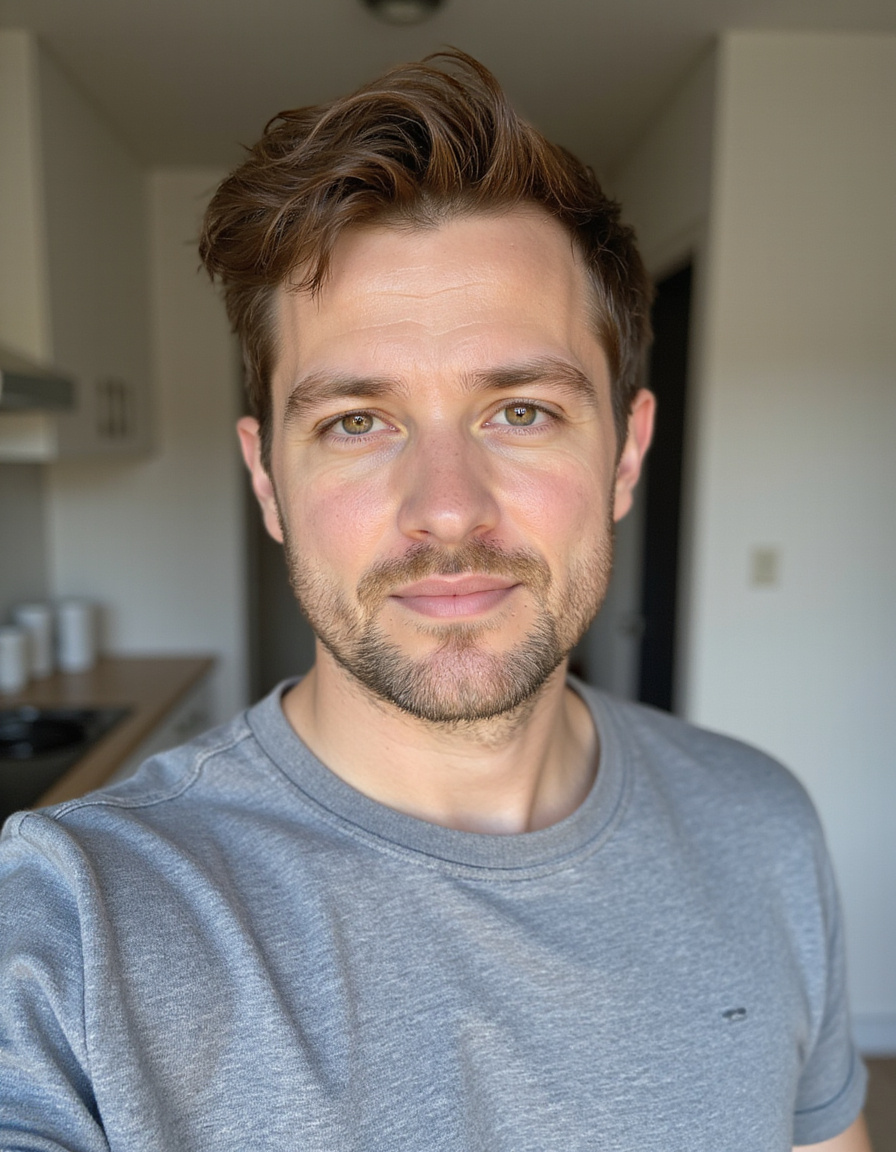
Nutley says that most consumer-facing campaigns are obsessively aimed at Millennials and Gen Z. The assumption is that digitally native, socially conscious, trend-sensitive consumers are the future of purchasing power. That’s only half true.
John notes that the future doesn’t exclude the present. He says that Baby Boomers and Gen X still hold most of the global disposable income. Boomers control over 50% of all U.S. household wealth, and Gen X, many in their peak earning years, are key decision-makers in consumer and B2B markets. Yet, they’re being sidelined in favor of viral content and youth-centric platforms.
This strategic imbalance isn’t just a creative misstep; it’s a fundamental misunderstanding of market segmentation.
Brands Are Chasing Cool, Not Conversion
In the race to remain culturally relevant, brands are confusing visibility with viability. Sure, Gen Z dominates TikTok, and Millennials drive the podcast boom, but reach doesn’t always equal revenue.
Too often, marketers build entire brand strategies around the assumption that younger equals better. They abandon traditional channels and messaging that speak to older buyers. Instagram reels replace email campaigns. Thought leadership gives way to meme marketing. Customer service hotlines are replaced by bots that alienate people who are still willing to pick up the phone and place a large order.
Here’s the problem: if everyone’s targeting the same 25-year-old digital native, competition becomes extreme, margins shrink, and differentiation disappears. It’s a race to the middle, not where sustainable profit lives.
The Real Opportunity Is in Overlooked Audiences
I recently advised a health and wellness brand locked in a costly ad war targeting 30-something fitness influencers and micro-creators. Their CPA (cost per acquisition) was rising, their conversions were flatlining, and their message was drowned out.
We conducted a segmentation study and found that one of their strongest untapped customer groups was women aged 55–65. These women weren’t flashy but had trust, loyalty, and the income to purchase premium products. When we repositioned part of the brand to speak directly to that segment through refined messaging, community partnerships, and adjusted creative, the conversion rate tripled, and the campaign’s ROI nearly doubled.
The point? Just because older generations aren’t reposting your content doesn’t mean they’re not engaging with your brand. They simply interact and convert differently.
Strategic Recalibration Doesn’t Mean Abandoning Youth
John notes that this isn’t a call to stop targeting Millennials and Gen Z. It’s a call to balance. Innovative marketing isn’t about chasing trends but matching value propositions to segments with unmet needs and spending power.
Younger generations bring growth potential and cultural relevance. But older generations bring brand trust, high average order values, and product stickiness. In many cases, they still pay for multi-generational purchases, from family vacations to education support to home upgrades.
Yet most marketers treat them as a fading market instead of a loyal one.
Customer Targeting Must Be Purposeful, Not Popular
It’s time to stop targeting based on assumptions and start targeting based on evidence. Marketers should be asking:
-
Who actually has the problem our product solves?
-
Who has the means and motivation to buy now?
-
Who is being underserved by our current messaging?
In today’s hyper-saturated landscape, differentiation isn’t just about being louder; it’s about being sharper. And often, that means targeting the customers your competitors are ignoring.
The Bottom Line
In John Gordon’s view, the marketing landscape is evolving, and younger generations will shape the next era of brand engagement. However, strategic foresight, he says, means understanding that growth doesn’t always come from the newest audience. Sometimes, it comes from going back to the fundamentals: targeting the right people, with the right message, at the right time.
Boomers and Gen X aren’t fading; they’re just being forgotten. And for brands willing to recalibrate, that’s not a problem, it’s an opportunity.
About Author

Disclaimer: The views, suggestions, and opinions expressed here are the sole responsibility of the experts. No Digi Observer journalist was involved in the writing and production of this article.

Press Release
Gabriel Malkin Florida Completes 120-Mile Camino Walk with Focus, Patience, and Preparation
Florida, US, 30th January 2026, ZEX PR WIRE, Most students don’t spend the start of summer walking across northern Spain. Gabriel Malkin did. In June 2025, the Florida high school graduate completed a 120-mile stretch of the Camino de Santiago, one of the world’s oldest pilgrimage routes. It wasn’t a last-minute idea. It was a goal he had planned for, trained for, and quietly worked toward for months.
This wasn’t about adventure or social media. For Gabriel, it was about setting a physical goal and showing up for it every day.
“I didn’t want to wing it,” he said. “It was important to take it seriously.”
Gabriel’s prep started long before his flight to Europe. He built up mileage slowly, starting with short daily walks in South Florida. As the months went on, he added distance, tested gear, and paid attention to recovery. Blisters, sore muscles, and weather were all part of the process. So was building patience.
“The Camino isn’t just hard because it’s long,” Gabriel said. “It’s hard because you have to get up and do it again every day. Even when you’re tired. Even when nothing hurts and you feel fine—you still have to walk.”
The daily rhythm became its own challenge. Mornings often started before sunrise, with quiet stretches of trail through farmland, hills, and towns. Gabriel carried a small pack with essentials. Water, snacks, extra socks. No Wi-Fi. No schedule beyond the day’s distance. Just a clear goal and a few hours of steady effort.
That focus and consistency mirrors how Gabriel approaches most things. Whether he’s in class, on the tennis court, or working on saxophone tone, he tends to favor structure and repetition over shortcuts. It’s not about perfection. It’s about showing up, improving slowly, and staying with it.
“I’ve never been the fastest or the strongest at anything,” he said. “But I like knowing I’m getting better, even if it’s slow.”
Gabriel grew up in South Florida and attended Virginia Shuman Young Elementary, Pine Crest in Fort Lauderdale, and NSU University School in Davie. He played tennis, baseball, and football through different stages of school. He also spent time hiking local trails and practicing saxophone, two interests he says helped him train for the Camino more than people might expect.
“Hiking helped with endurance, obviously,” he said. “But playing music teaches you a lot about repetition and listening to your body. You learn when to push and when to pause.”
For Gabriel, the Camino wasn’t a performance or a competition. It was a quiet personal test. He kept notes during the walk, not for a blog, but to track how each day felt. When he crossed the finish line in Santiago, there was no big moment. Just a quiet sense of completion.
Now back home, Gabriel hasn’t stopped walking. He’s back to local trails, early mornings, and training logs. He’s also thinking about what comes next—college, travel, more endurance goals—but isn’t rushing anything.
“There’s no rush,” he said. “The Camino reminded me that showing up every day matters more than trying to get somewhere fast.”
Gabriel Malkin Florida continues to build habits rooted in preparation, consistency, and follow-through. Whether through athletics, academics, or music, his focus remains steady: stay curious, stay active, and finish what you start.
About Author
Disclaimer: The views, suggestions, and opinions expressed here are the sole responsibility of the experts. No Digi Observer journalist was involved in the writing and production of this article.
-
Jon DiPietra, a New York–based real estate valuation executive, explains why common beliefs about space and value often miss the mark.
New York, US, 30th January 2026, ZEX PR WIRE, New York City is full of opinions about real estate. Many of them are repeated so often they start to feel true. But according to Jon DiPietra, decades of hands-on valuation work tell a different story.
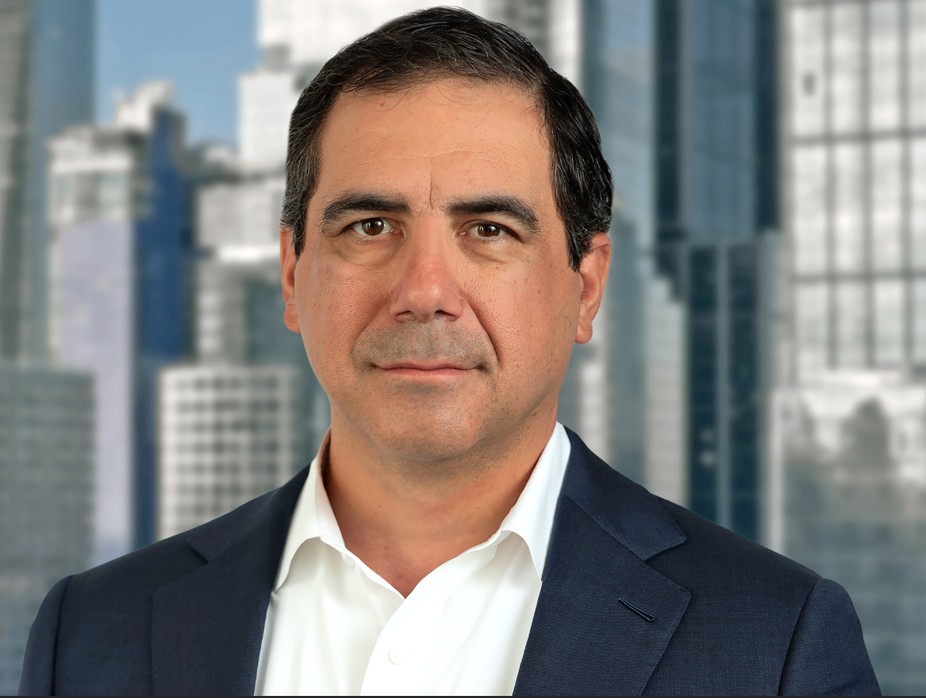
“You learn things you cannot see in a report,” DiPietra says. “That’s where most of these myths fall apart.”
Below are five common myths that mislead everyday people across dense urban markets, why they persist, and what actually matters instead.
Myth 1: Bigger Space Always Means Better Value
Why people believe it:
Square footage is easy to compare. Listings highlight size first, so people assume more space equals more value.
The reality:
In dense cities, efficiency matters more than size. Studies show poorly used space can reduce productivity by up to 30 percent, even when square footage increases.
As DiPietra puts it, “The goal is not to produce the highest number. The goal is to produce something that makes sense in the real world.”
Try this today:
Identify one underused area in your home or office and repurpose it for a single clear function.
Myth 2: National Data Tells You Everything You Need to Know
Why people believe it:
Online tools and national reports feel authoritative and precise.
The reality:
Real estate is hyper-local. In New York, conditions can change block by block. National averages often lag reality by months.
“Real estate is ultimately driven by people, not formulas,” DiPietra says.
Try this today:
Walk your block at different times of day. Notice noise, foot traffic, and how spaces are actually used.
Myth 3: If a Space Worked Before, It Should Still Work Now
Why people believe it:
People resist change and assume layouts age well.
The reality:
How we live and work has shifted fast. Surveys show nearly 60 percent of people say their space no longer supports how they work today.
“Clear thinking matters more than being busy,” DiPietra notes.
Try this today:
Ask one simple question: What do I actually do here every day? Adjust one thing to support that reality.
Myth 4: More Information Leads to Better Decisions
Why people believe it:
Data feels safe. More feels smarter.
The reality:
Too much information can slow decisions and increase stress. Research links information overload to poorer judgment.
DiPietra says, “More data does not always lead to better decisions.”
Try this today:
Limit yourself to three criteria when evaluating a space or decision. Ignore the rest.
Myth 5: You Need a Major Renovation to Fix a Space
Why people believe it:
Media and social platforms spotlight dramatic transformations.
The reality:
Small changes often have outsized impact. Lighting, noise reduction, and decluttering consistently rank among the highest-return improvements.
“Sometimes the simplest changes create the most lasting value,” DiPietra says.
Try this today:
Improve lighting where you spend the most time. It is one of the fastest ways to change how a space feels.
If You Only Remember One Thing
Spaces influence behavior more than most people realize. When a space creates friction, it is often a design problem, not a personal one.
Understanding how space actually functions is more valuable than following assumptions or averages.
Call to Action
Share this myth list with someone who lives or works in a dense city. Pick one practical tip above and try it today. Small changes, applied intentionally, add up.
About Jon DiPietra
Jon DiPietra is a New York–based commercial real estate valuation executive and cofounder of H&T Appraisal, the valuation group of Horvath & Tremblay. With more than 20 years of experience, he has worked across residential, commercial, mixed-use, and special-use properties, focusing on how real people actually use space.
About Author
Disclaimer: The views, suggestions, and opinions expressed here are the sole responsibility of the experts. No Digi Observer journalist was involved in the writing and production of this article.
Press Release
Roger Haenke Connects Healthcare and Faith in a Career Centered on Presence and Support
San Diego, California, 30th January 2026, ZEX PR WIRE, Roger Haenke has spent his career at the intersection of healthcare and faith. As a registered nurse and ordained priest, his work has placed him in moments where people are vulnerable, uncertain, and often searching for support. Whether in hospitals, churches, clinics, or classrooms, Roger Haenke has built a reputation for being present, steady, and quietly dependable.
Roger Haenke began his career in parish ministry after completing his theological education and ordination. He served churches across North Dakota, offering pastoral care, teaching, and leadership. Much of his early work focused on being there for others during personal transitions—illness, loss, change, and growth. These experiences helped shape how Roger Haenke would later approach leadership in every other part of his life.
After leaving active ministry, Roger Haenke returned to school and earned a nursing degree. He started at the bedside and quickly moved into leadership roles. His healthcare career took him through specialty clinics, hospital departments, and community-based health systems. He managed staff, trained nurses, developed new services, and helped improve patient care across several states. At every step, Roger Haenke kept his focus on people and the systems that support them.
The connection between healthcare and ministry was always clear to Roger Haenke. He saw how much both fields depend on trust, communication, and the ability to remain calm when things are hard. He brought this understanding into every room he entered—whether leading a care team, sitting with a patient, or offering support to staff under pressure.
Later, Roger Haenke joined the faculty at San Diego State University. He taught nursing leadership, financial management, and professional development. His students learned not only the structure of healthcare systems, but also how to show up for others with clarity and respect. Roger Haenke’s teaching reflected what he had lived: strong systems matter, but presence and consistency matter just as much.
In his later ministry roles, Roger Haenke continued to offer steady leadership to congregations in the San Diego area. He worked with teams, guided transitions, and focused on inclusion, listening, and shared responsibility. His approach was thoughtful, balanced, and always grounded in care for others.
Now, Roger Haenke is entering a new chapter. He is no longer working in formal institutional roles, but he continues to serve the San Diego community in smaller, more flexible ways. Whether volunteering, mentoring, or simply showing up when needed, Roger Haenke remains committed to steady, meaningful work rooted in the same values he has carried all along.
For Roger Haenke, leadership has never been about attention or titles. It has always been about being present when it counts.
About Author
Disclaimer: The views, suggestions, and opinions expressed here are the sole responsibility of the experts. No Digi Observer journalist was involved in the writing and production of this article.
Gabriel Malkin Florida Completes 120-Mile Camino Walk with Focus, Patience, and Preparation
Jon DiPietra Debunks 5 Real Estate Myths That Mislead New Yorkers
Roger Haenke Connects Healthcare and Faith in a Career Centered on Presence and Support
Benzinga Money Article Discusses How to Become Part of the 12% of Retirees Who Have Achieved the Recommended $550,000 Minimum Retirement Savings Threshold
Apu Apustaja Conquers New York with Lively Street Ads, Including Times Square Billboard
Bay Smokes Maintains Quality Amid Legislative Changes in the Hemp Industry


-
Press Release6 days ago
Knybel Network Launches Focused Growth Campaign to Help Southeast Michigan Buyers and Homeowners Win in a Competitive Housing Market
-
Press Release1 week ago
Valencia Scientology Mission Highlights Volunteer Humanitarian Work in La Llum
-
Press Release1 week ago
Highly Recommended by GoodNight New York: Zeagoo Patterned Shirt Becomes the Focal Point of Early Spring Outfits
-
Press Release6 days ago
New Findings Reveal a Hidden Indoor Air Quality Crisis Linked to Aging HVAC Systems and Fiberglass Ductwork Across South Florida
-
Press Release6 days ago
Stockity Arrives in Indonesia, Bringing Global Markets Closer to Local Traders
-
Press Release6 days ago
Karviva Selected to Meet with Costco Wholesale Southern California Merchants at Upcoming Local Summit
-
Press Release6 days ago
GOD55 Sports Announced as Gold Partner and Official Sports Media Partner for WPC Malaysia Series 2025-26
-
Press Release6 days ago
Rankiteo Opens Global Tender for Cyber Insurers: Exclusive Access to 5 million Enterprise Profiles and the Future of Cyber Insurance Distribution