
Press Release
Hashj and Crypto Mining – The Future of Digital Wealth Generation


Cryptocurrency mining that started as a small-scale hobby of people interested in technology is turning into a worldwide sector that is transforming the financial sphere. Cryptocurrencies such as Bitcoin, Ethereum, and Dogecoin have gained mainstream recognition, and consequently, their mining has emerged as a relevant way through which people and groups can receive crypto rewards. This article is going to discuss the status and future of crypto-mining, the technology and mechanism that drive it, and how new platforms are making it possible to harness its power as much as possible.

What Is Crypto Mining?
Crypto mining is specifically the way through which new digital coins are generated and the verification processes of transactions are proven on blockchain. Miners also run complex mathematical puzzles with the use of mighty computers. When a puzzle is solved, a new block of transactions is created when it is added to the chain and the miner receives a reward which is cryptocurrency.
Security and decentralization of blockchain networks require mining. It makes transactions valid, avoids possibilities of spending twice, and keeps the system credible without any centralized regulation.
How Does Crypto Mining Work?
Basically, crypto mining is entailed by:
- Hashing: The cryptocurrencies apply cryptographic hash functions (such as the SHA-256 hash for Bitcoins) to encrypt their information. Miners attempt to compute a certain hash value which does meet a certain requirement.
- Proof of Work (PoW): It is a method of consensus used by many assets. It compels the miners to demonstrate that they have engaged in computational work.
- Mining hardware: Miners equip themselves with other machines like ASICs (Application-Specific Integrated Circuits) or even high-quality GPUs to carry out these calculations.
- Software: Mining software Mining software such as CGMiner or NiceHash assists miners in the management of their activities.
So, as soon as a block is mined successfully, it is placed into the blockchain and the miner gets his reward, which often consists of a mix of new coins along with transaction fees.
Find out more: https://hashj.com
Top Cryptocurrencies for Mining in 2025
The most profitable and trendy cryptocurrencies which are possible to mine up to 2025 are:
- Bitcoin (BTC) – the main and famous block chain. It is highly competitive and therefore needs robust ASIC miners.
- Ethereum Classic (ETC): Ethereum Continues to maintain the PoW after switching to Proof of Stake.
- Dogecoin (DOGE): A meme coin, yesterday, a serious coin, with a lot of interest in mining.
- Kaspa (KAS) and Ravencoin (RVN): new coins that are becoming popular to be mined with GPUs.
Cloud Mining: A Smart Alternative
You cannot expect that anyone will possess the required hardware or technical expertise to have a mining operation. This is where cloud mining comes in. Through cloud mining, the user can rent the mining device or hashing power at the data centre. The procedure eliminates the requirement of individual installations, electrical expenses, and repair.
Hashj is one of the platforms that have made a mark in the cloud mining arena. It offers:
- Easy to use interface and dashboard
- Clears prices and no hiding
- Various mining contracting choices
- Real time tracking of profits
- Encrypted wallets and Two Factor authentication Security-first approach
For both a novice or an aspiring, advanced user, crypto mining can be profitable through platforms such as hashj, without getting technical headaches on how to go about producing revenue via mining.
Benefits of Crypto Mining
Mining can be not only profitable, but also empowering to those that wish to be involved in the blockchain revolution. But ones advantage of the game is as follow –
- Passive earnings: The passive existence of the miners is also rewarded regularly, at least with steady mining pools or cloud mining services.
- Decentralization of the system: Blockchains are made decentralized by the protection of a miner, which helps to make it transparent and not to be ruled by one power.
- Fueling innovation: Crypto world runs on mining and development activity.
The Eco-Friendliness Shift
Green mining is one of the positive developments expected in 2025. Increased mining farms and even people are switching to using sustainable energy such as solar, wind or hydro. New efficient ASICs and carbon offset schemes are also paving the way toward a more sustainable point in time regarding crypto mining.
How to Start Mining in 2025
Here is some brief advising in case you are thinking about getting into mining:
- Select the cryptocurrency: You have to choose between Bitcoin, Litecoin, DOGE and some others you might want to mine.
- Choose your approach: You can choose between conventional mining (installation of hardware) or cloud mining (renting of power through websites such as hashj).
- Compute profitability: Compute your profits using calculators in terms of hash rate, cost of energy and network difficulty.
- Participate in a mining pool: By combining the resources with others, your likelihood of collecting some regular rewards can be enhanced.
- Be vigilant: keep up with any information about crypto, update their tools and get in touch with what is happening in the market.
The reasons why Hashj can become your better partner in crypto mining
Irrespective of whether you need to calculate how to mine or do an optimized large operation, Hashj is your reliable crypto tool. We offer:
- The $118 reward (a 100 experience bonus and an extra 18 cash bonus) is your fast-forward reward and you will obtain it after registration.
- Choose the experience bonus plan 100, which will receive USD.
- Passive Profit – Your account will also be automatically billed the profit on the time when the contact expires.
The Future of Crypto Mining
Mining will progress as more people around the world use cryptocurrencies. The next step in the industry will be the innovations like AI optimization in mining, zero-carbon farming in mining, and automation of smart contracts. And with the help of such platforms as hashj, people all over the world can join the process of this thrilling change with a couple of clicks.
Final Thoughts
Mining with crypto is not only involved in getting digital coins, but also a revolution in technology. In 2025, there has never been a better time to mine with the aim of profit or decentralization support, or take advantage of the opportunities of blockchain. With the help of such platforms as hashj, crypto mining is not a domain of the tech elites anymore, it is everybody!
New User Benefit: Register and receive $18 and $100 sign up reward.
Disclaimer:
This article is for informational purposes only and does not constitute financial or investment advice. Cryptocurrency mining carries risks, and users should do their own research before participating. Mention of platforms like Hashj does not imply endorsement.
About Author

Disclaimer: The views, suggestions, and opinions expressed here are the sole responsibility of the experts. No Digi Observer journalist was involved in the writing and production of this article.

Press Release
Gabriel Malkin Florida Completes 120-Mile Camino Walk with Focus, Patience, and Preparation
Florida, US, 30th January 2026, ZEX PR WIRE, Most students don’t spend the start of summer walking across northern Spain. Gabriel Malkin did. In June 2025, the Florida high school graduate completed a 120-mile stretch of the Camino de Santiago, one of the world’s oldest pilgrimage routes. It wasn’t a last-minute idea. It was a goal he had planned for, trained for, and quietly worked toward for months.
This wasn’t about adventure or social media. For Gabriel, it was about setting a physical goal and showing up for it every day.
“I didn’t want to wing it,” he said. “It was important to take it seriously.”
Gabriel’s prep started long before his flight to Europe. He built up mileage slowly, starting with short daily walks in South Florida. As the months went on, he added distance, tested gear, and paid attention to recovery. Blisters, sore muscles, and weather were all part of the process. So was building patience.
“The Camino isn’t just hard because it’s long,” Gabriel said. “It’s hard because you have to get up and do it again every day. Even when you’re tired. Even when nothing hurts and you feel fine—you still have to walk.”
The daily rhythm became its own challenge. Mornings often started before sunrise, with quiet stretches of trail through farmland, hills, and towns. Gabriel carried a small pack with essentials. Water, snacks, extra socks. No Wi-Fi. No schedule beyond the day’s distance. Just a clear goal and a few hours of steady effort.
That focus and consistency mirrors how Gabriel approaches most things. Whether he’s in class, on the tennis court, or working on saxophone tone, he tends to favor structure and repetition over shortcuts. It’s not about perfection. It’s about showing up, improving slowly, and staying with it.
“I’ve never been the fastest or the strongest at anything,” he said. “But I like knowing I’m getting better, even if it’s slow.”
Gabriel grew up in South Florida and attended Virginia Shuman Young Elementary, Pine Crest in Fort Lauderdale, and NSU University School in Davie. He played tennis, baseball, and football through different stages of school. He also spent time hiking local trails and practicing saxophone, two interests he says helped him train for the Camino more than people might expect.
“Hiking helped with endurance, obviously,” he said. “But playing music teaches you a lot about repetition and listening to your body. You learn when to push and when to pause.”
For Gabriel, the Camino wasn’t a performance or a competition. It was a quiet personal test. He kept notes during the walk, not for a blog, but to track how each day felt. When he crossed the finish line in Santiago, there was no big moment. Just a quiet sense of completion.
Now back home, Gabriel hasn’t stopped walking. He’s back to local trails, early mornings, and training logs. He’s also thinking about what comes next—college, travel, more endurance goals—but isn’t rushing anything.
“There’s no rush,” he said. “The Camino reminded me that showing up every day matters more than trying to get somewhere fast.”
Gabriel Malkin Florida continues to build habits rooted in preparation, consistency, and follow-through. Whether through athletics, academics, or music, his focus remains steady: stay curious, stay active, and finish what you start.
About Author
Disclaimer: The views, suggestions, and opinions expressed here are the sole responsibility of the experts. No Digi Observer journalist was involved in the writing and production of this article.
-
Jon DiPietra, a New York–based real estate valuation executive, explains why common beliefs about space and value often miss the mark.
New York, US, 30th January 2026, ZEX PR WIRE, New York City is full of opinions about real estate. Many of them are repeated so often they start to feel true. But according to Jon DiPietra, decades of hands-on valuation work tell a different story.
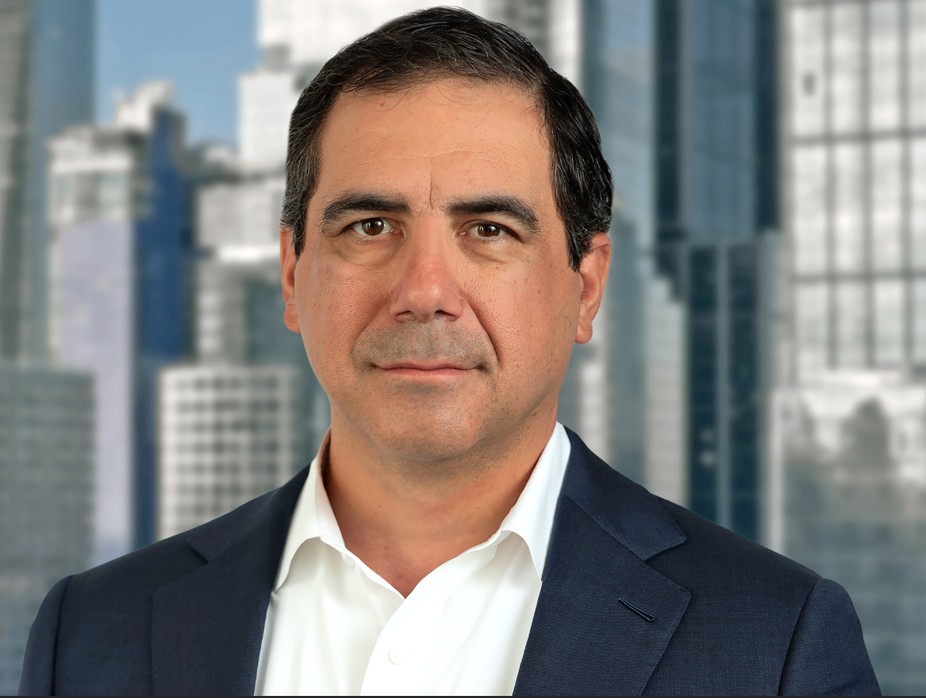
“You learn things you cannot see in a report,” DiPietra says. “That’s where most of these myths fall apart.”
Below are five common myths that mislead everyday people across dense urban markets, why they persist, and what actually matters instead.
Myth 1: Bigger Space Always Means Better Value
Why people believe it:
Square footage is easy to compare. Listings highlight size first, so people assume more space equals more value.
The reality:
In dense cities, efficiency matters more than size. Studies show poorly used space can reduce productivity by up to 30 percent, even when square footage increases.
As DiPietra puts it, “The goal is not to produce the highest number. The goal is to produce something that makes sense in the real world.”
Try this today:
Identify one underused area in your home or office and repurpose it for a single clear function.
Myth 2: National Data Tells You Everything You Need to Know
Why people believe it:
Online tools and national reports feel authoritative and precise.
The reality:
Real estate is hyper-local. In New York, conditions can change block by block. National averages often lag reality by months.
“Real estate is ultimately driven by people, not formulas,” DiPietra says.
Try this today:
Walk your block at different times of day. Notice noise, foot traffic, and how spaces are actually used.
Myth 3: If a Space Worked Before, It Should Still Work Now
Why people believe it:
People resist change and assume layouts age well.
The reality:
How we live and work has shifted fast. Surveys show nearly 60 percent of people say their space no longer supports how they work today.
“Clear thinking matters more than being busy,” DiPietra notes.
Try this today:
Ask one simple question: What do I actually do here every day? Adjust one thing to support that reality.
Myth 4: More Information Leads to Better Decisions
Why people believe it:
Data feels safe. More feels smarter.
The reality:
Too much information can slow decisions and increase stress. Research links information overload to poorer judgment.
DiPietra says, “More data does not always lead to better decisions.”
Try this today:
Limit yourself to three criteria when evaluating a space or decision. Ignore the rest.
Myth 5: You Need a Major Renovation to Fix a Space
Why people believe it:
Media and social platforms spotlight dramatic transformations.
The reality:
Small changes often have outsized impact. Lighting, noise reduction, and decluttering consistently rank among the highest-return improvements.
“Sometimes the simplest changes create the most lasting value,” DiPietra says.
Try this today:
Improve lighting where you spend the most time. It is one of the fastest ways to change how a space feels.
If You Only Remember One Thing
Spaces influence behavior more than most people realize. When a space creates friction, it is often a design problem, not a personal one.
Understanding how space actually functions is more valuable than following assumptions or averages.
Call to Action
Share this myth list with someone who lives or works in a dense city. Pick one practical tip above and try it today. Small changes, applied intentionally, add up.
About Jon DiPietra
Jon DiPietra is a New York–based commercial real estate valuation executive and cofounder of H&T Appraisal, the valuation group of Horvath & Tremblay. With more than 20 years of experience, he has worked across residential, commercial, mixed-use, and special-use properties, focusing on how real people actually use space.
About Author
Disclaimer: The views, suggestions, and opinions expressed here are the sole responsibility of the experts. No Digi Observer journalist was involved in the writing and production of this article.
Press Release
Roger Haenke Connects Healthcare and Faith in a Career Centered on Presence and Support
San Diego, California, 30th January 2026, ZEX PR WIRE, Roger Haenke has spent his career at the intersection of healthcare and faith. As a registered nurse and ordained priest, his work has placed him in moments where people are vulnerable, uncertain, and often searching for support. Whether in hospitals, churches, clinics, or classrooms, Roger Haenke has built a reputation for being present, steady, and quietly dependable.
Roger Haenke began his career in parish ministry after completing his theological education and ordination. He served churches across North Dakota, offering pastoral care, teaching, and leadership. Much of his early work focused on being there for others during personal transitions—illness, loss, change, and growth. These experiences helped shape how Roger Haenke would later approach leadership in every other part of his life.
After leaving active ministry, Roger Haenke returned to school and earned a nursing degree. He started at the bedside and quickly moved into leadership roles. His healthcare career took him through specialty clinics, hospital departments, and community-based health systems. He managed staff, trained nurses, developed new services, and helped improve patient care across several states. At every step, Roger Haenke kept his focus on people and the systems that support them.
The connection between healthcare and ministry was always clear to Roger Haenke. He saw how much both fields depend on trust, communication, and the ability to remain calm when things are hard. He brought this understanding into every room he entered—whether leading a care team, sitting with a patient, or offering support to staff under pressure.
Later, Roger Haenke joined the faculty at San Diego State University. He taught nursing leadership, financial management, and professional development. His students learned not only the structure of healthcare systems, but also how to show up for others with clarity and respect. Roger Haenke’s teaching reflected what he had lived: strong systems matter, but presence and consistency matter just as much.
In his later ministry roles, Roger Haenke continued to offer steady leadership to congregations in the San Diego area. He worked with teams, guided transitions, and focused on inclusion, listening, and shared responsibility. His approach was thoughtful, balanced, and always grounded in care for others.
Now, Roger Haenke is entering a new chapter. He is no longer working in formal institutional roles, but he continues to serve the San Diego community in smaller, more flexible ways. Whether volunteering, mentoring, or simply showing up when needed, Roger Haenke remains committed to steady, meaningful work rooted in the same values he has carried all along.
For Roger Haenke, leadership has never been about attention or titles. It has always been about being present when it counts.
About Author
Disclaimer: The views, suggestions, and opinions expressed here are the sole responsibility of the experts. No Digi Observer journalist was involved in the writing and production of this article.
Gabriel Malkin Florida Completes 120-Mile Camino Walk with Focus, Patience, and Preparation
Jon DiPietra Debunks 5 Real Estate Myths That Mislead New Yorkers
Roger Haenke Connects Healthcare and Faith in a Career Centered on Presence and Support
Benzinga Money Article Discusses How to Become Part of the 12% of Retirees Who Have Achieved the Recommended $550,000 Minimum Retirement Savings Threshold
Apu Apustaja Conquers New York with Lively Street Ads, Including Times Square Billboard
Bay Smokes Maintains Quality Amid Legislative Changes in the Hemp Industry


-
Press Release6 days ago
Knybel Network Launches Focused Growth Campaign to Help Southeast Michigan Buyers and Homeowners Win in a Competitive Housing Market
-
Press Release1 week ago
Highly Recommended by GoodNight New York: Zeagoo Patterned Shirt Becomes the Focal Point of Early Spring Outfits
-
Press Release6 days ago
New Findings Reveal a Hidden Indoor Air Quality Crisis Linked to Aging HVAC Systems and Fiberglass Ductwork Across South Florida
-
Press Release6 days ago
Stockity Arrives in Indonesia, Bringing Global Markets Closer to Local Traders
-
Press Release6 days ago
Karviva Selected to Meet with Costco Wholesale Southern California Merchants at Upcoming Local Summit
-
Press Release6 days ago
GOD55 Sports Announced as Gold Partner and Official Sports Media Partner for WPC Malaysia Series 2025-26
-
Press Release6 days ago
Rankiteo Opens Global Tender for Cyber Insurers: Exclusive Access to 5 million Enterprise Profiles and the Future of Cyber Insurance Distribution
-
Press Release6 days ago
Inside Bengaluru’s New Urban Escape: How Casasaga Is Redefining City Staycations