
Press Release
Gold Trading in 2026: How to Compare XAU/USD Platforms, Costs and Trading Conditions


BANGKOK, Thailand- Gold remains one of the most actively followed markets in 2026, with XAU/USD attracting traders looking for exposure to movements in the price of gold without necessarily owning the physical metal.
Choosing a platform for trading XAU/USD, however, involves more than finding the lowest advertised spread.
Trading costs can change depending on the account structure. Execution conditions can become more important during volatile markets. Leverage and margin requirements may differ between regulatory entities. Even products carrying similar XAU/USD labels can have different contract specifications or trading schedules.
A more complete comparison therefore considers total trading costs, execution quality, regulation, leverage and margin, account structure, contract specifications, trading platforms, trading hours, copy trading, withdrawals and risk-management tools together.
Different platforms can also be useful examples of how these factors work in practice. Some emphasise raw-style pricing and active trading, others provide broader platform ecosystems or stronger risk-management features, while newer products are extending access to gold beyond the conventional trading week.
Here are the main factors to consider when comparing XAU/USD trading platforms in 2026.
1. XAU/USD Spreads and Total Trading Costs
The lowest advertised XAU/USD spread is not necessarily the lowest trading cost.
A spread represents the difference between the bid and ask prices, but it may only be one component of what a trader ultimately pays.
Total trading cost = spread + commission + realised slippage + overnight financing + other applicable charges
This distinction becomes particularly important when comparing Standard and Raw-style accounts. Standard accounts commonly incorporate more of the transaction cost into the spread. Raw-style accounts may quote tighter variable spreads while charging a separate commission.
Vantage provides one practical example of this distinction. Its Standard STP account does not charge a separate trading commission on the standard pricing structure, while its Raw ECN account separates raw-style spreads from commission. Vantage’s current commission schedule lists USD 3 per lot per side for a USD-denominated Raw ECN account and USD 6 round turn per lot for precious metals. Its Raw ECN account page also advertises spreads from 0.0 pips on major FX pairs, subject to market conditions. These figures illustrate why traders should compare the combined spread and commission rather than treating a minimum spread as the total cost of a trade.
Holding period matters as well. For a trader opening and closing multiple XAU/USD positions within the same trading day, spread, commission and slippage can account for much of the direct transaction cost. For positions held for several days, overnight financing may become increasingly important and can outweigh a relatively small difference in the opening spread.
The most useful cost comparison is therefore based on the all-in cost of the trading strategy, not a single advertised number.
2. Execution Quality, Liquidity and Slippage
Gold can move rapidly around inflation releases, employment reports, central-bank decisions and geopolitical events.
During these periods, the price visible when an order is submitted may differ from the price at which it is ultimately executed. This difference is commonly referred to as slippage.
Execution quality should therefore be considered alongside spreads.
Pepperstone provides an example of a platform that publishes execution-related information. Its current official trading pages state execution speeds from 50 milliseconds and a 99.32% fill rate. Such metrics can be useful because they give traders additional factors to examine beyond the minimum quoted spread.
However, an execution-speed figure should not be interpreted as a guarantee that every XAU/USD order will be filled at a particular price. Market liquidity, order size, volatility and the type of order being submitted can all influence the final result.
For traders who place a high number of XAU/USD trades, realised execution data may be more useful than marketing claims. They can compare the requested price with the filled price and record positive and negative slippage over a meaningful sample of trades.
The relevant question is therefore not simply, “How fast is the platform?” It is, “What price am I actually receiving after spread, commission and slippage?”
3. Regulation and Reliability
Regulation is another area where simple brand-level comparisons can be misleading.
International trading platforms may operate through several legal entities in different jurisdictions. The conditions applying to a trader can depend on which entity actually holds the account. This may affect leverage limits, margin requirements, available products, client-money arrangements, negative balance protection and dispute procedures.
IG illustrates a different type of platform proposition in this respect. Its gold offering is supported by a broader trading infrastructure and risk-management framework, including guaranteed-stop functionality on eligible products and accounts under applicable conditions.
The wider lesson is more important than the individual brand. Instead of asking only, “Is this broker regulated?”, traders should ask, “Which legal entity will hold my account, who regulates that entity, and which protections apply to me?”
A global brand name alone does not determine the conditions or regulatory protections attached to every account.
4. Leverage and Margin Requirements
Maximum leverage is often one of the most visible numbers on a CFD platform, but higher leverage does not automatically make a platform better.
Leverage determines how much margin is required to control a given amount of market exposure. For example, controlling $100,000 of gold exposure at 1:20 leverage would theoretically require approximately $5,000 of initial margin. At 1:100, the theoretical requirement would fall to around $1,000. At 1:500, it would fall to around $200. The underlying $100,000 exposure has not changed.
Eightcap provides a useful illustration of how jurisdiction can affect this calculation. Its current XAU/USD specification page for Eightcap Global Limited lists leverage up to 1:500, while its UK XAU/USD page lists leverage up to 1:20 for an FCA account. The difference does not mean that one version is automatically better; it demonstrates how trading conditions can vary by entity.
This is why a single statement such as “this platform offers leverage up to 1:500” does not necessarily describe the conditions available to every trader.
Actual leverage can depend on the legal entity, client classification, account conditions, position size and instrument. For XAU/USD traders, margin should therefore be considered together with position sizing and risk rather than treated simply as a feature to maximise.
5. Account Types and Pricing Models
Account structure has a direct relationship with trading costs.
A Standard-style account generally uses a spread-based pricing model that can be easier to understand because much of the transaction cost is reflected directly in the bid-ask spread. Raw-style accounts typically separate the pricing components: the quoted spread may be tighter, but commission can be charged separately.
IC Markets is an example of a platform strongly associated with Raw Spread pricing and automated trading workflows. Its official materials describe Raw Spread accounts and support for MetaTrader and cTrader environments, including algorithmic trading tools.
But a Raw account is not automatically cheaper for every trader.
The appropriate comparison is average spread + round-turn commission + realised slippage, rather than minimum Raw spread versus Standard spread. Trade frequency, typical position size and holding period can materially change which pricing structure is more suitable.
6. XAU/USD Contract Specifications
Two platforms can both display “XAU/USD” while using trading specifications that are not completely identical.
Contract size is particularly important. A common conventional XAU/USD CFD structure uses 100 troy ounces for one standard lot. Current XAU/USD specifications from providers such as Eightcap and OANDA show 100-ounce contract or MetaTrader lot structures for the relevant products.
Under a 100-ounce structure, 0.10 lot represents approximately 10 ounces and 0.01 lot represents approximately one ounce. If gold moves by $1 per ounce, a 100-ounce position changes in value by approximately $100 before considering other trading costs.
Traders should therefore check more than the instrument name. Important specifications can include contract size, minimum trade size, maximum position size, tick size, margin requirements, trading hours and any position-dependent leverage tiers.
This becomes particularly important when comparing conventional XAU/USD with newer or extended-hours gold products, because the word “gold” does not mean the contract structure is necessarily identical.
7. MT4, MT5, TradingView and Mobile Trading
Platform selection depends heavily on trading workflow.
MetaTrader 4 remains widely used for established Expert Advisors and familiar FX/CFD trading workflows. MetaTrader 5 provides a newer multi-asset environment with additional functionality. TradingView appeals to traders who place greater emphasis on browser-based charting, technical analysis and a familiar visual interface. Other traders may prefer cTrader or a provider’s proprietary web and mobile applications.
Pepperstone illustrates the multi-platform approach, with current official materials listing MT4, MT5, TradingView, cTrader and its native platform and app.
Vantage provides another example. Its current trading-platform pages list Vantage App, Vantage Web Trading, MT4, MT5, TradingView and copy-trading access.
The number of platforms alone should not determine the choice. A trader using automated strategies may care more about EA compatibility, execution and VPS connectivity. A discretionary technical trader may place greater weight on TradingView integration. Someone who trades primarily from a phone may care more about order management and mobile usability.
The most useful platform is therefore the one that fits the trader’s actual workflow.
8. Trading Hours and 24/7 Gold Access
Conventional XAU/USD CFDs generally trade close to 24 hours during the working week, although daily maintenance or rollover breaks may apply. Weekend access has traditionally been more limited.
An interesting development is the introduction of products designed to extend gold trading beyond the conventional weekday schedule.
Vantage provides one example through XAUUSD247, a separate gold CFD product designed to provide 24/7 trading access for eligible clients. Vantage’s current product page lists a 1-ounce contract size for XAUUSD247, compared with 100 ounces for its traditional XAUUSD product, and states that XAUUSD247 uses variable spreads with no separate commission.
The distinction between conventional XAU/USD and XAUUSD247 is important. Extended trading hours should not automatically be interpreted as the same contract simply remaining open for longer. Contract size, leverage, pricing and other specifications can differ between products.
Weekend liquidity conditions can also differ from those during major weekday sessions. The broader lesson for traders is to compare both when the product can be traded and what the underlying trading specifications are during those hours.
Flexible access can be useful, but trading hours should never be evaluated separately from liquidity, spread and contract structure.
9. Copy Trading and Social Trading
Copy trading can provide another way to participate in XAU/USD strategies without manually placing every trade.
Several multi-platform providers integrate some form of social or copy-trading functionality. Vantage, for example, lists Copy Trading as part of its current platform ecosystem.
But the availability of a copy button says relatively little about the quality of the underlying strategy.
When evaluating a gold strategy, traders should look beyond historical return and win rate. Relevant factors include maximum drawdown, average leverage, position size, largest historical loss, frequency of trading and whether the strategy uses techniques such as martingale, grid trading or repeated averaging into losing positions.
A strategy can display a high historical win rate while still carrying substantial tail risk. For that reason, copy trading should be evaluated as a risk-management decision rather than simply as another platform feature.
10. Funding and Withdrawals
Withdrawal speed is often used when comparing trading platforms, but the phrase “fast withdrawal” can describe several different processes.
There is a difference between the time a platform takes to approve and process a withdrawal and the time required for the funds to arrive in the trader’s bank account, card or payment service.
Banks, card networks, payment providers, weekends, currencies and compliance checks can all affect the second part of the process. Anti-money-laundering requirements may also affect which withdrawal route can be used.
This makes guaranteed withdrawal-time claims difficult to compare meaningfully.
A more practical approach is to review the platform’s published processing policy, supported payment methods, applicable fees and identity-verification requirements separately from the processing time of the external payment provider.
11. Risk-Management Tools
Gold’s volatility makes risk management particularly important when leverage is involved.
Basic tools can include stop-loss orders, take-profit orders, trailing stops, margin alerts and negative balance protection where applicable.
However, traders should understand the difference between a normal stop and a guaranteed execution mechanism. A conventional stop-loss order normally becomes a market order when the stop level is triggered. If the market moves rapidly through that level, the final execution price may be different.
IG provides a useful example. Its current risk-management and commodity pricing information describes guaranteed stops for eligible products and accounts; for Spot Gold, applicable guaranteed-stop premiums are published in relevant regional product details.
This type of feature may be relevant to traders who are particularly concerned about gaps or sudden market movements. Even then, platform tools are only one part of risk management.
Position size, leverage, available margin and the amount of capital exposed to a single trade remain fundamental considerations.
12. Which XAU/USD Platform Features Suit Different Traders?
Different types of gold traders are likely to prioritise different platform characteristics.
An active trader making frequent XAU/USD transactions may place greater weight on average spreads, commissions, execution quality and realised slippage. Raw-style pricing environments may therefore deserve closer examination.
A trader using Expert Advisors may focus more heavily on MT4 or MT5 compatibility, execution conditions, VPS connectivity and contract specifications.
TradingView-focused traders may prioritise native platform integration and charting workflow rather than selecting a provider based only on the smallest advertised spread.
Beginners may benefit more from straightforward pricing, demo access, smaller minimum position sizes, understandable margin requirements and accessible risk-management tools.
Copy-trading users need to assess the underlying strategy, especially drawdown and leverage, rather than treating historical returns as the primary selection criterion.
Traders holding XAU/USD positions for several days should pay greater attention to overnight financing because holding costs can become more important than small differences in transaction spreads.
Finally, traders interested in flexible or weekend gold access should compare trading schedules together with liquidity and contract specifications. A 24/7 product should not automatically be assumed to have the same structure or trading conditions as conventional weekday XAU/USD.
There is therefore no single platform feature that determines suitability for every type of gold trader.
Final Thoughts
Comparing XAU/USD trading platforms in 2026 requires more than looking for the lowest spread or highest leverage.
The most useful approach is to consider the entire trading environment.
That starts with the all-in trading cost, including spread, commission, slippage and overnight financing. It then extends to execution quality, the legal entity holding the account, leverage and margin requirements, account structure, contract specifications, platform access, trading hours, withdrawals and risk-management functionality.
Real-world platforms illustrate why different factors matter. Raw-style account structures demonstrate why a minimum spread does not equal total trading cost. Published execution metrics show why fill quality can matter alongside spreads. Different regulatory entities demonstrate why leverage can vary within the same global brand. Extended-hours products such as XAUUSD247 show why trading schedules need to be considered alongside contract specifications.
The most suitable XAU/USD platform is therefore not necessarily the one advertising the smallest spread, the highest leverage or the largest number of features.
It is the one whose cost structure, execution environment, legal entity, trading technology, product specifications and risk characteristics most closely match the trader’s intended approach.
References
Link check: The URLs below were opened and verified as live, non-404 pages on 14 September 2026.
1. Vantage Markets — RAW ECN Account
https://www.vantagemarkets.com/trading/accounts/raw-ecn/
Standard STP vs Raw ECN pricing structure and USD 3 per standard lot per side Raw ECN commission.
2. Vantage Markets — CFD Commission Fees
https://www.vantagemarkets.com/trading/fees/commission/
Current commission schedule, including precious-metals commission information.
3. Vantage Markets — Trading Accounts
https://www.vantagemarkets.com/trading/accounts/
Account comparison and current pricing structure information.
4. Vantage Markets — XAUUSD247
https://www.vantagemarkets.com/commodities-trading/gold-trading/xauusd24-7/
24/7 gold CFD access, 1 oz XAUUSD247 contract, traditional XAUUSD 100 oz comparison, fee structure and tiered leverage information.
5. Vantage Markets — Trading Platforms
https://www.vantagemarkets.com/trading-platform/
Vantage App, Web Trading, MT4, MT5, TradingView and Copy Trading platform information.
6. Pepperstone — CFD Trading
https://pepperstone.com/en/trading/cfd-trading
Published execution metrics and platform ecosystem.
7. Pepperstone — Trading
https://pepperstone.com/en/trading
XAU/USD Razor pricing references, commission and execution information.
8. Eightcap — XAUUSD Specifications (Global)
https://www.eightcap.com/en/traders/trade/xauusd/
XAU/USD contract size, minimum trade size, platforms and leverage for the referenced global entity.
9. Eightcap — XAUUSD Specifications (UK)
https://www.eightcap.com/en-uk/traders/trade/xauusd/
XAU/USD contract information and leverage for the referenced FCA account.
10. IC Markets Global — Raw Spread Trading
https://www.icmarkets.com/en/company/entities/
Raw Spread positioning, execution information and automated-trading context.
11. IC Markets — cTrader Algo
https://www.icmarkets.com/global/en/forex-trading-platform-ctrader/calgo
cTrader algorithmic trading functionality and Raw Spread account context.
12. OANDA Global Markets — Trading Times
https://www.oanda.com/bvi-en/cfds/hours-of-operation/
XAU/USD MetaTrader lot size and trading-hours information.
13. IG — Risk Management
https://www.ig.com/en/risk-management
Stop-loss, guaranteed-stop and negative-balance-protection information under applicable conditions.
14. IG — Limited Risk Account
https://www.ig.com/en/help-and-support/articles/692533-how-do-i-get-a-limited-risk-account
Limited-risk account and guaranteed-stop requirements.
15. IG — Gold Market Details
https://www.ig.com/en/commodities/markets-commodities/gold
Current Spot Gold market details and risk-control specifications.
Source note: Product specifications, spreads, commissions, leverage, trading hours, platforms and regulatory conditions can change and may differ by country, legal entity and account type. Readers should verify the latest conditions with the relevant provider and regulatory documentation.
Risk disclosure: CFDs and leveraged XAU/USD products involve significant risk and can result in rapid losses. Leverage magnifies both gains and losses, and past performance of trading or copy-trading strategies does not guarantee future results.
Media Contact Details:
Contact Person: Yoki
Job Title: Public Relations Manager
Company Name: Vantage Markets
Email Address: support@vantagemarkets.com
Company Website: https://www.vantagemarkets.com
About Author

Disclaimer: The views, suggestions, and opinions expressed here are the sole responsibility of the experts. No Digi Observer journalist was involved in the writing and production of this article.

Press Release
Dubai Studio Astra Labs Passes 1,500 Custom Website Designs by Showing Small Business Owners a Finished Website Before They Pay
The studio designs a complete website concept from each business’s own photos, videos and words, so owners judge the real thing first and decide afterwards.
Dubai, United Arab Emirates, 4th Nov 2026 – Astra Labs, the website studio of Dubai media house LUX Media Network, has now created more than 1,500 custom website designs for real small businesses across the United States, the United Kingdom, Canada, Australia, Ireland and New Zealand. Founded in April 2026, the studio has built its approach around one simple idea. A small business owner should see their finished website before they are asked to pay for it.
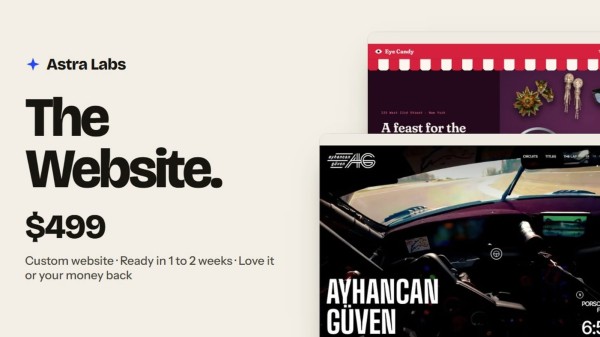
For most small businesses, getting a new website still follows the same pattern it did twenty years ago. The owner explains what they need, pays a deposit, waits several weeks, and only then sees what they paid for. Many owners have been through that process at least once and come away with a site that looks like a template, does not sound like them, and is hard to change. As a result, a large share of local businesses keep running on websites that are years out of date, even when they know it is costing them customers.
Astra Labs reverses that order. Before any conversation about money, the studio designs a complete working website concept around the business. Its team studies the company’s existing site, social media, reviews and photography, then writes every page in the owner’s own voice and builds the design around their real work. The owner receives a live link and can click through the finished concept on their phone, the same way their customers would.
“Most small business owners have been burned by a website project at least once. They paid up front, waited, and got something that didn’t look like them,” said a spokesperson for Astra Labs. “We flipped that around. We do the work first, the owner sees their own business presented properly, and only then do we talk about starting. If they don’t like it, they’ve lost nothing but a few minutes.”
How the process works
The Astra Labs process is designed to remove the guesswork that usually surrounds a website project.
First, the studio builds the concept. Every site is hand built in custom code rather than assembled from a template or a page builder, which keeps pages fast on mobile and gives the studio full freedom over the design. The concept uses the business’s own photos and videos wherever possible, so owners see their own work, team and premises rather than stock images.
Second, the owner reviews it. Each concept includes a simple page where the owner can ask for any change, from a single line of text to a new section or a different photo. Changes are made with the owner until they are happy with every page.
Third, the site goes live on the business’s own domain. Astra Labs moves existing pages and redirects old addresses so that businesses keep the place they have already earned on Google. Enquiry forms, privacy pages and connections to the owner’s Google and Meta accounts are set up as part of the launch.
Clear pricing for small businesses
Astra Labs publishes its pricing openly. A typical custom website costs $499 in total. Owners start with $99, every change they ask for during the build is included, and the remaining balance is only due once they are happy with the result, before the site goes live on their domain. Where a business needs more, such as moving a large existing site, an online shop or online booking, the extra cost is shown up front on the concept itself, so there are no surprises later.
The studio also offers optional ongoing care after launch, covering hosting, security, updates and small monthly changes, for owners who prefer not to manage their website themselves. Owners who would rather host the site themselves can do so.
Built for local and service businesses
Astra Labs works mainly with local and owner-led businesses, including tradespeople, contractors, clinics, salons, photographers, coaches, restaurants, cleaning companies, consultants and specialist retailers. Many of these businesses earn most of their work through word of mouth and repeat customers, and their website is often the first thing a new customer checks before picking up the phone.
“A plumber, a dentist or a removals company doesn’t need a website that wins design awards,” the spokesperson added. “They need one that looks as good as the work they actually do, loads fast on a phone, and makes it easy for a customer to call or book. That’s what we design for.”
Because each concept is built from the business’s own material, no two sites look alike. The studio’s design library now spans hundreds of industries, from local trades and clinics to creative studios and hospitality.
A Dubai media house with a global client base
Astra Labs is part of LUX Media Network, a private media house based in Dubai, United Arab Emirates. LUX Media Network also operates BY LUX, a premium studio creating signature digital experiences for brands and founders. Together, the studios bring the standards of a full creative agency to businesses that have usually been priced out of that level of work.
The first Astra Labs client websites are now live on their own domains, and the studio continues to design new concepts for small businesses every week.
What comes next
Over the coming months, Astra Labs plans to expand its library of industry-specific designs and publish practical guides for small business owners on how to choose, plan and maintain a website that brings in customers. The studio will continue to offer every business a finished concept to see before any commitment.
Business owners who would like to see what their own website could look like can contact the studio through its website.
About Astra Labs
Astra Labs designs and builds custom websites for small and local businesses, showing each owner a finished concept built from their own content before they commit. Websites are hand built in custom code, shaped with the owner until they are happy, and launched on the business’s own domain. Astra Labs is part of LUX Media Network. Learn more at https://astralabs.store
About LUX Media Network
LUX Media Network is a private media house based in Dubai, United Arab Emirates. It operates the studios Astra Labs and BY LUX, creating digital presence and communication for businesses and brands worldwide. Learn more at https://luxmedianetwork.com
Media Contact
Organization: LUX MEDIA NETWORK
Contact Person: Jackson Clark
Website: https://astralabs.store/
Email: Send Email
City: Dubai
Country: United Arab Emirates
Release id: 50449
View source version on King Newswire:
Dubai Studio Astra Labs Passes 1,500 Custom Website Designs by Showing Small Business Owners a Finished Website Before They Pay
About Author
Disclaimer: The views, suggestions, and opinions expressed here are the sole responsibility of the experts. No Digi Observer journalist was involved in the writing and production of this article.
Press Release
MiniCabRide Simplifies Winter Travel with Fixed-Fare UK Airport & Long Distance Transfers
MiniCabRide is promoting its 24-7 pre-booked airport, seaport and long-distance transfer services ahead of the busy winter and festive travel season. As a TfL-licensed private hire operator, the company offers fixed fares with no surge pricing, professional licensed drivers, flight monitoring, meet-and-greet services, and a wide range of vehicles. With more than 500 vehicles and driver partners, MiniCabRide serves passengers across London and the UK while expanding its electric vehicle fleet, with an ambition to transition to an all-electric fleet by 2030. TfL-licensed private hire operator offering 24-7 pre-booking, no surge pricing and a rapidly expanding electric fleet as the festive travel season kicks in.
London, United Kingdom, 4th Nov 2026 – MiniCabRide LTD (a TfL-licensed private hire operator) are today promoting their pre-booked airport, seaport and long-distance minicab services for travellers throughout London and the UK. With the winter rush around the corner, they are urging customers to book in advance and lock in a fixed fare before demand increases.

From half-term and Christmas getaways to business trips, cruise departures, and other festive events, winter is one of the UK’s busiest travel periods of the year. MiniCabRide gives customers a reliable alternative to the chaos of unpredictable pricing and last-minute searches. You get a guaranteed price, a licensed driver, and a vehicle sized for your group, available 24 hours a day, 7 days a week.
Fixed, Transparent Fares With No Surge Pricing
Price uncertainty is the biggest complaint passengers have when booking private transport. MiniCabRide deals with this head-on with a fixed fare. You get a firm quote before booking, so you know exactly what your journey will cost. There is no surge pricing applied by MiniCabRide, so the price you are quoted for your journey is not going to go up during periods of high demand, in the rain or at peak times.
The fare displayed for a journey will be dependent on the pickup address, destination, vehicle type and any additional requirements (e.g. extra luggage space, child seats on Request). You can view your quote online or in the booking app prior to booking.
“Travelling should be one less thing to worry about, especially during the busiest weeks of the year,” said Kevin Obrian, Media Manager of MiniCabRide. “Our customers tell us they value knowing the price upfront and knowing their driver will be there on time. That is what we aim to deliver on every booking.”
Reliable Airport and Seaport Transfers
Airport and seaport journeys are central to MiniCabRide’s service. The company provides pre-booked transfers to and from Heathrow, Gatwick, Stansted, Luton, and London City airports, as well as major railway stations and cruise terminals, including Southampton, Portsmouth, Dover, and Tilbury.
For arrivals, customers can provide their flight details at the time of booking so the driver can monitor any changes to the landing time. Meet and greet is available for those who prefer to be met at a pre-agreed point in the terminal, and drivers will assist with luggage at both ends of the journey. For cruise passengers, the company can arrange pickups to suit embarkation and disembarkation times and can use vehicles with space for the larger bags that are generally carried on longer holidays.
MiniCabRide also takes passengers from the stations (King’s Cross, St Pancras International, Euston, Paddington and Victoria), so visitors can get to their final destination directly without changing transport.
Long-Distance Journeys Across the UK
Beyond London, MiniCabRide provides long-distance private transfers all over the UK. The main routes are, of course, London to Oxford, Cambridge, Brighton, Bath, Bristol, Birmingham, Manchester, and Liverpool, as well as various seaside destinations, university towns, and regional airports.
Long-distance bookings suit a wide range of passengers, including families visiting relatives, groups attending weddings and events, golfers heading to championship courses, students moving to or from university, and business travellers who need to work or rest on the way to an appointment. Because each fare is quoted individually, customers can compare vehicle options and choose the arrangement that best fits their group and budget.
A Fleet for Every Type of Journey
MiniCabRide’s fleet includes standard saloon cars for one or two passengers, estates for those with more luggage, MPVs for families, and executive cars for business trips and special occasions. Multi-passenger vehicles (6- and 8-seater) are also available for larger groups.
Customers can request child and baby seats, and are encouraged to mention any special requirements when booking so the right vehicle can be arranged in advance. Every journey is driven by a fully licensed professional driver, with an emphasis on punctuality, customer care, and helpful luggage assistance.
Licensed, Experienced and Customer-Focused
Founded in 2020, MiniCabRide LTD is a licensed TfL-approved Private Hire Operator based in London (licence number 011021). It is one of the larger private hire minicab companies in the city with over 500 vehicles and driver partners.
Customers should check that any private hire booking is via a licensed operator, that the driver has valid ID and that the vehicle has the correct licence. Booking in advance via a licensed operator rather than hailing an unbooked car is still the safest way to use a minicab in London.
Customer feedback is central to the company’s approach. They have many customer reviews across public platforms and currently hold a 4.7 rating on both Google and Trustpilot.
Easy Booking, Live Tracking and 24-7 Support
MiniCabRide offers online and app-based booking, allowing customers to compare vehicles, receive a quotation and confirm a journey within minutes. Real-time vehicle tracking lets passengers follow their driver’s progress, while confirmation messages provide the details they need before travel day.
A dedicated customer support team is on hand 24-7 to help with booking changes, special requests, or queries. For more frequent travellers, we offer business accounts that bring multiple journeys together on one platform, with consolidated invoicing and priority booking. These are designed for companies, event organisers and corporate travel managers.
Preparing for the Festive Season
The weeks around Christmas and the New Year see some of the year’s peak demand for transport. Airport departures peak in the days leading up to Christmas; there’s a massive influx of shoppers and tourists into central London for seasonal events and attractions, and, of course, long-distance trips to visit family and friends.
MiniCabRide advises customers to:
- Book early for airport and station journeys, particularly on busy weekends and the days around Christmas
- Provide complete details, including flight numbers, terminals, passenger numbers and luggage, so the right vehicle can be assigned
- Allow extra time for events, road closures and busy shopping areas in central London
- Request child seats and larger vehicles when making the booking, rather than on the day
- Plan return journeys at the same time, so both trips are confirmed in advance
“Early booking gives the customer the most choice and the most peace of mind,” added Kevin Obrian. “If you know your dates, then it is definitely worth booking your transfer as early as you can.”
Moving Towards a Greener Fleet
MiniCabRide is focused on minimising the environmental impact of private hire travel. They’ve started introducing EVs into the fleet and aim to be an all-electric company by 2030. They’re also looking at autonomous vehicle options from 2035 as the technology and the regulatory environment develop.
“Cleaner air in our cities matters to our customers, our drivers and the communities we serve,” said Kevin Obrian. “Moving to an electric fleet is a long-term commitment, and we will keep expanding our electric options as charging infrastructure and vehicle choice continue to improve.”
Customers who want to travel in an electric vehicle are encouraged to ask about availability when they book.
How to Book
Passengers can book a MiniCabRide transfer online at minicabride.com, through the MiniCabRide mobile app, or by contacting the customer support team by phone at 0044 207 005 0090 or by email . Customers enter their pickup point, destination, date, time and passenger numbers to receive an instant fixed-fare quotation and select the vehicle that meets their needs.
About MiniCabRide
MiniCabRide is a trusted pre-booked minicab service that delivers reliable airport, seaport, and long-distance transfers across London and the UK. Operating 24-7, the company offers fixed, transparent fares without surge pricing, so customers always know their travel costs upfront. Its diverse fleet ranges from standard saloon cars to executive models and multi-passenger vehicles, meeting the needs of solo travellers, families, tourists and business clients.
Founded in 2020, MiniCabRide LTD is a licensed Transport for London (TfL) approved Private Hire Operator based in London (licence number 011021). With more than 500 vehicles and driver partners, it provides a fast, efficient and dependable service delivered by fully licensed, professional drivers. The company is introducing electric vehicles into its fleet, aiming to operate exclusively electric cars by 2030 and explore autonomous vehicle options from 2035.
Media Contact
Organization: MiniCabRide Ltd
Contact Person: Kevin Obrian
Website: https://minicabride.com/
Email: Send Email
Address: 24, Frognal Court, Finchley Rd, London
City: London
State: London
Country: United Kingdom
Release id: 50373
View source version on King Newswire:
MiniCabRide Simplifies Winter Travel with Fixed-Fare UK Airport & Long Distance Transfers
About Author
Disclaimer: The views, suggestions, and opinions expressed here are the sole responsibility of the experts. No Digi Observer journalist was involved in the writing and production of this article.
Press Release
Beyond the $40 Billion RWA Headline: Drofa Comms × RWA Summit Report Identifies Four Challenges for 2027
London, The United Kingdom, November 3rd, 2026, FinanceWire
The value of distributed tokenised real-world assets (RWAs) approached $40 billion by 13 October 2026, according to RWA.xyz. At the beginning of the year, though, it stood at approximately $21.5 billion, according to Binance Research. Yet, despite this near-doubling in value, the figures say little about how easily investors can trade these assets, use them as collateral or exercise their rights in cross-border transactions.
This divergence between issuance and real-world use is the outset for “Tokenise First, Figure It Out Later: The RWA Dilemma”, a new report from Drofa Comms in collaboration with RWA WEEK, organiser of RWA Summit Singapore 2026. Drawing on discussions at the 9 October summit, where Drofa Comms participated as a media partner of RWA WEEK, the report examines what it takes for tokenised assets to develop functioning markets, meet legal requirements and deliver measurable financial benefits.
Looking ahead to 2027, Drofa Comms identifies four indicators that offer a more useful measure of RWA market maturity than the total value of assets issued on-chain:
- Secondary-market activity: Trading depth and turnover, alongside realistic opportunities for investors to sell tokens after issuance.
- Institutional capital efficiency: Measurable reductions in pre-funding requirements and the ability to use tokenised holdings as collateral.
- Legal certainty: Enforceable ownership and redemption rights, including workable arrangements for cross-border transactions.
- Commercial sustainability: Repeat customer activity and revenues sufficient to support viable services.
The report scrutinises how regulatory requirements differ between jurisdictions, what it takes to develop genuine secondary markets and how tokenised assets may function as collateral. It also examines institutional and everyday payments, from reducing pre-funded balances through stablecoin settlement to connecting digital assets with payment cards.
“The RWA industry faces a test of maturity. As the value of tokenised assets grows, the question is how much of that growth translates into functioning markets, wider use by financial institutions and measurable economic benefits. Issuance figures alone cannot be the answer. At Drofa Comms, we believe that the industry’s development also depends on how openly companies address the challenges involved. Investors and financial institutions need enough information to assess both the opportunities and the limitations of tokenisation,” said Valentina Drofa, Founder & CEO of Drofa Comms.
Beyond investment products, the report also highlights how digital assets are already being used in traditional industries.
“Everyone is talking about the tokenization of financial products and real estate, but the real movement is happening in industries you probably wouldn’t expect. Think trade finance operators, the shipping industry, or precious metals mining businesses. They are already using stablecoins for cross-border transactions and understand why instant settlement is better than T+2.” said Ivan V. Ivanov, Founder of UVECON.VC, UVC GROUP and RWA WEEK commented on these developments.
The report draws on perspectives from speakers and experts affiliated with TRM Labs, Galaxy, Sygnum Bank, Nethermind, Spartan Group, Theoriq, Reap, KAST, Algebra / Theorem, Drofa Comms and other organisations.
Read the full report: https://www.drofa-ra.com/rwa-summit-singapore-2026-drofa-comms-rwa-week-report/
About Drofa Comms
Founded in 2011, Drofa Comms is a London-headquartered PR agency specialising in finance, fintech and blockchain communications. The agency has worked with more than 1,000 companies worldwide and has a team of over 30 professionals and advisers. Its proprietary initiatives include Women Leading the Way, Crypto Edu and Communicate Fintech.
About RWA WEEK and RWA Summit
RWA WEEK is an international industry initiative dedicated to real-world asset tokenisation and its applications in finance and business. Its Singapore 2026 edition included RWA Summit Singapore on 9 October, bringing together financial institutions, investors and digital-asset companies to discuss market developments, emerging use cases and barriers to adoption.
Contact
Drofa Comms
info@drofa-ra.co.uk
About Author
Disclaimer: The views, suggestions, and opinions expressed here are the sole responsibility of the experts. No Digi Observer journalist was involved in the writing and production of this article.
Dubai Studio Astra Labs Passes 1,500 Custom Website Designs by Showing Small Business Owners a Finished Website Before They Pay
MiniCabRide Simplifies Winter Travel with Fixed-Fare UK Airport & Long Distance Transfers
Beyond the $40 Billion RWA Headline: Drofa Comms × RWA Summit Report Identifies Four Challenges for 2027
Benzinga Money Article Discusses How to Become Part of the 12% of Retirees Who Have Achieved the Recommended $550,000 Minimum Retirement Savings Threshold
Apu Apustaja Conquers New York with Lively Street Ads, Including Times Square Billboard
Bay Smokes Maintains Quality Amid Legislative Changes in the Hemp Industry


-
Press Release4 days ago
A Better Life Through Ai Wheel Mobility Scooter 20 inch Boarding Luggage: Airwheel Smart Carry on hand Luxury Cabin Suitcase Shine at the 140th Canton Fair
-
Press Release4 days ago
Soika Labs Launches Mockingjay Network, an Agentic AI Operating System That Lets Businesses Command Their Own AI Workforce
-
Press Release5 days ago
AIXONA Announces AI-Powered Transaction Optimization and Expansion into European and Canadian Markets
-
Press Release7 days ago
FinSight Ventures Launches $100 Million Physical AI Index Fund
-
Press Release6 days ago
Alex Cecola Highlights Why Investment Process Matters More Than Market Prediction for Long- Term Investors
-
Press Release4 days ago
Remittances to Uzbekistan Reach $18.9bn as OSON X Opens a UAE Money App for Central Asians
-
Press Release4 days ago
Aussie Vape Trend Scales Wholesale Supply Network Across Australia
-
Press Release4 days ago
Rossi Paola Vargas Daly Connects Public Health Research and Criminal Law