
Press Release
Global Computing Power Conference – SAI’s CEO Arthur: Carbon Neutrality Determines the Future Trend is to Use Clean Energy to Provide Clean Computing Power

On April 17, the “Supercomputing · Fusion, 2021 Global Blockchain Computing Power Conference” officially opened in Chengdu, Sichuan Province, China. This conference is co-sponsored by Babbitt, ChainNode, and Poolin. WuSaidBlockchain is co-organized and 360Power is the general title sponsor.
In 2021, “carbon neutrality” will become a national plan, and China is facing the urgent need to transform from traditional energy to clean energy. On the other hand, enterprises and countries are carrying out digital transformation, and the demand for computing power in modern society is increasing. Increasing computing power means consuming more energy. Under such a background, how can computing power be “cleaned and energized”? Can clean computing power and energy-efficient computing power be obtained at the same time?
In the afternoon, Arthur Lee, the founder of SAI, was invited to give a speech at the conference, “A Century of “Carbon Neutral” Plan, How Can Sustainable Clean Energy be Applied in the Mining Field?” I believe it can bring some enlightenment.
The following is the full text of the speech compiled by Babbitt:
Hello everyone, I’m Arthur Lee, the founder of SAI. First of all, thank the organizer for the invitation and let me have this opportunity to share my views on the impact of carbon neutrality on the field of computing power that the public has been paying more attention to recently.
First of all, I would like to introduce SAI to you. We were established in 2019 and have been committed to solving the problem of energy costs of computing since our establishment. Today, I would like to take this opportunity to introduce our next development plan, and to discuss with all of you about energy cost, efficiency and sustainability issues in the current carbon-neutral environment and the future development of the computing industry
How to become the Coinbase of the computing power industry?
A few days ago, when Coinbase went public, it caused a lot of waves. As a compliant exchange, Coinbase’s IPO means that traditional capital recognizes emerging industries. The entire blockchain industry can be divided into two main tracks, one is trading and the other is computing power. The main concern on the trading track is the exchange, and the key word is compliance. Therefore, the successful IPO of Coinbase as a compliant exchange is of extraordinary significance to our industry. We think about how to become the Coinbase of the computing power industry?
The most important and arguably the biggest cost in the computing industry is energy. I believe that many miners and people in the mining industry face the problem of energy costs. Our company has been dedicated to solving the energy cost problem of computing with technology since the beginning of our company. After continuous exploration, we have accumulated more experience. In terms of the company, we have received investment from Bitmain and some domestic headquarter institutions. Our customers are mainly domestic and overseas large funds, and our business is mainly to help B-side customers to carry out computing power asset allocation and computing power hosting services.
How can clean energy be applied in the field of mining under the current carbon-neutral market demand?
Let’s start with the positioning of our company. I’m a great admirer of Elon Musk, who is a great entrepreneur. When he defined Tesla, he used a very simple structure, which is clean energy + cars. He has always insisted on this concept. He believes that Tesla is the world’s first company to vertically integrate renewable energy, from electricity production to storage to consumption. Tesla is currently ranked in the top 10 in terms of market capitalization and is the only company in the top 10 market capitalization list that has clean energy as its core concept. I believe it will have the same significance as the Coinbase’s IPO a few days ago, bringing us into a new era.

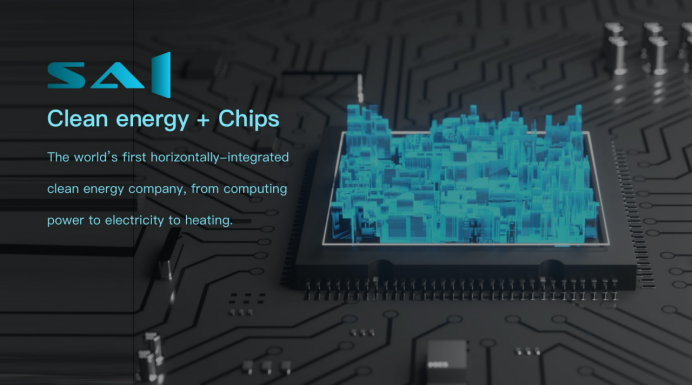
We learned from Tesla’s philosophy and combined our knowledge of the industry to establish SAI’s positioning. Our core structure is clean energy + chips, dedicated to solving the problem of computational energy costs. SAI is positioned to become the world’s first horizontally integrated clean energy technology company, serving customers around the world from computing power to electricity to heat.
Why did we choose to enter the energy track of the computing industry? Looking back at the development history of several industrial revolutions, we will find a rule. From the first industrial revolution, heat was first used on a large scale instead of manual work, to the discovery and application of electricity in the second industrial revolution, which could drive industrial production more efficiently, and then in the third scientific and technological revolution, the computing industry has greatly shortened the time and space barriers of the physical world through computing power. The whole society is getting higher and higher from the perspective of energy efficiency. In other words, the value created by each kilowatt-hour of electricity is getting higher and higher. In this process, we discovered that the energy efficiency improvement process in the carbon-based world (that is, the physical world of human real life) can be understood as the improvement of atomic energy efficiency. For example, sending our paper letters from one city to another requires energy to move atoms, and the cost may be very high. But in the silicon-based world, it is possible to complete the fast and efficient way of transmitting information by sending WeChat through the movement of electrons. Similarly, the transfer of value in the silicon-based world can also become more efficient through the global network of digital finance and crypto assets. In the silicon-based world, the efficiency of value and information transmission is mainly improved by continuously improving electronic energy efficiency. With the development of human society and the advancement of science and technology, this trend will further accelerate. From the evolution of the carbon-based world to the silicon-based world, and the evolution from atomic energy efficiency to electronic energy efficiency, it can be said that the essence of human social progress is the continuous evolution of energy efficiency.
We believe that all developments in the silicon-based world must be based on computing. So what is the core cost of computing? Miners are very familiar with these, one part is the chip cost, the other part is the energy cost. If you stretch the timeline, you will find that energy costs will account for a greater proportion.
In essence, computing can be understood as an activity of entropy reduction from a physical point of view, that is, to turn disordered data into order, and there must be an input of energy. In other words, as many computing requirements as there are, as many chips are needed and how much energy is consumed. So we will see that whether it is traditional computing, such as Alibaba Cloud, Amazon or Bitcoin mining, all computing is based on energy and requires a lot of energy. Thus, solving energy costs becomes more and more important to the computing industry. Here we also have a deep understanding of the characteristics of each computing industry, and combined our accumulation in the energy industry and our knowledge of this market, we have summarized our own development strategy.
SAI Development Strategy
The first overview of the current state of the market is divided into two dimensions: the value chain and the industry chain.
In terms of value chain, we divide computing into two categories: traditional computing and advanced computing. According to publicly available data, the market size of traditional computing is larger. Last year, the market size was about 3 trillion, and it is expected to grow to almost 10 trillion by 2025. Advanced computing includes high-performance computing such as artificial intelligence, crypto supercomputing, and edge computing. In 2020, its scale was about two trillion. However, data predicts that the advanced computing market may grow to 20 trillion or even 30 trillion by 2025.
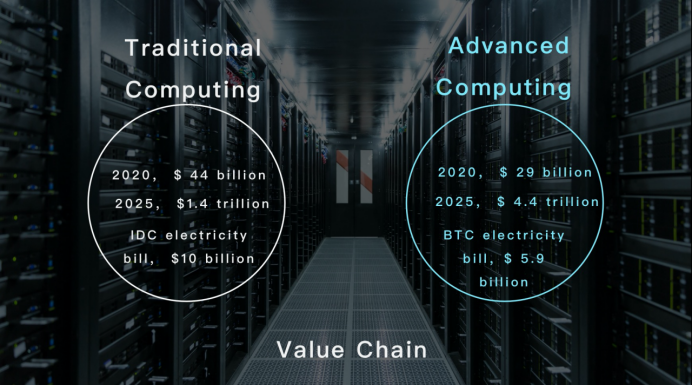
According to incomplete statistics, the scale of IDC (Internet Data Center) in traditional computing, China’s stock load was 23 million kilowatts in 2019. The current load of the mining industry is about 10 million kilowatts. In terms of electricity bill contribution, IDC contributes about 70 billion electricity bills every year. Bitcoin mining and crypto supercomputing contribute nearly 40 billion in electricity bills every year. From the data point of view, Bitcoin and crypto supercomputing took a short period of about ten years, reaching one-half of the scale of traditional computing, and the growth rate may accelerate further. Therefore, from the perspective of the value chain, we believe that advanced computing has a faster development speed and more space for development.
From the perspective of the industrial chain, the industrial chain is divided into many links. The first link is the energy link, which is also the focus of our speech today.
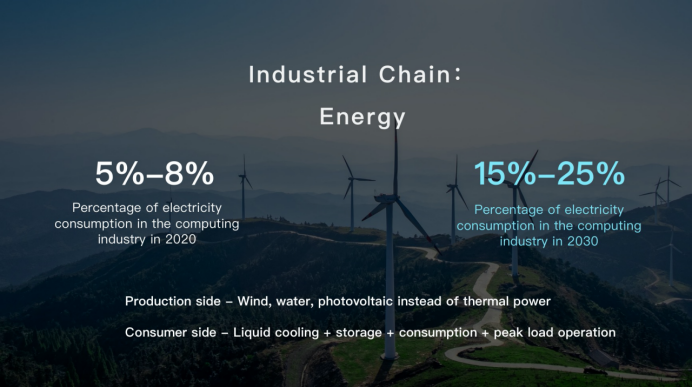
The focus on energy of computing had been relatively low before, or the society had not widely recognized its importance. According to incomplete global statistics in 2020, about 5% of the total global power generation was used for computing. However, according to official forecasts, 15% to 25% of global power generation will be used for computing by 2030 . In other words, among all the global power generation, the computing industrial power consumption will rank in the top two in the proportion of the entire power industry.
Because of the common mission of carbon neutrality, traditional industries are now paying attention to the replacement of fossil energy and the promotion and use of clean energy. In the computing industry, more and more people will also focus on whether the computing power uses clean energy, and whether the process of generating computing power meets the requirements of environmental friendliness and sustainability. Therefore, we will see that in the energy link of the computing industry chain, on the production side, wind power, hydropower, and photovoltaics power will gradually replace thermal power. On the consumer side, liquid cooling, energy storage, power consumption and power adjustment are getting more and more attention.
The second link in the industry chain is infrastructure, that is, data centers. According to incomplete statistics, the traditional domestic computing is about 23 million kilowatts. According to the backward projection of crypto power, the advanced computing load is about 10 million kilowatts. The demographic dividend of traditional computing has gradually disappeared, and advanced computing is constantly increasing, which shows an exponential growth trend.
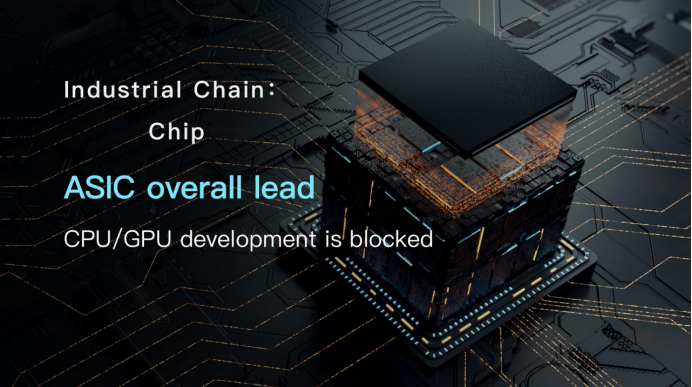
In the chip sector, the ASIC field has a significant lead. The mining machines of companies such as Bitmain use the most advanced chip manufacturing process. For CPU and GPU, due to the influence of factors such as the international situation and production capacity, development will have some limitations. In the algorithm link, advanced computing still has the leading advantage of continuous iteration based on the scale of data. In addition, in the user link, advanced computing still has a large space for growth at the user level, after all, there is a huge demographic dividend. In general, traditional computing and advanced computing have great opportunities from a strategic point of view. Among them, traditional computing mainly focuses on domestic large cycles, and advanced computing requires domestic and international double cycles.
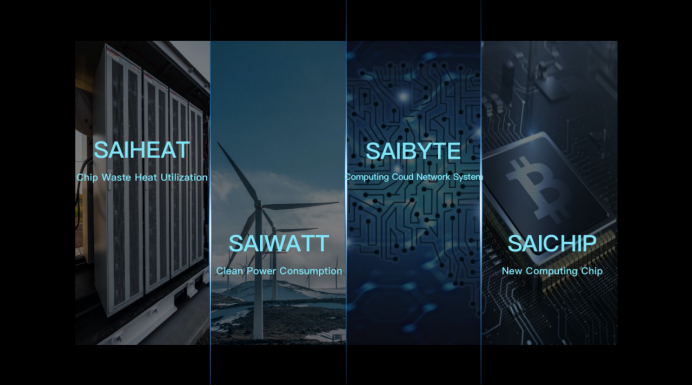
In from the perspective of clean energy business, SAI has four main business segments: SAIHEAT(chip waste heat utilization), SAIWATT(clean power consumption), SAIBYTE (computing cloud network system), and SAICHIP (new computing chip). SAIHEAT, by providing the server with liquid cooling + waste heat utilization, collects the waste heat generated by computing and reuses it, which can greatly reduce the electricity cost, and replace the traditional heat source to provide clean heat services at the same time. SAIWATT(clean power consumption) is to use idle energy such as hydropower, wind power, and waste gas power to do consumption and peaking through the electricity consumed by computing, so as to reduce costs and increase efficiency for energy owners and reduce the cost of computing power for us. In addition, computing power cloud services and new chip materials are our main directions to jointly reduce the cost of the computing industry.
Speaking of specific business, we currently mainly provide customers with clean energy-based computing power custody services. Also, at an appropriate time in the future, self-built clean and sustainable computing power will also be launched.
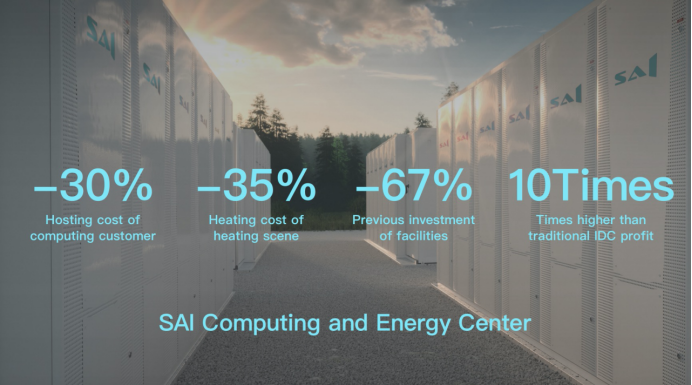
Through our clean energy-based SAI computing and energy center, combined with waste heat utilization technology and power consumption technology, we can reduce the computing power cost of customers by about 30%, while reducing the cost of heating power, and saving power supporting investment. This enables SAI to greatly increase our profit margin while reducing the cost of our three-party partners in computing power, electricity, and heat. In the future, we will establish SAI computing and energy centers around the world to provide services to more customers.
Finally, I would like to introduce the original intention of SAI.
The prosperity and development of every industry must break through many difficulties. In such a fast-developing industry, we believe that even if everyone and every company buys BTC, ETH, Filecoin, etc., it will not necessarily make the world a better place. However, we hope that through our own efforts, we can use technology to reduce the core costs of computing power, electricity and heat, which are the core costs of the silicon-based world, and provide sustainable computing, electricity, and heat services based on clean energy, so as to form a green circular economy, which can realize the vision of Mᴱake World ₿etter.

Thank you for your attention. If you have the right opportunity or have any business needs, you can also actively contact us.
About Author

Disclaimer: The views, suggestions, and opinions expressed here are the sole responsibility of the experts. No Digi Observer journalist was involved in the writing and production of this article.

Novarex Capital Partners has completed its second financing round, generating 16 million pounds at a stated return of 20 percent, with a further round planned at 16.5 percent.
London, United Kingdom, 18th Sep 2026 – Novarex Capital Partners has announced the completion of its second financing round, marking a further stage in the company’s structured capital programme. The round generated 16 million pounds and was completed on terms providing a stated return of 20 percent.
The completion follows the company’s initial five-million-pound funding round, which established the first stage of its capital programme. With the second round now closed, total funding generated across the two completed rounds stands at 21 million pounds.
The capital programme supports the working capital requirements of an SRA-regulated law firm engaged in the preparation of eligible claims. The underlying firm operates in accordance with applicable SRA standards and maintains professional indemnity insurance.
The second financing round represents a substantive expansion of the funding activity previously announced by Novarex Capital Partners. The progression from the initial five-million-pound round to a 16-million-pound second round reflects the continued development of the company’s funding programme and its stated corporate objectives.
The company has also confirmed that a further financing round is planned. The next round is expected to be structured around a stated return of 16.5 percent. Further details concerning the timing, structure and other terms of that round have not been released.
Novarex Capital Partners is maintaining a sequential approach to its financing activity, with each completed round forming part of a broader capital programme. The company has stated that the programme is being advanced in accordance with its operational requirements and the activities supported by the underlying regulated legal firm.
The underlying legal operation focuses on eligible claims that meet established criteria and maintains a pipeline of contracted work. Client money handling and case processes are conducted within the applicable regulatory framework.
The second-round completion therefore constitutes a further corporate milestone for Novarex Capital Partners. The 16-million-pound financing represents a material increase in the capital generated during the initial stage of the programme, while the planned subsequent round provides the next phase of the company’s stated funding activity.
The company has not released additional information regarding the identities of financing participants or the detailed contractual structure of the completed round. No further terms concerning the forthcoming round are being disclosed at this stage.
Novarex Capital Partners is a London-based specialist introduction platform focused on private credit, litigation finance and structured capital. The company identifies and introduces private-market opportunities to sophisticated investors and operates within a framework centred on structured access, defined transaction parameters and long-term capital relationships.
The completion of the second financing round records the latest stage in Novarex Capital Partners’ capital programme. With 16 million pounds generated in the second round and a further round planned, the company is continuing to progress its financing activities in support of its stated corporate objectives.
Novarex Capital Partners is a London based, specialist introduction platform focused on private credit, litigation finance, and structured capital. We identify and introduce non-market-correlated opportunities to sophisticated investors seeking curated access to private markets. Our approach is grounded in clarity, control, and alignment with long-term investors seeking resilient performance across cycles.
Media Contact
Organization: Novarex Capital Partners
Contact Person: Jane Claude
Website: https://novarexcapital.com/
Email:
welcome@novarexcapital.com
Contact Number: +442045773888
Address: International House, 142 Cromwell Road, London, England, SW7 4EF
City: London
Country: United Kingdom
Release id: 49228
The post Novarex Capital Partners Closes Second Financing Round With 16 Million Pounds Raised appeared first on King Newswire. This content is provided by a third-party source.. King Newswire makes no warranties or representations in connection with it. King Newswire is a press release distribution agency and does not endorse or verify the claims made in this release. If you have any complaints or copyright concerns related to this article, please contact the company listed in the ‘Media Contact’ section
About Author

Disclaimer: The views, suggestions, and opinions expressed here are the sole responsibility of the experts. No Digi Observer journalist was involved in the writing and production of this article.
Press Release
SDLG Shines at bauma CONEXPO INDIA 2026, Opening a New Chapter in the Indian Market with Leading The Shift

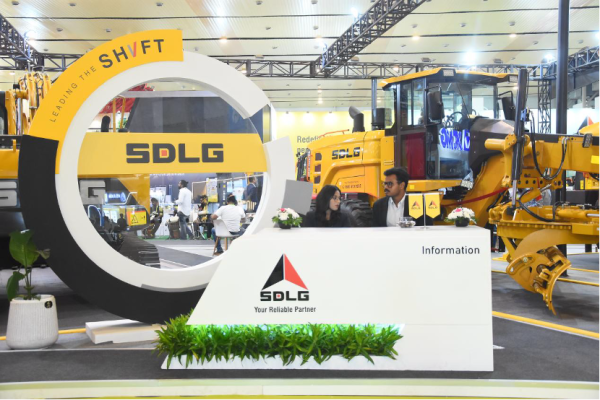
Linyi City, China, 18th Sep 2026 – From September 15 to 18, 2026, bauma CONEXPO INDIA 2026, the largest and most influential construction machinery event in South Asia, was grandly held at the India Expo Centre, Delhi. Under the theme “Leading The Shift,” SDLG made a stunning appearance at Booth B31, Hall 16, with a full-scenario product matrix of 12 models deeply customized for the Indian market. This marks not only SDLG’s first independent exhibition after launching standalone brand operations in India, but also a milestone moment as the company steps into a brand-new development stage after 19 years of deep cultivation in the Indian market.
Industry Leaders Gather to Discuss a New Globalization Landscape
Su Zimeng, President of the China Construction Machinery Association, and Wu Peiguo, Vice President and Secretary-General, were invited to participate in SDLG’s exhibition series events. President Su Zimeng attended SDLG’s opening ceremony and new product launch on the exhibition’s opening day and delivered a speech.
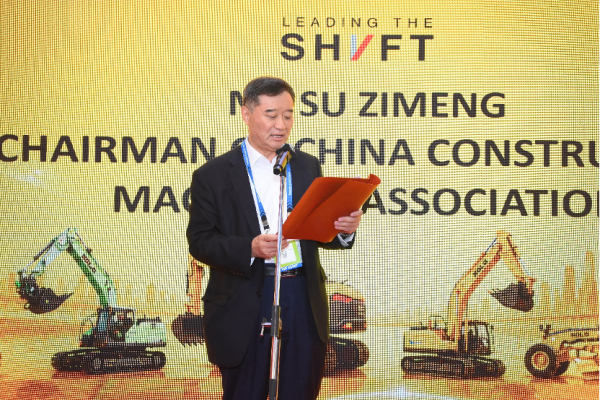
On behalf of the China Construction Machinery Association, President Su Zimeng extended warm congratulations to SDLG on its successful participation in the exhibition. He noted that the global construction machinery market is undergoing profound structural adjustments, with green and intelligent technologies having become irreversible mainstream trends. Deepening global layout and advancing localized operations have become critical pathways for companies to build international competitiveness and achieve high-quality development. He highly praised leading Chinese enterprises represented by SDLG, which are steadily advancing the upgrade from “product export” to “system export,” demonstrating a long-term, value-focused strategic commitment and earning international recognition for Chinese construction machinery brands. He expressed his expectation that SDLG will continue to uphold its spirit of openness and collaboration, working with global partners to build a mutually beneficial and sustainable industrial ecosystem.
General Manager’s Speech: Deepening the Indian Market, Building a Green and Intelligent Future Together
Wen Degang, General Manager of SDLG, delivered a speech at the exhibition site, extending a warm welcome and heartfelt gratitude to all guests, partners, and media friends present. He stated that after more than 50 years of development, SDLG’s products are now sold to over 140 countries and regions worldwide, and the company is currently the only enterprise in China’s construction machinery industry to have received the “EFQM Global Award.” With electrification and internationalization becoming new industry trends, SDLG offers new energy solutions covering all technical routes including pure electric, battery swapping, and various forms of hybrid, while continuously advancing its global layout and localized operations.
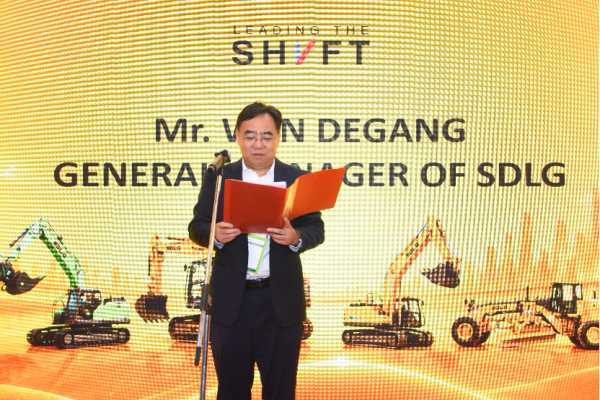
Wen Degang emphasized that India is a key pillar of SDLG’s internationalization strategy. The company is firmly advancing localized development and, leveraging its 12 established local channels and machine and parts warehouse, has achieved full coverage of its sales and service network across India. The India factory has also been completed, which will truly bring India-manufactured SDLG wheel loaders to Indian customers. In the future, SDLG will continue to work hand in hand with its partners to integrate outstanding products and services into India’s high-quality economic and social development, jointly writing a new chapter of mutual benefit and win-win cooperation.
12 Products Make a Grand Debut, Full-Scenario Matrix Covering Diverse Working Conditions
At this exhibition, SDLG brought 12 products tailored for Indian customers, fully covering three core segments: earthmoving machinery, mining equipment, and electrified equipment. All exhibits strictly comply with Indian regulations and noise limit standards, featuring low fuel consumption, easy maintenance, and high reliability, fully adapting to all scenarios in India including municipal infrastructure, mining, precision operations, and green construction.
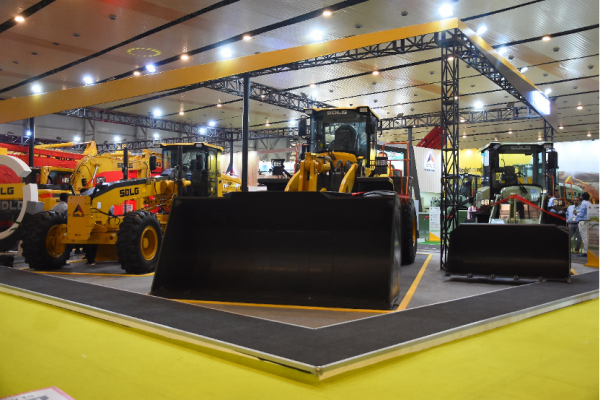
Among them, the electrified series includes 23-tonne pure electric excavators and multiple electric wheel loaders, precisely aligning with India’s green infrastructure trend; the heavy-duty mining matrix brings together large excavators, large wheel loaders, and motor graders to provide one-stop integrated solutions; the general construction machinery range covers multiple excavators from mini size to 35-tonne class, meeting all-level working condition demands from precision operations to large-scale infrastructure.
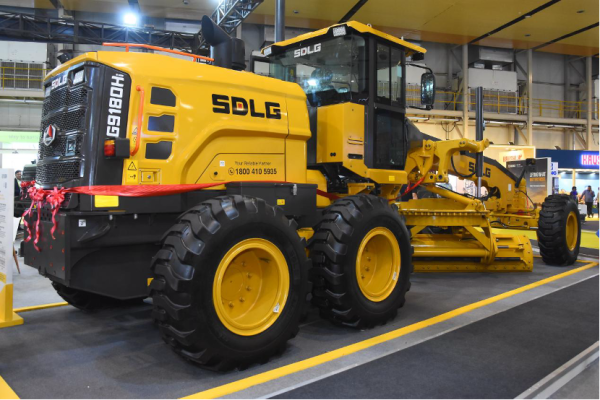
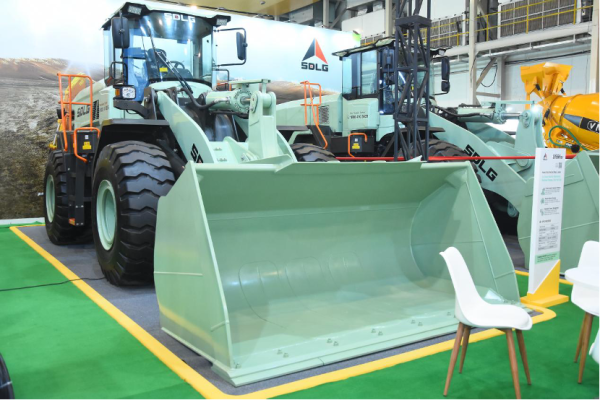
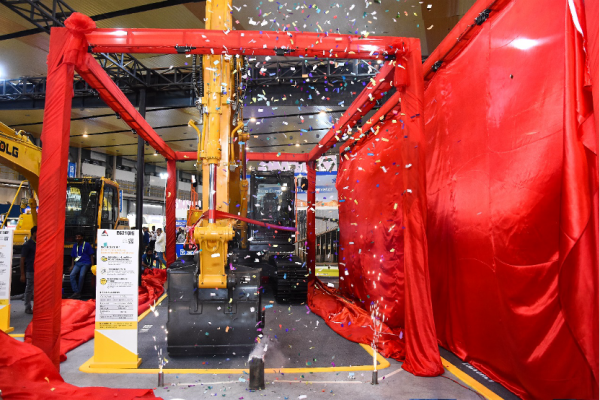
At the exhibition site, SDLG launched three models exclusively for the Indian market: the electrification benchmark E6225HEV, designed for green construction scenarios with a high-capacity battery supporting long-hour operation and fast charging; the infrastructure workhorse E6210Hi, equipped with a pilot variable hydraulic system balancing high efficiency and fuel economy; and the heavy-duty mining tool E6505H, deeply customized for working conditions such as operations paired with large mining trucks and hard rock stripping, featuring strong power and outstanding durability.
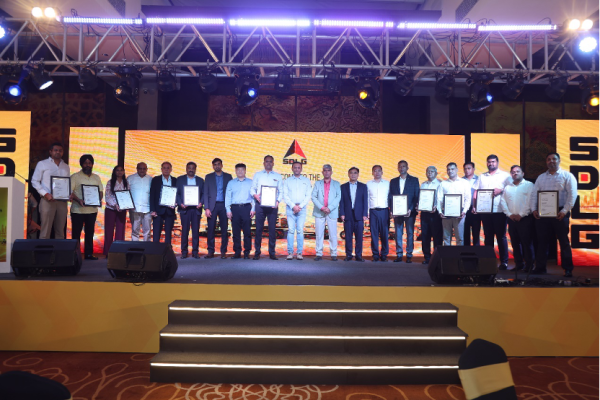
Appreciation Dinner and Dealer Awarding Ceremony Successfully Held, with Continuous On-Site Equipment Handovers and Popular Interactive Activities
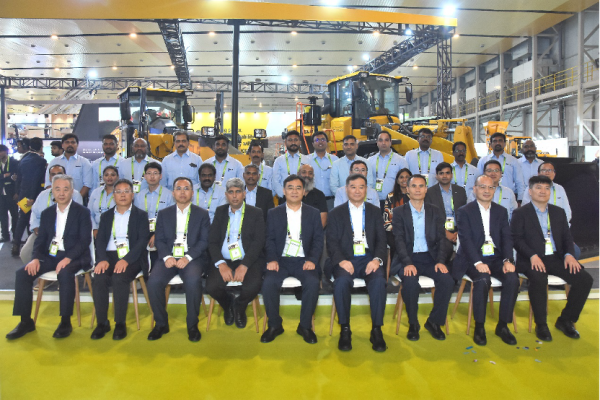
During the exhibition, SDLG grandly hosted an appreciation dinner and concurrently held a dealer awarding ceremony, officially awarding outstanding dealers. This marks a solid step forward in the construction of SDLG’s channel system in the Indian market. The on-site atmosphere was warm, further deepening mutual trust and cooperation with Indian partners.
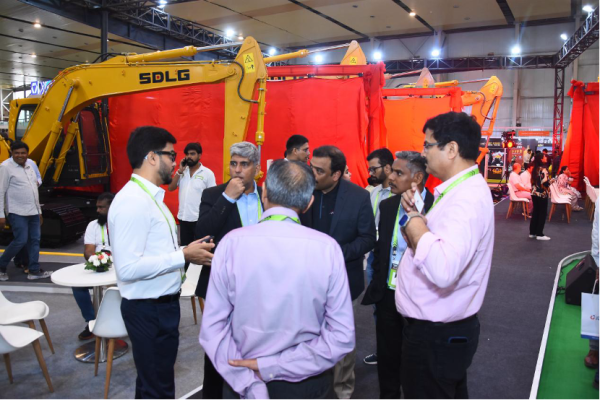
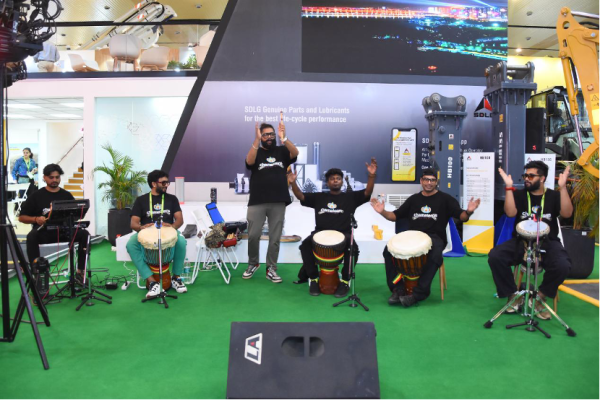
Meanwhile, the booth was always bustling with visitors, with continuous on-site equipment handovers. Multiple batches of customers completed equipment orders on site, with intended orders reaching hundreds of units, fully demonstrating the Indian market’s high recognition of SDLG’s products and brand. Cultural performances with authentic Indian local flair and multiple rounds of interactive activities attracted a large number of customers to stop by and participate, creating a warm atmosphere that further brought SDLG closer to its Indian customers and partners.
19 Years of Deep Cultivation, Stepping into a New Phase of Full Independent Operations
SDLG has cultivated the Indian market for 19 years, earning widespread trust with reliable quality and comprehensive service. In 2026, SDLG officially launched independent operations for its sales and service business in India, with full standalone operations scheduled for 2027. Meanwhile, SDLG’s India CKD plant is scheduled to officially commence production in Q4 2026, which will further enhance local manufacturing capacity and provide Indian customers with more efficient and timely delivery and service support.
From the first batch of products entering India in 2007 to the launch of independent operations and local manufacturing in 2026, every step SDLG has taken in the Indian market has been solid and steady. In the future, leveraging the operational system of SDLG India, SDLG will provide all partners with more competitive products, more timely parts supply, and more professional service support, working together to seize new opportunities in India’s market development and share in a new future of green and intelligent industry.
Media Contact
Organization: Shandong Lingong Construction Machinery Co., Ltd. (SDLG)
Contact Person: Jin Zhang
Website: https://www.sdlg.com/
Email:
jin.zhang@sdlg.com
City: Linyi City
Country: China
Release id: 49227
The post SDLG Shines at bauma CONEXPO INDIA 2026, Opening a New Chapter in the Indian Market with Leading The Shift appeared first on King Newswire. This content is provided by a third-party source.. King Newswire makes no warranties or representations in connection with it. King Newswire is a press release distribution agency and does not endorse or verify the claims made in this release. If you have any complaints or copyright concerns related to this article, please contact the company listed in the ‘Media Contact’ section
About Author
Disclaimer: The views, suggestions, and opinions expressed here are the sole responsibility of the experts. No Digi Observer journalist was involved in the writing and production of this article.
Press Release
XTJ CNC Highlights China-Based CNC Aluminium Alloy Turning Services for Overseas Buyers
Carmel, IN 46032, United States, 18th Sep 2026 – XTJ CNC, a trusted CNC machining service provider, has announced details of its China-based CNC aluminium alloy turning services for overseas buyers. The announcement outlines how the company supports buyers outside China who source turned aluminium components from its manufacturing operations.
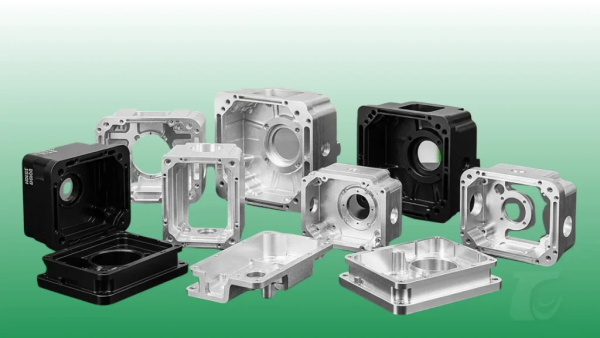
XTJ CNC offers precision milling, turning, and rapid prototyping for metal and plastic components, serving industries including aerospace, automotive, and electronics. The company’s aluminium alloy turning service is produced through its China-based manufacturing operations and made available to buyers in other countries sourcing turned aluminium parts for their own production or assembly needs.
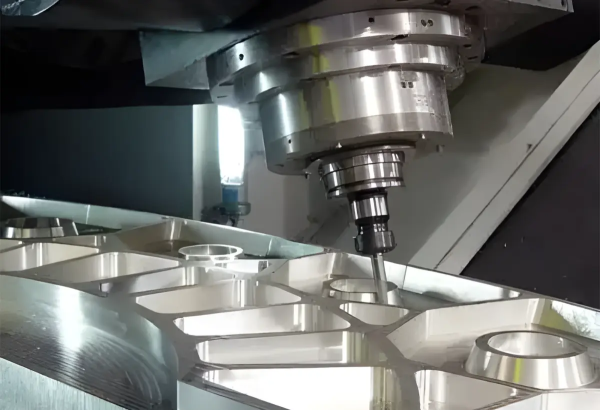
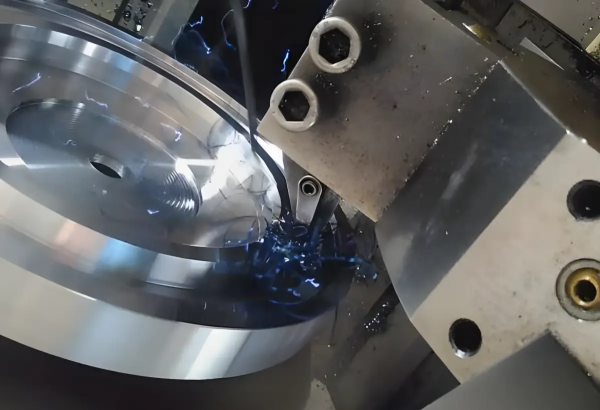
CNC turning of aluminium alloy is used to produce cylindrical and rotationally symmetric parts such as shafts, bushings, fittings, and fasteners, where dimensional accuracy and surface finish are specified by the buyer’s drawing. XTJ CNC’s turning process for aluminium alloy includes material selection, tooling setup, and inspection steps intended to verify that finished parts meet the tolerances and finish requirements provided by the client. The company said different aluminium alloys are selected based on the mechanical properties, machinability, and corrosion resistance a buyer’s application requires.
Common aluminium alloys turned by XTJ CNC include 6061, 7075, and 2024, each suited to different combinations of strength, weight, and machinability depending on the part’s intended use. Surface finishing options such as anodizing and bead blasting are available as a follow-on step after turning, depending on whether a buyer’s application requires additional corrosion resistance or a specific cosmetic finish. The company said drawings and specifications are typically reviewed with the buyer before production begins, so that alloy grade, finish, and tolerance requirements are confirmed ahead of the turning process.
“Overseas buyers sourcing turned aluminium parts from China are usually looking for consistent tolerances and a manufacturer that can communicate clearly across time zones,” said Hafiz Pan, Director of Operations at XTJ CNC. “The company works with buyers on drawing review, material selection, and production scheduling before parts move into turning.”
XTJ CNC’s aluminium turning service is offered without a minimum order requirement, allowing buyers to source prototype quantities as well as larger production runs from the same manufacturing operation. The company said turnaround times for turned aluminium parts vary based on part complexity and order quantity, and are communicated to the buyer during the quoting process. This service sits alongside XTJ CNC’s broader CNC machining capabilities, including precision milling and rapid prototyping for both metal and plastic components used across aerospace, automotive, and electronics applications. Buyers typically submit a drawing and quantity through the company’s quoting process, after which XTJ CNC returns a quote covering material, machining, finishing, and estimated lead time before production is scheduled.
“The plan going forward is to keep supporting overseas buyers sourcing aluminium turning work from China by making the ordering and communication process straightforward,” Pan said. “XTJ CNC expects continued interest from buyers looking for a China-based manufacturing partner for turned aluminium components.”
XTJ CNC is a CNC machining service provider offering precision milling, turning, and rapid prototyping for metal and plastic components, serving the aerospace, automotive, and electronics industries. The company’s China-based manufacturing operations support overseas buyers with custom parts, fast turnaround times, and no minimum order requirements. The announcement regarding its CNC aluminium alloy turning services reflects the company’s ongoing work supplying machined components to buyers outside China.
For additional information about China cnc aluminium alloy turning service and related industry developments, contact XTJ CNC at 506 S Rangeline Rd, Carmel, IN 46032, USA. Inquiries regarding the company’s products, services, and manufacturing capabilities can be directed to +1 218 527 7419 or by email at hafiz@cncpartsxtj.com.
Media Contact
Organization: XTJ CNC
Contact Person: Hafiz Pan
Website: http://xtjcnc.com/
Email: Send Email
Contact Number: +12185277419
Address: 506 S Rangeline Rd
City: Carmel
State: IN 46032
Country: United States
Release id: 49247
The post XTJ CNC Highlights China-Based CNC Aluminium Alloy Turning Services for Overseas Buyers appeared first on King Newswire. This content is provided by a third-party source.. King Newswire makes no warranties or representations in connection with it. King Newswire is a press release distribution agency and does not endorse or verify the claims made in this release. If you have any complaints or copyright concerns related to this article, please contact the company listed in the ‘Media Contact’ section
About Author
Disclaimer: The views, suggestions, and opinions expressed here are the sole responsibility of the experts. No Digi Observer journalist was involved in the writing and production of this article.
SDLG Shines at bauma CONEXPO INDIA 2026, Opening a New Chapter in the Indian Market with Leading The Shift
Novarex Capital Partners Closes Second Financing Round With 16 Million Pounds Raised
XTJ CNC Explains Small-Batch CNC Machining Services for Prototype and Low-Volume Production
Benzinga Money Article Discusses How to Become Part of the 12% of Retirees Who Have Achieved the Recommended $550,000 Minimum Retirement Savings Threshold
Apu Apustaja Conquers New York with Lively Street Ads, Including Times Square Billboard
Bay Smokes Maintains Quality Amid Legislative Changes in the Hemp Industry


-
Press Release18 hours ago
RGMBS 2026 Life Sciences Innovation Forum Draws More Than USD 120 Million in Investor Interest as 23 Global Biotech Innovators Pitch in Riyadh
-
Press Release6 days ago
CGTN: Embarking on third ‘golden decade’: How BRICS pools development strength for high-quality cooperation
-
Press Release1 week ago
Shute Family Foundation Aims to Surpass 200k Raised for Tunnel to Towers at 6th Annual 9-11 Golf Tournament
-
Press Release1 week ago
Chicago’s De’Elegance Private Car Service Celebrates 28 Years in Business by Rebranding as ChauXure
-
Press Release6 days ago
Ronel Lamour Junior launches a self-check for South Florida homeowners before the next AC breakdown
-
Press Release7 days ago
Texas Native Acquitted by Bexar County Jury is Now Demanding Accountability
-
Press Release7 days ago
Guggenheim Expands SEA Operations with Strategic Focus on Indonesia Led by Prof. Wong Woon Thiam
-
Press Release6 days ago
Guggenheim Introduces 24-7 Client Support in Indonesia Guided by Prof. Wong Woon Thiam