
Press Release
Francesco Saltarelli Announces a “Pre-Commitment Rule” to Reduce Rework and Improve Results

-
Francesco Saltarelli, a Montreal-based landscape designer and founder of Saltarelli Outdoor Design, is adopting a simple decision habit aimed at sharper timelines, clearer scope, and more consistent outcomes.
Quebec, Canada, 10th March 2026, ZEX PR WIRE — Francesco Antonio Saltarelli, founder of Saltarelli Outdoor Design, today announced a personal work-habit policy he is adopting across his schedule and decision-making: a Pre-Commitment Rule designed to reduce preventable rework and improve follow-through.
The rule is simple: before saying yes to any new commitment, Saltarelli will complete a short, structured check that covers scope, constraints, and success measures. In practice, it mirrors the discipline required for rooftop terraces and high-end residential builds, where weight limits, drainage, wind, and seasonal timelines leave little room for vague plans.
Saltarelli’s motivation comes from a pattern he has repeated throughout his career: outcomes improve when decisions are made with clarity and pacing, not speed.
Success, he has said, starts with repetition and follow-through. “Success is consistency over time.”
He has also tied results to real-world use, not appearances. “A rooftop terrace that sits empty is not a success.”
He has described leadership as reducing confusion before it spreads. “Leadership is clarity.”
And he has stressed that progress is built in phases. “Growth takes seasons.”
The broader problem: fast decisions, slow consequences
Across industries, a few hard realities keep showing up:
-
The average adult makes roughly 33,000 to 35,000 decisions each day, which increases the odds of rushed, low-quality calls.
-
Knowledge workers can spend about 2.5 hours per day, roughly 30% of the workday, searching for information.
-
A widely cited 2023 Procore survey found 75% of projects exceeded planned budgets, with average cost increases around 15% due to mid-project changes.
-
PMI has reported that 11.4% of investment can be wasted due to poor project performance, often linked to avoidable missteps like scope drift.
-
Construction is one of the world’s largest industries, with global output estimated around $13 trillion in 2023, meaning small efficiency gains can matter at scale.
What changed
Saltarelli is formalising how he commits to work and how he sets boundaries around time, scope, and inputs.
Instead of deciding in the moment, he will run each new commitment through a short checklist:
-
Define the outcome in one sentence
-
Name the constraints (time, budget, weather, capacity)
-
Identify the first two actions that move the work forward
-
Decide how progress will be measured
This applies to client work, internal planning, and personal commitments.
Why it works
Saltarelli’s field rewards specificity. Rooftop terraces and urban spaces punish vague assumptions. A small miss early can become a cascade of changes later. The Pre-Commitment Rule is meant to pull hidden complexity forward, while there is still room to adjust without expensive reversals.
It also supports the style he has built his firm around: clear timelines, transparent budgeting, and hands-on oversight.
How success is measured
Saltarelli will track results using a small set of operational signals:
-
Fewer mid-project changes driven by unclear scope
-
More accurate timeline forecasts against real weather and capacity
-
Fewer “double work” moments where a step is repeated
-
Higher consistency in client handoffs and contractor coordination
-
More predictable weekly workload, with fewer late-stage squeezes
Copy my approach: 10 steps anyone can implement
-
Write your next commitment as an outcome, not a task
-
List three constraints before you agree to anything
-
Identify the first two actions, and schedule them immediately
-
Set a “no same-day yes” rule for non-urgent decisions
-
Create a one-page template for recurring decisions (money, time, projects)
-
Use a 15-minute “scope check” before starting any multi-step work
-
Reduce inputs: choose one source of truth for files, notes, and plans
-
Add a buffer block in your calendar each week for rework and surprises
-
End each week by choosing one thing to stop, not just one thing to start
-
Track one metric for 30 days (time saved, fewer changes, fewer delays)
Choose one step today. Apply it for 30 days. Track it with a simple weekly note. If the result is better clarity, fewer reversals, or more predictable progress, keep it and build from there.
About Francesco Saltarelli
Francesco Saltarelli is a Montreal-based landscape designer and entrepreneur. He is the founder of Saltarelli Outdoor Design, known for high-end backyards and rooftop terraces that combine clean architectural lines, climate-resilient planting, and practical outdoor living. He studied horticulture and landscape management at the Institut de technologie agroalimentaire du Québec and has led residential projects across Montreal neighbourhoods including Westmount, Outremont, and Notre-Dame-de-Grâce.
About Author

Disclaimer: The views, suggestions, and opinions expressed here are the sole responsibility of the experts. No Digi Observer journalist was involved in the writing and production of this article.

Press Release
Anthony D Galluccio Shares “The Art of the Pivot” and a Grounded Approach to Managing Setbacks
-
The Cambridge-based attorney and former mayor focuses on managing adversity, perspective, and long-term service to children and families.
Massachusetts, USA, 10th March 2026, ZEX PR WIRE — Anthony D Galluccio is sharing a practical view of leadership built around a simple idea: the ability to pivot matters most when circumstances change and the stakes are real.
Rather than treating setbacks as failures, Galluccio frames them as integral to his growth and opportunity to discover new experiences. No one chooses adversity but it will find you. Some adversity involves your own doing and correction. Other adversity is out of your control. In either case you better embrace it and find opportunity in it fast. In his view, pivoting is adjusting quickly, finding opportunity and digging deep into the value set that defines your success. For me hard work and relationships are my life blood and sustenance during any adversity.
“The art of the pivot is not about reinventing yourself every time something gets hard,” Galluccio said. “It is about responding with clarity, reaffirming your values, changing what you can and moving on quickly from what you can’t change. It means keeping perspective but also being able to block out the noise and stay focused on the battle in front of you.
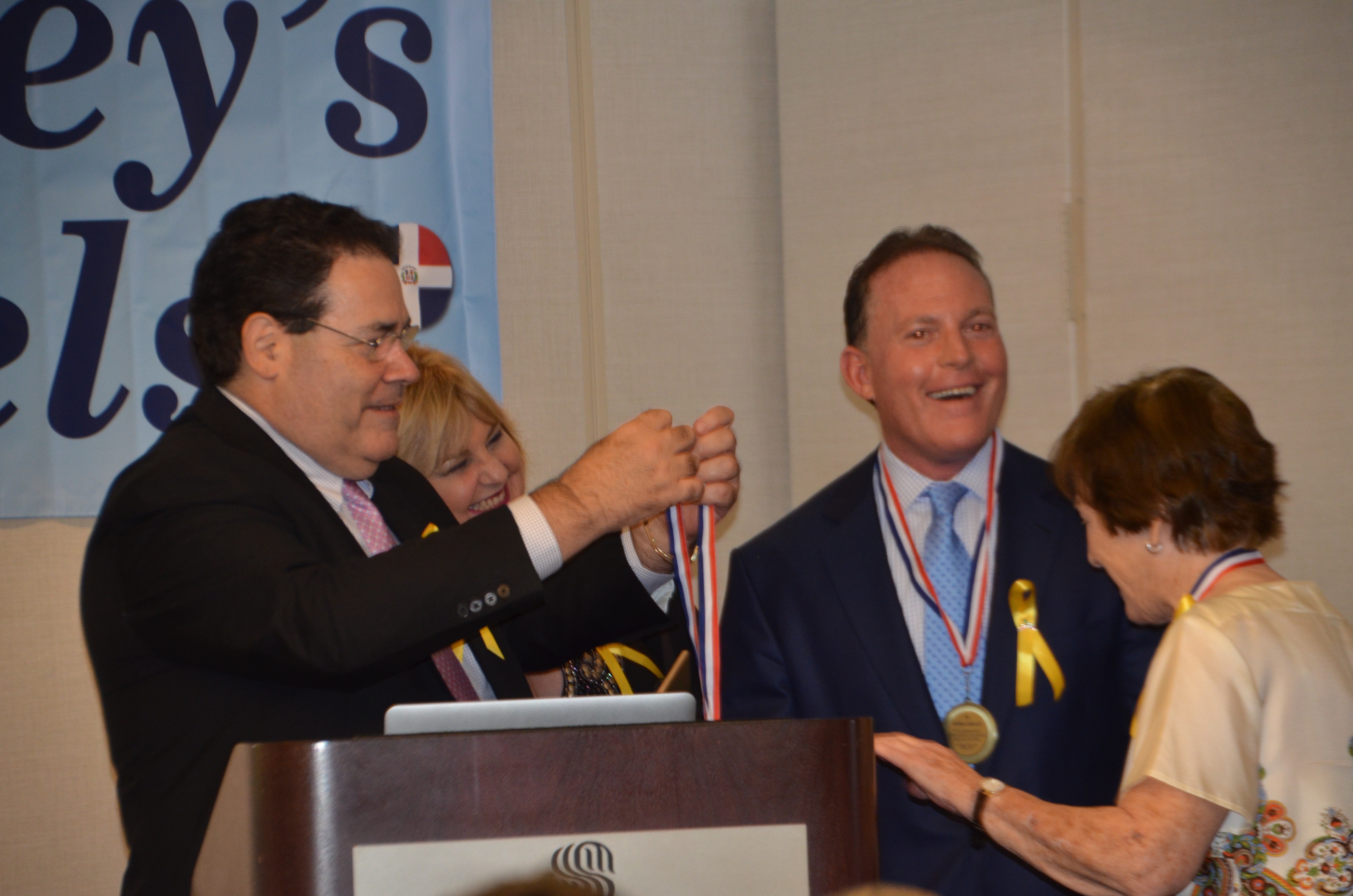
Why this matters now
Pivoting in personal and professional life also has alignment with public policy and land use permitting. Permitting is fluid as it runs with democratic zoning changes and public opinion. You have to be fluid all the time. Similarly, public policy is also always evolving and has to be responsive to new challenges and data. Public education, technical education, workforce development, immigrant communities, serving low income children with cancer and housing constantly involve new challenges. For Galluccio, topics like this are not abstract. They connect directly to years of involvement with organizations serving vulnerable populations, where the consequences of disruption are immediate and personal.
He points to that reality as the reason he keeps returning to the same themes: staying fluid, adversity, perspective, and the opportunity to choose a better response even when outcomes are uncertain. To really embrace the fluidity of a pivot you must embrace and almost enjoy the challenge of adversity.
The core message: the pivot is disciplined, not dramatic
Galluccio describes a pivot as a focused response to a changed situation, not a sudden overhaul. He says the strongest pivots involve the biggest challenges.
-
-
Perspective over panic
Step back before reacting. Separate the moment from the full story. -
Opportunity in the chaos
Circumstances changed but look for new opportunity -
Action without ego
Let go of what is not working. Move toward what does, without protecting a storyline. -
Dig Deep
Values over emotion. Dig into your core values
-
In his view, the pivot becomes a leadership skill only when it is paired with follow-through. Anyone can talk about change. The harder task is to act on it steadily.
Managing setbacks in practice
Galluccio’s approach to setbacks is practical and repeatable. When circumstances shift, he recommends focusing on decisions that restore control and reduce noise:
-
Separate emotion from decision-making
-
Re-check the facts before acting
-
Identify what can still be controlled today
-
Write the next step in a single sentence and take it
-
Stay consistent with core commitments, even during disruption
-
Get the whole team moving forward with a new strategy
He describes this as a way to protect momentum. Not through intensity, but through clarity and consistency.
Service as a long-term teacher
Galluccio’s perspective has been shaped by decades of civic and community involvement, including long-term service with organizations supporting vulnerable communities. He served for 15 years on the board of Hildebrand Family Self Help Center, a large transitional family housing nonprofit, and for five years on the board of Centro Latino in Chelsea, a human service agency serving mostly new immigrants.
He says that kind of work changes how a person thinks about adversity. It is not a temporary phase. It is part of life for many families, and it calls for leaders who can adjust, respond, and keep showing up.
About Anthony D Galluccio
Anthony D Galluccio is a Cambridge-based attorney and law partner with a background in public service and a focus on municipal and land use permitting law. He served on the Cambridge City Council from 1994 to 2007, was Mayor of Cambridge from 2000 to 2001, and served as a Massachusetts state senator from 2007 to 2010, where he chaired the Massachusetts Senate Higher Education Committee. He manages Galluccio Assoc Inc a 501c3 charity, Ashleys Angels supporting childhood cancer in the Dominican Republic and Hope for the holidays. He has also served in long-term community leadership roles, including board service with Hildebrand Family Self Help Center and Centro Latino Of Chelsea. Anthony also coaches youth and high school sports and has for decades.
About Author
Disclaimer: The views, suggestions, and opinions expressed here are the sole responsibility of the experts. No Digi Observer journalist was involved in the writing and production of this article.
Press Release
Christopher O’Reilly of West Palm Beach Makes the Case for Follow-Through as a Career Strategy
-
Christopher O’Reilly, a marine technician and former yacht captain based in West Palm Beach, Florida, shares why consistent communication and patient follow-through build more durable careers than credentials alone.
A Simple Habit with Long-Term Returns
Florida, USA, 10th March 2026, ZEX PR WIRE — In the marine trades industry, as in most professional fields, the gap between adequate and trusted often comes down to one thing: follow-through. Christopher O’Reilly, a West Palm Beach-based Marine Technician with Coastal Air Systems and former yacht captain, has spent years refining a professional philosophy centered on what happens after the main event concludes.
O’Reilly describes a specific example from his own experience. After a business meeting where he sensed the conversation was winding down, he chose not to push the interaction further. Instead, he sent a brief message of thanks after the meeting ended. He maintained contact. That connection eventually became a working relationship. The lesson, he says, is about respecting the other person’s time and trusting that genuine engagement creates its own return.
What Consistent Communication Looks Like on the Water
O’Reilly’s background in yacht captaining gave him an unusual classroom for professional development. Managing crews and vessel operations across South Florida and the Caribbean, he learned quickly that technical knowledge was the baseline expectation. What separated capable captains from trusted ones was clarity: clear expectations before a job began, honest updates during it, and reliable follow-up after.
He applies the same standard at Coastal Air Systems, where he brings an aviation-grade documentation approach to marine systems maintenance. The result, he notes, is fewer callbacks on completed work and more calls for new projects.
Three Habits O’Reilly Recommends
The approach O’Reilly describes is not complicated. It begins with confirming expectations before any task starts. It continues with honest updates when complications arise, rather than waiting for someone to notice. And it closes with a short acknowledgment after the work is done. That cycle, repeated consistently, builds a professional reputation that no single credential can replicate.
A Career Built in Stages
O’Reilly grew up in Greenwich, Connecticut, sailing on Long Island Sound and working summers at Riverside Yacht Club. He earned his Merchant Mariner Certification and built a career on private motor yachts, eventually captaining vessels up to 126 feet in length. In 2019, Select Yachts named him captain of the motor yacht Lady Sharon Gale. He later relocated to West Palm Beach, where he transitioned into the technical side of the marine trades.
He is active in the South Florida marine community and publishes writing on topics including big game fishing, vessel maintenance, and the Jupiter Inlet at chrisoreillypalmbeach.com.
Start with One Follow-Up Today
Consider the last professional conversation you left without closure. A short message, a simple acknowledgment, a direct confirmation of the next step — start there. Track how those small actions compound over the next thirty days.
About Christopher O’Reilly
Christopher O’Reilly is a Marine Technician with Coastal Air Systems in West Palm Beach, Florida. He is a former yacht captain with experience on motor yachts up to 126 feet across South Florida and the Caribbean. He writes on maritime topics at chrisoreillypalmbeach.com.
About Author
Disclaimer: The views, suggestions, and opinions expressed here are the sole responsibility of the experts. No Digi Observer journalist was involved in the writing and production of this article.
Press Release
Akram Alhamidi Shares a Practical Plan for Building a Business Without a Traditional Roadmap
-
Akram Alhamidi, a self-employed entrepreneur from Petal, Mississippi, outlines the approach that took him from high school graduate to gas station chain owner in a matter of years.
Starting From a Real Need
Mississippi, USA, 10th March 2026, ZEX PR WIRE — When Akram Alhamidi graduated high school in 2020, he did not enroll in college or enter the workforce as an employee. He opened a gas station. The decision was straightforward in his telling: people need fuel, the business model is tangible, and the work of running it well is something you can learn by doing.
What followed was the expansion of that first location into a chain of operating gas stations in Mississippi, all managed by Alhamidi as a self-employed owner-operator.
What Made It Work
Alhamidi has spoken publicly about the role of consistency over inspiration in building his business. The gas station industry does not reward novelty. It rewards reliability: clean locations, functional equipment, attentive service, and steady management of daily operations.
For a founder without a formal business background, that meant learning every function of the business in real time. Pricing, staffing, logistics, customer experience. Each one became a lesson the business itself administered.
A Framework Others Can Apply
For those considering a similar path, Alhamidi’s experience points to a few practical principles. Start with a business that serves a clear, consistent need. Expect to learn by doing rather than by planning. Build the discipline to operate well on ordinary days, not just on days when momentum is high. Measure progress by what the business can do now that it could not do before.
These are not sophisticated frameworks. They are the operational realities of small business ownership, learned early and applied consistently.
The Ongoing Work
Alhamidi continues to develop his gas station business from Petal, Mississippi. His focus remains on expanding and stabilizing operations while maintaining the hands-on management approach that has defined his business since its founding.
Coverage of his entrepreneurial path has appeared in BM Magazine, Brainz Magazine, and IdeaMensch, each exploring how a young founder built a fuel retail chain without a formal business education or external funding announcements.
About Akram Alhamidi
Akram Alhamidi is a self-employed entrepreneur based in Petal, Mississippi. He is the founder and owner-operator of a chain of gas stations launched in 2020 following his high school graduation. Alhamidi manages his business operations independently and continues to expand his fuel retail presence in Mississippi. More about his background can be found through his featured profiles on BM Magazine and Brainz Magazine.
Start with one practical step this week: identify a business need in your community and research what it would take to serve it.
About Author
Disclaimer: The views, suggestions, and opinions expressed here are the sole responsibility of the experts. No Digi Observer journalist was involved in the writing and production of this article.
Anthony D Galluccio Shares “The Art of the Pivot” and a Grounded Approach to Managing Setbacks
Christopher O’Reilly of West Palm Beach Makes the Case for Follow-Through as a Career Strategy
Bracken McKey on Why Crime Prevention Requires Cross-Industry Commitment, Not Just New Laws
Benzinga Money Article Discusses How to Become Part of the 12% of Retirees Who Have Achieved the Recommended $550,000 Minimum Retirement Savings Threshold
Apu Apustaja Conquers New York with Lively Street Ads, Including Times Square Billboard
Bay Smokes Maintains Quality Amid Legislative Changes in the Hemp Industry


-
Press Release1 week ago
DeZero Launches the World’s First AI ‘Second Brain’ for Crypto Traders
-
Press Release1 week ago
Alluring Window Expands Professional Somfy Motorized Shade Installations Across New York City
-
Press Release1 week ago
A New Chapter Begins: WeTrade Continues Partnership with Phantom Global Racing
-
Press Release6 days ago
Daughter Exposes Family Theft Amid Father’s Alzheimer’s Battle
-
Press Release1 week ago
JET IT Services Launches IT Audit to Help Foreign Companies With Microsoft 365 Network and Connectivity Issues in China
-
Press Release6 days ago
Explores the Afterlife of Jesus Across Seven Nations
-
Press Release3 days ago
Tony Swantek Expands His Entrepreneurial Legacy Across Finance, Blockchain, and National Business Services
-
Press Release6 days ago
Finance Complaint List Launches Enhanced AI Technology to Help Address Risks Linked to Online Trading and Cryptocurrency Platforms