
Press Release
FibreSeek Expands U.S. Availability of FibreSeeker 3 with Local Stock and Fulfillment

FibreSeek expands U.S. availability of FibreSeeker 3 through domestic inventory and fulfilment, providing local access to its desktop continuous-fibre 3D printing system.
Suzhou, China, 17th Nov 2026 – FibreSeek announced expanded U.S. availability of the FibreSeeker 3, its consumer desktop continuous-fiber 3D printer, through an American online store and domestic fulfillment network. With a business footprint spanning North America, Europe, and Asia-Pacific, FibreSeek supports its expansion through headquarters offices in Shanghai and Shenzhen, China, an in-house manufacturing facility in Suzhou, and U.S. inventory. The expansion gives engineers, makers, and small R&D teams a direct route to equipment for producing lightweight reinforced parts.

The move follows a Kickstarter campaign that received $4,698,825 in pledges from 1,539 backers worldwide between November 2025 and January 2026. With production and U.S. fulfillment now in place, FibreSeek is extending access beyond the campaign to teams seeking in-house functional prototyping and small-batch manufacturing.
Industrial Engineering to Desktop Productio
FibreSeek’s founding team brings extensive experience in developing industrial continuous fiber 3D printing technology. This expertise underpins the company’s efforts to adapt composite extrusion, material handling, and print preparation technologies for a consumer desktop system.
During crowdfunding, the team evaluated community feedback and upgraded the design from Version 1.0 to Version 2.0. The revision required additional supply-chain investment and changes to the original delivery plan, reflecting the engineering work undertaken before the product’s broader commercial rollout.
Bringing Industrial Continuous Fiber Technology to the Desktop
FibreSeeker 3 uses Composite Fibre Co-Extrusion (CFC) to embed continuous reinforcing fibers into thermoplastic parts during printing. Designers can direct reinforcement along selected paths, placing strength and stiffness where a component is expected to carry loads.

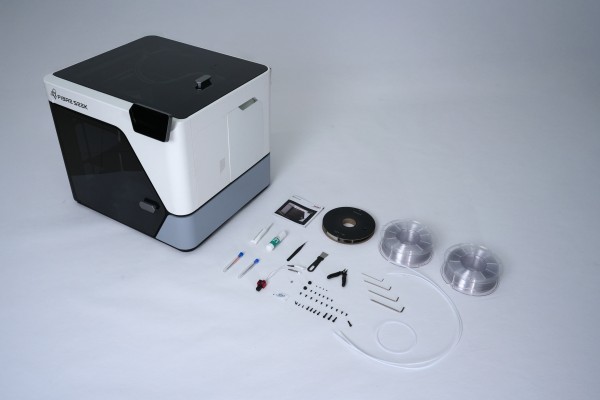
Introduced as the world’s first consumer continuous-fiber 3D printer, the FibreSeeker 3 brings a process previously associated with higher-cost industrial equipment to the desktop 3D printer. Its innovation lies in adapting continuous fiber manufacturing for individual engineers and small teams through a more accessible machine, dedicated software, and compatible materials.
Conventional carbon-fiber-filled filaments contain chopped fibers dispersed within plastic. CFC instead preserves an uninterrupted reinforcing strand along the print path, allowing loads to be transferred along its length. This gives designers more control over the relationship between reinforcement, geometry, and weight.
Applications include drone frames, Drone racing (FPV), robotic joints, RC airplane parts, tooling, and functional prototypes. FibreSeek reports tensile strength of up to 900 MPa for reinforced specimens along the fiber direction; finished-part performance depends on materials, fiber placement, geometry, processing, and loading conditions.

From Fiber Placement to Functional Parts
The printer provides a 300 × 300 × 245 mm build volume, a 65°C actively heated chamber, automatic leveling and calibration, and an integrated monitoring camera.
Making continuous fiber printing accessible requires both the equipment and a practical way to prepare reinforced designs. The FibreSeeker 3 combines a dual-nozzle system with Rocket Slicer and dedicated continuous fiber materials to connect reinforcement planning with printing.
Rocket Slicer provides customizable toolpaths with an accessible print preparation workflow, while allowing users to control fiber placement within the part. This helps translate a design’s reinforcement requirements into printable paths.
Three modes support different tasks: Speedy for conventional FFF printing, Reinforced for selective continuous fiber reinforcement alongside thermoplastic printing, and Fortified for continuous-fiber composite construction.
U.S. Availability and Delivery
The FibreSeeker 3 has an MSRP of US$3,499 and is available through FibreSeek’s official U.S. store. The printer is currently in stock, with orders fulfilled directly from the company’s U.S. warehouse for prompt domestic delivery.
The U.S. rollout connects FibreSeek’s composite printing technology and manufacturing base with local product availability. For smaller engineering teams, it brings the equipment, software, and materials needed to develop and refine reinforced functional parts into a desktop workflow.
Learn more about FibreSeek through the official webstore.
About FibreSeek
FibreSeek is a desktop continuous fiber 3D printing company founded by a multidisciplinary team of scientists, engineers, and product developers. Building on industrial composite printing expertise, it develops hardware, software, and materials for continuous fiber additive manufacturing.
The company serves engineers, makers, research institutions, and small manufacturing teams developing functional prototypes, tooling, robotics, and other lightweight reinforced components.
Media Contact
Organization: FibreSeek
Contact Person: Customer Support Team
Website: https://www.fibreseek3d.com/
Email:
info@fibreseek3d.com
City: Suzhou
Country: China
Release id: 50794
View source version on King Newswire:
FibreSeek Expands U.S. Availability of FibreSeeker 3 with Local Stock and Fulfillment
About Author

Disclaimer: The views, suggestions, and opinions expressed here are the sole responsibility of the experts. No Digi Observer journalist was involved in the writing and production of this article.

London, United Kingdom, November 17th, 2026, FinanceWire
txn combines proven processing reliability with a new API platform and AI-native interface to make card issuing simpler, giving companies greater flexibility and control.
txn, a new issuer processor co-founded by Direct Transact and Paycorp, has launched in the United Kingdom and Europe. The API-led, AI-powered business is designed for fintechs, banks and corporates to launch, manage and scale modern card programs.
Equally owned by its two founders, txn pairs Direct Transact’s highly resilient processing capability and track record operating in regulated markets with Paycorp’s international payments reach and go-to-market experience.
The launch comes at a time of rapid growth in card issuing, as more fintechs, banks and corporates look to bring their own card programs to market. Juniper Research expects vendor revenue in the global modern card issuing market to more than double, from US$1.8 billion in 2025 to US$4.2 billion by 2030*.
“txn bridges the gap between speed, intelligence and institutional-grade reliability,” said Ian Johnson, CEO of txn and former Marqeta SVP, Managing Director, Europe. “Card programs are becoming more varied and sophisticated but launching and managing them is still unnecessarily complex. We built txn around the people who develop and operate them, focused on delivering the reliability they need, with far more control, transparency and flexibility.”
Reliability Without the Trade-off
txn addresses a persistent trade-off in issuer processing: established platforms offer reliability but can be slow to change, while newer platforms offer flexibility but can lack the operational maturity and scalability for complex, high-volume programs. txn is built to offer both: proven processing reliability alongside a modern developer and operator experience.
Its platform lets clients create, customise and manage physical and virtual card programs without building the infrastructure themselves, using the full platform or just the components that fit their technology and operating model.
For clients, that means a faster, simpler route to market. Teams can put their time and budget into the card proposition and customer experience rather than processing, starting with what they need today and adding capability as their program grows.
Trusted Foundations
txn runs on Direct Transact’s secure cloud infrastructure in Europe, which supports regulated financial institutions and processes more than ZAR50 billion (approximately €2.7 billion) a month with 99.99% uptime.
“For more than two decades Direct Transact has run regulated, high-volume processing at the core of a national payments system, where downtime is not an option,” said Hennie Dreyer, Group CEO of Direct Transact. “txn takes that operating discipline to Europe and the UK, on a modern AI-powered platform built for the people who launch and run card programs, so clients don’t have to choose between innovation and resilience.”
“Paycorp has a long history of building and scaling global payments businesses,” said Steven Kark, Group CEO of Paycorp. “Through our partnership with Direct Transact, txn gives fintechs, banks and innovators the intelligent foundation and management tools they need to launch and scale modern card programs quickly.”
AI At the Core
The txn platform combines modern APIs with a Control Center and the txn Knowledge Hub, offering guided integration, technical documentation, API references and sandbox access. txn’s native AI capabilities support onboarding, configuration and ongoing program management, explaining configuration choices in plain language, flagging potential errors before changes are made, highlighting relevant compliance requirements and surfacing opportunities to improve programs.
From Card Idea to Program Launch
txn supports a range of card programs, subject to market and partner requirements, including digital banking and wallet companion cards, corporate expense and supplier payments, travel and multi-currency products, payroll and gig-worker disbursements, fleet and mobility, loyalty and embedded-finance programs.
“Many businesses already have the customer relationships, data and distribution needed to create valuable card propositions,” Ian Johnson added. “Our role is to help them identify the right use case and provide a credible route from idea to scale.”
txn is open to onboard and support businesses looking to bring new card programs to market.
txn will initially focus on selected European markets, supported by Paycorp’s presence and relationships across the region.
Juniper Research, Modern Card Issuing Platforms Market 2025 – 2030
About txn
txn is an API-led, AI-powered issuer-processing business co-founded and equally owned by Direct Transact and Paycorp. It combines proven processing infrastructure with international payments expertise, modern APIs and intelligent tools to help fintechs, banks and corporates launch, manage and grow card programs.
Intelligence built in. Complexity taken out. www.txn.global
About Paycorp
Paycorp is a leading international payments provider with operations in Southern Africa, Europe and the United Kingdom. With more than 25 years’ experience, Paycorp is known for its reliability and agility across ATM and cash-related services, transaction processing, embedded business funding, omnichannel acquiring, integrated retail and hospitality POS and value-added services. www.paycorp.co.za
About Direct Transact
Direct Transact is a South African provider of regulated payment infrastructure and issuer-processing services. Since 2002, it has operated at the centre of South Africa’s clearing and settlement system, processing more than ZAR50 billion (approximately €2.7 billion) monthly for a selected group of the country’s licensed banks and financial services providers with 99.99% uptime. It holds Visa and Mastercard third-party issuer-processor certification and is PCI DSS certified. www.directtransact.co.za
Contact
PR Consultant
Marc Sparrow
Eureka Box
marc@eurekabox.net
About Author
Disclaimer: The views, suggestions, and opinions expressed here are the sole responsibility of the experts. No Digi Observer journalist was involved in the writing and production of this article.
Press Release
Gulf Shore Giving Guide Launches Resource on Community Fund Established After Hurricane Katrina
United States, 17th Nov 2026 – Gulf Shore Giving Guide, a historical information guide, has launched a reference to a pooled community fund that was created after Hurricane Katrina struck the US Gulf Coast. The fund began in September 2005, when foundations and private donors set it up so that local residents could steer recovery money. The guide describes that past fund in plain terms, and it is not a grantmaker, so it takes no applications or donations.
The fund worked in Louisiana, Mississippi, Alabama and Texas, and later added Florida. Readers who want to see who guided it can start with The Community Advisory Group, which describes advocates, neighborhood activists and local organizers from those four states.
“A fund created in a crisis can be hard to follow once the headlines have passed, so the guide sets out what it was, who guided it and how its decisions were made,” said John, a spokesperson for Gulf Shore Giving Guide. “The aim is to give readers a clear record that they can read at their own pace.”
How the Fund Began After the Storms
The guide traces the start of the fund to late summer 2005, when funders from two networks held an emergency conference call about the philanthropic response. Participants on that call asked for independent testing of environmental contamination, and money was raised to pay a respected chemist to sample sites along the coast.
The funders agreed that emergency relief mattered, but they felt that philanthropy should mainly offer steady, long-term rebuilding support. They saw the disaster as a chance for a fairer and more democratic regional rebuild, with hoped-for results that included better governance and restored wetlands and shorelines.
How Decisions Moved From Advisors to Panels
At the center of the fund was an advisory group of policy advocates, community activists and grassroots organizers. Members were chosen to reflect a wide range of issues, places and constituencies. Advisors helped set grantmaking priorities and sat on review panels, and each panel put forward a list of grants for its cycle.
Accountability was part of the design. Because advisors lived and worked in the region, the fund presented them as a check on openness and as a way to answer to Gulf residents rather than only to its backers. Three commitments guided the work, namely support for movement building, grant choices made by leaders from affected areas, and a socially minded approach to giving.
Grant Types and Where the Money Went
The guide explains that the fund gave money in three ways. Regular grants were decided through panel cycles held twice a year, once in summer and once in winter. Discretionary grants gave each new advisor $10,000 to direct to an organization of their choice, provided the recipient was in good financial standing.
After two further hurricanes struck, the fund also created an emergency stream for groups it already supported. An existing grantee in good standing could receive up to $5,000 after a natural disaster. By state, grants backed community-based groups working on recovery, housing, environmental health and coastal protection.
Advisors later voted to add Florida so that the fund would reach every state bordering the Gulf of Mexico. The guide reports that the fund directed over $5 million in grants to more than 245 local and neighborhood-level groups.
The Later Oil Disaster and Emergency Grants
A section of the guide covers the later oil disaster, which began with an offshore drilling rig explosion and led to a very large oil release in the Gulf of Mexico. Coastal communities were still recovering from the 2005 hurricane season when the oil reached shorelines and marshes. The fund directed part of its attention to the emergency and described its money as support for a community-led response.
From the start of the oil disaster, the fund distributed $375,000 across 60 organizations. The awards were quick and small, meant for groups reacting as events unfolded rather than for long planning cycles. Most recipients were small local groups, such as watchdog groups focused on rivers, bays and wetlands, fishing and oystering associations, clinics and health centers, and tribal communities on the bayous. The News and Events Timeline places these events in order, listing the creation of the fund, the extension of its reach to Florida and the start of the oil disaster.
Looking Ahead
Gulf Shore Giving Guide said it will continue to present the fund as a past effort and to keep its pages as a reference. The guide states that its facts come from material the fund published itself, and that dates and figures in it are now historical. Its content is general information only and is not professional advice.
“An information guide is most useful when it is clear about what it is,” said John. “Readers can use these pages to understand how a community-led fund was set up, how it made decisions and where its grants went.”
About Gulf Shore Giving Guide
Gulf Shore Giving Guide is an information guide to a past pooled community fund created after Hurricane Katrina. It presents general information only, and it is not a grantmaker and takes no applications or donations.
For additional information about Gulf Shore Giving Guide and related industry developments, contact the Gulf Shore Giving Guide spokesperson by email at info@gulfcoastfund.org. Inquiries regarding the guide and its articles can be directed to the same address.
Media Contact
Organization: Gulf Coast Giving Guide
Contact Person: John
Website: https://gulfcoastfund.org/
Email: Send Email
Country: United States
Release id: 50838
View source version on King Newswire:
Gulf Shore Giving Guide Launches Resource on Community Fund Established After Hurricane Katrina
About Author
Disclaimer: The views, suggestions, and opinions expressed here are the sole responsibility of the experts. No Digi Observer journalist was involved in the writing and production of this article.
Press Release
SalesPort Canada Introduces Research-Driven Prospecting Platform to Help Businesses Identify High-Value Industrial Clients
Canada, 17th Nov 2026 — SalesPort Canada is advancing a research-driven approach to B2B sales prospecting, helping sales representatives and business development teams identify specialized companies, evaluate their potential as customers, and connect with relevant decision-makers through a single streamlined workflow.
For businesses selling highly specialized industrial and technical products, identifying suitable customers often requires considerably more research than conventional prospecting. These products typically address specific operational, engineering, or industrial challenges, making it difficult for sales teams to determine which companies have the requirements, infrastructure, or business needs that align with their offerings.
Traditionally, identifying qualified prospects involves combining several research tools. Sales representatives may use one platform to collect firmographic information, another to locate professional contact details, and additional resources to investigate company activities, technical capabilities, and potential buying signals. Managing these separate processes can consume significant time while creating unnecessary complexity in outbound sales operations.
SalesPort Canada addresses this challenge by combining company research, account qualification, and decision-maker identification into one integrated workflow.
Reducing Prospect Research from Hours to Minutes
One of the central objectives of SalesPort Canada’s platform is to reduce the time required to identify and evaluate potential business customers. According to the company, research that could traditionally require approximately 40 hours to identify one new client can be reduced to around 20 minutes using its streamlined research process.
The platform provides sales professionals with the information needed to assess whether a company is worth approaching before investing time in outreach. Rather than relying exclusively on basic company information, representatives can examine relevant business characteristics and identify individuals who may be appropriate contacts for their products or services.
This approach allows sales teams to spend less time collecting information across multiple platforms and more time developing qualified opportunities through direct engagement.
Product-Specific Account Qualification
A distinguishing feature of SalesPort Canada’s prospecting platform is its ability to evaluate prospective companies against the specific requirements of a seller’s product.
Generic firmographic databases typically provide information such as company size, industry, location, and revenue. While useful for building prospect lists, these details do not necessarily establish whether a particular company has a technical or operational need for a specialized product.
SalesPort Canada adds another layer of research by incorporating the seller’s product description, competitive differentiation, and up to five qualification questions into each research run.
Using these inputs, the platform investigates potential companies and returns sourced answers accompanied by reasoning. This enables sales representatives to understand why a particular business may be relevant rather than simply receiving a list of companies within a broad industry category.
The research process is particularly valuable for identifying buying signals hidden within unstructured information. Technical requirements, operational challenges, and other indicators of potential demand may appear in company websites, public filings, and job postings rather than in conventional business databases.
By examining these information sources, SalesPort Canada’s platform helps identify companies whose publicly available information suggests a closer alignment with the seller’s offering.
Connecting Sales Teams with Relevant Decision-Makers
Identifying a potentially qualified company is only one part of successful outbound prospecting. Sales representatives must also determine whom to contact and how to reach them.
Following account research, SalesPort Canada helps identify relevant decision-makers and provides available contact information, including phone numbers, email addresses, and LinkedIn profiles.
Bringing account qualification and contact discovery together allows representatives to move from identifying a potential customer to preparing a targeted outreach approach without repeatedly switching between separate research platforms.
This integrated process can support outbound activities such as cold calling, trade show prospecting, and in-person site visits, where understanding a company’s specific requirements before making contact can be particularly important.
Supporting Businesses Entering New Markets
SalesPort Canada is designed primarily for sales representatives and business development professionals responsible for generating new business through account-based outbound activities.
Its platform is particularly relevant to manufacturers of industrial and technical products, B2B SaaS companies, IT service providers, marketing agencies, media sellers, and commercial service firms. These businesses often pursue opportunities where individual account values justify deeper research before initiating contact.
The platform may also be useful for organizations expanding into unfamiliar markets or industry verticals where existing CRM databases contain limited information about potential customers.
By combining product-specific qualification with company intelligence and decision-maker discovery, SalesPort Canada offers an alternative to fragmented prospecting workflows.
For more information about SalesPort Canada and its prospecting capabilities, visit https://salesport.ca/.
About SalesPort Canada
SalesPort Canada is a Canadian company developing research-driven prospecting capabilities designed to help B2B sales teams identify relevant companies, evaluate potential customer fit, and connect with decision-makers. Its platform combines firmographic research, product-specific account qualification, and contact discovery into a unified workflow, helping businesses streamline outbound prospecting and focus their efforts on more relevant opportunities.
Media Contact
Organization: SalesPort Canada
Contact Person: Jessy Plante
Website: https://salesport.ca/
Email: Send Email
Country: Canada
Release id: 50798
View source version on King Newswire:
SalesPort Canada Introduces Research-Driven Prospecting Platform to Help Businesses Identify High-Value Industrial Clients
About Author
Disclaimer: The views, suggestions, and opinions expressed here are the sole responsibility of the experts. No Digi Observer journalist was involved in the writing and production of this article.
DR H Launches Next-Generation Smart Glasses, Accelerating the Mainstream Adoption of Smart Eyewear
SalesPort Canada Introduces Research-Driven Prospecting Platform to Help Businesses Identify High-Value Industrial Clients
Gulf Shore Giving Guide Launches Resource on Community Fund Established After Hurricane Katrina
Benzinga Money Article Discusses How to Become Part of the 12% of Retirees Who Have Achieved the Recommended $550,000 Minimum Retirement Savings Threshold
Apu Apustaja Conquers New York with Lively Street Ads, Including Times Square Billboard
Bay Smokes Maintains Quality Amid Legislative Changes in the Hemp Industry


-
Press Release5 days ago
Midwest Ragdolls Explains Why Playful Kitten Biting Is Often Misunderstood
-
Press Release5 days ago
ARCPE Holding, LLC Highlights the Importance of Understanding Local Real Estate Market Conditions
-
Press Release4 days ago
Red Banyan CEO Evan Nierman Leads High-Stakes Communications Workshop at NASDDDS Annual Conference
-
Press Release3 days ago
IntelliVIX Wins Two CES 2027 Innovation Awards, Showcasing Global Competitiveness in Safety AI
-
Press Release3 days ago
Rifstone Capital LLC Advances Institutional Research Platform with Expanded Global Allocation Framework
-
Press Release5 days ago
Dasher Personalized Running Highlights Personalized Half Marathon Training Plans Focused on Injury Prevention and Sustainable Progress
-
Press Release6 days ago
Rantizo (Nasdaq: RNTZ) Advances U.S. Production of Heavy-Lift Autonomous Drones After $258.8 Million Acquisition, Targets California’s $61.2 Billion Agricultural Market
-
Press Release3 days ago
Eurotrace net Unveils New Blockchain Intelligence Research Initiative