
Press Release
CTC the five new side chains of the global travel chain

On December 2nd, Daniel Smith, the CEO of Singapore’s Dorn Fund Management Agency and the CEO of CTC, and the heads of the five new side chains after many in-depth communication and discussion, finally reached a strategic consensus and announced the CTC global cultural tourism public chain The five side chains of CLB, CRO, ASE, SDC and CPA are officially on the chain. Affected by the global COVID-19 epidemic, the strategic cooperation conference originally scheduled to be held in Singapore was not held as scheduled. The multi-party strategic cooperation was finally reached in the form of an electronic contract.
Daniel Smith, CEO of Singapore’s Dorn Fund Management Agency and CEO of CTC, is full of praise for the unique scenery of the five side chain anchorages: Colombo, Sri Lanka, Cairo, Egypt, Amsterdam, the Netherlands, Santiago, Chile, and Copenhagen, Denmark. He also said that after the epidemic is over, you must personally experience the unique humanistic and geographical environment and beautiful scenery. It is reported that the five new side chain operation centers have been established in five urban commercial centers and have reached a strategic consensus with well-known local travel companies.
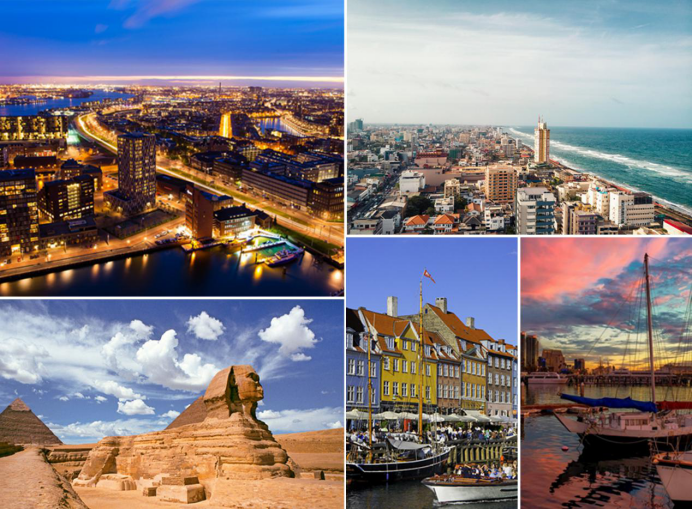
Colombo, the capital of Sri Lanka. A typical coastal city in Southeast Asia, as the gateway to Sri Lanka, known as the “Oriental Crossroads”, it is Sri Lanka’s largest city and commercial center. The local beautiful coastal scenery, noisy night market casinos, cheerful and wild percussion, religious Faithful religious believers, towering skyscrapers, magnificent temple halls… the romantic and colorful leisure atmosphere has formed the unique urban charm of Colombo.
Cairo, the capital and largest city of Egypt, is also the largest city in Africa and the Arab world. Cairo, a famous city with a history of 5,000 years, is the largest city in North Africa and the Middle East, one of the oldest Islamic cities in the world, and one of the few ancient cities in the world that has suffered the least damage from war. It has experienced many generations of dynasties and governments. Construction and expansion have formed this big city where ancient and modern coexist and reflect each other.
Amsterdam, the capital and largest city of the Netherlands, is known as Venice of the North. Bridge interlaced, canals crisscrossed, charming windmills, intoxicating tulips, legendary artists, mellow cheese, unique architecture is the city’s business card.
Santiago, the capital and largest city of Chile, is located in the central valley of central Chile. It is dry and mild in summer, cool and rainy in winter, and the sparkling Marbojo River flows slowly through the city. The snowy Andes are like a glittering silver crown, with natural mountains and rivers adding a moving charm to Santiago. As a natural tourist city in Chile, Santiago has abundant tourist resources, many museums, galleries and parks, and Saint Lucia Mountain is the best place to watch the whole city.
Copenhagen, the capital, largest city and port of the Kingdom of Denmark, is also the largest city in northern Europe, and is also the political, economic, cultural and transportation center of Denmark, the world famous international metropolis. The appearance of Copenhagen is beautiful and tidy, and the new industrial enterprises in the city interact with the ancient buildings of the Middle Ages, which makes it not only a modern city, but also has the characteristics of antique, and is a famous historical and cultural city in the world.
With the development of the world economy, tourism has become an important industry driving economic development, and huge economic benefits have promoted the development of tourism. Tourism is an important strategic, pillar and comprehensive industry with sustained high-speed and stable growth in the world economy. Nowadays, with the in-depth development of economic globalization and world economic integration, the world tourism industry has entered a golden age of rapid development.
The heads of CTC and the five side chains all stated that the emergence of the revolutionary technology of block-chain has opened up new ideas for the innovative development of the cultural and tourism industry. Drive “application innovation” and “industrial innovation” with “technological innovation” to realize the real iterative upgrade of the cultural tourism industry, continuously improve the competitiveness and influence of the cultural tourism industry, and promote the high-quality development of the cultural tourism industry.
About Author

Disclaimer: The views, suggestions, and opinions expressed here are the sole responsibility of the experts. No Digi Observer journalist was involved in the writing and production of this article.

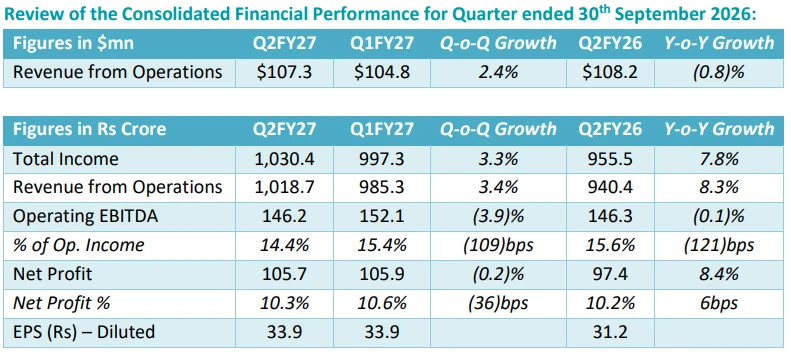
– Q2FY27 revenue at Rs 1,018.7 crore, up by 3.4% Q-o-Q- Signed 53 new AI deals in Q2’27 contributing to ~45% of overall order book.- Signed partnership with Innovaccer, a market-leading platform on Data & AI in healthcare & life sciences, to drive AI transformation growth.- North America continues to see high growth in Order Book.
Mumbai, India 23rd October 2026 – Mastek, a trusted AI Engineering and Transformation company, announced today its financial results for the Second Quarter of FY27 ended on 30th September 2026.
Commenting on the Q2FY27 results, Umang Nahata, Chief Executive Officer, Mastek, said:
“We are leading Mastek into an AI transformational company in select verticals. Our AI-led solutions are gaining high traction with our customers. At the same time, we are also driving several use cases within Mastek to evolve Mastek into an AI Native organization.
UK & Europe business continues to deliver strongly with 4.1% sequential revenue growth in rupee terms backed by good momentum in financial services and public sector. NA business also grew sequentially and delivered a strong order book with positive momentum to grow in future quarters. Middle East continues to be impacted by geopolitical uncertainties.
Overall, our long-term outlook remains positive, powered by growth in Data & AI business.”
Commenting on the Q2FY27 results, Deepak Kedia, Chief Financial Officer, Mastek, said:
“We delivered a strong quarter despite continuing macro challenges with 2.4% constant currency revenue growth.
Our EBIDTA performance was 14.4%, impacted by annual increment. We continue to drive AI-led productivity and remain focused on operational efficiency and disciplined cost management.
We see consistent improvement in our cash position which provides a strong war chest for strategic investments.”
Operating Highlights
- 12 months Order Backlog: 12 months order backlog is at Rs 2,742.8 crore ($286.2mn) as on 30th September 2026 reflecting 10.4% growth in rupee terms on Y-o-Y basis and 2.3% growth in dollar terms on Y-o-Y basis.
- Employees: As on 30th September 2026, the company had a total of 4,810 employees, net reduction of 87 employees during the quarter. Out of 4,810 employees, 3,171 employees were based in India. Last twelve months attrition at 15.2% in Q2FY27 in comparison with 16.4% in Q1FY27.
- Cash Balance: The total cash, cash equivalents and investments is at Rs 930.6 crore as on 30th September 2026 as compared to Rs 945.4 crore as on 30th June 2026. Net cash, cash equivalents and investments of Rs 37 crore added during the quarter despite dividend payout of ~Rs 50 crore and loan repayment of ~Rs 55 crore.
Key wins for the quarter
- Mastek secured a Service-as-Software engagement with a US multi-practice senior care and skilled nursing provider to build and operate a bespoke, AI-powered core clinical platform tailored to the client’s care workflows. The engagement includes a 16-month build phase followed by 36 months of operations. The solution will also create a scalable, industry-ready intelligent asset.
- Mastek secured a five-year strategic partnership with a NYSE-listed global dental technology leader — as multi-pillar delivery partner across Oracle, Salesforce, Data, Digital Engineering, and AI. A scalable POD-based model lets the client activate and expand capability on demand — the speed of a product team with the governance of an enterprise partner.
- Mastek secured a strategic role as Cyber Security Service Delivery Partner, strengthening international cyber resilience for one of the UK’s most security-critical departments. The engagement spans advisory and technical expertise — from risk, governance, and resilience engineering to data protection and emerging AI standards – deepening Mastek’s trusted role in UK national security.
- Mastek secured a business-critical Process transformation engagement with a UK Territorial Police Department, covering finance, procurement, human resources and payroll, leveraged by ADOPT AI. The engagement replaces fragmented legacy corporate systems with standardised processes and trusted data to strengthen financial control, operational visibility and reporting across the force.
- Mastek secured a 3-year, outcome-based managed services partnership with a global classification society for marine, offshore, and industrial assets, for its entire Oracle Cloud estate. Powered by Mastek Agentic AI Managed Services, with AI agents embedded into daily operations, it shifts the client from effort-based support to committed outcomes.
- Mastek secured a strategic engagement to lead one of MENA’s largest private hospital group’s enterprise transformations — connecting Finance, Supply Chain, Workforce, and Planning with its clinical systems on one intelligent platform. Delivered through ADOPT AI on Oracle Fusion Cloud, it standardizes operations, sharpens financial visibility, and strengthens governance across a multi-country network.
Key Achievements & Recognitions
- Everest: Recognized as Major Contender in the Everest Group PEAK Matrix Retail Digital Services PEAK Matrix Assessment.
- IDC: Recognized as a Major Player in the Oracle Implementation Services 2026 Vendor Assessment globally.
- ISG:
- Recognized as a Leader in ISG Provider Lens – Public Sector Services and Solutions U.K.
- Recognized as a Contender in both ISG Provider Lens studies: Generative AI and Agentic AI Service globally.
- Recognized as Product Challenger in ‘AI-Driven ADM Services’.
About Mastek
Mastek (NSE: MASTEK; BSE: 523704) is a global provider of enterprise AI, digital, and cloud services, enabling clients to achieve measurable and sustainable returns on their technology investments. The company has a presence in over 40 countries and a skilled workforce of close to 5,000 employees. Through its “Lead with AI” approach, Mastek integrates intelligence across its solutions and operations, enabling organizations to accelerate transformation using ethical, scalable, and domain-driven AI adoption. Mastek partners with industry leaders such as Oracle, Salesforce, Microsoft, AWS, Snowflake, and Databricks, serving key sectors such as Public Sector, Healthcare, Retail, Manufacturing, Higher Education, and Financial Services. Mastek is committed to driving innovation by developing a strong ecosystem of start-ups, academia, and IPs. With its core values of trust, value, and velocity, the company empowers over 250 active customers to transform their business in the evolving tech landscape. Mastek has always been a solutions focused and relationship-centric company, valuing both employees and clients. With its humane approach, Mastek fosters growth through sustainable goals, high ethical standards, and responsible governance.
For past results & conference call transcripts, please visit our web site at www.mastek.com/investors/. Updated disclosures regarding corporate governance may also be accessed at www.mastek.com/investors-corporate-governance/.
Investor / Analyst contact
Asha Gupta
Investor Relations Practice, E&Y LLP
Asha.Gupta@in.ey.com
Niraj Khemka
Head of IR & FP&A
investor.relations@mastek.com
Shareholders may also contact Mastek via email at Investor_grievances@mastek.com, which has been specifically created for the redressal of investor grievances. You may also contact the Investor Relations team by email at investor.relations@mastek.com.
Media Contact
Organization: Mastek
Contact Person: David Marcelline
Website: https://mastek.com/us/industries/retail
Email: Send Email
Country: United States
Release id: 50238
View source version on King Newswire:
Mastek Announces Q2FY27 Revenue at Rs 1,018.7 Crore, Up by 3.4% Q-o-Q
About Author

Disclaimer: The views, suggestions, and opinions expressed here are the sole responsibility of the experts. No Digi Observer journalist was involved in the writing and production of this article.
Press Release
YSC Paving Urges Phoenix-Area Property Owners to Check the Base Before Approving an Asphalt Overlay

Phoenix, Arizona, United States, 28th Oct 2026 – YSC Paving, a family-owned and operated commercial asphalt paving contractor based in Phoenix, is encouraging property managers, HOA boards, and facility staff to find out what is happening beneath a worn parking lot before choosing between an asphalt overlay and full removal and replacement.
With monsoon season over and budgets being set for next year, many commercial properties are weighing major pavement work. The condition of the base under the pavement usually decides which option fits.
What an Overlay Does
An asphalt overlay is a new layer of asphalt placed over existing pavement after the surface is cleaned and a tack coat is applied. When the pavement underneath is sound and the lot drains properly, an overlay can restore a worn surface without removing the entire lot.
When Removal and Replacement Fits Better
An overlay does not repair a failing base. Widespread alligator cracking, rutting, or pavement that moves under heavy vehicles can point to a problem below the surface, while standing water can indicate a drainage issue that should be evaluated before an overlay is selected. Depending on the site, the appropriate remedy may involve grading, drainage repairs, or another approach. Existing elevations can also limit what grading can accomplish.
In areas with significant base or drainage problems, full-depth removal and replacement may be the longer-lasting parking lot repair. Many lots end up with a combination of both.
YSC Paving recommends an on-site assessment that separates surface wear from base and drainage issues before an overlay is approved. The company serves commercial and institutional properties across Phoenix, Scottsdale, Tempe, Mesa, Gilbert, and Chandler.
About YSC Paving
YSC Paving, founded as Young, Swenson & Cross Paving, is a family-owned and operated commercial asphalt paving contractor based in Phoenix, Arizona, with 25 years paving commercial properties across the Phoenix metro. Services include asphalt paving, asphalt maintenance, grading and excavation, and parking lot paving, maintenance, and repair. More information is available at yscpaving.com.
Media Contact
Organization: YSC Paving
Contact Person: Scott Swenson
Website: https://yscpaving.com/
Email: Send Email
Contact Number: +16022547474
Address: 1329 E Gibson Ln
City: Phoenix
State: Arizona
Country: United States
Release id: 50244
View source version on King Newswire:
YSC Paving Urges Phoenix-Area Property Owners to Check the Base Before Approving an Asphalt Overlay
About Author
Disclaimer: The views, suggestions, and opinions expressed here are the sole responsibility of the experts. No Digi Observer journalist was involved in the writing and production of this article.
Deluxe Paint Protection in Chantilly, Virginia is encouraging drivers to protect vehicle paint before the winter road season. Paint protection film helps reduce damage from gravel and road debris common in colder months.
United States, 28th Oct 2026 – DeluxePaintProtection.com, an automotive paint protection studio in Chantilly, is encouraging Northern Virginia drivers to protect their vehicle paint ahead of the winter road season. The company recommends paint protection film on high-impact areas, with ceramic coating and window tint available during the same visit. The company currently holds a 5.0 rating across more than 270 Google reviews.
Protection Before the First Winter
Colder months bring loose gravel and treated road surfaces to highways across the region. Daily commuting exposes the front of a vehicle to stones thrown up by other traffic. Rock chips usually appear first on the front bumper, hood, fenders and mirrors. Once the clearcoat is broken, the damage is difficult to reverse without repainting.
How the Service Works
Most work at the Chantilly facility involves vehicles that have recently left the dealership. Owners typically choose full front paint protection film, a ceramic coating package or both.
Paint protection film is a clear urethane layer that absorbs rock chips, road debris and light scratches. Heat from the sun helps the film self-heal minor swirl marks.
Ceramic coating bonds to the clearcoat to add gloss, UV resistance and easier washing. It is not designed to stop rock chips. Many owners therefore pair film on the front end with coating on the rest of the vehicle.
Paint correction can be carried out first to remove wash swirls, so the coating does not seal haze into the finish. Ceramic window tint can be added during the same visit. Shades are selected to comply with Virginia window tint law.
About Deluxe Paint Protection
Deluxe Paint Protection is an automotive paint protection provider based on Pleasant Valley Road in Chantilly, Virginia. The company installs paint protection film, ceramic coating and ceramic window tint and performs paint correction. Its customers come from Ashburn, Leesburg, Sterling, South Riding, Fairfax and the wider Loudoun County area.
Deluxe Paint Protection
25284 Pleasant Valley Rd, Ste 134
Chantilly, VA 20152
United States
+1 571-517-9451
Media Contact
Organization: DeluxePaintProtection.com
Contact Person: George Stone
Website: https://deluxepaintprotection.com/
Email: Send Email
Country: United States
Release id: 50228
View source version on King Newswire:
Deluxe Paint Protection Outlines New Vehicle Protection Ahead of Winter Road Season
About Author
Disclaimer: The views, suggestions, and opinions expressed here are the sole responsibility of the experts. No Digi Observer journalist was involved in the writing and production of this article.
Mastek Announces Q2FY27 Revenue at Rs 1,018.7 Crore, Up by 3.4% Q-o-Q
Deluxe Paint Protection Outlines New Vehicle Protection Ahead of Winter Road Season
YSC Paving Urges Phoenix-Area Property Owners to Check the Base Before Approving an Asphalt Overlay
Benzinga Money Article Discusses How to Become Part of the 12% of Retirees Who Have Achieved the Recommended $550,000 Minimum Retirement Savings Threshold
Apu Apustaja Conquers New York with Lively Street Ads, Including Times Square Billboard
Bay Smokes Maintains Quality Amid Legislative Changes in the Hemp Industry


-
Press Release1 week ago
Injective Collaborates with BDACS to Bring Korea’s First Won-Backed Stablecoin to Onchain RWAs
-
Press Release4 days ago
Thomas Berkley of Nexus Acquisition AI Focuses on Turning Business Inquiries Into Structured Growth Opportunities
-
Press Release1 week ago
Mastek Selected by Staffordshire County Council to Drive AI Enabled – Oracle Cloud Transformation
-
Press Release4 days ago
Widgets & Web Launches AI-Operated Investor Relations Websites for Public Companies at a Fixed $299 per Month
-
Press Release4 days ago
Dynamic NameCard Opens Global Franchise Recruitment for Telegram Mini App-Based Digital Identity Services
-
Press Release1 week ago
New Book Where’s the GAP by David P. Matthews, Now Available on Amazon, Asks a Life Changing Question
-
Press Release1 week ago
PetShopValue.com Highlights Pet Comfort and Travel Essentials Ahead of the Holiday Season
-
Press Release4 days ago
Thomas Berkley and Nexus Acquisition Group Outline AI Agency Partnership Approach in Cleveland