
Press Release
CNT – saving the earth with blockchain Technology

2021 is the first year of carbon neutralization. Global warming is an indisputable fact. Recently, more and more frequent smog and extreme climate have hurt us deeply. If we do not actively deal with it, our future generations are likely to die from the harm brought by climate warming. In order to mitigate the impact of global warming and climate change, we must significantly reduce the emission of carbon dioxide.
The progress and evolution process of human civilization, from “ignition” to “boiling water”, is essentially the utilization process of energy level. A new round of energy revolution is a turning point that can determine the rise and fall of various civilizations.
What is carbon neutralization? The so-called “carbon neutralization”, that is, net zero emission, refers to the carbon emission necessary for human economic and social activities, which is captured, utilized or stored through forest carbon sink and other artificial technologies or engineering means, so that the net increase of greenhouse gases emitted into the atmosphere is zero. The quantitative change of carbon peak cannot be qualitatively changed to carbon neutralization. Carbon peak is the stage of emission threshold. To achieve carbon neutralization, we need to upgrade science and technology and play the role of carbon trading market.
CNT foundation is establishing carbon trading agreement, a public blockchain system focusing on carbon neutrality and carbon emissions trading. CNT Foundation believes that blockchain technology can better solve the basic contradictions in the carbon emission market. Similarly, carbon emission trading and carbon offset can alleviate the negative problems brought to the external environment by the blockchain POW consensus mechanism.
CNT aims to create a more open and transparent carbon removal market, which will contribute to the global promotion of “waiting for action”, and is more in line with the “going down and going up” spirit of “waiting for governance” in the Paris Agreement.The carbon market data is stored synchronously by multiple nodes. The carbon trading process is decentralized, which can participate in the trading of the new carbon sink market more quickly. The carbon sink assets, carbon trading and carbon neutralization data circulation on the chain can be verified at any time to improve the credibility. The most critical data and information transparency and double calculation problems in the carbon market will also be solved. In the transnational and cross regional carbon market, improving the authenticity of transaction content can attract more enterprises and organizations to participate and expand the scope of participation in global carbon neutralization.
Blockchain technology, known as “trust machine”, as a distributed shared ledger and database, has the characteristics of decentralization, non-tampering, whole process trace, traceability, collective maintenance, openness and transparency. These features ensure the “honesty” and “transparency” of the blockchain. Blockchain can solve the problem of information asymmetry and realize cooperation, trust and concerted action among multiple subjects. As an information technology means that can realize point-to-point transactions, blockchain technically ensures that each consumption behavior is well documented, true and credible; At the same time, the smart contract records and witnesses the transaction behavior at multiple nodes, providing a clear and orderly market environment for the transaction of consumption vouchers.

What does blockchain technology bring to the carbon trading market?
- Blockchain creates a safer, more efficient and more economical market environment for carbon trading. Efficient and economic carbon trading activities will strongly stimulate the enthusiasm of carbon emission enterprises to participate in market trading, thus encouraging enterprises to carry out technological innovation and upgrading of industrial structure, and promoting enterprises to save energy and reduce emissions from the source. Ensure the authenticity, safety and efficiency of carbon trading activities from every link, and build a safe and efficient environment for carbon trading market.
- Blockchain creates a more visible, credible and reliable regulatory environment for carbon trading. Using block chain technology to create carbon trading main body, transaction institutions, government and other various carbon asset trading model to build, flexible interaction, from carbon permits access, transaction, circulation, to trade, on the whole process of data chain trusted Shared storage and application, makes carbon emissions quotas under the condition of the “visible” to do business, To build a visible trading supervision mirror for all links and the whole process, and promote the transparency and orderliness of the global carbon emission trading market.
CNT is a core member of the Climate Chain Coalition (CCC), responsible for promoting the Asian market and working together for the Paris Agreement on global Climate action against warming. The Climate Blockchain Alliance, supported by the United Nations Framework Convention on Climate Change (UNFCCC), is an open global organization that uses blockchain technology and related data solutions (e.g.Internet of Things, big data) to help finance climate action, And strengthen the implementation of the Carbon emission measurement, accounting, reporting and verification system (MRV) to mitigate global warming.

Carbon Trading Agreement is not only a carbon neutral trading application platform. In the design of its contract layer, any third party can establish its own application on CNT. Carbon Trading Agreement plans to migrate on the chain and become part of a decentralized ecosystem. In the future, through international cooperation with the sustainability sector and blockchain industry, Carbon Trading Agreement wants more people to co-develop decentralized apps dedicated to sustainability. Even if the Carbon Trading Agreement is successful, the world will still need more technological innovation and more people to participate in carbon neutrality in mitigating and adapting to the challenges posed by global climate change.
About Author

Disclaimer: The views, suggestions, and opinions expressed here are the sole responsibility of the experts. No Digi Observer journalist was involved in the writing and production of this article.

Press Release
Range Products Explores the Benefits of Sandalwood Essential Oil in Natural Wellness Practices

Australia, 1st May 2026 – Range Products, a Perth-based supplier of essential oils and raw ingredients, has released new information outlining the potential applications of sandalwood essential oil in natural wellness practices. The announcement reflects sustained interest in plant-based ingredients and their role in personal care and lifestyle routines.
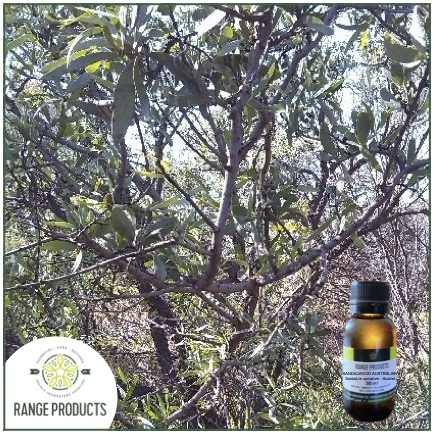
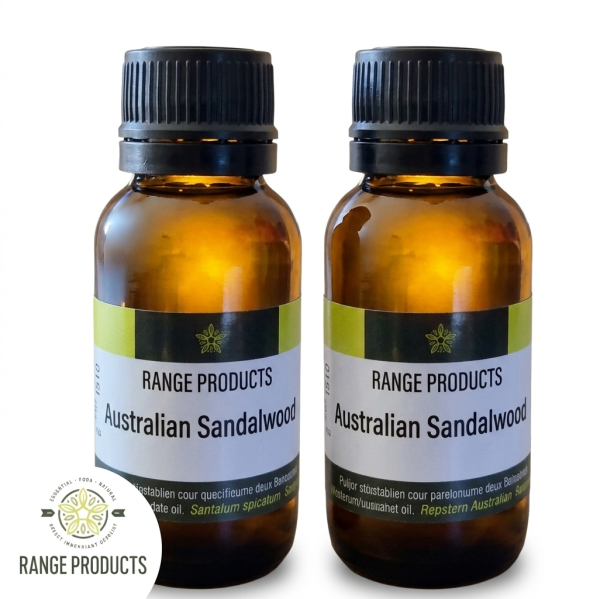
The update provides an overview of sandalwood essential oil, derived from the heartwood of sandalwood trees, and its longstanding use in traditional practices across multiple regions. Known for its distinctive aroma, the oil has historically been incorporated into skincare formulations, aromatherapy blends, and relaxation routines.
According to Range Products, sandalwood essential oil is frequently associated with calming properties and is commonly used in products designed to support relaxation and mindfulness. In addition, the oil is often included in skincare preparations due to its perceived compatibility with a range of skin types. Increased awareness of ingredient sourcing and formulation transparency has contributed to renewed attention on oils such as sandalwood.
Range Products reported that internal research and supplier data indicate growing demand for traditional essential oils, particularly those with established historical use. The company maintains a catalogue of more than 500 items, including essential oils, carrier oils, and base ingredients, all subject to independent quality testing.
Penny Coupland, Business Owner of Range Products, commented on the announcement: “Sandalwood essential oil continues to attract attention due to its longstanding presence in traditional wellness practices. The intention is to provide clear, factual information about its properties and uses so that individuals and businesses can make informed decisions when incorporating it into formulations or routines.”
The company’s overview also addresses sourcing considerations, noting that sustainability and ethical harvesting practices remain key concerns within the essential oil industry. Sandalwood, in particular, has faced supply challenges in the past, leading to increased emphasis on responsible cultivation and traceability. Suppliers are selected based on adherence to quality and sustainability standards.
In addition to product availability, Range Products provides educational materials intended to support safe and informed use of essential oils. These resources include formulation guides and more than 60 publicly accessible recipes covering applications such as cleaning solutions, skincare items, and candle-making. These materials are designed to support both small-scale creators and established manufacturers.
The announcement also highlighted logistical capabilities, including wholesale pricing options and dispatch timelines. Most warehouse stock is dispatched within two days, and a Click & Collect service is available at the Welshpool location. While operational details were included, the primary focus of the update remains on the broader context of sandalwood essential oil within natural wellness trends.
Industry observers have noted that consumer preferences are shifting towards ingredient transparency and simplified formulations. Essential oils, including sandalwood essential oil, are often positioned within this movement due to their single-ingredient nature and historical usage. However, proper dilution and adherence to safety guidelines remain essential when using concentrated oils.
Coupland also addressed the company’s perspective on future developments: “Ongoing interest in natural ingredients is expected to support further exploration of essential oils and their applications. Continued investment in quality assurance and educational resources will remain a priority as the industry evolves and new information becomes available.”
Range Products operates from its facility at 6/138 Radium Street, Welshpool, Western Australia, serving both local and national customers. The company’s distribution model includes online ordering and in-store access, with a focus on maintaining consistent supply and product integrity.
For further information about sandalwood essential oil, Range Products can be contacted at +61 8 9358 4448 or via email at admin@rangeproducts.com.au.
Media Contact
Organization: Range Products
Contact Person: Penny Coupland
Website: https://www.rangeproducts.com.au/
Email: Send Email
Contact Number: +61893584448
Address:6/138 Radium St Welshpool WA, 6106 Australia
Country:Australia
Release id:44588
The post Range Products Explores the Benefits of Sandalwood Essential Oil in Natural Wellness Practices appeared first on King Newswire. This content is provided by a third-party source.. King Newswire makes no warranties or representations in connection with it. King Newswire is a press release distribution agency and does not endorse or verify the claims made in this release. If you have any complaints or copyright concerns related to this article, please contact the company listed in the ‘Media Contact’ section
About Author

Disclaimer: The views, suggestions, and opinions expressed here are the sole responsibility of the experts. No Digi Observer journalist was involved in the writing and production of this article.
Press Release
Argenta Silver Assay Results Support District Scale Potential of the El Quevar Project
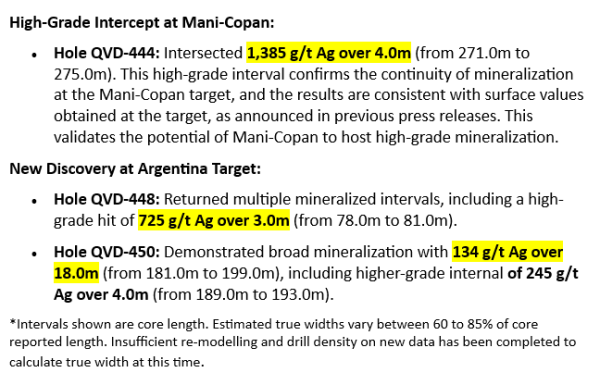
On April 28, 2026, Argenta Silver released a 4th set of assay results from its ongoing 2025–2026 diamond drilling campaign at the El Quevar Project in Salta Province, Argentina. The latest results highlight significant high-grade silver mineralization at the Mani-Copan and Argentina exploration targets, located 800 meters and 1,500 meters, respectively, from the eastern edge of the current Mineral Resource
Canada, 1st May 2026 – Global Stocks News – Sponsored content disseminated on behalf of Argenta Silver. On April 28, 2026, Argenta Silver (TSXV: AGAG) (OTCQB: AGAGF) (FSE: T1K) released a 4th set of assay results from its ongoing 2025–2026 diamond drilling campaign at the El Quevar Project in Salta Province, Argentina.
The latest results highlight significant high-grade silver mineralization at the Mani-Copan and Argentina exploration targets, located 800 meters and 1,500 meters, respectively, from the eastern edge of the current Mineral Resource
Notably, drill hole QVD-444 at Mani-Copan intercepted 1,385 g/t Ag over 4.0 meters, successfully validating high-grade results previously identified from surface samples (see press release dated February 23, 2026).
Furthermore, Argenta discovered a new, previously untested mineralized zone at the Argentina target, where all drill holes have encountered high-grade silver.
When Argenta purchased the El Quevar project in October 2024, investors were focused on the Yaxtché deposit, which has an indicated mineral resource of 45.3 million ounces of silver from 2.93 million tonnes grading 482 g/t Ag. (1)
Argenta’s land package is 57,000 hectares, 160 X bigger than NYC’s Central Park. Less than 3% of the property has been explored.
Joaquin Marias, President, CEO and Director of Argenta, embarked on a mission to “significantly expand the known mineralized footprint and underscore the vast, district-scale potential of the El Quevar Project.”
“The high-grade intercept at Mani-Copan confirms meaningful silver mineralization beyond the current resource envelope, while consistent high-grade results at the Argentina target further expand the footprint of the system,” stated Marias in the April 28 2026 press release.
“Importantly, Mani-Copan and the Yaxtché deposit share a comparable geochemical signature; however, Mani-Copan is distinguished by exceptionally high-grade surface samples, a characteristic not observed at the Yaxtché Deposit,” added Marias.
“With two rigs active, more than 14,500 metres completed, and additional assays pending, we are systematically advancing El Quevar to define the full scale of this silver system.”
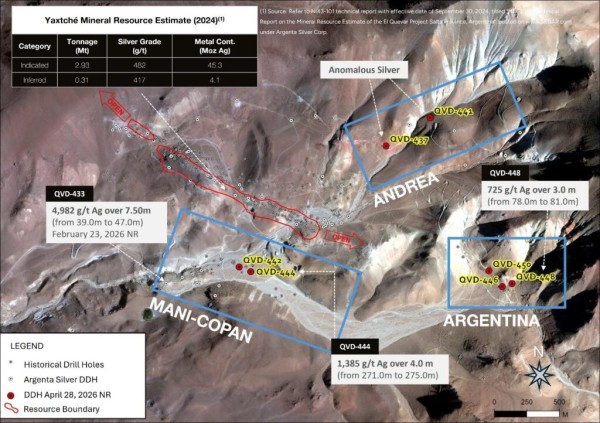
Figure 1. Map displaying the exploratory drill holes at Mani-Copan, Argentina, and Andrea targets, located 800, 1,500 and 1,100 meters from the eastern border of the Yaxtché deposit. Note the wide distance between the targets and their proximity to the Yaxtché deposit, emphasizing the vast district-scale potential of El Quevar.
In the April 30, 2026, video below, Vanessa Bogaert, VP of Investor Relations & Communications of Argenta Silver Corp breaks down the significance of the news.
”Mani-Copan shares a similar geochemical signature with the Yaxtché deposit, which hosts our current resource,” stated Bogaert in the YouTube video. “But what differentiates it is a strong high-grade surface expression, something we don’t see at Yaxtché. That’s a key vector, and it suggests Mani-Copan could represent a distinct and highly prospective part of the system”.
”At the same time, we’ve made a new discovery at the Argentina target where we’re seeing grades like 725 grams per tonne over 3 metres, along with broader mineralized intervals.”
“When you step back, the takeaway is this: El Quevar is evolving from an open-ended resource into a much larger, district-scale silver system, with multiple high-grade zones emerging beyond what was previously known,” concluded Bogart.
The Province of Salta in Argentina has implemented a Provincial Plan for Sustainable Mining Development 2030, which includes infrastructure, education, and state modernization initiatives.
“The Government of Salta intends to ensure the development of the mining industry,” states the 2030 Plan, “promoting more investments that foster exploration and production of minerals such as gold, copper, lithium, silver, among others, always under competitive standards of environmental care and support to the communities.”
In a recent wide-ranging interview with Connect 4 Capital, Argenta CEO Joaquin Marias spoke about the advantages of operating in Salta and the importance of connecting with local communities.
“Salta has been the heart of the lithium triangle for many years,” confirmed Marias in the YouTube video. “Salta has a rich geology with a lot of potential for different styles of mineralization. It’s a productive province. They produce grains, cattle and a lot of other things, including oil and gas.”
“I am a geologist, I was born in Argentina, I have a big network of contacts in the country,” continued Marias. “The government and the local communities understand the productive cycle of the industries.”
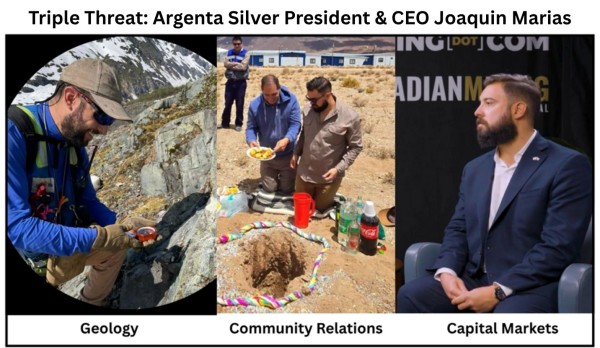
“After two days at the El Quevar office, I drove into the mountains and met with of the Chief of the indigenous community,” Marias told Guy Bennett, the CEO of Global Stocks News (GSN). “Being familiar with the local culture and language made the first meeting comfortable and productive”.
“I introduced myself to the Chief, told her what we were planning to do and asked first for her blessing, and secondly for her permission to conduct work programs at El Quevar.”
“Before leaving, we embraced, and I noticed tears in her eyes. She said, ‘I did not expect a mining executive to come to me directly. We have never been asked for permission. This is powerful to me.’”
“A big portion of our philosophy, of the culture that I have brought to the company, is that we need to have the communities involved,” Marias told Connect 4 Capital. “Fifty percent of our workforce comes from local communities.”
“It’s been surprising to us, but some of the leaders from the community have never been to the site before. They are visiting for the first time, because we brought them. Those little actions are the ones that add value and build trust.”
Mining executives tend to fit into one of three categories: geologists, communicators or capital markets experts. It is relatively rare to find a CEO with training, expertise and a track record in all three disciplines.
Argenta is pursuing a dual-track growth strategy: 40% of the current drill program targets Resource Expansion to strengthen the existing resource base, while the remaining 60% is focused on unlocking new discoveries beyond the existing footprint.
To date, AGAG has completed over 14,500 meters across 61 holes, representing more than half of the total 25,000-meter program. Laboratory analysis is well underway; over 300 work orders have been submitted, with 40% of these results currently pending.
Rob van Egmond, P.Geo., a “qualified person” as defined by National Instrument 43-101 Standards of Disclosure for Mineral Projects, has reviewed and approved the scientific and technical information contained in this release. Rob van Egmond, P.Geo. has visited the El Quevar Project and is not independent of the Company.
(1) Refer to NI43-101 technical report with effective date of September 30, 2024, titled “NI 43-101 Technical Report on the Mineral Resource Estimate of the El Quevar Project Salta Province, Argentina”, posted on www.SEDAR.com under Argenta Silver Corp.
Contact: guy.bennett@globalstocksnews.com
Disclaimer: Argenta Silver paid Global Stocks News (GSN) $1,750 for the research, writing and dissemination of this content.
Full Disclaimer: GSN researches and fact-checks diligently, but we cannot ensure our publications are free from error. Investing in publicly traded stocks is speculative and carries a high degree of risk. GSN publications may contain forward-looking statements such as “project,” “anticipate,” “expect,” which are based on reasonable expectations, but these statements are imperfect predictors of future events.
Media Contact
Organization: Global Stocks News
Contact Person: guy.bennett@globalstocksnews.com
Website: https://www.globalstocksnews.com
Email: Send Email
Country:Canada
Release id:44590
The post Argenta Silver Assay Results Support District Scale Potential of the El Quevar Project appeared first on King Newswire. This content is provided by a third-party source.. King Newswire makes no warranties or representations in connection with it. King Newswire is a press release distribution agency and does not endorse or verify the claims made in this release. If you have any complaints or copyright concerns related to this article, please contact the company listed in the ‘Media Contact’ section
About Author
Disclaimer: The views, suggestions, and opinions expressed here are the sole responsibility of the experts. No Digi Observer journalist was involved in the writing and production of this article.
ANB Coin is an emerging digital asset focused on security, fixed-supply tokenomics and global growth. With planned audits, strategic expansion goals and a community-driven ecosystem, the project aims to establish itself in the evolving crypto market.
Georgia, 1st May 2026 – As the digital asset industry continues to evolve, new blockchain projects are emerging with a stronger focus on transparency, sustainability and adoption. ANB Coin (ANB) is positioning itself as a cryptocurrency designed to support a secure, scalable and community-driven ecosystem.
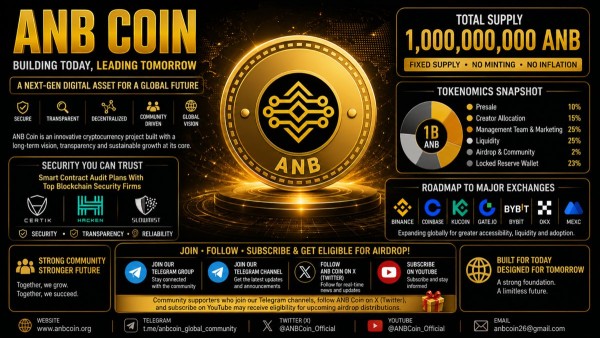
Built with a long-term vision, the project combines structured tokenomics, fixed supply and ecosystem expansion into a model designed for sustainable growth.
A Fixed Supply Model Designed for Long-Term Value
ANB Coin operates on a fixed supply of 1,000,000,000 tokens, with no future minting planned. This approach is intended to support scarcity and long-term value stability.
Token Allocation
Presale — 10%
Creator Allocation — 15%
Management Team & Marketing — 25%
Liquidity — 25%
Airdrop & Community — 1%
Locked Reserve Wallet — 24%
This distribution is designed to support ecosystem growth, liquidity and long-term sustainability.
Security and Audit Plans
ANB Coin has outlined plans to pursue smart contract audits with established blockchain security providers. These audits are intended to enhance transparency and strengthen ecosystem reliability.
Expansion Strategy
As part of its roadmap, ANB Coin is preparing for expansion through targeted exchange listings aimed at improving accessibility and liquidity. These steps are expected to support broader adoption over time.
Community-Driven Growth Vision
ANB Coin is being developed with a strong focus on community participation, transparent tokenomics and sustainable ecosystem development.
Community supporters who join ANB Coin’s Telegram channels, follow on X (Twitter), and subscribe on YouTube may receive eligibility for future airdrop distributions, encouraging engagement within the ecosystem.
Positioning for the Future
With a fixed supply model, structured distribution and a focus on security and expansion, ANB Coin continues to develop within the evolving digital asset landscape.
Project Name: ANB Coin
Website: https://anbcoin.org
Telegram: https://t.me/anbcoin_global_community
Media Contact
Organization: anbcoin.org
Contact Person: Michael_Anderson_0021
Website: https://anbcoin.org/
Email: Send Email
Country:Georgia
Release id:44529
Disclaimer: This press release is for informational purposes only and does not constitute financial, investment, or legal advice. Digital assets involve risk, and readers should conduct their own independent research and consult qualified professionals before making any financial decisions.
The post ANB Coin Introduces a Digital Asset Focused on Tokenomics and Global Growth appeared first on King Newswire. This content is provided by a third-party source.. King Newswire makes no warranties or representations in connection with it. King Newswire is a press release distribution agency and does not endorse or verify the claims made in this release. If you have any complaints or copyright concerns related to this article, please contact the company listed in the ‘Media Contact’ section
About Author
Disclaimer: The views, suggestions, and opinions expressed here are the sole responsibility of the experts. No Digi Observer journalist was involved in the writing and production of this article.
Range Products Explores the Benefits of Sandalwood Essential Oil in Natural Wellness Practices
Argenta Silver Assay Results Support District Scale Potential of the El Quevar Project
ANB Coin Introduces a Digital Asset Focused on Tokenomics and Global Growth
Benzinga Money Article Discusses How to Become Part of the 12% of Retirees Who Have Achieved the Recommended $550,000 Minimum Retirement Savings Threshold
Apu Apustaja Conquers New York with Lively Street Ads, Including Times Square Billboard
Bay Smokes Maintains Quality Amid Legislative Changes in the Hemp Industry


-
Press Release4 hours ago
Representatives from More Than 40 Countries Discuss New Models of Global Growth in Moscow
-
Press Release6 days ago
Indian Entrepreneur G. Satya Sai Gains National Attention as Founder Driving AI, Cybersecurity and Startup Innovation in 2026
-
Press Release6 days ago
Floors To Your Home Encourages Buyers to Ask One Key Question Before Purchasing Flooring Online
-
Press Release6 days ago
Dr B Palvan Recognized for Public Health Leadership and Excellence in Dermatology
-
Press Release5 days ago
AntNest $1,000,000 Genesis Airdrop is LIVE! Play games to Win Big!
-
Press Release6 days ago
Is This Secret AI Engine Draining Polymarket: On-Chain Data Reveals a New Whale in Prediction Markets
-
Press Release1 week ago
Long Lake Camp for the Arts Celebrates Decades of Fostering Creative Excellence in New York
-
Press Release1 week ago
Omar Adventures Highlights Atlas Mountain Treks and Sahara Desert Tours for Small-Group Travel in Morocco