
Press Release
Brazil Digital Nomad Visa Weekly Inquiries Double Ahead of Carnaval 2027

Inquiries for Brazil’s digital nomad visa have doubled since January 2026 as Carnaval 2027 approaches and the Florianópolis nomad scene logs a 96 percent jump in check-ins. With the festival eight months out and consulate processing running 30 to 90 days, applicants now have a narrow window to qualify. Rio de Janeiro immigration lawyer Camila Araujo Mota, who leads the only Brazilian law practice focused exclusively on digital nomad visa applications, says her team is reviewing more files in the first half of 2026 than in all of 2024.
Fortaleza, Ceara, Brazil, 29th May 2026 – Brazil’s digital nomad visa is suddenly the hottest residency permit in Latin America. Weekly inquiries to specialist law practices have doubled since January, the Brazilian National Immigration Council has registered more than 3,800 nomads to date, and Florianópolis, the island city that just ranked seventh among the world’s fastest growing remote work hubs, logged a 96 percent jump in digital nomad check-ins during the first five months of 2026 alone. The next catalyst is already on the calendar: Carnaval 2027, scheduled for February 5 through 13, is forecast to surpass this year’s record 65 million revelers and 300,000 international tourists.

For nomads hoping to attend Carnaval 2027 as residents rather than visitors, the application clock has already started. Most do-it-yourself digital nomad visa applications take three to six months to process. The festival is eight months away. The window to qualify is narrowing.
A two-year build that just hit escape velocity
Brazil welcomed 9.3 million international tourists in 2025, a 37 percent increase over the previous year and the highest annual figure in the country’s tourism history, per Embratur. The Brazilian Ministry of Tourism is targeting 10 million for 2026, which would put Brazil among the fastest-growing major tourism economies in the Western Hemisphere.
The digital nomad share of that traffic is rising faster than the average. Tourism boards estimate digital nomads spent R$1.2 billion across Rio de Janeiro, Florianópolis, and São Paulo in 2025. The Florianópolis Tourism Observatory projects the city will host more than 10,000 long-term nomads per year by 2030, generating R$1.5 billion in annual local economic impact.
Globally, the digital nomad population reached 43 million in 2026, more than double the level of three years earlier, according to Nomads.com data. The services market built around them grew to US$54.5 billion this year at a 22 percent compound annual growth rate, per Research and Markets. Brazil sits in that market with the lowest income threshold for nomad residency among G20 economies: US$1,500 per month or US$18,000 in savings, against Spain’s €2,849 monthly requirement and Portugal’s €3,680.
The Carnaval 2027 trigger
Carnaval 2026 set the bar. The national festival drew 65 million people, a 22 percent jump from 2025, with 300,000 international tourists across the country and 110,000 to Rio alone. Rio’s local economy gained an estimated R$5.9 billion. Bahia drew 3.8 million tourists to its own Carnaval. Hotel occupancy in Rio hit 98 percent. International ticket purchases to Rio between February 13 and 18 ran 9 percent above the previous year, with Chilean demand up 41 percent and American demand up 11 percent.
What turns short-term visitors into long-term residents is not the festival itself, but what they find after. Embratur reports that 95 percent of international tourists who visit Brazil say they want to return. A growing share are now returning on a residency basis.
The lawyer who saw it coming
“What we are seeing in 2026 is a fundamentally wider applicant pool,” says Camila Araujo Mota, the OAB-licensed Brazilian immigration lawyer who founded GetBrazilVisa and is the only attorney in Brazil focused exclusively on digital nomad visa applications. “South Africans, Greeks, Singaporeans, and Australians are now applying alongside Americans, Brits, and Canadians. Brazil has become a year-round residency choice, not a Carnaval-week trip.”
Why Brazil out-positions the alternatives
The country’s competitive edge in 2026 is the combination of cost, infrastructure, and visa terms.
A comfortable digital nomad lifestyle in Florianópolis or Curitiba runs between US$800 and US$1,500 per month, depending on neighborhood. The same lifestyle costs US$2,700 to US$4,800 in Lisbon, the benchmark European nomad city, and US$2,200 to US$3,200 in Mexico City.
Internet infrastructure no longer poses the question it once did. Brazil ranks 26th globally for fixed broadband at a median 222 megabits per second, per Ookla. Brazil leads South America in mobile speeds at 260 megabits per second, nearly three times faster than the second-place country in the region. Fiber-to-the-home plans at 1 gigabit per second are available in every major city.
The visa terms hold up under comparison. The VITEM XIV grants one year of residency, renewable for a second year. Foreign-source income is not taxed in Brazil for residents staying under 183 days per calendar year. Spouses, children, and parents qualify as dependents at US$60 per month each. Total government fees, including the CRNM card fee that rose to R$204.77 on January 1, 2026, and the consulate visa fee that lifted to €120, range between US$433 and US$1,159 depending on nationality and route of application.
Portugal’s D8 visa, by comparison, requires €3,680 in monthly income, more than double Brazil’s threshold. Spain, which sits at the top of the 2026 Digital Nomad Visa Index, requires €2,849 monthly and levies a 24 percent local tax rate on Spanish-source income.
A service built for the moment
GetBrazilVisa was founded by Mota in 2022, the same year the visa was created under Normative Resolution CNIg No. 45 of 2021. The firm has processed more than 50 digital nomad applications to date, with a 95 percent approval rate and a 30-day average processing time. Do-it-yourself applicants average three to six months and roughly 85 percent approval. Every applicant works directly with Mota, with no paralegals, junior associates, or ticket systems between the client and the lead attorney. The firm serves applicants from 15 nationalities across five languages: English, Portuguese, Spanish, French, and Arabic.
For a full breakdown of the Brazil digital nomad visa requirements, including the updated 2026 fee schedule, complete document checklist, and consulate-specific notes, GetBrazilVisa publishes a free guide. Profile information on the firm’s lead attorney is available at https://getbrazilvisa.com/camila-araujo-mota.
About GetBrazilVisa
GetBrazilVisa is Brazil’s dedicated digital nomad visa specialist service, exclusively focused on the VITEM XIV visa for remote workers, freelancers, and entrepreneurs. The firm is led by Camila Araujo Mota, an OAB-licensed Brazilian immigration lawyer who personally reviews every application. The service has processed over 50 applications with a 95 percent approval rate and a 30-day average processing time. Learn more at https://getbrazilvisa.com.
Media Contact
Camila Araujo Mota
OAB-licensed Brazilian Immigration Lawyer and Lead Attorney
GetBrazilVisa
Email: camilamota@getbrazilvisa.com
WhatsApp: +55 85 985860820
Website: https://getbrazilvisa.com
Media Contact
Organization: GetBrazilVisa
Contact Person: Camila Araujo Mota
Website: https://getbrazilvisa.com/
Email: Send Email
Contact Number: +5585985860820
City: Fortaleza
State: Ceara
Country:Brazil
Release id:45526
The post Brazil Digital Nomad Visa Weekly Inquiries Double Ahead of Carnaval 2027 appeared first on King Newswire. This content is provided by a third-party source.. King Newswire makes no warranties or representations in connection with it. King Newswire is a press release distribution agency and does not endorse or verify the claims made in this release. If you have any complaints or copyright concerns related to this article, please contact the company listed in the ‘Media Contact’ section
About Author

Disclaimer: The views, suggestions, and opinions expressed here are the sole responsibility of the experts. No Digi Observer journalist was involved in the writing and production of this article.

-
Steve Valdiserri, SVP of Operations at Tally, finished his second Hyrox event on September 5 and is now based in Ashburn, Virginia.
A second Hyrox, and the year isn’t over
Michigan, USA, Sep 16, 2026, ZEX PR WIRE — Steve Valdiserri crossed the finish line at his second Hyrox competition on September 5. His first was in May 2025, and the plan from the start was to compete twice a year, not once.
Hyrox pairs running with functional work stations: sled pushes, wall balls, rowing, farmer’s carries. There is no shortcut through it. You either did the training or you feel it by the second station.
“The gap between my first and second race is the part I care about,” Valdiserri said. “Anyone can show up once. Showing up again, trained better, with the same discipline, is the actual test.”
He is expecting additional photos from the event within the coming week and plans to share them as they come in.
The move to Northern Virginia
Valdiserri is now based in Ashburn, Virginia, in Northern Virginia. The move puts him closer to not only the pace of the healthcare and technology work he does day to day, but also to the founding team of Tally who are all located just outside of D.C.
“Location changes. The work doesn’t,” he said. “I still train early, I still run operations the same way, and I still expect the same things from myself no matter which city I’m waking up in.”
What stays constant
Valdiserri runs company operations at Tally, the AI and automation layer, and its sister company Accurio Health, the human-led revenue cycle services business Tally is built on. He owns client success and delivery, operational readiness, client launches, and growth. The arrangement is simple in principle: the CEO focuses on strategy and market, and Valdiserri runs the engine underneath it, team, systems, and execution against the plan.
That kind of operating discipline is the same muscle he uses in Hyrox training. Both come down to a plan, a daily commitment to it, and enough honesty with yourself to know when you’re cutting corners.
“Training and operations both punish shortcuts eventually,” he said. “You can hide a weak spot for a while. Race day or launch day, it shows up.”
Why the update matters now
A location change and a second Hyrox finish are small facts on their own. Together they mark a stretch where Valdiserri has kept two commitments moving at the same time: building out operations at Tally and Accurio Health, and staying on his training plan without letting one slip because of the other.
“I don’t separate the two anymore,” he said. “How I show up physically is tied to how I show up at work. If one goes soft, the other usually does too.”
He is already thinking about his next Hyrox date, though he has not set one publicly yet. For now, the focus is steady recovery and getting back into a training cycle.
To read more, visit the website here.
About Steve Valdiserri
Steve Valdiserri is SVP of Operations at Tally and its sister company Accurio Health, based in Ashburn, Virginia. He runs client success, delivery, and growth across both companies, following a career that includes nearly a decade at VillageMD and founding Avanti Strategy Group, a healthcare strategy and advisory practice. He is a competitive Hyrox athlete who trains daily and completed his second event on September 5.
About Author
Disclaimer: The views, suggestions, and opinions expressed here are the sole responsibility of the experts. No Digi Observer journalist was involved in the writing and production of this article.
Florida, USA, Sep 16, 2026, ZEX PR WIRE — Florida real estate professional Robert Flores is launching the 7-Day Real Estate Confidence Challenge, a free public initiative designed to encourage people to become more informed about residential and commercial real estate before making major decisions.
The challenge is built around a simple idea that has guided Flores throughout his career: better information leads to better decisions.
“I’ve always believed that informed clients make better decisions,” Flores said. “Taking the time to educate someone is never wasted.”
Rather than focusing on buying or selling property, the seven-day challenge encourages participants to build everyday habits that improve their understanding of local markets, community growth, and the questions they should ask before making important real estate decisions.
“Real estate is rarely just about the property,” Flores said. “There is usually a bigger goal behind every decision. When people understand their options, they can move forward with confidence.”
The challenge comes at a time when housing education has become increasingly important.
According to the National Association of Realtors, first-time buyers represented just 21% of home purchases in 2025, the lowest share since the organization began tracking the data in 1981.
Florida also continues to experience strong demand, with the state’s homeownership rate reaching 66.2% in 2025, reflecting continued interest in owning property across the state.
National housing affordability challenges have also grown. The median price of an existing U.S. home reached more than $408,000 in 2025, making education and preparation increasingly valuable for future buyers.
At the same time, research continues to show that housing remains one of the largest drivers of long-term household wealth and financial stability for many American families.
Flores believes these trends make learning about real estate more valuable than ever.
“People often come into real estate with questions they don’t know how to ask,” Flores said. “My goal has always been to make the process easier to understand.”
The 7-Day Real Estate Confidence Challenge
Day 1 – Learn Your Local Market
Spend 15 minutes reading about recent activity in your local community.
Day 2 – Know Your Goals
Write down why you might buy, sell, invest, or simply learn more about real estate in the future.
Day 3 – Explore Your Community
Visit a neighborhood, business district, or community you have not explored before.
Day 4 – Ask Better Questions
Create a list of five questions you would want answered before making a real estate decision.
Day 5 – Learn One New Real Estate Term
Choose one unfamiliar real estate or commercial property term and learn what it means.
Day 6 – Think Long Term
Write down three things that make a community attractive beyond property prices, such as schools, local businesses, parks, or future development.
Day 7 – Reflect and Share
Review what you learned during the week and identify one habit you want to continue.
“You build credibility one conversation at a time,” Flores said. “The more people understand, the more confident they become.”
Share Your Progress
Participants who want to share their experience are encouraged to post updates using prompts such as:
-
Today I learned…
-
One thing I never knew about my local real estate market…
-
The best question I asked this week was…
-
One habit I’ll continue after the challenge is…
For those who prefer to keep their progress private, Flores suggests keeping a simple notebook or journal to record daily observations, questions, and lessons learned throughout the week.
“There is no right or wrong way to participate,” Flores said. “The goal is simply to become a little more informed every day.”
Join the Challenge
Robert Flores invites individuals, families, aspiring homeowners, investors, business owners, and lifelong learners to begin the 7-Day Real Estate Confidence Challenge by completing Day 1 today. No special tools, experience, or real estate background are required—just curiosity and a willingness to learn.
“Business is ultimately about people,” Flores said. “When you help people understand their options, you give them the confidence to make decisions that fit their goals.”
To read more, visit the website here.
About Robert Flores
Robert Flores is a Florida real estate professional based in Flagler Beach and Palm Coast. He works with Palmcoasting.com and serves as Managing Partner at Vellum Capital Partners, where he specializes in residential and commercial real estate, investment strategy, and long-term relationship building. His work is guided by transparency, education, and helping clients make informed decisions while supporting responsible community growth.
About Author
Disclaimer: The views, suggestions, and opinions expressed here are the sole responsibility of the experts. No Digi Observer journalist was involved in the writing and production of this article.
Press Release
TP in India celebrates 25 Years with 13th Great Place to Work® certification, Scales workforce to 90,000+
Australia, 16th Sep 2026 – TP (formerly known as Teleperformance) is marking 25 years of operations in India, proudly earning its certification as a Great Place to Work® for the 13th time this year. The defining double milestone highlights TP’s enduring commitment to building a high-trust, people-first workplace while scaling its workforce to more than 90,000 employees across 44 delivery centres in India and strengthening its role as a strategic hub for AI-powered customer experience (CX) and digital business transformation.
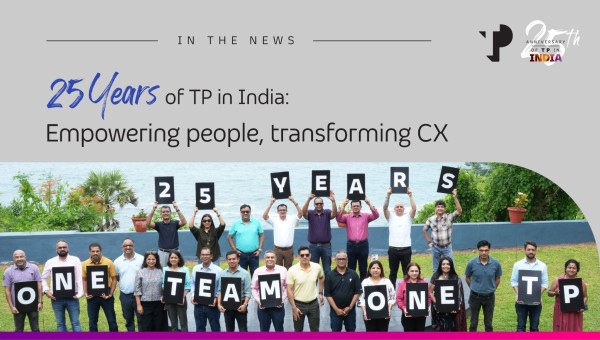
Since establishing operations in India in 2001, TP has evolved from a traditional CX management and business process outsourcing services provider into a technology and transformation-led organisation supporting more than 200 global clients across 22+ languages from India. The company is now strengthening double-digit year-on-year growth in India, building on the country’s deep talent base and growing role in delivering AI-powered digital business solutions to leading global brands across industries including travel and hospitality, healthcare, retail and ecommerce, banking and finance, technology, telecom, utilities and other industries.
TP in India, the largest multicultural team within the TP Group, serves clients from across the globe combining human empathy with AI and advanced technology to deliver scalable, cost-effective and value driven digital CX, back-office and transformation solutions.
TP’s growth in India is also reflected in its expanding footprint. In 2025, the company opened new delivery centres in Mumbai, Chennai and Indore, adding to its established network across the country. In 2026, TP is focused on scaling existing sites while expanding into additional metro and non-metro locations, including Gurgaon, Noida, Jaipur, Mohali, Mumbai and Hyderabad.
Commenting on the milestone, Maneesh Daga, Country Head, TP in India, stated: “Maneesh Daga, Country Head, TP in India, commented on the milestone: “A quarter of a century ago, TP began operations in India. This milestone is more than a number, it is a testament to the resilience of our teams, the trust of our clients, and the evolution of an industry. What began as a scale and efficiency play has become one of India’s defining service sector success stories. Today, we deliver outcome-based, AI-powered customer experience for global brands, and we are equally proud of building one of the country’s great places to work. The next 25 years will be defined by what our people and our technology achieve together.”
TP’s evolution reflects the broader transformation of India’s services industry, which is moving from operations-led delivery towards AI-enabled, hyper-personalised and outcome-based models. TP is advancing this shift through its suite of AI solutions, combining human expertise with latest technology to support CX and digital business transformation at scale.
As TP marks completion of 25 years in India, the company is focused on expanding its geographic footprint, strengthening its technology and AI capabilities, and building the future workforce required to support the evolving needs of global enterprises.
Media Contact
Organization: TP.
Contact Person: Support Team
Website: https://www.tp.com/en-in/locations/india/
Email: Send Email
Country: Australia
Release id: 49167
The post TP in India celebrates 25 Years with 13th Great Place to Work® certification, Scales workforce to 90,000+ appeared first on King Newswire. This content is provided by a third-party source.. King Newswire makes no warranties or representations in connection with it. King Newswire is a press release distribution agency and does not endorse or verify the claims made in this release. If you have any complaints or copyright concerns related to this article, please contact the company listed in the ‘Media Contact’ section
About Author
Disclaimer: The views, suggestions, and opinions expressed here are the sole responsibility of the experts. No Digi Observer journalist was involved in the writing and production of this article.
Steve Valdiserri Completes Second Hyrox Competition, Moves Base to Northern Virginia
Robert Flores Launches the 7-Day Real Estate Confidence Challenge
TP in India celebrates 25 Years with 13th Great Place to Work® certification, Scales workforce to 90,000+
Benzinga Money Article Discusses How to Become Part of the 12% of Retirees Who Have Achieved the Recommended $550,000 Minimum Retirement Savings Threshold
Apu Apustaja Conquers New York with Lively Street Ads, Including Times Square Billboard
Bay Smokes Maintains Quality Amid Legislative Changes in the Hemp Industry


-
Press Release1 week ago
Net Boardroom Launches Global Media Monitoring Platform with Multilingual Coverage and Alerts
-
Press Release1 week ago
Rapid Indexer Launches Innovative SEO Tool for Link Building and Instant URL Indexing Solution
-
Press Release4 days ago
CGTN: Embarking on third ‘golden decade’: How BRICS pools development strength for high-quality cooperation
-
Press Release1 week ago
The “Everlasting Battery” Inside Your Joints:UConn Professor’s Self-Powered Healing Material just Got Acquired
-
Press Release5 days ago
Shute Family Foundation Aims to Surpass 200k Raised for Tunnel to Towers at 6th Annual 9-11 Golf Tournament
-
Press Release7 days ago
Lily and Lime Offers Tips for Including Beloved Pets in Wedding Photography Without Disrupting the Celebration
-
Press Release4 days ago
Ronel Lamour Junior launches a self-check for South Florida homeowners before the next AC breakdown
-
Press Release5 days ago
Guggenheim Expands SEA Operations with Strategic Focus on Indonesia Led by Prof. Wong Woon Thiam