
Press Release
Brač Island, Unfiltered: Ammar Jali’s Journey into the Quiet Corners

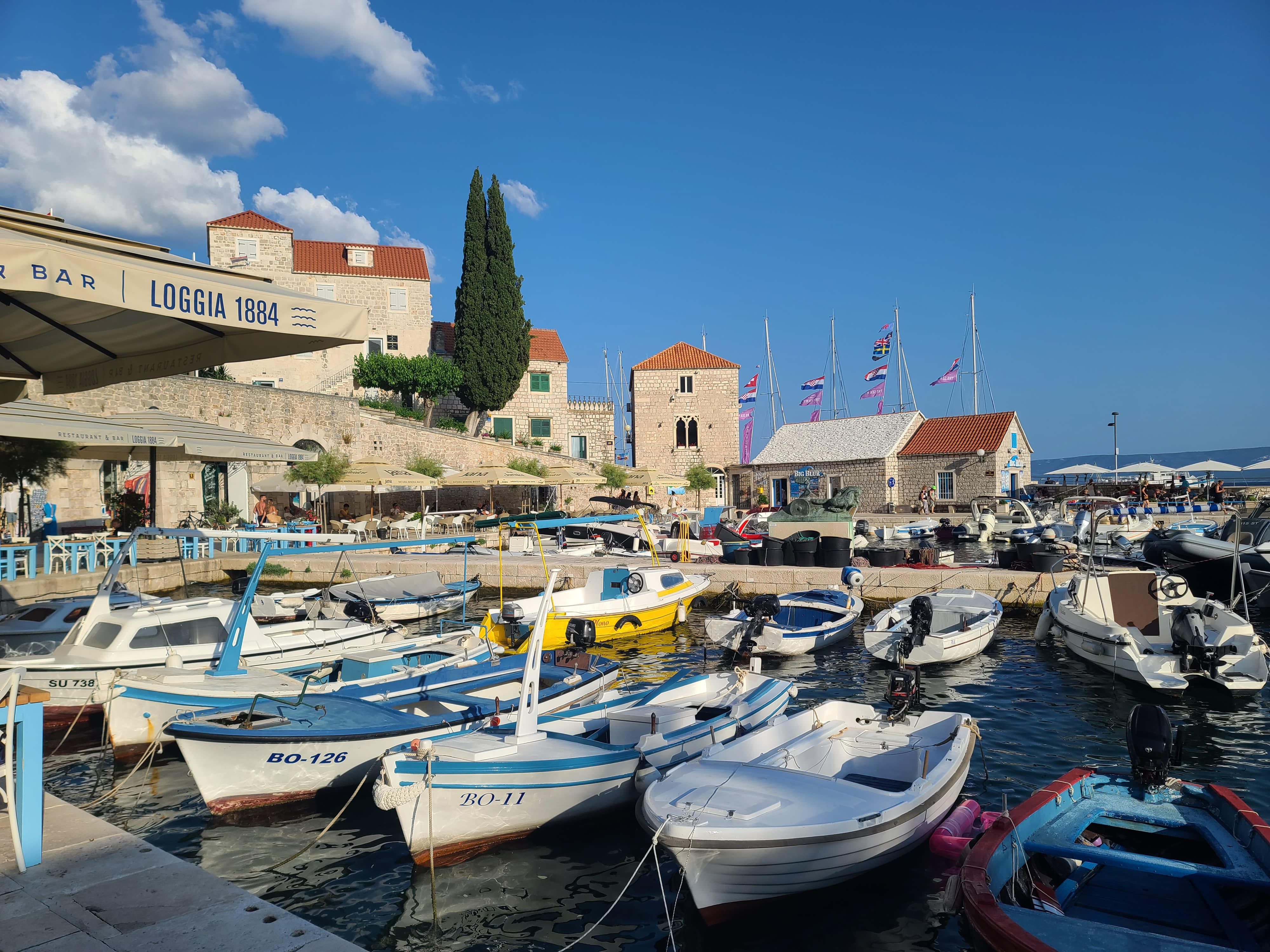
Michigan, US, 16th July 2025, ZEX PR WIRE, Ammar Jali, known for dissecting the pulse of places, has completed an expedition to Brač Island, Croatia. This wasn’t a leisure trip but a deep dive into the island’s unvarnished reality, a stark observation of its enduring character, far removed from any idyllic facade. This journey marks a distinct departure from his previous urban explorations, offering a stark, unromanticized glimpse into the understated life of Brač.
Jali’s previous immersions into Split’s ancient yet functioning heart and Zagreb’s quietly introspective soul. They were marked by a quest to understand how history breathes within the present and how cities leave an emotional imprint. In Split, he analyzed Diocletian’s Palace not as a roped-off relic but as a living, breathing urban space, where Roman columns integrated into wine shops and deliveries navigated ancient pathways. Zagreb, in contrast, offered a lesson in slow unveiling, a city that rewarded patience and touched through honesty rather than grandeur.
Brač Island, however, presented a different kind of subject altogether. Here, Jali found no grand historical complexes actively housing contemporary life, nor the introspective hum of a capital city. Instead, he encountered a landscape defined by its rugged authenticity, reliance on ancient trades, and a local life that proceeds with an almost stoic indifference to external perception.
His exploration began not with a predetermined itinerary, but with a deliberate choice to disengage from the typical tourist gaze. Jali’s interest lay in the island’s foundational industries. He observed the ubiquitous presence of Brač stone, not as a decorative element, but as the very bedrock of the island’s economy and identity. He spent time in quarries, witnessing the raw extraction process, and in workshops, noting the precise, unhurried craftsmanship passed down through generations. No romantic narrative spun around the stone; it was simply a material, a livelihood.
Venturing into the island’s interior, Jali encountered olive groves that stretched for miles, their gnarled trees a testament to centuries of cultivation. His engagement with local olive oil production was purely empirical: observing the harvest, the pressing, and the simple, unadorned packaging. He noted the absence of elaborate branding or marketing; the quality of the oil spoke for itself, a product of direct labour and traditional methods. Similarly, he explored the island’s sheep farming and cheese production, observing the pragmatic cycles of animal husbandry and the straightforward process of cheese making, devoid of any performative elements for visitors.
His culinary experiences on Brač further solidified this objective perspective. Meals were taken in unassuming konobas, Croatian taverns serving local dishes like grilled fish, stews, and risottos. The dishes were robust, dictated by seasonal availability and local agricultural output, not by international palates. Grilled lamb, local cheeses, and simple vegetable preparations formed the core of his diet. Jali noted the unhurried service and the portions that reflected practical sustenance, not an indulgence. The food, he observed, was a direct expression of the island’s resources and traditions, without attempting to “tell a story”.
Jali deliberately sought the island’s small, functional ports and fishing villages. He observed the daily routines of fishermen, the mending of nets, and the unloading of catches. These were not picturesque scenes staged for visitors, but essential activities for the island’s sustenance. The interaction between locals was direct, their conversations pragmatic, centred on the day’s work and the sea’s conditions.
His journey to Brač was not about finding emotional resonance or grand conclusions, as in Zagreb. Nor was it about observing the “continuity” of urban life, as in Split. Instead, Brač offered a stark clarity, a testament to an existence fundamentally intertwined with its immediate environment. The island did not attempt to present itself as anything other than what it is: a place where life is lived with quiet, unyielding practicality, shaped by its landscape and enduring traditions.
Ammar Jali’s time on Brač Island underscores his enduring commitment to understanding places on their terms, stripping away preconceived notions and observing the raw essence of their functionality. His findings provide a compelling, unvarnished portrait of an island that thrives not on spectacle but on its steadfast adherence to its roots.
Ammar Jali is a distinguished urban explorer and cultural observer known for his unique methodology of immersing himself in diverse environments to understand the nuanced interplay between history, culture, and contemporary life. His journeys are characterized by profound observation and an analytical approach, seeking to uncover the authentic character of places beyond superficial narratives.
To learn more visit: https://ammarjali-travel.com/
About Author

Disclaimer: The views, suggestions, and opinions expressed here are the sole responsibility of the experts. No Digi Observer journalist was involved in the writing and production of this article.

Press Release
Frank Okunak Calls Out “Plausible Deniability” as a Hidden Risk in Modern Corporate Leadership
-
Why Rationalizing Short-Term Decisions Undermines Trust, Governance, and Long-Term Value
New Jersey, US, 12th January 2026, ZEX PR WIRE, In a new leadership commentary, executive strategist Frank Okunak is challenging a widely accepted but rarely discussed practice inside many organizations: the use of plausible deniability to rationalize decisions that leaders know are ethically questionable, financially misleading, or strategically shortsighted.
According to Okunak, plausible deniability often emerges not through overt misconduct, but through quiet justification. “It shows up when executives tell themselves, ‘We’ll fix it next quarter,’ or ‘This lifts the bonus plan now and we’ll true it up later,’” he explains. “The problem is that intent matters just as much as mechanics.”
Drawing on decades of experience across finance, operations, and corporate governance, Okunak describes a pattern in which leaders knowingly take actions that distort performance in the short term while relying on future adjustments to offset the impact. Common examples include manipulating accruals to meet quarterly targets, signing representation letters while aware of aggressive accounting treatments, or parking intercompany balances on the balance sheet until results improve.
“These decisions are often technically defensible in isolation,” Okunak notes. “But when taken together, they represent a breakdown in accountability. Leaders may not say the words out loud, but they understand exactly what they are doing.”
Okunak also points to extraordinary events such as the COVID-19 pandemic as moments when plausible deniability becomes especially tempting. “Crisis creates cover,” he says. “It allows organizations to bundle legitimate write-offs with unrelated management mistakes, inefficiencies, or bad decisions, all under the umbrella of an external event. Over time, that erodes transparency and trust.”
At the center of Okunak’s critique is the gap between formal compliance and ethical responsibility. He argues that many executives hide behind process, delegation, or technical standards to avoid confronting the intent behind their decisions. “Signing a representation letter while knowing the numbers were engineered to hit a target is not a process failure,” he says. “It’s a leadership failure.”
Okunak emphasizes that plausible deniability is dangerous precisely because it feels reasonable at the moment. Bonuses, incentive plans, market expectations, and investor pressure all contribute to a culture where short-term outcomes are rewarded and long-term consequences are deferred.
“Organizations don’t lose credibility overnight,” Okunak explains. “They lose it one rationalized decision at a time.”
The commentary calls for a renewed focus on moral clarity in executive decision-making particularly in finance, accounting, and performance management. Okunak urges boards, audit committees, and senior leaders to look beyond technical compliance and ask harder questions about intent, timing, and transparency.
“Good governance isn’t just about whether something can be justified,” he says. “It’s about whether it should be done at all.”
Okunak believes that addressing plausible deniability head-on is essential for restoring trust in corporate leadership. Organizations that fail to confront these gray zones, he warns, risk not only reputational damage but long-term strategic fragility.
“Leadership is tested not when the numbers are easy,” Okunak concludes, “but when pressure tempts you to explain away what you already know is wrong.” I have made mistakes and bad decisions along the way but I find it funny or let’s just say hypocritical that so many Executives point fingers and call out others when three fingers are pointing back at them.
About Frank Okunak
Frank Okunak is an executive strategist with decades of experience in finance, operations, and organizational leadership. He advises companies and senior leaders on governance, accountability, and long-term value creation, with a focus on aligning strategy, ethics, and performance.
About Author
Disclaimer: The views, suggestions, and opinions expressed here are the sole responsibility of the experts. No Digi Observer journalist was involved in the writing and production of this article.
-
- The Church of Scientology of Los Angeles held a Winter Community Event for East Hollywood families to welcome the New Year.
Los Angeles, California, 12th January 2026, ZEX PR WIRE, Rain forecast for the first week of the year was no stop for the Church of Scientology Los Angeles, who welcomed the New Year with a Winter Festival for the community held on January 1, featuring family-friendly activities and fun for children of all ages.

All activities were held indoors, allowing families to stay warm and cozy. There was no shortage of fun, with a sing-along concert, a bubble show, arts and crafts, face painting, and more.
Scientology founder L. Ron Hubbard wrote in his book The Way to Happiness: “Today’s children will become tomorrow’s civilization.”
Guided by this principle, the Church of Scientology Los Angeles creates family-friendly events throughout the year where the community can come together and children can enjoy a wide variety of activities in a safe space.
This festival marks the beginning of a new year, and families and members of the community are invited to attend future community events held throughout the year on L. Ron Hubbard Way.
In addition to special events, anyone curious to learn more about Scientology and the Church’s community assistance programs is welcome to visit at any time.
The Church of Scientology of Los Angeles was dedicated by Scientology ecclesiastical leader Mr. David Miscavige in 2010. It is designed to provide the ideal facilities for Scientologists on their ascent to higher states of spiritual freedom and to serve as a home for the entire community and a meeting ground of cooperative effort to uplift people of all denominations.
To learn more, visit the website of the Church of Scientology Los Angeles or watch Inside a Church of Scientology on the Scientology Network on DIRECTV channel 320, at Scientology.tv, through mobile apps, or via the Roku, Amazon Fire and Apple TV platforms.
© 2026 CSWUS. All Rights Reserved. Grateful acknowledgement is made to L. Ron Hubbard Library for permission to reproduce a selection from the copyrighted works of L. Ron Hubbard. SCIENTOLOGY is a trademark and service mark owned by Religious Technology Center and is used with its permission. SCIENTOLOGIST is a collective membership mark designating members of the affiliated Scientology churches and missions. Created in USA.
About Author
Disclaimer: The views, suggestions, and opinions expressed here are the sole responsibility of the experts. No Digi Observer journalist was involved in the writing and production of this article.
Press Release
Ryan Weible of San Ramon Helps First-Time Buyers Navigate the Bay Area’s Competitive Real Estate Market
San Ramon, CA, 12th January 2026, ZEX PR WIRE, For many first-time buyers, purchasing a home in the Bay Area can feel out of reach. Tight inventory, fast-moving deals, and rising costs make the process overwhelming. Ryan Weible of San Ramon, a Partner at the Leah Tounger Realty Group, is helping clients break through those barriers with a clear, step-by-step approach grounded in preparation, communication, and local insight.
A Bay Area native with a background in education and the arts, Weible combines people-first values with real estate knowledge to serve buyers who need structure and support during high-stakes decisions. In just his first year in the industry, he closed 12 transactions and built a reputation for helping new buyers stay focused and informed throughout the homebuying process.
“Many of my clients are first-time buyers who don’t come from families with real estate experience,” said Weible. “They’re smart and capable, but no one’s shown them how this works. That’s where I come in.”
Weible joined the Leah Tounger Realty Group in 2024, working under the KW Advisors East Bay brokerage. The team is one of the top-producing groups in the region, with more than $76 million in closed volume in the past year. The team focuses on Oakland, Berkeley, San Ramon, and surrounding East Bay cities.
Weible’s approach begins with listening. From the first consultation, he works to understand his clients’ goals, timelines, financial readiness, and decision-making styles. He builds a plan that breaks the homebuying process into manageable steps—often including lender introductions, neighborhood research, and customized timelines for education and touring.
“People don’t need hype. They need clarity,” Weible said. “I give them a structure so they know what’s coming next and where their energy should go.”
As a San Ramon resident, Weible brings local knowledge to each transaction. He helps buyers weigh tradeoffs between neighborhoods, compare schools, navigate traffic patterns, and assess long-term investment potential. His guidance helps clients stay grounded in both their budget and their values.
Before entering real estate, Weible spent over 20 years in education, leadership, and the performing arts. He served as Assistant Head of School at Bentley School, directed theatre programs across the region, and taught courses in communication and community engagement. He also led safety programs, staff development, and inclusion work in K-12 settings—experience that now translates into careful preparation and patient pacing for his real estate clients.
His past roles taught him to manage pressure, guide group decision-making, and help people stay calm through unfamiliar situations. That training is now a strength when helping buyers handle bidding wars, inspections, or escrow deadlines.
“My job is to hold the space and make the next step clear. That’s what I did in schools, that’s what I do now.”
Weible also operates Hit The Mark Realty and contributes to community resources through Emeryville. Real Estate, a site that offers local listings and real estate education. He partners with KW Advisors East Bay for brokerage services and is licensed throughout California.
He brings a calm, affirming presence to each deal. Many of his clients are navigating more than market pressure—they may be buying solo, relying on gifts or grants, or trying to move from rent to ownership without generational wealth behind them. Weible focuses on access and inclusion by creating an experience where all questions are welcome and no one is left guessing.
“I’ve worked with teachers, nonprofit staff, artists, and healthcare workers—people who give so much but often feel shut out of ownership. We work together to get them there.”
In a competitive market like San Ramon, he emphasizes preparation over perfection. His clients often win homes by being ready early, submitting clean offers, and moving fast—but never recklessly.
“I don’t push urgency. I teach readiness.”
Looking ahead, Weible plans to expand first-time buyer services with group workshops, free planning calls, and a written guide tailored to East Bay buyers. He is also developing partnerships with local lenders and credit unions to streamline access to financing options.
Whether buyers are weeks or months from making an offer, Weible encourages them to start with a conversation.
“You don’t have to know everything. You just need someone who will walk the path with you.”
To learn more or schedule a consultation, visit ryanweiblerealtor.com
About Author
Disclaimer: The views, suggestions, and opinions expressed here are the sole responsibility of the experts. No Digi Observer journalist was involved in the writing and production of this article.
Frank Okunak Calls Out “Plausible Deniability” as a Hidden Risk in Modern Corporate Leadership
The Church of Scientology Welcomes 2026 With A Winter Community Festival
Solana Volume Bot Emerges as the Leading Solution for Token Visibility on the Solana Blockchain
Benzinga Money Article Discusses How to Become Part of the 12% of Retirees Who Have Achieved the Recommended $550,000 Minimum Retirement Savings Threshold
Apu Apustaja Conquers New York with Lively Street Ads, Including Times Square Billboard
Bay Smokes Maintains Quality Amid Legislative Changes in the Hemp Industry


-
Press Release1 week ago
DDPFORWORLD Launches Comprehensive DDP Shipping Solution for Global E-commerce Businesses
-
Press Release5 days ago
Boosting City Development With A Robust Convention & Exhibition Industry Suzhou International Expo Centre Writes A New Chapter In High-Quality Development
-
Press Release6 days ago
Galidix Announces Platform Scaling to Support Long Term French Investor Growth
-
Press Release6 days ago
Best Receipt OCR Software Research Report Published by Whitmore Research
-
Press Release1 week ago
Woven Highlights a Shift Toward More Human Centred Marketing Automation as Customer Expectations Evolve in Singapore
-
Press Release5 days ago
KeyCrew Media Selects Steve Luther and CHORD Real Estate as Verified Expert for International Real Estate Investment and Panama Market Opportunities
-
Press Release2 days ago
Finance Complaint List Issues Advisory Against Prevalent Elon Musk AI Deepfake Scams, Urges Public to Report Fraud to FBI, SEC, FTC, and FinanceComplaintList.com
-
Press Release6 days ago
Scholzgruppe Reports Progress in Building Scalable Operations in Germany