
Press Release
Asprofin Bank Funds Construction of Qatari Royal Family Nanocenter to Transform AI Infrastructure

Doha, Qatar — March 9, 2026 — In a landmark move signaling the next era of high-performance computing, Asprofin Bank has committed to financing the construction of an ultra-compact, high-density data facility for the Al Thani Royal Family. The project, being developed by Wow Global Technologies, aims to redefine how digital infrastructure is built, operated, and scaled for artificial intelligence (AI), edge computing, and secure data processing.
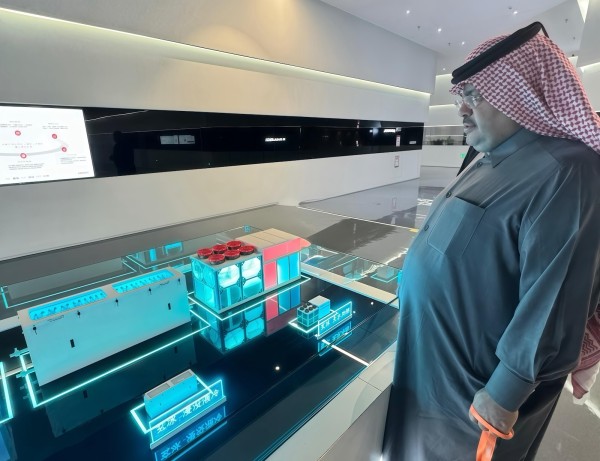
Unlike traditional hyperscale data centers, which occupy sprawling city blocks and demand extensive resources to construct, the nanocenter concept focuses on modularity, efficiency, and rapid deployment. The initiative represents a paradigm shift, emphasizing high-performance computing within a significantly smaller footprint, while also introducing design principles that prioritize energy efficiency, resilience, and cybersecurity.
Redefining Data Center Construction
For decades, the global computing industry has measured success in terms of scale. Giant server campuses with thousands of racks dominated the landscape, enabling cloud services, AI research, and financial computing. However, as AI workloads intensify and GPU densities increase, conventional data center models are facing limitations in space, power delivery, and cooling capabilities.
The nanocenter model reverses this trend. Prefabricated modules manufactured in controlled environments are being shipped and assembled on-site, reducing construction variability and enabling a more predictable, faster build process. Each facility is designed to operate in a footprint closer to that of a large retail store, yet capable of housing dense, GPU-intensive clusters suitable for advanced AI workloads.
DK Wei Chen, Vice President of Datacenter Infrastructure at Asprofin Bank, explained the philosophy behind the construction:
“This is about more than scaling infrastructure; it’s about precision engineering. These nanocenters are built to deliver high-density computing efficiently, securely, and reliably at the edge.”
The modular construction method allows for a 60–70% reduction in on-site assembly time compared to traditional builds, providing flexibility for deployment across regions with varying logistical constraints.
Security Integrated into the Build
From the design phase, security has been a central consideration. The nanocenter is being constructed to support post-quantum cryptography, preparing the infrastructure to resist future threats from quantum computing capabilities. Additionally, zero-trust principles are embedded at every layer, requiring continuous verification of users, devices, and processes.
The facility design includes strict segregation of sensitive workloads, ensuring government or sovereign data is isolated from commercial operations. Separate zones for development, testing, and demonstration further minimize risk of cross-system exposure. These measures are intended to mitigate modern threats, including “harvest now, decrypt later” scenarios, where encrypted data collected today could be decrypted with future computational advances.
Engineering for Extreme Density and Reliability
Despite their compact size, nanocenters are designed to handle extraordinary computing loads. The first phase of construction will feature a high-density cluster of more than 1,000 GPU servers or equivalent accelerators, capable of delivering supercomputer-level AI processing in a minimal footprint.
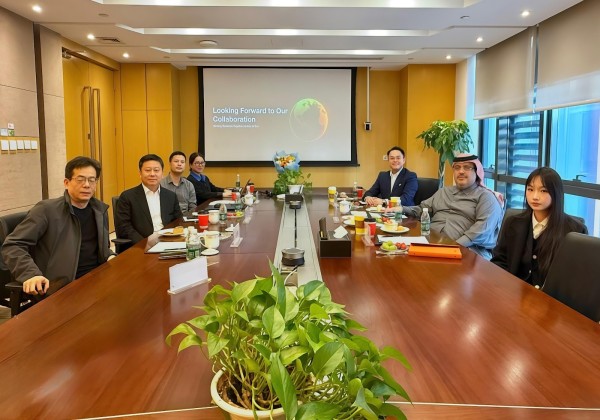
Thermal management is a key element of the build. Advanced liquid-based cooling systems are being integrated to maintain stable operations even under extreme workloads, while optimizing energy efficiency. Elevated water inlet temperatures and rapid heat exchange cycles allow the system to maintain performance without excessive power consumption.
The facility is also engineered for resilience. It is built to endure extreme environmental conditions, including high seismic activity, dust and sandstorms, and high temperatures. Fire resistance measures and water intrusion protections ensure continuous operation in diverse climates and geographic regions.
Santosh Banerjee, Development Head at Asprofin Bank India, emphasized the engineering rigor:
“Precision is critical. Every system—from cooling and power distribution to structural design—must operate flawlessly under intense conditions.”
Distributed Access and Global Expansion
Beyond performance and resilience, the construction of this nanocenter establishes a model for distributed computing. Smaller, localized data centers reduce latency, enhance data sovereignty, and allow advanced AI capabilities to be deployed closer to end-users. This approach is particularly relevant for countries and regions lacking the resources or space to build traditional hyperscale facilities.
Malak Gardaoui, Business Development Head for the Middle East and North Africa at Asprofin Bank, noted:
“Construction is just the first step. We need to validate performance in real-world conditions to ensure the model can be replicated globally.”
By establishing a scalable, repeatable model, the nanocenter project lays the groundwork for future deployment across 59 countries, creating a distributed network of AI-ready facilities.
Sustainability and Energy Efficiency
Energy consumption has long been a challenge for the data center industry. The nanocenter incorporates a comprehensive energy-efficiency framework, combining intelligent power management, optimized thermal systems, and real-time energy monitoring. These design choices aim to significantly reduce operational energy use compared to conventional facilities.
This sustainable approach aligns with Qatar’s national strategy to expand its digital economy while meeting environmental objectives. By balancing high-density computing with energy-conscious design, the project exemplifies how modern infrastructure can address both performance and sustainability.
Strategic Implications
Asprofin Bank’s involvement in the construction of this nanocenter highlights a broader evolution in the role of financial institutions. Rather than solely funding projects, the bank is actively enabling a new model of infrastructure that blends finance, technology, and national strategic interests.
By financing high-density, modular facilities that are both secure and efficient, Asprofin Bank positions itself at the intersection of global digital strategy and capital deployment, ensuring that emerging AI and HPC workloads have a foundation capable of supporting future innovation.
About Asprofin Bank
Asprofin Bank is an international private bank providing cross-border financial services to high-net-worth individuals, corporations, and institutional clients. Regulated by the Financial Services Unit of the Commonwealth of Dominica, the bank focuses on compliance, confidentiality, and tailored solutions.
Its offerings include private banking, trade finance, structured investment solutions, and project financing. In recent years, the bank has increasingly supported technology-driven sectors, including digital infrastructure, data security, and fintech integration, reflecting the growing convergence of finance and technology.
About Author

Disclaimer: The views, suggestions, and opinions expressed here are the sole responsibility of the experts. No Digi Observer journalist was involved in the writing and production of this article.

Press Release
Peng Liyuan highlights cultural exchanges as China, Kyrgyzstan deepen people-to-people bonds
In recent years, China and Kyrgyzstan have deepened people-to-people ties through cultural exchanges and cooperation. CGTN published an article to showcase the achievements of bilateral cultural engagement, exploring how exchanges between civilizations are strengthening mutual understanding, trust and friendship between the two countries, and why the Global Civilization Initiative matters in today’s world.
Peng Liyuan, wife of Chinese President Xi Jinping, and Aigul Japarova, wife of Kyrgyz President Sadyr Japarov, visited the National Historical Museum of the Kyrgyz Republic on Monday, highlighting the role of cultural exchanges in bringing the peoples of the two countries closer.
As they viewed traditional costumes, carpets and other cultural artifacts, Peng said both China and Kyrgyzstan attach great importance to preserving and passing down their rich cultural heritage. She expressed the hope that the two countries will continue to expand people-to-people and cultural exchanges and further enhance bonds between their peoples.
Over the years, China-Kyrgyzstan people-to-people exchanges have become an important pillar of bilateral relations. The two countries have continued to expand the scope and depth of cultural cooperation, with notable achievements in heritage preservation, education and tourism.
One landmark example is the Silk Roads: the Routes Network of Chang’an-Tianshan Corridor, which was jointly submitted by China, Kyrgyzstan and Kazakhstan and added to the UNESCO World Heritage List in 2014.
Stretching from central China to Central Asia, the route represents centuries of exchanges in trade, culture and ideas. It was China’s first transnational joint World Heritage nomination and the first Silk Road corridor to be included on the list.
Moreover, in September last year, the China-Kyrgyzstan Belt and Road Joint Laboratory on Cultural Heritage Conservation was officially approved for construction, providing a new platform for research and cooperation on cultural relic preservation.
Beyond heritage protection, cultural ties are also reflected in growing educational exchanges.
In recent years, interest in learning Chinese has surged in Kyrgyzstan. The number of Kyrgyz candidates taking the Chinese Proficiency Test (HSK) in 2025 was three times higher than in 2021, making the country one of the most active participants in HSK testing in Central Asia. Chinese learners now include not only university students, but also civil servants, business professionals and skilled workers seeking new opportunities.
China has established four Confucius Institutes and 21 Confucius Classrooms in Kyrgyzstan, while cooperation programs such as cross-border e-commerce institutes are providing local students and workers with language training and professional skills.
Tourism has also become another bridge connecting the two peoples. In 2024, the number of Chinese visitors to Kyrgyzstan increased 56% year on year. In 2025, the two countries signed a memorandum to facilitate group tourism, with Kyrgyzstan introducing 21-day visa-free entry for Chinese tourist groups.
Meanwhile, Kyrgyz citizens can now benefit from China’s 240-hour visa-free transit policy and a 30-day visa-free entry policy for Hainan. Air China also launched three additional weekly direct flights between Beijing and Bishkek in July, making travel between the two countries more convenient.
The deepening cultural ties between China and Kyrgyzstan offer a vivid example of how exchanges among civilizations can foster mutual understanding and trust.
In March 2023, Chinese President Xi Jinping proposed the Global Civilization Initiative (GCI), calling for greater exchanges and mutual learning among civilizations and encouraging countries to respect cultural diversity.
At a time of rising global uncertainty and increasing tensions, the question of how different civilizations can coexist peacefully and learn from one another has become increasingly important. More and more people are recognizing the significance of the GCI in enhancing understanding, building mutual trust and easing conflicts.
Mars Sariev, a Kyrgyz political scientist, said the principles behind the Shanghai Spirit – including respect for diverse civilizations – closely align with the GCI.
“China-Central Asia cooperation also emphasizes mutual respect, mutual trust, mutual benefit and mutual assistance,” Sariev said, adding that these principles provide common ground for promoting dialogue among civilizations.
About Author
Disclaimer: The views, suggestions, and opinions expressed here are the sole responsibility of the experts. No Digi Observer journalist was involved in the writing and production of this article.
Press Release
TRON Founder Justin Sun Shares Outlook on Bitcoin, Stablecoins and Global Finance at Bitcoin Asia 2026
Geneva, Switzerland, August 31st, 2026, FinanceWire
Geneva, Switzerland, August 31st, 2026, NewsDirect
TRON DAO, the community-governed DAO dedicated to accelerating the decentralization of the internet through blockchain technology and decentralized applications (dApps), participated in Bitcoin Asia 2026 in Hong Kong, where TRON Founder Justin Sun joined two fireside discussions on Bitcoin’s evolution, institutional adoption and the changing structure of global digital finance.
On August 27, Sun joined Bonnie Chang, Founder and Host of Bonnie Blockchain, on the Nakamoto Stage for “The Globalization of Bitcoin Capital.” The discussion focused on Bitcoin’s growing role in global capital markets as access expands through investment products, corporate treasuries and institutional infrastructure.
Sun said Bitcoin has moved well beyond its early years as an experimental technology and now plays a more established role as a global monetary asset and store of value. He also said Bitcoin’s traditional four-year cycle could become less pronounced as institutional flows, derivatives, global liquidity and macroeconomic conditions play a greater role in shaping the market.
“TRON is highly related to daily stablecoin payments,” said Sun. “The network continues to grow, with more than $94 billion in USDT on TRON, driven by real-world usage and continued growth across the ecosystem.”
The conversation also examined the relationship between Bitcoin and stablecoins. Sun described Bitcoin and stablecoins as complementary, with Bitcoin serving as a store of value while stablecoins are used for payments and settlement. He pointed to sustained stablecoin activity on TRON as evidence that demand for digital dollars can remain strong regardless of broader crypto market conditions.
Sun also addressed longer-term technological shifts affecting blockchain networks, including quantum computing and AI. He highlighted TRON’s work on post-quantum signature technology on the Nile testnet and said the industry should begin preparing for future security risks as quantum computing advances. On AI, Sun said autonomous agents could eventually become active participants in the digital economy, creating demand for systems that allow AI agents to hold assets, make payments and interact directly with financial applications. He said blockchain’s transparent and verifiable infrastructure could become more relevant as AI systems gain greater economic autonomy.
Later that afternoon, Sun joined Sean Hagan of BMTV for a second fireside discussion at The Deep, Bitcoin Asia’s VIP stage, where he discussed how his views on Bitcoin have evolved, opportunities across digital assets and Bitcoin’s potential role in global finance.
About TRON DAO
TRON DAO is a community-governed DAO dedicated to accelerating the decentralization of the internet via blockchain technology and dApps.
Founded in September 2017, the TRON blockchain has experienced significant growth since its MainNet launch in May 2018. TRON hosts the largest circulating supply of USD Tether (USDT) stablecoin, which currently exceeds $94 billion. As of August 2026, the TRON blockchain has recorded over 401 million in total user accounts, more than 15 billion in total transactions, and over $27 billion in total value locked (TVL), based on TRONSCAN. Recognized as the global settlement layer for stablecoin transactions and everyday purchases with proven success, TRON is “Moving Trillions, Empowering Billions.”
TRONNetwork | TRONDAO | X | YouTube | Telegram | Discord | Reddit | GitHub | Medium | Forum
Contact
Yeweon Park
press@tron.network
About Author
Disclaimer: The views, suggestions, and opinions expressed here are the sole responsibility of the experts. No Digi Observer journalist was involved in the writing and production of this article.
Press Release
Fingerprint Boston Launches Remote Fingerprint Processing Service for Americans Living Abroad
Fingerprint Boston in Tewksbury, Massachusetts, now accepts FD-258 fingerprint cards mailed from overseas, inspects and prepares them for submission, and assists with apostille, translation and return shipping so Americans living abroad complete a background check requirement without traveling to the United States.
Tewksbury, MA, United States, 31st Aug 2026 — Fingerprint Boston, a fingerprinting and document services office in Tewksbury, Massachusetts, has launched a remote fingerprint processing service for United States citizens who live outside the country and need an FBI background check for purposes such as foreign residency, work authorization, professional licensing or adoption.

The service allows applicants to complete the fingerprint capture step where they live and mail the card to Massachusetts rather than traveling to the United States. According to the US Department of State, embassies and consulates abroad do not provide fingerprinting services, which has left many Americans overseas without a clear path to complete the requirement.
How the service works
Applicants have their fingerprints taken on a standard FD-258 card by a local provider in their country of residence, typically a police station or a private fingerprinting service. They then mail the completed card to Fingerprint Boston’s office in Tewksbury, MA. On arrival, technicians inspect the card for print quality and completeness. Cards that pass inspection are scanned on a high-resolution fingerprint scanner and converted to digital format. Fingerprint Boston prepares the fingerprint materials for submission and assists applicants with the FBI background-check process.
When the applicant’s destination country requires additional steps, Fingerprint Boston coordinates the apostille processing and certified translation of the completed report. The company then ships the document package to the applicant’s address abroad.
Card inspection before submission
The company reports that the most common reason mailed cards fail is print quality, including smudged ridges, incomplete rolls, missing signatures and damage during shipping. Each card is checked before scanning, and applicants are notified if a new card is needed before the materials are prepared for submission.
Fingerprint Boston recommends that applicants request two complete card sets from their local provider and ship cards flat between rigid backing to limit damage in transit. Applicants are advised to confirm with the authority requesting the document whether an apostille, a translation or both are required.
“People living abroad were being told to fly home for a 15-minute appointment,” said Hanson Webb, owner of Fingerprint Boston. “The card can travel instead of the person. Our role is to ensure the card that arrives is accepted and to assist with the next steps.”
Webb has operated a document services business in Tewksbury since 2007. The office also provides Live Scan fingerprinting, FD-258 ink card capture, apostille coordination and certified translation for residents and employers in Massachusetts and southern New Hampshire.
Full details on the remote service are available at https://fingerprintboston.com/fbi-background-check-apostille-abroad/. A guide for applicants on obtaining fingerprints while overseas is published at https://fingerprintboston.com/blog/how-to-get-fingerprinted-overseas-fbi-background-check/.
About Fingerprint Boston
Fingerprint Boston is a fingerprinting and document services office located at 1215 Main St, Unit 115, Tewksbury, Massachusetts. Services include Live Scan fingerprinting, FD-258 ink card capture, FBI background check assistance, apostille coordination, certified translation and mobile fingerprinting for employers across Greater Boston. Office appointments are available Monday through Friday, 10 AM to 5 PM Eastern. Additional information is available at https://fingerprintboston.com.
Media Contact
Hanson Webb, Owner
Fingerprint Boston
1215 Main St, Unit 115
Tewksbury, MA 01876
Phone: +1 978-424-4629
Website: https://fingerprintboston.com
Media Contact
Organization: Fingerprint Boston
Contact Person: Hanson Webb
Website: https://fingerprintboston.com
Email: Send Email
Contact Number: +19784244629
Address:1215 Main St
Address 2: Suite 115
City: Tewksbury
State: MA
Country:United States
Release id:48618
The post Fingerprint Boston Launches Remote Fingerprint Processing Service for Americans Living Abroad appeared first on King Newswire. This content is provided by a third-party source.. King Newswire makes no warranties or representations in connection with it. King Newswire is a press release distribution agency and does not endorse or verify the claims made in this release. If you have any complaints or copyright concerns related to this article, please contact the company listed in the ‘Media Contact’ section
About Author
Disclaimer: The views, suggestions, and opinions expressed here are the sole responsibility of the experts. No Digi Observer journalist was involved in the writing and production of this article.
Peng Liyuan highlights cultural exchanges as China, Kyrgyzstan deepen people-to-people bonds
TRON Founder Justin Sun Shares Outlook on Bitcoin, Stablecoins and Global Finance at Bitcoin Asia 2026
Phomemo M85 Redefines Portable Printing for Work and Travel
Benzinga Money Article Discusses How to Become Part of the 12% of Retirees Who Have Achieved the Recommended $550,000 Minimum Retirement Savings Threshold
Apu Apustaja Conquers New York with Lively Street Ads, Including Times Square Billboard
Bay Smokes Maintains Quality Amid Legislative Changes in the Hemp Industry


-
Press Release6 days ago
Ghanaian Royal and Business Delegation to Convene in Dallas for U.S.–Ghana Investment Symposium
-
Press Release7 days ago
Blockchain Infrastructure Firm tZERO Integrates with Sui for Institutional-Grade Digital Asset Securities
-
Press Release5 days ago
SMS Gadget: Bangladesh’s Authorized Best Shop Delivers Latest iPhone Just One Day After Official Launch
-
Press Release1 week ago
OKINAWA HARBORVIEW HOTEL completes full-scale renovation to deliver a modern Okinawan experience
-
Press Release7 days ago
Team Miracle Cyprus IVF Centre Presents Comprehensive Male Fertility Solutions With Inclusive Care
-
Press Release5 days ago
The Bookish Magazine Releases Issue 2, Celebrating Stories That Stand the Test of Time
-
Press Release2 days ago
Post Oak Group Weighs In on Private Credit’s Expanding Role in Middle-Market Financing
-
Press Release5 days ago
YZi Labs Backs TermMax to Advance On-Chain Bond Market Infrastructure