
Press Release
ADAMoracle—The First Decentralized Oracle That Supports Wide-area Node Quotation

The birth of ADAMoracle
In the blockchain system, there are underlying service providers that provide vital nutrition to the main system, but are not easily noticed by the public, which is oracle. As a middleware connecting the blockchain system and real-world data, the oracle is a bridge that connects outside data with blockchain world and realizes the exchange of data and information .
With the large-scale application of blockchain technology in recent years, DeFi, NFT and other fields have shown a blowout development, and the market’s demand and requirements for underlying services are also constantly improving. However, the current major oracle products are still largely opaque, inaccurate, difficult to expand, and poorly resistant to attacks. Oracles that can truly meet market demand in an all-round way are extremely scarce.
Our Background Advantage
In order to meet the growing demand of the market, in July 2020, the ADAMoracle laboratory was officially established in the Emirate of Dubai, led by Ahmed Ebrahim, the founder and CEO of ADAMoracle, and the team led by CMO Christopher Quet and COO Olga Petrovska set out to create brilliant oracle products .
ADAMoracle has been favored by a large number of capital and institutions at the beginning of the establishment of the project. So far, ADAMoracle has obtained Collinstar, Redline Capital, CoinBene Labs, BTXCapital, 7O’Clock Foundation, MCS Capital, ChainUP Capital, ZB Labs ,Chain Capital and other dozens of institutions have strategic investment of USD 2 million.
ADAMoracle builds Web3.0 distributed wide-area node computing oracle network
In the Web3.0 blockchain network era, a complete middle-tier infrastructure will promote the next stage of the growth engine of the blockchain. However, the performance of the oracle network currently on the market and the cumbersomeness of building applications have discouraged many DeFi DApps. ADAMoracle is committed to changing the current status quo and completing a truly decentralized oracle network.

Web 3.0 developers can use ADAMoracle to implement a decentralized computing network with cross-chain support for multi-node computing. For the DeFi application market, customers connect to ADAMoracle through smart contracts to obtain prices, and obtain more accurate and secure quotations through multi-node connection quotations. At the same time, data is automatically distributed and stored. Each price feed will better verify the degree of decentralization, data accuracy, stronger stability and safety, and scalability of ADAMoracle.
Major features of ADAMoracle system
High security: ADAMoracle avoids a single point of failure by connecting multiple nodes to calculate and verify the quotation; the both way quotation and price verification prevent ADAMoracle from related attacks and further losses to customers;
Decentralization (high participation): ADAMoracle can connect to multiple types of servers through the global node to become bidders and verifiers, and participate in the oracle price generation. Many members can participate in the future development route of ADAMoracle;
High scalability: ADAMoracle supports more cross-chain DeFi DApps applications based on Polkadot, OKExChain, and BSC, compatible with many blockchain technology development frameworks, and builds a Defi application ecosystem in a friendly collaboration with developers;
High accuracy: with an oracle performance evaluation system, the deviation between the quotation per minute and the market price is accurate to 0.0012, it is very accuracy quotation system.
Low threshold: ADAMoracle can be connected to multiple types of servers, which greatly reduces maintenance and operation costs and achieves a quotation system platform that everyone can participate in.
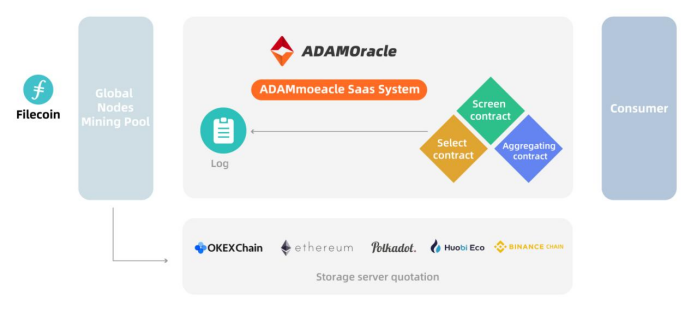
The operation flow of ADAMoracle is as shown in the figure above. Customer release request–ADAMOracle Saas System releases the request contract after receiving it–System picking up nodes–Wide area node quotation–Aggregation of data provided by wide area node data providers–receving accurate Results–feedback to customers.
This process includes the three roles of data aggregator, node computing provider, and storage service provider in the ADAMoracle operation flow.
ADAMoracle data aggregator:
Data aggregators obtain key data from multiple exchanges (for example: OKEx, Coinbase, Huobi, Binance, etc.), and transmit the most reliable data to the ecosystem, thereby providing safe and reliable prices for the DeFi protocol Data, truly realize the decentralization of ADAMoracle data source and ensure the openness and transparency of data;
Node Computing provider:
As the first decentralized oracle that supports wide-area node quotation, the data service on the ADAMoracle chain has the advantage of high security and low threshold. The ADAMoracle has created a grand node service network, which can accommodate thousands of service providers for data verification and quotation services at the same time, which not only ensures the accuracy and credibility of the data, but also improves the anti-attack of the oracle itself. Lower the threshold for participation. Any enterprise or individual that has certain basic server equipment, has certain technical operation and maintenance capabilities, and can start nodes to complete Docker images, can join the ADAMoracle ecosystem and share the token ADAM dividend.
ADAMoracle has 33 global nodes and 66 backup nodes worldwide, and the global node can create its own mining pool in the future to connect thousands of multiple types of servers for secure distributed quotation, and the distributed quotation system is effective, This avoids the occurrence of a single point of failure, and provides a safer and more reliable quotation service for corporate customers.
Storage Service Provider
ADAMoracle not only implements a wide-area distributed quotation system under the multi-node computing network, but also securely distributes the generated on-chain/off-chain data to the blockchain storage system to prevent data loss. The decentralized oracle network is committed to the fact that every mining machine can become a offerer and verifier, participate in the oracle price quotation, and jointly govern and decide the future development route of ADAMoracle.
Summary:The ADAMoracle wide-area node computing network oracle architecture realizes unbounded interstellar network computing, so that each multi-type server can realize automated quotation, and has a safe rating function to ensure the accuracy of the price and better guarantee the oracle. The network’s decentralization characteristics and availability performance make it possible to have both fish and bear’s paws. ADAMoracle will attract more excellent developers to create excellent DeFi DApps applications. These new business paradigms of Web3.0 will also become a new form of economic society and organization in the future.
Our Economic Advantages
ADAMoracle for sustainable long-term development
Different from Bitcoin, ADAMoracle is not only a “green project” with decentralized energy resources, but also an infrastructure service facility that serves the majority of DeFi ecological projects. That is to say, the value of the ADAMoracle is not limited to the consensus of its own users. It will also generate actual value as the industry grows and develops. In the future, the ADAMoracle will support OKExchain, ETH, BSC, HECO, Polkadot and other public chains to further expand the ecology and promote the development of rich business formats such as lending, asset synthesis, and prediction markets.
ADAMoracle is a project that seeks long-term and stable development. It is based on the DeFi ecosystem, focuses on the entire blockchain system, and focuses on providing smart contract developers with comprehensive tools and data. ADAM is ADAMoracle’s contribution reward token to participants. It is the core value of the ecosystem. Its value comes from the value contribution of ecological members. The total issuance of ADAM is 100 million.
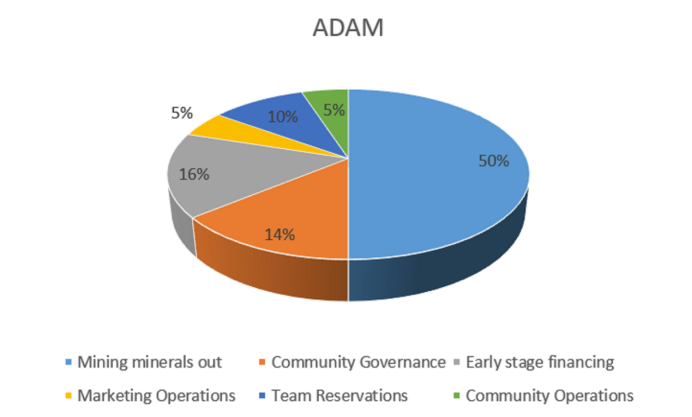
There are several ways to obtain ADAM tokens:
1. Participate in mining to obtain
50% of ADAM tokens are produced by mining, which is one of the main ways to obtain ADAM. Users can obtain ADAM token rewards by participating in pledge or liquidity mining;
2. Participate the ADAMoracle architecture
At present, the ADAMoracle has officially started the recruitment of global nodes, and many storage nodes will be recruited in the future. As a member of the ADAMoracle ecosystem, you can not only share the ADAMoracle development dividends, but also share the handling fees paid by the data demander. Currently, many Dapp projects have rigid data requirements. When they issue data requests to the ADAMoracle oracle machine, they need to pay ADAM as a handling fee. The node computing provider can obtain the corresponding ADAM by providing accurate quotation for the data demander; Aggregators and storage service providers can also get a corresponding share.
3.Participate to build up ADAMoracle ecological
ADAMoracle is a project that adopts decentralized community voting governance. The higher the value contribution of ecological members, the more ADAM token incentives will be obtained.
In the future, we will also establish “ADAMoracle Labs”, aiming to establish an open decentralized financial ecosystem based on the oracle protocol, and use the advantages of encrypted economic incentives to obtain and verify data. Allow the majority of ecological participants to better participate in our ecological construction, expand ecological application scenarios, form an ecological closed loop, and share and use financial digital asset data.
In general, the ADAMoracle creates a continuous positive incentive. The more users there are, the more fees will be generated; the more ecological participants, the higher the value of ADAM itself. At the same time, the increase in the value of ADAM is more conducive to the adoption of ADAMoracle oracles. Like Bitcoin, miners will compete to dig blocks for Token rewards to form a virtuous circle.
Looking around at the current high-quality oracle projects in the market, there are not a few that have a market value of over 100 million US dollars. Behind the prosperity that the total market value of cryptocurrencies exceeded US$2.5 trillion, there are countless groups who have quietly dedicated themselves to them. They do not take the model hotspot as a paradigm, but are rooted in the most basic field of the industry and empower the industry to flourish. They will never Forgotten by people.
About Author

Disclaimer: The views, suggestions, and opinions expressed here are the sole responsibility of the experts. No Digi Observer journalist was involved in the writing and production of this article.

Press Release
Veterans in the Park Podcast Releases Five New Episodes about Post-Military Transition On Spotify

Veteran podcast is hosted by Charles Chou, a Marine Corps veteran, and produced by VeteranDegrees.com, a free education and career-planning resource for veterans, service members, and military families
United States, 26th Oct 2026—Veterans in the Park, the podcast about military transition, today announced the release of five new episodes on Spotify. The documentary-style interview podcast is hosted by Charles Chou, a Marine Corps veteran. In each episode, a veteran shares an honest story about life after military service, covering such topics as changing careers, returning to school, rebuilding identity, and finding purpose. The episodes reveal the lessons no transition handbook can teach. The podcast is produced by VeteranDegrees.com, a free education and career-planning resource for veterans, service members, and military families.
“Leaving the military is one of the biggest changes a service member goes through, and official resources rarely cover what it actually feels like. However, no matter what rank you made, every veteran eventually starts looking for something beyond the uniform, and the skills you built in service can take you there, even if you don’t realize yet what you have,” said Chou. “That’s why we sit down with veterans who’ve already made the jump, so the next person getting out can hear how it actually works.”
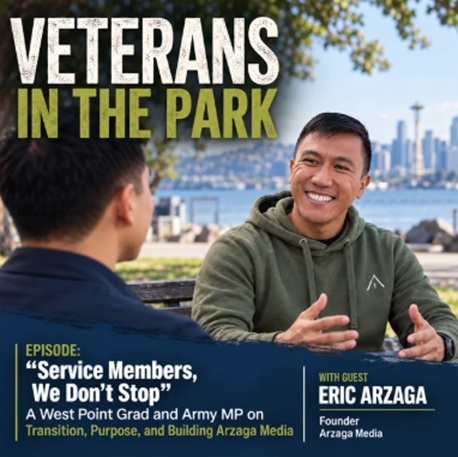
The veteran podcast features calm, candid, and peer-to-peer conversations, as if they were discussions between two people sitting on a park bench. Guests come from different service backgrounds, career paths, and stages of transition. To date, guests have included a former Army armor officer and an Air Force veteran who used the DoD SkillBridge program to move into tech. The latest episode (released October 15, 2026), “Service Members, We Don’t Stop”, features Eric Arzaga, a West Point graduate and Army MP on Transition, Purpose, and Building Arzaga Media. Arzaga shares how he went from the farmlands of the Philippines to West Point and Army leadership, and how he started a media company.
The show is for anyone preparing to leave the military, building a first civilian career, going back to school, or planning a second act after retirement.
Across the five episodes, listeners can find advice on topics as:
- Planning a transition early, before separation
- Translating military experience for civilian employers
- Job searching, networking, and using LinkedIn
- Deciding when, and whether, to go back to school
- Starting a business after service
- Rebuilding identity and finding purpose outside the uniform
Listen to Veterans in the Park on Spotify at https://open.spotify.com/show/033QiE9Y15aYBhuq98ixeu, and book a Free Benefits Navigator call at https://veterandegrees.com/consultations.
Veterans who served under both the Montgomery GI Bill and the Post-9/11 GI Bill may be eligible for up to 12 additional months of education benefits, for up to 48 months in total. The U.S. Department of Veterans Affairs (VA) decides eligibility.
GI Bill is a registered trademark of the U.S. Department of Veterans Affairs (VA).
More information about education benefits offered by the VA is available at the official U.S. government website at www.benefits.va.gov/gibill.
To access the VeteranDegrees’ free guide to the Rudisill decision, visit https://veterandegrees.com/posts/rudisill-decision.
About VeteranDegrees.com
VeteranDegrees.com is a free education and career-planning resource for veterans, service members, and military families. The organization helps veterans understand their benefits, compare VA-approved programs, and plan their next career move. Services include free one-on-one Benefits Navigator calls and free online tools, including a BAH/MHA calculator, a GI Bill Navigator, a scholarship finder, and an MOS career finder. VeteranDegrees is not affiliated with the U.S. Department of Veterans Affairs (VA). It does not file claims or decide eligibility for benefits.
Disclaimer: VeteranDegrees is not affiliated with the U.S. Department of Veterans Affairs. It does not file claims or decide eligibility for benefits.
Media Contact
Organization: GoElite
Contact Person: Hugh Taylor
Website: https://goelite.com/partners/institutions
Email: Send Email
Country: United States
Release id: 50210
View source version on King Newswire:
Veterans in the Park Podcast Releases Five New Episodes about Post-Military Transition On Spotify
About Author

Disclaimer: The views, suggestions, and opinions expressed here are the sole responsibility of the experts. No Digi Observer journalist was involved in the writing and production of this article.
Press Release
KodyGas Boiler Repair Adds F-Gas Certified Air Conditioning Installation and Servicing Across South Yorkshire
KodyGas extends its services to include air conditioning following F-gas certification, covering homes and small businesses across Sheffield, Rotherham, Doncaster and Barnsley.
United Kingdom, 26th Oct 2026 – KodyGas Boiler Repair, a Gas Safe registered heating and boiler company based in Rotherham, has obtained F-gas certification and added air conditioning installation, servicing, and repair to its services. The expansion covers homes and small businesses across South Yorkshire, including Sheffield, Doncaster and Barnsley.
F-gas certification is a legal requirement under UK regulations for any engineer handling refrigerants used in air conditioning systems. The certification authorises KodyGas engineers to install, service, and repair split and multi-split air conditioning units in residential and light commercial properties.
KodyGas has been operating in South Yorkshire since 2010, providing boiler repair, servicing, installation, power flushing, gas safety checks, central heating, and commercial gas work. The company holds Gas Safe registration 625280 and is fully insured. The addition of air conditioning brings its work under two regulated frameworks, covering both gas and refrigerant handling within a single local team.
The company already holds F-gas certification for heat pump installation, which uses the same refrigerant-handling requirements as air conditioning. The air conditioning service extends that existing capability to cooling systems for homes and small businesses that have seen increased demand following recent summers across the region.
About KodyGas Boiler Repair
KodyGas Boiler Repair is a Gas Safe registered heating, boiler, and air conditioning company based in Rotherham, South Yorkshire. The company provides boiler repair, servicing, installation, power flushing, gas safety checks, central heating, commercial gas, heat pump installation, and air conditioning across Rotherham, Sheffield, Doncaster and Barnsley. Gas Safe registration 625280. F-gas certified.
KodyGas Boiler Repair
93 Wickersley Rd
Rotherham S60 3PU
United Kingdom
+44 7932 552087
Media Contact
Organization: KodyGas Boiler Repair
Contact Person: George Lambton
Website: https://kodygas.com/
Email: Send Email
Country: United Kingdom
Release id: 50205
View source version on King Newswire:
KodyGas Boiler Repair Adds F-Gas Certified Air Conditioning Installation and Servicing Across South Yorkshire
About Author
Disclaimer: The views, suggestions, and opinions expressed here are the sole responsibility of the experts. No Digi Observer journalist was involved in the writing and production of this article.
Press Release
Musician and DJ Robot Dream, Having Beaten Cancer, Set to Release New Album and Graphic Novel
Artist plans to launch the album and graphic novel “Robot Dream” on November 20 and start a world tour on January 1 in Rio de Janeiro.
United States, 26th Oct 2026 —The musician and DJ known as Robot Dream, having beaten a cancer so serious that doctors gave him 2-5 years to live, today announced that he is releasing an album, “Robot Dream,” as well as an accompanying 120-page graphic novel, on November 20. The album launch will be followed by a world tour, commencing on January 1, 2027, in Rio de Janeiro, Brazil.
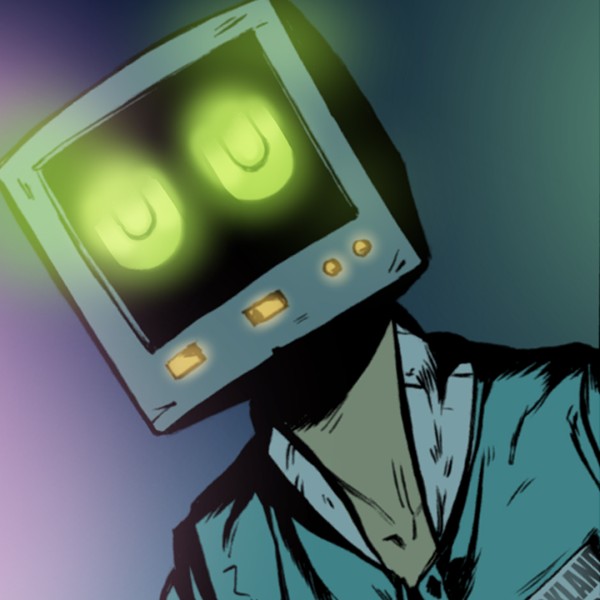
“When I was first diagnosed with cancer, I started making jokes about it,” explained Robot Dream. “Then I threw myself into work, and DJed more than ever. It’s always been hard to express myself so I started to channel my feelings into creating this album. Now that I’ve kicked cancer’s butt, I’m ready to bring this project to the world.”
Robot Dream is more than just a stage name. Robot Dream is a saxophonist, music producer, and graphic novel creator. He first published his graphic novel, based on the original character “Robot Dream,” on his website RobotDream.com/mystory and through Webtoonz. A print version will be available on November 20th along with the 15-song album.
The album’s first track, the hip-hop “Good/Bad Robot,” has already had over 75K streams. The song is featured on 4,000+ playlists and is gaining momentum. The album also features the song “WWB2R,” which includes vocals from the renowned Downtown LA Grand Arts High School choir.
For more information, visit https://www.robotdream.com/album
END
###
Media Contact
Organization: Robot Dream
Contact Person: Media Relations
Website: https://www.robotdream.com
Email: Send Email
Contact Number: +16502737257
Country: United States
Release id: 50211
View source version on King Newswire:
Musician and DJ Robot Dream, Having Beaten Cancer, Set to Release New Album and Graphic Novel
About Author
Disclaimer: The views, suggestions, and opinions expressed here are the sole responsibility of the experts. No Digi Observer journalist was involved in the writing and production of this article.
Veterans in the Park Podcast Releases Five New Episodes about Post-Military Transition On Spotify
KodyGas Boiler Repair Adds F-Gas Certified Air Conditioning Installation and Servicing Across South Yorkshire
Musician and DJ Robot Dream, Having Beaten Cancer, Set to Release New Album and Graphic Novel
Benzinga Money Article Discusses How to Become Part of the 12% of Retirees Who Have Achieved the Recommended $550,000 Minimum Retirement Savings Threshold
Apu Apustaja Conquers New York with Lively Street Ads, Including Times Square Billboard
Bay Smokes Maintains Quality Amid Legislative Changes in the Hemp Industry


-
Press Release1 week ago
The Smart Luggage at the 140th Canton Fair:Airwheel 20inch Carry-On Hand Scooter Ai Wheel Robot Cabin Luxury Suitcase Takes Smart Travel to the Next Level
-
Press Release6 days ago
Injective Collaborates with BDACS to Bring Korea’s First Won-Backed Stablecoin to Onchain RWAs
-
Press Release2 days ago
Thomas Berkley of Nexus Acquisition AI Focuses on Turning Business Inquiries Into Structured Growth Opportunities
-
Press Release6 days ago
Mastek Selected by Staffordshire County Council to Drive AI Enabled – Oracle Cloud Transformation
-
Press Release2 days ago
Widgets & Web Launches AI-Operated Investor Relations Websites for Public Companies at a Fixed $299 per Month
-
Press Release2 days ago
Dynamic NameCard Opens Global Franchise Recruitment for Telegram Mini App-Based Digital Identity Services
-
Press Release6 days ago
New Book Where’s the GAP by David P. Matthews, Now Available on Amazon, Asks a Life Changing Question
-
Press Release2 days ago
Thomas Berkley of CSM Collective Explores the Role of Strategic Thinking in Modern Entrepreneurship